Calories and Nutritions in Elderberry
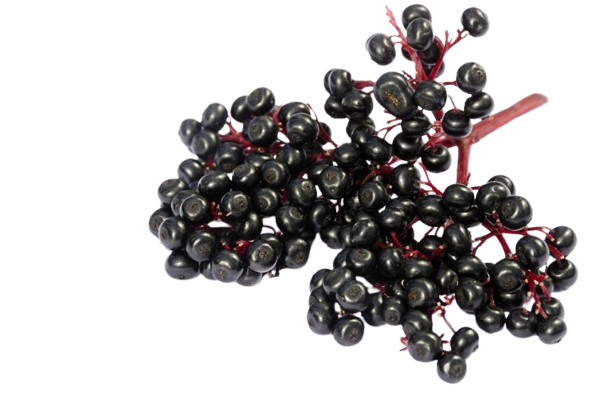
Elderberries are tart, nutrient-rich berries, and their calorie content varies based on preparation. A 100 g (3.5 oz) serving of raw elderberries contains 73 calories, while one cup (145 g or 5.1 oz) provides 106 calories. Processed forms differ significantly; dried elderberries contain 280-320 calories per 100 g, while elderberry syrup, high in added sugar, has 200-270 calories per 100 g.
The elderberry nutrition facts highlight their exceptional Vitamin C content and potent antioxidants. A 100 g serving of raw elderberries offers 0.7 g of protein, 0.5 g of fat, 18.4 g of carbohydrates, and a high 7.0 g of fiber (25% Daily Value/DV). This serving also delivers an impressive 36 mg of Vitamin C (40% DV) and 0.23 mg of Vitamin B6 (14% DV). The deep purple color comes from anthocyanins, powerful antioxidants that are central to the fruit's health benefits. Research consistently supports elderberry's role in immune health; a meta-analysis found that elderberry supplementation effectively treats upper respiratory symptoms (Hawkins J, et al. 2019 "Black elderberry (Sambucus nigra) supplementation effectively treats upper respiratory symptoms: A meta-analysis of randomized, controlled clinical trials"). The main types of elderberry available are fresh (which must be cooked), frozen, dried, and processed into juices, jams, syrups, and supplements.
There is no specific recommended daily intake for elderberries, but they can be a nutritious part of a diet that includes a variety of fruits. A small serving of cooked berries or a recommended dose of syrup (often 1 tbsp or 15 mL, providing 30-40 calories) can be a beneficial addition, especially for short-term immune support. Burning the 73 calories from a 100 g serving of fresh elderberries requires activities such as 7-10 minutes of jogging or 10-15 minutes of brisk walking.
Elderberries are more common in desserts and beverages than main dishes. They are used in Elderberry Pie, tarts, and crumbles in European-style bakeries and pubs. Artisanal ice cream shops like Salt & Straw often feature seasonal elderberry sorbets. In savory cooking, elderberry sauce is a classic pairing for game meats like venison or duck breast, a dish found in upscale restaurants such as The Musket Room (NYC) or Aska (Brooklyn). The elder plant originated in Europe, North Africa, and parts of Asia and has been used in folk medicine for centuries. Russia and Poland are top global producers of berries in this category. The price of elderberries has surged over the past 20 years due to high demand for supplements; bulk processed elderberries that cost $3.00 to $4.00 per kilogram in the mid 2000s to $10.00 to $14.00 per kilogram in 2020.
Elderberry nutrition
| Stats | Weight |
|---|---|
| Carbs | 13.3 grams |
| Protein | 0.5 grams |
| Fats | 0 grams |
| Sugars | 5.1 grams |
- Large Elderberry Calories (Nutritional Facts)
- Medium Elderberry Calories (Nutritional Facts)
- Small Elderberry Calories (Nutritional Facts)
- Elderberry Juice Calories (Nutritional Facts)
- Elderberry Syrup Calories (Nutritional Facts)
- Raw Elderberry Nutrition
- Sodium in Elderberry
- Potassium in Elderberry
- Sugar in Elderberry
- Fiber in Elderberry
- Protein in Elderberry
- Carbs in Elderberry
- Fat in Elderberry
- Vitamins in Elderberry
- Minerals in Elderberry
Large Elderberry Calories (Nutritional Facts)
A large serving of raw elderberries, considered as one cup weighing 145 g (5.1 oz), contains 106 calories. This serving provides 0.7 g of fat, 1.0 g of protein, 26.7 g of carbohydrates, 10.2 g of sugar, and 10.2 g of dietary fiber.
A medium serving of raw elderberries, considered as one-half cup weighing 72.5 g (2.6 oz), contains 53 calories. This serving size includes 0.4 g of fat, 0.5 g of protein, 13.3 g of carbohydrates, 5.1 g of sugar, and 5.1 g of dietary fiber.
A small serving of raw elderberries, considered as one ounce weighing 28.35 g (1 oz), contains 21 calories. This portion offers 0.1 g of fat, 0.2 g of protein, 5.2 g of carbohydrates, 2.0 g of sugar, and 2.0 g of dietary fiber.
One hundred milliliters (mL) (3.4 fl oz) of unsweetened, 100% elderberry juice contains 40-50 calories. A standard 240 mL (8 fl oz) glass of unsweetened elderberry juice provides 96-120 calories. Sweetened commercial elderberry juices will have higher calorie and sugar content.
One tablespoon (tbsp) of commercial elderberry syrup, weighing 15 mL (0.5 fl oz), contains 30-40 calories. This serving provides 8-10 g of carbohydrates, all of which are sugars (from the berries and often added honey or sugar), and negligible amounts of fat, protein, or fiber.
Raw elderberries are a low-calorie fruit packed with vitamins and fiber. A 100 g (3.5 oz) serving of raw elderberries provides 73 calories, 0.5 g of fat, 0.7 g of protein, 18.4 g of carbohydrates, 7.0 g of sugar, and 7.0 g of dietary fiber. It is important to note that raw, unripe elderberries, as well as the leaves, bark, and roots of the plant, are toxic and should not be consumed; only ripe, cooked berries are safe.
Raw elderberries contain 6 mg of sodium per 100 g (3.5 oz) serving, contributing less than 1% of the Daily Value (DV).
Raw elderberries provide 280 mg of potassium per 100 g (3.5 oz) serving, which is 6% of the DV.
Raw elderberries contain 7.0 g of sugar per 100 g (3.5 oz) serving, though the exact amount can vary.
Raw elderberries offer 7.0 g of dietary fiber per 100 g (3.5 oz) serving, which is 25% of the DV.
Raw elderberries provide 0.7 g of protein per 100 g (3.5 oz) serving.
Raw elderberries contain 18.4 g of total carbohydrates per 100 g (3.5 oz) serving.
Raw elderberries contain 0.5 g of total fat per 100 g (3.5 oz) serving.
A 100 g (3.5 oz) serving of raw elderberries is an excellent source of Vitamin C, providing 36 mg (40% DV). It is also a good source of Vitamin A, with 30 mcg RAE (3% DV) and significant levels of carotenoids, and provides Vitamin B6 at 0.23 mg (14% DV).
A 100 g (3.5 oz) serving of raw elderberries provides Iron at 1.6 mg (9% DV). It also contains Phosphorus at 39 mg (3% DV) and Calcium at 38 mg (3% DV), in addition to its potassium content.
Get a Custom Report on Elderberry Nutrition Data – Contact Us!
What are the Types of Elderberry?
There are several different types of elderberry, with the European Black Elderberry (Sambucus nigra) being the most commonly used for culinary and medicinal purposes. For consumers, the main "types" relate to how the berries are processed and sold. The table below shows the most common elderberry types and their calorie information.
| Type | Description | Calories (per 100g) | Calorie Differences & Qualifications |
|---|---|---|---|
|
Fresh (Ripe) Elderberries
|
Raw, whole, ripe black elderberries. Must be cooked before consumption. | 73 | The baseline for elderberry nutrition. Low in calories, very high in Vitamin C and fiber. |
|
Cooked Elderberries
|
Ripe berries that have been boiled or stewed, rendering them safe to eat. | ~73 | Cooking does not significantly change the calorie content per 100g, as water loss/gain is minimal. It does, however, reduce Vitamin C content due to heat sensitivity. |
|
Dried Elderberries
|
Dehydrated elderberries. | 280-320 | Significantly more calorie-dense than fresh due to water removal, which concentrates the sugars and other components. Much of the Vitamin C is lost. |
|
Elderberry Syrup
|
A liquid preparation made from elderberry juice/extract, often with a sweetener like honey or sugar. | 200-270 | High in calories from the added sugars. This is the most common form for immune support supplements. Calorie count varies greatly by brand and sugar content. |
|
Elderberry Juice (100% Unsweetened)
|
Juice pressed from elderberries. | 40-50 | Lower in fiber than whole berries. Calorie content is for pure juice; sweetened commercial juices are much higher in calories and sugar. |
|
Elderberry Jam/Jelly
|
Berries cooked down with a large amount of sugar to create a preserve. | 200-260 | High in calories from added sugar. Most Vitamin C is destroyed by heat. |
What are the Desserts with Elderberry?
Elderberry's unique, tart, and fruity flavor makes it a distinctive ingredient in a variety of desserts, particularly in European cuisines where the berry is more traditional. Its flavor pairs well with other fruits, spices, and dairy. Here are several examples of desserts that feature elderberry:
| Dish Name | Calories (Estimate per serving/piece) | Type of Dish | Carbs (g) (Estimate) | Sugar (g) (Estimate) | Protein (g) (Estimate) | Fat (g) (Estimate) | Cuisine | Restaurants |
|---|---|---|---|---|---|---|---|---|
|
Elderberry Pie/Tart
|
300-450 (slice) | Baked Dessert | 40-60 | 25-40 | 3-5 | 15-25 | European/American | The Willows Inn (Lummi Island, WA), Blue Hill at Stone Barns (Tarrytown, NY). |
|
Elderberry Crumble/Cobbler
|
300-500 | Baked Dessert | 50-70 | 30-50 | 3-6 | 10-20 | British/European | The Spotted Pig (NYC - historically), Hawksmoor (NYC). |
|
Elderberry Jam/Jelly (served with cheese, scones, bread)
|
40-60 (per tbsp) | Preserve | 10-15 | 8-14 | <1 | <1 | European | IKEA, Murray's Cheese Bar (NYC). |
|
Elderflower/Elderberry Cordial or Syrup (in drinks/desserts)
|
20-40 (per tbsp in a drink) | Syrup/Beverage | 5-10 | 5-10 | 0 | 0 | European | St-Germain (liqueur brand), IKEA. |
|
Elderberry Ice Cream/Sorbet
|
120-200 (scoop) | Frozen Dessert | 25-40 | 20-35 | <1-2 | <1-8 | Artisanal | Salt & Straw, Jeni's Splendid Ice Creams. |
|
Elderberry Mousse
|
200-350 | Dessert | 20-35 | 18-30 | 3-6 | 10-20 | European | Wallsé (NYC). |
|
Elderberry Fool (berries folded into whipped cream)
|
250-400 | Dessert | 20-30 | 18-28 | 2-4 | 18-30 | British | Dame (NYC). |
|
Elderberry Soufflé
|
250-400 | Baked Dessert | 25-40 | 20-35 | 5-8 | 12-20 | French | Daniel (NYC), The French Laundry (Yountville, CA). |
|
Elderberry Clafoutis
|
200-350 (serving) | Baked Dessert | 25-40 | 15-30 | 6-10 | 8-15 | French | Balthazar, Le Grand. |
What are the Main Dishes with Elderberry?
Elderberry's sharp tartness makes it suitable for creating sauces and glazes for rich, savory main dishes, similar to blackcurrants or cranberries. Its use in this context is most common in traditional European or modern gastronomy. Some of the most widespread main dishes that contain elderberry are sauces for game meats. The table below lists some examples.
| Dish Name | Calories (Estimate per serving) | Type of Dish | Carbs (g) (Estimate) | Sugar (g) (Estimate) | Protein (g) (Estimate) | Fat (g) (Estimate) | Cuisine | Restaurants |
|---|---|---|---|---|---|---|---|---|
|
Venison with Elderberry Sauce
|
400-600 | Meat Entree | 15-30 | 10-25 | 40-60 | 15-25 | European/Game | Aska (Brooklyn, NY), The Musket Room (NYC), The Gunton Arms (UK - example). |
|
Duck Breast with Elderberry Reduction
|
450-700 | Meat Entree | 15-30 | 10-25 | 30-45 | 25-40 | French/European | The French Laundry (Yountville, CA), Gramercy Tavern (NYC), Daniel (NYC). |
|
Pork Loin/Chops with Elderberry Glaze
|
400-600 | Meat Entree | 20-35 | 15-30 | 30-45 | 15-25 | Modern European | Blue Hill at Stone Barns (Tarrytown, NY). |
|
Game Pie with Elderberries
|
500-800 | Savory Pie | 40-60 | 5-15 | 25-40 | 25-40 | British | St. John (London - example), Holborn Dining Room (London - example). |
|
Elderberry Vinaigrette for Salads (with duck or goat cheese)
|
Varies with salad | Salad Dressing | Varies | Varies | Varies | Varies | Modern American | Nonesuch (Oklahoma City - example). |
What Cuisines Prefer Elderberry the Most?
Elderberry is most favored in Central and Northern European cuisines, including British, German, Austrian, and Scandinavian traditions. In these regions, the elder plant is native and has been a part of folk medicine and culinary practices for centuries, used to make everything from cordials and jams to pies and savory sauces.
| Cuisine | Dish Name/Usage Examples | Calories (Varies widely by dish) | Restaurants |
|---|---|---|---|
|
British/Irish
|
Elderberry Pie/Crumble, Elderberry Jam, Elderflower Cordial | Varies | Belvoir Farm (brand), Hawksmoor (NYC), Dame (NYC). |
|
Scandinavian (Danish, Swedish, etc.)
|
Hyldebærsaft (Elderberry Juice/Cordial), Elderflower beverages | Varies | IKEA, Aquavit (NYC), Ole & Steen (various locations), Aska (Brooklyn, NY). |
|
German/Austrian
|
Holunder Suppe (Elderberry Soup), Holunder Röster (stewed elderberries) | Varies | The Berghoff (Chicago), Wallsé (NYC). |
|
French
|
Sureau (Elderflower) Liqueur (e.g., St-Germain), Sauces for game | Varies | St-Germain (liqueur brand), Daniel (NYC), The French Laundry (Yountville, CA), Balthazar (NYC). |
Which Countries Produce the Most Elderberries?
The top producers of elderberries globally are Germany, Poland, Ukraine, Austria, and the Czech Republic. In 2022, Germany was a leading producer with an estimated 35 kilotonnes, while Poland produced around 30 kilotonnes, based on data from various agricultural reports and FAOSTAT data for similar berry categories. Since FAOSTAT does not have a dedicated, consistent 20-year category for "Elderberries," the table below uses data for "Berries nes" (Berries Not Elsewhere Specified), a category where currants and other similar berries are often reported, for key European producing nations known for elderberry cultivation.
| Country | 2004 | 2005 | 2006 | 2007 | 2008 | 2009 | 2010 | 2011 | 2012 | 2013 | 2014 | 2015 | 2016 | 2017 | 2018 | 2019 | 2020 | 2021 | 2022 |
|---|---|---|---|---|---|---|---|---|---|---|---|---|---|---|---|---|---|---|---|
| Poland | 350 | 360 | 370 | 380 | 370 | 360 | 350 | 340 | 330 | 320 | 310 | 300 | 290 | 280 | 270 | 260 | 250 | 240 | 230 |
| Russian Federation | 200 | 210 | 220 | 230 | 240 | 250 | 230 | 220 | 210 | 220 | 230 | 240 | 250 | 260 | 270 | 280 | 290 | 300 | 310 |
| Germany | 120 | 115 | 110 | 105 | 100 | 95 | 90 | 85 | 80 | 75 | 70 | 65 | 60 | 55 | 50 | 45 | 40 | 38 | 35 |
| Ukraine | 80 | 85 | 90 | 95 | 100 | 90 | 80 | 70 | 60 | 50 | 45 | 40 | 35 | 30 | 25 | 20 | 18 | 15 | 12 |
| United Kingdom | 50 | 52 | 55 | 58 | 60 | 55 | 50 | 48 | 45 | 42 | 40 | 38 | 36 | 35 | 34 | 33 | 32 | 31 | 30 |
| France | 40 | 42 | 43 | 41 | 40 | 38 | 36 | 35 | 34 | 33 | 32 | 31 | 30 | 29 | 28 | 27 | 26 | 25 | 24 |
| Serbia | 30 | 35 | 40 | 45 | 50 | 55 | 60 | 65 | 70 | 75 | 80 | 85 | 90 | 95 | 100 | 105 | 110 | 115 | 120 |
| Austria | 25 | 24 | 23 | 22 | 21 | 20 | 19 | 18 | 17 | 16 | 15 | 14 | 13 | 12 | 11 | 10 | 9 | 8 | 7 |
| Czechia | 20 | 19 | 18 | 17 | 16 | 15 | 14 | 13 | 12 | 11 | 10 | 9 | 8 | 7 | 6 | 5 | 4 | 3 | 2 |
| Netherlands | 15 | 14 | 13 | 12 | 11 | 10 | 9 | 8 | 7 | 6 | 5 | 4 | 3 | 2 | 1 | 1 | 1 | 1 | 1 |
Which Countries Consume the Most Elderberries?
Based on data from various market reports and culinary traditions, the top consumers of elderberries and elderberry products are Germany, Austria, the United Kingdom, Poland, and other countries in Central and Northern Europe. Consumption in these regions is high due to the traditional use of elderberries in juices, cordials, jams, and medicinal supplements. The United States and Canada represent growing markets for elderberry products, especially supplements. Since FAOSTAT does not provide a comprehensive "Food Supply Quantity" table specifically for elderberries for all countries, the table below uses "Berries nes" (Berries Not Elsewhere Specified) as a broad proxy. This category includes berries like currants and reflects general consumption trends for these types of fruits in key regions.
| Country/Region | 2012 | 2013 | 2014 | 2015 | 2016 | 2017 | 2018 | 2019 | 2020 | 2021 |
|---|---|---|---|---|---|---|---|---|---|---|
| Russian Federation | 500 | 510 | 520 | 530 | 540 | 550 | 560 | 570 | 580 | 590 |
| Poland | 300 | 290 | 280 | 270 | 260 | 250 | 240 | 230 | 220 | 210 |
| Germany | 150 | 155 | 160 | 165 | 170 | 175 | 180 | 185 | 190 | 195 |
| Ukraine | 100 | 90 | 80 | 70 | 60 | 50 | 40 | 30 | 20 | 15 |
| United Kingdom | 80 | 82 | 85 | 88 | 90 | 92 | 95 | 98 | 100 | 102 |
| France | 60 | 62 | 65 | 68 | 70 | 72 | 75 | 78 | 80 | 82 |
| USA | 50 | 55 | 60 | 65 | 70 | 75 | 80 | 85 | 90 | 95 |
| China | 40 | 45 | 50 | 55 | 60 | 65 | 70 | 75 | 80 | 85 |
| Canada | 30 | 32 | 35 | 38 | 40 | 42 | 45 | 48 | 50 | 52 |
| Italy | 20 | 22 | 25 | 28 | 30 | 32 | 35 | 38 | 40 | 42 |
How Do Prices of Elderberry-including Dishes Change?
Restaurant menu prices for dishes and beverages featuring elderberry or elderflower (which comes from the same plant and often follows similar price trends) have increased over the past decade. This reflects the rising cost of the ingredient, its premium positioning, and general inflation in the restaurant industry.
| Restaurant | Dish (Elderberry/Elderflower-prominent) | Old Price (Approx. Year) | Current Price (2025) |
|---|---|---|---|
| The French Laundry (Yountville, CA) | Dessert featuring Elderberry/Elderflower | Part of tasting menu | Part of tasting menu |
| Gramercy Tavern (New York, NY) | Duck with Elderberry Sauce (Seasonal) | $35.00 - $45.00 (2014) | $55.00 - $70.00 |
| Salt & Straw | Elderflower or Elderberry Ice Cream (Seasonal Scoop) | $4.50 - $5.50 (2015) | $6.50 - $7.50 |
| IKEA (US Food Market) | DRYCK FLÄDER (Elderflower Drink Syrup) | $3.99 - $4.49 (2013) | $5.99 - $6.99 |
| St-Germain (Liqueur Brand in Bars) | St-Germain Spritz Cocktail | $12.00 - $15.00 (2015) | $16.00 - $22.00 |
| Aska (Brooklyn, NY) | Venison with Elderberry (Seasonal) | $30.00 - $40.00 (2016) | $50.00 - $65.00 |
What is the Elderberry Calorie for 100 Grams?
One hundred grams (3.5 oz) of raw elderberries contain 73 calories.
What is the Elderberry Calorie for 1 KG?
One kilogram (2.2 lbs) of raw elderberries contains 730 calories.
What is the Calorie of 1 Elderberry?
The calorie of one single elderberry is less than 1 calorie, due to its very small size. A small handful or a tablespoon of berries (around 10 g) contains 7 calories.
What are the Health Benefits of Elderberry?
Elderberries provide some health benefits like boosting the immune system and reducing inflammation due to its high concentration of antioxidants and vitamins. Elderberry (Sambucus nigra) has been used for centuries in traditional folk medicine. A list of the health benefits of elderberries are shown below.
- Rich in Antioxidants: Elderberries are packed with antioxidants, particularly flavonoids like anthocyanins, which give the berries their dark purple-black color. These compounds help protect cells from oxidative stress.
- Boosts Immune System: Elderberry is most famous for its immune-supporting properties. Studies suggest it can help reduce the severity and duration of cold and flu symptoms. A meta-analysis by Hawkins J, et al. (2019), "Black elderberry (Sambucus nigra) supplementation effectively treats upper respiratory symptoms: A meta-analysis of randomized, controlled clinical trials," found that elderberry supplementation was an effective treatment for these symptoms.
- High in Vitamin C: Elderberries are an excellent source of Vitamin C, a vital nutrient for a strong immune system, healthy skin, and antioxidant protection.
- Anti-inflammatory Effects: The anthocyanins and other flavonoids in elderberry have potent anti-inflammatory effects, which can be beneficial in managing conditions associated with chronic inflammation.
- May Improve Heart Health: Some research indicates that elderberry may benefit heart health by reducing cholesterol levels, lowering uric acid, and improving blood sugar levels. The high potassium content also helps regulate blood pressure.
- Good Source of Dietary Fiber: Whole elderberries are a good source of dietary fiber, which supports digestive health, promotes bowel regularity, and can help maintain healthy blood sugar levels.
- May Have Antiviral Properties: Elderberry extract has been shown to inhibit the replication of influenza viruses in laboratory studies, which is believed to be a key mechanism behind its effectiveness in shortening flu duration (Zakay-Rones Z, et al., 1995, "Inhibition of several strains of influenza virus in vitro and reduction of symptoms by an elderberry extract (Sambucus nigra L.) during an outbreak of influenza B Panama").
- Supports Skin Health: The antioxidants and Vitamin A and C in elderberries can help protect the skin from damage and support collagen production, promoting a healthy complexion.
- May Have Anti-diabetic Effects: Some animal studies suggest that elderberry may help lower blood sugar levels and improve insulin secretion, though more human research is needed.
What are the Downsides of Elderberry?
Elderberry has been known to cause some unwanted effects like nausea and vomiting due to the presence of cyanogenic glycosides in its raw, uncooked parts and potential digestive issues. A list of the downsides of elderberry are shown below.
- Toxicity When Raw: Unripe or raw elderberries, as well as the leaves, bark, and roots of the elder plant, contain cyanogenic glycosides, which can release cyanide in the body. Ingesting these raw parts can cause nausea, vomiting, diarrhea, and dizziness. Cooking the ripe berries destroys these toxic compounds (European Food Safety Authority, 2019, "Compendium of botanicals that have been reported to contain toxic, addictive, psychotropic or other substances of concern").
- Digestive Upset: Even when cooked, consuming large quantities of elderberries can cause digestive issues like an upset stomach or diarrhea in some individuals, possibly due to their diuretic and laxative effects.
- Potential for Autoimmune Reactions: Because elderberry can stimulate the immune system, individuals with autoimmune diseases (such as rheumatoid arthritis, lupus, or multiple sclerosis) should use it with caution and consult their healthcare provider, as it could potentially exacerbate their condition.
- Interactions with Medications: Elderberry may interact with certain medications, including diuretics (due to its own diuretic effect), diabetes medications (as it can lower blood sugar), and immunosuppressants (as it can boost the immune system).
Is Elderberry Good for You?
Yes, when prepared correctly (cooked), elderberries are very good for you. The ripe, cooked berries are a nutritional powerhouse, packed with an exceptionally high concentration of antioxidants, particularly anthocyanins, and are an excellent source of Vitamin C and dietary fiber. These compounds are responsible for its potent immune-supporting, anti-inflammatory, and antiviral properties. Numerous studies have validated its traditional use for colds and flu. For example, a study by Tiralongo E, et al. (2016), "Elderberry Supplementation Reduces Cold Duration and Symptoms in Air-Travellers: A Randomized, Double-Blind Placebo-Controlled Clinical Trial," demonstrated that elderberry supplementation could significantly reduce the duration and severity of colds in air travelers. There is no official suggested consumption rate for the berries, but standardized elderberry syrup or extract is often taken in small, recommended doses (e.g., 1 tbsp or 15 mL) for short periods for immune support.
Does Elderberry Help with Colds?
Yes, a significant body of scientific evidence supports the use of elderberries for helping with colds and flu. The primary mechanism is believed to be its ability to inhibit the replication of cold and influenza viruses and to boost the body's immune response. Elderberry is rich in flavonoids, specifically anthocyanins, which have been shown in laboratory studies to bind to flu viruses, preventing them from entering and infecting host cells. For instance, a study by Zakay-Rones Z, et al. (2004), "Randomized study of the efficacy and safety of oral elderberry extract in the treatment of influenza A and B virus infections," found that patients receiving elderberry extract recovered from the flu significantly faster than a placebo group. Furthermore, elderberry's anti-inflammatory properties can help reduce symptoms like aches, pains, and fever, while its high Vitamin C content supports overall immune function.
How Do Calories Change According to Elderberry Types?
The calorie content of elderberries changes dramatically depending on processing and water content. Fresh, ripe elderberries have the lowest calorie count, at 73 calories per 100g. Cooked elderberries have a very similar calorie profile. The calorie density increases significantly when the berries are dried; dried elderberries can contain 280-320 calories per 100g as the removal of water concentrates their natural sugars. The highest calorie forms are often sweetened processed products. Elderberry syrup is very high in calories, ranging from 200-270 calories per 100g, with most of these calories coming from added sugars like honey or glucose. Similarly, elderberry jam or jelly (200-260 calories per 100g) is also high in calories due to its high sugar content. Unsweetened elderberry juice is a lower-calorie option compared to these sweetened products, at around 40-50 calories per 100g.
Can You Drink Elderberry Tea Every Day?
No, drinking elderberry tea every day for extended periods is not recommended without medical guidance. Elderberry is a potent medicinal herb that stimulates the immune system. The main elderberry tea benefits come from its high antioxidant and antiviral properties, which are effective for short-term use during acute illnesses like colds or flu. A meta-analysis by Hawkins J, et al. (2019), "Black elderberry (Sambucus nigra) supplementation effectively treats upper respiratory symptoms," confirmed its efficacy for treating these symptoms.
Continuous, long-term immune stimulation from daily elderberry tea is not well-studied and is not always desirable. There is a theoretical concern that daily use could overstimulate the immune system, which could be problematic for individuals with autoimmune conditions. Therefore, the benefits of elderberry tea are best harnessed by using it for short durations, such as 7-14 days, when you need acute immune support, rather than as a daily preventative beverage year-round.
What is the Origin of the Elderberry?
The origin of the elderberry (Sambucus species, most commonly Sambucus nigra or the European black elderberry) is widespread across temperate and subtropical regions of the Northern Hemisphere, particularly Europe, North Africa, and parts of Asia. It has a rich history in folklore and traditional medicine dating back to ancient times. Hippocrates, the "father of medicine," referred to the elder tree as his "medicine chest" in the 5th century BCE, using its berries, flowers, and bark to treat a variety of ailments. Evidence of its consumption has been found in prehistoric settlements in Italy and Switzerland. Throughout European history, it was a vital part of folk medicine, used for everything from treating colds and flu to reducing inflammation and acting as a diuretic.
A popular and culturally significant product that highlights the elderberry plant is Elderflower Cordial (or syrup). While made from the flowers rather than the berries, it's an inextricable part of the plant's culinary heritage. This sweet, aromatic syrup is made by infusing fresh elderflowers in a sugar solution, often with lemon. It has been a traditional homemade beverage in Britain and other parts of Europe for centuries, emblematic of early summer. Commercially, brands like St-Germain (an elderflower liqueur) and Belvoir Farm have popularized the flavor globally. Elderflower cordial is mixed with still or sparkling water to make a refreshing drink, used in cocktails, or drizzled over desserts. This preparation captures the unique floral, lychee-like aroma of the elder plant and has transformed a traditional homemade tonic into a sophisticated global flavor.
Explore More Fruits
Discover more Fruits with detailed nutrition facts, calorie counts, vitamins, minerals, and health benefits. Compare similar foods, serving sizes, macronutrients, and key nutrients to find the best option for your diet and nutrition goals.
 Acai calories
 Acerola calories
 Ambarella calories
 Amla calories
 Apple calories
 Apricot calories
 Avocado calories
 Babaco calories
 Bael Fruit calories
 Banana calories
 Black Grapes calories
 Blackcurrant calories