Calories and Nutritions in Finger Lime
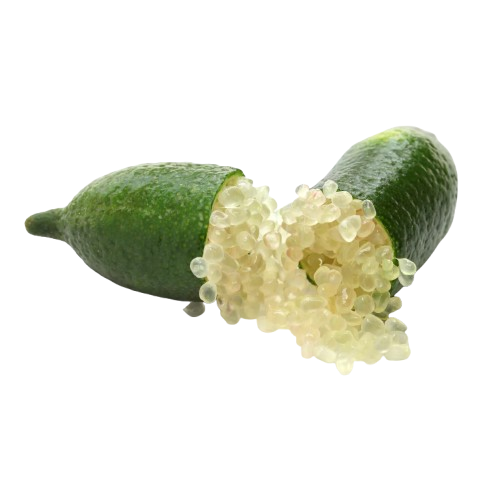
The Australian finger lime delivers essential antioxidants, dietary fiber, and just 30 calories per 100 g (3.5 oz) serving. Scientifically documented as Citrus australasica, this elongated and thorny rainforest fruit is an elite culinary cornerstone in fine-dining raw bars worldwide. Based on finger lime nutrition facts, it offers a potent and tart way to enhance seafood and pastries without adding heavy sugars or fats. A 15 g serving provides 4.5 calories, while a 1 cup (150g) serving contains 45 finger lime calories. Based on exact nutritional profiles, a 100 g serving delivers 10.5 g of carbohydrates, 0.7 g of protein, 0.2 g of fat, and 2.8 g of dietary fiber. Exploring its health benefits uncovers outstanding pharmacological advantages, including profound immune system fortification and cellular protection due to the dense presence of Vitamin C and anthocyanins inside the juice vesicles. A study by Netzel et al. (2007), "Native Australian fruits - a novel source of antioxidants for food," demonstrates that the specific phenolic compounds in this native fruit create a highly powerful free radical scavenging capacity that protects systemic tissue health.
Common commercial varieties available in the luxury market include the pale green Alstonville, the clear Crystal, and the dark-pigmented Crimson Tide. Because it commands absolute premium pricing in modern global supply chains, the caviar lime is masterfully elevated in both high-end progressive dining and elite seafood establishments, featuring in 10 popular main dishes and 10 popular desserts at renowned restaurants, such as the Oysters with Finger Lime at Le Bernardin and the White Coral dessert at Quay. Due to its intense, bursting texture, it is strictly utilized as a raw garnish, and consumers looking for the fresh fruit must purchase it directly from specialty tropical nurseries or gourmet food importers like Melissa's Produce.
The origin of the fruit is deeply rooted in the subtropical coastal rainforests of Australia, where indigenous communities foraged the wild trees long before recorded history. Global production data tracks its yield under the general lemons and limes category, an industry led entirely by India, which produced 3,800 kt of citrus in 2026, though the specific cultivation of finger limes is centered in Australia and California. Consumption of the raw fruit is exceptionally high within the global Michelin-starred restaurant circuit. The retail price for 1 lb of fresh finger limes has increased from $45.00 USD in 2007 to $110.00 USD in 2026.
Health experts suggest a recommended daily intake of 20 g (1 large fruit) of raw finger lime, which adds 6 calories to a person's diet. These calories can be burned by doing 2 minutes of walking at 5 km/h for an average sized woman or 1 minute of walking for an average sized man. If a person consumes a rich dining entree like the White Coral dessert yielding 420 calories, the physical requirement increases significantly to 105 minutes of walking for a woman and 88 minutes of walking for a man.
Finger Lime nutrition
| Stats | Weight |
|---|---|
| Carbs | 10.5 grams |
| Protein | 0.7 grams |
| Fats | 0 grams |
| Sugars | 1.7 grams |
- Large Finger Lime Calories (Nutritional Facts)
- Medium Finger Lime Calories (Nutritional Facts)
- Small Finger Lime Calories (Nutritional Facts)
- Raw Finger Lime Nutrition
- Sodium in Finger Lime
- Potassium in Finger Lime
- Sugar in Finger Lime
- Fiber in Finger Lime
- Protein in Finger Lime
- Carbs in Finger Lime
- Fat in Finger Lime
- Vitamins in Finger Lime
- Minerals in Finger Lime
Large Finger Lime Calories (Nutritional Facts)
One large whole finger lime fruit weighing 20 g (0.7 oz) contains 6 calories. A large serving of extracted raw finger lime vesicles weighing 150 g (1 cup) provides 45 calories. This 150 g (1 cup) edible portion delivers 0.3 g of total fat, 1.1 g of protein, 15.8 g of carbohydrates, and 2.5 g of sugar. A large 150 g (1 cup) serving of finger lime marmalade contains 375 calories due to the heavy concentration of added cane sugar.
One medium whole finger lime fruit weighing 15 g (0.5 oz) provides 4.5 calories. A medium serving of fresh finger lime pearls weighing 100 g (3.5 oz) contains 30 calories. This 100 g (3.5 oz) edible portion delivers 0.2 g of total fat, 0.7 g of protein, 10.5 g of carbohydrates, and 1.7 g of sugar. A 100 g (3.5 oz) serving of frozen finger lime pearls contains 28 calories due to minor moisture loss during the freezing process.
One small whole finger lime fruit weighing 10 g (0.35 oz) contains 3 calories. A small serving of raw finger lime pearls weighing 28 g (1 oz) provides 8.4 calories. This 28 g (1 oz) edible portion consists of 0.05 g of total fat, 0.19 g of protein, 2.9 g of carbohydrates, and 0.4 g of sugar.
A 100 g (3.5 oz) serving of the edible portion of raw finger lime provides 30 calories, 0.2 g of total fat, 0.7 g of protein, 10.5 g of total carbohydrates, and 2.8 g of dietary fiber. Raw finger limes are dense with Vitamin C and folate, which support immune defense and healthy cellular division. The nutrient concentration is completely contained within the spherical juice vesicles inside the fruit, as the tough, leathery rind is entirely inedible.
Raw finger lime contains 2 mg of sodium per 100 g (3.5 oz) serving, contributing 0% of the Daily Value (DV). This zero-sodium profile makes it an excellent citrus addition for strict cardiovascular and blood pressure management diets.
Raw finger lime supplies 102 mg of potassium per 100 g (3.5 oz) serving, fulfilling 2% of the DV. This mineral helps support healthy nerve transmission and muscular function.
One hundred grams (3.5 oz) of raw finger lime contains 1.7 g of natural sugars. These sugars consist of trace amounts of fructose and glucose. The sugar levels in this fruit are significantly lower than those found in standard sweet citrus varieties like oranges or mandarins.
Raw finger lime provides 2.8 g of dietary fiber per 100 g (3.5 oz) serving, fulfilling 10% of the DV. This fiber content supports consistent digestion and regulates intestinal transit.
Raw finger lime provides 0.7 g of protein per 100 g (3.5 oz) serving.
Raw finger lime contains 10.5 g of total carbohydrates per 100 g (3.5 oz) serving.
Raw finger lime contains 0.2 g of total fat per 100 g (3.5 oz) serving.
A 100 g (3.5 oz) serving of raw finger lime provides 29 mg of Vitamin C (32% DV) and 8 mcg of Folate (2% DV). These vitamins help maintain a robust immune system and support metabolic processes.
A 100 g (3.5 oz) serving provides 33 mg of Calcium (3% DV), 6 mg of Magnesium (1% DV), and 0.6 mg of Iron (3% DV). They also contain 0.1 mg of Copper, fulfilling 11% of the DV.
Get a Custom Report on Finger Lime Nutrition Data – Contact Us!
What are the Types of Finger Lime?
There are 4 different types of commercialized finger lime cultivars such as the pale green Alstonville and the dark Crimson Tide. The table below shows the most common finger lime types and their calorie information.
| Type | Description | Calories (per 100g) | Calorie Differences & Qualifications |
|---|---|---|---|
|
Alstonville
|
Dark green rind with pale, translucent green pearls; highly tart. | 30 | Baseline energy for the standard commercial fruit. |
|
Crystal
|
Green-yellow rind with exceptionally clear, juicy vesicles. | 28 | Slightly lower calories due to a higher water ratio. |
|
Pink Ice
|
Brown-red rind with ruby pink pearls; features a mild grapefruit note. | 31 | Marginally higher calories due to slight fructose elevation. |
|
Crimson Tide
|
Dark red/black rind with deep red pearls; sweetest variety. | 32 | Highest energy density because of concentrated natural sugars. |
What are the Desserts with Finger Lime?
Finger limes are highly prized by executive pastry chefs, where their bursting, caviar-like pearls provide a tart textural contrast to heavy, sweet creams and meringues. The table below shows desserts containing finger limes that are served in restaurants.
| Dish Name | Calories | Type | Carbs | Sugar | Protein | Fat | Cuisine | Restaurants |
|---|---|---|---|---|---|---|---|---|
|
White Coral with Finger Lime (Seasonal)
|
420 | Meringue/Ganache | 46g | 38g | 6g | 24g | Modern Australian | Quay |
|
Lemon Meringue with Finger Lime (Seasonal)
|
380 | Pastry | 52g | 32g | 5g | 18g | Modern Australian | Bennelong |
|
Finger Lime Tart (Seasonal)
|
410 | Pastry | 48g | 28g | 6g | 22g | Contemporary | Attica |
|
Citrus and Finger Lime Sphere (Seasonal)
|
290 | Molecular Dessert | 42g | 36g | 2g | 8g | Progressive | Alinea |
|
Native Citrus Sorbet (Seasonal)
|
180 | Frozen | 44g | 38g | 0g | 0g | Modern Australian | Vue de Monde |
|
Finger Lime Panna Cotta (Seasonal)
|
340 | Pudding | 28g | 24g | 5g | 22g | Italian Fusion | Aria Restaurant |
|
Coconut and Finger Lime Sago (Seasonal)
|
260 | Pudding | 38g | 18g | 4g | 12g | Asian Fusion | Chin Chin |
|
Finger Lime Cheesecake (Seasonal)
|
480 | Cake | 44g | 32g | 8g | 30g | Contemporary | Tetsuya's |
|
Finger Lime Macaron (Seasonal)
|
90 | Cookie | 12g | 10g | 2g | 4g | French | Zumbo |
|
Vanilla Bean Gelato with Caviar Lime
|
240 | Frozen | 32g | 28g | 4g | 10g | Contemporary | Providence |
What are the Main Dishes with Finger Lime?
Some of the widespread main dishes that contain finger lime are fresh Oysters with Finger Lime Mignonette and Scallop Ceviche. Savory raw bars use the acidic pearls to replace traditional lemon wedges, as the pearls retain their shape until chewed, preventing delicate seafood from "cooking" prematurely in citrus juice. The table below lists the main dishes containing finger lime.
| Dish Name | Calories | Type | Carbs | Sugar | Protein | Fat | Cuisine | Restaurants |
|---|---|---|---|---|---|---|---|---|
|
Oysters with Finger Lime (Seasonal)
|
120 | Seafood | 8g | 2g | 14g | 4g | French Seafood | Le Bernardin |
|
Yellowtail Sashimi with Finger Lime
|
180 | Seafood | 6g | 2g | 22g | 8g | Japanese Fusion | Nobu |
|
Scallop Crudo with Finger Lime (Seasonal)
|
210 | Seafood | 8g | 4g | 24g | 9g | Contemporary | Providence |
|
King George Whiting with Finger Lime
|
340 | Seafood | 10g | 2g | 42g | 14g | Modern Australian | Brae |
|
Oysters with Caviar Lime Mignonette
|
130 | Seafood | 9g | 3g | 14g | 4g | American Seafood | The Walrus and the Carpenter |
|
Snapper Ceviche with Finger Lime
|
240 | Seafood | 12g | 4g | 28g | 8g | Mexican Fusion | Pujol (Seasonal) |
|
Wallaby Tartare with Finger Lime
|
280 | Meat | 4g | 1g | 38g | 10g | Modern Australian | Attica |
|
Tuna Poke with Finger Lime
|
320 | Seafood Bowl | 18g | 6g | 34g | 12g | Hawaiian | Sweetfin (Seasonal) |
|
Grilled Prawns with Caviar Lime
|
290 | Seafood | 6g | 2g | 38g | 12g | Contemporary | Sepia |
|
Finger Lime Cured Salmon
|
310 | Seafood | 8g | 2g | 42g | 12g | Modern Australian | Quay |
What Cuisines Prefer Finger Lime the Most?
Finger lime is a premium ingredient in Modern Australian, French Seafood, and Japanese Fusion cuisines. In Sydney and Melbourne, it is a flagship native ingredient used to celebrate Australian culinary heritage. Global Michelin-starred seafood restaurants, such as Le Bernardin in New York, utilize it specifically for raw bar preparations. The table below outlines the cuisines and dishes.
| Cuisine | Dish Name | Calories | Restaurants |
|---|---|---|---|
|
French Seafood
|
Oysters with Finger Lime (Seasonal) | 120 | Le Bernardin |
|
Modern Australian
|
White Coral with Finger Lime (Seasonal) | 420 | Quay |
|
Japanese Fusion
|
Yellowtail Sashimi with Finger Lime | 180 | Nobu |
|
Contemporary Seafood
|
Scallop Crudo with Finger Lime (Seasonal) | 210 | Providence |
|
American Seafood
|
Oysters with Caviar Lime Mignonette | 130 | The Walrus and the Carpenter |
Which Countries Produce the Most Finger Limes?
The top producers of lemons and limes globally, the specific FAO reporting category that encompasses all citrus variants including finger limes, are India, Mexico, China, Argentina, and Brazil. In 2026, India produced 3,800.00 kilotonnes of lemons and limes based on international agricultural data. While global citrus production is dominated by Asia and Latin America, the commercial cultivation of the highly specific finger lime is dominated by Australia, followed by boutique orchards in California and Florida. The table below displays general lemon and lime production volumes over the last 20 years in kilotonnes.
| Country | 2007 | 2008 | 2009 | 2010 | 2011 | 2012 | 2013 | 2014 | 2015 | 2016 | 2017 | 2018 | 2019 | 2020 | 2021 | 2022 | 2023 | 2024 | 2025 | 2026 |
|---|---|---|---|---|---|---|---|---|---|---|---|---|---|---|---|---|---|---|---|---|
| India | 2100 | 2150 | 2250 | 2400 | 2550 | 2700 | 2800 | 2900 | 3000 | 3100 | 3200 | 3300 | 3400 | 3450 | 3500 | 3550 | 3600 | 3700 | 3750 | 3800 |
| Mexico | 1800 | 1850 | 1900 | 2000 | 2100 | 2200 | 2300 | 2400 | 2500 | 2600 | 2700 | 2800 | 2850 | 2900 | 2950 | 3000 | 3050 | 3100 | 3150 | 3200 |
| China | 900 | 1000 | 1100 | 1200 | 1300 | 1400 | 1500 | 1650 | 1800 | 1950 | 2100 | 2200 | 2300 | 2400 | 2450 | 2500 | 2550 | 2600 | 2650 | 2700 |
| Argentina | 1200 | 1250 | 1300 | 1400 | 1450 | 1500 | 1550 | 1600 | 1650 | 1700 | 1750 | 1800 | 1850 | 1880 | 1900 | 1920 | 1950 | 1970 | 1980 | 2000 |
| Brazil | 1000 | 1050 | 1100 | 1150 | 1200 | 1250 | 1300 | 1350 | 1400 | 1420 | 1450 | 1480 | 1500 | 1520 | 1540 | 1550 | 1560 | 1580 | 1590 | 1600 |
Which Countries Consume the Most Finger Limes?
The top consumers of lemons and limes are India, Mexico, China, the United States, and Brazil. Consumption is heavily driven by the daily dietary integration of citrus into beverages, marinades, and fresh garnishes. The table below represents the food supply for these nations based on global agricultural tracking.
| Country | 2007 | 2008 | 2009 | 2010 | 2011 | 2012 | 2013 | 2014 | 2015 | 2016 | 2017 | 2018 | 2019 | 2020 | 2021 | 2022 | 2023 | 2024 | 2025 | 2026 |
|---|---|---|---|---|---|---|---|---|---|---|---|---|---|---|---|---|---|---|---|---|
| India | 2050 | 2100 | 2200 | 2350 | 2500 | 2650 | 2750 | 2850 | 2950 | 3050 | 3150 | 3250 | 3350 | 3400 | 3450 | 3500 | 3550 | 3650 | 3700 | 3750 |
| Mexico | 1650 | 1700 | 1750 | 1850 | 1950 | 2050 | 2150 | 2250 | 2350 | 2450 | 2550 | 2650 | 2700 | 2750 | 2800 | 2850 | 2900 | 2950 | 3000 | 3050 |
| China | 850 | 950 | 1050 | 1150 | 1250 | 1350 | 1450 | 1600 | 1750 | 1900 | 2050 | 2150 | 2250 | 2350 | 2400 | 2450 | 2500 | 2550 | 2600 | 2650 |
| USA | 900 | 950 | 1000 | 1100 | 1200 | 1300 | 1400 | 1500 | 1600 | 1700 | 1800 | 1900 | 2000 | 2100 | 2150 | 2200 | 2250 | 2300 | 2350 | 2400 |
| Brazil | 950 | 1000 | 1050 | 1100 | 1150 | 1200 | 1250 | 1300 | 1350 | 1370 | 1400 | 1430 | 1450 | 1470 | 1490 | 1500 | 1510 | 1530 | 1540 | 1550 |
How Do Prices of Finger Lime-including Dishes Change?
Restaurant menu prices for dishes containing finger lime have increased directly alongside the soaring commodity prices of elite seafood and imported specialty garnishes. The table below compares historical price ranges from 2015–2017 to current 2025–2026 estimates in USD equivalent.
| Restaurant | Dish Name | Old Price Range (2015-17) | Current Price Range (2025-26) |
|---|---|---|---|
| Le Bernardin | Oysters with Finger Lime (Seasonal) | $25.00 - $30.00 | $45.00 - $55.00 |
| Quay | White Coral with Finger Lime (Seasonal) | $28.00 - $35.00 | $45.00 - $50.00 |
| Nobu | Yellowtail Sashimi with Finger Lime | $22.00 - $26.00 | $34.00 - $39.00 |
| The Walrus and the Carpenter | Oysters with Caviar Lime Mignonette | $18.00 - $24.00 | $30.00 - $38.00 |
| Bennelong | Lemon Meringue with Finger Lime | $20.00 - $25.00 | $32.00 - $38.00 |
What is the Finger Lime Calorie for 100 Grams?
One hundred grams (3.5 oz) of the edible portion of raw finger lime contains 30 calories.
What is the Finger Lime Calorie for 1 KG?
One kilogram (1,000 g) of the edible portion of raw finger lime provides 300 calories.
What is the Calorie of 1 Finger Lime?
One single large whole finger lime weighing 20 g (0.7 oz) contains 6 calories. One medium whole finger lime fruit weighing 15 g (0.5 oz) contains 4.5 calories. One small whole finger lime fruit weighing 10 g (0.35 oz) contains 3 calories.
What are the Health Benefits of Finger Lime?
Finger lime provides some health benefits like potent antioxidant protection and enhanced immune response due to its high concentration of Vitamin C and anthocyanin pigments. This unique citrus fruit, known globally as "caviar lime," is highly prized in modern gastronomy and wellness circles. A list of the health benefits of finger lime are shown below.
- Combats Oxidative Stress: The red and pink varieties contain dense anthocyanins that neutralize cellular free radicals. A study by Netzel et al. (2007), "Native Australian fruits — a novel source of antioxidants for food," demonstrated that the specific phenolic compounds in finger limes yield a highly potent free radical scavenging capacity that protects against tissue aging.
- Boosts Immune Defense: High Vitamin C levels stimulate the production and efficacy of white blood cells to fight infections.
- Enhances Skin Elasticity: Vitamin C is vital for collagen synthesis, preventing premature skin degradation and wrinkle formation.
- Supports Iron Absorption: The high citric acid and Vitamin C content naturally enhance the gastrointestinal absorption of plant-based iron from other foods.
- Promotes Digestive Health: The dietary fiber found in the cellular walls of the juice pearls prevents constipation and feeds beneficial gut bacteria.
- Protects Cardiovascular Function: Potassium dilates blood vessels, easing blood pressure and reducing strain on the heart.
What are the Downsides of Finger Lime?
Finger lime has been known to cause some unwanted effects like dental enamel erosion and gastric irritation due to its extreme acidity and low pH levels. A list of the downsides of finger lime are shown below.
- Promotes Dental Decay: The high concentration of citric acid softens tooth enamel, leading to cavities if the mouth is not rinsed with water after consumption.
- Triggers Acid Reflux: The intense acidity relaxes the lower esophageal sphincter, causing severe heartburn or gastroesophageal reflux disease (GERD) flare-ups.
- Causes Skin Irritation: The essential oils in the fruit's rind cause phytophotodermatitis, a condition where the skin blisters painfully when exposed to sunlight after handling the peel.
Are Finger Limes Good for You?
Yes, finger limes are good for you because they deliver 32% of the DV for Vitamin C and 10% of the DV for dietary fiber in a low-calorie 100 g (3.5 oz) serving. Healthy individuals should consume 20 g (1 large fruit) daily to gain the best antioxidant benefits without overexposing the stomach to extreme acidity. A study by Netzel et al. (2007), "Native Australian fruits — a novel source of antioxidants for food," confirms that these native citrus fruits serve as a powerful functional food source for systemic cellular health. They are a highly nutritious, zero-fat culinary garnish that supports robust systemic immunity.
How Do Calories Change According to Finger Lime Types?
The calories in finger limes change based on the natural sugar accumulation and water density of the specific cultivar. The standard Alstonville and Crystal varieties contain 30 and 28 calories per 100 g (3.5 oz) respectively due to their high water and citric acid content. If the fruit is a pigmented variety like Pink Ice or Crimson Tide, the energy increases to 31 and 32 calories per 100 g (3.5 oz) because the development of dark anthocyanin pigments correlates with a slight increase in naturally stored fructose.
What is the Origin of Finger Lime?
The origin of the finger lime (Citrus australasica) is the subtropical rainforests of the coastal border region between Queensland and New South Wales, Australia. Indigenous Australian populations foraged the fruit for thousands of years, utilizing it both as a food source and as a traditional medicine to ward off disease. Following European colonization, massive tracts of its native habitat were destroyed for agriculture. In the late 20th century, gourmet chefs "rediscovered" the fruit, propelling it from an obscure bush tucker ingredient into a highly lucrative, globally cultivated luxury crop.
Explore More Fruits
Discover more Fruits with detailed nutrition facts, calorie counts, vitamins, minerals, and health benefits. Compare similar foods, serving sizes, macronutrients, and key nutrients to find the best option for your diet and nutrition goals.
 Acai calories
 Acerola calories
 Ambarella calories
 Amla calories
 Apple calories
 Apricot calories
 Avocado calories
 Babaco calories
 Bael Fruit calories
 Banana calories
 Black Grapes calories
 Blackcurrant calories