Calories and Nutritions in Fruit Salad
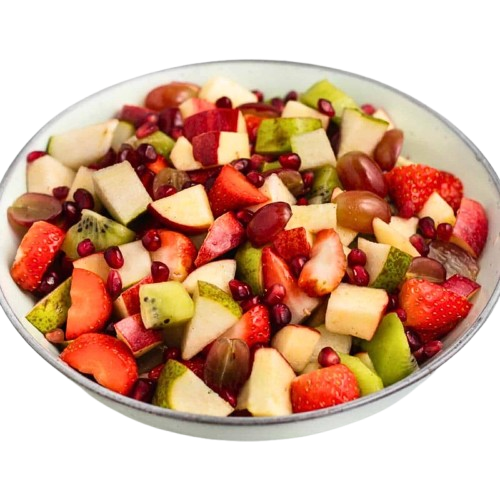
Fruit salad is a dessert consisting of various kinds of fruit often served in natural fruit juice, syrup or condensed milk. All-natural fruit salad has low calories with a small half-cup serving (90g) containing 54 calories. A cup of fruit salad with condensed milk has 245 calories, while a cup with mayonnaise dressing (188g) reaches 432 calories. Fruit cups from Chick-fil-A and Panera Bread contain 60 calories, while a Starbucks fruit bowl has 90 calories.
The fruit salad nutrition facts highlight a food rich in natural carbohydrates and micronutrients. A one-cup serving (180g) provides 1.3g of protein, 1.6g of fat, and 25g of carbohydrates, including 20.5g of sugar. The preparation style dramatically alters the calorie content, ranging from a low of 35 calories per 100g for a melon salad to 150 calories per 100g for an Ambrosia salad with creamy dressing. A key health benefit is the high concentration of vitamins and fiber, with a one-cup serving providing 85mg of Vitamin C (94% DV) and 3.4g of fiber (12% DV), nutrients linked to reduced disease risk in a meta-analysis by Aune, D., et al. (2017) that associated higher fruit intake with lower risk of all-cause mortality.
The top fruit-producing nations include China and India, while high per capita consumption of fruits are seen in countries like the Dominican Republic. Prices of fruit salad have increased over the years, with a packaged fruit bowl increasing from under $4.00 in the early 2000s to over $6.00 after 2020.
The composition of plain fruit salad makes the dish a healthy choice for weight loss and a low-calorie snack. Health recommendations from organizations like the American Heart Association suggest a daily intake of around two cups of fruit for a 2,000-calorie diet, advising consumption without high-calorie syrups or dressings. A small 54-calorie serving requires a minimal energy expenditure equivalent to 5 minutes of jogging or 7 minutes of swimming.
Fruit Salad nutrition
| Stats | Weight |
|---|---|
| Carbs | 38.5 grams |
| Protein | 24.5 grams |
| Fats | 0 grams |
| Sugars | 28.5 grams |
- Large Fruit Salad Calories (Nutritional Facts)
- Medium Fruit Salad Calories (Nutritional Facts)
- Small Fruit Salad Calories (Nutritional Facts)
- Fruit Salad with Milk Calories (Nutritional Facts)
- Fresh Fruit Salad Calories (Nutritional Facts)
- Sodium in Fruit Salad
- Potassium in Fruit Salad
- Sugar in Fruit Salad
- Fiber in Fruit Salad
- Protein in Fruit Salad
- Carbs in Fruit Salad
- Fat in Fruit Salad
- Vitamins in Fruit Salad
- Minerals in Fruit Salad
Large Fruit Salad Calories (Nutritional Facts)
A large bowl of fruit salad (745g or 26.3oz) contains 695 calories, 49g of protein, 26g of fat, 77g of carbohydrates, 10g of fiber, 57g of sugar, and 1192mg of sodium. A large serving of fruit salad (2 cups, 360g) contains 216 calories, 2.5g of protein, 3.3g of fat, 50g of carbohydrates, 6.8g of fiber, 41g of sugar, and 22mg of sodium.
A medium bowl of fruit salad (373g or 13.2oz) provides 348 calories, 24.5g of protein, 13g of fat, 38.5g of carbohydrates, 5g of fiber, 28.5g of sugar, and 596mg of sodium. A medium serving of fruit salad (1 cup, 180g or 6.3oz) provides 108 calories, 1.3g of protein, 1.6g of fat, 25g of carbohydrates, 3.4g of fiber, 20.5g of sugar, and 11mg of sodium.
A small bowl of fruit salad (187g or 6.6oz) contains 174 calories, 12.3g of protein, 6.5g of fat, 19.3g of carbohydrates, 2.5g of fiber, 14.3g of sugar, and 298mg of sodium. A small serving of fruit salad (0.5 cup, 90g) contains 54 calories, 0.6g of protein, 0.8g of fat, 12.5g of carbohydrates, 1.7g of fiber, 10.2g of sugar, and 6mg of sodium.
A cup of fruit salad with condensed milk (200g) contains 245 calories, 3g of protein, 7g of fat, 41g of carbohydrates, 2g of fiber, 28g of sugar, and 110mg of sodium.
A serving of plain, raw fruit salad without citrus or dressing (175g or 6.2oz) contains 93 calories, 1.2g of protein, 0.5g of fat, 23.7g of carbohydrates, 3g of fiber, 16.8g of sugar, and 5mg of sodium. A cup of fruit salad with citrus and a mayonnaise-style dressing (188g) contains 432 calories, 3.7g of protein, 37.4g of fat, 24.3g of carbohydrates, 3.9g of fiber, 16.3g of sugar, and 233mg of sodium.
A large bowl of fruit salad (745g) contains 1192mg of sodium (52% DV). A large serving (2 cups, 360g) has 22mg of sodium (1% DV). A medium bowl (373g) has 596mg of sodium (26% DV). A medium serving (1 cup, 180g) has 11mg of sodium (0% DV). A small bowl (187g) has 298mg of sodium (13% DV). A small serving (0.5 cup, 90g) contains 6mg of sodium (0% DV). A cup with condensed milk (200g) has 110mg of sodium (5% DV). A cup with mayonnaise dressing (188g) has 233mg of sodium (10% DV). A serving of plain fruit salad (175g) has 5mg of sodium (0% DV).
A large bowl of fruit salad (745g) contains 1128mg of potassium (24% DV). A large serving (2 cups, 360g) has 536mg of potassium (11% DV). A medium bowl (373g) has 564mg of potassium (12% DV). A medium serving (1 cup, 180g) has 268mg of potassium (6% DV). A small bowl (187g) has 282mg of potassium (6% DV). A small serving (0.5 cup, 90g) contains 134mg of potassium (3% DV). A cup with mayonnaise dressing (188g) has 367mg of potassium (8% DV). A serving of plain fruit salad (175g) has 357mg of potassium (8% DV).
A large bowl of fruit salad (745g) contains 57g of sugar. A large serving (2 cups, 360g) has 41g of sugar. A medium bowl (373g) has 28.5g of sugar. A medium serving (1 cup, 180g) has 20.5g of sugar. A small bowl (187g) has 14.3g of sugar. A small serving (0.5 cup, 90g) contains 10.2g of sugar. A cup with condensed milk (200g) contains 28g of sugar. A cup with mayonnaise dressing (188g) has 16.3g of sugar. A serving of plain fruit salad (175g) has 16.8g of sugar.
A large bowl of fruit salad (745g) provides 10g of dietary fiber (36% DV). A large serving (2 cups, 360g) has 6.8g of fiber (24% DV). A medium bowl (373g) has 5g of fiber (18% DV). A medium serving (1 cup, 180g) has 3.4g of fiber (12% DV). A small bowl (187g) has 2.5g of fiber (9% DV). A small serving (0.5 cup, 90g) contains 1.7g of fiber (6% DV). A cup with mayonnaise dressing (188g) has 3.9g of fiber (14% DV). A serving of plain fruit salad (175g) has 3g of fiber (11% DV).
A large bowl of fruit salad (745g) provides 49g of protein (98% DV). A large serving (2 cups, 360g) has 2.5g of protein (5% DV). A medium bowl (373g) has 24.5g of protein (49% DV). A medium serving (1 cup, 180g) has 1.3g of protein (3% DV). A small bowl (187g) has 12.3g of protein (25% DV). A small serving (0.5 cup, 90g) contains 0.6g of protein (1% DV). A cup with mayonnaise dressing (188g) has 3.7g of protein (7% DV). A serving of plain fruit salad (175g) has 1.2g of protein (2% DV).
A large bowl of fruit salad (745g) contains 77g of carbohydrates (28% DV). A large serving (2 cups, 360g) has 50g of carbohydrates (18% DV). A medium bowl (373g) has 38.5g of carbohydrates (14% DV). A medium serving (1 cup, 180g) has 25g of carbohydrates (9% DV). A small bowl (187g) has 19.3g of carbohydrates (7% DV). A small serving (0.5 cup, 90g) contains 12.5g of carbohydrates (5% DV). A cup with condensed milk contains 41g of carbohydrates. A cup with mayonnaise dressing (188g) has 24.3g of carbohydrates (9% DV). A serving of plain fruit salad (175g) has 23.7g of carbohydrates (9% DV).
A large bowl of fruit salad (745g) contains 26g of total fat (33% DV). A large serving (2 cups, 360g) has 3.3g of total fat (4% DV). A medium bowl (373g) has 13g of total fat (17% DV). A medium serving (1 cup, 180g) has 1.6g of total fat (2% DV). A small bowl (187g) has 6.5g of total fat (8% DV). A small serving (0.5 cup, 90g) contains 0.8g of total fat (1% DV). A cup with condensed milk contains 7g of total fat. A cup with mayonnaise dressing (188g) has 37.4g of total fat (48% DV). A serving of plain fruit salad (175g) has 0.5g of total fat (1% DV).
A large bowl of fruit salad (745g) provides 273mcg of Vitamin A (30% DV) and 14mg of Vitamin C (16% DV). A medium serving (1 cup, 180g) provides 77mcg of Vitamin A (9% DV) and 85mg of Vitamin C (94% DV). A serving of plain fruit salad (175g) provides 38.2mg of Vitamin C (42% DV). A cup with mayonnaise dressing (188g) provides 29.7mg of Vitamin C (33% DV).
A large bowl of fruit salad (745g) provides 3mg of iron (17% DV) and 522mg of calcium (40% DV). A medium serving (1 cup, 180g) provides 0.5mg of iron (3% DV) and 29mg of calcium (2% DV). A serving of plain fruit salad (175g) provides 0.5mg of iron (3% DV) and 18mg of calcium (1% DV). A cup with mayonnaise dressing (188g) provides 0.8mg of iron (4% DV) and 43mg of calcium (3% DV).
Get a Custom Report on Fruit Salad Nutrition Data – Contact Us!
What are the Types of Fruit Salads?
The types of fruit salads are Mixed Fruit Salad, Tropical Fruit Salad, Melon Salad, and Ambrosia Salad. These variations are defined by the fruits used and the presence of a dressing. A breakdown of these common salad styles is in the table below.
| Type | Description | Calories (Approximate per 100g) | Calorie Qualifications |
|---|---|---|---|
|
Mixed Fruit Salad
|
A standard mix of common fruits like grapes, berries, melon, and apples. No dressing. | 60 | This is the baseline version, with calories coming only from the natural fruit sugars. |
|
Tropical Fruit Salad
|
Features tropical fruits like pineapple, mango, papaya, and kiwi. | 75 | The higher natural sugar content of tropical fruits makes this version slightly higher in calories. |
|
Melon Salad
|
Primarily composed of high-water-content melons like cantaloupe, honeydew, and watermelon. | 35 | The very high water content of melons makes this the lowest-calorie type of fruit salad. |
|
Ambrosia Salad
|
A dessert salad with fruits (often canned), miniature marshmallows, coconut, and a creamy dressing of whipped cream or sour cream. | 150 | The high-fat, high-sugar dressing and marshmallows make this the most calorie-dense version. |
What are Desserts With Fruit Salad?
A fruit salad is a dessert in itself, but it can also be served with light toppings or as a component of another dish. A selection of items that can be served with fruit salad is presented in the table below.
| Dish Name | Calories (Estimate per serving) | Type of Dessert | Carbs (g) (Estimate) | Sugar (g) (Estimate) | Protein (g) (Estimate) | Fat (g) (Estimate) | Cuisine | Restaurants |
|---|---|---|---|---|---|---|---|---|
|
Plain Greek Yogurt
|
100 (per 3/4 cup) | Topping | 8 | 6 | 17 | 0 | Greek/American | Chobani (retail) |
|
Cottage Cheese
|
90 (per 1/2 cup) | Side | 4 | 3 | 12 | 2 | American | Good Culture (retail) |
|
Lemon Sorbet
|
110 (per scoop) | Side | 27 | 22 | 0 | 0 | Italian | Talenti |
|
Honey Drizzle
|
60 (per tbsp) | Topping | 17 | 17 | 0 | 0 | Global | Panera Bread |
|
Toasted Coconut
|
60 (per 2 tbsp) | Topping | 2 | 1 | 1 | 6 | American | Whole Foods Market |
What Cuisines Prefer Fruit Salad the Most?
Fruit salad is a versatile dish found in many culinary traditions, adapted to local fruits and tastes. The following list displays the culinary settings where fruit salad is a common item.
| Cuisine | Dish | Types of Fruits Used | Calories (Estimate) | Restaurant(s) |
|---|---|---|---|---|
|
American
|
Fruit Cup / Fruit Bowl | Berries, melon, grapes | 60-100 | Chick-fil-A, Starbucks |
|
Latin American
|
Bionico / Ensalada de Frutas | Tropical fruits, often with cream and granola | 250-400 | Mexican fruit stands |
|
Southeast Asian
|
Rojak | Tropical fruits with a spicy palm sugar dressing | 200-300 | Malaysian/Singaporean restaurants |
|
Filipino
|
Buko Pandan Salad | Young coconut, pandan jelly, cream | 200-300 | Jollibee |
|
German
|
Obstsalat | Apples, oranges, bananas, often with juice | 80-120 | German cafes |
Which Countries Produce the Most Fruit Salads?
The top producers of fresh fruit, the essential component of fruit salads, are China, India, and Brazil. Specific global production data for finished fruit salads is not tracked as a separate category. The table below shows the total production quantity of all fruits in key countries.
| Country | 2003 | 2008 | 2013 | 2018 | 2019 | 2020 | 2021 | 2022 |
|---|---|---|---|---|---|---|---|---|
| China | 145,000,000 | 190,000,000 | 250,000,000 | 260,000,000 | 270,000,000 | 280,000,000 | 290,000,000 | 313,000,000 |
| India | 50,000,000 | 65,000,000 | 85,000,000 | 98,000,000 | 100,000,000 | 102,000,000 | 105,000,000 | 108,000,000 |
| Brazil | 35,000,000 | 38,000,000 | 37,000,000 | 39,000,000 | 40,000,000 | 41,000,000 | 42,000,000 | 43,000,000 |
| United States | 30,000,000 | 28,000,000 | 26,000,000 | 25,000,000 | 24,500,000 | 24,000,000 | 23,500,000 | 23,000,000 |
| Turkey | 13,000,000 | 15,000,000 | 17,000,000 | 22,000,000 | 23,000,000 | 24,000,000 | 25,000,000 | 26,000,000 |
Which Countries Consume the Most Fruit Salads?
The top consumers of fresh fruit, which includes fruit salads, are found across the globe. Consumption data for fruit salads is best represented by per capita fruit consumption data. The table below shows the apparent per capita fruit consumption in key countries.
| Country | Per Capita Consumption ( kg/year ) |
|---|---|
| Dominican Republic | 387 |
| Rwanda | 215 |
| Portugal | 175 |
| China | 160 |
| Italy | 155 |
| Brazil | 150 |
| Turkey | 145 |
| United States | 125 |
How Do Prices of Fruit Salad-Including Dishes Change?
The price for fruit cups on cafe and fast-food menus has climbed over the last decade. This adjustment is a direct result of higher wholesale fruit costs and increased labor expenses. This upward adjustment is reflected on the menus of prominent food service chains.
| Restaurant | Dish | Old Price (Year) | Current Price (2024/2025) |
|---|---|---|---|
| Chick-fil-A | Fruit Cup (Medium) | $2.59 (2015) | $3.79 - $5.00 |
| Panera Bread | Fruit Cup | $3.49 (2016) | $4.29 - $5.49 |
| Starbucks | Berry Trio Parfait | $3.95 (2014) | $5.20 - $5.55 |
| McDonald's | Fruit & Maple Oatmeal | $1.50 (2013) | $1.99 - $4.29 |
What is the Fruit Salad Calorie for 100 Grams?
A 100g serving of plain fruit salad contains 53 calories, a 100g serving of a mixed bowl with other ingredients contains 93 calories, a 100g serving with condensed milk has 123 calories, and a 100g serving with mayonnaise dressing has 230 calories.
What is the Fruit Salad Calorie for 1 KG?
One kilogram (1000g) of plain fruit salad contains 530 calories, a kilogram of a mixed bowl has 930 calories, a kilogram with condensed milk has 1,230 calories, and a kilogram with mayonnaise dressing has 2,300 calories.
What is the Calorie of 1 Fruit Salad?
A single serving of fruit salad (95g) contains 54 calories, while commercial options like the Chick-fil-A (141g) and Panera Bread (170g) fruit cups both have 60 calories, and a Starbucks Fruit Salad bowl (227g) contains 90 calories.
What are the Health Benefits of Fruit Salad?
The nutritional value of fruit salad is concentrated in the variety of fresh fruits used. An account of the primary health advantages is provided here.
- Rich in Vitamins and Minerals: A mix of fruits provides a wide array of essential micronutrients, especially Vitamin C and potassium, which support immune function and blood pressure regulation. A comprehensive review by Slavin, J. L., & Lloyd, B. (2012), "Health Benefits of Fruits and Vegetables," confirmed that fruit consumption is a key contributor to the intake of these vital nutrients.
- Provides Dietary Fiber: Whole fruits are an excellent source of dietary fiber, which is crucial for maintaining digestive health, promoting regular bowel movements, and helping to manage blood sugar levels. A meta-analysis by Aune, D., et al. (2017), "Fruit and vegetable intake and the risk of cardiovascular disease, total cancer and all-cause mortality—a systematic review and dose-response meta-analysis of prospective studies," established a clear link between higher fruit fiber intake and reduced risk for chronic diseases.
- Supplies a Broad Range of Antioxidants: The different colors of fruits in a salad correspond to a variety of antioxidant compounds, such as flavonoids and carotenoids, which help protect the body's cells from damage caused by free radicals. A study by Wolfe, K. L., et al. (2008), "Antioxidant activity of apple peels," demonstrates how different parts of fruits contain a high concentration of these protective compounds.
What are the Downsides of Fruit Salad?
The composition of some fruit salads can present health considerations, especially when not prepared plainly. An examination of these potential drawbacks is detailed here.
- High Natural Sugar Content: A large portion of fruit salad contains a significant amount of natural sugar (fructose). A scientific statement from the American Heart Association by Johnson, R. K., et al. (2009), "Dietary sugars intake and cardiovascular health," notes that even natural sugars contribute to total calorie intake and should be consumed in moderation. A healthier alternative for a small snack is a single piece of whole fruit. A suggested amount is to limit consumption to one cup per serving.
- High-Calorie Additions: Fruit salads served with heavy syrup, creamy dressings, condensed milk, or mayonnaise are extremely high in added sugars and fats, which negates the health benefits of the fruit. A review by Malik, V. S., & Hu, F. B. (2022), "The role of sugar-sweetened beverages in the global epidemics of obesity and chronic diseases," details how high intake of added sugars from sources like syrups is a principal driver of weight gain and metabolic dysfunction.
Is Fruit Salad Good for You?
Yes, fruit salads made from fresh, whole fruits without added sugar or heavy dressings are a healthy food choice. The dish provides numerous benefits across different aspects of health. For heart health, the high potassium content helps to counterbalance sodium and maintain healthy blood pressure levels. A meta-analysis by Aburto, N. J., et al. (2013), "Effect of increased potassium intake on cardiovascular risk factors and disease: systematic review and meta-analyses," found that higher potassium intake was associated with lower blood pressure.
For digestive health, the combination of soluble and insoluble fiber from a variety of fruits promotes gut regularity and supports a healthy gut microbiome. A comprehensive review by Anderson, J. W., et al. (2009), "Health benefits of dietary fiber," established a clear link between higher fiber intake and a reduced risk for numerous chronic diseases. For immune health, the high concentration of Vitamin C and other antioxidants supports the body's natural defense systems. A review by Carr, A. C., & Maggini, S. (2017), "Vitamin C and Immune Function," established that Vitamin C is a vital micronutrient for the proper functioning of immune cells.
Is Fruit Salad a Healthy Choice for Weight Loss?
Yes, a fruit salad made from fresh fruit without added dressings is a healthy choice for weight loss. The primary reason is its low energy density, meaning the food provides a large volume with few calories. A study by Bell, E. A., et al. (1998), "Energy density of foods affects energy intake in normal-weight women," demonstrated that participants consumed fewer total calories when eating low-energy-dense foods. The high water and fiber content in fruit salad also promotes feelings of fullness, or satiety, which can help reduce overall calorie intake. A study by Holt, S. H., et al. (1995), "A satiety index of common foods," found that fruits ranked very high in their ability to satisfy hunger compared to other foods with the same number of calories. Furthermore, replacing high-calorie snacks with fruit is associated with weight loss. A study by Oyebode, O., et al. (2014), "Fruit and vegetable consumption and all-cause, cancer and CVD mortality: analysis of Health Survey for England data," reinforces the benefits of a diet high in fruits. A suggested consumption rate for weight loss is to incorporate one to two cups of plain fruit salad as a snack or part of a meal.
How Do Calories Change According to Fruit Salad Types?
The ingredients used determine the calorie count of a fruit salad. An Ambrosia salad has the highest calorie value at 150 calories per 100 grams, a consequence of the high-fat, high-sugar creamy dressing and added marshmallows. A melon salad contains the lowest calorie value at 35 calories per 100 grams, a reflection of the extremely high water content and lower sugar concentration in melons compared to other fruits. Tropical fruit salads are higher in calories than mixed fruit salads due to the naturally higher sugar content of fruits like mango and pineapple.
What Makes Fruit Salad a Low-Calorie Option Compared to Other Desserts?
A plain fruit salad is a low-calorie option compared to other desserts because of its high water content and the absence of high-calorie processed ingredients. Fruits are naturally over 80-90% water, which provides volume and weight without adding calories. The sweetness comes from natural fruit sugars rather than large amounts of concentrated added sugar. Most importantly, a fruit salad contains no high-fat, high-calorie density ingredients like butter, cream, oil, or refined flour, which form the base of desserts like cakes, pies, and cookies. A 100g serving of fruit salad has around 60 calories, whereas a 100g serving of chocolate cake has over 370 calories.
What are the Main Dishes With Fruit Salad?
A fruit salad functions as a side dish, appetizer, or dessert and is not served with a main dish in a traditional sense. The sweet and acidic profile of a fruit salad makes the dish a refreshing counterpoint to savory foods. A fruit salad is conventionally served alongside breakfast or brunch items like quiche or at barbecues and potlucks with grilled meats.
Is Fruit Salad Considered a Low-Calorie Snack?
Yes, a fruit salad made of plain, fresh fruit is considered a low-calorie snack. The high water and fiber content of the fruit provides a large volume of food for a very low number of calories. A one-cup serving of mixed fruit salad contains only 108 calories. In contrast, a one-cup serving of potato chips contains over 200 calories, and a one-cup serving of ice cream can contain over 250 calories. The nutrient density of fruit salad is also much higher than that of processed snacks, providing vitamins and minerals instead of just empty calories from fat and refined carbohydrates.
What is the Origin of Fruit Salad?
The story of the modern fruit salad began in the mid-19th century. People have eaten mixed fruits for millennia, but the concept of a "fruit salad" as a specific dish gained popularity in America during this period. The term appeared in print in the 1860s. The rise of the fruit salad was linked to the growing domestic science movement, which promoted healthier eating habits, and the increasing availability of a variety of fruits due to advancements in transportation and refrigeration. The "fruit cocktail," a related dish often using canned fruits in syrup, was popularized in the early 20th century and further cemented the idea of a mixed fruit dish in the American diet.
Explore More Fruits
Discover more Fruits with detailed nutrition facts, calorie counts, vitamins, minerals, and health benefits. Compare similar foods, serving sizes, macronutrients, and key nutrients to find the best option for your diet and nutrition goals.
 Acai calories
 Acerola calories
 Ambarella calories
 Amla calories
 Apple calories
 Apricot calories
 Avocado calories
 Babaco calories
 Bael Fruit calories
 Banana calories
 Black Grapes calories
 Blackcurrant calories