Calories and Nutritions in Galia Melon
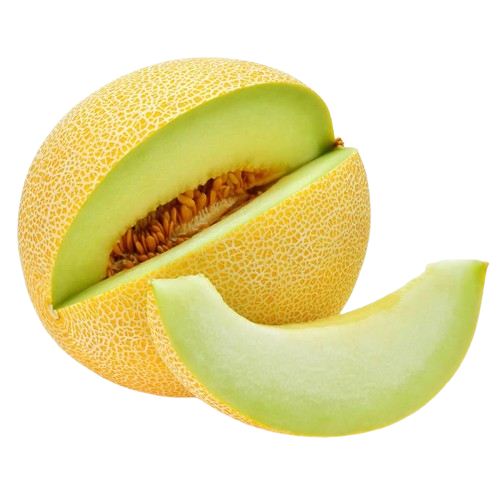
Galia melon is a hybrid fruit recognized for the netted rind and aromatic green-white flesh. A small serving (100g) provides 35 calories in fresh Galia melon. Dried Galia melon contains 340 calories per 100g due to the removal of water content. Frozen galia melon balls offer 35 calories per 100g portion. A standard cup of raw galia melon balls (170g) supplies 60 calories. Large volumes show the low energy load of the fresh fruit, as one kilogram (1000g) contains 350 calories. A whole small melon (800g) supplies 280 calories.
A nutritional breakdown of Galia melon nutrition reveals a carbohydrate-rich food source, with a large serving (200g) supplying 17g of carbohydrates and 1.8g of dietary fiber. Research by Carr, A. C., & Maggini, S. (2017), "Vitamin C and Immune Function," establishes that the substantial Vitamin C content, measured at 72mg per large serving, plays a critical role in supporting the body's barrier against pathogens. The Galia melon calories consist mainly of natural sugars, with a 200g serving providing 16g of sugar. This high simple sugar content makes the morning hours or the period immediately following physical exercise the optimal time for consumption to facilitate rapid glycogen replenishment. Micronutrient intake is also substantial, offering 534mg of potassium (11% DV) per 200g.
International supply of galia melon relies on the agricultural output of major producers, with China and Turkey leading production volumes. This supply caters to specific international markets, where the United States imported over $512 million worth of melons in 2023. Galia melon is a primary component in fruit salads, sorbets, and appetizers like Prosciutto e Melone in Italian cuisine. Increasing global demand has pushed retail costs higher, with the price of a single melon rising from under $1.50 in the early 2000s to between $3.50 and $5.00 by 2024. Dining establishments reflect this shift, as a Fresh Fruit Salad at Katz’s Delicatessen increased from $3.95 in 2005 to over $6.95 in 2025.
Galia melon is valued as a nutrient-dense fruit featuring high levels of Vitamin C and potassium. This nutritional profile aids in immune system maintenance and blood pressure regulation. Dietitians recommend eating galia melon in moderation, due to its high fructose content. A 7 oz serving of galia melon contains 70 calories, an energy load that requires 19 minutes of walking or 9 minutes of cycling to burn.
Galia Melon nutrition
| Stats | Weight |
|---|---|
| Carbs | 12.8 grams |
| Protein | 1.4 grams |
| Fats | 0 grams |
| Sugars | 12 grams |
- Large Galia Melon Calories (Nutritional Facts)
- Medium Galia Melon Calories (Nutritional Facts)
- Small Galia Melon Calories (Nutritional Facts)
- Raw Galia Melon Nutrition
- Sodium in Galia Melon
- Potassium in Galia Melon
- Sugar in Galia Melon
- Fiber in Galia Melon
- Protein in Galia Melon
- Carbs in Galia Melon
- Fat in Galia Melon
- Vitamins in Galia Melon
- Minerals in Galia Melon
Large Galia Melon Calories (Nutritional Facts)
A large serving of fresh Galia melon (200g or 7oz) contains 70 calories, 1.8g of protein, 0.4g of fat, 17g of carbohydrates, 1.8g of fiber, 16g of sugar, and 36mg of sodium.
A medium serving of fresh Galia melon (150g or 5.3oz) provides 53 calories, 1.4g of protein, 0.3g of fat, 12.8g of carbohydrates, 1.4g of fiber, 12g of sugar, and 27mg of sodium.
A small serving of fresh Galia melon (100g or 3.5oz) contains 35 calories, 0.9g of protein, 0.2g of fat, 8.5g of carbohydrates, 0.9g of fiber, 8g of sugar, and 18mg of sodium.
A standard cup of raw Galia melon balls (170g or 6oz) supplies 60 calories, 1.5g of protein, 0.3g of fat, 14.5g of carbohydrates, 1.5g of fiber, 13.6g of sugar, and 30.6mg of sodium.
A large serving of fresh Galia melon (200g) contains 36mg of sodium (2% DV). A medium serving of fresh Galia melon (150g) has 27mg of sodium (1% DV). A small serving of fresh Galia melon (100g) contains 18mg of sodium (1% DV). A serving of raw Galia melon balls (170g) provides 30.6mg of sodium (1% DV).
A large serving of fresh Galia melon (200g) contains 534mg of potassium (11% DV). A medium serving of fresh Galia melon (150g) has 400.5mg of potassium (9% DV). A small serving of fresh Galia melon (100g) contains 267mg of potassium (6% DV). A serving of raw Galia melon balls (170g) provides 453.9mg of potassium (10% DV).
A large serving of fresh Galia melon (200g) contains 16g of sugar. A medium serving of fresh Galia melon (150g) has 12g of sugar. A small serving of fresh Galia melon (100g) contains 8g of sugar. A serving of raw Galia melon balls (170g) provides 13.6g of sugar.
A large serving of fresh Galia melon (200g) provides 1.8g of dietary fiber (6% DV). A medium serving of fresh Galia melon (150g) has 1.4g of fiber (5% DV). A small serving of fresh Galia melon (100g) contains 0.9g of fiber (3% DV). A serving of raw Galia melon balls (170g) provides 1.5g of fiber (5% DV).
A large serving of fresh Galia melon (200g) provides 1.8g of protein (4% DV). A medium serving of fresh Galia melon (150g) has 1.4g of protein (3% DV). A small serving of fresh Galia melon (100g) contains 0.9g of protein (2% DV). A serving of raw Galia melon balls (170g) provides 1.5g of protein (3% DV).
A large serving of fresh Galia melon (200g) contains 17g of carbohydrates (6% DV). A medium serving of fresh Galia melon (150g) has 12.8g of carbohydrates (5% DV). A small serving of fresh Galia melon (100g) contains 8.5g of carbohydrates (3% DV). A serving of raw Galia melon balls (170g) provides 14.5g of carbohydrates (5% DV).
A large serving of fresh Galia melon (200g) contains 0.4g of total fat (1% DV). A medium serving of fresh Galia melon (150g) has 0.3g of total fat (0% DV). A small serving of fresh Galia melon (100g) contains 0.2g of total fat (0% DV). A serving of raw Galia melon balls (170g) provides 0.3g of total fat (0% DV).
A large serving of fresh Galia melon (200g) provides 72mg of Vitamin C (80% DV) and 66mcg of Vitamin A (7% DV). A medium serving of fresh Galia melon (150g) has 54mg of Vitamin C (60% DV) and 49.5mcg of Vitamin A (6% DV). A small serving of fresh Galia melon (100g) contains 36mg of Vitamin C (40% DV) and 33mcg of Vitamin A (4% DV). A serving of raw Galia melon balls (170g) provides 61.2mg of Vitamin C (68% DV) and 56.1mcg of Vitamin A (6% DV).
A large serving of fresh Galia melon (200g) provides 0.4mg of iron (2% DV), 18mg of calcium (1% DV), and 30mg of magnesium (7% DV). A medium serving of fresh Galia melon (150g) has 0.3mg of iron (2% DV), 13.5mg of calcium (1% DV), and 22.5mg of magnesium (5% DV). A small serving of fresh Galia melon (100g) contains 0.2mg of iron (1% DV), 9mg of calcium (1% DV), and 15mg of magnesium (4% DV). A serving of raw Galia melon balls (170g) provides 0.36mg of iron (2% DV), 15.3mg of calcium (1% DV), and 25.5mg of magnesium (6% DV).
Get a Custom Report on Galia Melon Nutrition Data – Contact Us!
What are the Types of Galia Melons?
The types of Galia Melons are Fresh, Dried, Frozen, and Juiced. The table below details the distinctions between these varieties.
| Type | Description | Calories (Per 100g) | Calorie Qualifications |
|---|---|---|---|
|
Fresh Galia Melon
|
Raw, unprocessed fruit flesh. | 35 | The calorie count reflects the high water content and natural sugars. |
|
Dried Galia Melon
|
Dehydrated fruit with water removed. | 340 | The drying process concentrates the sugar and nutrients, resulting in high caloric density. |
|
Frozen Galia Melon
|
Flash-frozen fruit balls or chunks. | 35 | Freezing preserves the natural water and nutrient profile, maintaining the original calorie count. |
|
Galia Melon Juice
|
Liquid extraction from the pulp. | 45 | The removal of fiber allows for a slightly higher concentration of sugar per volume. |
What are Desserts With Galia Melon?
Galia melon appears frequently in refreshing dessert courses due to the high water content and aromatic sweetness. Chefs utilize the fruit in sorbets, fruit tarts, and chilled soups to cleanse the palate. The following table identifies dishes where Galia melon serves as a primary sweet ingredient.
| Dish Name | Calories (Estimate) | Type of Dish | Carbs (g) (Estimate) | Sugar (g) (Estimate) | Protein (g) (Estimate) | Fat (g) (Estimate) | Cuisine | Restaurants |
|---|---|---|---|---|---|---|---|---|
|
Melon Sorbet
|
120 | Frozen Dessert | 30 | 28 | 0 | 0 | French | Bouchon (Yountville, CA) |
|
Fresh Fruit Tart
|
350 | Pastry | 45 | 25 | 4 | 18 | French | La Madeleine |
|
Melon Granita
|
100 | Frozen Dessert | 25 | 24 | 0 | 0 | Italian | Babbo (New York, NY) |
|
Melon with Honey Yogurt
|
180 | Healthy Bowl | 28 | 22 | 8 | 4 | Greek | Estiatorio Milos (New York, NY) |
|
Melon Balls with Mint
|
60 | Fruit Salad | 15 | 14 | 1 | 0 | American | The Cheesecake Factory (Global/USA) |
|
Shaved Ice with Melon
|
250 | Frozen Dessert | 60 | 55 | 2 | 0 | Japanese | Nobu |
|
Melon Mousse
|
280 | Cream Dessert | 25 | 20 | 4 | 18 | European | Per Se (New York, NY) |
|
Melon Gelato
|
220 | Frozen Dairy | 32 | 28 | 4 | 8 | Italian | Eataly (Various Locations) |
|
Melon Carpaccio (Sweet)
|
90 | Fruit Plate | 22 | 20 | 1 | 0 | Modern American | The Modern (New York, NY) |
|
Melon Tapioca Pudding
|
300 | Pudding | 50 | 35 | 3 | 10 | Asian Fusion | Tao (Las Vegas, NV) |
|
Fruit Salad with Cream
|
200 | Fruit Salad | 30 | 25 | 2 | 8 | American | Denny's |
|
Melon Popsicle (Paleta)
|
110 | Frozen Treat | 28 | 26 | 0 | 0 | Mexican | La Michoacana |
|
Melon Cheesecake
|
450 | Cake | 40 | 30 | 8 | 28 | Fusion | Morimoto (Philadelphia, PA) |
What are the Main Dishes With Galia Melon?
Galia melon functions as a counterpoint to salty and savory ingredients in appetizers and light entrees. The sweetness cuts through rich fats found in cured meats and cheeses. Savory entrees incorporating galia melon are listed here.
| Dish Name | Calories (Estimate) | Type of Dish | Carbs (g) (Estimate) | Sugar (g) (Estimate) | Protein (g) (Estimate) | Fat (g) (Estimate) | Cuisine | Restaurants |
|---|---|---|---|---|---|---|---|---|
|
Prosciutto e Melone
|
250 | Appetizer | 15 | 12 | 18 | 14 | Italian | Carbone (New York, NY) |
|
Melon and Feta Salad
|
280 | Salad | 18 | 14 | 12 | 18 | Mediterranean | Zaytinya (Washington, D.C.) |
|
Chilled Melon Soup
|
150 | Soup | 25 | 20 | 3 | 5 | Spanish | Jaleo (Washington, D.C.) |
|
Scallop and Melon Ceviche
|
220 | Seafood Starter | 12 | 8 | 25 | 6 | Peruvian | La Mar (San Francisco, CA) |
|
Grilled Melon Salad
|
180 | Warm Salad | 20 | 18 | 4 | 10 | American | Seasons 52 |
|
Melon and Burrata
|
350 | Cheese Plate | 15 | 12 | 18 | 25 | Italian | Osteria Mozza (Los Angeles, CA) |
|
Duck Breast with Melon
|
450 | Meat Entree | 12 | 8 | 35 | 28 | French | Le Bernardin (New York, NY) |
|
Shrimp and Melon Salad
|
320 | Seafood Salad | 15 | 10 | 28 | 16 | Thai | Lotus of Siam (Las Vegas, NV) |
|
Melon Gazpacho
|
160 | Cold Soup | 28 | 22 | 3 | 6 | Spanish | Boqueria (New York, NY) |
|
Chicken Salad with Melon
|
380 | Salad Entree | 25 | 18 | 30 | 18 | American | Panera Bread |
|
Melon Poke Bowl
|
450 | Rice Bowl | 65 | 15 | 20 | 12 | Hawaiian | Poke Bar |
|
Pork Belly with Melon
|
550 | Meat Entree | 15 | 10 | 25 | 45 | Asian Fusion | Momofuku (New York, NY) |
|
Melon Salsa with Fish
|
300 | Seafood Entree | 10 | 8 | 35 | 12 | Mexican | Red O (Los Angeles, CA) |
What Cuisines Prefer Galia Melon the Most?
Galia melon functions as a primary ingredient in Mediterranean, Middle Eastern, and Modern American culinary traditions. The table below identifies food cultures where this ingredient is essential.
| Cuisine | Dish | Types of Galia Melon | Calories (Estimate) | Restaurant(s) |
|---|---|---|---|---|
|
Italian
|
Prosciutto e Melone | Fresh/Sliced | 250 | Carbone (New York, NY) |
|
Israeli
|
Melon and Feta Salad | Fresh/Cubed | 280 | Zahav (Philadelphia, PA) |
|
Spanish
|
Melon Gazpacho | Pureed/Chilled | 160 | Jaleo (Washington, D.C.) |
|
French
|
Melon Sorbet | Frozen/Pureed | 120 | Bouchon (Yountville, CA) |
|
Japanese
|
Melon Parfait | Fresh/Layered | 350 | Roy's (Various Locations) |
|
Greek
|
Fruit Salad with Yogurt | Fresh/Mixed | 180 | Estiatorio Milos (New York, NY) |
|
American
|
Grilled Melon Salad | Grilled/Sliced | 180 | Seasons 52 |
|
Peruvian
|
Melon Ceviche | Marinated/Raw | 220 | La Mar (San Francisco, CA) |
|
Thai
|
Spicy Melon Salad | Fresh/Julienned | 320 | Lotus of Siam (Las Vegas, NV) |
|
Mexican
|
Melon Agua Fresca | Juiced/Blended | 110 | Guelaguetza (Los Angeles, CA) |
|
Chinese
|
Melon Tapioca | Cubed/Simmered | 300 | Tao (Las Vegas, NV) |
|
Modern American
|
Melon Carpaccio | Thinly Sliced | 90 | The Modern (New York, NY) |
|
Hawaiian
|
Melon Poke | Cubed/Raw | 450 | Poke Bar |
Which Countries Produce the Most Galia Melons?
The top producers of Galia melons, often categorized under cantaloupes and other netted varieties, are China, Turkey, and India. These nations dominate the global supply by generating the highest volumes of Cucumis melo for domestic use and export. Brazil and Spain also maintain substantial output levels to meet the counter-seasonal demand in North American and European markets. The table below shows the annual production of melons for the top producing nations over the last two decades.
| Country | 2003 | 2008 | 2013 | 2018 | 2019 | 2020 | 2021 | 2022 | 2023 |
|---|---|---|---|---|---|---|---|---|---|
| China | 9,800 | 10,600 | 12,400 | 13,400 | 13,500 | 13,600 | 13,800 | 14,000 | 14,200 |
| Turkey | 1,750 | 1,650 | 1,600 | 1,750 | 1,700 | 1,600 | 1,650 | 1,550 | 1,500 |
| India | 650 | 800 | 950 | 1,200 | 1,250 | 1,300 | 1,350 | 1,450 | 1,500 |
| Kazakhstan | 400 | 600 | 800 | 900 | 950 | 1,000 | 1,100 | 1,200 | 1,300 |
| Iran | 1,100 | 1,200 | 1,300 | 1,250 | 1,200 | 1,150 | 1,100 | 1,000 | 950 |
| Afghanistan | 300 | 350 | 400 | 500 | 550 | 600 | 650 | 700 | 750 |
| Guatemala | 350 | 450 | 550 | 650 | 680 | 700 | 720 | 740 | 760 |
| Brazil | 350 | 400 | 500 | 550 | 580 | 590 | 600 | 620 | 650 |
| United States | 1,100 | 1,000 | 900 | 750 | 700 | 680 | 650 | 640 | 620 |
| Spain | 1,050 | 950 | 850 | 700 | 650 | 640 | 630 | 610 | 600 |
Which Countries Consume the Most Galia Melons?
The top consumers of Galia melons, based on import volumes for the "other melons" category, are the United States, Germany, and France. These nations absorb the largest quantities of the fruit to satisfy year-round demand, relying on imports from Central America and Southern Europe during winter months. The United Kingdom and the Netherlands also function as major markets, with the latter serving as a distribution hub for the rest of Europe. The table below shows the import values for the primary consumer markets, reflecting the high demand for this specific fruit product.
| Country | 2003 | 2008 | 2013 | 2018 | 2019 | 2020 | 2021 | 2022 | 2023 |
|---|---|---|---|---|---|---|---|---|---|
| United States | 220.5 | 290.2 | 360.4 | 450.6 | 460.1 | 470.5 | 490.2 | 505.4 | 512.0 |
| Germany | 110.2 | 135.6 | 155.8 | 175.4 | 178.2 | 180.3 | 182.1 | 184.6 | 186.0 |
| France | 95.1 | 120.5 | 145.2 | 165.3 | 168.6 | 170.2 | 172.5 | 175.9 | 178.0 |
| Netherlands | 85.4 | 110.2 | 135.6 | 160.8 | 165.2 | 168.5 | 170.6 | 172.1 | 174.0 |
| United Kingdom | 90.3 | 115.5 | 130.4 | 145.2 | 142.1 | 135.4 | 132.9 | 134.2 | 136.0 |
| Canada | 65.5 | 80.4 | 95.2 | 110.5 | 112.6 | 115.1 | 116.4 | 117.6 | 118.0 |
| Belgium | 30.1 | 45.5 | 55.8 | 65.2 | 68.5 | 70.8 | 72.4 | 74.5 | 76.0 |
| Switzerland | 25.2 | 35.6 | 45.5 | 55.2 | 56.8 | 58.5 | 60.2 | 62.5 | 64.0 |
How Do Prices of Galia Melon-Including Dishes Change?
Menu pricing for dishes containing Galia melon has increased, reflecting the rising procurement costs of the raw ingredient. The table below displays the price changes for specific menu items at established restaurants.
| Brand/Restaurant | Dish | Old Price (Year) | Current Price (2024/2025) |
|---|---|---|---|
| Carbone (New York, NY) | Prosciutto & Melon (Antipasti) | $21.00 (2013) | $29.00 - $32.00 |
| Katz's Delicatessen (Woodbridge, CT) | Fresh Fruit Salad | $3.95 (2005) | $4.99 - $6.95 |
| Nobu | Melon Kakigori | $68.00 (2010) | $72.00 - $75.00 |
| Estiatorio Milos (New York, NY) | Fresh Fruit Plate | $18.00 (2010) | $29.00 - $32.00 |
What is the Galia Melon Calorie for 100 Grams?
A 100g serving of fresh raw Galia melon contains 35 calories.
What is the Galia Melon Calorie for 1 KG?
One kilogram (1000g) of fresh raw Galia melon contains 350 calories.
What is the Calorie of 1 Galia Melon?
A whole small Galia melon (800g) contains 280 calories, while a larger whole Galia melon (1300g) provides 455 calories. Commercial produce distributions vary, as a Melissa's Produce Galia Melon (1000g) contains 350 calories, and a large Del Monte Galia Melon (1200g) supplies 420 calories.
What are the Health Benefits of Galia Melon?
Galia melon provides notable health benefits such as specific advantages related to immune support, vision maintenance, and blood pressure regulation. The fruit serves as a dense source of micronutrients essential for physiological maintenance. The following points detail these galia melon health benefits.
- Supports Immune Function: Galia melon contains high levels of Vitamin C, a vitamin necessary for the development and function of immune cells. A study by Carr, A. C., & Maggini, S. (2017), "Vitamin C and Immune Function," established that Vitamin C deficiency impairs immune response, making the nutrient critical for pathogen defense.
- Enhances Visual Health: The fruit supplies a significant amount of Vitamin A and beta-carotene, compounds that facilitate the preservation of retinal tissues. Research by Rasmussen, H. M., & Johnson, E. J. (2013), "Nutrients for the aging eye," confirms that adequate Vitamin A intake prevents night blindness and reduces the risk of age-related macular degeneration.
- Regulates Blood Pressure: Potassium found in the flesh helps balance sodium levels in the body, supporting cardiovascular stability. A review by Aburto, N. J., et al. (2013), "Effect of increased potassium intake on cardiovascular risk factors and disease: systematic review and meta-analyses," highlights the role of potassium in lowering blood pressure and reducing stroke risk.
What are the Downsides of Galia Melon?
Galia melon remains safe for consumption in standard amounts, but specific health considerations exist. These potential downsides of galia melon are detailed below.
- Increases Blood Glucose: The high fructose content raises blood sugar levels rapidly, which poses risks for individuals with insulin resistance. A study by Stanhope, K. L. (2016), "Sugar consumption, metabolic disease and obesity: The state of the controversy," found that excessive fructose intake correlates with metabolic dysregulation.
- Triggers Digestive Issues: The fruit contains fermentable oligosaccharides, disaccharides, monosaccharides, and polyols (FODMAPs), which cause bloating in sensitive individuals. Research by Gibson, P. R., & Shepherd, S. J. (2010), "Evidence-based dietary management of functional gastrointestinal symptoms: The FODMAP approach," suggests that restricting high-FODMAP foods alleviates irritable bowel syndrome symptoms.
Are Galia Melons Good for You?
Yes, Galia melons are good for health because the fruit supports cardiovascular function, digestive regulation, and cognitive maintenance. The high potassium content aids heart health by regulating blood pressure, a mechanism detailed in the study by Filippini, T., et al. (2020), "Potassium intake and blood pressure: a dose-response meta-analysis of randomized controlled trials." Digestive health improves through dietary fiber intake, which promotes regular bowel movements as confirmed by Anderson, J. W., et al. (2009), "Health benefits of dietary fiber." The Vitamin C concentration supports brain health by reducing oxidative stress, a benefit explored by Harrison, F. E., & May, J. M. (2009), "Vitamin C function in the brain: vital role of the ascorbate transporter SVCT2." A safer alternative for individuals monitoring sugar intake is strawberries or raspberries. A suggested daily amount involves limiting consumption to one small cup (150g) to maintain glycemic balance.
Is Galia Melon Good for Your Health?
Yes, Galia melon consumption supports physiological well-being through dense nutrient profiles that assist in hydration and cellular protection. The fruit provides antioxidants that reduce cellular damage, a finding supported by research from Liu, R. H. (2003), "Health benefits of fruit and vegetables are from additive and synergistic combinations of phytochemicals." Regular intake aids in hydration and electrolyte balance, which aligns with findings by Popkin, B. M., et al. (2010), "Water, hydration, and health." The low caloric density assists in weight management protocols as noted in the study by Rolls, B. J., et al. (2004), "What is the role of portion control in weight management." A preferred consumption rate involves eating one medium serving (150g) daily to maximize vitamin intake without excessive sugar consumption.
How Do Calories Change According to Galia Melon Types?
Caloric density shifts between fresh and processed forms of Galia melon. Dried Galia melon contains the highest energy load at 340 calories per 100 grams due to water removal and sugar concentration. Fresh Galia melon presents the lowest profile at 35 calories per 100 grams. Frozen varieties maintain a similar count to the raw fruit, while juicing removes fiber and slightly elevates the caloric concentration per volume.
When is the Best Time to Consume Galia Melon?
The optimal time to consume Galia melon is during the morning hours or immediately following physical exercise. The high simple sugar content provides rapid glycogen replenishment for muscle recovery. Digestion occurs most efficiently on an empty stomach, allowing the body to absorb vitamins and minerals without fermentation interference from heavier foods. Consuming the fruit early in the day maximizes hydration levels due to the high water composition.
What is the Origin of Galia Melon?
Dr. Zvi Karchi developed the Galia melon at the Neve Yaar Research Center in Israel during the 1970s. The breeder named the fruit after Galia, Karchi's daughter. This hybrid cultivar resulted from crossing the green-fleshed Ha'Ogen melon with the netted Krimka melon. The agricultural innovation aimed to combine the aromatic qualities of the Ha'Ogen with the netting and durability of the Krimka. Commercial production expanded rapidly to Europe and the Americas due to the distinct sweetness and aroma of the flesh.
Explore More Fruits
Discover more Fruits with detailed nutrition facts, calorie counts, vitamins, minerals, and health benefits. Compare similar foods, serving sizes, macronutrients, and key nutrients to find the best option for your diet and nutrition goals.
 Acai calories
 Acerola calories
 Ambarella calories
 Amla calories
 Apple calories
 Apricot calories
 Avocado calories
 Babaco calories
 Bael Fruit calories
 Banana calories
 Black Grapes calories
 Blackcurrant calories