Calories and Nutritions in Glass Noodles
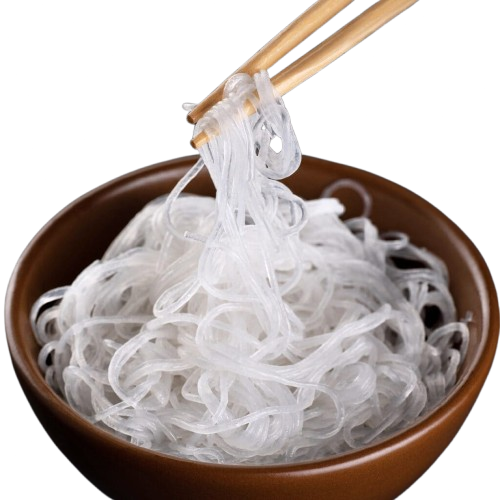
Glass noodles, also known as cellophane or starch noodles, are translucent pasta threads made from vegetable starches like mung bean, sweet potato, or tapioca. A single bundle of dry glass noodles (40g) contains 140 calories, while 100g of glass noodles provides 108 calories. Korean sweet potato noodles or Dangmyeon contain 115 calories per 140g serving whereas a 200g serving of the stir-fried dish Japchae delivers 310 calories due to added oil and vegetables. Tapioca or Canna Noodles contain 130 calories per 100 grams (cooked), Mung Bean Vermicelli has 108 calories per 100 grams (cooked) while Korean Sweet Potato Noodles provide 82 calories per 100 grams (cooked). Raw dry glass noodles are much denser, packing 176 calories into a 50g serving.
A look at glass noodles nutrition facts reveals a food composed almost entirely of carbohydrates. A large serving of cooked glass noodles provides 65g of carbohydrates and negligible amounts of protein (0.5g) and fat (0.1g).
Global production of glass noodles is led by China, Thailand, and South Korea which export these noodles to meet the demands of Asian cuisine worldwide. Major consumers include China, South Korea, and Thailand. Glass noodles is used in at least ten dishes like Korean Japchae, Thai Yum Woon Sen, and Chinese Ants Climbing a Tree (Ma Yi Shang Shu). Market prices have risen steadily with US retail packages of glass noodles increasing from under $1.20 to between $3.00 and $5.00 by 2024. Menu pricing reflects this trend as a serving of Japchae at BCD Tofu House moved from $11.99 to between $18.99 and $21.95 in 2024.
Glass noodles are valued for their unique chewy texture and ability to absorb flavors. Dietitians recommend them as a gluten-free carbohydrate source that supports digestive health through resistant starch. A small cooked serving of glass noodles contains 108 calories which requires 11 minutes of running or 14 minutes of swimming to metabolize. Individuals monitoring sodium intake should be cautious with seasoned noodle dishes as sauces significantly increase the salt content.
Glass Noodles nutrition
| Stats | Weight |
|---|---|
| Carbs | 39 grams |
| Protein | 0.3 grams |
| Fats | 0 grams |
| Sugars | 0 grams |
- Large Glass Noodles Calories (Nutritional Facts)
- Medium Glass Noodles Calories (Nutritional Facts)
- Small Glass Noodles Calories (Nutritional Facts)
- Korean Glass Noodles Calories (Nutritional Facts)
- Japchae Noodles Calories (Nutritional Facts)
- Raw Glass Noodles Nutrition
- Sodium in Glass Noodles
- Potassium in Glass Noodles
- Sugar in Glass Noodles
- Fiber in Glass Noodles
- Protein in Glass Noodles
- Carbs in Glass Noodles
- Fat in Glass Noodles
- Vitamins in Glass Noodles
- Minerals in Glass Noodles
Large Glass Noodles Calories (Nutritional Facts)
A large serving of cooked glass noodles (250g or 8.8oz) contains 270 calories, 0.5g of protein, 0.1g of fat, 65g of carbohydrates, 0.5g of fiber, 0g of sugar, and 25mg of sodium.
A medium serving of cooked glass noodles (150g or 5.3oz) provides 162 calories, 0.3g of protein, 0.1g of fat, 39g of carbohydrates, 0.3g of fiber, 0g of sugar, and 15mg of sodium.
A small serving of cooked glass noodles (100g or 3.5oz) contains 108 calories, 0.2g of protein, 0g of fat, 26.1g of carbohydrates, 0.2g of fiber, 0g of sugar, and 10mg of sodium.
A serving of cooked Korean sweet potato glass noodles (140g or 5oz) contains 115 calories, 0g of protein, 0g of fat, 28g of carbohydrates, 0g of fiber, 0g of sugar, and 20mg of sodium.
A serving of Japchae (200g or 7oz), which includes stir-fried glass noodles with vegetables and soy seasoning, contains 310 calories, 4g of protein, 10g of fat, 54g of carbohydrates, 2g of fiber, 8g of sugar, and 680mg of sodium.
A serving of raw, dry glass noodles (50g or 1.8oz) contains 176 calories, 0.1g of protein, 0g of fat, 43g of carbohydrates, 0.3g of fiber, 0g of sugar, and 5mg of sodium.
A large serving of cooked glass noodles (250g) contains 25mg of sodium (1% DV). A medium serving of cooked glass noodles (150g) has 15mg of sodium (1% DV). A small serving of cooked glass noodles (100g) provides 10mg of sodium (0% DV). A serving of cooked Korean glass noodles (140g) contains 20mg of sodium (1% DV). A serving of Japchae (200g) contains 680mg of sodium (30% DV). A serving of raw glass noodles (50g) provides 5mg of sodium (0% DV).
A large serving of cooked glass noodles (250g) contains 12mg of potassium (0% DV). A medium serving of cooked glass noodles (150g) has 7mg of potassium (0% DV). A small serving of cooked glass noodles (100g) provides 5mg of potassium (0% DV). A serving of cooked Korean glass noodles (140g) contains 10mg of potassium (0% DV). A serving of Japchae (200g) contains 180mg of potassium (4% DV). A serving of raw glass noodles (50g) provides 6mg of potassium (0% DV).
A large serving of cooked glass noodles (250g) contains 0g of sugar. A medium serving of cooked glass noodles (150g) has 0g of sugar. A small serving of cooked glass noodles (100g) provides 0g of sugar. A serving of cooked Korean glass noodles (140g) contains 0g of sugar. A serving of Japchae (200g) contains 8g of sugar. A serving of raw glass noodles (50g) provides 0g of sugar.
A large serving of cooked glass noodles (250g) provides 0.5g of dietary fiber (2% DV). A medium serving of cooked glass noodles (150g) has 0.3g of fiber (1% DV). A small serving of cooked glass noodles (100g) contains 0.2g of fiber (1% DV). A serving of cooked Korean glass noodles (140g) contains 0g of fiber (0% DV). A serving of Japchae (200g) provides 2g of fiber (7% DV). A serving of raw glass noodles (50g) provides 0.3g of fiber (1% DV).
A large serving of cooked glass noodles (250g) provides 0.5g of protein (1% DV). A medium serving of cooked glass noodles (150g) has 0.3g of protein (1% DV). A small serving of cooked glass noodles (100g) contains 0.2g of protein (0% DV). A serving of cooked Korean glass noodles (140g) contains 0g of protein (0% DV). A serving of Japchae (200g) provides 4g of protein (8% DV). A serving of raw glass noodles (50g) provides 0.1g of protein (0% DV).
A large serving of cooked glass noodles (250g) contains 65g of carbohydrates (24% DV). A medium serving of cooked glass noodles (150g) has 39g of carbohydrates (14% DV). A small serving of cooked glass noodles (100g) contains 26.1g of carbohydrates (9% DV). A serving of cooked Korean glass noodles (140g) contains 28g of carbohydrates (10% DV). A serving of Japchae (200g) provides 54g of carbohydrates (20% DV). A serving of raw glass noodles (50g) provides 43g of carbohydrates (16% DV).
A large serving of cooked glass noodles (250g) contains 0.1g of total fat (0% DV). A medium serving of cooked glass noodles (150g) has 0.1g of total fat (0% DV). A small serving of cooked glass noodles (100g) contains 0g of total fat (0% DV). A serving of cooked Korean glass noodles (140g) contains 0g of total fat (0% DV). A serving of Japchae (200g) provides 10g of total fat (13% DV). A serving of raw glass noodles (50g) provides 0g of total fat (0% DV).
A large serving of cooked glass noodles (250g) provides 0mg of Vitamin C (0% DV) and 0mcg of Vitamin A (0% DV). A medium serving of cooked glass noodles (150g) has 0mg of Vitamin C (0% DV) and 0mcg of Vitamin A (0% DV). A serving of Japchae (200g) contains 2mg of Vitamin C (2% DV) and 150mcg of Vitamin A (17% DV). A serving of raw glass noodles (50g) provides 0mg of Vitamin C (0% DV) and 0mcg of Vitamin A (0% DV).
A large serving of cooked glass noodles (250g) provides 5mg of calcium (0% DV) and 0.2mg of iron (1% DV). A medium serving of cooked glass noodles (150g) has 3mg of calcium (0% DV) and 0.1mg of iron (1% DV). A small serving of cooked glass noodles (100g) contains 2mg of calcium (0% DV) and 0.1mg of iron (1% DV). A serving of Japchae (200g) contains 30mg of calcium (2% DV) and 1.5mg of iron (8% DV). A serving of raw glass noodles (50g) provides 10mg of calcium (1% DV) and 0.5mg of iron (3% DV).
Get a Custom Report on Glass Noodles Nutrition Data – Contact Us!
What are the Types of Glass Noodles?
The types of glass noodles are Mung Bean Vermicelli, Korean Sweet Potato Noodles (Dangmyeon), and Tapioca/Canna Noodles. These variations differ based on the starch source and the texture of the final product. The following chart illustrates the differences among these forms of glass noodles.
| Type | Description | Calories (Per 100g Cooked) | Calorie Qualifications |
|---|---|---|---|
|
Mung Bean Vermicelli
|
Thin, thread-like noodles made from mung bean starch. | 108 | The calorie count reflects a high water absorption rate, lowering density per gram. |
|
Korean Glass Noodles (Dangmyeon)
|
Thicker, chewier noodles made from sweet potato starch. | 82 | The high moisture retention of sweet potato starch results in the lowest caloric density. |
|
Tapioca/Canna Noodles
|
Made from cassava or canna root, often mixed with mung bean. | 130 | The inclusion of tapioca starch often results in a denser, higher-calorie noodle. |
What are Desserts With Glass Noodles?
Glass noodles appear in specific Southeast Asian sweet soups and puddings, utilizing the neutral flavor and gelatinous texture to absorb sugary coconut broths. The table below outlines confectioneries that incorporate glass noodles.
| Dish Name | Calories (Estimate) | Type of Dish | Carbs (g) (Estimate) | Sugar (g) (Estimate) | Protein (g) (Estimate) | Fat (g) (Estimate) | Cuisine | Restaurants |
|---|---|---|---|---|---|---|---|---|
|
Salim (Thai Sweet Noodles)
|
350 | Sweet Soup | 45 | 30 | 2 | 18 | Thai | Bhan Kanom Thai (Los Angeles, CA) |
|
Chè Dau Xanh (Mung Bean)
|
280 | Sweet Soup | 50 | 25 | 6 | 4 | Vietnamese | Bambu |
|
Almond Jelly with Noodles
|
220 | Cold Dessert | 35 | 20 | 4 | 6 | Chinese | Phoenix Palace (Chandler, AZ) |
|
Coconut Milk Glass Noodles
|
320 | Pudding | 40 | 22 | 2 | 16 | Burmese | Burma Superstar (San Francisco, CA) |
|
Sweet Potato Noodle Pancake
|
250 | Fried Dessert | 45 | 15 | 2 | 8 | Korean | Koryo (Oakland, CA) |
|
Cendol (Starch Noodle var.)
|
380 | Iced Dessert | 55 | 35 | 3 | 15 | Malaysian | PappaRich (New York, NY) |
|
Sweet Mung Bean Soup
|
200 | Hot Soup | 40 | 15 | 5 | 1 | Chinese | Tim Ho Wan (New York, NY) |
|
Falooda (Vermicelli)
|
400 | Drink/Dessert | 60 | 40 | 6 | 12 | Indian/Persian | Rajbhog Sweets (National) |
|
Thapthim Krop (Noodle var.)
|
300 | Coconut Soup | 45 | 25 | 2 | 12 | Thai | Lers Ros (San Francisco, CA) |
What are the Main Dishes With Glass Noodles?
Glass noodles serve as the primary starch in stir-fries, soups, and salads across East and Southeast Asian cuisines. The noodles absorb the flavors of soy, sesame, and chili sauces effectively. The table below displays savory meals and appetizers that feature glass noodles.
| Dish Name | Calories (Estimate) | Type of Dish | Carbs (g) (Estimate) | Sugar (g) (Estimate) | Protein (g) (Estimate) | Fat (g) (Estimate) | Cuisine | Restaurants |
|---|---|---|---|---|---|---|---|---|
|
Japchae
|
310 | Stir-Fry | 54 | 8 | 4 | 10 | Korean | BCD Tofu House |
|
Yum Woon Sen
|
250 | Spicy Salad | 35 | 6 | 15 | 5 | Thai | Lotus of Siam (Las Vegas, NV) |
|
Ants Climbing a Tree
|
450 | Stir-Fry | 40 | 4 | 18 | 25 | Chinese (Sichuan) | Han Dynasty |
|
Pad Woon Sen
|
500 | Stir-Fry | 65 | 8 | 15 | 20 | Thai | Pok Pok (Portland - Historical) |
|
Mandu Guk (Dumpling Soup)
|
400 | Soup | 55 | 3 | 15 | 12 | Korean | Cho Dang Tofu (Chicago, IL) |
|
Glass Noodle Spring Rolls
|
180 | Fried Appetizer | 20 | 2 | 5 | 10 | Vietnamese | The Slanted Door (San Francisco, CA) |
|
Claypot Glass Noodles
|
600 | Braised Dish | 70 | 5 | 25 | 28 | Thai/Chinese | R&G Lounge (San Francisco, CA) |
|
Sukiyaki (Noodle component)
|
550 | Hot Pot | 45 | 15 | 30 | 25 | Japanese | Ootoya (New York, NY) |
|
Vegan Japchae
|
280 | Stir-Fry | 54 | 8 | 2 | 8 | Korean | Franchia Vegan Cafe (New York, NY) |
What Cuisines Prefer Glass Noodles the Most?
Glass noodles function as a foundational staple in Korean, Thai, and Chinese cuisines. The table below showcases culinary preparations that prioritize glass noodles.
| Cuisine | Dish | Types of Glass Noodles | Calories (Estimate) | Restaurant(s) |
|---|---|---|---|---|
|
Korean
|
Japchae | Sweet Potato (Dangmyeon) | 310 | BCD Tofu House |
|
Thai
|
Yum Woon Sen | Mung Bean Vermicelli | 250 | Kin Khao (San Francisco, CA) |
|
Chinese (Sichuan)
|
Ants Climbing a Tree | Mung Bean Vermicelli | 450 | Sichuan Impression (Los Angeles, CA) |
|
Vietnamese
|
Miến Gà | Canna/Mung Bean | 350 | Turtle Tower (San Francisco, CA) |
|
Japanese
|
Sukiyaki | Konjac/Potato Starch | 550 | Momofuku (New York, NY) |
|
Indonesian
|
Soun Goreng | Mung Bean Vermicelli | 480 | Simpang Asia (Los Angeles, CA) |
|
Burmese
|
Kyar Zan Hingar | Mung Bean Vermicelli | 380 | Burma Love (San Francisco, CA) |
|
Cambodian
|
Cha Mee Suo | Mung Bean Vermicelli | 400 | Phnom Penh (Cleveland, OH) |
|
Malaysian
|
Kerabu Soun | Mung Bean Vermicelli | 220 | PappaRich (New York, NY) |
Which Countries Produce the Most Glass Noodles?
The top producers of glass noodles are China, Thailand, and South Korea. China dominates the global market, particularly in the production of mung bean vermicelli (Longkou fansi), exporting vast quantities to Asia and the West. Thailand serves as a major hub for mung bean processing, while South Korea specializes in the production of sweet potato starch noodles. The table below shows the estimated export values for starch noodles (vermicelli) for the leading countries over the last two decades.
| Country | 2003 | 2008 | 2013 | 2018 | 2019 | 2020 | 2021 | 2022 |
|---|---|---|---|---|---|---|---|---|
| China | 120 | 250 | 450 | 680 | 710 | 780 | 850 | 920 |
| Thailand | 45 | 80 | 120 | 180 | 190 | 210 | 230 | 250 |
| South Korea | 30 | 55 | 85 | 130 | 140 | 160 | 175 | 190 |
| Vietnam | 15 | 30 | 60 | 95 | 105 | 120 | 135 | 150 |
| Indonesia | 10 | 20 | 40 | 65 | 70 | 80 | 90 | 100 |
| Taiwan | 8 | 15 | 25 | 40 | 45 | 50 | 55 | 60 |
| Philippines | 5 | 10 | 18 | 30 | 32 | 35 | 38 | 42 |
| Japan | 4 | 8 | 15 | 25 | 28 | 30 | 32 | 35 |
Which Countries Consume the Most Glass Noodles?
The top consumers of glass noodles are China, South Korea, and Thailand. China consumes the largest volume domestically, utilizing the ingredient in hot pots, fillings, and stir-fries. South Korea maintains high per capita consumption due to the popularity of Japchae as a side dish and main course. The United States represents a growing import market, driven by the expansion of Asian restaurant chains and the gluten-free movement. The table below shows the import values for starch noodles in key markets.
| Country | 2003 | 2008 | 2013 | 2018 | 2019 | 2020 | 2021 | 2022 |
|---|---|---|---|---|---|---|---|---|
| South Korea | 25 | 50 | 90 | 140 | 150 | 165 | 180 | 200 |
| United States | 20 | 45 | 85 | 130 | 145 | 170 | 190 | 210 |
| Japan | 30 | 55 | 80 | 110 | 115 | 125 | 135 | 145 |
| Vietnam | 10 | 25 | 50 | 85 | 95 | 110 | 125 | 140 |
| Malaysia | 15 | 30 | 55 | 80 | 85 | 95 | 105 | 115 |
| Hong Kong | 12 | 22 | 40 | 65 | 70 | 75 | 80 | 85 |
| Germany | 8 | 15 | 30 | 50 | 55 | 65 | 70 | 75 |
| Canada | 6 | 12 | 25 | 45 | 50 | 60 | 65 | 70 |
How Do Prices of Glass Noodles-Including Dishes Change?
The cost of menu items featuring glass noodles has increased notably, a reflection of rising labor expenses and the inflation of ingredient costs. The following table compares historical and current prices for these dishes at well-known dining establishments.
| Brand/Restaurant | Dish | Old Price (Year) | Current Price (2024/2025) |
|---|---|---|---|
| BCD Tofu House | Japchae | $11.99 (2012) | $18.99 - $21.95 |
| Lotus of Siam (Las Vegas, NV) | Yum Woon Sen | $18.00 (2011) | $20.50 - $38.50 |
| The Slanted Door (San Francisco) | Cellophane Noodles (Crab) | $18.00 (2010) | $28.00 - $38.00 |
| Kin Khao (San Francisco, CA) | Yum Woon Sen | $12.00 (2015) | $19.00 - $21.00 |
| Cho Dang Tofu (Chicago, IL) | Japchae | $19.99 (2013) | $20.99 - $21.99 |
| Ootoya (New York, NY) | Sukiyaki Nabe | $18.00 (2014) | $28.00 - $34.00 |
What is the Glass Noodles Calorie for 100 Grams?
A 100g serving of cooked plain glass noodles contains 108 calories, while cooked Korean glass noodles provide 82 calories and prepared Japchae contains 155 calories, with raw, dry glass noodles containing 352 calories per 100g.
What is the Glass Noodles Calorie for 1 KG?
One kilogram of cooked plain glass noodles contains 1,080 calories, cooked Korean glass noodles provides 820 calories, and prepared Japchae contains 1,550 calories, while raw, dry glass noodles contains 3,520 calories per kilogram.
What is the Calorie of 1 Glass Noodles?
A single 40g bundle of dry glass noodles contains 140 calories, while a 500g package of Ottogi Korean Vermicelli contains 1,750 calories, and a 40g package of Pine Brand Mung Bean Vermicelli provides 140 calories.
What are the Health Benefits of Glass Noodles?
The nutritional profile of glass noodles offers specific advantages related to glycemic control, digestive health, and allergen avoidance. The starch-based structure, particularly in mung bean varieties, contains resistant starch that functions similarly to soluble fiber. The glass noodles health benefits are provided below.
- Supports Glycemic Control: Mung bean glass noodles possess a low glycemic index compared to wheat or rice pastas, resulting in a slower release of glucose into the bloodstream. A study by Sugiyama, M., et al. (2003), "Glycemic index of single and mixed meal foods among common Japanese foods," established that mung bean vermicelli elicits a significantly lower postprandial glucose response compared to rice or wheat noodles.
- Promotes Digestive Health: The retrograded starch formed after cooking and cooling glass noodles acts as a prebiotic, fostering beneficial gut bacteria. Research by Raigond, P., et al. (2015), "Resistant starch in food: a review," confirms that the processing and cooking methods of starch noodles increase the resistant starch content, which aids in colonic health and regularity.
- Facilitates Gluten-Free Diets: The noodles consist entirely of starch (mung bean, sweet potato, or tapioca) and water, eliminating gluten triggers for those with celiac disease. A review by Catassi, C., et al. (2015), "Diagnosis of Non-Celiac Gluten Sensitivity," highlights the necessity of strict gluten avoidance to prevent systemic inflammation in sensitive individuals, a requirement these noodles meet naturally.
What are the Downsides of Glass Noodles?
The food presents health risks linked to low nutrient density and high sodium content in prepared dishes. These components require monitoring to prevent micronutrient deficiencies and hypertension, as shown below.
- Lacks Micronutrient Density: The refining process extracts pure starch from the source vegetable, stripping away proteins, vitamins, and minerals found in the whole plant. A study by Gaesser, G., et al. (2019), "Refined Grains and Health: Genuine Risk, or Guilt by Association?" suggests that diets high in refined starches contribute to nutrient inadequacies compared to whole food sources.
- Increases Sodium Intake in Preparations: Glass noodles absorb significant amounts of sauces, often leading to excessive sodium consumption in dishes like Japchae or Yum Woon Sen. Research by He, F. J., & MacGregor, G. A. (2009), "A comprehensive review on salt and health and current experience of worldwide salt reduction programmes," links high sodium intake from processed sauces to elevated blood pressure and cardiovascular risk.
- A safer alternative for individuals monitoring nutrient intake is shirataki noodles or zucchini noodles. A suggested daily amount involves limiting consumption to a single small serving (100g cooked) on rare occasions.
Are Glass Noodles Good for You?
Yes, glass noodles are good for health in moderation because the starch-based pasta offers a gluten-free energy source that supports digestive health through resistant starch. The high resistant starch content in mung bean varieties improves gut flora balance, a benefit highlighted by Raigond, P., et al. (2015), "Resistant starch in food: a review." The absence of fat and cholesterol supports heart health when prepared with lean proteins and vegetables, aligning with findings from Siri-Tarino, P. W., et al. (2010), "Saturated fat, carbohydrate, and cardiovascular disease." The low glycemic index of specific types aids in blood sugar management, a mechanism explained by Sugiyama, M., et al. (2003), "Glycemic index of single and mixed meal foods among common Japanese foods."
Are Glass Noodles Suitable for Diabetics?
Yes, glass noodles are suitable for diabetics, specifically those made from mung bean starch, due to the low glycemic index which prevents rapid blood sugar spikes. The starch structure digests slowly, providing a steady release of energy. A study by Jenkins, D. J., et al. (1981), "Glycemic index of foods: a physiological basis for carbohydrate exchange," identified mung bean noodles as having one of the lowest GI values among carbohydrate-rich foods. Research by Atkinson, F. S., et al. (2008), "International tables of glycemic index and glycemic load values: 2008," confirms that mung bean vermicelli has a significantly lower glycemic index compared to wheat pasta or white rice, making it a safer carbohydrate choice for blood glucose management. A clinical trial by Brand-Miller, J. C., et al. (2003), "Low-glycemic index diets in the management of diabetes," confirmed that low-GI foods assist in long-term glycemic control and HbA1c reduction for insulin-resistant individuals. A preferred consumption rate is one cup of cooked noodles (approx. 140g), cooled to enhance resistant starch, and served with ample fiber.
How Do Calories Change According to Glass Noodles Types?
The calorie count varies noticeably between the different starch bases used to produce glass noodles. A serving of Tapioca/Canna Noodles contains 130 calories per 100 grams cooked, representing the highest energy density due to the compact nature of cassava starch. Mung Bean Vermicelli presents a moderate profile at 108 calories per 100 grams cooked, as the thin strands absorb a significant amount of water. Korean Sweet Potato Noodles (Dangmyeon) provide the lowest profile at 82 calories per 100 grams cooked, reflecting the high expansion ratio and moisture retention of sweet potato starch during boiling.
What is the Origin of Glass Noodles?
The origin of glass noodles traces back to the Song Dynasty in China, where historical records first mention noodles made from mung bean starch. The technique of extracting starch and extruding it into threads spread from China to the Korean peninsula and Southeast Asia through trade routes and migration. In Korea, the introduction of sweet potatoes in the 17th century led to the development of Dangmyeon, a thicker variety that became essential for ceremonial dishes. Industrial production in the 20th century standardized the drying process, making the ingredient a shelf-stable staple across Asia.
Explore More Grains
Discover more Grains with detailed nutrition facts, calorie counts, vitamins, minerals, and health benefits. Compare similar foods, serving sizes, macronutrients, and key nutrients to find the best option for your diet and nutrition goals.
 Amaranth calories
 Arborio Rice calories
 Arrowroot Powder calories
 Barley calories
 Basmati Rice calories
 Black Rice calories
 Brown Rice calories
 Buckwheat calories
 Bulgur Wheat calories
 Coconut Flour calories
 Cornmeal calories
 Cornstarch calories