Calories and Nutritions in Grapple
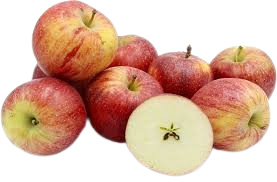
Grapple is a grape-scented apple that is a popular snack in American school lunches and healthy dining establishments. There are 95 grapple fruit calories in a medium-sized fruit. Known primarily by its trademarked name Grapple®, this item is not a genetic hybrid but a premium Fuji or Gala apple that has been infused with food-grade grape flavoring. A small 149g serving provides 77 calories, while a large 242g fruit contains 126 calories in grapples.
Based on grapple fruit nutrition facts, a 100g serving delivers 14g of carbohydrates, 0.3g of protein, and 2.4g of fiber. These fruits offer key health benefits such as improved cardiovascular health and better digestion due to their high pectin and antioxidant levels. Common varieties include the Fuji-based and Gala-based versions, both of which undergo a specialized bathing process to absorb the grape aroma. Retail brands primarily consist of the original Grapple® brand found in the produce section of major US grocery chains like Walmart and Kroger.
The origin of the Grapple is Washington State, USA, where it was developed to provide a fun, fruit-based alternative to sugary snacks. Global production follows the trends of the broader apple market, which is led by China at 45,983 kt in 2021. Consumption is highest in North America, where the novelty of the grape scent drives retail sales. The retail price for a 4-pack of the fruit has risen from $3.49 USD in 2005 to $5.99 USD in 2024.
Health experts suggest a recommended daily intake of 1 medium grapple fruit, which adds 95 calories to a person's diet. These calories can be burned through 25 minutes of walking at 5 km/h for an average woman or 21 minutes for an average man.
Grapple nutrition
| Stats | Weight |
|---|---|
| Carbs | 25 grams |
| Protein | 0.5 grams |
| Fats | 0 grams |
| Sugars | 19 grams |
- Large Grapple Calories (Nutritional Facts)
- Medium Grapple Calories (Nutritional Facts)
- Small Grapple Calories (Nutritional Facts)
- Raw Grapple Nutrition
- Sodium in Grapple
- Potassium in Grapple
- Sugar in Grapple
- Fiber in Grapple
- Protein in Grapple
- Carbs in Grapple
- Fat in Grapple
- Vitamins in Grapple
- Minerals in Grapple
Large Grapple Calories (Nutritional Facts)
One large Grapple weighing 242 g (8.5 oz) contains 126 calories. This portion provides 0.4 g of total fat, 0.6 g of protein, 34 g of carbohydrates, and 25 g of sugar. A large 242 g (8.5 oz) Grapple consumed with the skin removed contains 116 calories because some fiber and carbohydrates are lost.
One medium Grapple weighing 182 g (6.4 oz) contains 95 calories. This serving delivers 0.3 g of total fat, 0.5 g of protein, 25 g of carbohydrates, and 19 g of sugar. A medium 182 g (6.4 oz) Grapple sliced and served with 1 tbsp of almond butter contains 193 calories.
One small Grapple weighing 149 g (5.3 oz) contains 77 calories. This amount consists of 0.2 g of total fat, 0.4 g of protein, 21 g of carbohydrates, and 16 g of sugar.
A 100 g (3.5 oz) serving of raw Grapple provides 52 calories, 0.2 g of total fat, 0.3 g of protein, 14 g of total carbohydrates, and 2.4 g of dietary fiber. Grapples are Fuji or Gala apples infused with a grape aroma, retaining the same nutrient density as the base fruit. The nutritional profile remains identical in the fresh fruit compared to sliced versions stored in refrigerated packaging.
Raw Grapples contain 1 mg of sodium per 100 g (3.5 oz) serving, contributing 0% of the daily value (DV). This zero-sodium profile makes them a suitable choice for heart-healthy diets.
Raw Grapples supply 107 mg of potassium per 100 g (3.5 oz) serving, fulfilling 2% of the DV. This mineral helps support healthy nerve function and blood pressure levels.
One hundred grams (3.5 oz) of raw Grapple contains 10 g of natural sugars. These sugars are primarily fructose and glucose. No extra sugar or corn syrup is added during the grape-flavor infusion process.
Raw Grapples provide 2.4 g of dietary fiber per 100 g (3.5 oz) serving, fulfilling 9% of the DV. This fiber content supports consistent digestive health.
Raw Grapples provide 0.3 g of protein per 100 g (3.5 oz) serving.
Raw Grapples contain 14 g of total carbohydrates per 100 g (3.5 oz) serving.
Raw Grapples contain 0.2 g of total fat per 100 g (3.5 oz) serving.
A 100 g (3.5 oz) serving of raw Grapple provides 4.6 mg of vitamin C (5% DV) and 0.02 mg of vitamin B6 (1% DV). These vitamins help maintain a strong immune system and skin health.
A 100 g (3.5 oz) serving provides 6 mg of calcium (1% DV), 5 mg of magnesium (1% DV), and 0.1 mg of iron (1% DV). They also contain trace amounts of copper and phosphorus.
Get a Custom Report on Grapple Nutrition Data – Contact Us!
What are the Types of Grapple?
There are 2 different types of Grapple such as the Fuji-based and the Gala-based variety. The table below shows the common Grapple types and their calorie information.
| Type | Description | Calories (per 100g) | Calorie Differences & Qualifications |
|---|---|---|---|
|
Fuji Grapple
|
A Fuji apple infused with grape flavor; has a higher brix level. | 52 | Baseline energy for the standard commercial variety. |
|
Gala Grapple
|
A Gala apple infused with grape flavor; has a milder sweetness. | 50 | Slightly lower energy due to lower natural sugar content. |
|
Sliced Grapple
|
Pre-sliced and packaged fruit treated with calcium ascorbate. | 52 | Identical calories; vitamin C is slightly higher from the treatment. |
Which Countries Produce the Most Apples (General Category for Grapple)?
The top global producers of apples (where grapples are made from) are China, the United States, Turkey, Poland, and India. In 2021, China produced 45,983.00 kilotonnes of apples while the United States produced 4,467.20 kilotonnes based on FAO data. Grapples are specifically produced in the United States. The table below displays production volumes for the last 20 years in kilotonnes.
| Country | 2005 | 2006 | 2007 | 2008 | 2009 | 2010 | 2011 | 2012 | 2013 | 2014 | 2015 | 2016 | 2017 | 2018 | 2019 | 2020 | 2021 | 2022 | 2023 | 2024 |
|---|---|---|---|---|---|---|---|---|---|---|---|---|---|---|---|---|---|---|---|---|
| China | 24000 | 26000 | 28000 | 30000 | 31500 | 33000 | 36000 | 38500 | 39600 | 41000 | 42600 | 43800 | 41300 | 39200 | 42400 | 44000 | 45983 | 46500 | 47000 | 48000 |
| USA | 4200 | 4400 | 4100 | 4350 | 4500 | 4200 | 4300 | 4100 | 4700 | 5100 | 4500 | 5000 | 5100 | 4600 | 4900 | 4600 | 4467 | 4500 | 4600 | 4700 |
| Turkey | 2500 | 2000 | 2400 | 2500 | 2700 | 2600 | 2800 | 2900 | 3100 | 2400 | 2700 | 2900 | 3000 | 3600 | 3600 | 4300 | 4493 | 4600 | 4700 | 4800 |
| Poland | 2300 | 2300 | 1000 | 2800 | 2600 | 1800 | 2500 | 2800 | 3000 | 3200 | 3100 | 3600 | 2400 | 4800 | 3000 | 3500 | 4067 | 4200 | 4300 | 4400 |
| India | 1400 | 1800 | 2000 | 2000 | 1900 | 2100 | 2200 | 2200 | 2500 | 2500 | 2500 | 2500 | 2700 | 2300 | 2300 | 2700 | 2274 | 2400 | 2500 | 2600 |
Which Countries Consume the Most Apples?
The top consumers of apples (where grapples are made from) are China, the United States, Turkey, India, and Germany. Consumption in the United States remains strong due to the introduction of specialty snack fruits like the Grapple. The table below represents the food supply for these nations based on data from Statista and the USDA.
| Country | 2005 | 2006 | 2007 | 2008 | 2009 | 2010 | 2011 | 2012 | 2013 | 2014 | 2015 | 2016 | 2017 | 2018 | 2019 | 2020 | 2021 | 2022 | 2023 | 2024 |
|---|---|---|---|---|---|---|---|---|---|---|---|---|---|---|---|---|---|---|---|---|
| China | 18000 | 19500 | 21000 | 23000 | 25000 | 26500 | 29000 | 31000 | 32000 | 33500 | 35000 | 36000 | 34000 | 32000 | 35000 | 37000 | 38500 | 39000 | 39500 | 40000 |
| USA | 3800 | 3900 | 3950 | 4000 | 4100 | 4050 | 4150 | 4000 | 4200 | 4400 | 4300 | 4450 | 4500 | 4350 | 4400 | 4200 | 4300 | 4350 | 4400 | 4500 |
| Turkey | 2100 | 1800 | 2100 | 2200 | 2300 | 2250 | 2400 | 2500 | 2600 | 2100 | 2300 | 2450 | 2500 | 2800 | 2900 | 3100 | 3200 | 3300 | 3400 | 3500 |
| India | 1350 | 1700 | 1900 | 1950 | 1850 | 2000 | 2100 | 2150 | 2400 | 2450 | 2400 | 2450 | 2600 | 2250 | 2200 | 2600 | 2100 | 2300 | 2400 | 2500 |
| Germany | 950 | 970 | 980 | 1000 | 1020 | 990 | 1050 | 1030 | 1060 | 1100 | 1080 | 1120 | 1150 | 1180 | 1200 | 1250 | 1280 | 1300 | 1320 | 1350 |
What is the Grapple Calorie for 100 Grams?
One hundred grams (3.5 oz) of raw Grapple contains 52 calories.
What is the Grapple Calorie for 1 KG?
One kilogram (1,000 g) of raw Grapple provides 520 calories.
What is the Calorie of 1 Grapple?
One single large Grapple weighing 242 g (8.5 oz) contains 126 calories. A medium sized fresh Grapple weighing 182 g (6.4 oz) contains 95 calories. A small fruit weighing 149 g (5.3 oz) contains 77 calories.
What are the Health Benefits of Grapple?
Grapples provide some health benefits like improved lung function and reduced cholesterol due to their high concentration of flavonoids and pectin. Often called "grape-flavored apples," these fruits are a popular choice for encouraging fruit consumption in children. The health benefits of Grapple are discussed here.
- Supports Respiratory Health: Flavonoids in the fruit help protect the lungs from oxidative damage. A study by Woods et al. (2003), "Does apple consumption improve lung function?," found that people who eat apples regularly have better lung capacity.
- Promotes Heart Health: Soluble fiber helps lower LDL cholesterol levels. Research by Boyer and Liu (2004), "Apple phytochemicals and their health benefits," found that apple consumption is linked to a reduced risk of cardiovascular disease.
- Boosts Immune Defense: Vitamin C content supports the production of white blood cells.
- Enhances Satiety: High fiber and water content help individuals feel full longer, which can assist in weight management.
- Improves Digestive Regularity: The insoluble fiber found in the skin adds bulk to stool and prevents constipation.
- Neutralizes Free Radicals: Polyphenols in the fruit protect cells from inflammatory stress. A study by Hyson (2011), "A Comprehensive Review of Apples and Apple Components and Their Relationship to Human Health," highlights the anti-inflammatory properties of apple components.
What are the Downsides of Grapple?
Grapple has been known to cause some unwanted effects like oral allergies and tooth enamel erosion due to its natural acidity and sugar content. A list of the downsides of Grapple are shown below.
- Induces Allergic Reactions: Individuals with birch pollen sensitivity may experience itching in the mouth. A study by Zuidmeer et al. (2006), "The prevalence of plant food allergies," notes that apples are common triggers for oral allergy syndrome.
- Promotes Dental Decay: Natural sugars and malic acid can soften tooth enamel if the fruit is eaten frequently throughout the day.
- Gastrointestinal Discomfort: Consuming too many Grapples can lead to bloating or gas because of the high fiber and fructose content.
Are Grapples Good for You?
Yes, Grapples are healthy and good for you because they deliver 9% of the DV for fiber and essential antioxidants in every 100 g (3.5 oz) serving. Healthy individuals should consume 1 medium Grapple daily to maintain consistent heart and digestive health. A study by Hyson (2011), "A Comprehensive Review of Apples and Apple Components and Their Relationship to Human Health," suggests that apples are effective in reducing the risk of chronic diseases. They are a nutrient-dense snack choice.
How Do Calories Change According to Grapple Types?
The calories in Grapples change based on the base apple variety used for the flavor infusion. Fresh Fuji Grapples contain 52 calories per 100 g (3.5 oz). If a Gala apple is used as the base, the energy decreases to 50 calories per 100 g (3.5 oz) because Gala apples naturally have slightly less sugar than Fuji varieties. The flavoring process, which uses methyl anthranilate, does not add any measurable calories to the fruit.
What are the Desserts with Grapple?
There are no existing desserts with Grapple on the menus of major restaurant chains. Grapples are primarily sold as whole or sliced fresh fruit in retail grocery stores rather than being used as a processed ingredient in restaurant kitchens.
What are the Main Dishes with Grapple?
There are no existing main dishes with Grapple on the menus of major restaurant chains.
What Cuisines Prefer Grapple the Most?
There are no traditional cuisines that prefer Grapple because it is a modern, trademarked commercial product from the United States. It is exclusively popular in American school lunches and domestic retail snack markets.
What is the Origin of Grapple?
The origin of the Grapple is Washington State, United States, where it was developed by Ray Sandidge in the early 2000s. The product was created to give apples a grape-like aroma to encourage children to eat more fresh fruit. It is produced by taking a Fuji or Gala apple and bathing it in a solution of water and food-grade grape flavoring. The fruit is not a genetic hybrid but a flavored version of a standard apple.
How Do Prices of Grapple-including Dishes Change?
There are no existing restaurant dishes featuring Grapple as a listed menu ingredient.
Explore More Fruits
Discover more Fruits with detailed nutrition facts, calorie counts, vitamins, minerals, and health benefits. Compare similar foods, serving sizes, macronutrients, and key nutrients to find the best option for your diet and nutrition goals.
 Acai calories
 Acerola calories
 Ambarella calories
 Amla calories
 Apple calories
 Apricot calories
 Avocado calories
 Babaco calories
 Bael Fruit calories
 Banana calories
 Black Grapes calories
 Blackcurrant calories