Calories and Nutritions in Green Grapes
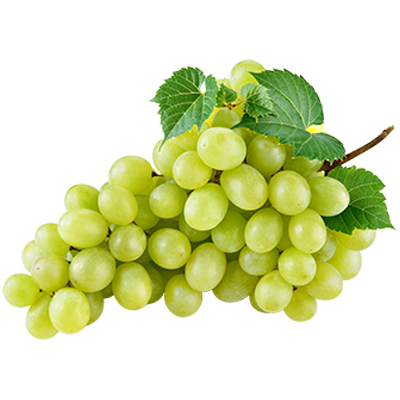
Green grapes are a crisp, tart and sweet fruit from the Vitis vinifera vine. There are 69 green grapes calories per 100 g (3.5 oz) of the fresh raw fruit. Frequently referred to by names such as white grapes, Thompson seedless, or Muscat grapes, a 1 oz serving (28 g) serving provides 19 calories, while a 1 cup serving offers 104 calories. According to green grapes nutrition facts, a 100 g (3.5 oz) portion provides 18.1 g of carbohydrates, 0.72 g of protein, and 0.16 g of fat. The main health benefits of green grapes are attributed to a high concentration of catechins, which reduce inflammation, and Vitamin C for immune support. Research by Pezzuto (2008), "Grapes and human health: a perspective," confirmed that regular consumption contributes to overall disease prevention.
Common types include the ubiquitous Thompson Seedless, the aromatic Muscat, and the specialty Cotton Candy variety. The crisp, mild flavor profile is utilized in savory main dishes such as the Verjus Glazed Scallops at Bouchon Bistro and the Grape & Gorgonzola Salad at Buca di Beppo. Popular desserts incorporating the fruit include the Fruit Tart at La Madeleine and the Fresh Fruit Cup at Chick-fil-A. Green grapes are a popular snack in American, Mediterranean, and French cuisines
The origin of green grapes is the Near East, cultivated for over 8,000 years, with the specific "white" mutation preventing anthocyanin production. Global production is led by China, which produced an estimated 15,100 kt of total grapes in 2024, followed by Italy and the United States. Consumption is highest in China and the United States, where the fruit is a year-round staple. The retail price for one pound of fresh green seedless grapes has risen from $1.39 USD in 2005 to $3.29 USD in 2024.
Health guidelines suggest a recommended daily intake of 150 g (1 cup), which provides 104 calories. To burn these calories, an average woman weighing 70 kg (154 lbs) must engage in 29 minutes of moderate walking at 5 km/h (3 mph), while an average man weighing 84 kg (185 lbs) requires 24 minutes.
Green Grapes nutrition
| Stats | Weight |
|---|---|
| Carbs | 18.1 grams |
| Protein | 0.72 grams |
| Fats | 0 grams |
| Sugars | 15.5 grams |
- Large Green Grapes Calories (Nutritional Facts)
- Medium Green Grapes Calories (Nutritional Facts)
- Small Green Grapes Calories (Nutritional Facts)
- Raw Green Grapes Nutrition
- Sodium in Green Grapes
- Potassium in Green Grapes
- Sugar in Green Grapes
- Fiber in Green Grapes
- Protein in Green Grapes
- Carbs in Green Grapes
- Fat in Green Grapes
- Vitamins in Green Grapes
- Minerals in Green Grapes
Large Green Grapes Calories (Nutritional Facts)
A large serving of raw green grapes, weighing 150 g (1 cup), contains 104 calories. This portion provides 0.24 g of total fat, 1.1 g of protein, 27.3 g of carbohydrates, and 23.4 g of sugar. A large 150 g (1 cup) serving delivers 1.4 g of dietary fiber.
A medium serving of fresh green grapes, weighing 100 g (3.5 oz), contains 69 calories. This serving offers 0.16 g of total fat, 0.72 g of protein, 18.1 g of carbohydrates, and 15.5 g of sugar. A medium fruit serving provides 191 mg of potassium.
A small serving of raw green grapes, weighing 28 g (1 oz), contains 19 calories. This portion consists of 0.04 g of total fat, 0.2 g of protein, 5.1 g of carbohydrates, and 4.3 g of sugar.
A 100 g (3.5 oz) serving of raw green grapes provides 69 calories, 0.16 g of total fat, 0.72 g of protein, 18.1 g of total carbohydrates, and 0.9 g of dietary fiber. Raw green grapes are a nutrient-dense fruit rich in Vitamin C, Vitamin K, and antioxidants. The nutrient density is significantly higher in the whole fruit with skin compared to white grape juice which lacks fiber.
Green grapes contain 2 mg of sodium per 100 g (3.5 oz) serving, which contributes 0% of the Daily Value (DV). This extremely low sodium content makes the fruit suitable for heart-healthy diets.
Green grapes serve as a source of potassium, providing 191 mg per 100 g (3.5 oz) serving, which represents 4% of the DV. This mineral helps regulate fluid balance and nerve signals.
Green grapes contain 15.5 g of sugar per 100 g (3.5 oz) serving. These are naturally occurring fructose and glucose sugars found within the juicy pulp of the Vitis vinifera fruit.
Green grapes provide 0.9 g of dietary fiber per 100 g (3.5 oz) serving, fulfilling 3% of the DV. The fiber content aids in digestive health and helps regulate cholesterol levels.
Green grapes provide 0.72 g of protein per 100 g (3.5 oz) serving.
Green grapes contain 18.1 g of total carbohydrates per 100 g (3.5 oz) serving.
Green grapes contain 0.16 g of total fat per 100 g (3.5 oz) serving. The fruit is naturally virtually fat-free.
A 100 g (3.5 oz) serving of raw green grapes provides 14.6 mcg of Vitamin K (12% DV) and 3.2 mg of Vitamin C (4% DV). It also contains significant amounts of Thiamin and Riboflavin.
A 100 g (3.5 oz) serving of raw green grapes provides 0.127 mg of Copper (14% DV). It also delivers 10 mg of Calcium (1% DV), 7 mg of Magnesium (2% DV), and 0.36 mg of Iron (2% DV).
Get a Custom Report on Green Grapes Nutrition Data – Contact Us!
What are the Types of Green Grapes?
There are 3 main commercial categories of Green Grapes such as seedless, seeded, and specialty cultivars. The table below shows the most common Green Grapes types and their calorie information.
| Type | Description | Calories (per 100 g / 3.5 oz) | Calorie Differences & Qualifications |
|---|---|---|---|
|
Thompson Seedless
|
The standard pale green commercial variety; mild flavor. | 69 | The baseline for standard nutritional values. |
|
Muscat (Seeded/Seedless)
|
Distinctly floral and sweet aroma; often used for wine. | 70 | Nearly identical calories; higher aromatic compounds. |
|
Cotton Candy
|
Specialty variety bred to taste like spun sugar. | 75 | Higher sugar density due to selective breeding for sweetness. |
|
Autumn King
|
Large, crisp berries with late harvest availability. | 69 | Standard calorie count; prized for texture. |
What are the Desserts with Green Grapes?
Green grapes are a refreshing ingredient in light, fruit-forward desserts where their acidity cuts through heavy creams or sweet glazes. They are often used fresh in tarts or frozen as a healthy snack. The table below lists dessert items that feature green grapes as a primary ingredient.
| Dish Name | Calories | Type | Carbs | Sugar | Protein | Fat | Cuisine | Restaurants |
|---|---|---|---|---|---|---|---|---|
|
Fruit Tart
|
450 | Pastry | 58g | 32g | 6g | 22g | French-American | La Madeleine |
|
Grape & Rosemary Focaccia (Sweet)
|
380 | Bread | 52g | 18g | 8g | 14g | Italian | Eataly |
|
Fresh Fruit Salad
|
110 | Fruit Cup | 28g | 22g | 1g | 0g | American | Chick-fil-A |
|
Green Grape Sorbet
|
140 | Frozen | 34g | 30g | 0g | 0g | Artisanal | Jeni's Splendid Ice Creams |
|
Fruit & Cheese Bistro Box
|
480 | Snack Box | 42g | 24g | 18g | 26g | American | Starbucks |
|
Yogurt Parfait with Grapes
|
290 | Parfait | 48g | 34g | 12g | 4g | American | Au Bon Pain |
What are the Main Dishes with Green Grapes?
Main dishes that contain green grapes are Chicken Salad Croissants, Ajoblanco (White Gazpacho), and Waldorf Salad.The fruit adds a crisp texture and tart sweetness that pairs well with almonds, creamy dressings, and poultry. The table below lists the nutritional facts for popular savory entrees and soups that incorporate green grapes.
| Dish Name | Calories | Type | Carbs | Sugar | Protein | Fat | Cuisine | Restaurants |
|---|---|---|---|---|---|---|---|---|
|
Chicken Salad Croissant
|
620 | Sandwich | 48g | 12g | 28g | 34g | American | Cheddar's Scratch Kitchen |
|
Ajoblanco (White Gazpacho)
|
380 | Soup | 24g | 14g | 8g | 28g | Spanish | Jaleo by Jose Andres |
|
Classic Waldorf Salad
|
540 | Salad | 32g | 24g | 12g | 42g | American | Waldorf Astoria Hotel |
|
Chicken Salad Sandwich
|
560 | Sandwich | 54g | 10g | 32g | 26g | American | McAlister's Deli |
|
Grape & Gorgonzola Salad
|
410 | Salad | 22g | 16g | 14g | 30g | Italian-American | Buca di Beppo |
|
Grilled Chicken & Fruit Salad
|
390 | Salad | 28g | 22g | 38g | 18g | American | Zaxby's |
|
Verjus Glazed Scallops
|
420 | Seafood | 18g | 12g | 34g | 22g | French Fusion | Bouchon Bistro |
What Cuisines Prefer Green Grapes the Most?
Green grapes are a defining element of Spanish, French, and American Deli cuisines. In Spain, they are essential for Ajoblanco, a chilled almond soup from Andalusia. In France, they are used in Veronique sauces for fish and poultry. American cuisine utilizes them extensively in creamy chicken salads and fruit cups. The table below outlines the specific culinary contexts and dishes where green grapes are a prominent featured element.
| Cuisine | Dish Name | Calories | Restaurants |
|---|---|---|---|
|
Spanish
|
Ajoblanco (Chilled Soup) | 380 | Jaleo by Jose Andres |
|
American Deli
|
Chicken Salad Croissant | 620 | Cheddar's Scratch Kitchen |
|
French
|
Verjus Glazed Scallops | 420 | Bouchon Bistro |
|
American Heritage
|
Classic Waldorf Salad | 540 | Waldorf Astoria Hotel |
|
Italian-American
|
Grape & Gorgonzola Salad | 410 | Buca di Beppo |
Which Countries Produce the Most Green Grapes?
The top producers of grapes (including green table varieties) globally are China, Italy, the United States, Spain, and France. In 2022, China produced an estimated 14,800.00 kilotonnes of grapes, dominating the global market for fresh table consumption based on data from the International Organisation of Vine and Wine (OIV). While Italy and France focus on wine production, China and the United States (California) prioritize seedless table grapes like the Thompson and Autumn King. The table below displays estimated production volumes for the primary regions where green grapes are a specialized commercial crop. Note: Data aggregates all grape varieties; table grapes represent approx. 30-40% of total.
| Country | 2005 | 2006 | 2007 | 2008 | 2009 | 2010 | 2011 | 2012 | 2013 | 2014 | 2015 | 2016 | 2017 | 2018 | 2019 | 2020 | 2021 | 2022 | 2023 | 2024 |
|---|---|---|---|---|---|---|---|---|---|---|---|---|---|---|---|---|---|---|---|---|
| China | 6,500 | 7,200 | 8,100 | 9,000 | 9,800 | 10,500 | 11,200 | 11,800 | 12,400 | 12,900 | 13,400 | 13,800 | 14,100 | 14,300 | 14,500 | 14,600 | 14,700 | 14,800 | 14,950 | 15,100 |
| Italy | 8,200 | 8,000 | 7,800 | 7,600 | 7,400 | 7,200 | 7,000 | 6,900 | 7,100 | 6,800 | 7,200 | 7,300 | 7,000 | 7,500 | 7,200 | 7,100 | 7,150 | 7,200 | 7,250 | 7,300 |
| USA | 6,800 | 6,600 | 6,500 | 6,700 | 6,800 | 6,900 | 6,850 | 6,950 | 7,100 | 7,200 | 7,100 | 7,000 | 6,900 | 7,000 | 6,800 | 6,700 | 6,600 | 6,500 | 6,450 | 6,400 |
| Spain | 6,200 | 6,100 | 5,900 | 5,800 | 5,700 | 5,600 | 5,500 | 5,400 | 6,200 | 6,100 | 6,000 | 5,900 | 5,800 | 6,100 | 5,700 | 5,600 | 5,500 | 5,450 | 5,400 | 5,350 |
| France | 6,500 | 6,400 | 6,200 | 6,000 | 5,900 | 5,800 | 6,200 | 5,600 | 5,700 | 6,000 | 6,100 | 5,900 | 5,500 | 6,000 | 5,400 | 5,600 | 5,500 | 5,400 | 5,350 | 5,300 |
Which Countries Consume the Most Green Grapes?
Based on market data from the USDA and global trade reports, the top consumers of fresh table grapes are China, the United States, the European Union, Brazil, and India. Consumption is calculated by the domestic utilization of fresh fruit in retail sectors. China consumes the vast majority of its own production, valuing green grapes for their crisp texture and sweetness. The United States maintains high consumption year-round through imports from Chile and Peru during the off-season. The table below represents the apparent food supply and utilization of table grape products in these leading nations.
| Country | 2005 | 2006 | 2007 | 2008 | 2009 | 2010 | 2011 | 2012 | 2013 | 2014 | 2015 | 2016 | 2017 | 2018 | 2019 | 2020 | 2021 | 2022 | 2023 | 2024 |
|---|---|---|---|---|---|---|---|---|---|---|---|---|---|---|---|---|---|---|---|---|
| China | 6,200 | 6,800 | 7,500 | 8,400 | 9,200 | 10,000 | 10,800 | 11,500 | 12,100 | 12,600 | 13,100 | 13,500 | 13,800 | 14,000 | 14,200 | 14,300 | 14,400 | 14,500 | 14,650 | 14,800 |
| USA | 1,200 | 1,250 | 1,300 | 1,350 | 1,400 | 1,450 | 1,500 | 1,550 | 1,580 | 1,600 | 1,620 | 1,640 | 1,660 | 1,680 | 1,700 | 1,720 | 1,740 | 1,760 | 1,780 | 1,800 |
| EU | 2,100 | 2,150 | 2,200 | 2,250 | 2,300 | 2,350 | 2,400 | 2,450 | 2,500 | 2,550 | 2,600 | 2,650 | 2,600 | 2,700 | 2,650 | 2,600 | 2,550 | 2,500 | 2,450 | 2,400 |
| Brazil | 800 | 850 | 900 | 950 | 1,000 | 1,050 | 1,100 | 1,150 | 1,200 | 1,250 | 1,300 | 1,350 | 1,400 | 1,450 | 1,500 | 1,550 | 1,580 | 1,600 | 1,620 | 1,640 |
| India | 1,100 | 1,200 | 1,300 | 1,400 | 1,500 | 1,600 | 1,700 | 1,800 | 1,900 | 2,000 | 2,100 | 2,200 | 2,300 | 2,400 | 2,500 | 2,600 | 2,700 | 2,800 | 2,900 | 3,000 |
How Do Prices of Green Grapes-including Dishes Change?
Menu prices for dishes that feature green grapes have seen steady increases, reflecting the rising cost of fresh produce and labor. The table below compares historical price ranges from the 2015–2017 period with current 2025–2026 market estimates for specific menu items that feature green grapes.
| Restaurant | Dish Name | Old Price Range (2015–2017) | Current Price Range (2025–2026) |
|---|---|---|---|
| Cheddar's Scratch Kitchen | Chicken Sandwich | $7.50 - $8.95 | $10.99 - $12.50 |
| Waldorf Astoria | Classic Waldorf Salad | $18.00 - $22.00 | $26.00 - $32.00 |
| Buca di Beppo | Gorgonzola Salad | $12.50 - $14.50 | $18.00 - $21.00 |
| McAlister's Deli | Deli Harvest Chicken Salad Sandwich | $7.25 - $8.50 | $10.50 - $12.25 |
| Chick-fil-A | Fresh Fruit Cup (Small) | $2.25 - $2.85 | $3.50 - $4.25 |
| La Madeleine | Fruit Tart | $4.95 - $5.75 | $7.25 - $8.50 |
What is the Green Grapes Calorie for 100 Grams?
One hundred grams (3.5 oz) of raw green grapes contains 69 calories.
What is the Green Grapes Calorie for 1 KG?
One kilogram (1,000 g or 35.3 oz) of raw green grapes contains 690 calories.
What is the Calorie of 1 Green Grape?
One single medium green grape weighing roughly 5 g (0.17 oz) contains 3 calories. A large grape weighing 7 g (0.25 oz) contains 5 calories. A small grape weighing 2.4 g (0.08 oz) contains 2 calories.
What are the Health Benefits of Green Grapes?
Green grapes provide some health benefits like supporting hydration and reducing oxidative stress due to their high water content and concentration of catechins. This fruit, frequently called "white grapes," "Thompson seedless," or "Muscat grapes," is a staple in Mediterranean and American diets. A list of the health benefits of green grapes is shown below.
- Promotes Hydration: Green grapes are composed of approximately 81% water, helping to maintain fluid balance and skin elasticity.
- Supports Bone Health: A 100 g (3.5 oz) serving provides 14.6 mcg of Vitamin K, fulfilling 12% of the Daily Value (DV) for bone mineralization and blood clotting.
- Reduces Oxidative Stress: Green grapes contain flavonoids like catechins and quercetin that neutralize free radicals. Research by Dohadwala and Vita (2009), "Grapes and Cardiovascular Disease," highlights the antioxidant capacity of grape polyphenols.
- Supports Heart Health: The potassium content helps regulate blood pressure, while the fiber assists in lowering LDL cholesterol.
- Anti-Inflammatory Properties: Bioactive compounds in the fruit help inhibit inflammatory markers in the body.
- Regulates Blood Sugar: Despite their sweetness, grapes have a low glycemic index (GI 53) and contain compounds that may improve insulin sensitivity.
- Enhances Immune Function: The Vitamin C and copper content support the body's natural defense mechanisms.
- Supports Eye Health: Lutein and zeaxanthin in the skin help protect the retina from oxidative damage.
What are the Downsides of Green Grapes?
Green grapes have been known to cause some unwanted effects like choking hazards and digestive distress due to their size and fructose content. A list of the downsides of green grapes is shown below.
- Choking Hazard: The small, round shape poses a significant choking risk for young children if not cut properly.
- High Fructose Content: The 15.5 g of sugar per 100 g (3.5 oz) serving can cause bloating or gas in individuals with fructose malabsorption or IBS.
- Pesticide Residue: Grapes frequently appear on the "Dirty Dozen" list for pesticide retention. A study by the Environmental Working Group (EWG) consistently ranks conventionally grown grapes as high in pesticide residues.
- Potential for Weight Gain: Due to their small size and sweetness, it is easy to overconsume calories without realizing it.
- Interference with Blood Thinners: The high Vitamin K content can interact with anticoagulant medications like warfarin if consumption fluctuates significantly.
Are Green Grapes Good for You?
Yes, green grapes are good for you because they deliver 12% of the DV for Vitamin K and essential antioxidants in every 100 g (3.5 oz) serving. Healthy individuals should consume 150 g (1 cup) per day to gain hydration and anti-inflammatory benefits. The major benefits include the support of bone health through Vitamin K and the protection of cells against oxidative damage. Research by Pezzuto (2008), "Grapes and human health: a perspective," confirms that regular consumption contributes to overall disease prevention. It is an ideal nutrient-dense snack for those seeking a sweet treat with functional health properties.
How Do Calories Change According to Green Grapes Types?
The calories in green grapes do not vary significantly between commercial varieties, as most standard cultivars contain approximately 69 to 72 calories per 100 g (3.5 oz). The primary difference lies in the sugar concentration; specialty "designer" grapes like Cotton Candy or Moon Drop (green variety) can contain up to 18 g of sugar per 100 g, raising the calorie count to roughly 75. Dried green grapes (golden raisins) show the most significant variation, containing roughly 300 calories per 100 g (3.5 oz) due to the removal of water which concentrates the natural sugars.
What is the Origin of Green Grapes?
The origin of the green grape (Vitis vinifera) is the Near East, specifically the region of modern-day Iran and Turkey, alongside its red and black counterparts. However, the specific "white" (green) mutation is believed to have occurred naturally thousands of years ago, preventing the production of anthocyanins. The most famous green variety, the Thompson Seedless (originally known as Sultanina), originated in the Ottoman Empire (modern Turkey/Iran) and was introduced to California by William Thompson in 1872.
This variety revolutionized the table grape industry due to its lack of seeds and thin skin. Today, it remains the most planted table grape in California, though newer varieties like "Autumn King" and "Cotton Candy" are gaining market share. China, the United States, and Italy are the world's largest producers, ensuring a consistent global supply.
Explore More Fruits
Discover more Fruits with detailed nutrition facts, calorie counts, vitamins, minerals, and health benefits. Compare similar foods, serving sizes, macronutrients, and key nutrients to find the best option for your diet and nutrition goals.
 Acai calories
 Acerola calories
 Ambarella calories
 Amla calories
 Apple calories
 Apricot calories
 Avocado calories
 Babaco calories
 Bael Fruit calories
 Banana calories
 Black Grapes calories
 Blackcurrant calories