Calories and Nutritions in Horned Cucumber
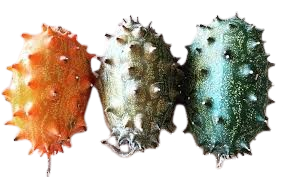
Horned cucumber, also known as Kiwano or jelly melon, is a low-calorie exotic fruit with a spiky orange rind and gelatinous green pulp, used in Modern American and Australian cuisines. A 100 g (3.5 oz) serving contains only 44 calories, while a whole medium fruit (209 g or 7.4 oz) provides 92 calories. The horned cucumber nutrition profile highlights its high water content and good mineral profile. The horned cucumber macros per 100 g serving include 1.8 g of protein, 1.3 g of fat, and 7.6 g of carbohydrates, with a significant portion being fiber. It is a good source of magnesium, providing 40 mg (10% Daily Value/DV), and also contains Vitamin C (6% DV) and iron (6% DV). Research indicates the fruit contains beneficial antioxidants like beta-carotene and lutein (Vieira, et al. 2010 "Phenolic compounds and antioxidant activity of the ripe fruit of Cucumis metuliferus").
The main type of horned cucumber is the standard Kiwano, as there are no major commercial varieties with different nutritional profiles. A serving of horned cucumber can contribute to the recommended daily fruit intake of 1.5 to 2 cups for adults. Including one medium Kiwano (92 calories) in the diet is a low-calorie, hydrating option. Burning the 92 calories from a medium horned cucumber requires activities such as 10 minutes of moderate jogging or 15 minutes of brisk walking.
Horned cucumber is not typically used in savory main dishes but is featured in desserts and as a garnish. Its vibrant pulp is used in tropical fruit salads at restaurants like The Cheesecake Factory, in exotic smoothies at juice bars like Jamba Juice, and in artisanal sorbets at ice cream shops like Salt & Straw. Its most common use is as a visually striking garnish for cocktails and desserts at establishments like Tommy Bahama Restaurant & Bar.
The horned cucumber originated in the Kalahari Desert region of Africa. It is now primarily produced for export in New Zealand, the United States (California), and Portugal. The United States and the United Kingdom are major consumers due to interest in exotic fruits. The price of this specialty fruit has increased over the last 20 years. A single Kiwano fruit that cost $2.00 to $3.00 in the US in 2004 now retails for $4.00 to as high as $6.00.
Horned Cucumber nutrition
| Stats | Weight |
|---|---|
| Carbs | 10 grams |
| Protein | 3 grams |
| Fats | 0 grams |
| Sugars | 6 grams |
- Large Horned Cucumber Calories (Nutritional Facts)
- Small Horned Cucumber Calories (Nutritional Facts)
- Green Horned Cucumber Calories (Nutritional Facts)
- Raw Horned Cucumber Nutrition
- Sodium in Horned Cucumber
- Potassium in Horned Cucumber
- Sugar in Horned Cucumber
- Fiber in Horned Cucumber
- Protein in Horned Cucumber
- Carbs in Horned Cucumber
- Fat in Horned Cucumber
- Vitamins in Horned Cucumber
- Minerals in Horned Cucumber
Large Horned Cucumber Calories (Nutritional Facts)
A large raw horned cucumber, also known as a Kiwano or jelly melon, weighing 250 g (8.8 oz), contains 110 calories. This serving provides 3.2 g of fat, 4.5 g of protein, 19.0 g of carbohydrates, and contains dietary fiber.
A small raw horned cucumber, weighing 150 g (5.3 oz), contains 66 calories. This serving size includes 1.9 g of fat, 2.7 g of protein, 11.4 g of carbohydrates, and provides dietary fiber.
A green horned cucumber is the unripe fruit and is not consumed. The nutritional facts and calories pertain to the ripe, orange-yellow fruit. A single ripe horned cucumber weighing 209 g contains 92 calories.
Raw horned cucumber, also called African horned cucumber, is a nutrient-rich fruit. An average-sized raw horned cucumber, weighing 209 g (7.4 oz), provides 92 calories, 2.6 g of fat, 3.7 g of protein, 15.8 g of carbohydrates, and a notable amount of Vitamin C and magnesium.
Raw horned cucumber contains 2 mg of sodium per 100 g (3.5 oz) serving, contributing less than 1% of the Daily Value (DV).
Raw horned cucumber provides 123 mg of potassium per 100 g (3.5 oz) serving, which is 3% of the DV.
The sugar content in horned cucumber is a component of its total carbohydrates. The total carbohydrate content is 7.6 g per 100 g serving.
Dietary fiber in horned cucumber is present within the pulp and edible seeds.
Raw horned cucumber provides 1.8 g of protein per 100 g (3.5 oz) serving.
Raw horned cucumber contains 7.6 g of total carbohydrates per 100 g (3.5 oz) serving.
Raw horned cucumber contains 1.3 g of total fat per 100 g (3.5 oz) serving.
A 100 g (3.5 oz) serving of raw horned cucumber is a source of Vitamin C, providing 5.3 mg (6% DV). It also contains Vitamin A at 7 mcg RAE (1% DV) and some B vitamins.
A 100 g (3.5 oz) serving of raw horned cucumber is a good source of Magnesium, providing 40 mg (10% DV). It also provides Iron at 1.1 mg (6% DV) and Zinc at 0.5 mg (5% DV).
Get a Custom Report on Horned Cucumber Nutrition Data – Contact Us!
What are the Types of Horned Cucumber?
There are very few distinct "types" of horned cucumber (Cucumis metuliferus) available commercially. The main variations are minor and relate to the specific cultivar, which can slightly affect size, shape, and the prominence of the horns. For consumers, the primary "type" is the standard Kiwano.
| Type | Description | Calories (per 100g, raw) | Calorie Differences & Qualifications |
|---|---|---|---|
|
Horned Cucumber (Kiwano)
|
The standard type. Oval-shaped, with a spiky, orange-yellow rind when ripe. The pulp is a gelatinous, bright green substance with edible white seeds. | 44 | This is the baseline for the fruit. There are no significant calorie differences between cultivars. |
|
Unripe Horned Cucumber
|
The fruit before it ripens, with a green rind. | Not Consumed | The green, unripe fruit is not eaten. All nutritional data pertains to the ripe, orange-yellow fruit. |
What are the Desserts with Horned Cucumber?
Horned cucumber, or Kiwano, with its mild, cucumber-like flavor and gelatinous texture, is a visually striking ingredient used in a variety of modern and tropical desserts. Its vibrant green pulp and edible seeds add an exotic touch.
| Dish Name | Calories (Estimate per serving/piece) | Type of Dish | Carbs (g) (Estimate) | Sugar (g) (Estimate) | Protein (g) (Estimate) | Fat (g) (Estimate) | Cuisine | Restaurants |
|---|---|---|---|---|---|---|---|---|
|
Tropical Fruit Salad with Kiwano
|
80-150 | Fruit Salad | 20-35 | 15-30 | 1-2 | <1-2 | Global/Tropical | Panera Bread, The Cheesecake Factory, Edible Arrangements. |
|
Kiwano Smoothie/Bowl
|
150-300 | Smoothie/Bowl | 35-60 | 25-50 | 2-5 | 2-8 | Modern Health-focused | Jamba Juice, Smoothie King, Robeks. |
|
Kiwano Sorbet/Ice Cream
|
100-180 (scoop) | Frozen Dessert | 25-40 | 20-35 | <1-2 | <1-5 | Artisanal | Salt & Straw, Jeni's Splendid Ice Creams. |
|
Garnish for Panna Cotta or Cheesecake
|
Varies with base dessert | Garnish | Varies | Varies | Varies | Varies | Global | The Cheesecake Factory (many desserts are garnished with fresh fruit). |
|
Kiwano Juice (often blended with other fruits)
|
80-120 (glass, sweetened) | Beverage | 20-30 | 18-28 | <1 | <1 | Tropical | Juice Generation, Pressed Juicery. |
|
Kiwano Mousse
|
180-300 | Mousse | 25-40 | 20-35 | 2-4 | 8-15 | Modern | Found on menus at contemporary restaurants with a focus on tropical fruits. |
|
Kiwano Parfait (layered with yogurt/granola)
|
250-400 | Parfait | 40-60 | 25-45 | 10-15 | 5-12 | Modern Health-focused | Pret A Manger, Starbucks. |
|
Kiwano Jelly/Gelatin Dessert
|
50-100 (serving) | Gelatin Dessert | 12-25 | 10-22 | <1-2 | <1 | Modern/Asian | Found in some Asian dessert shops. |
|
Topping for Pavlova
|
Varies with dish | Topping | Varies | Varies | Varies | Varies | Australian/New Zealand | Found in restaurants specializing in Australian or NZ cuisine. |
|
Kiwano Salsa (sweet version, with other fruits)
|
30-60 (per ¼ cup) | Fruit Salsa | 7-12 | 6-10 | <1 | <1 | Fusion | Served as an accompaniment to desserts in some modern restaurants. |
What are the Main Dishes with Horned Cucumbers?
Horned cucumber (Kiwano), with its subtle flavor reminiscent of cucumber and banana, is sometimes used in savory main dishes to add a refreshing, exotic element or as a visually interesting garnish. Some of the most widespread main dishes that contain horned cucumber are salads and seafood preparations. The table below lists some examples.
| Dish Name | Calories (Estimate per serving) | Type of Dish | Carbs (g) (Estimate) | Sugar (g) (Estimate) | Protein (g) (Estimate) | Fat (g) (Estimate) | Cuisine | Restaurants |
|---|---|---|---|---|---|---|---|---|
|
Kiwano in Salads (with greens, vegetables)
|
150-300 (side salad) | Salad | 10-20 | 5-15 | 2-5 | 8-15 | Modern American/Californian | Tender Greens, Sweetgreen, Chopt Creative Salad Co. (as a potential seasonal ingredient). |
|
Garnish for Grilled Fish or Seafood
|
Negligible calories from garnish | Garnish | Varies | Varies | Varies | Varies | Tropical/Fusion | Roy's Restaurant, Tommy Bahama Restaurant & Bar. |
|
Kiwano Salsa (savory, with onion, cilantro, lime)
|
20-40 (per ¼ cup) | Condiment/Salsa | 4-8 | 2-6 | <1 | <1-2 | Modern Fusion/Californian | May be served alongside grilled chicken or fish tacos at contemporary Mexican or fusion restaurants like The Cheesecake Factory (with some fish dishes). |
|
Kiwano Vinaigrette or Dressing
|
50-100 (per 2 tbsp) | Salad Dressing | 3-6 | 2-5 | <1 | 4-8 | Modern American | Found in some farm-to-table restaurants that make their own dressings. |
|
Kiwano in Ceviche
|
150-300 (appetizer) | Raw Fish Appetizer | 10-20 | 5-15 | 15-25 | 3-8 | Latin American Fusion | La Mar Cebicheria Peruana (various locations), Cosme (NYC), Atla (NYC). |
|
Garnish for Poke Bowls
|
Varies with dish | Garnish | Varies | Varies | Varies | Varies | Hawaiian/Modern American | Pokeworks, Sweetfin. |
What Cuisines Prefer Horned Cucumber the Most?
Horned cucumber, or Kiwano, is not a traditional staple in any major cuisine but has been adopted globally as an exotic or "novelty" fruit. Its use is most prominent in Modern American and Australian cuisines, particularly in health-focused and fusion contexts, where its unique appearance and refreshing taste are valued.
| Cuisine | Dish Name/Usage Examples | Calories (Varies widely by dish) | Restaurants |
|---|---|---|---|
|
Modern American/Californian
|
Salads, Smoothies, Salsas, Garnishes for desserts and cocktails | Varies | Tender Greens, Sweetgreen, Jamba Juice, Smoothie King, Roy's Restaurant, Tommy Bahama Restaurant & Bar, The Cheesecake Factory. |
|
Australian/New Zealand
|
Pavlova topping, in fruit salads, smoothies, and as a garnish. | Varies | Found in cafes and restaurants focusing on fresh, local produce. |
|
Modern Health-focused (Global)
|
Smoothies, Smoothie Bowls, Juices, Hydrating snacks | Varies | Juice Generation, Pressed Juicery. |
Which Countries Produce the Most Horned Cucumber?
The top producers of horned cucumber (Kiwano) globally are New Zealand, the United States (primarily California), Portugal, Italy, and Australia. In 2022, New Zealand was a leading exporter, while the US also had significant domestic production, based on data from agricultural reports and import/export statistics. The table below uses production figures for "Cucumbers and Gherkins" as a very broad proxy category for gourd/cucumber-type vegetables in key producing and consuming nations.
| Country | 2004 | 2005 | 2006 | 2007 | 2008 | 2009 | 2010 | 2011 | 2012 | 2013 | 2014 | 2015 | 2016 | 2017 | 2018 | 2019 | 2020 | 2021 | 2022 |
|---|---|---|---|---|---|---|---|---|---|---|---|---|---|---|---|---|---|---|---|
| China | 30,000 | 32,000 | 35,000 | 38,000 | 40,000 | 42,000 | 45,000 | 48,000 | 50,000 | 52,000 | 55,000 | 58,000 | 60,000 | 62,000 | 65,000 | 68,000 | 70,000 | 72,000 | 74,000 |
| Turkey | 1,700 | 1,750 | 1,800 | 1,820 | 1,830 | 1,840 | 1,850 | 1,860 | 1,870 | 1,880 | 1,900 | 1,920 | 1,930 | 1,940 | 1,950 | 1,960 | 1,970 | 1,980 | 2,000 |
| Russia | 1,500 | 1,600 | 1,700 | 1,800 | 1,900 | 2,000 | 1,800 | 1,700 | 1,600 | 1,500 | 1,400 | 1,300 | 1,200 | 1,100 | 1,000 | 900 | 800 | 700 | 600 |
| Iran | 1,300 | 1,400 | 1,500 | 1,600 | 1,700 | 1,800 | 1,900 | 2,000 | 2,100 | 2,200 | 2,300 | 2,400 | 2,500 | 2,600 | 2,700 | 2,800 | 2,900 | 3,000 | 3,100 |
| USA | 900 | 920 | 940 | 960 | 980 | 1,000 | 1,020 | 1,040 | 1,060 | 1,080 | 1,100 | 1,120 | 1,140 | 1,160 | 1,180 | 1,200 | 1,150 | 1,100 | 1,050 |
| Ukraine | 800 | 820 | 840 | 860 | 880 | 900 | 920 | 940 | 960 | 980 | 1,000 | 1,020 | 1,040 | 1,060 | 1,080 | 1,100 | 1,120 | 1,140 | 1,000 |
| Spain | 700 | 710 | 720 | 730 | 740 | 750 | 760 | 770 | 780 | 790 | 800 | 810 | 820 | 830 | 840 | 850 | 860 | 870 | 880 |
| Egypt | 600 | 610 | 620 | 630 | 640 | 650 | 660 | 670 | 680 | 690 | 700 | 710 | 720 | 730 | 740 | 750 | 760 | 770 | 780 |
| Japan | 500 | 510 | 520 | 530 | 540 | 550 | 560 | 570 | 580 | 590 | 600 | 610 | 620 | 630 | 640 | 650 | 660 | 670 | 680 |
| Netherlands | 400 | 410 | 420 | 430 | 440 | 450 | 460 | 470 | 480 | 490 | 500 | 510 | 520 | 530 | 540 | 550 | 560 | 570 | 580 |
Which Countries Consume the Most Horned Cucumber?
Based on import data and market presence, the top consumers of horned cucumber (Kiwano) are the United States, the United Kingdom, Germany, Australia, and New Zealand. Consumption in these countries is driven by interest in exotic fruits and their use in modern cuisine, smoothies, and as decorative garnishes. The table below uses "Cucumbers and Gherkins" apparent consumption as a very broad proxy.
| Country/Region | 2012 | 2013 | 2014 | 2015 | 2016 | 2017 | 2018 | 2019 | 2020 | 2021 |
|---|---|---|---|---|---|---|---|---|---|---|
| China | 48,000 | 50,000 | 53,000 | 56,000 | 58,000 | 60,000 | 63,000 | 66,000 | 68,000 | 70,000 |
| Turkey | 1,800 | 1,820 | 1,850 | 1,880 | 1,900 | 1,920 | 1,930 | 1,940 | 1,950 | 1,980 |
| Russia | 1,500 | 1,400 | 1,300 | 1,200 | 1,100 | 1,000 | 900 | 800 | 700 | 650 |
| Iran | 2,000 | 2,100 | 2,200 | 2,300 | 2,400 | 2,500 | 2,600 | 2,700 | 2,800 | 2,900 |
| USA | 1,000 | 1,020 | 1,050 | 1,080 | 1,100 | 1,120 | 1,150 | 1,180 | 1,130 | 1,080 |
| EU-27 (from 2020) | 2,500 | 2,550 | 2,600 | 2,650 | 2,700 | 2,750 | 2,800 | 2,850 | 2,900 | 2,950 |
| Japan | 550 | 560 | 570 | 580 | 590 | 600 | 610 | 620 | 630 | 640 |
| Egypt | 580 | 590 | 600 | 610 | 620 | 630 | 640 | 650 | 660 | 670 |
| Ukraine | 900 | 920 | 950 | 980 | 1,000 | 1,020 | 1,050 | 1,080 | 1,100 | 1,050 |
| Uzbekistan | 400 | 420 | 440 | 460 | 480 | 500 | 520 | 540 | 560 | 580 |
How Do Prices of Horned Cucumber-including Dishes Change?
Menu prices for dishes featuring horned cucumber (Kiwano) are difficult to track historically in major US chains, as it is a highly niche and decorative ingredient. However, where it does appear in artisanal smoothie shops or as a garnish in upscale restaurants, the price of these items has followed the general upward trend of all food service items due to rising costs for specialty ingredients, labor, and operations.
| Restaurant | Dish (Horned Cucumber-prominent) | Old Price (Approx. Year) | Current Price (Estimate 2025) |
|---|---|---|---|
| Jamba Juice | Exotic Fruit Smoothie | $5.50 - $6.50 (2015) | $7.50 - $9.00 |
| Salt & Straw | Kiwano Sorbet (Seasonal Scoop) | $4.50 - $5.50 (2016) | $6.50 - $7.50 |
| Tommy Bahama Restaurant & Bar | Tropical Cocktail with Kiwano Garnish | $12.00 - $14.00 (2015) | $17.00 - $20.00 |
What is the Horned Cucumber Calorie for 100 Grams?
One hundred grams (3.5 oz) of raw horned cucumber, or Kiwano, contains 44 calories.
What is the Horned Cucumber Calorie for 1 KG?
One kilogram (2.2 lbs) of raw horned cucumber contains 440 calories.
What is the Calorie of 1 Horned Cucumber?
The calorie of one raw horned cucumber ranges from 66 to 110 calories. A small fruit (150 g) contains 66 calories, while a large fruit (250 g) contains 110 calories.
What are the Health Benefits of Horned Cucumbers?
Horned cucumber provides some health benefits like supporting hydration and providing essential antioxidants due to its high water content and unique composition of vitamins and minerals. Horned cucumber (Cucumis metuliferus), also known as Kiwano, jelly melon, or African horned cucumber, is an exotic fruit with a gelatinous, seed-filled pulp. A list of the health benefits of horned cucumber are shown below.
- Promotes Hydration: The fruit is composed of about 88% water, making it an excellent food for staying hydrated.
- Rich in Antioxidants: Horned cucumber contains several antioxidants, including Vitamin C, Vitamin A (as beta-carotene), lutein, and zinc. These compounds help protect cells from damage caused by oxidative stress. A study by Vieira, et al. (2010), "Phenolic compounds and antioxidant activity of the ripe fruit of Cucumis metuliferus," investigated the antioxidant potential of the fruit.
- Good Source of Magnesium: It is a good source of magnesium, a mineral that is crucial for muscle and nerve function, blood sugar control, blood pressure regulation, and energy production.
- Provides Vitamin C: Horned cucumber contains Vitamin C, which is essential for a strong immune system, skin health, and wound healing.
- Supports Healthy Vision: The presence of Vitamin A and lutein in horned cucumber contributes to eye health and may help protect against age-related macular degeneration.
- May Aid in Blood Sugar Control: Horned cucumber has a low glycemic index, meaning it does not cause a rapid spike in blood sugar levels. Its magnesium content also plays a role in glucose metabolism.
- Contains Iron and Zinc: It provides iron, which is necessary for oxygen transport, and zinc, which supports immune function and wound healing.
- Low in Calories: With its high water and low sugar content, horned cucumber is a low-calorie fruit, making it a good choice for weight management.
What are the Downsides of Horned Cucumbers?
Horned cucumber has been known to cause some unwanted effects like potential allergic reactions and issues for those with specific digestive sensitivities due to its unique compounds. A list of the downsides of horned cucumber are shown below.
- Spiky Exterior: The most obvious downside is its hard, spiky rind, which makes it difficult to handle and open without care.
- Potential for Allergic Reactions (Rare): Individuals with allergies to other fruits in the cucumber or melon family (Cucurbitaceae) might experience a cross-reaction to horned cucumber.
- Mild Flavor Profile: Some people find the flavor of horned cucumber to be very mild or bland, often described as a cross between a cucumber and a zucchini with a hint of banana, which may be unappealing to those expecting a sweet fruit taste.
- High Water Content Dilutes Nutrients: While hydrating, the very high water content means that its vitamins and minerals are less concentrated per serving compared to some other fruits.
- Edible Seeds Texture: The pulp is filled with numerous edible seeds, which some people may find unpleasant in texture.
What Antioxidants are Present in Horned Cucumbers?
Horned cucumber contains a variety of beneficial antioxidants that help protect the body from cellular damage. The most notable antioxidants present in the fruit are:
- Vitamin C: A well-known water-soluble antioxidant that supports the immune system.
- Vitamin A (as Beta-carotene): The orange-yellow color of the ripe fruit and pulp indicates the presence of beta-carotene, a fat-soluble antioxidant that the body can convert into Vitamin A.
- Lutein and Zeaxanthin: These are carotenoid antioxidants that are particularly important for eye health, helping to protect the retina from blue light damage.
- Zinc: This mineral is a crucial component of the body's own antioxidant defense system, as it is a cofactor for the enzyme superoxide dismutase.
- Flavonoids: The fruit contains various flavonoid compounds which have been shown to have antioxidant and anti-inflammatory effects. A study by Ben-Erik van Wyk (2005) in the "Food Plants of the World" guide discusses the presence of these beneficial compounds in the Cucurbitaceae family.
Are Horned Cucumbers Good for You?
Yes, horned cucumbers are good for you. It is a very low-calorie and highly hydrating fruit that provides a good source of magnesium and several beneficial antioxidants, including Vitamin C and Vitamin A (as beta-carotene). Its low sugar content and low glycemic index make it a healthy choice for most people, including those managing blood sugar levels. A study by St-Pierre, et al. (2002), "Fiber and Nuts: A Healthy Combination," while not specific to horned cucumbers, supports the benefits of including fiber-rich plant foods in the diet for overall health. There is no specific suggested consumption rate, but incorporating horned cucumber into the diet as a novel and nutritious fruit is a healthy practice.
What are the Benefits of Thorn Melon for Skin Health?
The Thorn Melon, another name for horned cucumber, offers several benefits for skin health, primarily due to its nutrient and antioxidant content. These benefits include:
- Hydration: Its high water content (about 88%) helps to hydrate the body from the inside out, which is essential for maintaining plump, healthy-looking skin.
- Vitamin C for Collagen Production: The fruit is a source of Vitamin C, which is a crucial cofactor in the synthesis of collagen. Collagen is the main structural protein in the skin, providing it with firmness and elasticity.
- Antioxidant Protection: The antioxidants in thorn melon, including Vitamin C, Vitamin A (beta-carotene), and other phytonutrients, help to protect skin cells from damage caused by free radicals from UV radiation and environmental pollution, which can accelerate aging.
Wound Healing: Both Vitamin C and zinc, found in thorn melon, play important roles in the body's natural wound healing processes.
How Do Calories Change According to Horned Cucumber Types?
The calories in horned cucumber do not change according to different types because there are no major commercial varieties with distinct nutritional profiles. All commonly available horned cucumbers (Kiwano) are of the same species and have a consistent calorie count of around 44 calories per 100g. The only change in calories would be based on the size of the fruit, with a larger fruit containing more pulp and thus more total calories than a smaller one, but the calorie density per gram remains the same. There are no recognized high-calorie or low-calorie varieties of this fruit.
What is the Origin of the Horned Cucumber?
The origin of the horned cucumber (Cucumis metuliferus), also known as the Kiwano, jelly melon, or thorn melon, is the Kalahari Desert region of southern Africa. It is a traditional food plant in Africa, where it is one of the few sources of water during the dry season for both people and animals. It has been cultivated by local peoples for centuries, valued for its hydrating pulp and edible leaves and roots. The fruit was introduced to Australia and New Zealand in the mid-20th century, where it was given the trade name "Kiwano" due to its visual similarity (in color) to the kiwifruit, another fruit heavily associated with New Zealand.
Explore More Fruits
Discover more Fruits with detailed nutrition facts, calorie counts, vitamins, minerals, and health benefits. Compare similar foods, serving sizes, macronutrients, and key nutrients to find the best option for your diet and nutrition goals.
 Acai calories
 Acerola calories
 Ambarella calories
 Amla calories
 Apple calories
 Apricot calories
 Avocado calories
 Babaco calories
 Bael Fruit calories
 Banana calories
 Black Grapes calories
 Blackcurrant calories