Calories and Nutritions in Huckleberry
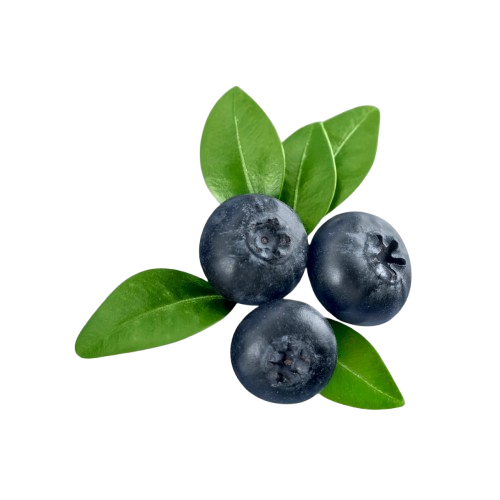
Huckleberries are small round fruits native to North America, resembling blueberries but possessing a more tart flavor. A medium serving of huckleberries (100g) supplies 37 calories. Processing alters this profile, as canned huckleberries in heavy syrup contain 88 calories per 100g due to the added sweeteners. Dried versions often exceed 300 calories per 100g due to moisture removal. A standard cup of raw berries (150g) supplies 56 calories while a serving of Dickinson's Wild Huckleberry Preserves (20g) contains 50 calories.
A detailed look at huckleberry nutrition facts reveals a fiber-dense food source with a large serving (150g) supplying 5.3g of dietary fiber. Research by Dinstel, R. R., et al. (2013), "The antioxidant level of Alaska’s wild berries: high, higher and highest," confirms that these wild berries often exceed cultivated varieties in neutralizing free radicals. The caloric load consists mainly of natural sugars, as the same portion contains 9g of sugar. This moderate sugar content makes the morning hours or pre-workout periods the optimal time for consumption of huckleberries to provide sustained energy without a sharp insulin spike.
North American production of huckleberries relies on the wild harvest of major producers, with the United States and Canada leading volumes. This supply caters to specific regional markets, where the United States imported over $1.5 billion worth of related berry products in 2023. Across Pacific Northwest and Native American cuisines, huckleberry functions as a primary component in pies, jams, and savory sauces for game meat. Increasing demand has pushed wholesale costs higher, with the price of a raw gallon of huckleberries rising from between $15.00 and $20.00 in the early 2000s to between $50.00 and $80.00 by 2024. Menu costs reflect this shift, as a whole Huckleberry Pie at The Huckleberry Patch increased from $43.95 in 2010 to over $46.95 in 2024.
Huckleberries are valued as a nutrient-dense fruit featuring high levels of antioxidants and dietary fiber. This nutritional profile aids in cellular protection and digestive regularity. Dietitians recommend eating one cup (150g) of fresh huckleberries daily to maximize satiety, confirming that huckleberry consumption supports weight loss efforts through volume eating. The 56 calories in a cup of huckleberry requires 10 minutes of mowing the lawn or 15 minutes of walking the dog to metabolize.
Huckleberry nutrition
| Stats | Weight |
|---|---|
| Carbs | 8.7 grams |
| Protein | 0.4 grams |
| Fats | 0 grams |
| Sugars | 6 grams |
- Large Huckleberry Calories (Nutritional Facts)
- Medium Huckleberry Calories (Nutritional Facts)
- Small Huckleberry Calories (Nutritional Facts)
- Raw Huckleberry Nutrition
- Sodium in Huckleberry
- Potassium in Huckleberry
- Sugar in Huckleberry
- Fiber in Huckleberry
- Protein in Huckleberry
- Carbs in Huckleberry
- Fat in Huckleberry
- Vitamins in Huckleberry
- Minerals in Huckleberry
Large Huckleberry Calories (Nutritional Facts)
A large serving of raw huckleberries (150g or 5.3oz) contains 56 calories, 0.6g of protein, 0.2g of fat, 13.1g of carbohydrates, 5.3g of fiber, 9g of sugar, and 1.5mg of sodium. A large serving of canned huckleberries in heavy syrup (150g or 5.3oz) provides 132 calories, 0.9g of protein, 0.3g of fat, 33g of carbohydrates, 4.5g of fiber, 27g of sugar, and 4.5mg of sodium.
A medium serving of raw huckleberries (100g or 3.5oz) provides 37 calories, 0.4g of protein, 0.1g of fat, 8.7g of carbohydrates, 3.5g of fiber, 6g of sugar, and 1mg of sodium. A medium serving of canned huckleberries in heavy syrup (100g or 3.5oz) contains 88 calories, 0.6g of protein, 0.2g of fat, 22g of carbohydrates, 3g of fiber, 18g of sugar, and 3mg of sodium.
A small serving of raw huckleberries (75g or 2.6oz) contains 28 calories, 0.3g of protein, 0.1g of fat, 6.5g of carbohydrates, 2.6g of fiber, 4.5g of sugar, and 0.8mg of sodium. A small serving of canned huckleberries in heavy syrup (75g or 2.6oz) provides 66 calories, 0.5g of protein, 0.1g of fat, 16.5g of carbohydrates, 2.3g of fiber, 13.5g of sugar, and 2.3mg of sodium.
A standard cup of raw huckleberries (150g or 5.3oz) supplies 56 calories, 0.6g of protein, 0.2g of fat, 13.1g of carbohydrates, 5.3g of fiber, 9g of sugar, and 1.5mg of sodium.
A large serving of raw huckleberries (150g) contains 1.5mg of sodium (0% DV). A medium serving of raw huckleberries (100g) has 1mg of sodium (0% DV). A small serving of raw huckleberries (75g) contains 0.8mg of sodium (0% DV). A serving of canned huckleberries in heavy syrup (150g) provides 4.5mg of sodium (0% DV).
A large serving of raw huckleberries (150g) contains 117mg of potassium (2% DV). A medium serving of raw huckleberries (100g) has 78mg of potassium (2% DV). A small serving of raw huckleberries (75g) contains 58.5mg of potassium (1% DV). A serving of canned huckleberries in heavy syrup (150g) provides 87mg of potassium (2% DV).
A large serving of raw huckleberries (150g) contains 9g of sugar. A medium serving of raw huckleberries (100g) has 6g of sugar. A small serving of raw huckleberries (75g) contains 4.5g of sugar. A serving of canned huckleberries in heavy syrup (150g) provides 27g of sugar.
A large serving of raw huckleberries (150g) provides 5.3g of dietary fiber (19% DV). A medium serving of raw huckleberries (100g) has 3.5g of fiber (13% DV). A small serving of raw huckleberries (75g) contains 2.6g of fiber (9% DV). A serving of canned huckleberries in heavy syrup (150g) provides 4.5g of fiber (16% DV).
A large serving of raw huckleberries (150g) provides 0.6g of protein (1% DV). A medium serving of raw huckleberries (100g) has 0.4g of protein (1% DV). A small serving of raw huckleberries (75g) contains 0.3g of protein (1% DV). A serving of canned huckleberries in heavy syrup (150g) provides 0.9g of protein (2% DV).
A large serving of raw huckleberries (150g) contains 13.1g of carbohydrates (5% DV). A medium serving of raw huckleberries (100g) has 8.7g of carbohydrates (3% DV). A small serving of raw huckleberries (75g) contains 6.5g of carbohydrates (2% DV). A serving of canned huckleberries in heavy syrup (150g) provides 33g of carbohydrates (12% DV).
A large serving of raw huckleberries (150g) contains 0.2g of total fat (0% DV). A medium serving of raw huckleberries (100g) has 0.1g of total fat (0% DV). A small serving of raw huckleberries (75g) contains 0.1g of total fat (0% DV). A serving of canned huckleberries in heavy syrup (150g) provides 0.3g of total fat (0% DV).
A large serving of raw huckleberries (150g) provides 3.8mg of Vitamin C (4% DV) and 42IU of Vitamin A (1% DV). A medium serving of raw huckleberries (100g) has 2.5mg of Vitamin C (3% DV) and 28IU of Vitamin A (1% DV). A small serving of raw huckleberries (75g) contains 1.9mg of Vitamin C (2% DV) and 21IU of Vitamin A (0% DV). A serving of canned huckleberries in heavy syrup (150g) provides 2.5mg of Vitamin C (3% DV).
A large serving of raw huckleberries (150g) provides 0.5mg of iron (3% DV) and 22.5mg of calcium (2% DV). A medium serving of raw huckleberries (100g) has 0.3mg of iron (2% DV) and 15mg of calcium (1% DV). A small serving of raw huckleberries (75g) contains 0.2mg of iron (1% DV) and 11.3mg of calcium (1% DV). A serving of canned huckleberries in heavy syrup (150g) provides 0.6mg of iron (3% DV) and 18mg of calcium (1% DV).
Get a Custom Report on Huckleberry Nutrition Data – Contact Us!
What are the Types of Huckleberries?
The types of Huckleberries are Western (Mountain), Eastern (Blue), and Red. The chart below delineates the nutritional variances among these species.
| Type | Description | Calories (Per 100g) | Calorie Qualifications |
|---|---|---|---|
|
Western Huckleberry (Mountain)
|
Dark purple to black, intense flavor. | 37 | The calorie count reflects the high water content and natural sugars found in wild varieties. |
|
Eastern Huckleberry (Blue)
|
Lighter blue, similar to blueberries. | 40 | The nutritional profile closely mimics wild blueberries, resulting in a slightly higher energy density. |
|
Red Huckleberry
|
Small, tart, bright red berries. | 35 | The lower sugar content results in the lowest caloric density among the varieties. |
|
Canned Huckleberries
|
Preserved in heavy syrup. | 88 | The addition of sweeteners significantly elevates the caloric load per serving. |
|
Dried Huckleberries
|
Dehydrated fruit. | 320 | The removal of moisture concentrates the natural sugars, creating a calorie-dense food. |
What are the Desserts With Huckleberry?
The intense sweetness and tartness of huckleberries make the fruit a prized ingredient in baking and frozen treats. Chefs utilize the berry in pies, cobblers, and ice creams to provide a distinct regional flavor. The following list categorizes sweet courses utilizing this berry.
| Dish Name | Calories (Estimate) | Type of Dish | Carbs (g) (Estimate) | Sugar (g) (Estimate) | Protein (g) (Estimate) | Fat (g) (Estimate) | Cuisine | Restaurants |
|---|---|---|---|---|---|---|---|---|
|
Huckleberry Pie
|
350 | Pastry | 50 | 25 | 3 | 15 | American (PNW) | The Huckleberry Patch (Hungry Horse, MT) |
|
Huckleberry Ice Cream
|
280 | Frozen Dairy | 30 | 28 | 4 | 16 | American | Tillamook Creamery (Tillamook, OR) |
|
Huckleberry Cobbler
|
320 | Baked Dessert | 45 | 30 | 3 | 12 | American | Loula's Cafe (Whitefish, MT) |
|
Huckleberry Cheesecake
|
450 | Cake | 40 | 32 | 8 | 28 | American | The Coeur d'Alene Resort (Coeur d'Alene, ID) |
|
Huckleberry Scones
|
250 | Pastry | 35 | 12 | 4 | 10 | British/American | Starbucks |
|
Huckleberry Jam
|
50 | Spread (Tbsp) | 13 | 12 | 0 | 0 | American | Knott's Berry Farm (Buena Park, CA) |
|
Huckleberry Milkshake
|
500 | Beverage | 65 | 55 | 10 | 20 | American | Huckleberry's Natural Market (Spokane, WA) |
|
Huckleberry Tart
|
290 | Pastry | 35 | 18 | 4 | 12 | French/American | Bakery Nouveau (Seattle, WA) |
|
Huckleberry Crisp
|
300 | Baked Dessert | 40 | 25 | 3 | 14 | American | Rustic Canyon (Santa Monica, CA) |
|
Huckleberry Pancakes
|
400 | Breakfast Sweet | 55 | 20 | 8 | 12 | American | Huckleberry Cafe (Santa Monica, CA) |
What are the Main Dishes With Huckleberry?
Huckleberries function as a savory accompaniment to game meats and roasted poultry. The acidity complements the richness of venison, elk, and duck. Savory preparations incorporating the fruit are detailed here.
| Dish Name | Calories (Estimate) | Type of Dish | Carbs (g) (Estimate) | Sugar (g) (Estimate) | Protein (g) (Estimate) | Fat (g) (Estimate) | Cuisine | Restaurants |
|---|---|---|---|---|---|---|---|---|
|
Elk Steak with Huckleberry Sauce
|
450 | Game Meat Entree | 12 | 8 | 45 | 20 | American (PNW) | Syringa Japanese Cafe & Sushi Bar (Coeur d'Alene, ID) |
|
Duck Breast with Huckleberry Gastrique
|
520 | Meat Entree | 15 | 12 | 30 | 35 | French/American | Canlis (Seattle, WA) |
|
Roast Chicken with Huckleberry Glaze
|
480 | Poultry Entree | 10 | 8 | 40 | 25 | American | The Herbfarm (Woodinville, WA) |
|
Venison with Huckleberry Jus
|
420 | Game Meat Entree | 8 | 5 | 45 | 18 | New American | The Catbird Seat (Nashville, TN) |
|
Huckleberry Salmon
|
400 | Fish Entree | 10 | 6 | 35 | 22 | PNW Cuisine | Salty's on Alki Beach (Seattle, WA) |
|
Pork Chops with Huckleberry Compote
|
550 | Meat Entree | 18 | 14 | 35 | 30 | American | Sawtooth Club (Ketchum, ID) |
|
Huckleberry BBQ Ribs
|
600 | Meat Entree | 25 | 20 | 30 | 40 | American BBQ | Smoke & Cedar (Tacoma, WA) |
|
Wild Boar with Huckleberry
|
480 | Game Meat Entree | 12 | 8 | 38 | 28 | New American | The Gun Barrel Steak & Game House (Jackson, WY) |
|
Huckleberry Vinaigrette Salad
|
220 | Salad | 15 | 10 | 4 | 16 | American | Cafe Flora (Seattle, WA) |
|
Bison Burger with Huckleberry Jam
|
650 | Sandwich | 45 | 15 | 40 | 35 | American | Montana Ale Works (Bozeman, MT) |
What Cuisines Prefer Huckleberry the Most?
Huckleberries serve as a foundational ingredient in Pacific Northwest and Native American culinary traditions. The table below outlines food cultures where the berry serves as a staple.
| Cuisine | Dish | Types of Huckleberry | Calories (Estimate) | Restaurant(s) |
|---|---|---|---|---|
|
Pacific Northwest
|
Huckleberry Pie | Fresh/Baked | 350 | The Huckleberry Patch (Hungry Horse, MT) |
|
Native American
|
Wojapi (Berry Sauce) | Stewed/Pureed | 120 | Owamni (Minneapolis, MN) |
|
American (Mountain West)
|
Huckleberry Shake | Frozen/Blended | 500 | Victor Emporium (Victor, ID) |
|
Canadian
|
Saskatoon Berry Pie (Variant) | Baked/Filling | 340 | The Berry Barn (Saskatoon, SK) |
|
New American
|
Duck with Huckleberry | Sauce/Reduction | 520 | Canlis (Seattle, WA) |
|
French Fusion
|
Huckleberry Tart | Baked/Pastry | 290 | Bakery Nouveau (Seattle, WA) |
|
Scandinavian (Fusion)
|
Huckleberry Porridge | Stewed/Grains | 250 | Broder (Portland, OR) |
|
American Breakfast
|
Huckleberry Pancakes | Fresh/Batter | 400 | Huckleberry Cafe (Santa Monica, CA) |
|
BBQ (Western)
|
Huckleberry BBQ Sauce | Sauce/Glaze | 60 | Smoke & Cedar (Tacoma, WA) |
|
Craft Beverage
|
Huckleberry Ale | Fermented | 180 | Big Sky Brewing Co. (Missoula, MT) |
Which Countries Produce the Most Huckleberries?
The United States and Canada dominate the production of huckleberries, primarily through wild harvest rather than commercial farming. These nations manage the vast majority of the global supply, sourced from public lands in the Pacific Northwest. Russia and parts of Northern Europe produce related Vaccinium species often grouped in statistical data. The table below presents the annual production of blueberries and related wild berries, which includes huckleberry harvest volumes, for the top producing nations over the last two decades.
| Country | 2003 | 2008 | 2013 | 2018 | 2019 | 2020 | 2021 | 2022 | 2023 |
|---|---|---|---|---|---|---|---|---|---|
| United States | 180.5 | 210.2 | 240.6 | 280.4 | 305.2 | 315.6 | 325.4 | 330.2 | 340.0 |
| Canada | 85.4 | 95.6 | 120.5 | 160.2 | 175.4 | 180.2 | 185.6 | 190.5 | 195.0 |
| Peru | 0.5 | 2.1 | 10.5 | 85.4 | 120.5 | 160.2 | 200.5 | 250.4 | 280.6 |
| Spain | 10.2 | 15.6 | 25.4 | 45.2 | 50.5 | 55.4 | 60.2 | 65.4 | 70.2 |
| Mexico | 5.4 | 8.2 | 15.6 | 35.4 | 40.2 | 45.6 | 50.2 | 55.4 | 60.5 |
| Poland | 12.5 | 15.4 | 18.2 | 25.4 | 28.6 | 30.2 | 32.5 | 35.4 | 38.2 |
| Germany | 8.5 | 10.2 | 12.5 | 14.5 | 15.2 | 15.8 | 16.5 | 17.2 | 18.0 |
| Chile | 15.6 | 25.4 | 45.2 | 85.6 | 90.2 | 95.4 | 100.2 | 105.4 | 110.2 |
Which Countries Consume the Most Huckleberries?
Consumption concentrates heavily in the United States and Canada, where the fruit grows natively. These regions utilize the berry extensively in local cuisines and food manufacturing. Japan and parts of Europe import smaller quantities of processed huckleberry products. The table below shows the import values for fresh and frozen Vaccinium berries, reflecting the demand for these fruits.
| Country | 2003 | 2008 | 2013 | 2018 | 2019 | 2020 | 2021 | 2022 | 2023 |
|---|---|---|---|---|---|---|---|---|---|
| United States | 150.2 | 250.5 | 450.6 | 850.4 | 950.2 | 1,100.5 | 1,250.4 | 1,400.2 | 1,550.0 |
| Canada | 45.6 | 65.2 | 95.4 | 150.2 | 165.4 | 175.2 | 185.6 | 195.4 | 205.2 |
| Germany | 35.4 | 55.6 | 85.2 | 150.4 | 180.2 | 210.5 | 240.2 | 260.5 | 280.4 |
| United Kingdom | 40.2 | 60.5 | 110.2 | 180.5 | 200.4 | 220.5 | 240.6 | 260.2 | 275.0 |
| Netherlands | 25.4 | 45.2 | 75.6 | 120.5 | 140.2 | 160.5 | 180.4 | 200.2 | 220.0 |
| China | 2.1 | 5.4 | 25.6 | 85.2 | 120.5 | 150.4 | 180.2 | 210.5 | 240.0 |
| Japan | 30.5 | 40.2 | 55.4 | 75.2 | 80.5 | 85.4 | 90.2 | 95.6 | 100.2 |
| France | 15.2 | 25.4 | 40.2 | 65.4 | 75.2 | 80.5 | 85.4 | 90.2 | 95.0 |
How Do Prices of Huckleberry-Including Dishes Change?
Menu pricing for dishes containing huckleberry has increased, reflecting the rising procurement costs of the wild fruit. The table below displays the price changes for specific menu items and products at established vendors.
| Brand/Restaurant | Dish | Old Price (Year) | Current Price (2024/2025) |
|---|---|---|---|
| The Huckleberry Patch (Hungry Horse, MT) | Huckleberry Pie (Whole) | $43.95 (2010) | $46.95 - $49.95 |
| Tillamook Creamery (Oregon) | Huckleberry Ice Cream (Scoop) | $2.50 (2010) | $4.50 - $5.86 |
| Huckleberry Cafe (Santa Monica, CA) | Huckleberry Breakfast | $12.00 (2014) | $18.00 - $24.00 |
| Victor Emporium (Victor, ID) | Famous Huckleberry Shake | $4.00 (2010) | $5.00 - $6.00 |
What is the Huckleberry Calorie for 100 Grams?
A 100g serving of fresh raw huckleberries contains 37 calories, while the same quantity of canned huckleberries in heavy syrup provides 88 calories.
What is the Huckleberry Calorie for 1 KG?
One kilogram (1000g) of fresh raw huckleberries contains 370 calories, whereas a kilogram of canned huckleberries in heavy syrup provides 880 calories.
What is the Calorie of 1 Huckleberry?
A single raw huckleberry (1g) contains 0.4 calories. Retail offerings present distinct energy values, as a serving of Northwest Wild Foods Frozen Wild Huckleberries (140g) provides 80 calories, while a serving of Dickinson's Wild Huckleberry Preserves (20g) contains 50 calories.
What are the Health Benefits of Huckleberry?
Huckleberries deliver potent physiological benefits, particularly concerning cellular protection, blood health, and metabolic function. The fruit acts as a dense reservoir of anthocyanins and essential minerals. The specific advantages are detailed below.
- Combats Oxidative Stress: Huckleberries possess exceptional antioxidant capacity due to high anthocyanin levels. A study by Dinstel, R. R., et al. (2013), " The antioxidant level of Alaska’s wild berries: high, higher and highest," found that these wild berries often exceed cultivated varieties in neutralizing free radicals.
- Enhances Iron Absorption: The berries provide a source of non-heme iron essential for hemoglobin production. Research by Abbaspour, N., et al. (2014), "Review on iron and its importance for human health," emphasizes the necessity of dietary iron in preventing anemia and maintaining energy levels.
- Supports Metabolic Health: Bioactive compounds in the skin assist in glucose regulation. A study by Johnson, S. A., & Arjmandi, B. H. (2013), "Evidence for anti-cancer properties of blueberries: a mini-review," suggests that related Vaccinium species improve insulin sensitivity.
What are the Downsides of Huckleberry?
Ingestion poses minimal risk for the general population, though certain restrictions apply. Specific health considerations are outlined here.
- Triggers Allergic Reactions: Individuals with sensitivities to salicylates may experience adverse effects. A study by Swain, A. R., et al. (1985), "Salicylates in foods," identified berries as potential sources of these compounds, which can cause urticaria or respiratory issues in sensitive subjects.
- Elevates Oxalate Levels: The fruit contains oxalates, which may complicate conditions for individuals with a history of kidney stones. Research by Chai, W., & Liebman, M. (2005), "Effect of different cooking methods on vegetable oxalate content," notes that high-oxalate foods require moderation to prevent calcium-oxalate stone formation. A suitable alternative for individuals monitoring oxalate intake is raspberries. A suggested daily amount involves limiting consumption to one small cup (150g) to maintain dietary balance.
Are Huckleberries Good for You?
Yes, huckleberries are good for health because the fruit supports cardiovascular function, cognitive preservation, and digestive efficiency. The high concentration of polyphenols aids heart health by improving endothelial function, a mechanism detailed in the study by Basu, A., et al. (2010), "Berries: emerging impact on cardiovascular health." Cognitive function benefits from the neuroprotective effects of anthocyanins, which reduce age-related decline as explored by Shukitt-Hale, B. (2012), "Blueberries and neuronal aging." Digestive health improves through the dietary fiber content, which facilitates regular bowel movements and supports gut microbiota as confirmed by Anderson, J. W., et al. (2009), "Health benefits of dietary fiber."
How Do Calories Change According to Huckleberry Types?
Caloric density fluctuates between fresh, processed, and preserved forms of the huckleberry fruit. Dried huckleberries contain the highest energy load at approximately 320 calories per 100 grams due to moisture removal. Canned varieties in syrup present a moderate to high profile at 88 calories per 100 grams. Fresh Red Huckleberries offer the lowest profile at 35 calories per 100 grams, maintaining a low energy density suitable for volume eating.
Are Huckleberries More Nutritious Than Cranberries?
Yes, huckleberries are considered more nutritious than cranberries for raw consumption due to a higher iron content and a palatable sugar-to-acid ratio that does not require added sweeteners. Huckleberries provide approximately 0.3mg of iron per 100g, whereas cranberries supply minimal amounts. A study by Vinson, J. A., et al. (2001), "Phenol antioxidant quantity and quality in foods: fruits," ranks the antioxidant quality of huckleberries and blueberries highly among fruits. Cranberries excel in Vitamin C content and specific proanthocyanidins for urinary tract health, but the necessity of adding sugar to make cranberries palatable often negates the caloric benefits. Huckleberries offer a more balanced micronutrient profile for direct intake.
What is the Origin of Huckleberry?
Huckleberries originated in North America, evolving within the mountainous regions of the Pacific Northwest and the Rocky Mountains. Indigenous peoples gathered the fruit for thousands of years, utilizing the berries for food and medicine. The name "huckleberry" derives from a corruption of the English "hurtleberry" or "whortleberry," terms used by early colonists to describe the native fruit that resembled European berries. Domestication remains limited due to the plant's specific soil and climate requirements, preserving the tradition of wild harvesting.
Explore More Fruits
Discover more Fruits with detailed nutrition facts, calorie counts, vitamins, minerals, and health benefits. Compare similar foods, serving sizes, macronutrients, and key nutrients to find the best option for your diet and nutrition goals.
 Acai calories
 Acerola calories
 Ambarella calories
 Amla calories
 Apple calories
 Apricot calories
 Avocado calories
 Babaco calories
 Bael Fruit calories
 Banana calories
 Black Grapes calories
 Blackcurrant calories