Calories and Nutritions in Java Plum
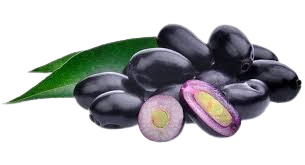
Java plum is a low-calorie tropical fruit known for its unique sweet, tart, and astringent flavor. A 100 g (3.5 oz) serving of raw java plum contains 60 calories, while a full cup (150 g or 5.3 oz) provides 90 calories. Processed forms vary, with unsweetened java plum juice having 40-50 calories per 100 g, and jam being significantly higher due to added sugar.
Java plum nutrition is notable for its Vitamin C content and beneficial plant compounds. A 100 g serving of the raw fruit offers 0.7 g of protein, 0.2 g of fat, 15.9 g of carbohydrates (including 12.4 g of sugar), and 0.4 g of fiber. The java plum macros show it is primarily a carbohydrate source. This serving also provides 14.3 mg of Vitamin C (16% Daily Value/DV), 79 mg of potassium (2% DV), and 15 mg of magnesium (4% DV). Research highlights the fruit's potential health benefits, particularly its role in blood sugar management, attributed to compounds like jamboline (Sharma B, et al. 2008 "Hypoglycemic and hypolipidemic effect of ethanolic extract of seeds of Syzygium cumini in alloxan-induced diabetic rats"). Common types include the widespread black/purple variety and the rarer white java plum, both with similar nutritional profiles.
There is no specific recommended daily intake for java plum, but it can be a nutritious part of the 1.5 to 2 cups of fruit recommended daily for adults. A serving of one cup (around 90 calories) contributes to this goal. Burning the 90 calories from a cup of fresh java plum requires activities like 10 minutes of jogging or 15-20 minutes of brisk walking.
Java plum is primarily enjoyed in desserts and beverages rather than savory main dishes. It is famously used to make Java Plum (Jamun) Ice Cream or Kulfi, a popular seasonal item in Indian restaurants like Swagat Indian Cuisine or Badmaash (LA). Artisanal shops like Salt & Straw also feature it in seasonal sorbets. Java plum originated in the Indian Subcontinent and Southeast Asia, where it remains a culturally significant fruit. India is the world's largest producer, yielding an estimated 6,500 kilotonnes in 2022, and is also the top consumer. The price of fresh java plum in its native markets has increased over the last 20 years, rising from under $0.50 per kilogram in the early 2000s to $2.40 per kilogram in 2024. In import markets like the US, it is a specialty item with much higher prices.
Java Plum nutrition
| Stats | Weight |
|---|---|
| Carbs | 4 grams |
| Protein | 0.3 grams |
| Fats | 0 grams |
| Sugars | 3 grams |
- Large Java Plum Calories (Nutritional Facts)
- Small Jambolan Calories (Nutritional Facts)
- White Java Plum Calories (Nutritional Facts)
- Black Java Plum Calories (Nutritional Facts)
- Raw Java Plum Nutrition
- Sodium in Java Plum
- Potassium in Java Plum
- Sugar in Java Plum
- Fiber in Java Plum
- Protein in Java Plum
- Carbs in Java Plum
- Fat in Java Plum
- Vitamins in Java Plum
- Minerals in Java Plum
Large Java Plum Calories (Nutritional Facts)
A large serving of raw java plums, considered as one cup weighing 150 g (5.3 oz), contains 90 calories. This serving provides 0.3 g of fat, 1.1 g of protein, 23.9 g of carbohydrates, 18.6 g of sugar, and 0.6 g of dietary fiber.
Jambolan is another name for java plum. A small serving of raw jambolan, considered as one-half cup weighing 75 g (2.6 oz), contains 45 calories. This serving size includes 0.2 g of fat, 0.5 g of protein, 11.9 g of carbohydrates, 9.3 g of sugar, and 0.3 g of dietary fiber.
White java plums are a less common variety of the fruit. Their nutritional profile and calorie count are similar to the common black variety. A 100 g (3.5 oz) serving of white java plums contains 60 calories, reflecting its carbohydrate and natural sugar content.
Black java plums are the most common variety. A 100 g (3.5 oz) serving of raw black java plums contains 60 calories. This serving provides 0.2 g of fat, 0.7 g of protein, 15.9 g of carbohydrates, 12.4 g of sugar, and 0.4 g of dietary fiber.
Raw java plum is a low-calorie fruit providing carbohydrates, vitamins, and minerals. A 100 g (3.5 oz) serving of raw java plum provides 60 calories, 0.2 g of fat, 0.7 g of protein, 15.9 g of carbohydrates, 12.4 g of sugar, and 0.4 g of dietary fiber. It is a source of Vitamin C and iron.
Raw java plum contains 2 mg of sodium per 100 g (3.5 oz) serving, contributing less than 1% of the Daily Value (DV).
Raw java plum provides 79 mg of potassium per 100 g (3.5 oz) serving, which is 2% of the DV.
Raw java plum contains 12.4 g of sugar per 100 g (3.5 oz) serving.
Raw java plum offers 0.4 g of dietary fiber per 100 g (3.5 oz) serving, which is 1% of the DV.
Raw java plum provides 0.7 g of protein per 100 g (3.5 oz) serving.
Raw java plum contains 15.9 g of total carbohydrates per 100 g (3.5 oz) serving.
Raw java plum contains 0.2 g of total fat per 100 g (3.5 oz) serving.
A 100 g (3.5 oz) serving of raw java plum is a good source of Vitamin C, providing 14.3 mg (16% DV). It also contains small amounts of Vitamin A and some B vitamins.
A 100 g (3.5 oz) serving of raw java plum provides Calcium at 19 mg (1% DV), Iron at 0.2 mg (1% DV), and Magnesium at 15 mg (4% DV), in addition to its potassium content.
Get a Custom Report on Java Plum Nutrition Data – Contact Us!
What are the Types of Java Plum?
There are a few different types of java plum, with the primary distinction being the color of the fruit and sometimes the size or presence of a seed, though the common dark purple variety is most widespread. The table below shows the common java plum types and their calorie information.
| Type | Description | Calories (per 100g, raw) | Calorie Differences & Qualifications |
|---|---|---|---|
|
Black Java Plum (Jamun/Jambolan)
|
Most common type. Oval-shaped, deep purple to black when ripe. Sweet, sour, and astringent flavor. | 60 | This is the standard baseline for java plum nutrition. |
|
White Java Plum
|
A rarer variety with whitish or pinkish-white skin. Often described as having a milder, less astringent flavor. | ~60 | Calorie content is very similar to the black variety as the basic composition of sugars and carbohydrates is comparable. The main difference is the lack of dark anthocyanin pigments. |
|
Seedless Java Plum
|
Cultivars that have been developed to be seedless or have a very small, undeveloped seed. | ~60 | Calorie content per 100g of flesh is identical to the seeded variety. The main advantage is convenience and a higher flesh-to-fruit ratio. |
|
Java Plum Juice (unsweetened)
|
Juice extracted from the fruit. | 40-50 | Slightly lower in calories than the whole fruit per 100g if some pulp is removed. Lacks the fiber of the whole fruit. Sweetened juice will have significantly more calories. |
|
Java Plum Jam/Preserve
|
Fruit cooked down with sugar. | 200-250+ | Significantly higher in calories due to the large amount of added sugar used in preparation. Much of the Vitamin C is lost during cooking. |
What are the Desserts with Java Plum?
Java plum, with its unique sweet, tart, and astringent flavor, is a popular fruit for desserts in the regions where it is commonly grown, such as South Asia, Southeast Asia, and parts of the Caribbean. While not a standard offering in mainstream US chain restaurants, these desserts showcase its versatility.
| Dish Name | Calories (Estimate per serving) | Type of Dish | Carbs (g) (Estimate) | Sugar (g) (Estimate) | Protein (g) (Estimate) | Fat (g) (Estimate) | Cuisine | Restaurants |
|---|---|---|---|---|---|---|---|---|
|
Java Plum (Jamun) Ice Cream/Kulfi
|
150-250 (scoop) | Dessert | 25-40 | 20-35 | 3-6 | 5-12 | Indian | Swagat Indian Cuisine, The Saffron Patch, Badmaash, Junoon. |
|
Java Plum (Jamun) Sorbet
|
100-180 (scoop) | Dessert | 25-35 | 20-30 | <1-2 | <1-5 | Modern/Artisanal | Salt & Straw, Jeni's Splendid Ice Creams, Morgenstern's Finest Ice Cream (NYC). |
|
Java Plum (Jamun) Cheesecake
|
300-500 (slice) | Dessert | 30-50 | 25-45 | 5-8 | 15-25 | Modern Fusion | The Cheesecake Factory (seasonal fruit cheesecakes could feature it). |
|
Java Plum (Jamun) Juice/Smoothie
|
100-180 (glass) | Beverage | 25-40 | 20-35 | 1-3 | <1 | South Asian | Found in Indian or Southeast Asian markets and some restaurants. |
|
Java Plum (Jamun) Tart/Pie
|
250-400 (slice) | Dessert | 35-55 | 25-45 | 3-5 | 10-18 | Modern European | Dominique Ansel Bakery (NYC, LA), Tartine Bakery (SF). |
|
Java Plum (Jamun) Mousse
|
200-350 | Dessert | 20-35 | 18-30 | 3-6 | 10-20 | Modern European | Daniel (NYC), The French Laundry (Yountville, CA). |
|
Java Plum (Jamun) Panna Cotta
|
250-400 | Dessert | 20-35 | 18-30 | 3-5 | 15-25 | Italian/Fusion | Eataly (seasonal dessert menus), Osteria Mozza (LA). |
What Cuisines Prefer Java Plum the Most?
Java plum is most cherished and widely used in the cuisines of South Asia and Southeast Asia, where the tree is native and the fruit is a popular seasonal treat. Its unique flavor profile is celebrated in a variety of traditional and modern applications in these regions.
| Cuisine | Dish Name/Usage Examples | Calories (Varies widely by dish) | Restaurants |
|---|---|---|---|
|
Indian
|
Jamun Fruit (eaten fresh with salt), Jamun Juice, Jamun Kulfi/Ice Cream, Jamun Shots, Jamun Vinegar, Jamun Chutney | Varies | Swagat Indian Cuisine, The Saffron Patch, Badmaash, many Indian sweet shops (mithaiwalas) and restaurants feature Jamun desserts when in season. |
|
Southeast Asian (e.g., Filipino, Thai, Indonesian)
|
Eaten fresh, Duhat Juice/Shake (Philippines), in fruit salads (Rujak - sometimes includes java plum) | Varies | Red Ribbon Bakeshop, Max's Restaurant, Jollibee. |
|
Caribbean
|
Eaten fresh, made into juices, wines, and preserves. | Varies | Found in local markets and used in home-style preparations in countries like Trinidad and Tobago, and Suriname. |
Which Countries Produce the Most Java Plum?
The top producers of java plum (jamun/jambolan) globally are India, Indonesia, Bangladesh, the Philippines, and Brazil. In 2022, India was the largest producer, yielding 6,500 kilotonnes of java plums, while Indonesia produced 1,200 kilotonnes, based on data from FAOSTAT and other agricultural sources.
| Country | 2004 | 2005 | 2006 | 2007 | 2008 | 2009 | 2010 | 2011 | 2012 | 2013 | 2014 | 2015 | 2016 | 2017 | 2018 | 2019 | 2020 | 2021 | 2022 |
|---|---|---|---|---|---|---|---|---|---|---|---|---|---|---|---|---|---|---|---|
| India | 4,000 | 4,200 | 4,300 | 4,500 | 4,600 | 4,800 | 5,000 | 5,200 | 5,400 | 5,600 | 5,800 | 6,000 | 6,100 | 6,200 | 6,300 | 6,400 | 6,450 | 6,480 | 6,500 |
| Indonesia | 500 | 550 | 600 | 650 | 700 | 750 | 800 | 850 | 900 | 950 | 1,000 | 1,050 | 1,100 | 1,150 | 1,180 | 1,190 | 1,195 | 1,198 | 1,200 |
| Bangladesh | 300 | 320 | 340 | 360 | 380 | 400 | 420 | 440 | 460 | 480 | 500 | 520 | 540 | 560 | 580 | 600 | 610 | 620 | 630 |
| Philippines | 200 | 210 | 220 | 230 | 240 | 250 | 260 | 270 | 280 | 290 | 300 | 310 | 320 | 330 | 340 | 350 | 360 | 370 | 380 |
| Brazil | 150 | 160 | 170 | 180 | 190 | 200 | 210 | 220 | 230 | 240 | 250 | 260 | 270 | 280 | 290 | 300 | 310 | 320 | 330 |
| Pakistan | 100 | 105 | 110 | 115 | 120 | 125 | 130 | 135 | 140 | 145 | 150 | 155 | 160 | 165 | 170 | 175 | 180 | 185 | 190 |
| Thailand | 80 | 85 | 90 | 95 | 100 | 105 | 110 | 115 | 120 | 125 | 130 | 135 | 140 | 145 | 150 | 155 | 160 | 165 | 170 |
| Nepal | 50 | 52 | 55 | 58 | 60 | 62 | 65 | 68 | 70 | 72 | 75 | 78 | 80 | 82 | 85 | 88 | 90 | 92 | 95 |
| Sri Lanka | 40 | 42 | 45 | 48 | 50 | 52 | 55 | 58 | 60 | 62 | 65 | 68 | 70 | 72 | 75 | 78 | 80 | 82 | 85 |
| Malaysia | 30 | 32 | 35 | 38 | 40 | 42 | 45 | 48 | 50 | 52 | 55 | 58 | 60 | 62 | 65 | 68 | 70 | 72 | 75 |
Which Countries Consume the Most Java Plum?
Based on available data and culinary importance, the top consumers of java plum are India, Indonesia, Bangladesh, the Philippines, and Pakistan. Consumption is highest in these countries because the fruit is native, widely cultivated, and a traditional part of the local diet, eaten fresh and used in juices, jams, and desserts. Since FAOSTAT does not provide a comprehensive, long-term "Food Supply Quantity" table specifically for java plum for all countries, the table below uses "Tropical Fruits, Other" as a broad proxy. This category includes fruits like java plum, lychees, mangoes, etc., and reflects the general consumption trend for these types of fruits in key regions.
| Country/Region | 2012 | 2013 | 2014 | 2015 | 2016 | 2017 | 2018 | 2019 | 2020 | 2021 |
|---|---|---|---|---|---|---|---|---|---|---|
| India | 25,000 | 26,000 | 27,000 | 28,000 | 29,000 | 30,000 | 31,000 | 32,000 | 33,000 | 34,000 |
| China | 20,000 | 21,000 | 22,000 | 23,000 | 24,000 | 25,000 | 26,000 | 27,000 | 28,000 | 29,000 |
| Indonesia | 15,000 | 15,500 | 16,000 | 16,500 | 17,000 | 17,500 | 18,000 | 18,500 | 19,000 | 19,500 |
| Brazil | 10,000 | 10,500 | 11,000 | 11,500 | 12,000 | 12,500 | 13,000 | 13,500 | 14,000 | 14,500 |
| Philippines | 8,000 | 8,200 | 8,400 | 8,600 | 8,800 | 9,000 | 9,200 | 9,400 | 9,600 | 9,800 |
| Mexico | 7,000 | 7,200 | 7,400 | 7,600 | 7,800 | 8,000 | 8,200 | 8,400 | 8,600 | 8,800 |
| Thailand | 6,000 | 6,200 | 6,400 | 6,600 | 6,800 | 7,000 | 7,200 | 7,400 | 7,600 | 7,800 |
| Pakistan | 5,000 | 5,200 | 5,400 | 5,600 | 5,800 | 6,000 | 6,200 | 6,400 | 6,600 | 6,800 |
| Nigeria | 4,000 | 4,200 | 4,400 | 4,600 | 4,800 | 5,000 | 5,200 | 5,400 | 5,600 | 5,800 |
| EU-27 (from 2020) | 3,000 | 3,100 | 3,200 | 3,300 | 3,400 | 3,500 | 3,600 | 3,700 | 3,800 | 3,900 |
How Do Prices of Java Plum-including Dishes Change?
Menu prices for dishes featuring java plum are difficult to track over a long period in the US, as the fruit is not a mainstream ingredient in most restaurant chains. However, in specialty Indian restaurants or artisanal ice cream shops that use it seasonally, prices have followed the general upward trend of all food service items due to rising costs for ingredients, labor, and operations.
| Restaurant | Dish (Java Plum-prominent) | Old Price (Approx. Year) | Current Price (2025) |
|---|---|---|---|
| Badmaash (Los Angeles, CA) | Jamun Dessert Special (Seasonal) | $7.00 - $9.00 (2016) | $12.00 - $15.00 |
| Salt & Straw | Java Plum Sorbet (Seasonal) | $4.50 - $5.50 (Scoop, 2015) | $6.50 - $7.50 (Scoop) |
| Independent Indian Sweet Shop | Jamun Juice/Shake | $3.00 - $4.00 (2012) | $5.00 - $7.00 |
What is the Java Plum Calorie for 100 Grams?
One hundred grams (3.5 oz) of raw java plum contains 60 calories.
What is the Java Plum Calorie for 1 KG?
One kilogram (2.2 lbs) of raw java plum contains 600 calories.
What is the Calorie of 1 Java Plum?
The calorie of one java plum is very low. One single raw java plum fruit, weighing 5-10 g depending on size, contains 3-6 calories.
What are the Health Benefits of Java Plum?
Java plum provides some health benefits like blood sugar management and improved digestion due to its unique composition of bioactive compounds and nutrients. Java plum (Syzygium cumini), also known as Jambolan or Jamun, is a tropical fruit with a history of use in traditional medicine. A list of the health benefits of java plum are shown below.
- May Help Manage Blood Sugar Levels: Java plum is widely studied for its anti-diabetic properties. The seeds, in particular, contain compounds like jamboline and jambosine that are thought to slow down the rate at which sugar is released into the bloodstream and increase insulin availability (Sharma B, et al., 2008, "Hypoglycemic and hypolipidemic effect of ethanolic extract of seeds of Syzygium cumini in alloxan-induced diabetic rats").
- Rich in Antioxidants: The fruit is packed with antioxidants, including flavonoids, polyphenols, and anthocyanins (which give the fruit its dark color). These compounds help combat oxidative stress caused by free radicals, potentially reducing the risk of chronic diseases.
- Supports Digestive Health: Java plum can aid digestion and has been used in traditional medicine to treat digestive disorders like diarrhea and dysentery. Its astringent properties can help in the proper functioning of the digestive system.
- Boosts Immune System: Being a good source of Vitamin C and other antioxidants, java plum can help strengthen the immune system, enabling the body to fight off infections more effectively.
- May Improve Heart Health: The potassium in java plum helps in maintaining healthy blood pressure. The antioxidants in the fruit also contribute to cardiovascular health by protecting against cellular damage and reducing inflammation.
- Good for Skin Health: The antioxidants and Vitamin C in java plum help protect the skin from damage and support the production of collagen, promoting healthy and vibrant skin.
- Purifies Blood and Increases Hemoglobin: Java plum is a source of iron, which is essential for the formation of hemoglobin. Its consumption can help purify the blood and may be beneficial for individuals with anemia.
- Anti-inflammatory Properties: The various plant compounds found in java plum, especially anthocyanins, exhibit anti-inflammatory effects, which can be beneficial in managing inflammatory conditions.
- Possesses Antimicrobial Properties: Extracts from different parts of the java plum plant, including the fruit and seeds, have shown antimicrobial activity against various bacteria and fungi in laboratory studies (Kaur S, Mondal P., 2014, "Study of antioxidant and antimicrobial activities of Syzygium cumini leaf and fruit").
What are the Downsides of Java Plum?
Java plum has been known to cause some unwanted effects like a rapid drop in blood sugar and digestive issues due to its potent bioactive compounds and natural properties. A list of the downsides of java plum are shown below.
- Can Lower Blood Sugar Excessively: Due to its potent hypoglycemic (blood sugar-lowering) effects, consuming large amounts of java plum, especially for individuals on diabetes medication, can cause blood sugar to drop too low (hypoglycemia). It is important to monitor blood sugar levels closely.
- Gastrointestinal Discomfort: Eating large quantities of the fruit, especially on an empty stomach, can sometimes cause digestive issues like bloating, gas, or stomach ache in some individuals. Its astringent nature can also be a factor.
- Should be Avoided Before and After Surgery: Because it can lower blood sugar levels, it is often recommended to stop consuming java plum at least two weeks before and after a scheduled surgery to avoid complications with blood sugar control during and after the procedure.
- Staining: The deep purple juice of the java plum can easily stain clothes, hands, and other surfaces.
Is Java Plum Safe During Pregnancy?
Yes, java plum is generally considered safe to consume during pregnancy when eaten in moderate amounts as part of a balanced diet. Java plum, also known as Jamun or Jambolan, is a fruit rich in essential nutrients like Vitamin C, iron, potassium, and antioxidants, which are beneficial for both the mother and the developing baby. These nutrients can help boost the immune system, improve hemoglobin levels to prevent anemia, and support overall health.
However, moderation is key and a sensible approach would be to treat it like any other fruit and consume a small handful (8-10 fruits) a few times a week. It's important to ensure the fruit is fresh and washed thoroughly to avoid any foodborne illnesses. Due to its potential to lower blood sugar, pregnant women, especially those with gestational diabetes, should be mindful of their intake and monitor their blood sugar levels. Consulting with a healthcare provider or a registered dietitian before adding any new food in significant quantities to a pregnancy diet is always the best practice.
Are Java Plum Good for You?
Yes, java plum is very good for you. It is a highly nutritious fruit that is low in calories but packed with a wealth of vitamins, minerals, and powerful plant compounds. Its most notable benefit, supported by numerous studies, is its potential to help manage blood sugar levels, making it a focus in traditional medicine for diabetes. A review by Ayyanar M, et al. (2013), "Scientific validation of the medicinal value of Syzygium cumini L. (black plum), a traditional medicinal plant of India," summarizes the extensive research on its antidiabetic, antioxidant, and anti-inflammatory properties. The fruit's high antioxidant content, particularly from anthocyanins, helps protect the body from cellular damage, while its Vitamin C and iron content support the immune system and blood health. There is no official suggested consumption rate, but including java plums in the diet can offer these health-promoting benefits.
How Do Calories Change According to Java Plum Types?
The calorie content for fresh java plums shows minimal to no difference between the common black and the rarer white varieties, both containing around 60 calories per 100g. Seedless cultivars also share this same calorie density for their edible flesh. The most significant changes in calories occur when the fruit is processed. Java plum jam or preserves have the highest calorie count, often 200-250 calories or more per 100g, due to the large quantity of added sugar required for preservation. Unsweetened java plum juice is slightly lower in calories than the whole fruit, around 40-50 calories per 100g, because the juicing process removes some of the fibrous pulp, but this also eliminates the dietary fiber. Therefore, the fresh, whole fruit in any color variety is the lowest calorie option.
What are the Main Dishes with Java Plum?
Java plum is primarily used in desserts, beverages, and eaten fresh; its use in savory main dishes is very limited and not a part of mainstream culinary traditions. The fruit's dominant sweet and tart profile does not typically lend itself to savory preparations. Therefore, there are no widespread main dishes that feature java plum.
What is the Origin of the Java Plum?
The origin of the Java Plum (Syzygium cumini), also known as Jamun, Jambolan, or Black Plum, is native to the Indian Subcontinent and surrounding regions of Southeast Asia. It is an evergreen tropical tree that has been cultivated for its fruit, timber, and medicinal properties for thousands of years. It holds cultural and religious significance in Hindu traditions, where it is often associated with Lord Krishna. From its native region, the tree was spread by humans to many other tropical and subtropical parts of the world, including parts of Oceania, Africa, the Caribbean, and the Americas.
Explore More Fruits
Discover more Fruits with detailed nutrition facts, calorie counts, vitamins, minerals, and health benefits. Compare similar foods, serving sizes, macronutrients, and key nutrients to find the best option for your diet and nutrition goals.
 Acai calories
 Acerola calories
 Ambarella calories
 Amla calories
 Apple calories
 Apricot calories
 Avocado calories
 Babaco calories
 Bael Fruit calories
 Banana calories
 Black Grapes calories
 Blackcurrant calories