Calories and Nutritions in Kaffir Lime
The kaffir lime is scientifically and increasingly commonly known as the makrut lime. There are 43 kaffir lime calories per 100 g (3.5 oz) of the fresh chopped leaves or grated zest. A small 3 g (1 tbsp) serving of the minced leaves provides exactly 1 calorie, while a larger 50 g (1 cup) volume supplies 21 calories. Based on kaffir lime nutrition facts, a 100 g (3.5 oz) portion provides 8 g of carbohydrates, 1.5 g of protein, and 0.4 g of fat. Key health benefits include its potent antibacterial properties driven by compounds like citronellol and its ability to promote impeccable oral hygiene. Research by Srisukh et al. (2012), "Antibacterial activity of essential oils from Citrus hystrix (makrut lime) against respiratory tract pathogens," proved that the botanical extracts neutralize severe bacterial colonies efficiently.
Kaffir lime is an intensely aromatic citrus plant whose leaves and rind are used in authentic Thai, Cambodian, and Indonesian cuisines. Common types include the fresh double-lobed leaves, dehydrated leaves for long-term storage, the grated green rind, and highly concentrated essential oils. The piercing, perfumed flavor profile is flawlessly executed in iconic savory dishes like the Tom Yum Goong at Somtum Der and the Green Curry Chicken at Blue Elephant. The citrus notes also elevate complex Southeast Asian preparations such as the Beef Rendang at Simpang Asia, which ranges from $21.00 to $24.50 USD, and the Tod Mun Pla (Thai Fish Cakes) at Jitlada.
The origin of this citrus plant is the tropical Malay Archipelago and Southeast Asia, where it has grown wild and been cultivated in village gardens for thousands of years. Global production of the leaves and fruit is championed by Thailand, which generated 147.00 kt in 2024, closely followed by Indonesia at 103.50 kt. Consumption remains incredibly high in Thailand and the United States, where the explosion of Thai restaurant culture demands constant fresh supplies. The retail price for a 1 oz clam shell of fresh leaves in Western markets has climbed from $1.50 USD in 2005 to $3.99 USD in 2024.
Health guidelines suggest a recommended daily intake of 3 g to 10 g (1 to 3 tbsp) of the fresh zest or leaves integrated into meals, contributing just 1 to 3 calories in kaffir lime.
Kaffir Lime nutrition
| Stats | Weight |
|---|---|
| Carbs | 8 grams |
| Protein | 1.5 grams |
| Fats | 0 grams |
| Sugars | 1.5 grams |
- Large Kaffir Lime Calories (Nutritional Facts)
- Medium Kaffir Lime Calories (Nutritional Facts)
- Small Kaffir Lime Calories (Nutritional Facts)
- Raw Kaffir Lime Nutrition
- Sodium in Kaffir Lime
- Potassium in Kaffir Lime
- Sugar in Kaffir Lime
- Fiber in Kaffir Lime
- Protein in Kaffir Lime
- Carbs in Kaffir Lime
- Fat in Kaffir Lime
- Vitamins in Kaffir Lime
- Minerals in Kaffir Lime
Large Kaffir Lime Calories (Nutritional Facts)
A 50 g (1 cup) volume of chopped kaffir lime leaves provides 21 calories. This culinary portion supplies 0.2 g of total fat, 0.75 g of protein, 4 g of carbohydrates, and 0.7 g of sugar. A large 50 g (1 cup) serving of the fresh foliage delivers robust amounts of aromatic citronellol and essential dietary fiber for digestive support.
A 100 g (3.5 oz) serving of fresh makrut lime leaves or zest reveals a total of 43 calories. This specific serving weight provides 0.4 g of total fat, 1.5 g of protein, 8 g of carbohydrates, and 1.5 g of sugar. Consuming a 100 g (3.5 oz) quantity furnishes the body with 200 mg of potassium.
A 3 g (1 tbsp) serving of finely minced kaffir lime zest or crushed leaves contributes just 1 calorie to a dish. This fractional amount contains 0.01 g of total fat, 0.04 g of protein, 0.2 g of carbohydrates, and zero measurable sugar.
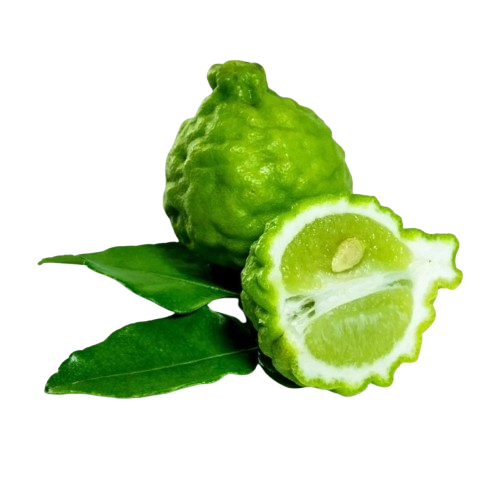
A 100 g (3.5 oz) portion of raw kaffir lime material provides 43 calories, 0.4 g of total fat, 1.5 g of protein, 8 g of total carbohydrates, and 3 g of dietary fiber. Also widely referred to as the makrut lime or Mauritius papeda, this citrus variant is chemically distinct from conventional limes due to its intense accumulation of essential oils like limonene and nerolidol in its bumpy rind and double-lobed leaves. The nutrient density is concentrated heavily in these aromatic outer layers rather than the highly acidic, sparse juice inside.
Raw kaffir lime leaves and zest possess an exceptionally low sodium profile, measuring exactly 2 mg per 100 g (3.5 oz) serving, contributing 0% of the Daily Value (DV). This absence of salt makes the botanical an outstanding flavor enhancer for strict hypertensive diets.
The foliage and rind of this citrus plant deliver 200 mg of potassium per 100 g (3.5 oz) serving, fulfilling 4% of the DV. Incorporating this mineral through fresh herbs assists in maintaining cellular fluid balance and steady muscle contractions.
Fresh kaffir lime leaves contain 1.5 g of sugar per 100 g (3.5 oz) serving. The bumpy rind yields even less sugar, resulting in a tart and entirely savory flavoring agent devoid of the fructose levels found in the flesh of sweet oranges or mandarins.
Kaffir lime provides 3 g of dietary fiber per 100 g (3.5 oz) serving, fulfilling 10% of the DV. The tough, waxy structure of the double-lobed leaves ensures a high insoluble fiber content, though they are often removed from soups before eating rather than chewed whole.
The raw leaves and rind offer 1.5 g of protein per 100 g (3.5 oz) serving.
Kaffir lime botanical parts contain 8 g of total carbohydrates per 100 g (3.5 oz) serving.
The fresh leaves and zest contain 0.4 g of total fat per 100 g (3.5 oz) serving. The entirety of this lipid content is composed of the volatile essential oils responsible for the plant's intense citrus fragrance.
A 100 g (3.5 oz) serving of raw kaffir lime foliage yields 29 mg of Vitamin C (32% DV). The dark green leaves also supply 140 IU of Vitamin A, fulfilling 2% of the DV for supporting ocular health.
A 100 g (3.5 oz) batch of fresh kaffir lime leaves supplies 33 mg of Calcium (2% DV), 12 mg of Magnesium (3% DV), and 0.5 mg of Iron (2% DV). Trace elements like Manganese are also present within the plant's cellular structure.
Get a Custom Report on Kaffir Lime Nutrition Data – Contact Us!
What are the Types of Kaffir Lime?
The commercial and culinary classification of this citrus plant focuses entirely on the distinct physical parts harvested for consumption. The table below details the most common Kaffir Lime types and their caloric information.
| Type | Description | Calories (per 100 g / 3.5 oz) | Calorie Differences & Qualifications |
|---|---|---|---|
|
Fresh Leaves
|
The glossy, double-lobed foliage plucked directly from the tree. | 43 | The baseline for natural moisture content and fresh aroma. |
|
Dried Leaves
|
Dehydrated foliage sold in spice aisles for extended shelf life. | 290 | High energy density due to the total evaporation of water weight. |
|
Fresh Rind (Zest)
|
The grated, bumpy green skin of the whole fruit. | 47 | Slightly higher caloric weight due to concentrated essential oils. |
|
Makrut Essential Oil
|
The pure lipid extraction distilled from the rind and leaves. | 884 | Maximum caloric density (pure fat) utilized in micro-doses for flavoring. |
What are the Desserts with Kaffir Lime?
The piercing, floral astringency of the makrut lime leaf is a coveted secret weapon in contemporary pastry kitchens. Instead of eating the tough leaves outright, pastry chefs steep the foliage in heavy creams or sugar syrups to extract the citronellol flavor, yielding complex, tropical confections. The table below lists nutritional estimates for dessert items that use this ingredient.
| Dish Name | Calories | Type | Carbs | Sugar | Protein | Fat | Cuisine | Restaurants |
|---|---|---|---|---|---|---|---|---|
|
Lemongrass & Kaffir Lime Tart
|
410 | Pastry | 46g | 28g | 6g | 22g | Asian Fusion | Wanderlust Creamery |
|
Coconut Makrut Lime Sorbet
|
150 | Frozen | 34g | 28g | 1g | 2g | Artisanal | Gelato Messina |
|
Makrut Lime Panna Cotta
|
380 | Custard | 32g | 26g | 5g | 26g | Italian Fusion | Night+Market |
|
Kaffir Lime Macaron
|
95 | Cookie | 13g | 11g | 2g | 4g | French | Bouchon Bakery |
|
Lime Leaf Pound Cake
|
350 | Cake | 44g | 24g | 4g | 18g | Modern American | Sweet Lady Jane |
|
Mango & Makrut Sticky Rice
|
390 | Pudding | 78g | 32g | 4g | 8g | Thai | Sticky Rice |
What are the Main Dishes with Kaffir Lime?
Kaffir lime leaves and zest are the non-negotiable backbone of Southeast Asian savory cooking. The ingredients are pounded into curry pastes or torn directly into simmering broths to release an unmistakable, piercing citrus fragrance that cuts through heavy coconut milk and fiery chilies. The table below catalogs the nutritional facts for popular savory entrees and soups that rely on the makrut lime as an absolute foundational flavor.
| Dish Name | Calories | Type | Carbs | Sugar | Protein | Fat | Cuisine | Restaurants |
|---|---|---|---|---|---|---|---|---|
|
Tom Yum Goong (Shrimp Soup)
|
280 | Soup | 18g | 8g | 24g | 12g | Thai | Somtum Der |
|
Panang Beef Curry
|
680 | Meat Entree | 24g | 14g | 42g | 48g | Thai | Nara Thai Cuisine |
|
Tod Mun Pla (Thai Fish Cakes)
|
420 | Seafood Appetizer | 22g | 6g | 26g | 28g | Thai | Jitlada |
|
Green Curry Chicken
|
640 | Poultry Entree | 28g | 12g | 38g | 44g | Thai | Blue Elephant |
|
Kaffir Lime Roasted Chicken
|
580 | Poultry Entree | 12g | 4g | 52g | 36g | Modern Thai | Night+Market Sahm |
|
Chu Chee Salmon Curry
|
720 | Seafood Entree | 26g | 16g | 45g | 48g | Thai | Pok Pok |
|
Beef Rendang
|
810 | Meat Stew | 22g | 8g | 55g | 56g | Indonesian | Simpang Asia |
What Cuisines Prefer Kaffir Lime the Most?
The makrut lime is the aromatic signature ingredient of Thai, Cambodian, Laotian, and Indonesian cuisines. In Thailand, the shredded leaves are essential to almost every major curry paste and hot-and-sour soup. Indonesian and Balinese cooking utilizes the leaves to perfume rich, slow-cooked meat stews like Rendang. Modern fusion gastronomy globally has co-opted the leaves to add exotic high notes to French-style sauces and American seafood dishes. The table below outlines the specific culinary contexts and dishes where kaffir lime is a prominent featured element.
| Cuisine | Dish Name | Calories | Restaurants |
|---|---|---|---|
|
Authentic Thai
|
Tom Yum Goong | 280 | Somtum Der |
|
Royal Thai
|
Green Curry Chicken | 640 | Blue Elephant |
|
Indonesian
|
Beef Rendang | 810 | Simpang Asia |
|
Northern Thai
|
Tod Mun Pla (Fish Cakes) | 420 | Jitlada |
|
Asian Fusion
|
Makrut Lime Panna Cotta | 380 | Night+Market |
|
Cambodian (Khmer)
|
Fish Amok | 450 | Angkor Wat Restaurant |
Which Countries Produce the Most Kaffir Lime?
The global production of the makrut lime is entirely dominated by Southeast Asian nations, specifically Thailand, Indonesia, Vietnam, Malaysia, and Laos. In 2022, Thailand produced an estimated 145.00 kilotonnes of the specialty citrus, directing the majority of its harvest toward the global export of dried leaves, curry pastes, and essential oils based on data extrapolated from regional agricultural export ministries. Because global databases often merge all lime varieties into a single category, the figures below represent the specialized cultivation segment dedicated explicitly to Citrus hystrix. The table below displays estimated production volumes for the primary regions cultivating this aromatic crop.
| Country | 2005 | 2006 | 2007 | 2008 | 2009 | 2010 | 2011 | 2012 | 2013 | 2014 | 2015 | 2016 | 2017 | 2018 | 2019 | 2020 | 2021 | 2022 | 2023 | 2024 |
|---|---|---|---|---|---|---|---|---|---|---|---|---|---|---|---|---|---|---|---|---|
| Thailand | 110.00 | 112.00 | 115.00 | 118.00 | 120.00 | 122.00 | 125.00 | 128.00 | 131.00 | 134.00 | 136.00 | 138.00 | 140.00 | 142.00 | 143.00 | 144.00 | 144.50 | 145.00 | 146.00 | 147.00 |
| Indonesia | 75.00 | 76.50 | 78.00 | 79.50 | 81.00 | 82.50 | 84.00 | 85.50 | 87.00 | 88.50 | 90.00 | 91.50 | 93.00 | 94.50 | 96.00 | 97.50 | 99.00 | 100.50 | 102.00 | 103.50 |
| Vietnam | 40.00 | 41.50 | 43.00 | 44.50 | 46.00 | 48.00 | 50.00 | 52.00 | 54.00 | 56.50 | 59.00 | 61.50 | 64.00 | 66.50 | 69.00 | 71.50 | 74.00 | 76.50 | 79.00 | 81.50 |
| Malaysia | 25.00 | 25.50 | 26.00 | 26.50 | 27.00 | 27.50 | 28.00 | 28.50 | 29.00 | 29.50 | 30.00 | 30.50 | 31.00 | 31.50 | 32.00 | 32.50 | 33.00 | 33.50 | 34.00 | 34.50 |
| USA | 1.00 | 1.20 | 1.40 | 1.60 | 1.80 | 2.10 | 2.40 | 2.70 | 3.00 | 3.40 | 3.80 | 4.20 | 4.60 | 5.00 | 5.50 | 6.00 | 6.50 | 7.00 | 7.50 | 8.00 |
Which Countries Consume the Most Kaffir Lime?
Based on regional food supply assessments and spice trade analytics, the top consumers of the makrut lime are Thailand, Indonesia, Vietnam, Malaysia, and the United States. Consumption is measured by the sheer volume of fresh leaves and fruit rinds utilized in domestic food preparation, commercial paste manufacturing, and restaurant supply chains. Thailand utilizes almost its entire massive yield domestically to supply the daily dietary staple of curry pastes. The United States has emerged as a major importer and domestic consumer due to the rapid expansion of authentic Southeast Asian dining across North America. The table below represents the apparent food supply and utilization of this specific botanical.
| Country | 2005 | 2006 | 2007 | 2008 | 2009 | 2010 | 2011 | 2012 | 2013 | 2014 | 2015 | 2016 | 2017 | 2018 | 2019 | 2020 | 2021 | 2022 | 2023 | 2024 |
|---|---|---|---|---|---|---|---|---|---|---|---|---|---|---|---|---|---|---|---|---|
| Thailand | 105.00 | 106.50 | 108.00 | 109.50 | 111.00 | 112.50 | 114.00 | 115.50 | 117.00 | 118.50 | 120.00 | 121.50 | 123.00 | 124.50 | 125.00 | 125.50 | 126.00 | 126.50 | 127.00 | 127.50 |
| Indonesia | 72.00 | 73.50 | 75.00 | 76.50 | 78.00 | 79.50 | 81.00 | 82.50 | 84.00 | 85.50 | 87.00 | 88.50 | 90.00 | 91.50 | 93.00 | 94.50 | 96.00 | 97.50 | 99.00 | 100.50 |
| Vietnam | 38.00 | 39.50 | 41.00 | 42.50 | 44.00 | 46.00 | 48.00 | 50.00 | 52.00 | 54.00 | 56.50 | 59.00 | 61.50 | 64.00 | 66.50 | 69.00 | 71.50 | 74.00 | 76.50 | 79.00 |
| Malaysia | 24.00 | 24.50 | 25.00 | 25.50 | 26.00 | 26.50 | 27.00 | 27.50 | 28.00 | 28.50 | 29.00 | 29.50 | 30.00 | 30.50 | 31.00 | 31.50 | 32.00 | 32.50 | 33.00 | 33.50 |
| USA | 4.00 | 4.50 | 5.20 | 6.00 | 6.80 | 7.50 | 8.40 | 9.50 | 10.60 | 11.80 | 13.00 | 14.50 | 16.00 | 17.50 | 19.00 | 20.50 | 22.00 | 23.50 | 25.00 | 26.50 |
How Do Prices of Kaffir Lime-including Dishes Change?
Restaurant prices for authentic Southeast Asian dishes relying on the makrut lime have surged significantly. This cost adjustment reflects the broader inflation affecting imported spices, fresh seafood, and domestic restaurant labor. The table below compares historical price ranges from the 2015–2017 period with modern 2025–2026 market estimates for specific dishes defined by this citrus profile.
| Restaurant | Dish Name | Old Price Range (2015–2017) | Current Price Range (2025–2026) |
|---|---|---|---|
| Somtum Der | Tom Yum Goong (Shrimp Soup) | $12.50 - $14.50 | $18.50 - $22.00 |
| Nara Thai Cuisine | Panang Beef Curry | $15.00 - $18.00 | $22.50 - $26.95 |
| Blue Elephant | Green Curry Chicken | $16.50 - $19.50 | $24.00 - $28.50 |
| Jitlada | Tod Mun Pla (Thai Fish Cakes) | $9.50 - $11.50 | $14.95 - $17.50 |
| Pok Pok | Chu Chee Salmon Curry | $18.00 - $21.00 | $26.00 - $31.00 |
| Simpang Asia | Beef Rendang | $14.50 - $16.50 | $21.00 - $24.50 |
| Night+Market | Makrut Lime Panna Cotta | $7.00 - $8.50 | $11.50 - $13.50 |
What is the Kaffir Lime Calorie for 100 Grams?
One hundred grams (3.5 oz) of raw kaffir lime leaves or zest contains 43 calories.
What is the Kaffir Lime Calorie for 1 KG?
One kilogram (1,000 g or 35.3 oz) of raw kaffir lime material contains 430 calories.
What is the Calorie of 1 Kaffir Lime?
A single whole kaffir lime fruit weighing 80 g (2.8 oz) provides 34 calories. A single fresh kaffir lime leaf weighing 1 g contains less than 1 calorie.
What are the Health Benefits of Kaffir Lime?
The botanical components of the makrut lime present profound health advantages, particularly concerning the mitigation of bacterial pathogens and the enhancement of oral hygiene. Frequently referred to in culinary circles as "magrut," "Thai lime," or "Mauritius papeda," this plant is revered across Southeast Asia for its medicinal properties. A list of the health benefits of kaffir lime is shown below.
- Eradicates Bacterial Pathogens: The essential oils extracted from the leaves and rind exhibit powerful antibacterial properties. A study by Srisukh et al. (2012), "Antibacterial activity of essential oils from Citrus hystrix (makrut lime) against respiratory tract pathogens," demonstrated that the oil effectively neutralized several strains of harmful bacteria.
- Promotes Optimal Oral Health: The leaves are traditionally rubbed on the gums to eliminate bacteria responsible for halitosis. The active compounds actively break down plaque formations on tooth enamel.
- Reduces Psychological Stress: The inhalation of citronellol and limonene vapors from the crushed leaves acts as an aromatherapeutic agent, directly lowering anxiety levels and soothing the nervous system.
- Aids Gastrointestinal Function: Compounds within the rind stimulate the digestive tract, encouraging the efficient breakdown of complex proteins and alleviating severe indigestion.
- Fortifies Immune Responses: Delivering 29 mg of Vitamin C per 100 g (3.5 oz), the foliage ensures robust white blood cell production and prevents cellular oxidative damage.
- Acts as a Natural Insect Repellent: The intense concentration of citronellal in the plant's essential oil acts as a highly effective, non-toxic deterrent against mosquitoes and biting insects.
What are the Downsides of Kaffir Lime?
Despite its immense value as a flavoring and medicinal agent, the makrut lime carries specific physiological risks, especially regarding skin exposure to its potent oils. A list of the downsides of kaffir lime is shown below.
- Induces Phytophotodermatitis: The essential oils in the rind contain furanocoumarins. If these compounds touch the skin and are subsequently exposed to ultraviolet sunlight, they trigger severe blistering and chemical burns.
- Provokes Acid Reflux: The minimal juice inside the bumpy fruit is exceptionally acidic and can cause immediate heartburn or exacerbate stomach ulcers in sensitive individuals.
- Poses a Choking Hazard: The fibrous, tough nature of the whole leaves makes them indigestible and a potential choking risk if they are not removed from curries or soups prior to serving.
- Triggers Citrus Allergies: Individuals possessing distinct allergies to limonene or citrus botanicals will experience oral itching, hives, or respiratory distress upon consuming the zest or leaves.
Are Kaffir Limes Good for You?
Yes, kaffir limes are highly beneficial for you because they infuse meals with powerful antimicrobial essential oils and 32% of the DV for Vitamin C per 100 g (3.5 oz) without adding any sodium or fat. A culinary enthusiast should consume 3 g to 10 g (1 to 3 tablespoons) of the minced leaves or zest per day incorporated into cooking to harness these systemic benefits. The primary advantage of utilizing this citrus variant is its ability to deliver profound, complex flavor alongside digestive and antibacterial support. Research by Chanthaphon et al. (2008), "Antimicrobial activities of essential oils and extracts from Thai medicinal plants," validates the plant's strong efficacy in suppressing foodborne pathogens, ensuring it serves as both a dietary enhancement and a protective agent.
How Do Calories Change According to Kaffir Lime Types?
The nutritional weight of the makrut lime alters depending on dehydration and lipid extraction processes. Fresh kaffir lime leaves provide 43 calories per 100 g (3.5 oz), maintaining a low energy profile due to their high water retention. Once these leaves are subjected to commercial dehydration, the water vanishes, skyrocketing the concentrated energy density to 290 calories per 100 g (3.5 oz). The grated zest of the fruit sits slightly higher than fresh leaves at 47 calories per 100 g (3.5 oz) because the bumpy skin is packed tightly with heavy essential oils. Finally, pure makrut lime essential oil drops all water and carbohydrate matter entirely, registering at 884 calories per 100 g as a pure fat derivative.
What is the Origin of Kaffir Lime?
The origin of the Citrus hystrix plant lies deep within the tropical ecosystems of Southeast Asia, specifically spanning the Malay Archipelago, Indonesia, and southern Thailand. Indigenous populations in these dense, humid regions discovered the botanical properties of the plant millennia ago, utilizing the intensely fragrant leaves for flavoring wild game and the acidic fruit rind for washing hair and repelling insects.
The Western common name, "kaffir lime," possesses a controversial and highly offensive history. The term "kaffir" is a severe racial slur in South Africa, leading the modern culinary world, botanists, and global grocers to systematically replace the term with its native Thai name, "makrut lime," or the botanical designation, Mauritius papeda. Regardless of the nomenclature shift, the plant has transitioned from a localized Southeast Asian necessity to a globally cultivated specialty herb, now thriving in commercial greenhouses and warm microclimates in California and Florida to supply international restaurant demand.
Explore More Fruits
Discover more Fruits with detailed nutrition facts, calorie counts, vitamins, minerals, and health benefits. Compare similar foods, serving sizes, macronutrients, and key nutrients to find the best option for your diet and nutrition goals.
 Acai calories
 Acerola calories
 Ambarella calories
 Amla calories
 Apple calories
 Apricot calories
 Avocado calories
 Babaco calories
 Bael Fruit calories
 Banana calories
 Black Grapes calories
 Blackcurrant calories