Calories and Nutritions in Langsat
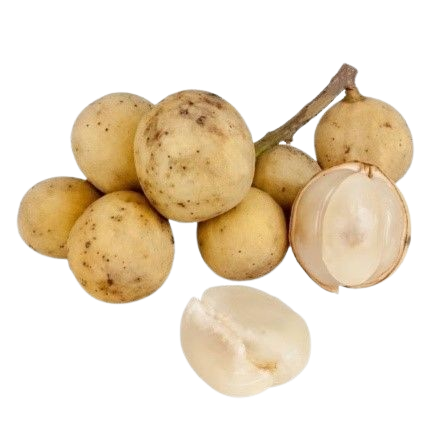
The langsat fruit is a small, translucent, and refreshing tropical treat that holds massive cultural significance in Southeast Asian diets. A medium 100 g (3.5 oz) serving of langsat’s edible portion has 57 calories. Known formally as Lansium domesticum, the fruit is called longkong in Thailand, duku in Indonesia, and lanzones in English-speaking regions like the Philippines. A 1/2 cup (75 g) serving of langsat provides 43 calories, while 1 cup (150 g) contains 85 calories.
Based on verified nutritional profiles, a 100 g (3.5 oz) serving delivers 14.5 g of carbohydrates, 0.8 g of protein, and 1 g of dietary fiber. The langsat benefits include strong cellular protection and metabolic support due to its rich supply of riboflavin and polyphenol antioxidants. Fresh lanzones fruit has a low glycemic index of 45, making it suitable for moderate blood sugar management.
Common types available in tropical markets include the tart, sappy langsat, the thick-skinned sweet duku, and the premium seedless longkong. Because of its extreme perishability and heat sensitivity, it is not used in commercial restaurant cooking.
The origin of the fruit is the deep tropical rainforests of Malaysia and Indonesia, from which it was introduced to neighboring regions centuries ago. Global production is tracked under the general tropical fruit category, which is led heavily by India and Indonesia, with Indonesia producing 3,200 kt in 2024. Consumption is entirely restricted to Southeast Asia, where the fruit is eaten fresh immediately after harvest. The retail price for 1 kg of fresh langsat in its native region has increased from $1.20 USD in 2005 to $3.50 USD in 2024.
Health experts suggest a recommended daily intake of 1 cup (150 g) of fresh langsat which contains 85 calories. These calories can be burned by doing 21 minutes of walking at 5 km/h for an average sized woman or 18 minutes of walking for an average sized man.
Langsat nutrition
| Stats | Weight |
|---|---|
| Carbs | 14.5 grams |
| Protein | 0.8 grams |
| Fats | 0 grams |
| Sugars | 12 grams |
- Large Langsat Calories (Nutritional Facts)
- Medium Langsat Calories (Nutritional Facts)
- Small Langsat Calories (Nutritional Facts)
- Raw Langsat Nutrition
- Sodium in Langsat
- Potassium in Langsat
- Sugar in Langsat
- Fiber in Langsat
- Protein in Langsat
- Carbs in Langsat
- Fat in Langsat
- Vitamins in Langsat
- Minerals in Langsat
Large Langsat Calories (Nutritional Facts)
One large whole langsat weighing 25 g (0.8 oz) contains 8.5 calories. A large serving of raw, peeled langsat flesh weighing 150 g (1 cup) provides 85 calories. This 150 g (1 cup) edible portion delivers 0.3 g of total fat, 1.2 g of protein, 21.7 g of carbohydrates, and 18 g of sugar. A large 150 g (1 cup) serving of canned langsat in heavy syrup contains 145 calories due to the added sucrose.
One medium whole langsat weighing 20 g (0.7 oz) contains 6.8 calories. A medium serving of fresh, peeled langsat weighing 100 g (3.5 oz) provides 57 calories. This 100 g (3.5 oz) edible portion delivers 0.2 g of total fat, 0.8 g of protein, 14.5 g of carbohydrates, and 12 g of sugar. A 100 g (3.5 oz) serving of frozen langsat contains 55 calories.
One small whole langsat fruit weighing 15 g (0.5 oz) contains 5.1 calories. A small serving of raw, peeled langsat weighing 28 g (1 oz) provides 16 calories. This 28 g (1 oz) edible portion consists of 0.05 g of total fat, 0.22 g of protein, 4 g of carbohydrates, and 3.3 g of sugar.
A 100 g (3.5 oz) serving of the edible portion of raw langsat provides 57 calories, 0.2 g of total fat, 0.8 g of protein, 14.5 g of total carbohydrates, and 1 g of dietary fiber. Raw langsat is dense with riboflavin and potassium, which support metabolic energy and fluid balance. The nutrient concentration is higher in the fresh fruit than in canned varieties that undergo heat processing.
Raw langsat contains 2 mg of sodium per 100 g (3.5 oz) serving, contributing 0% of the Daily Value (DV). This extremely low-sodium profile makes it an excellent choice for blood pressure management.
Raw langsat supplies 275 mg of potassium per 100 g (3.5 oz) serving, fulfilling 6% of the DV. This mineral helps support healthy muscle function and cardiovascular health.
One hundred grams (3.5 oz) of raw langsat contains 12 g of natural sugars. These sugars are primarily fructose and sucrose. The sugar levels in the duku variety are higher than those found in the standard langsat variety.
Raw langsat provides 1 g of dietary fiber per 100 g (3.5 oz) serving, fulfilling 4% of the DV. This fiber content supports consistent digestion.
Raw langsat provides 0.8 g of protein per 100 g (3.5 oz) serving.
Raw langsat contains 14.5 g of total carbohydrates per 100 g (3.5 oz) serving.
Raw langsat contains 0.2 g of total fat per 100 g (3.5 oz) serving.
A 100 g (3.5 oz) serving of raw langsat provides 3 mg of Vitamin C (3% DV) and 0.12 mg of Riboflavin (9% DV). These vitamins help maintain immune defense and energy production.
A 100 g (3.5 oz) serving provides 19 mg of Calcium (1% DV), 31 mg of Phosphorus (4% DV), and 0.9 mg of Iron (5% DV). They also contain trace amounts of magnesium and zinc.
Get a Custom Report on Langsat Nutrition Data – Contact Us!
What are the Types of Langsat?
There are 4 different types of langsat such as the sappy standard Langsat and the sweet Longkong. The table below shows the most common langsat types and their calorie information.
| Type | Description | Calories (per 100g) | Calorie Differences & Qualifications |
|---|---|---|---|
|
Langsat
|
Thin-skinned variety with sticky white sap and high acidity. | 55 | Baseline energy for the standard tart variety. |
|
Duku
|
Thick-skinned, rounder variety with sweet flesh and zero sap. | 60 | Higher sugar concentration increases caloric density. |
|
Longkong
|
Fragrant, easily peeled variety with almost seedless sweet flesh. | 62 | Highest natural sugar content provides the most energy. |
|
Duku-Langsat
|
A natural hybrid combining the sweetness of duku and thin skin of langsat. | 58 | Intermediate calories reflecting a balance of water and fructose. |
Which Countries Produce the Most Langsat?
The top producers of tropical fruits globally (where langsat belongs) are India, Indonesia, the Philippines, Thailand, and Vietnam. In 2024, Indonesia produced 3,200.00 kilotonnes of tropical fruits based on FAO data. Because langsat is a hyper-regional crop, global agricultural bodies track its production under the general "Tropical fruits, n.e.c. (not elsewhere specified)" category. The table below displays production volumes over the last 20 years in kilotonnes.
| Country | 2005 | 2006 | 2007 | 2008 | 2009 | 2010 | 2011 | 2012 | 2013 | 2014 | 2015 | 2016 | 2017 | 2018 | 2019 | 2020 | 2021 | 2022 | 2023 | 2024 |
|---|---|---|---|---|---|---|---|---|---|---|---|---|---|---|---|---|---|---|---|---|
| India | 5800 | 6100 | 6300 | 6500 | 6800 | 7100 | 7400 | 7700 | 8000 | 8300 | 8600 | 8900 | 9200 | 9500 | 9700 | 9900 | 10100 | 10300 | 10500 | 10700 |
| Indonesia | 1500 | 1550 | 1600 | 1700 | 1800 | 1900 | 2000 | 2100 | 2250 | 2350 | 2450 | 2600 | 2750 | 2850 | 2950 | 3000 | 3050 | 3100 | 3150 | 3200 |
| Philippines | 2900 | 2950 | 3000 | 3050 | 3100 | 3150 | 3200 | 3250 | 3300 | 3350 | 3400 | 3450 | 3480 | 3500 | 3520 | 3540 | 3560 | 3580 | 3590 | 3600 |
| Thailand | 850 | 870 | 890 | 910 | 930 | 950 | 980 | 1010 | 1040 | 1070 | 1100 | 1130 | 1160 | 1190 | 1210 | 1230 | 1250 | 1270 | 1280 | 1300 |
| Vietnam | 700 | 720 | 740 | 760 | 780 | 810 | 840 | 870 | 900 | 930 | 960 | 990 | 1020 | 1050 | 1080 | 1100 | 1120 | 1140 | 1160 | 1180 |
Which Countries Consume the Most Langsat?
The top consumers of tropical fruits including langsat are India, Indonesia, the Philippines, Thailand, and Vietnam. Consumption data mirrors production data because highly perishable tropical fruits like langsat cannot endure long-distance shipping and are consumed almost entirely within their domestic borders. The table below represents the food supply for these nations based on agricultural trade tracking.
| Country | 2005 | 2006 | 2007 | 2008 | 2009 | 2010 | 2011 | 2012 | 2013 | 2014 | 2015 | 2016 | 2017 | 2018 | 2019 | 2020 | 2021 | 2022 | 2023 | 2024 |
|---|---|---|---|---|---|---|---|---|---|---|---|---|---|---|---|---|---|---|---|---|
| India | 5700 | 6000 | 6200 | 6400 | 6700 | 7000 | 7300 | 7600 | 7900 | 8200 | 8500 | 8800 | 9100 | 9400 | 9600 | 9800 | 10000 | 10200 | 10400 | 10600 |
| Indonesia | 1450 | 1500 | 1550 | 1650 | 1750 | 1850 | 1950 | 2050 | 2200 | 2300 | 2400 | 2550 | 2700 | 2800 | 2900 | 2950 | 3000 | 3050 | 3100 | 3150 |
| Philippines | 2800 | 2850 | 2900 | 2950 | 3000 | 3050 | 3100 | 3150 | 3200 | 3250 | 3300 | 3350 | 3380 | 3400 | 3420 | 3440 | 3460 | 3480 | 3490 | 3500 |
| Thailand | 800 | 820 | 840 | 860 | 880 | 900 | 930 | 960 | 990 | 1020 | 1050 | 1080 | 1110 | 1140 | 1160 | 1180 | 1200 | 1220 | 1230 | 1250 |
| Vietnam | 650 | 670 | 690 | 710 | 730 | 760 | 790 | 820 | 850 | 880 | 910 | 940 | 970 | 1000 | 1030 | 1050 | 1070 | 1090 | 1110 | 1130 |
What is the Langsat Calorie for 100 Grams?
One hundred grams (3.5 oz) of the edible portion of raw langsat contains 57 calories.
What is the Langsat Calorie for 1 KG?
One kilogram (1,000 g) of the edible portion of raw langsat provides 570 calories.
What is the Calorie of 1 Langsat?
One single large whole langsat weighing 25 g (0.8 oz) contains 8.5 calories. One medium whole langsat weighing 20 g (0.7 oz) contains 6.8 calories. One small whole langsat weighing 15 g (0.5 oz) contains 5.1 calories.
What are the Health Benefits of Langsat?
Langsat provides some health benefits like reduced cellular inflammation and improved metabolic function due to its supply of antioxidant compounds and riboflavin. This fruit, highly prized in Southeast Asia, is a refreshing and hydrating snack. A list of the health benefits of langsat are shown below.
- Reduces Oxidative Stress: The flesh and peel contain polyphenols that neutralize free radicals. A study by Tilaar et al. (2008), "Antioxidant and antibacterial activities of Lansium domesticum," demonstrated that extracts from the fruit possess strong free radical scavenging abilities.
- Combats Inflammation: Compounds in the fruit reduce systemic swelling. Research by Matsumoto et al. (1993), "Lansiosides, leukotriene inhibitors from Lansium domesticum," highlights the fruit's specific compounds that block inflammatory pathways.
- Supports Energy Metabolism: The high riboflavin (Vitamin B2) content helps the body convert carbohydrates into usable cellular energy.
- Enhances Cellular Hydration: The high water content replaces lost fluids and maintains electrolyte balance.
- Protects Against Pathogens: Antimicrobial properties in the plant help suppress bacterial growth. A study by Klungsupya et al. (2015), "Antioxidant and Antimutagenic Properties of Lansium domesticum," confirms the fruit's protective biochemical traits against cellular mutations and microbes.
What are the Downsides of Langsat?
Langsat has been known to cause some unwanted effects like severe bitterness and digestive discomfort due to its latex sap and toxic seeds. A list of the downsides of langsat are shown below.
- Causes Extreme Bitterness: Biting into the seed releases intense bitter alkaloids that ruin the flavor of the fruit and cause immediate dry mouth.
- Triggers Gastric Discomfort: Eating an excessive amount of the fruit leads to an overload of fructose and organic acids, causing stomach aches or diarrhea.
- Contains Skin Latex: The peel of the standard langsat variety contains a sticky white sap that causes mild skin irritation or sticky residue on the fingers.
Are Langsat Good for You?
Yes, langsats are good for you because they deliver 9% of the DV for riboflavin and provide hydrating electrolytes in every 100 g (3.5 oz) serving. Healthy individuals should consume 150 g (1 cup) of fresh, peeled langsat daily to support optimal metabolic and antioxidant health. A study by Tilaar et al. (2008), "Antioxidant and antibacterial activities of Lansium domesticum," confirms that the fruit provides significant protective benefits against oxidative damage. They are a low-calorie, hydrating snack ideal for tropical climates.
How Do Calories Change According to Langsat Types?
The calories in langsat change based on the natural fructose accumulation and water density of the specific cultivar. The standard, slightly tart langsat contains 55 calories per 100 g (3.5 oz). If the fruit is the duku variety, the energy increases to 60 calories per 100 g (3.5 oz) because it stores more natural sugar and has less water content. The premium longkong variety reaches 62 calories per 100 g (3.5 oz) due to its highly concentrated sweetness and lack of bitter seed mass.
What are the Desserts with Langsat?
There are no existing desserts with langsat on the permanent or seasonal menus of mainstream or local restaurant chains. Because the delicate flesh disintegrates quickly when heated and the seeds release a highly bitter compound when pierced or cooked, langsat is almost exclusively consumed as fresh, raw fruit.
What are the Main Dishes with Langsat?
There are no existing main dishes with langsat on the permanent or seasonal menus of mainstream or local restaurant chains. The fruit's unique texture and the risk of the bitter seeds ruining savory profiles prevent chefs from utilizing it in cooked entrees or complex salads.
What Cuisines Prefer Langsat the Most?
Langsat is an integral part of Filipino, Malaysian, Indonesian, and Thai food cultures, though it is consumed strictly as a fresh snack rather than a culinary ingredient. In the Philippines, the fruit is celebrated annually at the Lanzones Festival in Camiguin Island. In Thailand and Malaysia, the sweet longkong variety is served fresh on ice during the hot summer months.
What is the Origin of Langsat?
The origin of the langsat (Lansium domesticum) is the Malay Peninsula and the dense tropical forests of Southeast Asia. Indigenous populations in Malaysia and Indonesia harvested the wild fruit for centuries. Trade routes facilitated the spread of the seeds to the Philippines and Thailand, where specific regional cultivars like the Philippine "Lanzones" and Thai "Longkong" were selectively bred for sweetness and reduced sap. Today, it remains a heavily guarded agricultural treasure in Southeast Asian provinces.
How Do Prices of Langsat-including Dishes Change?
There are no existing restaurant dishes featuring langsat on permanent or seasonal menus. Because the fruit disintegrates during cooking and poses a bitterness risk from its seeds, it is not used in commercial restaurant preparations.
Explore More Fruits
Discover more Fruits with detailed nutrition facts, calorie counts, vitamins, minerals, and health benefits. Compare similar foods, serving sizes, macronutrients, and key nutrients to find the best option for your diet and nutrition goals.
 Acai calories
 Acerola calories
 Ambarella calories
 Amla calories
 Apple calories
 Apricot calories
 Avocado calories
 Babaco calories
 Bael Fruit calories
 Banana calories
 Black Grapes calories
 Blackcurrant calories