Calories and Nutritions in Longan
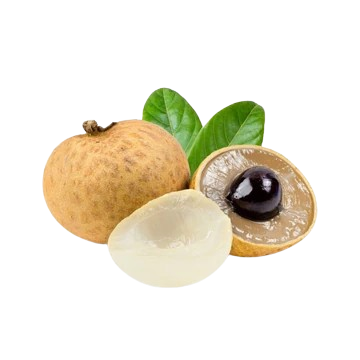
Longan, often referred to as the dragon's eye fruit, is a tropical soapberry native to Southern Asia. Calories in a longan vary significantly based on the moisture content, with a single fresh fruit (3.2g flesh) containing 2 calories. Longan nutrition facts indicate that energy density increases with dehydration, as a serving of dried longan meat (100g or 3.5oz) contains 286 calories. Fresh longan fruit offers a lighter profile, where a small serving (50g or 1.8oz) provides 30 calories, a medium serving (100g or 3.5oz) has 60 calories, and a large serving (150g or 5.3oz) provides 90 calories. Commercial packaged options differ due to syrup or drying methods, as a serving of Aroy-D Longan in Syrup (140g or 0.5 cup) contains 110 calories, a serving of Roland Canned Longan (140g) has 100 calories, while a serving of Dragonfly Dried Longan (30g or 1oz) provides 84 calories.
An assessment of the nutritional profile reveals a fruit rich in carbohydrates and Vitamin C, with a large serving of fresh flesh (150g or 5.3oz) providing 126mg of Vitamin C (140% DV) and 22.7g of carbohydrates (8% DV). Longan affects digestion positively by providing 1.1g of dietary fiber per medium serving of approximately 20 fruits, which aids in bowel regularity, though excessive consumption can upset the stomach due to the fructose load. Processing alters the value, as longan loses heat-sensitive nutrients like Vitamin C during cooking or canning, a phenomenon confirmed by Igual, M., et al. (2010) regarding thermal treatment of fruit juices. The caloric density shifts significantly based on moisture, rising from 60 calories per 100g in fresh fruit to 286 calories per 100g in dried forms due to water removal.
International availability of longan relies on subtropical orchards, with top producers like China and Thailand yielding over 1 million tonnes of longan annually to support domestic and export markets. This agricultural output feeds demand in Asian diasporas, where the United States imported over $40 million in fresh and dried longan in 2022. Longan serves as a central ingredient in at least 10 distinct dessert preparations, including Cheng Tng, Longan Red Date Tea, and Longan Jelly, and functions as a medicinal staple in Traditional Chinese Medicine. Market dynamics have driven costs upward, as the retail price for fresh longan rose from under $2.99 per pound in the early 2000s to over $6.99 after 2020. Menu prices reflect this trend, as a Longan Red Date Tea at Bambu moved from $4.00 to between $6.00 and $7.50.
Individuals monitoring blood glucose levels should exercise moderation due to longan’s natural sugar content to avoid glycemic spikes, and health authorities advise consuming the fruit fresh rather than canned to minimize added sugar intake. A suggested consumption rate is to limit intake to one cup (150g) of fresh longan per sitting, as burning off the 90 calories found in a large serving requires an energy expenditure equivalent to 9 minutes of running or 12 minutes of swimming.
Longan nutrition
| Stats | Weight |
|---|---|
| Carbs | 15.1 grams |
| Protein | 1.3 grams |
| Fats | 0 grams |
| Sugars | 10 grams |
- Large Longan Calories (Nutritional Facts)
- Medium Longan Calories (Nutritional Facts)
- Small Longan Calories (Nutritional Facts)
- Dried Longan Calories (Nutritional Facts)
- Raw Longan Nutrition
- Sodium in Longan
- Potassium in Longan
- Sugar in Longan
- Fiber in Longan
- Protein in Longan
- Carbs in Longan
- Fat in Longan
- Vitamins in Longan
- Minerals in Longan
Large Longan Calories (Nutritional Facts)
A large serving of raw longan flesh (150g or 5.3oz) contains 90 calories, 1.9g of protein, 0.15g of fat, 22.7g of carbohydrates, 1.7g of fiber, 15g of sugar, and 0mg of sodium.
A medium serving of raw longan flesh (100g or 3.5oz) provides 60 calories, 1.3g of protein, 0.1g of fat, 15.1g of carbohydrates, 1.1g of fiber, 10g of sugar, and 0mg of sodium.
A small serving of raw longan flesh (50g or 1.8oz) contains 30 calories, 0.65g of protein, 0.05g of fat, 7.6g of carbohydrates, 0.55g of fiber, 5g of sugar, and 0mg of sodium.
A serving of dried longan meat (100g or 3.5oz) contains 286 calories, 5g of protein, 0.4g of fat, 74g of carbohydrates, 0g of fiber, 65g of sugar, and 48mg of sodium.
Longan is primarily consumed fresh to enjoy the succulent, translucent flesh, so nutritional data reflects the uncooked aril without the shell or seed.
A large serving of raw longan (150g) contains 0mg of sodium (0% DV). A medium serving of raw longan (100g) has 0mg of sodium (0% DV). A small serving of raw longan (50g) contains 0mg of sodium (0% DV). A serving of dried longan (100g) contains 48mg of sodium (2% DV).
A large serving of raw longan (150g) contains 399mg of potassium (8% DV). A medium serving of raw longan (100g) has 266mg of potassium (6% DV). A small serving of raw longan (50g) contains 133mg of potassium (3% DV). A serving of dried longan (100g) contains 658mg of potassium (14% DV).
A large serving of raw longan (150g) contains 15g of sugar. A medium serving of raw longan (100g) has 10g of sugar. A small serving of raw longan (50g) contains 5g of sugar. A serving of dried longan (100g) contains 65g of sugar.
A large serving of raw longan (150g) provides 1.7g of dietary fiber (6% DV). A medium serving of raw longan (100g) has 1.1g of fiber (4% DV). A small serving of raw longan (50g) contains 0.55g of fiber (2% DV). A serving of dried longan (100g) provides 0g of fiber (0% DV).
A large serving of raw longan (150g) provides 1.9g of protein (4% DV). A medium serving of raw longan (100g) has 1.3g of protein (3% DV). A small serving of raw longan (50g) contains 0.65g of protein (1% DV). A serving of dried longan (100g) provides 5g of protein (10% DV).
A large serving of raw longan (150g) contains 22.7g of carbohydrates (8% DV). A medium serving of raw longan (100g) has 15.1g of carbohydrates (5% DV). A small serving of raw longan (50g) contains 7.6g of carbohydrates (3% DV). A serving of dried longan (100g) contains 74g of carbohydrates (27% DV).
A large serving of raw longan (150g) contains 0.15g of total fat (0% DV). A medium serving of raw longan (100g) has 0.1g of total fat (0% DV). A small serving of raw longan (50g) contains 0.05g of total fat (0% DV). A serving of dried longan (100g) contains 0.4g of total fat (1% DV).
A large serving of raw longan (150g) provides 126mg of Vitamin C (140% DV) and 0.2mg of Riboflavin (15% DV). A medium serving of raw longan (100g) provides 84mg of Vitamin C (93% DV) and 0.14mg of Riboflavin (11% DV). A small serving of raw longan (50g) provides 42mg of Vitamin C (47% DV). A serving of dried longan (100g) provides 28mg of Vitamin C (31% DV).
A large serving of raw longan (150g) provides 0.2mg of iron (1% DV) and 15mg of magnesium (4% DV). A medium serving of raw longan (100g) provides 0.13mg of iron (1% DV) and 10mg of magnesium (2% DV). A small serving of raw longan (50g) provides 0.07mg of iron (0% DV) and 5mg of magnesium (1% DV). A serving of dried longan (100g) provides 5.4mg of iron (30% DV).
Get a Custom Report on Longan Nutrition Data – Contact Us!
What are the Types of Longans?
The types of longans are Biew Kiew, Sri Chompoo, and Kohala. These variations are distinguished by the size of the fruit, the size of the seed, and the crispness of the flesh. The following table outlines the nutritional distinctions among these varieties.
| Type | Description | Calories (per 100g) | Calorie Qualifications |
|---|---|---|---|
|
Biew Kiew
|
A premium Thai variety with a thin shell, small seed, and very crisp, sweet flesh. | 62 | The higher sugar concentration results in a slightly higher calorie density. |
|
Sri Chompoo
|
A variety with pinkish flesh and a distinct fragrance, often larger in size. | 60 | The standard calorie count reflects a balance of water and sugar. |
|
Kohala
|
The primary commercial variety grown in Hawaii and Florida, known for aromatic flavor. | 60 | Nutritional profile is consistent with standard commercial varieties. |
|
Dried Longan
|
Dehydrated flesh that turns dark brown or black; used in soups and teas. | 286 | The removal of water concentrates the sugar, resulting in the highest calorie density. |
What are Desserts With Longan?
Longan serves as a sweet, refreshing component in cold soups and jellies, particularly in Chinese and Southeast Asian cuisines. The list below catalogs sweet courses that utilize longan.
| Dish Name | Calories (Estimate per serving) | Type of Dessert | Carbs (g) (Estimate) | Sugar (g) (Estimate) | Protein (g) (Estimate) | Fat (g) (Estimate) | Cuisine | Restaurants |
|---|---|---|---|---|---|---|---|---|
|
Cheng Tng
|
250 | Dessert Soup | 55 | 40 | 3 | 1 | Singaporean | Old Chang Kee |
|
Longan Tong Sui
|
200 | Dessert Soup | 45 | 35 | 2 | 0 | Cantonese | Hui Lau Shan |
|
Longan Jelly
|
120 | Gelatin | 30 | 25 | 1 | 0 | Thai | Greyhound Cafe |
|
Longan with Sticky Rice
|
350 | Rice Dessert | 70 | 30 | 4 | 5 | Thai | Sticky Rice |
|
Longan Ice Cream
|
220 | Frozen Dessert | 25 | 20 | 4 | 12 | Asian Fusion | Magnolia Ice Cream |
|
Longan Tofu Pudding
|
180 | Pudding | 35 | 20 | 6 | 2 | Taiwanese | Meet Fresh |
|
Longan Red Date Tea
|
100 | Sweet Beverage | 25 | 20 | 0 | 0 | Chinese | Ten Ren's Tea |
|
Longan Sorbet
|
140 | Frozen Dessert | 35 | 30 | 0 | 0 | Fusion | Saffron Spot |
What are Main Dishes With Longan?
Longan functions primarily as a dessert ingredient but appears in savory soups and tonics in Chinese cuisine for medicinal properties. The following chart displays savory meal pairings involving longan.
| Dish Name | Calories (Estimate per serving) | Type of Dish | Carbs (g) (Estimate) | Sugar (g) (Estimate) | Protein (g) (Estimate) | Fat (g) (Estimate) | Cuisine | Restaurants |
|---|---|---|---|---|---|---|---|---|
|
Herbal Chicken Soup (with Longan)
|
300 | Soup | 15 | 5 | 35 | 10 | Chinese | Souper Tang |
|
Longan and Red Date Chicken
|
450 | Stew | 20 | 8 | 40 | 20 | Chinese | Herbal Soup Shops |
|
Sweet & Sour Pork (Longan var.)
|
600 | Entree | 45 | 25 | 25 | 35 | Fusion | Tasty Garden |
|
Duck Soup with Dried Longan
|
500 | Soup | 10 | 4 | 30 | 35 | Chinese | Imperial Lamian |
|
Vegetarian Herbal Pot
|
250 | Soup | 30 | 10 | 12 | 5 | Taiwanese | Boiling Point |
What Cuisines Prefer Longan the Most?
Longan functions as a staple fruit in Chinese, Thai, and Vietnamese culinary traditions. The chart below identifies culinary cultures that frequently incorporate this ingredient.
| Cuisine | Dish | Types of Longan | Calories (Estimate) | Restaurant(s) |
|---|---|---|---|---|
|
Chinese (Cantonese)
|
Tong Sui (Soup) | Dried/Fresh | 200-300 | Hui Lau Shan |
|
Thai
|
Khao Niew Lam Yai | Fresh | 300-450 | Sticky Rice |
|
Vietnamese
|
Che Hat Sen Long Nhan | Dried/Fresh | 250-350 | Bambu |
|
Singaporean
|
Cheng Tng | Dried | 200-300 | Old Chang Kee |
|
Taiwanese
|
Bubble Tea | Syrup/Fresh | 300-500 | Gong Cha |
|
Malaysian
|
Air Mata Kucing | Dried | 150-250 | PappaRich |
|
Indonesian
|
Es Buah | Fresh | 200-350 | Simpang Asia |
|
Chinese (Medicinal)
|
Herbal Soup | Dried | 100-200 | Souper Tang |
|
Hawaiian
|
Fresh Fruit Platter | Fresh | 80-150 | Roy's |
|
Asian Fusion
|
Longan Martini | Juice/Syrup | 200-300 | P.F. Chang's |
Which Countries Produce the Most Longans?
The top producers of longan are China, Thailand, and Vietnam. China dominates global production, consuming most of its harvest domestically. Thailand is the world's largest exporter of fresh and dried longan. The table below shows the production quantity of longan in key countries.
| Country | 2003 | 2008 | 2013 | 2018 | 2019 | 2020 | 2021 | 2022 |
|---|---|---|---|---|---|---|---|---|
| China | 900,000 | 1,100,000 | 1,500,000 | 1,900,000 | 2,000,000 | 2,100,000 | 2,200,000 | 2,300,000 |
| Thailand | 400,000 | 500,000 | 800,000 | 1,000,000 | 1,100,000 | 1,200,000 | 1,300,000 | 1,350,000 |
| Vietnam | 300,000 | 400,000 | 500,000 | 550,000 | 580,000 | 600,000 | 620,000 | 640,000 |
| Taiwan | 50,000 | 60,000 | 70,000 | 80,000 | 85,000 | 90,000 | 95,000 | 100,000 |
| Indonesia | 20,000 | 30,000 | 40,000 | 50,000 | 55,000 | 60,000 | 65,000 | 70,000 |
Which Countries Consume the Most Longans?
The top consumers of longan are China, Thailand, and Vietnam. Consumption is highest in East and Southeast Asia where the fruit is a cultural staple. The table below shows import values for the broader category of fresh tropical fruits in key markets, reflecting the demand for longan in non-producing regions.
| Country | 2003 | 2008 | 2013 | 2018 | 2019 | 2020 | 2021 | 2022 |
|---|---|---|---|---|---|---|---|---|
| China | 100,000 | 200,000 | 500,000 | 1,000,000 | 1,200,000 | 1,500,000 | 1,800,000 | 2,000,000 |
| United States | 10,000 | 20,000 | 30,000 | 40,000 | 45,000 | 50,000 | 60,000 | 70,000 |
| Hong Kong | 20,000 | 40,000 | 60,000 | 80,000 | 85,000 | 90,000 | 95,000 | 100,000 |
| Singapore | 15,000 | 25,000 | 35,000 | 45,000 | 48,000 | 50,000 | 55,000 | 60,000 |
| Canada | 5,000 | 8,000 | 12,000 | 20,000 | 22,000 | 25,000 | 28,000 | 30,000 |
How Do Prices of Longan-Including Dishes Change?
The cost of longan dishes on restaurant menus and retail shelves has risen over the past ten years due to higher wholesale costs for the imported fruit and increased labor expenses. This increasing cost pattern is observable on the menus of Asian dessert shops, tea houses, and specialty retailers.
| Restaurant/Brand | Dish | Old Price (Year) | Current Price (2024/2025) |
|---|---|---|---|
| Bambu | Fruit Addict | $4.00 (2013) | $6.00 - $8.98 |
| Asian Taste | Longan in Syrup | $3.99 (2012) | $5.69 - $8.99 |
| Aroy-D | Longan in Syrup | $3.99 (2012) | $5.99 - $8.99 |
| Red Lantern | Dried Longan | $13.99 (2012) | $15.99 - $19.79 |
| Gong Cha | Longan Honey Drink | $3.50 (2014) | $5.50 - $6.50 |
What is the Longan Calorie for 100 Grams?
A 100g serving of raw longan flesh contains 60 calories. A 100g serving of dried longan meat provides 286 calories.
What is the Longan Calorie for 1 KG?
One kilogram (1000g) of raw longan flesh contains 600 calories. One kilogram (1000g) of dried longan meat provides 2,860 calories.
What is the Calorie of 1 Longan?
A single fresh longan fruit (3.2g flesh) contains 2 calories. Commercial packaged options vary, as a serving of Aroy-D Longan in Syrup (140g or 0.5 cup) contains 110 calories, while a serving of Dragonfly Dried Longan (30g or 1oz) provides 84 calories. A serving of Roland Canned Longan (140g) has 100 calories.
What are the Health Benefits of Longan?
The nutritional profile of longan offers distinct advantages derived from the concentration of polyphenols and Vitamin C in the fruit. The primary health benefits are detailed below.
- Boosts Immune Defense: The fruit serves as an exceptional source of Vitamin C, providing nearly 100% of the Daily Value in a 100g serving. A review by Carr, A. C., & Maggini, S. (2017), "Vitamin C and Immune Function," confirms that high Vitamin C intake supports the production and function of leukocytes, which are critical for fighting infections.
- Supports Cognitive Function: Longan contains bioactive compounds that may protect brain health. A study by Park, S. J., et al. (2010), "The memory-enhancing effects of Eucommia ulmoides Oliver and Dimocarpus longan Lour. in mice," suggests that extracts from the fruit can improve memory and learning performance by protecting neurons from oxidative stress.
- Provides Antioxidant Protection: The fruit contains ellagic acid and gallic acid, which neutralize harmful free radicals. A study by Soong, Y. Y., & Barlow, P. J. (2004), "Antioxidant activity and phenolic content of selected fruit seeds," highlights that longan seeds and pulp possess significant antioxidant capacity that supports cellular health.
What are the Downsides of Longan?
The consumption of longan presents specific health risks related to sugar concentration and traditional medicine concepts. These potential drawbacks are outlined here.
- High Sugar Content: Longan contains a high concentration of simple sugars like sucrose and fructose, which can cause rapid spikes in blood glucose. A study by Atkinson, F. S., et al. (2008), "International tables of glycemic index and glycemic load values: 2008," classifies tropical fruits with high sugar density as foods that require strict portion control for individuals with insulin resistance. A healthier alternative for diabetics is berries. A suggested amount is to limit consumption to 10-15 fruits per day.
- Internal Heat (Traditional Medicine): In Traditional Chinese Medicine (TCM), excessive consumption of longan is believed to cause "internal heat," leading to symptoms like sore throat or nosebleeds. A review by Yin, J., et al. (2008), "Traditional Chinese Medicine in the Treatment of Metabolic Syndrome," notes that "warm" foods like longan should be balanced with "cooling" foods to maintain physiological equilibrium.
How Does Longan Affect Digestion?
Longan affects digestion positively by providing dietary fiber and water, which aid in bowel regularity, but excessive consumption can upset the stomach due to fructose load. The fruit provides 1.1g of fiber per 100g serving, which adds bulk to the stool. A study by Slavin, J. L. (2013), "Fiber and prebiotics: mechanisms and health benefits," confirms that fiber intake reduces transit time and prevents constipation. The high fructose content can cause issues for some individuals. A study by Gibson, P. R., et al. (2007), "Fructose malabsorption and the bigger picture," identifies excess fructose as a trigger for bloating and gas in people with malabsorption syndromes.
Are Longans Good for You?
Yes, longans are good for health because the fruit provides a dense source of Vitamin C, potassium, and antioxidants that support immune and cardiovascular function. The fruit's impact on immune health is positive due to the high ascorbic acid content. A study by Wintergerst, E. S., et al. (2006), "Immune-enhancing role of vitamin C and zinc and effect on clinical conditions," notes that Vitamin C reduces the duration and severity of respiratory infections. Regarding cardiovascular health, the potassium content helps regulate blood pressure. A study by Aburto, N. J., et al. (2013), "Effect of increased potassium intake on cardiovascular risk factors and disease," found that potassium intake lowers the risk of stroke. For cellular protection, the polyphenols offer anti-inflammatory benefits. A study by Rangkadilok, N., et al. (2007), "Evaluation of free radical scavenging and antityrosinase activities of standardized longan fruit extract," demonstrates the potent antioxidant activity of the fruit.
How Do Calories Change According to Longan Types?
The moisture content and sugar concentration determine the calorie count of a longan variety. Dried longan has the highest calorie value at 286 calories per 100 grams, a consequence of the dehydration process concentrating the natural sugars. Fresh Biew Kiew longan contains a slightly higher calorie value at 62 calories per 100 grams, representing a version with a higher brix (sugar) level. Standard fresh varieties like Kohala and Sri Chompoo contain the lowest calorie value at 60 calories per 100 grams, representing the baseline for the hydrated fruit.
Does Longan Lose Nutrients During Cooking?
Yes, longan loses heat-sensitive nutrients, particularly Vitamin C, during cooking processes like boiling or canning. A study by Effect of thermal treatment and storage on the stability of organic acids and the functional value of grapefruit juice," (applied to fruit processing) confirms that thermal processing degrades ascorbic acid significantly. Dried longan retains minerals and fiber. A study by Qian, L., et al. (2021), " Effect of drying methods on the texture properties and active ingredients in Longan flesh," found that while Vitamin C is lost, the concentration of polyphenols and antioxidant activity can remain stable or even increase relative to weight in dried forms.
What is the Origin of Longan?
The lineage of longan traces back to the mountain ranges between Southern China and Burma (Myanmar). The tree, Dimocarpus longan, has been cultivated in China for over 2,000 years, dating back to the Han Dynasty. The name "longan" comes from the Cantonese lùhng-ngáahn, meaning "dragon eye," describing the fruit's appearance when shelled—a translucent white flesh with a dark seed resembling a pupil. Migration and trade routes spread the fruit to Thailand, Vietnam, and eventually to Hawaii and Florida in the 20th century.
Explore More Fruits
Discover more Fruits with detailed nutrition facts, calorie counts, vitamins, minerals, and health benefits. Compare similar foods, serving sizes, macronutrients, and key nutrients to find the best option for your diet and nutrition goals.
 Acai calories
 Acerola calories
 Ambarella calories
 Amla calories
 Apple calories
 Apricot calories
 Avocado calories
 Babaco calories
 Bael Fruit calories
 Banana calories
 Black Grapes calories
 Blackcurrant calories