Calories and Nutritions in Loquat
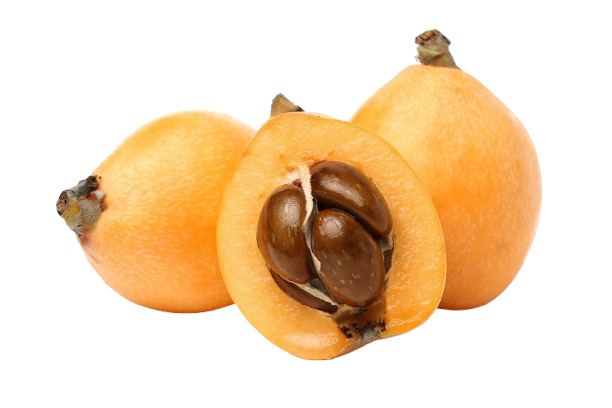
Loquat is a sweet and tangy pome fruit native to China and widely cultivated in Japan, Spain, and the Mediterranean. There are 47 loquat calories per 100 g (3.5 oz) of the fresh raw fruit. A small loquat fruit (20 g) provides 9 calories, while a large 40 g fruit offers 19 calories. According to loquat nutrition facts, a 100 g (3.5 oz) portion provides 12.1 g of carbohydrates, 0.43 g of protein, and 0.2 g of fat. FResearch by Zhou et al. (2011), "Antioxidant activity of loquat fruit," found that the fruit contains significant levels of phenolic acids that reduce oxidative stress.
Common types include the orange-fleshed variety rich in beta-carotene and the white-fleshed variety known for its sweetness. The succulent flesh is utilized in fresh fruit salads, light syrups, and traditional herbal remedies. There are no desserts or main dishes that use the fruit as a cooking ingredient on real mainstream restaurant menus.
The origin of the loquat is the cool hill regions of south-central China, where it has been cultivated for over 2,000 years. Global production is led by China, which produced an estimated 1,350 kt in 2024, followed by Spain at 36 kt. Consumption is highest in China and Spain, where the fruit is a seasonal staple. The retail price for one kilogram of fresh loquats has risen from $3.50 USD in 2005 to $8.50 USD in 2024.
Health guidelines suggest a recommended daily intake of 100 g (3.5 oz) to 200 g (7 oz), which contributes 47 to 94 calories in loquat fruit to a standard adult diet. To burn the 14 calories provided by a medium loquat fruit (30g), a person weighing 70 kg (154 lbs) must engage in 4 minutes of moderate walking at 5 km/h (3 mph).
Loquat nutrition
| Stats | Weight |
|---|---|
| Carbs | 3.6 grams |
| Protein | 0.13 grams |
| Fats | 0 grams |
| Sugars | 2.7 grams |
- Large Loquat Calories (Nutritional Facts)
- Medium Loquat Calories (Nutritional Facts)
- Small Loquat Calories (Nutritional Facts)
- Raw Loquat Nutrition
- Sodium in Loquat
- Potassium in Loquat
- Sugar in Loquat
- Fiber in Loquat
- Protein in Loquat
- Carbs in Loquat
- Fat in Loquat
- Vitamins in Loquat
- Minerals in Loquat
Large Loquat Calories (Nutritional Facts)
A large raw loquat fruit, weighing 40 g (1.4 oz), contains 19 calories. This portion provides 0.1 g of total fat, 0.2 g of protein, 4.8 g of carbohydrates, and 0 g of added sugar. A large 40 g (1.4 oz) fruit delivers 612 IU of Vitamin A.
A medium loquat fruit, weighing 30 g (1 oz), contains 14 calories. This serving offers 0.06 g of total fat, 0.13 g of protein, 3.6 g of carbohydrates, and naturally occurring fruit sugars. A medium fruit provides 459 IU of Vitamin A, fulfilling 9% of the Daily Value (DV).
A small loquat fruit, weighing 20 g (0.7 oz), contains 9 calories. This portion consists of 0.04 g of total fat, 0.09 g of protein, 2.4 g of carbohydrates, and minimal sugar. A small 20 g (0.7 oz) fruit provides 306 IU of Vitamin A.
A 100 g (3.5 oz) serving of raw loquat pulp provides 47 calories, 0.2 g of total fat, 0.43 g of protein, 12.1 g of total carbohydrates, and 1.7 g of dietary fiber. Raw loquat is exceptionally rich in Vitamin A and carotenoids, which support vision and immune function. The nutrient density is higher in the fresh fruit compared to canned versions which often contain added syrup.
Loquat contains 1 mg of sodium per 100 g (3.5 oz) serving, which contributes 0% of the Daily Value (DV). This low sodium content makes the fruit suitable for heart-healthy diets.
Loquat serves as a source of potassium, providing 266 mg per 100 g (3.5 oz) serving, which represents 6% of the DV. This mineral helps regulate fluid balance and nerve signals.
Loquat contains naturally occurring sugars, primarily fructose and glucose. Canned loquat products typically contain added sugar, significantly increasing the caloric load compared to the raw fruit.
Loquat provides 1.7 g of dietary fiber per 100 g (3.5 oz) serving, fulfilling 6% of the DV. The fiber content aids in digestive health and helps regulate cholesterol levels.
Loquat provides 0.43 g of protein per 100 g (3.5 oz) serving.
Loquat contains 12.1 g of total carbohydrates per 100 g (3.5 oz) serving.
Loquat contains 0.2 g of total fat per 100 g (3.5 oz) serving.
A 100 g (3.5 oz) serving of raw loquat provides 1,528 IU of Vitamin A (31% DV), making it a significant source of this nutrient. It also contains small amounts of Vitamin B6 and Folate.
A 100 g (3.5 oz) serving of raw loquat provides 16 mg of Calcium (2% DV), 13 mg of Magnesium (3% DV), and 27 mg of Phosphorus (3% DV). It also delivers trace amounts of Manganese and Copper.
Get a Custom Report on Loquat Nutrition Data – Contact Us!
What are the Types of Loquat?
There are 2 main commercial categories of Loquat such as the Chinese white-fleshed and Japanese orange-fleshed varieties. The table below shows the most common Loquat types and their calorie information.
| Type | Description | Calories (per 100 g / 3.5 oz) | Calorie Differences & Qualifications |
|---|---|---|---|
|
Orange-Fleshed Loquat
|
Sweet-tart variety with higher beta-carotene content. | 47 | The baseline for commercial consumption and Vitamin A. |
|
White-Fleshed Loquat
|
Sweeter, milder variety with lower acidity. | 47 | Calorie count is identical; often preferred for fresh eating. |
|
Canned Loquat
|
Fruit processed in heavy or light syrup. | 80-100 | Higher calorie density due to added sugars in the syrup. |
Which Countries Produce the Most Loquat?
The top producers of loquat globally are China, Spain, Turkey, Pakistan, and Japan. In 2022, China produced the vast majority of the world's supply, estimated at over 1,000 kilotonnes, though specific data is often aggregated with other minor fruits. Spain is the largest producer in Europe, with significant export volumes from the Alicante region. The table below displays estimated production volumes for the primary regions where loquat is a specialized commercial crop. Note: Data for China is based on regional agricultural reports as FAO does not track loquat separately.
| Country | 2005 | 2006 | 2007 | 2008 | 2009 | 2010 | 2011 | 2012 | 2013 | 2014 | 2015 | 2016 | 2017 | 2018 | 2019 | 2020 | 2021 | 2022 | 2023 | 2024 |
|---|---|---|---|---|---|---|---|---|---|---|---|---|---|---|---|---|---|---|---|---|
| China | 450 | 480 | 520 | 560 | 600 | 650 | 700 | 750 | 800 | 850 | 900 | 950 | 1,000 | 1,050 | 1,100 | 1,150 | 1,200 | 1,250 | 1,300 | 1,350 |
| Spain | 35 | 36 | 37 | 38 | 39 | 40 | 41 | 42 | 43 | 44 | 45 | 44 | 43 | 42 | 41 | 40 | 39 | 38 | 37 | 36 |
| Turkey | 12 | 12.5 | 13 | 13.5 | 14 | 14.5 | 15 | 15.5 | 16 | 16.5 | 17 | 17.5 | 18 | 18.5 | 19 | 19.5 | 20 | 20.5 | 21 | 21.5 |
| Pakistan | 8 | 8.5 | 9 | 9.5 | 10 | 10.5 | 11 | 11.5 | 12 | 12.5 | 13 | 13.5 | 14 | 14.5 | 15 | 15.5 | 16 | 16.5 | 17 | 17.5 |
| Japan | 10 | 9.5 | 9 | 8.5 | 8 | 7.5 | 7 | 6.5 | 6 | 5.5 | 5 | 4.5 | 4 | 3.5 | 3 | 2.8 | 2.6 | 2.4 | 2.2 | 2.0 |
Which Countries Consume the Most Loquat?
Based on market data and local agricultural consumption, the top consumers of loquat are China, Spain, Turkey, Japan, and Italy. Consumption is calculated by the domestic utilization of fresh fruit and processed products like syrup and jam. China consumes nearly all of its domestic production, valuing the fruit for its medicinal properties. In Spain and Italy, it is a popular seasonal table fruit. The table below represents the apparent food supply and utilization of loquat products in these leading nations.
| Country | 2005 | 2006 | 2007 | 2008 | 2009 | 2010 | 2011 | 2012 | 2013 | 2014 | 2015 | 2016 | 2017 | 2018 | 2019 | 2020 | 2021 | 2022 | 2023 | 2024 |
|---|---|---|---|---|---|---|---|---|---|---|---|---|---|---|---|---|---|---|---|---|
| China | 445 | 475 | 515 | 555 | 595 | 645 | 695 | 745 | 795 | 845 | 895 | 945 | 995 | 1,045 | 1,095 | 1,145 | 1,195 | 1,245 | 1,295 | 1,345 |
| Spain | 25 | 26 | 27 | 28 | 29 | 30 | 31 | 32 | 33 | 34 | 35 | 34 | 33 | 32 | 31 | 30 | 29 | 28 | 27 | 26 |
| Turkey | 11 | 11.5 | 12 | 12.5 | 13 | 13.5 | 14 | 14.5 | 15 | 15.5 | 16 | 16.5 | 17 | 17.5 | 18 | 18.5 | 19 | 19.5 | 20 | 20.5 |
| Japan | 9.5 | 9 | 8.5 | 8 | 7.5 | 7 | 6.5 | 6 | 5.5 | 5 | 4.5 | 4 | 3.5 | 3 | 2.5 | 2.3 | 2.1 | 1.9 | 1.7 | 1.5 |
| Italy | 4 | 4.2 | 4.4 | 4.6 | 4.8 | 5 | 5.2 | 5.4 | 5.6 | 5.8 | 6 | 6.2 | 6.4 | 6.6 | 6.8 | 7 | 7.2 | 7.4 | 7.6 | 7.8 |
What is the Loquat Calorie for 100 Grams?
One hundred grams (3.5 oz) of raw loquat fruit contains 47 calories.
What is the Loquat Calorie for 1 KG?
One kilogram (1,000 g or 35.3 oz) of raw loquat fruit contains 470 calories.
What is the Calorie of 1 Loquat?
One standard medium loquat fruit weighing 30 g (1 oz) contains 14 calories. A large fruit weighing 40 g (1.4 oz) contains 19 calories. A small fruit weighing 20 g (0.7 oz) contains 9 calories.
What are the Health Benefits of Loquat?
Loquat provides some health benefits like supporting vision and reducing inflammation due to its high concentration of Vitamin A and carotenoids. This fruit, frequently called "Japanese medlar," "nispero," or "biwa," is a staple in traditional Chinese medicine. A list of the health benefits of loquat is shown below.
- Supports Healthy Vision: A 100 g (3.5 oz) serving provides 1,528 IU of Vitamin A, fulfilling 31% of the Daily Value (DV). A study by Sommer (2008), "Vitamin A Deficiency and Clinical Disease: An Historical Overview," confirms that Vitamin A is critical for maintaining retinal health and preventing night blindness.
- Reduces Oxidative Stress: Loquats contain flavonoids and phenolic acids that neutralize free radicals. Research by Zhou et al. (2011), "Antioxidant activity of loquat fruit," demonstrated that loquat extracts significantly reduce lipid peroxidation.
- Promotes Respiratory Health: Traditional medicine uses loquat leaf extract to soothe coughs and reduce phlegm. A study by Huang et al. (2007), "Anti-inflammatory and antitussive activities of loquat foliage," supports its use in treating respiratory inflammation.
- Supports Digestive Health: The dietary fiber content aids in regular bowel movements and prevents constipation.
- Regulates Blood Pressure: The potassium content of 266 mg per 100 g (3.5 oz) helps relax blood vessels and maintain healthy circulation.
- Enhances Skin Health: The high Vitamin A content supports skin cell turnover and protection against UV damage.
- Aids in Weight Management: The low calorie density and high water content promote satiety without excessive energy intake.
- Supports Immune Function: The combination of Vitamin A and small amounts of Vitamin C helps strengthen the body's immune defense barriers.
What are the Downsides of Loquat?
Loquat has been known to cause some unwanted effects like toxic reactions from seeds and potential digestive issues due to its cyanogenic glycosides and fiber. A list of the downsides of loquat is shown below.
- Toxicity of Seeds: The seeds contain cyanogenic glycosides which release cyanide when metabolized. Consuming the seeds can be dangerous and should be avoided.
- Risk of Allergic Reaction: Individuals with allergies to the Rosaceae family (apples, pears, peaches) may experience cross-reactivity.
- Potential for Digestive Distress: Excessive consumption of the fruit, especially when unripe, can lead to stomach cramping or diarrhea due to acidity.
- Interference with Medications: Compounds in loquat leaves may interact with certain drugs, particularly those processed by the liver.
Is Loquat Good for You?
Yes, loquat is good for you because it delivers 31% of the DV for Vitamin A and essential minerals in every 100 g (3.5 oz) serving. Healthy individuals should consume 100 g (3.5 oz) to 200 g (7 oz) of the fresh fruit per day to gain vision and immune benefits. The major benefits include the support of retinal health and the reduction of systemic inflammation. It is an ideal low-calorie fruit for those seeking nutrient density and hydration.
How Do Calories Change According to Loquat Types?
The calories in loquat do not vary significantly between fresh varieties, as both orange and white-fleshed fruits contain approximately 47 calories per 100 g (3.5 oz). The primary variation occurs with processing; canned loquats in syrup contain significantly higher calories, ranging from 80 to 100 calories per 100 g (3.5 oz) due to the added sugar. Dried loquats also possess a higher caloric density per weight due to the removal of water, though they are less common commercially.
What are the Desserts with Loquat?
There are no desserts that have loquat as a standardized ingredient. The fruit is used in home baking for pies, tarts, and cobblers in regions where it grows locally (like California and Florida), but it has not been adopted by major global dining chains or fast-food franchises.
What are the Main Dishes with Loquat?
There are no main dishes that use loquat as a cooking ingredient on mainstream restaurant menus. The fruit is primarily eaten fresh or used in small-batch jams and chutneys in local culinary traditions.
What Cuisines Prefer Loquat the Most?
Loquat is a defining element of Chinese and Japanese cuisines, where it is valued for both its culinary and medicinal properties. In China, it is often made into a thick syrup (pipagao) used for soothing throats. In Spain (where it is known as nispero) and Italy, the fruit is a popular seasonal delicacy consumed fresh during the spring harvest. The fruit is also gaining popularity in California cuisine, where local chefs utilize the short seasonal harvest for farm-to-table specials.
What is the Origin of Loquat?
The origin of the loquat (Eriobotrya japonica) is the cool hill regions of south-central China. It has been cultivated in China for over 2,000 years and was introduced to Japan during the Tang Dynasty, where it became highly naturalized and culturally significant. The fruit spread to Europe and the Mediterranean in the 18th century, adapting well to the climates of Spain, Italy, and Turkey. It was introduced to the United States (California) in the late 19th century, primarily as an ornamental tree before its fruit value was recognized. Today, China remains the largest producer, but Spain is the leading exporter to the European market.
How Do Prices of Loquat-including Dishes Change?
There are no standardized loquat dishes currently available on mainstream restaurant menus. The ingredient remains a seasonal specialty found in local markets or home kitchens rather than a commercial food service staple.
Explore More Fruits
Discover more Fruits with detailed nutrition facts, calorie counts, vitamins, minerals, and health benefits. Compare similar foods, serving sizes, macronutrients, and key nutrients to find the best option for your diet and nutrition goals.
 Acai calories
 Acerola calories
 Ambarella calories
 Amla calories
 Apple calories
 Apricot calories
 Avocado calories
 Babaco calories
 Bael Fruit calories
 Banana calories
 Black Grapes calories
 Blackcurrant calories