Calories and Nutritions in Lucuma
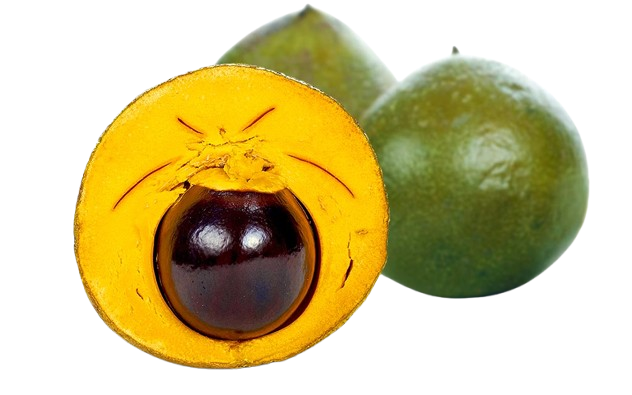
Lucuma is a subtropical fruit native to the Andean valleys of Peru, serving as a staple sweetener and flavoring in Peruvian and Chilean cuisines. There are 95 lucuma calories per 100 g (3.5 oz) of the fresh raw fruit. Frequently referred to by names such as Gold of the Incas, eggfruit, or lucmo, this fruit is significantly more energy-dense than berries but lower in calories than avocados. A small 100 g (3.5 oz) lucuma fruit provides 95 calories, while a large 150 g (5.3 oz) fruit offers 143 calories. According to lucuma nutrition facts, a 100 g (3.5 oz) portion provides 22.4 g of carbohydrates, 1.5 g of protein, and 1.6 g of fat. Research by Pinto et al. (2009), "Evaluation of antihyperglycemia and anti-hypertension potential of native Peruvian fruits," found that lucuma extracts have potent inhibitory effects on alpha-glucosidase, aiding in blood sugar management.
Common types of lucuma include the fresh raw fruit, frozen pulp, and dehydrated powder used as a sugar substitute. The maple-sweet and starchy profile of the fruit is utilized in specialty desserts such as the Suspiro de Limeña in Peruvian bakeries.
The origin of lucuma is the Andean region of South America, where it has been cultivated for over two millennia and revered as a symbol of fertility by the Moche culture. Global production is led by Peru, which produced 19.30 kt in 2024, followed by Chile at 4.50 kt. Consumption is highest in Peru and Chile, where the fruit is a primary confectionery ingredient. The retail price for a one-pound (454 g) bag of organic lucuma powder has decreased from $24.00 USD in 2005 to $16.99 USD in 2024 due to improved export channels.
Health guidelines suggest a recommended daily intake of 10 g to 15 g (2 to 3 tsp) of powder, which contributes 33 to 50 calories in lucuma to a standard adult diet. To burn the 114 calories provided by a medium 120 g (4.2 oz) fresh lucuma fruit, a person weighing 70 kg (154 lbs) must engage in 33 minutes of moderate walking at 5 km/h (3 mph). For those consuming a large 150 g (5.3 oz) fruit containing 143 calories, the energy expenditure requires 41 minutes of moderate walking.
Lucuma nutrition
| Stats | Weight |
|---|---|
| Carbs | 26.9 grams |
| Protein | 1.8 grams |
| Fats | 0 grams |
| Sugars | 18.7 grams |
- Large Lucuma Calories (Nutritional Facts)
- Medium Lucuma Calories (Nutritional Facts)
- Small Lucuma Calories (Nutritional Facts)
- Raw Lucuma Nutrition
- Sodium in Lucuma
- Potassium in Lucuma
- Sugar in Lucuma
- Fiber in Lucuma
- Protein in Lucuma
- Carbs in Lucuma
- Fat in Lucuma
- Vitamins in Lucuma
- Minerals in Lucuma
Large Lucuma Calories (Nutritional Facts)
A large fresh lucuma fruit, weighing 150 g (5.3 oz), contains 143 calories. This portion provides 2.4 g of total fat, 2.3 g of protein, 33.6 g of carbohydrates, and 23.4 g of sugar. A large 15 g (1 tbsp) serving of lucuma powder provides 60 calories.
A medium fresh lucuma fruit, weighing 120 g (4.2 oz), contains 114 calories. This serving offers 1.9 g of total fat, 1.8 g of protein, 26.9 g of carbohydrates, and 18.7 g of sugar. A medium 10 g (2 tsp) serving of lucuma powder contains 40 calories.
A small fresh lucuma fruit, weighing 100 g (3.5 oz), contains 95 calories. This portion consists of 1.6 g of total fat, 1.5 g of protein, 22.4 g of carbohydrates, and 15.6 g of sugar. A small 5 g (1 tsp) serving of lucuma powder provides 20 calories.
A 100 g (3.5 oz) serving of raw fresh lucuma provides 95 calories, 1.6 g of total fat, 1.5 g of protein, 22.4 g of total carbohydrates, and 2.3 g of dietary fiber. Raw lucuma is a nutrient-dense fruit rich in beta-carotene and niacin, which support energy metabolism. The nutrient density is significantly higher in the dehydrated powder form, which provides 329 calories per 100 g (3.5 oz) due to the removal of water.
Lucuma powder contains 80 mg of sodium per 100 g (3.5 oz) serving, which fulfills 3% of the Daily Value (DV). The fresh fruit contains minimal sodium, making it suitable for low-sodium diets.
Lucuma powder serves as a source of potassium, providing 950 mg per 100 g (3.5 oz) serving, which represents 20% of the DV. This mineral helps regulate fluid balance and nerve signals.
Fresh lucuma contains 15.6 g of sugar per 100 g (3.5 oz) serving. These are naturally occurring sugars, giving the fruit its signature maple-like sweetness. Lucuma powder contains 31 g of sugar per 100 g (3.5 oz) serving.
Lucuma powder provides 28 g of dietary fiber per 100 g (3.5 oz) serving, fulfilling 100% of the DV. The high fiber content aids in digestive health and blood sugar regulation. Fresh lucuma provides 2.3 g of fiber per 100 g (3.5 oz).
Lucuma powder provides 4 g of protein per 100 g (3.5 oz) serving. Fresh lucuma provides 1.5 g of protein per 100 g (3.5 oz).
Lucuma powder contains 85 g of total carbohydrates per 100 g (3.5 oz) serving. Fresh lucuma contains 22.4 g of total carbohydrates per 100 g (3.5 oz).
Lucuma powder contains 2.4 g of total fat per 100 g (3.5 oz) serving. Fresh lucuma contains 1.6 g of total fat per 100 g (3.5 oz).
A 100 g (3.5 oz) serving of lucuma powder is a source of Niacin (Vitamin B3), providing 4 mg (25% DV). It also contains significant amounts of beta-carotene, a precursor to Vitamin A.
A 100 g (3.5 oz) serving of lucuma powder provides 92 mg of Calcium (7% DV), 54 mg of Phosphorus (4% DV), and 4 mg of Iron (22% DV). It also delivers trace amounts of Zinc.
Get a Custom Report on Lucuma Nutrition Data – Contact Us!
What are the Types of Lucuma?
There are 2 main types of Lucuma products available globally such as the fresh fruit and the dehydrated powder. The table below shows the most common Lucuma types and their calorie information.
| Type | Description | Calories (per 100 g / 3.5 oz) | Calorie Differences & Qualifications |
|---|---|---|---|
|
Fresh Lucuma Fruit
|
The raw fruit with dry, starchy flesh similar to hard-boiled yolk. | 95 | The baseline for natural hydration and vitamins. |
|
Lucuma Powder
|
Dehydrated and milled fruit pulp used as a sweetener. | 329 | Highest energy density due to the removal of water. |
|
Frozen Lucuma Pulp
|
Pureed fruit flesh frozen for export and desserts. | 110 | Slightly higher density than fresh due to processing concentration. |
What are the Desserts with Lucuma?
Lucuma is a celebrated ingredient in Peruvian and Nikkei (Japanese-Peruvian) dining establishments, where its maple-sweet, starchy flesh is transformed into rich, creamy confections. Unlike mainstream fruits that are eaten raw, lucuma is almost exclusively processed into purees or powders to flavor custards, ice creams, and mousses in specialized restaurants. The table below lists nutritional estimates for dessert items found at specific Peruvian and artisanal restaurants that feature lucuma as a primary flavor profile.
| Dish Name | Calories | Type | Carbs | Sugar | Protein | Fat | Cuisine | Restaurants |
|---|---|---|---|---|---|---|---|---|
|
Helado de Lucuma (Ice Cream)
|
280 | Frozen | 32g | 28g | 5g | 16g | Peruvian | Pio Pio (NYC) |
|
Lucuma Cheesecake
|
450 | Cake | 42g | 34g | 8g | 28g | Peruvian Fusion | Coya (Global) |
|
Lucuma Mousse
|
360 | Mousse | 38g | 30g | 6g | 22g | Peruvian | La Mar by Gaston Acurio |
|
Suspiro de Lucuma
|
480 | Custard | 64g | 58g | 7g | 18g | Peruvian | Divino Ceviche |
|
Lucuma Ice Cream Scoop
|
240 | Frozen | 28g | 24g | 4g | 14g | American | Salt & Straw |
|
Lucuma & Chocolate Tart
|
390 | Pastry | 46g | 26g | 5g | 24g | Peruvian | Andina (Portland) |
|
Lucuma Superfood Smoothie
|
320 | Blended | 54g | 38g | 8g | 10g | Health/Wellness | Earthbar |
|
Alfajores with Lucuma
|
210 | Cookie | 28g | 16g | 2g | 10g | Peruvian | Rosalom (New Jersey) |
|
Lucuma Tiramisu
|
420 | Layered Cake | 48g | 34g | 6g | 24g | Nikkei Fusion | Chotto Matte |
|
Raw Lucuma Truffle
|
110 | Confection | 12g | 8g | 2g | 7g | Vegan | ChocoVivo |
|
Lucuma Manjarblanco
|
340 | Spread/Sweet | 42g | 38g | 6g | 14g | Peruvian | Tanta (Chicago) |
What Cuisines Prefer Lucuma the Most?
Lucuma is the defining fruit of Peruvian cuisine, where it holds a cultural status comparable to chocolate or vanilla in the West. It is also prominent in Chilean gastronomy and the growing Nikkei (Japanese-Peruvian fusion) scene found in major metropolitan cities like London, Miami, and New York. In the United States, the fruit is increasingly adopted by the "Health and Wellness" cuisine sector, where the powdered form is utilized as a low-glycemic sweetener in smoothie bowls and raw vegan bars. The table below outlines the specific culinary contexts and dining styles where lucuma is a prominent featured offering.
| Cuisine | Dish Name | Calories | Restaurants |
|---|---|---|---|
|
Traditional Peruvian
|
Helado de Lucuma | 280 | Pio Pio |
|
Nikkei Fusion
|
Lucuma Tiramisu | 420 | Chotto Matte |
|
Modern Peruvian
|
Lucuma Mousse | 360 | La Mar by Gaston Acurio |
|
Artisanal American
|
Lucuma Ice Cream | 240 | Salt & Straw |
|
Western Wellness
|
Lucuma Superfood Smoothie | 320 | Earthbar |
|
Andean Bakery
|
Alfajores with Lucuma | 210 | Rosalom |
Which Countries Produce the Most Lucuma?
The top producers of lucuma globally are Peru, Chile, Ecuador, and Colombia. In 2022, Peru produced an estimated 18.50 kilotonnes of fresh lucuma, dominating the global market share based on data from the Peruvian Ministry of Agriculture and Irrigation (MINAGRI). Production is concentrated in the coastal valleys and inter-Andean regions where the Pouteria lucuma tree thrives. Chile is the second-largest producer, focusing on domestic consumption and limited export to neighboring countries. The table below displays estimated production volumes for the primary regions where lucuma is a specialized commercial crop.
| Country | 2005 | 2006 | 2007 | 2008 | 2009 | 2010 | 2011 | 2012 | 2013 | 2014 | 2015 | 2016 | 2017 | 2018 | 2019 | 2020 | 2021 | 2022 | 2023 | 2024 |
|---|---|---|---|---|---|---|---|---|---|---|---|---|---|---|---|---|---|---|---|---|
| Peru | 9.50 | 9.80 | 10.20 | 10.60 | 11.00 | 11.50 | 12.10 | 12.80 | 13.50 | 14.20 | 14.80 | 15.50 | 16.20 | 16.80 | 17.40 | 17.80 | 18.20 | 18.50 | 18.90 | 19.30 |
| Chile | 2.10 | 2.20 | 2.30 | 2.40 | 2.50 | 2.65 | 2.80 | 2.95 | 3.10 | 3.25 | 3.40 | 3.55 | 3.70 | 3.85 | 4.00 | 4.10 | 4.20 | 4.30 | 4.40 | 4.50 |
| Ecuador | 0.80 | 0.85 | 0.90 | 0.95 | 1.00 | 1.10 | 1.20 | 1.30 | 1.40 | 1.50 | 1.60 | 1.70 | 1.80 | 1.90 | 2.00 | 2.05 | 2.10 | 2.15 | 2.20 | 2.25 |
| Colombia | 0.40 | 0.42 | 0.45 | 0.48 | 0.50 | 0.55 | 0.60 | 0.65 | 0.70 | 0.75 | 0.80 | 0.85 | 0.90 | 0.95 | 1.00 | 1.05 | 1.10 | 1.15 | 1.20 | 1.25 |
Which Countries Consume the Most Lucuma?
Based on market data from South American agricultural reports and superfood trade analysis, the top consumers of lucuma are Peru, Chile, the United States, Germany, and the United Kingdom. Consumption is calculated by the domestic utilization of fresh fruit and the import volume of processed powder for the health food sector. Peru has the highest per capita consumption, utilizing the fruit extensively in dairy and bakery products. The United States and Europe are the largest importers of lucuma powder, driven by the demand for natural low-glycemic sweeteners. The table below represents the apparent food supply and utilization of lucuma products in these leading nations.
| Country | 2005 | 2006 | 2007 | 2008 | 2009 | 2010 | 2011 | 2012 | 2013 | 2014 | 2015 | 2016 | 2017 | 2018 | 2019 | 2020 | 2021 | 2022 | 2023 | 2024 |
|---|---|---|---|---|---|---|---|---|---|---|---|---|---|---|---|---|---|---|---|---|
| Peru | 9.20 | 9.50 | 9.90 | 10.30 | 10.70 | 11.20 | 11.80 | 12.40 | 13.00 | 13.60 | 14.20 | 14.80 | 15.40 | 16.00 | 16.50 | 16.90 | 17.30 | 17.60 | 18.00 | 18.40 |
| Chile | 2.05 | 2.15 | 2.25 | 2.35 | 2.45 | 2.60 | 2.75 | 2.90 | 3.05 | 3.20 | 3.35 | 3.50 | 3.65 | 3.80 | 3.95 | 4.05 | 4.15 | 4.25 | 4.35 | 4.45 |
| USA | 0.10 | 0.15 | 0.20 | 0.30 | 0.45 | 0.65 | 0.90 | 1.20 | 1.50 | 1.80 | 2.10 | 2.40 | 2.70 | 3.00 | 3.30 | 3.50 | 3.70 | 3.90 | 4.10 | 4.30 |
| Germany | 0.05 | 0.08 | 0.12 | 0.18 | 0.25 | 0.35 | 0.45 | 0.55 | 0.70 | 0.85 | 1.00 | 1.15 | 1.30 | 1.45 | 1.60 | 1.70 | 1.80 | 1.90 | 2.00 | 2.10 |
| UK | 0.02 | 0.04 | 0.06 | 0.10 | 0.15 | 0.20 | 0.30 | 0.40 | 0.50 | 0.65 | 0.80 | 0.95 | 1.10 | 1.25 | 1.40 | 1.50 | 1.60 | 1.70 | 1.80 | 1.90 |
How Do Prices of Lucuma-including Dishes Change?
Menu prices for desserts and beverages featuring lucuma have seen consistent increases due to the reliance on imported frozen pulp or high-quality powders from Peru. Since lucuma is an exotic import for most global markets, its pricing fluctuates with supply chain costs and the premium status of Peruvian cuisine in international dining. The table below compares historical price ranges from the 2015–2017 period with current 2025–2026 market estimates for specific menu items that feature lucuma.
| Restaurant | Dish Name | Old Price Range (2015–2017) | Current Price Range (2025–2026) |
|---|---|---|---|
| La Mar by Gaston Acurio | Lucuma Mousse (Seasonal) | $9.00 - $11.00 | $14.00 - $16.00 |
| Pio Pio | Helado de Lucuma (Seasonal) | $6.50 - $7.50 | $9.50 - $11.00 |
| Salt & Straw | Lucuma Ice Cream (Per scoop, seasonal) | $4.50 - $5.50 | $6.75 - $7.95 |
| Divino Ceviche | Suspiro de Lucuma (Seasonal) | $6.00 - $8.00 | $10.00 - $12.50 |
What is the Lucuma Calorie for 100 Grams?
One hundred grams (3.5 oz) of raw fresh lucuma contains 95 calories. One hundred grams (3.5 oz) of lucuma powder contains 329 calories.
What is the Lucuma Calorie for 1 KG?
One kilogram (1,000 g or 35.3 oz) of fresh lucuma contains 950 calories. One kilogram (1,000 g or 35.3 oz) of lucuma powder contains 3,290 calories.
What is the Calorie of 1 Lucuma?
One standard medium fresh lucuma fruit weighing 120 g (4.2 oz) contains 114 calories. A large fruit weighing 150 g (5.3 oz) contains 143 calories. A small fruit weighing 100 g (3.5 oz) contains 95 calories.
What are the Health Benefits of Lucuma?
Lucuma provides some health benefits like regulating blood sugar levels and supporting skin health due to its low glycemic index and high beta-carotene content. This fruit, frequently called "Gold of the Incas," "eggfruit," or "lucmo," is a staple in Andean traditional medicine. A list of the health benefits of lucuma is shown below.
- Regulates Blood Glucose: Lucuma has a low glycemic index, which helps prevent rapid insulin spikes. A study by Pinto et al. (2009), "Evaluation of antihyperglycemia and antihypertension potential of native Peruvian fruits," found that lucuma extracts inhibit alpha-glucosidase activity, slowing carbohydrate digestion.
- Promotes Skin Health: The high beta-carotene content supports skin cell repair and protection against UV damage. Research by Rojo et al. (2010), "Wound healing properties of nut oil from Pouteria lucuma," demonstrated that lucuma nut oil promotes tissue regeneration and wound closure.
- Supports Digestive Health: The high dietary fiber content in lucuma powder (28 g per 100 g) aids in regular bowel movements and gut health.
- Provides Natural Sweetness: It serves as a healthy sugar substitute for diabetics and those reducing refined sugar intake.
- Boosts Cardiovascular Health: The presence of niacin (Vitamin B3) helps regulate cholesterol levels and supports heart function.
- Enhances Energy Metabolism: Niacin and iron content assist the body in converting food into usable energy, reducing fatigue.
- Antioxidant Protection: Lucuma contains polyphenols and carotenoids that neutralize free radicals and reduce oxidative stress.
What are the Downsides of Lucuma?
Lucuma has been known to cause some unwanted effects like potential allergic reactions and caloric density issues due to its concentrated sugar content in powdered form. A list of the downsides of lucuma is shown below.
- High Caloric Density in Powder: Lucuma powder contains 329 calories per 100 g (3.5 oz), which can lead to weight gain if consumed in large quantities without moderation.
- Potential for Allergic Reaction: Individuals with allergies to latex or other tropical fruits may experience cross-reactivity.
- Limited Availability: Fresh fruit is rarely found outside of South America, making it expensive and difficult to source globally.
- Processing Additives: Some lower-quality commercial powders may contain added sugars or fillers, diluting the nutritional benefits.
Is Lucuma Good for You?
Yes, lucuma is good for you because it delivers 25% of the DV for Niacin and 22% of the DV for Iron in every 100 g (3.5 oz) serving of powder. Healthy individuals should consume 10 g to 15 g (2 to 3 tsp) of lucuma powder per day as a natural sweetener to gain metabolic and skin health benefits. The major benefits include the stabilization of blood sugar levels and the promotion of tissue repair. It is an ideal sugar alternative for those seeking nutrient density alongside sweetness.
How Do Calories Change According to Lucuma Types?
The calories in lucuma change based on the water content and processing method used. Fresh lucuma contains 95 calories per 100 g (3.5 oz) because it retains its natural moisture. When the fruit is processed into lucuma powder, the removal of water concentrates the sugars and carbohydrates, raising the count to 329 calories per 100 g (3.5 oz). Frozen pulp typically maintains a caloric value close to the fresh fruit, around 110 calories per 100 g (3.5 oz), depending on whether any syrup or preservatives are added during packaging.
What are the Main Dishes with Lucuma?
There are no main dishes that use lucuma as a cooking ingredient on restaurant menus. The fruit possesses a distinctively sweet, dry texture with notes of butterscotch and maple, which restricts its culinary application to the pastry and beverage stations.
What is the Origin of Lucuma?
The origin of lucuma (Pouteria lucuma) is the Andean valleys of Peru, Chile, and Ecuador, where it has been cultivated for over 2,000 years. It was revered by the Moche culture (100–700 AD), who frequently depicted the fruit in their ceramics and burial art, symbolizing fertility and creation. The Incas later incorporated lucuma into their agricultural systems, expanding its range throughout the empire and establishing it as a staple food source known as the "Gold of the Incas."
The fruit remained a local Andean secret until the late 20th century, as its dry flesh oxidizes quickly and is difficult to export fresh. The development of high-quality lucuma powder and frozen pulp allowed the flavor to reach international markets, particularly in Europe and the United States. Today, it is recognized globally as a "superfood" sweetener, though Peru remains the cultural and agricultural heart of lucuma production, supplying the vast majority of the world's demand.
Explore More Fruits
Discover more Fruits with detailed nutrition facts, calorie counts, vitamins, minerals, and health benefits. Compare similar foods, serving sizes, macronutrients, and key nutrients to find the best option for your diet and nutrition goals.
 Acai calories
 Acerola calories
 Ambarella calories
 Amla calories
 Apple calories
 Apricot calories
 Avocado calories
 Babaco calories
 Bael Fruit calories
 Banana calories
 Black Grapes calories
 Blackcurrant calories