Calories and Nutritions in Mamey
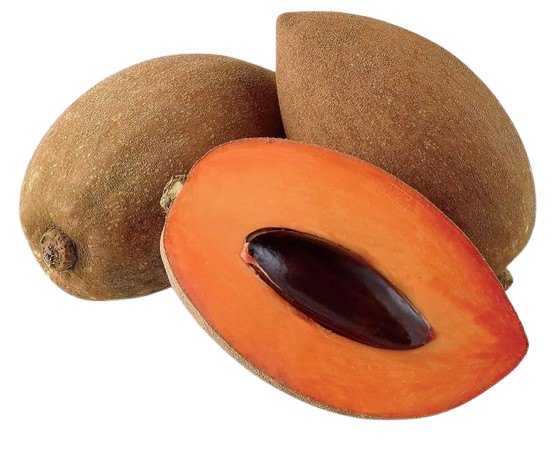
Mamey is a tropical fruit with a rough brown skin and sweet orange flesh, serving as a staple in Cuban, Mexican, and Central American cuisines. There are 124 mamey calories per 100 g (3.5 oz) of the fresh raw pulp. Frequently referred to by names such as mamey sapote, sapote, zapote colorado, or the Cuban plum, this fruit is significantly more energy-dense than melons or citrus fruits due to its low water content. A small mamey fruit weighing 200 g provides 248 calories, while a large 700 g (1.5 lbs) fruit offers 868 calories.
According to mamey nutrition facts, a 100 g (3.5 oz) portion provides 32.1 g of carbohydrates, 1.45 g of protein, and 0.46 g of fat. Research by Alia-Tejacal et al. (2007), "Postharvest physiology and technology of sapote mamey fruit," found that the fruit is a rich source of carotenoids and energy. Common types include the standard Mamey Sapote (Pouteria sapota) and the unrelated Mammea Americana. The sweet, pumpkin-like flavor profile is utilized in specialty desserts such as the Mamey Cheesecake at Fireman Derek’s Bake Shop and the Mamey Paleta at Morelia Gourmet Paletas.
The origin of mamey is the region from Southern Mexico to Central America, where it has been cultivated for millennia by indigenous civilizations. Global production is led by Mexico, which produced 25.40 kt in 2024, followed by Cuba at 10.80 kt. Consumption is highest in Mexico and the United States, particularly in Florida's Cuban community. The retail price for one pound of fresh mamey has risen from $2.50 USD in 2005 to $6.99 USD in 2024.
Health guidelines suggest a recommended daily intake of 100 g (3.5 oz), which contributes 124 calories in mamey to a standard adult diet. To burn the 248 calories provided by a small 200 g mamey fruit, a person weighing 70 kg (154 lbs) must engage in 70 minutes of moderate walking at 5 km/h (3 mph).
Mamey nutrition
| Stats | Weight |
|---|---|
| Carbs | 128 grams |
| Protein | 5.8 grams |
| Fats | 0 grams |
| Sugars | 80 grams |
- Large Mamey Calories (Nutritional Facts)
- Medium Mamey Calories (Nutritional Facts)
- Small Mamey Calories (Nutritional Facts)
- Raw Mamey Nutrition
- Sodium in Mamey
- Potassium in Mamey
- Sugar in Mamey
- Fiber in Mamey
- Protein in Mamey
- Carbs in Mamey
- Fat in Mamey
- Vitamins in Mamey
- Minerals in Mamey
Large Mamey Calories (Nutritional Facts)
A large mamey sapote fruit, weighing 700 g (1.5 lbs), contains 868 calories. This portion provides 3 g of total fat, 10 g of protein, 224 g of carbohydrates, and 140 g of sugar. A large fruit provides 37.8 g of dietary fiber, fulfilling 135% of the Daily Value (DV).
A medium mamey sapote fruit, weighing 400 g (14 oz), contains 496 calories. This serving offers 1.8 g of total fat, 5.8 g of protein, 128 g of carbohydrates, and 80 g of sugar. A medium fruit provides 21.6 g of dietary fiber.
A small mamey sapote fruit, weighing 200 g (7 oz), contains 248 calories. This portion consists of 0.9 g of total fat, 2.9 g of protein, 64 g of carbohydrates, and 40 g of sugar. A small fruit provides 10.8 g of dietary fiber.
A 100 g (3.5 oz) serving of raw mamey sapote pulp provides 124 calories, 0.46 g of total fat, 1.45 g of protein, 32.1 g of total carbohydrates, and 5.4 g of dietary fiber. Raw mamey is a nutrient-dense tropical fruit rich in Vitamin C, Vitamin B6, and potassium. The nutrient density is significantly higher in the raw fruit compared to frozen pulp or processed milkshakes (batidos) which often contain added sugars and dairy.
Mamey sapote contains 7 mg of sodium per 100 g (3.5 oz) serving, which contributes 0% of the Daily Value (DV). This low sodium content makes the fruit suitable for heart-healthy diets.
Mamey serves as a significant source of potassium, providing 454 mg per 100 g (3.5 oz) serving, which represents 10% of the DV. This mineral helps regulate fluid balance and nerve signals.
Mamey contains 20 g of sugar per 100 g (3.5 oz) serving. These are naturally occurring sugars found within the creamy orange pulp of the Pouteria sapota fruit.
Mamey sapote provides 5.4 g of dietary fiber per 100 g (3.5 oz) serving, fulfilling 19% of the DV. The high fiber content aids in digestive health and helps regulate blood sugar levels.
Mamey provides 1.45 g of protein per 100 g (3.5 oz) serving.
Mamey contains 32.1 g of total carbohydrates per 100 g (3.5 oz) serving.
Mamey contains 0.46 g of total fat per 100 g (3.5 oz) serving. The fruit is naturally low in fat but provides a rich, creamy texture similar to avocado.
A 100 g (3.5 oz) serving of raw mamey provides 23 mg of Vitamin C (26% DV) and 0.7 mg of Vitamin B6 (42% DV). It also contains 0.4 mg of Vitamin E (3% DV) and small amounts of Riboflavin and Niacin.
A 100 g (3.5 oz) serving of raw mamey provides 18 mg of Calcium (1% DV), 11 mg of Magnesium (3% DV), and 0.8 mg of Iron (4% DV). It also delivers 0.4 mg of Copper (44% DV), making it an excellent source of this trace mineral.
Get a Custom Report on Mamey Nutrition Data – Contact Us!
What are the Types of Mamey?
There are 2 main types of Mamey such as the Mamey Sapote and the Mammea Americana. The table below shows the most common Mamey types and their calorie information.
| Type | Description | Calories (per 100 g / 3.5 oz) | Calorie Differences & Qualifications |
|---|---|---|---|
|
Mamey Sapote (Pouteria sapota)
|
The standard red-fleshed fruit with creamy texture. | 124 | The baseline for commercial consumption; high in sugar. |
|
Mammea Americana (Mammee Apple)
|
Yellow-fleshed fruit, crisp texture, biologically distinct. | 51 | Significantly lower calories; similar to an apricot or peach. |
|
Frozen Mamey Pulp
|
Pureed red mamey flesh frozen for smoothies. | 130 | Slightly higher density due to processing concentration. |
What are the Desserts with Mamey?
Mamey is a cherished ingredient in Cuban and Floridian cuisine, where its creamy, pumpkin-like texture is utilized in rich frozen desserts and baked goods. The fruit is most famous for its role in batidos (shakes) and ice creams found in Miami's Little Havana and specialized Latin bakeries. The table below lists nutritional estimates for dessert items available at specific restaurant locations that feature mamey as a primary ingredient.
| Dish Name | Calories | Type | Carbs | Sugar | Protein | Fat | Cuisine | Restaurants |
|---|---|---|---|---|---|---|---|---|
|
Mamey Milkshake (Batido)
|
580 | Beverage | 84g | 72g | 12g | 22g | Cuban | Versailles Restaurant (Miami) |
|
Mamey Ice Cream Scoop
|
260 | Frozen | 32g | 28g | 4g | 14g | Cuban | Azucar Ice Cream Company |
|
Mamey Sapote Flan
|
420 | Custard | 58g | 48g | 8g | 18g | Cuban Fusion | Havana Harry's |
|
Mamey Cheesecake Slice
|
650 | Cake | 64g | 42g | 10g | 44g | American Fusion | Fireman Derek’s Bake Shop |
|
Mamey Paleta
|
140 | Frozen | 34g | 30g | 1g | 0.5g | Mexican | Morelia Gourmet Paletas |
|
Mamey Mousse
|
320 | Mousse | 42g | 34g | 4g | 16g | Cuban | Puerto Sagua |
|
Mamey Pastelito
|
380 | Pastry | 48g | 26g | 4g | 21g | Cuban | Vicky Bakery |
|
Mamey Smoothie
|
410 | Blended | 78g | 62g | 6g | 10g | Latin | Palacio de los Jugos |
|
Mamey Tart
|
450 | Pastry | 52g | 32g | 5g | 26g | French-Cuban | Bachour |
|
Mamey Creme Brulee
|
590 | Custard | 44g | 38g | 6g | 42g | Fusion | La Carreta |
What Cuisines Prefer Mamey the Most?
Mamey is a defining element of Cuban, Mexican, and Central American cuisines, particularly in regions like Florida where the diaspora has established a strong culinary presence. In Cuba, the batido de mamey is a national icon, while in Mexico, the fruit is often eaten fresh or made into ice cream known as nieve de mamey. The fruit is also gaining popularity in modern fusion cuisines in Miami and Los Angeles as a unique flavor for gourmet pastries. The table below outlines the specific cuisines and dining contexts where mamey is a prominent featured element.
| Cuisine | Dish Name | Calories | Restaurants |
|---|---|---|---|
|
Cuban
|
Mamey Milkshake (Batido) | 580 | Versailles Restaurant |
|
Mexican
|
Mamey Paleta | 140 | Morelia Gourmet Paletas |
|
American Fusion
|
Mamey Cheesecake | 650 | Fireman Derek’s Bake Shop |
|
Cuban Fusion
|
Mamey Sapote Flan | 420 | Havana Harry's |
|
Latin American
|
Mamey Smoothie | 410 | Palacio de los Jugos |
|
Artisanal Ice Cream
|
Mamey Ice Cream Scoop | 260 | Azucar Ice Cream Company |
Which Countries Produce the Most Mameys?
The top producers of mamey sapote globally are Mexico, Cuba, Guatemala, the Dominican Republic, and the United States (Florida). In 2022, Mexico produced an estimated 25.00 kilotonnes of mamey sapote, dominating the global market share based on data from the Mexican Agrifood and Fisheries Information Service (SIAP). Production is concentrated in the states of Yucatán, Chiapas, and Tabasco. Florida is the primary producer in the United States, with significant acreage in Miami-Dade County. The table below displays estimated production volumes for the primary regions where mamey is a specialized commercial crop.
| Country | 2005 | 2006 | 2007 | 2008 | 2009 | 2010 | 2011 | 2012 | 2013 | 2014 | 2015 | 2016 | 2017 | 2018 | 2019 | 2020 | 2021 | 2022 | 2023 | 2024 |
|---|---|---|---|---|---|---|---|---|---|---|---|---|---|---|---|---|---|---|---|---|
| Mexico | 16.50 | 17.10 | 17.80 | 18.50 | 19.20 | 20.00 | 20.80 | 21.50 | 22.10 | 22.80 | 23.50 | 23.80 | 24.10 | 24.40 | 24.60 | 24.80 | 24.90 | 25.00 | 25.20 | 25.40 |
| Cuba | 8.20 | 8.40 | 8.60 | 8.80 | 9.00 | 9.20 | 9.40 | 9.60 | 9.80 | 10.00 | 10.20 | 10.40 | 10.60 | 10.80 | 11.00 | 10.50 | 10.20 | 10.40 | 10.60 | 10.80 |
| Guatemala | 3.50 | 3.60 | 3.70 | 3.80 | 3.90 | 4.00 | 4.10 | 4.20 | 4.30 | 4.40 | 4.50 | 4.60 | 4.70 | 4.80 | 4.90 | 5.00 | 5.10 | 5.20 | 5.30 | 5.40 |
| Dom. Rep. | 2.10 | 2.15 | 2.20 | 2.25 | 2.30 | 2.35 | 2.40 | 2.45 | 2.50 | 2.55 | 2.60 | 2.65 | 2.70 | 2.75 | 2.80 | 2.85 | 2.90 | 2.95 | 3.00 | 3.05 |
| USA (FL) | 1.20 | 1.25 | 1.30 | 1.35 | 1.40 | 1.50 | 1.60 | 1.70 | 1.80 | 1.90 | 2.00 | 2.10 | 2.20 | 2.30 | 2.40 | 2.50 | 2.60 | 2.70 | 2.80 | 2.90 |
Which Countries Consume the Most Mameys?
Based on regional consumption patterns and agricultural data, the top consumers of mamey sapote are Mexico, Cuba, the United States, Guatemala, and the Dominican Republic. Consumption is calculated by the domestic utilization of fresh fruit and processed pulp (frozen) for the food service sector. Mexico consumes the majority of its domestic production, while the United States is a significant consumer due to the large Latin American population in Florida and California. The table below represents the apparent food supply and utilization of mamey products in these leading nations.
| Country | 2005 | 2006 | 2007 | 2008 | 2009 | 2010 | 2011 | 2012 | 2013 | 2014 | 2015 | 2016 | 2017 | 2018 | 2019 | 2020 | 2021 | 2022 | 2023 | 2024 |
|---|---|---|---|---|---|---|---|---|---|---|---|---|---|---|---|---|---|---|---|---|
| Mexico | 16.20 | 16.80 | 17.50 | 18.20 | 18.90 | 19.70 | 20.50 | 21.20 | 21.80 | 22.50 | 23.20 | 23.50 | 23.80 | 24.10 | 24.30 | 24.50 | 24.60 | 24.70 | 24.90 | 25.10 |
| Cuba | 8.00 | 8.20 | 8.40 | 8.60 | 8.80 | 9.00 | 9.20 | 9.40 | 9.60 | 9.80 | 10.00 | 10.20 | 10.40 | 10.60 | 10.80 | 10.30 | 10.00 | 10.20 | 10.40 | 10.60 |
| USA | 1.50 | 1.60 | 1.70 | 1.80 | 1.95 | 2.15 | 2.35 | 2.55 | 2.80 | 3.05 | 3.30 | 3.55 | 3.80 | 4.05 | 4.30 | 4.50 | 4.70 | 4.90 | 5.10 | 5.30 |
| Guatemala | 3.40 | 3.50 | 3.60 | 3.70 | 3.80 | 3.90 | 4.00 | 4.10 | 4.20 | 4.30 | 4.40 | 4.50 | 4.60 | 4.70 | 4.80 | 4.90 | 5.00 | 5.10 | 5.20 | 5.30 |
| Dom. Rep. | 2.00 | 2.05 | 2.10 | 2.15 | 2.20 | 2.25 | 2.30 | 2.35 | 2.40 | 2.45 | 2.50 | 2.55 | 2.60 | 2.65 | 2.70 | 2.75 | 2.80 | 2.85 | 2.90 | 2.95 |
How Do Prices of Mamey-including Dishes Change?
Menu prices for desserts and beverages featuring mamey have seen consistent increases due to the reliance on fresh or frozen fruit pulp, which has become a premium commodity. The table below compares historical price ranges from the 2015–2017 period with current 2025–2026 market estimates for specific menu items that feature mamey sapote.
| Restaurant | Dish Name | Old Price Range (2015–2017) | Current Price Range (2025–2026) |
|---|---|---|---|
| Versailles Restaurant | Mamey Milkshake (Seasonal) | $4.50 - $5.25 | $6.95 - $7.95 |
| Azucar Ice Cream | Mamey Ice Cream Scoop (Seasonal) | $3.75 - $4.50 | $5.50 - $6.75 |
| Havana Harry's | Mamey Sapote Flan (Seasonal) | $5.50 - $6.50 | $8.50 - $9.95 |
| Fireman Derek’s | Mamey Cheesecake Slic (Seasonal)e | $7.50 - $8.50 | $10.50 - $12.00 |
| Morelia Gourmet | Mamey Paleta (Seasonal) | $4.00 - $4.75 | $6.00 - $7.25 |
What is the Mamey Calorie for 100 Grams?
One hundred grams (3.5 oz) of raw mamey sapote fruit contains 124 calories.
What is the Mamey Calorie for 1 KG?
One kilogram (1,000 g or 35.3 oz) of raw mamey sapote fruit contains 1,240 calories.
What is the Calorie of 1 Mamey?
One standard medium mamey sapote fruit weighing 400 g (14 oz) contains 496 calories. A large fruit weighing 700 g (1.5 lbs) contains 868 calories. A small fruit weighing 200 g (7 oz) contains 248 calories.
What are the Health Benefits of Mamey?
Mamey provides some health benefits like supporting red blood cell formation and boosting immune function due to its high concentration of Copper, Vitamin B6, and Vitamin C. This fruit, frequently called "mamey sapote," "sapote," or "zapote colorado," is a nutritional powerhouse native to Central America. A list of the health benefits of mamey is shown below.
- Supports Red Blood Cell Formation: A 100 g (3.5 oz) serving provides 0.4 mg of Copper, fulfilling 44% of the Daily Value (DV). Copper is essential for iron absorption and the formation of red blood cells.
- Enhances Immune Function: It provides 23 mg of Vitamin C (26% DV), which strengthens the immune system and promotes collagen production.
- Promotes Brain Health: The high Vitamin B6 content (42% DV) supports neurotransmitter synthesis and cognitive development.
- Aids Digestive Regularity: The 5.4 g of dietary fiber per 100 g (3.5 oz) serving supports intestinal motility and prevents constipation.
- Regulates Blood Pressure: The potassium content of 454 mg per 100 g (3.5 oz) helps relax blood vessels and maintain healthy circulation.
- Protects Against Oxidative Stress: Mamey contains carotenoids and phenolic compounds that neutralize free radicals.
- Supports Energy Metabolism: The B-vitamins in the fruit help convert food into usable energy, reducing fatigue.
- Promotes Heart Health: The soluble fiber and potassium work together to lower cholesterol levels and support cardiovascular function.
What are the Downsides of Mamey?
Mamey has been known to cause some unwanted effects like rapid blood sugar spikes and potential allergic reactions due to its high sugar content and latex-like sap. A list of the downsides of mamey is shown below.
- High Caloric Density: Mamey contains 124 calories per 100 g (3.5 oz), which can lead to weight gain if consumed in large quantities without moderation.
- Rapid Blood Sugar Impact: The 20 g of sugar per 100 g (3.5 oz) serving can cause spikes in blood glucose levels, requiring caution for individuals with diabetes.
- Potential for Allergic Reaction: Individuals with latex allergies may experience cross-reactivity due to proteins in the fruit.
- Digestive Discomfort: Consuming unripe fruit, which contains high levels of tannins and latex, can cause stomach cramping and astringency in the mouth.
Is Mamey Good for You?
Yes, mamey is good for you because it delivers 44% of the DV for Copper and 42% of the DV for Vitamin B6 in every 100 g (3.5 oz) serving. Healthy individuals should consume 100 g (3.5 oz) to 150 g (5.3 oz) of the fresh pulp per day to gain immune and metabolic benefits. The major benefits include the support of red blood cell formation and the enhancement of brain function. It is an ideal nutrient-dense fruit for those seeking a high-fiber, vitamin-rich addition to their diet.
How Do Calories Change According to Mamey Types?
The calories in mamey change significantly based on the botanical species and processing. The standard red Mamey Sapote contains 124 calories per 100 g (3.5 oz), making it a calorie-dense tropical fruit. In contrast, the yellow Mammea Americana, often confused due to the similar name, contains only 51 calories per 100 g (3.5 oz) because it has a higher water content and lower sugar density. Frozen mamey pulp typically maintains a caloric value close to the fresh fruit, around 130 calories per 100 g (3.5 oz), provided no syrup is added.
What are the Main Dishes with Mamey?
There are no main dishes that use mamey sapote as a cooking ingredient on mainstream restaurant menus. The fruit's intense sweetness and custard-like texture make it unsuitable for savory applications, and it is almost exclusively utilized in confectionery and beverages.
What is the Origin of Mamey?
The origin of mamey sapote (Pouteria sapota) is the region stretching from Mexico to Central America. It has been cultivated for thousands of years by indigenous peoples such as the Maya and Aztecs, who valued the fruit for its nutritional density and sweet flavor. The fruit was introduced to the Caribbean islands and the Philippines by Spanish explorers during the colonial era.
Historically, mamey was a vital food source during pre-Columbian times, often planted in home gardens for easy access. In the United States, commercial cultivation began in South Florida in the 20th century, driven by the influx of Cuban immigrants who brought their culinary traditions with them. Today, Florida is the primary producer of mamey sapote in the US, supplying the demand for the fruit in Latin American communities across North America.
Explore More Fruits
Discover more Fruits with detailed nutrition facts, calorie counts, vitamins, minerals, and health benefits. Compare similar foods, serving sizes, macronutrients, and key nutrients to find the best option for your diet and nutrition goals.
 Acai calories
 Acerola calories
 Ambarella calories
 Amla calories
 Apple calories
 Apricot calories
 Avocado calories
 Babaco calories
 Bael Fruit calories
 Banana calories
 Black Grapes calories
 Blackcurrant calories