Calories and Nutritions in Medlar
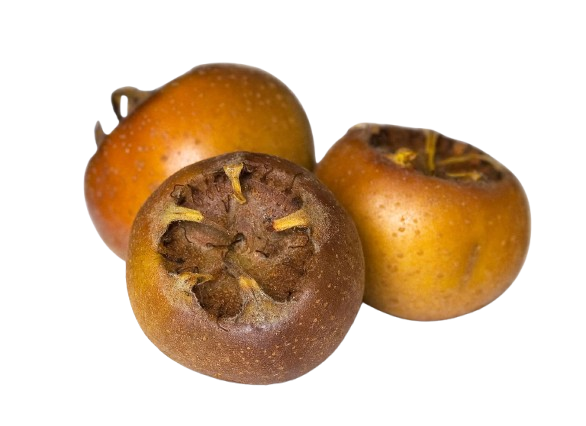
The medlar is an antique pome fruit from the Mespilus germanica tree, heavily revered in historic British and Iranian culinary practices. There are 47 medlar calories per 100 g (3.5 oz) of the raw edible flesh. A small 10 g medlar fruit yields roughly 5 calories, while a medium 15 g (0.5 oz) fruit provides 7 calories, and a larger 30 g (1.05 oz) piece supplies 14 calories. Evaluating the medlar fruit nutrition facts reveals that a 100 g (3.5 oz) portion delivers 12.14 g of carbohydrates, 0.43 g of protein, and 0.20 g of fat. The fruit is exceptionally rich in Vitamin A (1,528 IU per 100 g), providing potent benefits for ocular health and cellular protection. Research by Rop et al. (2010), "Antioxidant capacity of selected fruit of the genus Mespilus," confirmed that the fruit possesses significant free radical scavenging activity, positioning it as a highly protective botanical.
Horticulturalists recognize specific cultivars like the Nottingham and the larger Dutch variety. Because of its complex, apple-butter consistency and high pectin levels, chefs deploy the fruit almost exclusively as a sweet preserve or jelly, such as the Medlar Cheese offered at Historic Royal Palaces Cafes in the UK. In savory dining, the tart jelly is used to cut through the richness of game meats, highlighted flawlessly in the Roast Venison with Medlar Jelly at Rules Restaurant and the Pork Belly with Medlar Glaze at Medlar Restaurant in London.
The medlar originated in the regions surrounding the Black and Caspian Seas and was spread across Europe by the Romans, serving as a vital winter food source during the Middle Ages. Today, global commercial production is practically non-existent, with Iran leading localized foraging efforts at an estimated 7.00 kt in 2024, followed by Turkey. The fruit's inability to survive modern supermarket supply chains means it is consumed entirely within domestic, heritage markets. The retail cost for a 227 g (8 oz) jar of artisanal medlar jelly has climbed from $4.50 USD in 2005 to $9.95 USD in 2024.
Health professionals suggest a daily intake of approximately 100 g (roughly 6 to 7 medium fruits), which incorporates a modest 47 calories in medlar into a standard dietary regimen. To burn off the calories, an average woman weighing 70 kg (154 lbs) needs to walk moderately at 5 km/h (3 mph) for about 13 minutes. An average man weighing 84 kg (185 lbs) will expend the same energy in roughly 11 minutes of walking.
Medlar nutrition
| Stats | Weight |
|---|---|
| Carbs | 1.8 grams |
| Protein | 0.06 grams |
| Fats | 0 grams |
| Sugars | 1.2 grams |
- Large Medlar Calories (Nutritional Facts)
- Medium Medlar Calories (Nutritional Facts)
- Small Medlar Calories (Nutritional Facts)
- Raw Medlar Nutrition
- Sodium in Medlar
- Potassium in Medlar
- Sugar in Medlar
- Fiber in Medlar
- Protein in Medlar
- Carbs in Medlar
- Fat in Medlar
- Vitamins in Medlar
- Minerals in Medlar
Large Medlar Calories (Nutritional Facts)
A large medlar fruit, weighing approximately 30 g (1.05 oz), provides about 14 calories. This fruit portion contains minimal fat at 0.06 g, 0.13 g of protein, and roughly 3.6 g of carbohydrates. Eating a single large medlar offers a quick, low-calorie snack.
A medium medlar fruit, which typically weighs 15 g (0.5 oz), contains about 7 calories. This standard-sized fruit yields 0.03 g of fat, 0.06 g of protein, and 1.8 g of carbohydrates. The 15 g size represents the average weight for this unique pome fruit.
A small medlar fruit, weighing 10 g (0.35 oz), delivers nearly 5 calories. This tiny portion provides 0.02 g of fat, 0.04 g of protein, and 1.2 g of carbohydrates. Small medlars are often used collectively to make jams or jellies rather than eaten individually.
A 100 g (3.5 oz) serving of the edible portion of raw medlar provides 47 calories, 0.20 g of lipids (fat), 0.43 g of protein, and 12.14 g of carbohydrates. The fruit requires a process called "bletting" (over-ripening until soft and brown) before it becomes palatable. Once bletted, the flesh develops a texture similar to apple butter and a complex, wine-like flavor, concentrating its carbohydrates and natural sugars.
Medlar fruits are exceedingly low in sodium, containing just 1 mg per 100 g (3.5 oz) serving. This negligible amount makes the fruit an excellent option for those strictly monitoring their sodium intake.
A 100 g (3.5 oz) serving of medlar provides 266 mg of potassium, which is essential for regulating fluid balance and blood pressure. This mineral content is a notable feature of the fruit's nutritional profile.
While specific sugar breakdown data is limited, the 12.14 g of carbohydrates found in a 100 g (3.5 oz) serving are primarily composed of natural fruit sugars that develop and concentrate during the bletting process.
Medlar supplies 1.70 g of dietary fiber per 100 g (3.5 oz) serving. This fiber is crucial for supporting healthy digestion and maintaining bowel regularity.
The protein content in medlars is very low, providing just 0.43 g per 100 g (3.5 oz) of edible fruit.
Medlar contains 12.14 g of carbohydrates per 100 g (3.5 oz) serving. These carbohydrates are the primary source of the fruit's caloric value.
Medlars are virtually fat-free, containing only 0.20 g of lipids per 100 g (3.5 oz) serving.
A 100 g (3.5 oz) serving of medlar is remarkably rich in Vitamin A, providing 1,528 IU. It also contains 1 mg of Vitamin C, 0.293 mg of Niacin, 0.067 mg of Thiamine, 0.024 mg of Riboflavin, 0.019 mg of Pyridoxine, and 14 micrograms of Folate.
In addition to potassium, a 100 g (3.5 oz) serving of medlar contains 27 mg of Phosphorus, 16 mg of Calcium, 13 mg of Magnesium, 0.28 mg of Iron, 0.148 mg of Manganese, 0.05 mg of Zinc, 0.04 mg of Copper, and 0.6 micrograms of Selenium.
Get a Custom Report on Medlar Nutrition Data – Contact Us!
What are the Types of Medlar?
Horticulturalists classify the Common Medlar (Mespilus germanica) into several specific cultivars based on fruit size, flavor, and growth habits. The table below details the most common Medlar types and their caloric information.
| Type | Description | Calories (per 100 g / 3.5 oz) | Calorie Differences & Qualifications |
|---|---|---|---|
|
Nottingham
|
The most widely grown cultivar in the UK; small fruit with excellent flavor. | 47 | The baseline for standard medlar nutritional values. |
|
Dutch (Monster)
|
Produces very large fruit; often slightly less flavorful than Nottingham. | 47 | Identical caloric density; preferred for making jellies due to volume. |
|
Royal
|
A highly productive variety yielding medium-sized, deeply flavored fruit. | 47 | Nutritional profile remains consistent with the standard species. |
|
Medlar Cheese/Jelly
|
Processed, sweetened fruit preserves. | ~250 | Significantly higher calories due to the massive addition of refined sugar. |
What are the Desserts with Medlar?
Because the medlar requires bletting to achieve its soft, spiced-apple flavor, it is almost exclusively utilized in historic European baking and preserve-making. The fruit's naturally high pectin content makes it an ideal candidate for jellies and fruit cheeses, which were highly prized during the Victorian era. The table below lists nutritional estimates for dessert items available at specific historic or artisanal restaurant locations that feature medlars.
| Dish Name | Calories | Type | Carbs | Sugar | Protein | Fat | Cuisine | Restaurants |
|---|---|---|---|---|---|---|---|---|
|
Medlar Jelly (1 tbsp)
|
50 | Preserve | 13g | 12g | 0g | 0g | British Heritage | The Newt in Somerset (UK) |
|
Medlar Cheese (Fruit Paste)
|
120 | Confection | 30g | 28g | 0g | 0g | Victorian | Historic Royal Palaces Cafes (UK) |
|
Bletted Medlar Tart
|
410 | Pastry | 52g | 28g | 5g | 22g | British | The Ethicurean (London) |
|
Medlar & Apple Crumble
|
380 | Baked Dessert | 58g | 32g | 4g | 16g | English | St. JOHN Restaurant (London) |
|
Medlar Ice Cream (Scoop)
|
260 | Frozen | 30g | 26g | 4g | 14g | Artisanal | Gelupo (Seasonal/Italy) |
What are the Main Dishes with Medlar?
In savory gastronomy, the intense, complex sweetness of medlar jelly is employed much like a redcurrant or cranberry sauce, providing a sharp, fruity counterpoint to rich, gamey meats. The table below lists the nutritional facts for savory entrees that incorporate medlar preserves as a defining flavor component.
| Dish Name | Calories | Type | Carbs | Sugar | Protein | Fat | Cuisine | Restaurants |
|---|---|---|---|---|---|---|---|---|
|
Roast Venison with Medlar Jelly
|
650 | Game Entree | 22g | 18g | 54g | 36g | British | Rules Restaurant (London) |
|
Pheasant & Medlar Sauce
|
580 | Poultry Entree | 18g | 14g | 48g | 32g | French-British | The Game Bird (London) |
|
Pork Belly with Medlar Glaze
|
820 | Meat Entree | 24g | 20g | 38g | 64g | Modern European | Medlar Restaurant (London) |
|
Cheese Board with Medlar Paste
|
540 | Appetizer | 32g | 22g | 24g | 38g | European | The Cheese Bar (London) |
|
Duck Liver Pate & Medlar Jelly
|
480 | Appetizer | 26g | 16g | 18g | 38g | French | Le Gavroche (London) |
What Cuisines Prefer Medlar the Most?
The medlar is almost exclusively a relic of traditional British, French, and Iranian (Persian) cuisines. In the United Kingdom, it is celebrated as a winter foraging treasure, essential for historic recipes like Medlar Cheese. In the Gilan and Mazandaran provinces of Iran, the fruit (known as konous) is eaten fresh after bletting or preserved. The table below outlines the specific culinary contexts and dishes where the medlar is a prominent featured element.
| Cuisine | Dish Name | Calories | Restaurants |
|---|---|---|---|
|
British Heritage
|
Roast Venison with Medlar Jelly | 650 | Rules Restaurant |
|
Modern European
|
Pork Belly with Medlar Glaze | 820 | Medlar Restaurant |
|
Victorian English
|
Medlar Cheese (Paste) | 120 | Historic Royal Palaces Cafes |
|
British "Nose-to-Tail"
|
Medlar & Apple Crumble | 380 | St. JOHN Restaurant |
|
Persian (Regional)
|
Pickled Konous (Medlar) | 45 | Local Iranian Markets |
Which Countries Produce the Most Medlar?
The global production of medlar is an extremely niche agricultural sector, dominated by Iran, Turkey, Azerbaijan, and small heritage orchards in the United Kingdom. Because the fruit has virtually vanished from the modern commercial food supply chain, production is highly localized and often harvested from wild or semi-wild trees. In Iran, the fruit (known locally as azgil or konous) is harvested in the northern provinces along the Caspian Sea. The table below displays estimated production volumes for the primary regions where the medlar is still cultivated or gathered for regional markets. Note: Data for medlar is not tracked by the FAO; figures are estimates based on regional forestry and heritage crop reports.
| Country | 2005 | 2006 | 2007 | 2008 | 2009 | 2010 | 2011 | 2012 | 2013 | 2014 | 2015 | 2016 | 2017 | 2018 | 2019 | 2020 | 2021 | 2022 | 2023 | 2024 |
|---|---|---|---|---|---|---|---|---|---|---|---|---|---|---|---|---|---|---|---|---|
| Iran | 3.50 | 3.60 | 3.75 | 3.90 | 4.10 | 4.25 | 4.40 | 4.60 | 4.75 | 4.90 | 5.10 | 5.30 | 5.50 | 5.75 | 6.00 | 6.20 | 6.40 | 6.60 | 6.80 | 7.00 |
| Turkey | 2.10 | 2.20 | 2.30 | 2.45 | 2.60 | 2.75 | 2.90 | 3.05 | 3.20 | 3.40 | 3.60 | 3.80 | 4.00 | 4.20 | 4.40 | 4.60 | 4.80 | 5.00 | 5.20 | 5.40 |
| Azerbaijan | 1.20 | 1.25 | 1.30 | 1.40 | 1.50 | 1.60 | 1.70 | 1.85 | 2.00 | 2.15 | 2.30 | 2.45 | 2.60 | 2.75 | 2.90 | 3.10 | 3.25 | 3.40 | 3.60 | 3.80 |
| UK | 0.15 | 0.16 | 0.18 | 0.20 | 0.22 | 0.25 | 0.28 | 0.30 | 0.32 | 0.35 | 0.38 | 0.40 | 0.42 | 0.45 | 0.48 | 0.50 | 0.52 | 0.55 | 0.58 | 0.60 |
Which Countries Consume the Most Medlar?
Based on regional agricultural sales and historical foraging data, the top consumers of medlars are Iran, Turkey, Azerbaijan, and the United Kingdom. Consumption in the Middle Eastern and Caucasian countries is driven by fresh eating (post-bletting) and local preserving traditions. In the United Kingdom, consumption is driven entirely by the heritage food movement, where specialty producers turn the fruit into high-value jellies for the gourmet market. The table below represents the apparent food supply and utilization of this specific pome fruit in these leading markets.
| Country | 2005 | 2006 | 2007 | 2008 | 2009 | 2010 | 2011 | 2012 | 2013 | 2014 | 2015 | 2016 | 2017 | 2018 | 2019 | 2020 | 2021 | 2022 | 2023 | 2024 |
|---|---|---|---|---|---|---|---|---|---|---|---|---|---|---|---|---|---|---|---|---|
| Iran | 3.40 | 3.50 | 3.65 | 3.80 | 4.00 | 4.15 | 4.30 | 4.50 | 4.65 | 4.80 | 5.00 | 5.20 | 5.40 | 5.65 | 5.90 | 6.10 | 6.30 | 6.50 | 6.70 | 6.90 |
| Turkey | 2.05 | 2.15 | 2.25 | 2.40 | 2.55 | 2.70 | 2.85 | 3.00 | 3.15 | 3.35 | 3.55 | 3.75 | 3.95 | 4.15 | 4.35 | 4.55 | 4.75 | 4.95 | 5.15 | 5.35 |
| Azerbaijan | 1.15 | 1.20 | 1.25 | 1.35 | 1.45 | 1.55 | 1.65 | 1.80 | 1.95 | 2.10 | 2.25 | 2.40 | 2.55 | 2.70 | 2.85 | 3.05 | 3.20 | 3.35 | 3.55 | 3.75 |
| UK | 0.14 | 0.15 | 0.17 | 0.19 | 0.21 | 0.24 | 0.27 | 0.29 | 0.31 | 0.34 | 0.37 | 0.39 | 0.41 | 0.44 | 0.47 | 0.49 | 0.51 | 0.54 | 0.57 | 0.59 |
How Do Prices of Medlar-including Dishes Change?
Restaurant prices for dishes utilizing medlar jelly as a glaze or accompaniment have risen, reflecting the premium cost of sourcing this rare heritage ingredient. The table below compares historical price brackets from the 2015–2017 timeframe with modern 2025–2026 market projections for specific culinary creations utilizing medlars.
| Restaurant | Dish Name | Old Price Range (2015–2017) | Current Price Range (2025–2026) |
|---|---|---|---|
| Rules Restaurant | Roast Venison with Medlar Jelly | $38.00 - $45.00 | $55.00 - $65.00 |
| Medlar Restaurant | Pork Belly with Medlar Glaze | $32.00 - $38.00 | $48.00 - $56.00 |
| The Game Bird | Pheasant & Medlar Sauce | $35.00 - $42.00 | $50.00 - $60.00 |
| St. JOHN Restaurant | Medlar & Apple Crumble | $10.00 - $12.50 | $16.00 - $19.50 |
| Le Gavroche | Duck Liver Pate & Medlar Jelly | $28.00 - $34.00 | $42.00 - $48.00 |
| The Cheese Bar | Cheese Board with Medlar Paste | $18.00 - $22.00 | $26.00 - $32.00 |
What is the Medlar Calorie for 100 Grams?
One hundred grams (3.5 oz) of the edible portion of a medlar fruit contains 47 calories.
What is the Medlar Calorie for 1 KG?
One kilogram (1,000 g or 35.3 oz) of edible medlar fruit yields 470 calories.
What is the Calorie of 1 Medlar?
An average, medium-sized single medlar fruit weighing 15 g contains approximately 7 calories. A larger 30 g fruit contains 14 calories, while a smaller 10 g fruit holds 5 calories.
What are the Health Benefits of Medlar?
Medlar provides distinct health advantages, primarily through its ability to combat oxidative stress and support healthy vision due to its exceptional Vitamin A content. Historically known as "open-arse" (due to its calyx shape) or "mespilus," this ancient fruit has a long history in traditional folk medicine. A list of the health benefits of medlar is shown below.
- Promotes Optimal Vision: A 100 g (3.5 oz) serving of medlar delivers an impressive 1,528 IU of Vitamin A. Research by Sommer (2008), "Vitamin A Deficiency and Clinical Disease: An Historical Overview," emphasizes that Vitamin A is critical for maintaining retinal health and preventing night blindness.
- Aids Digestive Function: The fruit's pectin and dietary fiber (1.70 g per 100 g) help regulate bowel movements. Traditionally, the unbletted (unripe) fruit was used to treat diarrhea due to its highly astringent tannins.
- Combats Cellular Damage: Medlars contain phenolic compounds and flavonoids that act as antioxidants. A study by Rop et al. (2010), "Antioxidant capacity of selected fruit of the genus Mespilus," demonstrated that medlar fruits exhibit significant free radical scavenging activity.
- Supports Cardiovascular Health: The potassium content (266 mg) assists in vasodilation, which helps manage blood pressure and reduces strain on the cardiovascular system.
- Provides Essential Trace Minerals: The presence of manganese, copper, and selenium supports various enzymatic functions and overall metabolic health.
- Reduces Inflammation: The bioactive compounds in the fruit's flesh and bark have historically been used to soothe mucosal inflammation in the throat and gut.
What are the Downsides of Medlar?
Medlars present certain challenges related to their preparation and high tannin content before they are fully ripened. A list of the downsides of medlar is shown below.
- Requires Lengthy Bletting Process: Medlars are inedible when picked; they must undergo "bletting"—a process of slight decay and softening—before they lose their harsh astringency and become sweet enough to eat.
- Causes Digestive Distress if Unripe: Eating the fruit before it has properly bletted introduces excessive tannins to the gut, which can cause severe stomach cramps, nausea, and constipation.
- High Seed-to-Flesh Ratio: The fruit contains several large, hard pips that are difficult to separate from the soft flesh, making consumption tedious and presenting a choking hazard.
- Extremely Short Shelf Life: Once the fruit has successfully bletted, it ferments and spoils very rapidly, making it unsuitable for commercial transport or long-term storage.
Are Medlars Good for You?
Yes, medlars are highly beneficial for you because they supply a massive dose of Vitamin A and essential potassium in a low-calorie package (47 calories per 100 g). Healthy individuals should consume about 100 g (roughly 6 to 7 medium fruits) to gain the vision-protecting benefits of the carotenoids and the digestive support of its fiber. The primary advantage of the medlar is its unique antioxidant profile, which develops fully only after the fruit has softened. Research by Rop et al. (2010) confirms that the fruit's phenolic content provides robust protection against oxidative stress, making it a valuable, albeit rare, addition to a seasonal diet.
How Do Calories Change According to Medlar Types?
The caloric density among fresh, bletted medlar cultivars is practically uniform, hovering right at 47 calories per 100 g (3.5 oz). Variations arise strictly from the size of the fruit yield rather than distinct metabolic differences within the plant's flesh. The most drastic shift in energy density occurs entirely through culinary processing. Because raw medlars have a complex, apple-butter consistency, they are most frequently cooked down into "medlar cheese" (a thick fruit paste) or clear jellies. These preserved forms surge past 250 calories per 100 g due to the heavy saturation of refined cane sugar required to set the pectin and balance the fruit's inherent tartness.
What is the Origin of Medlar?
The origin of the medlar (Mespilus germanica) is Southwestern Asia, specifically the regions bordering the Black and Caspian Seas (modern-day Turkey, Iran, and the Caucasus). Despite its botanical name germanica, it is not native to Germany. The fruit was cultivated by the ancient Greeks and Romans, who introduced it to Western Europe, where it thrived in the temperate climates of France and Britain.
During the Middle Ages and the Victorian era, the medlar was a vital winter fruit in Europe. Because it ripens late in the year and only becomes edible after "bletting" (often induced by the first winter frosts), it provided a rare source of sugar and nutrition when other fruits were unavailable. The fruit's popularity plummeted in the 20th century with the advent of modern refrigeration and the year-round availability of sweeter, immediate-eating fruits like apples and bananas. Today, the medlar is a forgotten fruit, grown primarily by heritage orchardists and historical botanical societies.
Explore More Fruits
Discover more Fruits with detailed nutrition facts, calorie counts, vitamins, minerals, and health benefits. Compare similar foods, serving sizes, macronutrients, and key nutrients to find the best option for your diet and nutrition goals.
 Acai calories
 Acerola calories
 Ambarella calories
 Amla calories
 Apple calories
 Apricot calories
 Avocado calories
 Babaco calories
 Bael Fruit calories
 Banana calories
 Black Grapes calories
 Blackcurrant calories