Calories and Nutritions in Millet
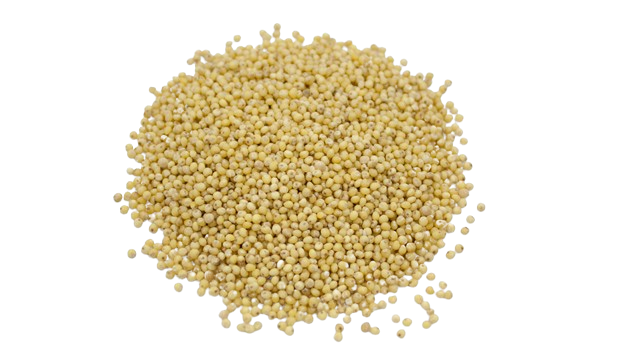
Millet calories are comparable to other whole grains, with a 100g (3.5 oz) serving of raw millet containing 378 calories. When cooked, it absorbs water, and a 100g serving provides 119 calories, while a one-cup serving of cooked millet (174g, 6.14 oz) contains 207 calories. Different raw millet types vary, with pearl millet at 361 calories and finger millet at 336 calories per 100g.
A millets nutrition chart shows that a 100g portion of raw millet provides 12.5g of protein (25% Daily Value/DV), 4.2g of fat (5% DV), and 72.9g of carbohydrates (26% DV), which includes an excellent 8.5g of fiber (30% DV) and 0g of sugar. Key minerals in raw millet include manganese (1.6mg, 70% DV), phosphorus (285mg, 41% DV), and magnesium (114mg, 27% DV). It is also a good source of B vitamins like thiamin (35% DV) and niacin (30% DV). Research consistently shows that the high fiber and nutrient content of millets contributes to health benefits such as improved glycemic control and reduced risk factors for cardiovascular disease (Anitha, S., et al., 2021, "A Systematic Review and Meta-Analysis of the Potential of Millets for Managing and Reducing the Risk of Developing Type 2 Diabetes").
The main types of millet include Proso, Pearl, Foxtail, and Finger millet, each with slight nutritional variations. The recommended daily intake of whole grains is around 3 to 6 one-ounce equivalents. For cooked millet, a serving is one cup, which is equivalent to 207 calories. Burning the 207 calories from a cup of cooked millet might require activities such as 20-25 minutes of jogging, 25-30 minutes of brisk walking, or about 30 minutes of cycling at a moderate intensity.
Millet is a key ingredient in many popular main dishes, such as savory porridges (upma) at South Indian restaurants like Saravanaa Bhavan, as a base for grain bowls at health-focused cafes like True Food Kitchen, and in traditional African and Asian porridges. It is not commonly used in Western desserts but is featured in Indian sweets like ladoo. Millet originated in both China and Africa thousands of years ago. Today, India, Nigeria, and China are the top producers and consumers of millet. The price of millet has seen an upward trend over the last 20 years from below $200 per metric ton to $250 to $400+ per metric ton in 2023/2024.
Millet nutrition
| Stats | Weight |
|---|---|
| Carbs | 74.4 grams |
| Protein | 10 grams |
| Fats | 4.19 grams |
| Sugars | 0 grams |
- Little Millet Calories (Nutritional Facts)
- Foxtail Millet Calories (Nutritional Facts)
- Pearl Millet Calories (Nutritional Facts)
- Finger Millet Calories (Nutritional Facts)
- Millet Rice Calories (Nutritional Facts)
- Raw Millet Nutrition
- Sodium in Millet
- Potassium in Millet
- Sugar in Millet
- Fiber in Millet
- Protein in Millet
- Carbs in Millet
- Fat in Millet
- Vitamins in Millet
- Minerals in Millet
Little Millet Calories (Nutritional Facts)
A 100g (3.5 oz) serving of raw little millet contains 341 calories. One cup of raw little millet (190g, 6.7 oz) provides 648 calories. One tablespoon (12g, 0.42 oz) of raw little millet has 41 calories, and one teaspoon (4g, 0.14 oz) has 14 calories. Raw little millet (100g) also contains 9.7g of protein, 67g of total carbohydrates, and 5.2g of total fat.
A 100g (3.5 oz) serving of raw foxtail millet contains 351 calories. One cup of raw foxtail millet (200g, 7.05 oz) provides 702 calories. One tablespoon (12.5g, 0.44 oz) of raw foxtail millet has 44 calories, and one teaspoon (4.2g, 0.15 oz) has 15 calories. Raw foxtail millet (100g) contains 11.2g of protein, 63.2g of carbohydrates, and 4.3g of total fat.
A 100g (3.5 oz) serving of raw pearl millet (bajra) contains 361 calories. One cup of raw pearl millet (192g, 6.77 oz) provides 693 calories. One tablespoon (12g, 0.42 oz) of raw pearl millet has 43 calories, and one teaspoon (4g, 0.14 oz) has 14 calories. Raw pearl millet (100g) also provides 11.6g of protein, 67.5g of total carbohydrates, and 5g of total fat.
A 100g (3.5 oz) serving of raw finger millet (ragi) contains 336 calories. One cup of raw finger millet (192g, 6.77 oz) provides 645 calories. One tablespoon (12g, 0.42 oz) of raw finger millet has 40 calories, and one teaspoon (4g, 0.14 oz) has 13 calories. Raw finger millet (100g) provides 7.7g of protein, 72.6g of carbohydrates, and 1.5g of total fat.
Millet rice, referring to cooked millet, contains 119 calories per 100g (3.5 oz) serving. One cup of cooked millet (174g, 6.14 oz) provides 207 calories. One tablespoon (10.9g, 0.38 oz) of cooked millet has 13 calories, and one teaspoon (3.6g, 0.13 oz) has 4 calories. Cooked millet (100g) also contains 3.5g of protein, 23.7g of carbohydrates, and 1g of total fat.
A 100g (3.5 oz) serving of raw millet (generic proso millet) contains 378 calories. One cup of raw millet (200g, 7.05 oz) provides 756 calories. One tablespoon (12.5g, 0.44 oz) of raw millet has 47 calories, and one teaspoon (4.2g, 0.15 oz) has 16 calories. Raw millet (100g) also provides 12.5g of protein, 72.9g of total carbohydrates, and 4.2g of total fat.
Raw millet contains 5mg of sodium per 100g (0% DV). Cooked millet (100g, without added salt) provides 2mg of sodium (0% DV).
Raw millet provides 195mg of potassium per 100g (4% DV). Cooked millet (100g) contains 100mg of potassium (2% DV) due to water absorption diluting the concentration.
Raw millet contains 0g of total sugars per 100g. Cooked millet also contains 0g of total sugars.
Raw millet provides 8.5g of dietary fiber per 100g (30% DV). Cooked millet (100g) offers 2.3g of dietary fiber (8% DV).
Raw millet contains 12.5g of protein per 100g (25% DV). Cooked millet (100g) provides 3.5g of protein (7% DV).
Raw millet has 72.9g of total carbohydrates per 100g (26% DV). Cooked millet (100g) provides 23.7g of total carbohydrates (9% DV).
Raw millet contains 4.2g of total fat per 100g (5% DV), which includes 0.7g of saturated fat. Cooked millet (100g) provides 1g of total fat (1% DV).
A 100g (3.5 oz) serving of raw millet is an excellent source of Niacin (Vitamin B3), providing 4.72mg (30% DV), and a good source of Thiamin (Vitamin B1) at 0.421mg (35% DV) and Vitamin B6 at 0.384mg (23% DV). Cooked millet retains these B vitamins but in lower concentrations per 100g.
A 100g (3.5 oz) serving of raw millet is an excellent source of Manganese, providing 1.6mg (70% DV), Phosphorus at 285mg (41% DV), and Magnesium at 114mg (27% DV). It is also a good source of Copper at 0.75mg (83% DV) and provides Iron at 3mg (17% DV). Cooked millet offers these minerals in smaller amounts per 100g.
Get a Custom Report on Millet Nutrition Data – Contact Us!
What are the Types of Millet?
There are several different types of millet grown and consumed around the world, with the most common being Pearl, Foxtail, Proso, Finger, and Little millet. These ancient grains vary in size, color, texture, and nutritional profile, including their calorie content. The table below shows some of the most common millet types and their calorie information for the raw grain.
| Type | Description | Calories (per 100g raw) | Calorie Qualifications |
|---|---|---|---|
|
Proso Millet (Common Millet)
|
Larger, round seeds. Creamy texture when cooked. | 378 | Among the highest in calories for millets. |
|
Pearl Millet (Bajra)
|
Small, round seeds, typically grayish or yellowish. A major staple in Africa and India. | 361 | High in calories and a good source of protein and fat. |
|
Foxtail Millet
|
Small, thin oval seeds. Mild flavor. | 351 | Moderate to high in calories. |
|
Little Millet
|
Very small seeds. | 341 | Moderate calorie content. |
|
Finger Millet (Ragi)
|
Small, reddish-brown seeds. Rich, earthy flavor. | 336 | Lower in calories compared to other major millets. Exceptionally high in calcium. |
|
Kodo Millet
|
Small, round seeds. Easily digestible. | 353 | Moderate to high in calories. |
|
Barnyard Millet
|
Small, round white seeds. | 300-330 | Generally among the lower-calorie millets. |
What are the Main Dishes with Millet?
Millet, a versatile and ancient gluten-free grain, is used as a base for a variety of main dishes across the globe, functioning similarly to rice, quinoa, or couscous. Some of the most widespread main dishes that contain millet include porridges, grain bowls, and as a substitute for rice in pilafs and stir-fries. Its mild, slightly nutty flavor allows it to adapt well to different seasonings and ingredients. The table below lists diverse main dishes featuring millet, along with estimated nutritional information.
| Dish Name | Calories (per serving) | Type of Millet Used (Foxtail, Proso, Pearl, etc.) | Carbs (g) | Sugar (g) | Protein (g) | Fat (g) | Cuisine | Restaurants |
|---|---|---|---|---|---|---|---|---|
|
Millet Grain Bowl (with vegetables & protein)
|
400-600 | Proso, Foxtail | 50-70 | 5-10 | 15-25 | 15-25 | Modern, Health-conscious, Californian | True Food Kitchen, Tender Greens, Sweetgreen (as a customizable base) |
|
Millet Porridge (Upma - savory Indian version)
|
250-400 | Foxtail, Little | 35-50 | 2-5 | 6-10 | 8-15 | Indian (South) | Saravanaa Bhavan, local South Indian restaurants |
|
Bajra Roti/Bhakri (Pearl Millet Flatbread)
|
100-150 (per roti) | Pearl Millet (Bajra) flour | 20-28 | <1 | 3-5 | 1-3 | Indian (Rajasthani, Gujarati) | Restaurants specializing in regional Indian cuisine |
|
Millet Pilaf (with vegetables and spices)
|
300-450 | Proso | 40-55 | 4-8 | 8-12 | 10-18 | Middle Eastern, Mediterranean, Fusion | CAVA (some seasonal grain bowls may feature it), health-focused cafes |
|
Stuffed Bell Peppers with Millet and Vegetables
|
300-450 (2 halves) | Proso, Foxtail | 45-60 | 8-15 | 10-15 | 5-10 | Vegetarian, Mediterranean | Some vegetarian or vegan-focused restaurants |
|
Millet Burgers (Veggie Patties)
|
350-550 | Proso, Foxtail (cooked and bound) | 40-55 | 5-10 | 12-18 | 10-18 | Modern Vegetarian/Vegan | Veggie Grill (seasonal/specialty burgers), Amy's Kitchen (retail brand for home) |
|
African Millet Porridge (Fura/Hausa Koko)
|
250-400 (bowl) | Pearl Millet | 40-60 | 2-5 (can be sweetened) | 6-10 | 3-8 | West African | Restaurants specializing in West African cuisine |
|
Millet Tabbouleh (substituting for bulgur)
|
250-400 | Proso, Foxtail | 25-35 | 2-4 | 5-8 | 15-25 | Modern Middle Eastern | Some health-conscious Mediterranean eateries may offer this variation |
|
Ragi Mudde (Finger Millet Balls)
|
200-300 (per serving) | Finger Millet (Ragi) flour | 40-55 | <1 | 5-8 | 1-3 | Indian (Karnataka) | Restaurants specializing in cuisine from Karnataka |
|
Millet Stir-fry (as a rice substitute)
|
350-550 | Proso, Foxtail | 40-60 | 8-15 | 15-25 | 10-18 | Asian Fusion | Home cooking concept; some customizable stir-fry restaurants may offer millet as a base |
|
Millet Salad (Cold, with herbs and vinaigrette)
|
250-400 | Proso | 30-40 | 3-6 | 6-10 | 10-18 | Modern American, Mediterranean | Whole Foods Market (prepared foods section), health-focused delis |
|
Congee (Millet version)
|
150-250 (bowl) | Foxtail | 30-45 | <1 | 4-7 | 1-3 | Chinese, Asian | Some specialized congee restaurants or those focusing on Northern Chinese cuisine |
What are the Desserts with Millet?
Millet is not a common ingredient in most Western desserts, but it is featured in a variety of traditional sweet dishes in other parts of the world, particularly in India, where different types of millet flour are used to make sweets and puddings.
| Dish Name | Calories (per serving) | Type of Millet Used | Carbs (g) | Sugar (g) | Protein (g) | Fat (g) | Cuisine | Restaurants/Brands |
|---|---|---|---|---|---|---|---|---|
|
Ragi Ladoo (Finger Millet Sweet Balls)
|
100-150 (per piece) | Finger Millet (Ragi) flour | 15-20 | 8-12 | 2-4 | 4-8 | Indian | Indian sweet shops (mithai shops), especially those with a health focus |
|
Sweet Millet Porridge (with milk, sugar, fruit)
|
200-350 (bowl) | Proso, Foxtail | 35-50 | 15-25 | 5-8 | 3-8 | International, Health-conscious | Primarily homemade; some health-focused breakfast cafes might offer a version |
|
Ragi Halwa (Finger Millet Pudding)
|
250-400 | Finger Millet (Ragi) flour | 30-45 | 18-25 | 3-5 | 10-18 | Indian | Restaurants specializing in regional Indian sweets |
|
Millet Cookies/Biscuits
|
80-120 (per cookie) | Various millet flours | 10-18 | 5-10 | 1-3 | 3-6 | Modern Health Baking | Health food stores, specialty online bakeries, brands like 24 Mantra Organic (retail) |
|
Bajra Raab (Sweet Pearl Millet Porridge)
|
200-300 | Pearl Millet (Bajra) flour | 25-35 | 10-15 | 4-6 | 8-12 | Indian (Gujarati) | Restaurants serving traditional Gujarati cuisine |
What Cuisines Prefer Millet the Most?
Millet is a staple grain most preferred in a wide range of cuisines across Africa and Asia, where it has been cultivated for thousands of years and is integral to traditional diets. Indian cuisine, in particular, utilizes a diverse array of millets. It has also gained significant popularity in modern health-conscious and vegetarian/vegan cuisines globally as a nutritious, gluten-free alternative to other grains. The table below highlights some of the cuisines that prominently feature millet.
| Cuisine | Dish Name | Calories (per serving) | Restaurants |
|---|---|---|---|
|
Indian (especially South Indian & Rajasthani)
|
Ragi Mudde (Finger Millet Balls), Bajra Roti (Pearl Millet Flatbread) | 200-300 (Mudde), 100-150 (Roti) | Saravanaa Bhavan (some millet dishes), restaurants specializing in regional Indian fare |
|
African (especially West & East African)
|
Millet Porridge (Fura, Hausa Koko), Injera-like flatbreads (from millet flour) | 250-400 (bowl) | Restaurants specializing in Ethiopian, Nigerian, or other African cuisines |
|
Chinese (Northern regions)
|
Millet Congee/Porridge | 150-250 (bowl) | Restaurants focusing on Northern Chinese cuisine |
|
Health-conscious / Californian / Vegan
|
Millet Grain Bowls, Veggie Burgers with Millet | 400-600 (bowl) | True Food Kitchen, Tender Greens, Sweetgreen, Veggie Grill |
|
Gluten-Free Baking
|
Millet Flour in Breads, Cookies, Muffins | Varies | Gluten-free bakeries, brands like Bob's Red Mill (flour for home baking) |
|
Nepali
|
Dhindo (a thick porridge, can be made with millet) | 250-350 | Nepali restaurants |
|
Russian/Eastern European
|
Kasha (can refer to millet porridge) | 200-350 (bowl) | Restaurants serving traditional Russian or Eastern European food |
Which Countries Produce the Most Millet?
The top producers of millet globally are India, Nigeria, Niger, China, and Sudan. These countries, particularly in Africa and Asia, have climates well-suited for growing this drought-resistant grain. India is the largest producer by a significant margin. The Food and Agriculture Organization of the United Nations (FAO) provides comprehensive data for "Millet." In 2022, India's production was over 11,000 kilotonnes. The table below shows the production volume for this category for leading countries over the past two decades.
| Country | 2004 | 2005 | 2006 | 2007 | 2008 | 2009 | 2010 | 2011 | 2012 | 2013 | 2014 | 2015 | 2016 | 2017 | 2018 | 2019 | 2020 | 2021 | 2022 | 2023 (Est.) |
|---|---|---|---|---|---|---|---|---|---|---|---|---|---|---|---|---|---|---|---|---|
| India | 11,350 | 11,580 | 11,750 | 12,050 | 11,980 | 10,850 | 10,350 | 10,280 | 9,850 | 9,150 | 8,850 | 8,050 | 8,350 | 10,250 | 10,350 | 11,550 | 12,490 | 12,050 | 11,850 | 11,900 |
| Nigeria | 5,500 | 5,800 | 6,050 | 6,250 | 6,350 | 6,450 | 6,550 | 6,650 | 6,750 | 6,850 | 6,950 | 7,050 | 6,850 | 6,650 | 6,450 | 6,250 | 6,050 | 5,850 | 5,650 | 5,700 |
| Niger | 2,500 | 2,850 | 3,150 | 3,350 | 3,550 | 3,750 | 3,950 | 4,150 | 4,350 | 4,550 | 4,750 | 4,950 | 5,150 | 5,350 | 5,550 | 5,750 | 5,950 | 6,150 | 6,350 | 6,400 |
| China | 1,850 | 1,900 | 1,950 | 2,000 | 2,050 | 2,100 | 2,150 | 2,200 | 2,250 | 2,300 | 2,350 | 2,400 | 2,450 | 2,500 | 2,550 | 2,600 | 2,650 | 2,700 | 2,750 | 2,780 |
| Sudan | 650 | 700 | 750 | 800 | 850 | 900 | 950 | 1,000 | 1,050 | 1,100 | 1,150 | 1,200 | 1,250 | 1,300 | 1,350 | 1,400 | 1,450 | 1,500 | 1,550 | 1,570 |
| Mali | 800 | 850 | 900 | 950 | 1,000 | 1,050 | 1,100 | 1,150 | 1,200 | 1,250 | 1,300 | 1,350 | 1,400 | 1,450 | 1,500 | 1,550 | 1,600 | 1,650 | 1,700 | 1,720 |
Which Countries Consume the Most Millet?
Based on FAOSTAT data for food supply (apparent consumption), the countries with the highest total consumption of millet are those where it is a staple food and a major agricultural product. India and several African nations, including Niger, Nigeria, Mali, Sudan, and Ethiopia, are the largest consumers of millet. China also has significant consumption. In these regions, millet is a critical source of calories and nutrients, often consumed as porridge, flatbreads, or a rice substitute.
| Country | 2004 | 2005 | 2006 | 2007 | 2008 | 2009 | 2010 | 2011 | 2012 | 2013 | 2014 | 2015 | 2016 | 2017 | 2018 | 2019 | 2020 | 2021 |
|---|---|---|---|---|---|---|---|---|---|---|---|---|---|---|---|---|---|---|
| India | 10,800 | 11,000 | 11,150 | 11,400 | 11,300 | 10,200 | 9,700 | 9,600 | 9,200 | 8,500 | 8,200 | 7,400 | 7,700 | 9,500 | 9,600 | 10,700 | 11,600 | 11,150 |
| Niger | 2,450 | 2,800 | 3,100 | 3,300 | 3,500 | 3,700 | 3,900 | 4,100 | 4,300 | 4,500 | 4,700 | 4,900 | 5,100 | 5,300 | 5,500 | 5,700 | 5,900 | 6,100 |
| Nigeria | 5,400 | 5,700 | 5,950 | 6,150 | 6,250 | 6,350 | 6,450 | 6,550 | 6,650 | 6,750 | 6,850 | 6,950 | 6,750 | 6,550 | 6,350 | 6,150 | 5,950 | 5,750 |
| China | 1,800 | 1,850 | 1,900 | 1,950 | 2,000 | 2,050 | 2,100 | 2,150 | 2,200 | 2,250 | 2,300 | 2,350 | 2,400 | 2,450 | 2,500 | 2,550 | 2,600 | 2,650 |
| Sudan | 600 | 650 | 700 | 750 | 800 | 850 | 900 | 950 | 1,000 | 1,050 | 1,100 | 1,150 | 1,200 | 1,250 | 1,300 | 1,350 | 1,400 | 1,450 |
| Mali | 780 | 830 | 880 | 930 | 980 | 1,030 | 1,080 | 1,130 | 1,180 | 1,230 | 1,280 | 1,330 | 1,380 | 1,430 | 1,480 | 1,530 | 1,580 | 1,630 |
How Do Prices of Millet-including Dishes Change?
The prices of restaurant dishes that feature millet, which are most common in Indian, African, or specialized health-food restaurants, have generally increased over the past 15-20 years. This is due to the rising cost of millet itself, along with increases in the prices of other ingredients (vegetables, meats, spices), and significant escalations in overall restaurant operating costs, including labor, rent, and energy. Below is a comparison of estimated prices for representative dishes where millet is a key component.
| Restaurant Chain/Type | Dish | Old Price (2004-2008) | Estimated Current Price (2024-2025) |
|---|---|---|---|
| True Food Kitchen | Millet Grain Bowl | $9.00 - $12.00 | $14.00 - $20.00 |
| Saravanaa Bhavan | Ragi Dosa (Finger Millet Crêpe) or Millet Upma | $6.95 - $9.95 | $11.95 - $16.95 |
| Local African Restaurant | Millet Porridge or Fufu (served with a stew) | $8.00 - $12.00 | $14.00 - $22.00 |
| Modern Vegetarian Restaurant | Millet Burger or Patty | $9.50 - $13.50 | $15.50 - $21.50 |
| Restaurants with Gluten-Free Options | Millet Pilaf or Salad (as a main) | $10.00 - $14.00 | $16.00 - $24.00 |
What is the Millet Calorie for 100 Grams?
A 100g (3.5 oz) serving of raw millet contains 378 calories. A 100g (3.5 oz) serving of cooked millet provides 119 calories. Different raw millet types vary slightly; for example, pearl millet (100g) has 361 calories, and finger millet (100g) has 336 calories.
What is the Millet Calorie for 1 KG?
One kilogram (1000g, 35.27 oz) of raw millet contains 3780 calories. One kilogram (1000g, 35.27 oz) of cooked millet provides 1190 calories.
What is the Millet Calorie for 1 Cup?
One cup of raw, uncooked millet (200g, 7.05 oz) contains 756 calories. One cup of cooked millet (174g, 6.14 oz) provides 207 calories.
What is the Calorie of 1 Millet?
A 28 oz (794g) bag of millet from Bob's Red Mill contains 2840 calories for the entire package. A 1 lb (454g) bag of millet provides 1716 calories.
What are the Health Benefits of Millet?
Millet provides some health benefits like supporting digestive health and helping to manage blood sugar levels due to its rich composition of fiber, complex carbohydrates, and essential nutrients. A list of the health benefits of millet are shown below.
- Rich in Nutrients and Antioxidants: Millet is a good source of essential nutrients, including magnesium, phosphorus, manganese, and B vitamins like niacin and thiamin. It also contains phenolic compounds, such as ferulic acid and catechins, which act as antioxidants to protect the body against harmful oxidative stress. (Saleh, A.S.M., et al., 2013, "Millet Grains: Nutritional Quality, Processing, and Potential Health Benefits").
- Helps Control Blood Sugar Levels: Millet is a good source of complex carbohydrates and fiber, which are digested more slowly than simple sugars. This slow digestion helps prevent spikes in blood sugar, making it a beneficial grain for individuals managing diabetes or seeking stable energy levels. (Kam, J., et al., 2016, "The effect of a breakfast containing chickpeas on subjective appetite, energy intake, and glycemic response in healthy men").
- Supports Heart Health: The fiber content in millet, particularly soluble fiber, can help reduce LDL (bad) cholesterol levels. It is also a good source of magnesium, a mineral that is important for maintaining a healthy heart rhythm and regulating blood pressure. (Chandrasekara, A. & Shahidi, F., 2011, "Content of insoluble bound phenolics in millets and their contribution to antioxidant capacity").
- Naturally Gluten-Free: Millet is a naturally gluten-free grain, making it an excellent and nutritious carbohydrate choice for individuals with celiac disease or non-celiac gluten sensitivity.
- Promotes Digestive Health: The high fiber content in millet supports a healthy digestive system by promoting regular bowel movements and helping to prevent constipation. The fiber also acts as a prebiotic, feeding beneficial bacteria in the gut. (Slavin, J.L., 2013, "Fiber and Prebiotics: Mechanisms and Health Benefits").
- May Aid in Weight Management: The combination of fiber and protein in millet can contribute to feelings of fullness and satiety, which can help reduce overall calorie intake and support weight management efforts. (Schröder, K., et al., 2009, "Effects of an Ad-libitum Low-fat, High-carbohydrate Diet in Combination with High- or Low-protein Foods on Appetite and Food Intake").
What are the Downsides of Millet?
Millet has been known to cause some unwanted effects like potential interference with thyroid function due to its goitrogen content and issues related to nutrient absorption from phytic acid. A list of the downsides of millet are shown below.
- Contains Goitrogens: Millet contains goitrogens, which are compounds that can interfere with thyroid hormone production by inhibiting iodine uptake. This is primarily a concern for individuals with an existing thyroid condition, particularly hypothyroidism, and an iodine deficiency. Cooking millet can help reduce its goitrogenic content. (Gaitan, E., et al., 1989, "Antithyroid and Goitrogenic Effects of Millet: Role of C-Glycosylflavones").
- Contains Phytic Acid: Like many grains and legumes, millet contains phytic acid, which can bind to minerals such as iron, zinc, and calcium in the same meal, potentially reducing their absorption. Soaking, sprouting, or fermenting millet before cooking can significantly reduce its phytic acid content. (Schlemmer, U., et al., 2009, "Phytate in foods and significance for humans: Food sources, intake, processing, bioavailability, protective role and analysis").
- Can Be Less Palatable for Some: Millet has a distinct, slightly nutty or earthy flavor and a different texture compared to more common grains like rice or wheat, which may not appeal to all palates.
- Requires Thorough Rinsing: Millet grains should be rinsed thoroughly before cooking to remove any dust, debris, or bitter-tasting saponins that may be present on the outer layer.
Is Millet Good for You?
Yes, millet is good for you and is considered a highly nutritious grain. It is a good source of plant based protein, dietary fiber, and complex carbohydrates, making it a satiating and energy-sustaining food. Millet is rich in important minerals like magnesium, phosphorus, and manganese, and provides several B vitamins. (Devi, P.B., et al., 2011, "Health benefits of finger millet (Eleusine coracana L.) polyphenols and dietary fiber: a review"). As a naturally gluten-free grain, it is an excellent choice for individuals with celiac disease or gluten sensitivity. Studies have associated millet consumption with health benefits such as improved blood sugar control and better cardiovascular health markers, largely due to its high fiber and antioxidant content. (Anitha, S., et al., 2021, "A Systematic Review and Meta-Analysis of the Potential of Millets for Managing and Reducing the Risk of Developing Type 2 Diabetes"). While it contains antinutrients like phytic acid and goitrogens, their effects can be minimized through proper preparation methods like soaking and cooking, and are generally not a concern for most people consuming a varied diet. (Hassan, Z.M., et al., 2021, "The nutritional use of millet grain for food and feed: a review").
How Much Millet Should You Eat Per Day for Optimal Health?
A person can eat one to two cups (174-348g cooked) of millet per day as part of a balanced and varied diet for optimal health. There is no official "recommended daily intake" specifically for millet, but incorporating it as a regular part of one's grain consumption is beneficial. Including millet in your diet can contribute to meeting daily fiber, protein, and mineral needs. Research has shown that regular consumption of millets as a staple grain can have positive effects on glycemic control and cardiovascular risk factors. (Anitha, S., et al., 2021, "A Systematic Review and Meta-Analysis of the Potential of Millets for Managing and Reducing the Risk of Developing Type 2 Diabetes"). As long as it is part of a diet that includes a variety of other foods like fruits, vegetables, and other protein sources, this amount is healthy for most individuals without specific thyroid conditions or sensitivities.
How Do Calories Change According to Millet Types?
The calorie content of raw millet changes moderately according to the specific type, with most varieties falling within a range of 330 to 380 calories per 100g. Proso millet, also known as common millet, is among the highest in calories, providing 378 calories per 100g. Pearl millet (bajra) and foxtail millet also have relatively high caloric values, at 361 and 351 calories per 100g, respectively. Other types, such as little millet (341 calories per 100g), are in a more moderate range. Among the most common varieties, finger millet (ragi) and barnyard millet are on the lower end of the calorie spectrum, with finger millet containing 336 calories per 100g and barnyard millet having around 300-330 calories per 100g. These differences are due to slight variations in the macronutrient composition—the specific amounts of protein, fat, and carbohydrates—inherent to each millet variety.
Is Millet a Grain?
Yes, millet is a grain. Millet refers to a group of small-seeded grasses that are widely grown around the world as cereal crops or grains for human food and animal fodder. Millet grains are ancient grains that have been cultivated for thousands of years, particularly in Asia and Africa. While they are not from the same botanical family as wheat, barley, or rye (which are in the Triticeae tribe), they are classified as cereal grains because they are the edible seeds of grasses, harvested for their starchy carbohydrate content.
What is the Origin of Millet?
Evidence suggests millet was one of the first cereal grains to be domesticated by humans, predating the cultivation of rice and wheat in some areas. Archaeological findings indicate that millet was domesticated independently in two primary regions: China and Africa. Foxtail millet (Setaria italica) and proso millet (Panicum miliaceum) were domesticated in Northern China as far back as 8,000 to 10,000 years ago, where they formed the basis of the region's early agricultural societies. In Africa, pearl millet (Pennisetum glaucum) was domesticated in the Sahel region of West Africa around 4,000 to 5,000 years ago.
These drought-resistant grains were crucial for early civilizations because they could thrive in arid conditions and poor soil where other crops might fail. A simple dish that highlights millet's ancient and fundamental role in food preparation is "Millet Porridge." In its most basic form, found in cultures from China to Africa to Eastern Europe (where it's often called "kasha"), the dish involves simply cooking whole or ground millet grains in water or milk until they become soft and thick. This porridge could be eaten savory, with salt and perhaps vegetables, or sweet, with honey and fruit.
Explore More Grains
Discover more Grains with detailed nutrition facts, calorie counts, vitamins, minerals, and health benefits. Compare similar foods, serving sizes, macronutrients, and key nutrients to find the best option for your diet and nutrition goals.
 Amaranth calories
 Arborio Rice calories
 Arrowroot Powder calories
 Barley calories
 Basmati Rice calories
 Black Rice calories
 Brown Rice calories
 Buckwheat calories
 Bulgur Wheat calories
 Coconut Flour calories
 Cornmeal calories
 Cornstarch calories