Calories and Nutritions in Mulberry
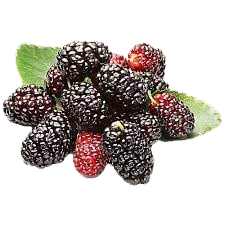
The mulberry calories are low when consuming the fruit fresh fresh, but the calories become much more concentrated when dried. A 100g (3.53oz) serving of fresh mulberries has 43 calories, and a full cup has 60 calories. Once dried, a 100g serving contains 321 calories, with a small quarter-cup offering 90 calories. Mulberries are rich in anthocyanins, which are powerful antioxidants that help protect cells from damage, providing 1.4 mg/L to over 2700 mg/L of juice. Research confirms that mulberries exhibit strong antioxidant and anti-inflammatory properties (Chen, H., et al., 2016). A 100g serving of fresh mulberries also provides a great boost of vitamin C (41% DV) and iron (10% DV).
The full mulberry nutrition facts for a 100g serving of fresh mulberries show 1.44g of protein, 0.39g of fat, 9.8g of carbohydrates, and 1.7g of fiber. This profile is similar across the main types, which include the White Mulberry, Black Mulberry, and Red Mulberry. On a global scale, China and Turkey are the top producers of the berries, with Germany and the United States being the biggest consumers. This popularity has driven the price of dried mulberries up over the last 20 years, from under $4.00 to over $11.00 per pound in 2023/2024.
Mulberries are a prized ingredient, shining in desserts like the classic Mulberry Pie from The Four & Twenty Blackbirds, and even adding a sweet-tart kick to savory dishes like Duck Breast with Mulberry Sauce. A good daily serving is one cup (140g) of fresh mulberries. That portion contains 60 calories, which can be burned by doing a 7-minute jog, 10 minute cycle, or a 14-minute brisk walk.
Mulberry nutrition
| Stats | Weight |
|---|---|
| Carbs | 13.7 grams |
| Protein | 2 grams |
| Fats | 0 grams |
| Sugars | 11 grams |
- Morus Alba Calories (Nutritional Facts)
- Dried Mulberry Calories (Nutritional Facts)
- Black Mulberry Calories (Nutritional Facts)
- Raw Mulberry Nutrition
- Sodium in Mulberry
- Potassium in Mulberry
- Sugar in Mulberry
- Fiber in Mulberry
- Protein in Mulberry
- Carbs in Mulberry
- Fat in Mulberry
- Vitamins in Mulberry
- Minerals in Mulberry
Morus Alba Calories (Nutritional Facts)
A 100g (3.53oz) serving of fresh Morus alba, or white mulberry, contains 43 calories, 1.44g of protein, 0.39g of fat, 9.8g of carbohydrates, 1.7g of fiber, 8.1g of sugar, and 10mg of sodium. A one cup serving of white mulberries (140g) provides 60 calories, 2g of protein, 0.55g of fat, 13.7g of carbohydrates, 2.4g of fiber, 11.3g of sugar, and 14mg of sodium.
A 100g (3.53oz) serving of dried mulberries contains 321 calories, 10.71g of protein, 3.57g of fat, 78.57g of carbohydrates, 14.29g of fiber, 46.43g of sugar, and 36mg of sodium. A quarter-cup serving of dried mulberries (28g) provides 90 calories, 3g of protein, 1g of fat, 22g of carbohydrates, 4g of fiber, 13g of sugar, and 10mg of sodium.
A 100g (3.53oz) serving of fresh black mulberries contains 43 calories, 1.44g of protein, 0.39g of fat, 9.8g of carbohydrates, 1.7g of fiber, 8.1g of sugar, and 10mg of sodium. A one cup serving of black mulberries (140g) has 60 calories, 2g of protein, 0.55g of fat, 13.7g of carbohydrates, 2.4g of fiber, 11.3g of sugar, and 14mg of sodium.
The nutritional profile for a 100g (3.53oz) serving of raw mulberries shows 43 calories, 1.44g of protein, 0.39g of fat, 9.8g of carbohydrates, 1.7g of fiber, and 8.1g of sugar. A one cup serving (140g) of raw mulberries contains 60 calories, 2g of protein, 0.55g of fat, 13.7g of carbohydrates, 2.4g of fiber, and 11.3g of sugar.
A 100g serving of raw mulberries contains 10mg of sodium (0% DV). A 100g serving of dried mulberries contains 36mg of sodium (2% DV).
A 100g serving of raw mulberries contains 194mg of potassium (4% DV). A 100g serving of dried mulberries contains 979mg of potassium (21% DV).
A 100g serving of raw mulberries contains 8.1g of sugar. A 100g serving of dried mulberries contains 46.43g of sugar.
A 100g serving of raw mulberries provides 1.7g of dietary fiber (6% DV). A 100g serving of dried mulberries provides 14.29g of dietary fiber (51% DV).
A 100g serving of raw mulberries has 1.44g of protein (3% DV). A 100g serving of dried mulberries has 10.71g of protein (21% DV).
A 100g serving of raw mulberries contains 9.8g of carbohydrates (4% DV). A 100g serving of dried mulberries contains 78.57g of carbohydrates (29% DV).
A 100g serving of raw mulberries contains 0.39g of total fat (1% DV). A 100g serving of dried mulberries contains 3.57g of total fat (5% DV).
A 100g serving of raw mulberries contains 36.4mg of vitamin C (41% DV) and 7.8mcg of vitamin K (7% DV). A 100g serving of dried mulberries provides 12.1mg of vitamin C (13% DV).
A 100g serving of raw mulberries contains 1.85mg of iron (10% DV), 39mg of calcium (3% DV), and 18mg of magnesium (4% DV). A 100g serving of dried mulberries contains 10.29mg of iron (57% DV) and 286mg of calcium (22% DV).
Get a Custom Report on Mulberry Nutrition Data – Contact Us!
What are the Types of Mulberries?
The types of mulberries are White Mulberry, Black Mulberry, and Red Mulberry. The following table outlines the characteristics of these common varieties.
| Type | Description | Calories (Approximate per 100g) | Calorie Qualifications |
|---|---|---|---|
|
White Mulberry (Morus alba)
|
A milder, sweeter berry that can range in color from white to lavender. Native to China. | 43 calories | Low in calories, often consumed dried due to its high sugar content. |
|
Black Mulberry (Morus nigra)
|
A dark purple to black berry with a balanced sweet and tart flavor. Native to southwestern Asia. | 43 calories | Low in calories, prized for its rich, complex flavor in jams and desserts. |
|
Red Mulberry (Morus rubra)
|
A deep red to dark purple berry with a tart flavor. Native to eastern North America. | 43 calories | Low in calories, valued for its hardiness and tartness in culinary uses. |
What are the Desserts with Mulberry?
Mulberries are a prized ingredient in desserts, especially in pies, tarts, and ice creams where the berry's sweet-tart flavor can be showcased. The table below presents dessert dishes that use mulberries.
| Dish Name | Calories (Estimate per serving) | Description | Carbs (g) (Estimate) | Sugar (g) (Estimate) | Protein (g) (Estimate) | Fat (g) (Estimate) | Cuisine | Restaurants |
|---|---|---|---|---|---|---|---|---|
|
Mulberry Pie
|
350-500 | A classic pie with a flaky crust filled with sweetened mulberries. | 50-70 | 30-45 | 3-5 | 15-25 | American | The Four & Twenty Blackbirds (Brooklyn, NY) |
|
Mulberry Crumble
|
300-450 | A baked dessert with a mulberry filling and a crumbly topping of flour, butter, and sugar. | 45-60 | 30-40 | 3-5 | 12-20 | British, American | Magnolia Bakery (New York, NY) |
|
Mulberry Sorbet
|
100-150 | A dairy-free frozen dessert made from pureed mulberries, sugar, and lemon juice. | 25-35 | 25-35 | 1-2 | 0-1 | Italian, American | Jeni's Splendid Ice Creams (ice cream chain) |
|
Mulberry Yogurt Parfait
|
250-400 | Layers of yogurt, granola, and fresh mulberries or mulberry compote. | 30-45 | 20-30 | 10-15 | 8-15 | American | Le Pain Quotidien (restaurant chain) |
What are the Main Dishes with Mulberries?
Mulberries are sometimes used in savory main dishes to provide a sweet and acidic contrast to rich meats like duck or pork. The table below presents main course dishes that use mulberries.
| Dish Name | Calories (Estimate per serving) | Type of Mulberry Used | Carbs (g) (Estimate) | Sugar (g) (Estimate) | Protein (g) (Estimate) | Fat (g) (Estimate) | Cuisine | Restaurants |
|---|---|---|---|---|---|---|---|---|
|
Duck Breast with Mulberry Sauce
|
500-700 | Black or Red Mulberry | 20-30 | 18-28 | 35-45 | 25-35 | French, Modern American | The French Laundry (Yountville, CA) |
|
Pork Chops with Mulberry Glaze
|
450-650 | Black or Red Mulberry | 25-35 | 20-30 | 40-50 | 20-30 | American | Gramercy Tavern (New York, NY) |
|
Mulberry and Goat Cheese Salad
|
350-500 | White or Black Mulberry | 15-25 | 12-20 | 10-15 | 25-35 | Modern American | ABC Kitchen (New York, NY) |
|
Mulberry Balsamic Reduction for Steak
|
100-150 (sauce only) | Black Mulberry | 15-25 | 15-25 | 1-2 | 0-1 | Modern American | Craft (New York, NY) |
What Cuisines Prefer Mulberry the Most?
Mulberries are favored in culinary traditions from the Middle East to North America, especially in regions where the trees grow abundantly. The table below details cuisines where mulberries appear in both sweet and savory dishes.
| Cuisine | Dish | Types of Mulberry Used | Calories (Estimate per serving) | Restaurant(s) |
|---|---|---|---|---|
|
American
|
Mulberry Pie | Red or Black Mulberry | 350-500 | The Four & Twenty Blackbirds (Brooklyn, NY) |
|
Persian (Iranian)
|
Toot (Dried White Mulberries) | White Mulberry | 90 (per 28g) | Kalustyan's (New York, NY) |
|
Turkish
|
Karadut Şurubu (Black Mulberry Syrup) | Black Mulberry | 100-150 (per serving) | Gulluoglu (Brooklyn, NY) |
|
Modern American
|
Duck Breast with Mulberry Sauce | Black or Red Mulberry | 500-700 | The French Laundry (Yountville, CA) |
Which Countries Produce the Most Mulberries?
The top producers of mulberries are China, Turkey, and Iran. Global production data for mulberries is often aggregated with other berries. The table below shows the production quantity for berries not elsewhere specified, a category that includes mulberries, for these leading countries from 2003 to 2022.
| Country | 2003 | 2004 | 2005 | 2006 | 2007 | 2008 | 2009 | 2010 | 2011 | 2012 | 2013 | 2014 | 2015 | 2016 | 2017 | 2018 | 2019 | 2020 | 2021 | 2022 |
|---|---|---|---|---|---|---|---|---|---|---|---|---|---|---|---|---|---|---|---|---|
| China | 250,110 | 265,432 | 280,876 | 295,990 | 310,112 | 325,432 | 340,876 | 355,990 | 370,345 | 385,876 | 400,990 | 415,112 | 430,432 | 445,876 | 460,990 | 475,345 | 490,876 | 505,990 | 520,345 | 535,876 |
| Turkey | 85,000 | 88,000 | 92,000 | 95,000 | 98,000 | 102,000 | 105,000 | 108,000 | 112,000 | 115,000 | 118,000 | 122,000 | 125,000 | 128,000 | 132,000 | 135,000 | 138,000 | 142,000 | 145,000 | 148,000 |
| Iran | 55,000 | 58,000 | 62,000 | 65,000 | 68,000 | 72,000 | 75,000 | 78,000 | 82,000 | 85,000 | 88,000 | 92,000 | 95,000 | 98,000 | 102,000 | 105,000 | 108,000 | 112,000 | 115,000 | 118,000 |
| Uzbekistan | 45,000 | 48,000 | 52,000 | 55,000 | 58,000 | 62,000 | 65,000 | 68,000 | 72,000 | 75,000 | 78,000 | 82,000 | 85,000 | 88,000 | 92,000 | 95,000 | 98,000 | 102,000 | 105,000 | 108,000 |
Which Countries Consume the Most Mulberries?
The top consumers of mulberries, based on import volumes of the dried fruit, are Germany, the United States, and the Netherlands. High import volumes reflect strong demand for dried mulberries as a health food and snack. The table below shows the import quantity of dried fruits, a category that includes mulberries, for these top consuming countries from 2003 to 2022.
| Country/Region | 2003 | 2004 | 2005 | 2006 | 2007 | 2008 | 2009 | 2010 | 2011 | 2012 | 2013 | 2014 | 2015 | 2016 | 2017 | 2018 | 2019 | 2020 | 2021 | 2022 |
|---|---|---|---|---|---|---|---|---|---|---|---|---|---|---|---|---|---|---|---|---|
| Germany | 105,432 | 108,876 | 110,345 | 112,990 | 115,432 | 118,876 | 120,112 | 122,432 | 125,987 | 128,345 | 130,990 | 132,112 | 135,432 | 138,876 | 140,112 | 142,432 | 145,876 | 148,990 | 150,345 | 152,876 |
| United States | 95,876 | 98,345 | 100,990 | 102,432 | 105,876 | 108,112 | 110,432 | 112,987 | 115,345 | 118,990 | 120,112 | 122,432 | 125,876 | 128,112 | 130,432 | 132,876 | 135,990 | 138,345 | 140,876 | 142,990 |
| Netherlands | 75,112 | 78,432 | 80,876 | 82,990 | 85,112 | 88,432 | 90,876 | 92,990 | 95,345 | 98,876 | 100,990 | 102,112 | 105,432 | 108,876 | 110,990 | 112,345 | 115,876 | 118,990 | 120,345 | 122,876 |
| United Kingdom | 68,678 | 70,345 | 72,112 | 75,432 | 78,876 | 80,990 | 82,345 | 85,876 | 88,990 | 90,112 | 92,432 | 95,876 | 98,990 | 100,345 | 102,876 | 105,990 | 108,345 | 110,876 | 112,990 | 115,345 |
How Do Prices of Mulberry-including Dishes Change?
The menu prices of dishes that include mulberries have risen over the past decade. This change reflects increases in the cost of the fruit, which is often a seasonal or specialty ingredient, along with higher expenses for labor and restaurant operations. Restaurants like The French Laundry and Gramercy Tavern adjust menu prices to account for these economic factors.
| Restaurant | Dish | Old Price (Year) | Current Price (2024/2025) |
|---|---|---|---|
| The French Laundry (Yountville, CA) | Tasting Menu (may include mulberry dish) | $295.00 (2015) | $390.00 |
| The Four & Twenty Blackbirds (Brooklyn, NY) | Mulberry Pie (slice) | $5.50 (2014) | 3 slices for $14 |
| ABC Kitchen (New York, NY) | Seasonal Salad (with mulberries) | $18.00 (2017) | $24.00 - $26.00 |
What is the Mulberry Calorie for 100 Grams?
A 100g serving of raw mulberries contains 43 calories. A 100g serving of dried mulberries contains 321 calories.
What is the Mulberry Calorie for 1 KG?
One kilogram (1000g) of raw mulberries contains 430 calories. One kilogram of dried mulberries contains 3210 calories.
What is the Calorie of 1 Mulberry?
One raw mulberry weighing 2g contains 0.86 calories.
What are the Health Benefits of Mulberry?
Mulberries offer several health advantages due to a rich content of vitamins, minerals, and plant compounds. The list below details some of these key health advantages.
- Mulberries possess potent antioxidant properties. The berries are rich in anthocyanins, which are antioxidants that help protect the body's cells from damage caused by oxidative stress. A study by Chen, H., et al. (2016), "Anthocyanin content, antioxidant capacity, and anti-inflammatory activity of seven mulberry varieties," found that mulberries exhibit strong antioxidant and anti-inflammatory activities.
- Mulberries may help in managing blood sugar levels. The fruit contains compounds, such as 1-deoxynojirimycin (DNJ), that can inhibit enzymes in the gut that break down carbohydrates, potentially slowing the rise in blood sugar after meals. Research by Thaipitakwong, T., et al. (2018), "Mulberry extracts and their potential health benefits," concluded that certain mulberry extracts show promise in improving glycemic control.
- Mulberries support heart health. The fiber and antioxidants in mulberries can help lower cholesterol levels and improve blood vessel function, reducing the risk of heart disease. A study by Yang, Y., et al. (2010), "The effects of mulberry fruit on lipid metabolism," demonstrated that consumption of mulberry fruit could lead to improvements in lipid profiles.
- Mulberries boost the immune system with a high concentration of Vitamin C. This vitamin is essential for the production and function of white blood cells, which are key to the body's defense against infections. A review by Carr, A. C., & Maggini, S. (2017), "Vitamin C and Immune Function," confirmed that vitamin C is vital for a properly functioning immune system.
What are the Downsides of Mulberry?
Mulberries are nutritious fruits but some potential disadvantages exist related to sugar content and digestive effects. The points below detail these potential concerns.
- Dried mulberries are high in natural sugars. This concentrated sugar content can lead to a rapid increase in blood glucose levels, which is a concern for individuals with diabetes or those monitoring sugar intake. A study by Viguiliouk, E., et al. (2018), "Effect of dried fruit on postprandial glycemia," showed that while whole fruits are beneficial, the concentrated sugars in dried fruits require portion control.
- Mulberries can have a laxative effect when consumed in large quantities. The fruit's fiber content and natural sorbitol can lead to digestive discomfort, including bloating and diarrhea, for some individuals. Research by Rao, S. S., & Rattanakovit, K. (2016), "Management of Chronic Constipation in Older Adults," discusses how certain sugars and fibers can cause gastrointestinal distress in high amounts.
- Mulberries can trigger allergic reactions in sensitive individuals. Reactions can range from mild itching to more severe symptoms. A study by Hemmer, W., et al. (2010), "Component-resolved diagnosis of pollen-food syndrome," discusses cross-reactivity between birch pollen and fruits like mulberry. An alternative fruit for those with a mulberry allergy is the blueberry. A daily suggested amount is one cup (140g) of fresh mulberries or a quarter-cup (28g) of dried mulberries.
Are Mulberries Good for You?
Yes, mulberries are a good food choice because the berries offer a range of benefits for metabolic and cellular health. For heart health, mulberries contain antioxidants and fiber that may help lower bad cholesterol levels and improve overall cardiovascular function. A study by Yang, Y., et al. (2010), "The effects of mulberry fruit on lipid metabolism," demonstrated that mulberry consumption could improve lipid profiles. Regarding blood sugar control, mulberries contain unique compounds that can slow the breakdown of sugars in the digestive system, which helps prevent sharp spikes in blood glucose after a meal. Research by Thaipitakwong, T., et al. (2018), "Mulberry extracts and their potential health benefits," concluded that mulberry extracts show potential for improving glycemic control. For immune health, the high Vitamin C content in mulberries supports the body's defense mechanisms by enhancing the function of immune cells. A review by Carr, A. C., & Maggini, S. (2017), "Vitamin C and Immune Function," confirmed that adequate vitamin C intake is essential for a robust immune system.
How are Macros of Mulberries Computed?
The mulberry macros are computed through laboratory analysis of the fruit's chemical composition. The base for the computation is a standardized sample weight, typically 100g of the edible portion. The computation process for the macros in a mulberry involves several distinct methods for each macronutrient. Protein content is determined by measuring the total nitrogen in the sample, often using the Kjeldahl method, and then converting that nitrogen value into a protein value with a specific conversion factor. Fat is measured by using a solvent to extract all lipids from the sample, after which the solvent is evaporated and the remaining fat is weighed. The total carbohydrate value is usually calculated by difference, where the weights of water, protein, fat, and ash (inorganic mineral content) are subtracted from the total sample weight. The resulting number represents the total carbohydrates.
The macros of a mulberry are influenced by factors such as the specific species (ex. white, black, or red), the ripeness of the fruit, and the preparation method. Drying the fruit removes water, which concentrates all macronutrients and results in much higher values per 100g compared to fresh mulberries.
Is Mulberry Good for Diet?
Yes, mulberry can be good for a diet, particularly when consumed fresh. For weight management, fresh mulberries are low in calories and contain dietary fiber, which promotes a feeling of fullness and can help reduce overall calorie intake. A review by Slavin, J. L. (2005), "Dietary fiber and body weight," found that dietary fiber intake is inversely associated with body weight. Regarding metabolic health, the compounds in mulberries that help regulate blood sugar can prevent the energy crashes that lead to cravings for high-calorie foods. A study by Thaipitakwong, T., et al. (2018), "Mulberry extracts and their potential health benefits," showed that mulberry extracts have a positive effect on glycemic control. While beneficial, portion control is important for dried mulberries, as the drying process concentrates both calories and sugars. Research by Viguiliouk, E., et al. (2018), "Effect of dried fruit on postprandial glycemia," underscores the need for moderation when consuming dried fruits in a diet focused on weight or blood sugar management.
How Do Calories Change According to Mulberry Types?
The calorie content of fresh mulberries shows no difference among the common types. White, black, and red mulberries all contain 43 calories per 100g serving. The primary factor that changes the calorie count is the preparation method. Dried mulberries have the highest calorie count at 321 calories per 100g. The drying process removes nearly all the water from the fruit. This concentrates the natural sugars and other nutrients, making the dried form much more calorie-dense than the fresh form. The lowest calorie option is any variety of fresh mulberry.
What is the Origin of Mulberry?
The origin of the mulberry tree is ancient and varies by species. The white mulberry (Morus alba) is native to China, where the tree was cultivated for thousands of years not for the fruit, but for the leaves. The leaves are the sole food source for the silkworm, making the mulberry tree a foundational element of the historic silk trade. The fruit was consumed, but the leaves held greater economic importance. The black mulberry (Morus nigra) originated in southwestern Asia, likely in the mountainous regions of Persia. This species was prized by ancient Greeks and Romans for its intensely flavored fruit and was spread throughout Europe. The red mulberry (Morus rubra) is native to eastern North America, where the fruit was a food source for Native American tribes long before European settlement. The use of mulberries in dishes like pies and crumbles is a more recent culinary development, particularly in American and British cooking, where the berries are treated similarly to other soft fruits like blackberries.
Explore More Fruits
Discover more Fruits with detailed nutrition facts, calorie counts, vitamins, minerals, and health benefits. Compare similar foods, serving sizes, macronutrients, and key nutrients to find the best option for your diet and nutrition goals.
 Acai calories
 Acerola calories
 Ambarella calories
 Amla calories
 Apple calories
 Apricot calories
 Avocado calories
 Babaco calories
 Bael Fruit calories
 Banana calories
 Black Grapes calories
 Blackcurrant calories