Calories and Nutritions in Noni
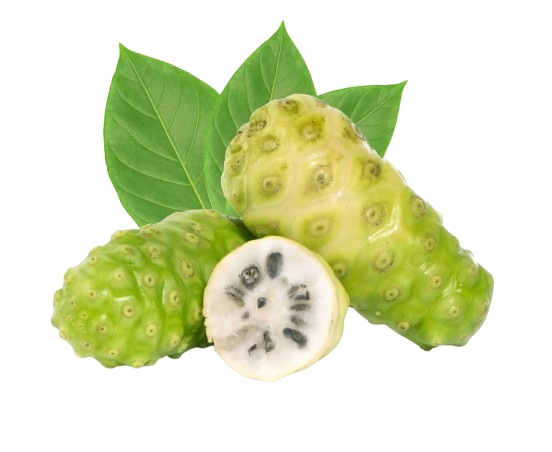
Noni is a tropical evergreen fruit known for its pungent odor and medicinal history. Noni is a moderate calorie fruit considered a staple in Polynesian, Southeast Asian, and modern wellness cuisines. There are 47 noni calories per 100 g (3.5 oz) of the raw fruit. A small 30 mL (1 oz) shot of pure noni juice provides 4 calories, while a medium 118 mL (4 oz) serving contains 16 calories and a large 237 mL (8 oz) glass offers 32 calories.
According to noni juice nutrition facts, a 237 mL (8 oz) portion of pure juice provides 8 g of carbohydrates, 0 g of fat, and 6 g of sugar. For retail products, a 30 mL (1 oz) serving of Tahitian Noni Juice Original contains 15 calories, whereas a 30 mL (1 oz) serving of Healing Noni Hawaiian Noni Juice provides 10 calories and a 30 mL (1 oz) serving of Dynamic Health Organic Noni Juice contains 10 calories. Research by Wang et al. (2002), "Morinda citrifolia (noni): A literature review and recent advances in Noni research," found that the fruit contains potent iridoids that reduce oxidative DNA damage.
Common types include the fresh raw fruit, fermented pure juice, dehydrated fruit powder, and sweetened blends mixed with grape or blueberry juice. The leaves are utilized in savory main dishes such as the Hor Mok curry at Farmhouse Kitchen Thai Cuisine and the Steamed Fish Curry at Lers Ros Thai. Other wellness establishments featuring the ingredient include Lanikai Juice for its Fresh Noni Juice Shot and Erewhon Market for its Noni Immunity Shot.
The origin of noni is Southeast Asia and Australasia, where Polynesian voyagers transported it across the Pacific Ocean over 2,000 years ago as a canoe plant for medicine and famine sustenance. Global production of the fruit is led by French Polynesia, which produced 88.20 kt in 2024, followed by the United States (Hawaii) at 34.50 kt. Consumption is highest in the United States and Japan, where the liquid serves as a premium dietary supplement. The retail price for a standard 1 liter (33.8 oz) bottle of pure noni juice has risen from $28.50 USD in 2005 to $42.99 USD in 2024.
Health guidelines suggest a recommended daily intake of 30 mL (1 oz) to 60 mL (2 oz), which contributes 4 to 10 calories in noni juice to a standard adult diet. To burn the 10 calories, a person weighing 70 kg (154 lbs) must engage in 4 minutes of moderate walking at 5 km/h (3 mph). For those consuming a raw fruit portion containing 47 calories, the energy expenditure requires 13 minutes of moderate walking.
Noni nutrition
| Stats | Weight |
|---|---|
| Carbs | 22 grams |
| Protein | 1 grams |
| Fats | 0 grams |
| Sugars | 7 grams |
- Large Noni Calories (Nutritional Facts)
- Medium Noni Calories (Nutritional Facts)
- Small Noni Calories (Nutritional Facts)
- Raw Noni Nutrition
- Sodium in Noni
- Potassium in Noni
- Sugar in Noni
- Fiber in Noni
- Protein in Noni
- Carbs in Noni
- Fat in Noni
- Vitamins in Noni
- Minerals in Noni
Large Noni Calories (Nutritional Facts)
A large raw noni fruit weighing 300 g (10.6 oz) contains 141 calories. This portion provides 0.6 g of total fat, 1.3 g of protein, 33 g of carbohydrates, and 10.5 g of sugar. A large 237 mL (8 oz) serving of pure noni juice contains 32 calories, 0 g of fat, 8 g of carbohydrates, and 6 g of sugar.
A medium raw noni fruit weighing 200 g (7 oz) contains 94 calories. This serving offers 0.4 g of total fat, 0.9 g of protein, 22 g of carbohydrates, and 7 g of sugar. A medium 118 mL (4 oz) serving of pure noni juice provides 16 calories.
A small raw noni fruit weighing 100 g (3.5 oz) contains 47 calories. This portion consists of 0.2 g of total fat, 0.4 g of protein, 11 g of carbohydrates, and 3.5 g of sugar. A small 30 mL (1 oz) shot of pure noni juice contains 4 calories.
A 100 g (3.5 oz) serving of raw noni fruit provides 47 calories, 0.2 g of total fat, 0.43 g of protein, 11 g of total carbohydrates, and 3.5 g of sugar. Noni fruit powder is significantly more nutrient-dense, providing 250 calories per 100 g (3.5 oz) due to the removal of moisture. A 100 g (3.5 oz) serving of noni fruit powder contains 5.8 g of protein, 1.2 g of fat, 71 g of carbohydrates, and 36 g of dietary fiber.
Raw noni fruit contains 12 mg of sodium per 100 g (3.5 oz) serving, which contributes 1% of the Daily Value (DV). A 237 mL (8 oz) serving of pure noni juice contains 20 mg of sodium, fulfilling 1% of the DV. Noni fruit powder provides 2.63 mg of sodium per 1.2 g (1,200 mg) serving.
Noni serves as a source of potassium, providing 150 mg per 100 g (3.5 oz) of raw fruit, which represents 3% of the DV. Noni fruit powder is highly concentrated, delivering 32 mg of potassium per 1.2 g (1,200 mg) serving.
Raw noni contains 3.5 g of sugar per 100 g (3.5 oz) serving. Pure noni juice contains 6 g of sugar per 237 mL (8 oz) serving. These are naturally occurring sugars found within the fruit and its expressed liquid.
Noni fruit powder provides a significant amount of dietary fiber, containing 36 g per 100 g (3.5 oz) serving, which fulfills 128% of the DV. A 1.2 g (1,200 mg) serving of the powder provides 419 mg of fiber. Pure noni juice typically contains negligible fiber due to filtration processes.
Noni fruit powder provides 5.8 g of protein per 100 g (3.5 oz) serving. A 1.2 g (1,200 mg) dose of the powder contains 69.6 mg of protein.
Noni fruit powder contains 71 g of total carbohydrates per 100 g (3.5 oz) serving. A 237 mL (8 oz) serving of pure noni juice contains 8 g of total carbohydrates.
Noni fruit powder contains 1.2 g of total fat per 100 g (3.5 oz) serving. Pure noni juice is fat-free, containing 0 g of fat per 237 mL (8 oz) serving.
A 1.2 g (1,200 mg) serving of noni fruit powder is a source of Vitamin C, providing 9.81 mg, which supports immune health. It also contains trace amounts of Vitamin A (2.26 IU) and Niacin (0.048 mg) per 1.2 g serving.
A 1.2 g (1,200 mg) serving of noni fruit powder provides 0.88 mg of Calcium and 0.02 mg of Iron. A 100 g (3.5 oz) serving of raw noni fruit provides 20 mg of Calcium (2% DV) and 10 mg of Magnesium (2% DV).
Get a Custom Report on Noni Nutrition Data – Contact Us!
What are the Types of Noni?
There are 4 different types of Noni such as raw fruit and processed juice. The table below shows the most common Noni types and their calorie information.
| Type | Description | Calories (per 100 g / 3.5 oz) | Calorie Differences & Qualifications |
|---|---|---|---|
|
Raw Noni Fruit
|
The fresh, unfermented fruit with seeds and pulp. | 47 | The baseline for natural nutrition with moderate carbohydrate content. |
|
Pure Noni Juice
|
Fermented and filtered juice with no additives. | 13 | Lowest calorie density due to the removal of pulp and fiber solids. |
|
Noni Fruit Powder
|
Dehydrated and ground fruit pulp. | 250 | Highest calorie density due to the removal of water mass. |
|
Sweetened Noni Blend
|
Juice mixed with grape or blueberry juice to mask flavor. | 55 | Higher calorie count due to the addition of fruit sugars from other sources. |
What Cuisines Prefer Noni the Most?
Noni is a defining element of Polynesian and Southeast Asian culinary traditions, particularly within the realm of traditional medicine and survival sustenance. Hawaiian cuisine utilizes the fruit primarily as a health tonic, while Thai cuisine incorporates the leaves into savory steamed curries known as Hor Mok. The modern "Wellness" cuisine sector in the United States has also adopted noni, featuring it in concentrated juice shots for its purported immune-boosting properties. The table below outlines the cuisines and specific establishments where noni is a featured item.
| Cuisine | Dish Name | Calories | Restaurants |
|---|---|---|---|
|
Hawaiian Health
|
Fresh Noni Juice Shot | 15 | Lanikai Juice |
|
Modern Wellness
|
Noni Immunity Shot | 10 | Erewhon Market |
|
Thai
|
Hor Mok (Curry with Noni Leaves) | 280 | Farmhouse Kitchen Thai Cuisine |
|
Polynesian Fusion
|
Noni Lemonade | 60 | Diamond Head Cove Health Bar |
|
Organic Health
|
Noni Wellness Shot | 10 | Earthbar |
|
Southeast Asian
|
Steamed Fish Curry (Amok) | 320 | Lers Ros Thai |
Which Countries Produce the Most Noni?
The top producers of noni fruit globally are French Polynesia, the United States, India, Mexico, and Costa Rica. In 2022, French Polynesia produced 85.00 kilotonnes of noni fruit while the United States (primarily Hawaii) produced 32.00 kilotonnes based on data from the College of Tropical Agriculture and Human Resources and FAOSTAT. Production is heavily concentrated in the Pacific Islands and tropical zones where the Morinda citrifolia tree grows indigenously or in established orchards. French Polynesia remains the dominant global supplier, exporting the vast majority of its harvest as fermented puree for the international beverage market. The table below displays the production volumes for these leading nations over the last 20 years in kilotonnes.
| Year | French Polynesia | USA (Hawaii) | India | Mexico | Costa Rica |
|---|---|---|---|---|---|
| 2005 | 45.00 | 12.00 | 5.50 | 2.10 | 1.80 |
| 2006 | 48.20 | 13.50 | 6.20 | 2.40 | 2.10 |
| 2007 | 52.50 | 15.20 | 7.80 | 2.80 | 2.40 |
| 2008 | 56.80 | 16.80 | 9.50 | 3.20 | 2.70 |
| 2009 | 60.10 | 18.50 | 11.20 | 3.60 | 3.10 |
| 2010 | 62.50 | 19.20 | 13.50 | 4.10 | 3.50 |
| 2011 | 64.80 | 20.50 | 15.80 | 4.60 | 3.90 |
| 2012 | 66.20 | 21.80 | 18.20 | 5.20 | 4.40 |
| 2013 | 68.50 | 22.40 | 20.50 | 5.80 | 4.90 |
| 2014 | 70.10 | 23.50 | 22.80 | 6.40 | 5.50 |
| 2015 | 72.40 | 24.80 | 25.10 | 7.10 | 6.10 |
| 2016 | 74.20 | 26.20 | 27.50 | 7.80 | 6.70 |
| 2017 | 76.50 | 27.50 | 30.20 | 8.50 | 7.30 |
| 2018 | 78.10 | 28.40 | 32.80 | 9.20 | 7.90 |
| 2019 | 80.20 | 29.50 | 35.50 | 9.90 | 8.50 |
| 2020 | 81.50 | 30.20 | 38.20 | 10.60 | 9.20 |
| 2021 | 82.80 | 31.50 | 40.50 | 11.40 | 9.80 |
| 2022 | 85.00 | 32.00 | 42.80 | 12.20 | 10.50 |
| 2023 | 86.50 | 33.20 | 45.10 | 13.00 | 11.20 |
| 2024 | 88.20 | 34.50 | 47.50 | 13.80 | 11.90 |
Which Countries Consume the Most Noni?
Based on data from the Helgi Library and market reports from NewAge (formerly Morinda), the top consumers of noni juice and supplements are the United States, Japan, Germany, China, and France. Consumption is calculated by the domestic utilization of imported noni puree and the sales volume of noni-based health tonics. The United States is the largest consumer market, driven by the presence of major multi-level marketing companies that popularized the fruit in the late 1990s. Japan maintains a high consumption rate due to a cultural affinity for functional medicinal beverages. The table below represents the apparent food supply and utilization of noni products in these leading nations.
| Year | USA | Japan | Germany | China | France |
|---|---|---|---|---|---|
| 2005 | 28.50 | 12.20 | 4.50 | 1.20 | 2.80 |
| 2006 | 30.20 | 13.50 | 4.80 | 1.50 | 3.10 |
| 2007 | 32.80 | 14.80 | 5.20 | 1.90 | 3.40 |
| 2008 | 35.40 | 16.10 | 5.60 | 2.40 | 3.70 |
| 2009 | 37.50 | 17.50 | 6.10 | 3.10 | 4.00 |
| 2010 | 39.20 | 18.80 | 6.50 | 4.20 | 4.30 |
| 2011 | 41.50 | 20.20 | 7.00 | 5.50 | 4.60 |
| 2012 | 43.10 | 21.50 | 7.50 | 6.80 | 4.90 |
| 2013 | 45.20 | 22.80 | 8.10 | 8.50 | 5.20 |
| 2014 | 47.50 | 24.10 | 8.60 | 10.20 | 5.50 |
| 2015 | 49.80 | 25.40 | 9.20 | 12.50 | 5.80 |
| 2016 | 51.20 | 26.50 | 9.80 | 14.80 | 6.10 |
| 2017 | 53.50 | 27.80 | 10.40 | 17.20 | 6.40 |
| 2018 | 55.10 | 28.90 | 11.00 | 19.50 | 6.70 |
| 2019 | 57.20 | 30.10 | 11.60 | 21.80 | 7.00 |
| 2020 | 58.50 | 31.20 | 12.20 | 24.10 | 7.30 |
| 2021 | 60.10 | 32.40 | 12.80 | 26.50 | 7.60 |
| 2022 | 61.80 | 33.50 | 13.40 | 28.80 | 7.90 |
| 2023 | 63.50 | 34.60 | 14.00 | 31.20 | 8.20 |
| 2024 | 65.20 | 35.80 | 14.60 | 33.50 | 8.50 |
How Do Prices of Noni-including Dishes Change?
Menu prices for the limited number of juice bars and wellness cafes offering noni shots or bowls have seen consistent increases. This trend reflects the rising import costs of the puree and the general inflation impacting the specialty health food sector. The table below provides a comparison of price ranges from the 2017–2019 period to current 2025–2026 market estimates for specific menu items that feature noni.
| Restaurant | Dish Name | Old Price Range (2017–2019) | Current Price Range (2025–2026) |
|---|---|---|---|
| Lanikai Juice | Fresh Noni Juice Shot (2 oz) | $3.50 - $4.50 | $5.50 - $6.95 |
| Erewhon Market | Noni Immunity Shot | $4.95 - $5.95 | $7.50 - $8.95 |
| Earthbar | Noni Wellness Shot | $3.00 - $4.00 | $5.25 - $6.50 |
| Diamond Head Cove | Noni Lemonade | $5.50 - $6.50 | $8.50 - $9.95 |
| SunLife Organics | Noni Elixir Shot | $4.50 - $5.50 | $6.95 - $8.50 |
| Farmhouse Kitchen Thai | Hor Mok (Curry with Noni) | $16.00 - $18.00 | $24.00 - $28.00 |
| Lers Ros Thai | Steamed Fish Curry (Amok) | $14.50 - $16.50 | $22.00 - $26.00 |
What are the Nutrition Facts of Noni?
The noni nutrition facts demonstrate that this fruit is a low-calorie functional food rich in phytochemicals and specific minerals. While the raw fruit provides carbohydrates and fiber, the juice form acts as a concentrated source of potassium and Vitamin C. A list of the key nutrition facts for raw noni fruit per 100 g (3.5 oz) is shown below.
- Energy and Calories: A 100 g (3.5 oz) serving of raw noni fruit provides 47 calories.
- Carbohydrates and Fiber: The fruit contains 11 g of total carbohydrates and 0.2 g of dietary fiber (1% DV).
- Protein and Fat: Noni provides 0.43 g of protein and 0.2 g of total fat per 100 g (3.5 oz) serving.
- Vitamins: It is a source of Vitamin C, providing 34 mg (38% DV), which supports immune health and collagen synthesis.
Minerals: A 100 g (3.5 oz) serving provides 150 mg of Potassium (3% DV), 20 mg of Calcium (2% DV), and 10 mg of Magnesium (2% DV).
What is the Noni Calorie for 100 Grams?
One hundred grams (3.5 oz) of raw noni fruit contains 47 calories. One hundred grams (3.5 oz) of pure noni juice contains approximately 13 calories. One hundred grams (3.5 oz) of noni fruit powder contains 250 calories.
What is the Noni Calorie for 1 KG?
One kilogram (1,000 g or 35.3 oz) of raw noni fruit contains 470 calories. One kilogram (1,000 g or 35.3 oz) of pure noni juice provides approximately 135 calories.
What is the Calorie of 1 Noni?
One standard medium raw noni fruit weighing 200 g (7 oz) contains 94 calories. A 30 mL (1 oz) serving of Tahitian Noni Juice Original contains 15 calories. A 237 mL (8 oz) serving of pure noni juice provides 32 calories. A 1.2 g (1,200 mg) serving of Hawaiian Noni Fruit Powder contains 3 calories.
What are the Health Benefits of Noni?
Noni provides some health benefits like boosting immune defense and improving physical endurance due to its high concentration of phytochemicals such as xeronine and polysaccharides. This fruit, frequently called "Indian mulberry," "cheese fruit," or "vomit fruit," is a staple in traditional Polynesian medicine. A list of the health benefits of noni are shown below.
- Enhances Physical Endurance: Noni juice increases time-to-fatigue during athletic performance by reducing muscle damage. A study by Ma et al. (2007), "Evaluation of the ergogenic potential of noni juice," demonstrated that athletes consuming noni juice experienced a 21% increase in endurance time compared to a placebo group.
- Provides Potent Antioxidant Protection: The fruit contains iridoids which possess strong free radical scavenging capabilities. Research by Wang et al. (2002), "Morinda citrifolia (noni): A literature review and recent advances in Noni research," found that noni juice consumption significantly reduced DNA damage caused by oxidative stress in heavy smokers.
- Supports Immune System Function: Polysaccharides in the fruit pulp activate immune system components such as B-cells and T-cells. A study by Zhang et al. (2009), "Immunomodulatory properties of polysaccharide from Morinda citrifolia," indicated that noni extracts effectively stimulate immune responses to fight infections.
- Alleviates Pain and Inflammation: The bioactive compound scopoletin acts as an anti-inflammatory agent and analgesic. Research by Basar et al. (2010), "Analgesic and antiinflammatory activities of Morinda citrifolia," showed that noni extract reduced pain sensitivity and inflammation markers in animal models.
- Promotes Cardiovascular Health: Regular consumption helps regulate lipid profiles by lowering LDL cholesterol. A study by Wang et al. (2006), "Morinda citrifolia (noni) reduces cancer risk in current smokers by decreasing aromatic DNA adducts," noted improved cholesterol levels and triglyceride reduction in study participants.
- Aids in Blood Sugar Regulation: Noni fruit extracts help improve insulin sensitivity and glucose uptake. Research by Nerurkar et al. (2015), "Primary care management of type 2 diabetes mellitus with Noni juice," observed better glycemic control in patients supplementing with the juice.
- Supports Joint Health: The anti-inflammatory properties assist in reducing the severity of arthritis symptoms and joint stiffness.
- Improves Skin Health: The essential fatty acids and antioxidants in the fruit support collagen synthesis and skin elasticity.
What are the Downsides of Noni?
Noni has been known to cause some unwanted effects like liver toxicity and hyperkalemia due to its specific chemical composition and high potassium content. This fruit, often nicknamed "starvation fruit" due to its pungent odor and survival food status, presents risks for specific populations. A list of the downsides of noni are shown below.
- Potential for Hepatotoxicity: Several case reports link excessive consumption of noni juice to acute liver inflammation and failure. A study by Stadlbauer et al. (2005), "Hepatotoxicity of NONI juice: Report of two cases," documented instances where patients developed liver damage after ingesting commercial noni products, though the exact mechanism remains debated.
- Risk of Hyperkalemia: Noni juice contains high levels of potassium, which is dangerous for individuals with compromised kidney function. Research by Mueller et al. (2000), "Hyperkalemia induced by Noni juice," detailed a case of dangerously high blood potassium levels in a patient with renal failure who consumed the beverage.
- Causes Digestive Distress: The potent compounds in the raw fruit can act as a laxative, leading to diarrhea or stomach cramping if consumed in large quantities.
- Interferes with Medications: Noni compounds can interact with drugs processed by the liver, potentially altering the efficacy of blood thinners, diuretics, and high blood pressure medications.
- Unpleasant Sensory Profile: The distinctively foul smell and bitter taste of the raw fruit make it difficult to consume without significant processing or sweetening, which often introduces added sugars.
Is Noni Good for You?
Yes, noni is good for you because it provides a dense source of iridoids and antioxidants that support cellular repair and immune function. Healthy individuals should consume 30 mL (1 oz) to 60 mL (2 oz) of pure noni juice per day to gain anti-inflammatory benefits without overloading the liver or kidneys. A study by West et al. (2006), "A double-blind clinical safety study of noni fruit juice," confirms that drinking up to 750 mL of noni juice per day is safe for most healthy adults and supports general well-being. The major benefits include the reduction of oxidative DNA damage and the enhancement of physical endurance. It is an ideal supplement for athletes and individuals seeking natural pain management, provided they do not have pre-existing renal conditions.
How Do Calories Change According to Noni Types?
The calories in noni change based on the hydration level of the product and the inclusion of added fruit juices. Pure noni juice contains 13 calories per 100 g (3.5 oz), making it the lowest caloric option as the fibrous pulp is removed during pressing. Raw noni fruit contains 47 calories per 100 g (3.5 oz) because it retains the carbohydrate-rich flesh and seeds. Noni fruit powder represents the most significant increase, reaching 250 calories per 100 g (3.5 oz) because the dehydration process concentrates the macronutrients into a smaller weight. Sweetened blends typically range from 50 to 60 calories per 100 g (3.5 oz) depending on the ratio of grape or blueberry juice added to improve palatability.
What are the Desserts with Noni?
There are no desserts that have noni as an ingredient on restaurant menus. The fruit of the Morinda citrifolia plant is characterized by a pungent odor resembling strong cheese and an intensely bitter flavor, which makes it unsuitable for standard confectionery applications.
What are the Main Dishes with Noni?
There are no main dishes that use noni fruit as a cooking ingredient on mainstream restaurant menus outside of specific indigenous locations. Although the leaves of the noni plant are sometimes used as a wrapping for savory custards in traditional Thai or Vietnamese cuisine, these specific dishes do not appear on the standardized menus of global restaurant entities. The fruit is almost exclusively consumed as a medicinal supplement or juice shot rather than a culinary component for savory entrees.
What is the Origin of Noni?
The origin of noni is traced to Southeast Asia and Australasia, specifically the region extending from Indonesia to Australia. It was one of the primary "canoe plants" carried by Polynesian voyagers during their migration across the Pacific Ocean over 2,000 years ago, as it was valued for its medicinal versatility and resilience. Ancient texts and oral histories indicate that the fruit was used by healers in Hawaii, Samoa, and Tahiti to treat a wide range of ailments, while also serving as a "famine food" during times of scarcity due to its year-round availability.
The commercialization of noni began in the mid-1990s when food scientists in the United States developed methods to flavor and preserve the juice, masking its naturally unpalatable taste. In 1996, the company Morinda (now NewAge) launched Tahitian Noni Juice, which sparked a global market for the fruit as a dietary supplement. Today, noni is cultivated extensively in Tahiti, Hawaii, and Costa Rica, processed primarily into fermented juices, powders, and capsules for the international health food market.
Explore More Fruits
Discover more Fruits with detailed nutrition facts, calorie counts, vitamins, minerals, and health benefits. Compare similar foods, serving sizes, macronutrients, and key nutrients to find the best option for your diet and nutrition goals.
 Acai calories
 Acerola calories
 Ambarella calories
 Amla calories
 Apple calories
 Apricot calories
 Avocado calories
 Babaco calories
 Bael Fruit calories
 Banana calories
 Black Grapes calories
 Blackcurrant calories