Calories and Nutritions in Oats
Calories in oats vary depending on the serving size and type. A medium cup of oats (164g) contains 614 calories while a small cup of oats (81g) contains 308 calories. A 100-gram serving of whole grain rolled oats contains around 382 calories. Oats nutrition information for a medium cup serving includes 108g of carbohydrates, 16.4g of fiber, 1.6g of sugar, 10g of fat, and 21g protein. The different types of oats are whole oat groats, steel-cut oats, Scottish oatmeal, rolled oats, and oat flour.
The top producer of oats is the European Union with 5.97 million metric tons in 2024. Global oat consumption has seen steady changes in recent years, with the European Union, Russia, the United States, and Canada being the top consumers. In 2020, the EU consumed 8.87 million metric tons of oats, while Russia and Canada consumed 3.95 million and 2.4 million metric tons, respectively. By 2024, these figures dropped to 7.41 million metric tons for the EU and 2.75 million metric tons for Russia, with Canada consuming 2.05 million metric tons. The price of oats has fluctuated in the last 20 years, from $1.84 per bushel in 2005 to $3.68 in 2025. Retail prices for oat products also vary, with Walmart's Great Value Organic Old Fashioned Oats (18 oz) priced at $3.52, Organic Steel Cut Oats (1 lb) at $12.64, and Bob's Red Mill Old Fashioned Rolled Oats (32 oz) at $10.75.
Oats are featured in desserts like Oatmeal Raisin Cookies and Apple Crisp, found at restaurants like Subway, Starbucks, and Cracker Barrel. Main dishes include Oatmeal Porridge at IHOP, Oat-Crusted Chicken at Applebee's, and Savory Oatmeal at Starbucks.
Oats are rich in antioxidants and have been known to help regulate blood sugar, support weight loss, improve skin health, lower the risk of childhood asthma, and relieve constipation. A healthy serving size of oats is one cup of cooked oatmeal or 1/2 cup of raw oats per day, which contains approximately 150 calories. Burning oats calories would take approximately 41 minutes of walking (3 mph), 15 minutes of running (6 mph), or 21 minutes of cycling (10 mph) for a person weighing 140 lbs.
Oats nutrition
| Stats | Weight |
|---|---|
| Carbs | 68.7 grams |
| Protein | 13.5 grams |
| Fats | 5.89 grams |
| Sugars | 0 grams |
- Large Cup of Oats Calories (Nutritional Facts)
- Medium Cup of Oats Calories (Nutritional Facts)
- Small Cup of Oats Calories (Nutritional Facts)
- Oatmeal Calories
- Raw Oats Calories
- Calories in Rolled Oats
- Potassium in Oats
- Sugar in Oats
- Fiber in Oats
- Protein in Oats
- Carbs in Oats
- Fat in Oats
- Vitamins in Oats
- Minerals in Oats
Large Cup of Oats Calories (Nutritional Facts)
A large cup of oats (246g) contains approximately 918 calories, 162g of carbohydrates, 24g of fiber, 2.4g of sugar, 16g fat, and 32g of protein.
A medium cup of oats (164g, regular size) contains approximately 612 calories, 108g of carbohydrates, 16.4g of fiber, 1.6g of sugar, 10g of fat, and 21g protein.
A small cup of oats (81g, regular size) contains approximately 308 calories, 55g of carbohydrates, 8.2g of fiber, 0.8g of sugar, 5.3g of fat, and 11g of protein.
According to the USDA, 100 grams of oatmeal contains 68 calories.
According to My Food Data, 156g of raw oats contains approximately 607 calories.
According to the USDA, 100 grams of whole grain rolled old-fashioned oats contains 382 calories.
The potassium in oats depends on the size of the serving as listed below:
- Potassium in a small cup of oats (41 grams) is 146.6 milligrams (3% Daily Value).
- Potassium in a medium cup of oats (81 grams) is 294 milligrams (6% Daily Value).
- Potassium in a large cup of oats (121 grams) is 440.9 milligrams (9% Daily Value).
The sugar in oats depends on the size of the serving as listed below:
- Sugar in a small cup of oats (41 grams) is 0.4 grams.
- Sugar in a medium cup of oats (81 grams) is 0.8 grams.
- Sugar in a large cup of oats (121 grams) is 1.2 grams.
The fiber in oats depends on the size of the serving as listed below:
- Fiber in a small cup of oats (41 grams) is 4.1 grams (15% Daily Value).
- Fiber in a medium cup of oats (81 grams) is 8.2 grams (29% Daily Value).
- Fiber in a large cup of oats (121 grams) is 12.3 grams (44% Daily Value).
The protein in oats depends on the size of the serving as listed below:
- Protein in a small cup of oats (41 grams) is 5.3 grams.
- Protein in a medium cup of oats (81 grams) is 11 grams.
- Protein in a large cup of oats (121 grams) is 16.5 grams.
The carbs in oats depend on the size of the serving as listed below:
- Carbohydrates in a small cup of oats (41 grams) is 27 grams (10% Daily Value).
- Carbohydrates in a medium cup of oats (81 grams) is 55 grams (20% Daily Value).
- Carbohydrates in a large cup of oats (121 grams) is 82.5 grams (30% Daily Value).
The fat in oats depends on the size of the serving as listed below:
- Fat in a small cup of oats (41 grams) is 2.6 grams (3% Daily Value).
- Fat in a medium cup of oats (81 grams) is 5.3 grams (7% Daily Value).
- Fat in a large cup of oats (121 grams) is 7.9 grams (10% Daily Value).
The vitamins in oats depend on the size of the serving as listed below. A 41g serving of oats contains 23μg of folate (B9) (6% DV), 0.4mg of niacin (2% DV), 1mg of pantothenic acid (11% DV), 0.1mg of riboflavin (B2) (4% DV), 0.3mg of thiamine (B1) (26% DV), and 0mg of vitamin B6 (4% DV). It does not contain vitamin A, vitamin B12, vitamin C, vitamin D, vitamin E, or vitamin K.
The minerals in oats depend on the size of the serving. A 41g serving of oats contains 42mg of calcium (3% DV), 1.5mg of iron (8% DV), 39mg of magnesium (9% DV), 135mg of phosphorus (11% DV), 117mg of potassium (2% DV), 0.9mg of zinc (8% DV), 0.2mg of copper (22% DV), 1.4mg of manganese (61% DV), and 0mg of sodium (0% DV). It does not contain selenium or fluoride.
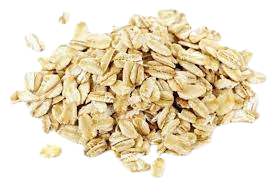
Get a Custom Report on Oats Nutrition Data – Contact Us!
What are the Types of Oats?
The types of oats include whole oat groats, steel-cut oats, Scottish oatmeal, rolled oats (regular and quick), and oat flour.
| Oat Type | Characteristics | Calories (per 100g, dry) |
|---|---|---|
|
Whole Oat Groats
|
Whole, unbroken oat kernels. The least processed form. Chewy, nutty texture. | ~389 |
|
Steel-Cut Oats (Irish Oats)
|
Whole oat groats that have been chopped into 2-3 pieces with steel blades. Chewy, slightly nutty texture. | ~375 |
|
Scottish Oatmeal
|
Whole oat groats that have been stone-ground into a meal. Finer than steel-cut, but coarser than rolled oats. Creamy texture when cooked. | ~370-380 |
|
Rolled Oats (Old-Fashioned)
|
Whole oat groats that have been steamed and flattened between rollers. Soft, somewhat chewy texture. | ~379 |
|
Quick Oats (Instant Oats)
|
Rolled oats that have been steamed for a longer time and rolled thinner. May be pre-cooked and dried. Soft, can be mushy texture. | ~379 |
|
Oat Flour
|
Finely ground oats. Can be made from any type of oat, but is usually made from rolled oats. | ~389 |
What are Desserts with Oats?
Listed in the table below are desserts that contain oats:
| Cuisine | Dessert Name | Description | Calories (Estimate) | Restaurants |
|---|---|---|---|---|
|
American
|
Oatmeal Raisin Cookies | Cookies made with oats, raisins, cinnamon, and brown sugar. | 120 (per cookie) | Subway, Panera Bread |
|
American
|
Oatmeal Chocolate Chip Cookies | Oatmeal cookies with chocolate chips. | 150 (per cookie) | Starbucks, various bakeries |
|
American
|
Apple Crisp | Baked apples topped with an oat and brown sugar crumble. | 220 (per serving) | Cracker Barrel, The Cheesecake Factory |
|
American
|
Oatmeal Bars | Dessert bars made with oats, sweeteners, and dried fruits or nuts. | 180 (per bar) | Starbucks, local bakeries, coffee shops |
|
Various
|
Oatmeal Pudding | Made from oats, milk, and sweeteners, flavored with vanilla or cinnamon. | 150 (per serving) | The Away Cafe, Tropical Smoothie Cafe, Bottega Restaurant (less common in restaurants) |
What are the Main Dishes with Oats?
The dishes that frequently feature oats in the recipes are listed below:
| Cuisine | Main Dish Name | Description | Calories (Estimate) | Restaurants |
|---|---|---|---|---|
|
American
|
Oatmeal Porridge | Warm dish made with oats, water or milk, often topped with fruits, nuts, or spices. | 150-300 (per serving, depending on toppings) | IHOP, Denny's |
|
American
|
Oatmeal Pancakes | Pancakes made with oats or oat flour. | 180-250 (per pancake, depending on size and ingredients) | The Original Pancake House, local diners |
|
American
|
Oat-Crusted Chicken | Chicken coated with oats instead of breadcrumbs, often baked. | 250-400 (per serving, depending on cut and preparation) | Applebee's (may be a past or limited-time item), The Cheesecake Factory (may be a past or limited time item) |
|
American
|
Oatmeal Meatloaf | Meatloaf where oats are used as a binder. | 220-350 (per serving, depending on recipe) | Cracker Barrel (may be a past or limited-time item), local diners |
|
Various
|
Savory Oatmeal | Oats cooked with broth or water, topped with vegetables, eggs, or cheese. | 200-400 (per serving, depending on toppings) | Starbucks (limited availability), The Away Cafe, some health-focused cafes |
What Cuisines Prefer Oats the Most?
The cuisines that prefer oats are listed below:
| Cuisine | Dishes | Calories (Estimate) | Restaurants (Examples) |
|---|---|---|---|
|
American
|
Oatmeal Pancakes | ~180 per serving | The Original Pancake House, Local Diners |
| Oatmeal Porridge | ~150 per serving | IHOP, Denny's | |
| Oat-Crusted Chicken | ~250 per serving | Applebee's (may be a past or limited-time item), The Cheesecake Factory (may be a past item) | |
|
British
|
Oatmeal Porridge | ~150 per serving | The Breakfast Club, Pret A Manger |
| Oatmeal Bars | ~180 per serving | Local Cafes, Bakeries | |
| Oatmeal Meatloaf | ~220 per serving | Family Restaurants, Local Diners | |
|
Scandinavian
|
Swedish Oatmeal Porridge | ~160 per serving | Fika, Smorgasbord Restaurants |
| Oatmeal Pudding | ~150 per serving | Swedish Bakery, Cafe Smorgas | |
|
Indian
|
Savory Oatmeal | ~200 per serving | Indian Cafes, Chai Cafes |
| Oats Upma | ~250 per serving | Indian Cafes, South Indian Restaurants | |
|
Canadian
|
Oatmeal Porridge | ~150 per serving | Tim Hortons, Local Cafes |
| Oatmeal Bars | ~180 per serving | Local Bakeries, Cafes |
Which Countries Produce the Most Oats?
According to the USDA, the top oat-producing countries from 2020 to 2024 include the European Union, Russia, and Canada. The EU leads with 5.97 million metric tons of oats in 2024. Russia and Canada follow with 3.3 million and 2.64 million metric tons, respectively. Other notable producers include Australia, Brazil, China, the United Kingdom, the United States, Argentina, and Chile, with varying production levels over the years. The top oat-producing countries from 2020 to 2024 are listed below with their respective values (in million metric tons):
| Country | 2020 | 2021 | 2022 | 2023 | 2024 |
|---|---|---|---|---|---|
| European Union | 8.5 | 7.5 | 7.5 | 6.0 | 5.97 |
| Russia | 4.1 | 3.7 | 4.5 | 3.3 | 3.3 |
| Canada | 4.6 | 2.9 | 5.2 | 2.6 | 2.64 |
| Australia | 1.9 | 1.7 | 1.6 | 1.0 | 1.00 |
| Brazil | 0.853 | 1.1 | 1.2 | 0.984 | 0.984 |
| China | 0.76 | 0.78 | 0.79 | 0.84 | 0.84 |
| United Kingdom | 1.0 | 1.1 | 1.0 | 0.83 | 0.83 |
| United States | 0.954 | 0.578 | 0.837 | 0.828 | 0.828 |
| Argentina | 0.51 | 0.725 | 0.429 | 0.565 | 0.565 |
| Chile | 0.525 | 0.578 | 0.333 | 0.458 | 0.458 |
Which Countries Consume the Most Oats?
The top producers of oats are the European Union, Russia, United States, and Canada. The European Union leads with 8.87 million metric tons in 2020, dropping to 7.41 million by 2024. Russia follows with a decrease from 3.95 million to 2.75 million, while the United States and Canada both see declines from 2.49 million to 2.237 million and 2.4 million to 2.05 million, respectively. The top oat-consuming countries from 2020 and 2024, based on million metric tons, are listed below:
| Country | 2020 | 2024 |
|---|---|---|
| EU | 8.87 | 7.41 |
| Russia | 3.95 | 2.75 |
| United States | 2.49 | 2.237 |
| Canada | 2.4 | 2.05 |
How Do Prices of Oats-including Dishes Change?
Oat prices have fluctuated over the years, ranging from $1.84 per bushel in 2005 to $3.68 in 2025. The fluctuations are primarily driven by factors like weather conditions, supply chain disruptions, and changing demand for oats in different sectors. Poor harvests can reduce supply and drive prices higher. Another factor is a shift in consumer preferences, such as increasing demand for plant-based diets. As oat prices rise, menu prices for dishes like oatmeal or granola bowls increase as well, as shown below:
| Restaurant | Dish | Old Price (Date) | Current Price (Date) |
|---|---|---|---|
| Starbucks | Classic Oatmeal | ~$2.75 (2014-2016) | $3.95 (March 2025) |
| Panera Bread | Steel Cut Oatmeal | ~$4.29 (2016-2018) | $6.29 (March 2025) |
| Subway | Oatmeal Raisin Cookie | ~$0.50 (2010-2014) | $1.29 (March 2025) |
How Does the Price of Oats Change for the Last 20 Years?
Over the last 20 years, the price of oats has fluctuated, starting at $1.84 per bushel in 2005, peaking at $3.87 in 2010, and reaching $3.68 in 2025. Retail prices also differ depending on the product, with Walmart selling Great Value Organic Old Fashioned Oats (18 oz) for $3.52, Organic Steel Cut Oats (1 lb) for $12.64, and Bob's Red Mill Old Fashioned Rolled Oats (32 oz) for $10.75. The average price of oats per bushel from 2005 to 2025 are as follows:
| Year | Price |
|---|---|
| 2005 | $1.84 |
| 2006 | $2.71 |
| 2007 | $3.06 |
| 2008 | $2.13 |
| 2009 | $2.63 |
| 2010 | $3.87 |
| 2011 | $3.1 |
| 2012 | $3.65 |
| 2013 | $3.4 |
| 2014 | $3.06 |
| 2015 | $2.27 |
| 2016 | $2.25 |
| 2017 | $2.42 |
| 2018 | $2.88 |
| 2019 | $2.91 |
| 2020 | $3.38 |
| 2021 | $3.65 |
| 2022 | $3.68 |
| 2023 | $3.76 |
| 2024 | $3.51 |
| 2025 | $3.68 |
What is the Oats Calorie for 100 GR?
According to My Food Data, a 100g serving of raw, uncooked oats contains 389 calories.
What is the Oats Calorie for 1 KG?
According to My Food Data, a 1kg serving of raw, uncooked oats contains 3890 calories.
What is the Calorie of 1 Cup of Oats?
According to My Food Data, 1 cup (156g) serving of raw, uncooked oats contains 607 calories.
What are the Health Benefits of Oats?
Oats provide a lot of health benefits such as the ones listed below:
- Oats are packed with antioxidants: Oats are high in antioxidants and beneficial plant compounds called polyphenols, with a unique group known as avenanthramides, which are primarily found in oats. Research published in October 2020 by Pema Raj, Nancy Ames, and others titled “The effects of oat ingredients on blood pressure in spontaneously hypertensive rats” shows that avenanthramides may help reduce oxidative stress by increasing nitric oxide production, leading to improved blood flow.
- Oats may help regulate blood sugar: Oats can lower blood sugar, especially in those with type 2 diabetes. A 2021 review article published in European Journal of Clinical Nutrition shows that adding oat beta-glucan to meals can reduce insulin levels.
- Oatmeal may support weight loss: Consuming satisfying foods can help reduce calorie intake and support weight loss according to a 2021 study spearheaded by Devendra Paudel. The beta-glucan in oatmeal slows stomach emptying, increasing feelings of fullness.
- Oats may improve skin care: Oats, specifically finely ground oats known as colloidal oatmeal, are used in many skin care products. The FDA approved colloidal oatmeal as a skin-protective substance in 2003. Oat-based products are known to relieve itching and irritation according to a study led by Andrea Perrelli, et al in 2018, particularly for conditions like eczema.
- Oats may lower the risk of childhood asthma: Asthma is a common chronic lung condition in children, characterized by inflammation of the airways. Research titled “Lipid Nutrition in Asthma” suggests that introducing oats early in a child's diet may reduce the risk of developing asthma, but the potential for oats to prevent asthma is still under investigation.
- Oats may relieve constipation: Studies show that oat bran, the fiber-rich outer layer of oats, can help alleviate constipation which affects 16 out of 100 adults and about 33 out of 100 adults who are ages 60 and over, and improve digestion, especially in individuals with ulcerative colitis.
What are the Downsides of Oats?
Oats have many benefits but also some downsides, as listed below:
- Gas accumulation: A January 2022 study by Salla Laito, Niina Valkonen, and Oskar Laaksonen found that oats may cause mild gastrointestinal symptoms, such as flatulence, in people with a sensitive gut or IBS when consumed with pulses. Breath hydrogen levels increased after eating oat flour compared to rice flour, but these levels did not fully explain the symptoms. Both sensitive and control groups reported more discomfort after the oat meal, though no severe symptoms occurred.
- Anemia: According to research by L. Rossander-Hulthén, A. Gleerup, and L. Hallberg, oat products, particularly oat bran and porridge, can inhibit the absorption of non-heme iron due to their high phytate content. This effect is significant enough to be a concern, especially for groups with critical iron needs, such as children, teenagers, and women in their fertile years. The heat treatment of oats, designed to prevent rancidity, further reduces the effectiveness of iron absorption.
- Celiac disease: A position paper published in the Canadian Journal of Gastroenterology and Hepatology titled Consumption of pure oats by individuals with celiac disease, suggests that pure and uncontaminated oats can be safe for individuals with celiac disease when consumed in limited amounts, which is 70g per day for adults and 25g for children
Are Oats Good For You?
Yes, oats are good for your health, offering benefits for heart health, diabetes prevention, and digestion. A 2021 analysis titled “A Review of Health-Beneficial Properties of Oats” found that consuming beta-glucan which is found in oats daily can reduce LDL (bad) cholesterol, while a 2016 study published in the National Library of Medicine of 54,871 Danish adults aged 50-64 linked oat consumption to a lower heart attack risk. A 2021 meta-analysis review led by Wehrli et al. found that oats promote good gut bacteria and prevent constipation.
How Many Oats Should I Eat a Day?
One cup of cooked oatmeal is a healthy serving size, says Jessica Crandall Snyder, RDN, CDCES, the CEO of Vital RD in Centennial, Colorado or 1/2 cup of raw oats, according to Julie Upton, MS, RD, CSSD.
How Many Oats Can I Eat a Day at Most?
Oats are high in fiber, so consuming too much may cause changes in stool appearance and frequency. One to two servings of oats per day is recommended for most people.
How Does Calorie Change According to Oats Types?
The calorie content of oats is similar across all types, as they have the same nutrition per gram. The only difference is the way the oats are cut and processed, which impacts cooking time and texture, but not the calorie count.
What is the Origin of Oats?
Oats were the last cereal grain to be domesticated by Western civilization around 3,000 years ago. The earliest records of oats date back to Egypt’s 12th Dynasty, around 2000 B.C., and possibly even earlier in China. But ancient civilizations like the Egyptians did not prioritize oats, unlike wheat and barley. Back then, the Greeks and Romans viewed oats as a lesser food, reserved for animals. The Romans introduced oats to Britain, where the climate proved ideal for cultivation. In Scotland, oats, particularly porridge, hold significant cultural importance, celebrated annually during the World Porridge Making Championship in Carrbridge. Although the Scots were not the first to plant oats, their geography and climate made them early adopters.
Explore More Grains
Discover more Grains with detailed nutrition facts, calorie counts, vitamins, minerals, and health benefits. Compare similar foods, serving sizes, macronutrients, and key nutrients to find the best option for your diet and nutrition goals.
 Amaranth calories
 Arborio Rice calories
 Arrowroot Powder calories
 Barley calories
 Basmati Rice calories
 Black Rice calories
 Brown Rice calories
 Buckwheat calories
 Bulgur Wheat calories
 Coconut Flour calories
 Cornmeal calories
 Cornstarch calories