Calories and Nutritions in Passion Fruit
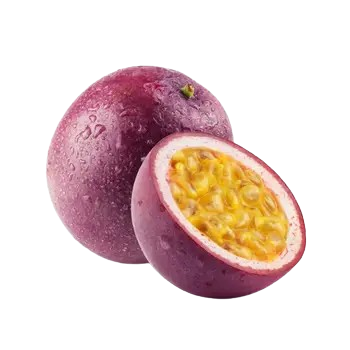
Passion fruit is a widely consumed tropical fruit used as a flavor enhancer in desserts and main dishes in Brazilian, Peruvian, and Hawaiian cuisines. A single passion fruit (18g) contains 17 calories in passion fruit, while a one-cup serving (236g) contains 229 calories. A 100g serving of fresh raw purple passion fruit or fresh raw yellow passion fruit provides 97 calories. A serving of Island Oasis Passion Fruit (34g) contains 50 calories, while an ounce of Nutty Fruity Passion Fruit (28g) provides 80 calories.
An examination of passion fruit nutrition facts reveals a carbohydrate-rich profile providing 55.2g of carbohydrates per cup. The fruit is a rich source of antioxidants and piceatannol needed for cardiovascular health. A study conducted by Lewis, B. J., et al. (2013), "Antihypertensive effect of passion fruit peel extract and its major bioactive components in spontaneously hypertensive rats," confirms that the bioactive compounds present in the fruit reduce blood pressure levels. The energy content stems mainly from natural fructose and glucose, establishing the food as a nutrient-dense source. Passion fruit’s micronutrient density is high, offering 821mg of potassium (17% DV) and 71mg of Vitamin C per cup.
International output of passion fruit relies significantly on the agricultural yields of Brazil, Colombia, and Vietnam, with Brazil leading global production volumes. This production meets demand in major markets where the United States and the Netherlands consume vast amounts of this tropical produce. Culinary practices in Brazil, Peru, and Hawaii utilize passion fruit as a foundational component for dishes such as Passion Fruit Mousse, Ceviche, and Lilikoi Chiffon Pie. Rising global consumption combined with weather patterns like El Niño has pushed market rates higher, causing the wholesale cost of a fresh fruit carton to jump from $25 in the early 2010s to a range of $42 to $55 in 2024. Restaurant prices reflect these economic shifts, demonstrated by the Tequila Sunburn Glazed Salmon at Bahama Breeze which climbed from a price of $16.99 in 2015 to between $18.99 and $25.49 in 2024.
Passion fruit calories are accompanied by high concentrations of iron and magnesium, providing 3.8mg of iron and 68mg of magnesium per 236g serving. This nutrient profile aids metabolic processes and supports nervous system health. Nutritionists recommend eating two pieces of passion fruit (36g) per day to maximize nutrient absorption while limiting acidity intake. This portion contains 34 calories, an energy load that requires 3 minutes of boxing or 5 minutes of rowing to burn.
Passion Fruit nutrition
| Stats | Weight |
|---|---|
| Carbs | 27.6 grams |
| Protein | 2.6 grams |
| Fats | 0 grams |
| Sugars | 13.2 grams |
- Large Passion Fruit Calories (Nutritional Facts)
- Medium Passion Fruit Calories (Nutritional Facts)
- Small Passion Fruit Calories (Nutritional Facts)
- Raw Passion Fruit Nutrition
- Sodium in Passion Fruit
- Potassium in Passion Fruit
- Sugar in Passion Fruit
- Fiber in Passion Fruit
- Protein in Passion Fruit
- Carbs in Passion Fruit
- Fat in Passion Fruit
- Vitamins in Passion Fruit
- Minerals in Passion Fruit
Large Passion Fruit Calories (Nutritional Facts)
A large serving of fresh raw purple passion fruit (236g or 1 cup) contains 229 calories, 5.2g of protein, 1.7g of fat, 55.2g of carbohydrates, 24.5g of fiber, 26.4g of sugar, and 66mg of sodium. A large serving of fresh raw yellow passion fruit pulp (236g or 1 cup) provides 229 calories, 5.2g of protein, 1.7g of fat, 55.2g of carbohydrates, 24.5g of fiber, 26.4g of sugar, and 66mg of sodium.
A medium portion of fresh raw purple passion fruit (118g or 0.5 cup) provides 115 calories, 2.6g of protein, 0.8g of fat, 27.6g of carbohydrates, 12.3g of fiber, 13.2g of sugar, and 33mg of sodium. A medium portion of fresh raw yellow passion fruit pulp (118g or 0.5 cup) supplies 115 calories, 2.6g of protein, 0.8g of fat, 27.6g of carbohydrates, 12.3g of fiber, 13.2g of sugar, and 33mg of sodium.
A small serving of fresh raw purple passion fruit (59g or 0.25 cup) contains 57 calories, 1.3g of protein, 0.4g of fat, 13.8g of carbohydrates, 6.1g of fiber, 6.6g of sugar, and 17mg of sodium. A small serving of fresh raw yellow passion fruit pulp (59g or 0.25 cup) provides 57 calories, 1.3g of protein, 0.4g of fat, 13.8g of carbohydrates, 6.1g of fiber, 6.6g of sugar, and 17mg of sodium.
A single passion fruit (18g) contains 17 calories, 0.4g of protein (1% DV), 0.13g of total fat (0% DV), 4.2g of total carbohydrate (2% DV), 1.9g of dietary fiber (7% DV), 2g of total sugars (4% DV), and 5mg of sodium (0% DV). The fruit provides 5.4mg of Vitamin C (6% DV), 0.29mg of iron (2% DV), 2.2mg of calcium (0% DV), 62.6mg of potassium (1% DV), and 12.2mg of phosphorus (1% DV).
A large serving of fresh raw purple passion fruit (236g or 1 cup) contains 66mg of sodium (3% DV), while a large serving of fresh raw yellow passion fruit (236g or 1 cup) provides 66mg of sodium (3% DV). A medium portion of fresh raw purple passion fruit (118g or 0.5 cup) has 33mg of sodium (1% DV), whereas a medium portion of fresh raw yellow passion fruit (118g or 0.5 cup) supplies 33mg of sodium (1% DV). A small serving of fresh raw purple passion fruit (59g or 0.25 cup) contains 17mg of sodium (1% DV), and a small serving of fresh raw yellow passion fruit (59g or 0.25 cup) provides 17mg of sodium (1% DV).
A large serving of fresh raw purple passion fruit (236g or 1 cup) provides 821mg of potassium (17% DV), while a large serving of fresh raw yellow passion fruit (236g or 1 cup) contains 821mg of potassium (17% DV). A medium portion of fresh raw purple passion fruit (118g or 0.5 cup) has 411mg of potassium (9% DV), whereas a medium portion of fresh raw yellow passion fruit (118g or 0.5 cup) supplies 411mg of potassium (9% DV). A small serving of fresh raw purple passion fruit (59g or 0.25 cup) contains 205mg of potassium (4% DV), and a small serving of fresh raw yellow passion fruit (59g or 0.25 cup) provides 205mg of potassium (4% DV).
A large serving of fresh raw purple passion fruit (236g or 1 cup) contains 26.4g of sugar, while a large serving of fresh raw yellow passion fruit (236g or 1 cup) provides 26.4g of sugar. A medium portion of fresh raw purple passion fruit (118g or 0.5 cup) has 13.2g of sugar, whereas a medium portion of fresh raw yellow passion fruit (118g or 0.5 cup) supplies 13.2g of sugar. A small serving of fresh raw purple passion fruit (59g or 0.25 cup) contains 6.6g of sugar, and a small serving of fresh raw yellow passion fruit (59g or 0.25 cup) provides 6.6g of sugar.
A large serving of fresh raw purple passion fruit (236g or 1 cup) provides 24.5g of dietary fiber (88% DV), while a large serving of fresh raw yellow passion fruit (236g or 1 cup) contains 24.5g of fiber (88% DV). A medium portion of fresh raw purple passion fruit (118g or 0.5 cup) has 12.3g of fiber (44% DV), whereas a medium portion of fresh raw yellow passion fruit (118g or 0.5 cup) supplies 12.3g of fiber (44% DV). A small serving of fresh raw purple passion fruit (59g or 0.25 cup) contains 6.1g of fiber (22% DV), and a small serving of fresh raw yellow passion fruit (59g or 0.25 cup) provides 6.1g of fiber (22% DV).
A large serving of fresh raw purple passion fruit (236g or 1 cup) provides 5.2g of protein (10% DV), while a large serving of fresh raw yellow passion fruit (236g or 1 cup) contains 5.2g of protein (10% DV). A medium portion of fresh raw purple passion fruit (118g or 0.5 cup) has 2.6g of protein (5% DV), whereas a medium portion of fresh raw yellow passion fruit (118g or 0.5 cup) supplies 2.6g of protein (5% DV). A small serving of fresh raw purple passion fruit (59g or 0.25 cup) contains 1.3g of protein (3% DV), and a small serving of fresh raw yellow passion fruit (59g or 0.25 cup) provides 1.3g of protein (3% DV).
A large serving of fresh raw purple passion fruit (236g or 1 cup) contains 55.2g of carbohydrates (20% DV), while a large serving of fresh raw yellow passion fruit (236g or 1 cup) provides 55.2g of carbohydrates (20% DV). A medium portion of fresh raw purple passion fruit (118g or 0.5 cup) has 27.6g of carbohydrates (10% DV), whereas a medium portion of fresh raw yellow passion fruit (118g or 0.5 cup) supplies 27.6g of carbohydrates (10% DV). A small serving of fresh raw purple passion fruit (59g or 0.25 cup) contains 13.8g of carbohydrates (5% DV), and a small serving of fresh raw yellow passion fruit (59g or 0.25 cup) provides 13.8g of carbohydrates (5% DV).
A large serving of fresh raw purple passion fruit (236g or 1 cup) contains 1.7g of total fat (2% DV), while a large serving of fresh raw yellow passion fruit (236g or 1 cup) provides 1.7g of total fat (2% DV). A medium portion of fresh raw purple passion fruit (118g or 0.5 cup) has 0.8g of total fat (1% DV), whereas a medium portion of fresh raw yellow passion fruit (118g or 0.5 cup) supplies 0.8g of total fat (1% DV). A small serving of fresh raw purple passion fruit (59g or 0.25 cup) contains 0.4g of total fat (1% DV), and a small serving of fresh raw yellow passion fruit (59g or 0.25 cup) provides 0.4g of total fat (1% DV).
A large serving of fresh raw purple passion fruit (236g or 1 cup) provides 71mg of Vitamin C (79% DV) and 151mcg of Vitamin A (17% DV). A large serving of fresh raw yellow passion fruit (236g or 1 cup) contains 71mg of Vitamin C (79% DV) and 151mcg of Vitamin A (17% DV). A medium portion of fresh raw purple passion fruit (118g or 0.5 cup) has 35.5mg of Vitamin C (39% DV), whereas a medium portion of fresh raw yellow passion fruit (118g or 0.5 cup) supplies 35.5mg of Vitamin C (39% DV). A small serving of fresh raw purple passion fruit (59g or 0.25 cup) contains 17.8mg of Vitamin C (20% DV), and a small serving of fresh raw yellow passion fruit (59g or 0.25 cup) provides 17.8mg of Vitamin C (20% DV).
A large serving of fresh raw purple passion fruit (236g or 1 cup) provides 3.8mg of iron (21% DV) and 68mg of magnesium (16% DV). A large serving of fresh raw yellow passion fruit (236g or 1 cup) contains 3.8mg of iron (21% DV) and 68mg of magnesium (16% DV). A medium portion of fresh raw purple passion fruit (118g or 0.5 cup) has 1.9mg of iron (11% DV), whereas a medium portion of fresh raw yellow passion fruit (118g or 0.5 cup) supplies 1.9mg of iron (11% DV). A small serving of fresh raw purple passion fruit (59g or 0.25 cup) contains 0.9mg of iron (5% DV), and a small serving of fresh raw yellow passion fruit (59g or 0.25 cup) provides 0.9mg of iron (5% DV).
Get a Custom Report on Passion Fruit Nutrition Data – Contact Us!
What are the Types of Passion Fruits?
The types of Passion Fruits include Purple Passion Fruit, Yellow Passion Fruit, Sweet Granadilla, Giant Granadilla, and Banana Passion Fruit. The table below outlines the nutritional differences.
| Type | Description | Calories (Per 100g) | Calorie Qualifications |
|---|---|---|---|
|
Purple Passion Fruit
|
Small, dark skin with orange pulp. | 97 | The dense seed and pulp ratio provides a high caloric load. |
|
Yellow Passion Fruit
|
Larger, thick yellow skin with tart pulp. | 97 | The nutritional profile mirrors the purple variety despite the size difference. |
|
Sweet Granadilla
|
Orange skin with greyish, sweet pulp. | 90 | The higher water content results in a slightly lower energy density. |
|
Giant Granadilla
|
Largest variety with mild, melon-like flesh. | 38 | The high volume of water and lower sugar content drastically reduce the calorie count. |
|
Banana Passion Fruit
|
Elongated shape with tart, orange pulp. | 60 | The fibrous nature and moisture content create a moderate caloric profile. |
What are the Desserts With Passion Fruit?
Passion fruit functions as a vital ingredient in confectionery by adding acidity and tropical sweetness to balance rich fats and sugars. It serves as a base for sorbets, moisture for cakes, and flavoring for creams. The following list enumerates confectionery items that utilize this fruit as a key component.
| Dish Name | Calories (Estimate) | Type of Dish | Carbs (g) (Estimate) | Sugar (g) (Estimate) | Protein (g) (Estimate) | Fat (g) (Estimate) | Cuisine | Restaurants |
|---|---|---|---|---|---|---|---|---|
|
Passion Fruit Mousse
|
320 | Pudding | 35 | 28 | 4 | 18 | Brazilian | Fogo de Chão |
|
Lilikoi Chiffon Pie
|
380 | Pie | 45 | 30 | 3 | 18 | Hawaiian | King's Hawaiian Bakery (Torrance, CA) |
|
Passion Fruit Tart
|
290 | Pastry | 38 | 22 | 4 | 14 | French | Paris Baguette |
|
Passion Fruit Sorbet
|
140 | Frozen Dessert | 34 | 32 | 0 | 0 | European | Amorino Gelato |
|
Passion Fruit Cheesecake
|
560 | Cake | 48 | 38 | 8 | 36 | American | The Cheesecake Factory (National) |
|
Passion Fruit Macaron
|
90 | Cookie | 12 | 10 | 2 | 4 | French | Ladurée (New York, NY) |
|
Passion Fruit Crème Brûlée
|
420 | Custard | 28 | 24 | 5 | 32 | French-Fusion | Roy's (Various Locations) |
|
Passion Fruit Donut
|
350 | Fried Dough | 42 | 25 | 4 | 18 | American | Doughnut Plant (New York, NY) |
|
Passion Fruit Panna Cotta
|
280 | Custard | 22 | 18 | 4 | 20 | Italian | Eataly (Various Locations) |
|
Lilikoi Shave Ice
|
210 | Frozen Dessert | 52 | 50 | 0 | 0 | Hawaiian | Matsumoto Shave Ice (Haleiwa, HI) |
|
Passion Fruit Tres Leches
|
340 | Cake | 45 | 35 | 6 | 12 | Latin American | Porto's Bakery (Los Angeles, CA) |
|
Passion Fruit Yogurt
|
120 | Frozen Yogurt | 24 | 20 | 3 | 0 | American | Pinkberry |
|
Passion Fruit Pavlova
|
250 | Meringue | 40 | 38 | 2 | 8 | Australian | The Thirsty Koala (Astoria, NY) |
|
Passion Fruit Eclair
|
260 | Pastry | 28 | 18 | 4 | 14 | French | Maison Kayser (New York, NY) |
|
Passion Fruit Tapioca
|
220 | Pudding | 38 | 25 | 2 | 6 | Asian | Mango Mango Dessert |
What are the Main Dishes With Passion Fruit?
Passion fruit serves as a potent tenderizer and flavor enhancer in savory applications, particularly within marinades and glazes. The natural acidity breaks down muscle fibers in meat, while the sugars create caramelized crusts during cooking. The list below details distinct savory recipes that incorporate this ingredient.
| Dish Name | Calories (Estimate) | Type of Dish | Carbs (g) (Estimate) | Sugar (g) (Estimate) | Protein (g) (Estimate) | Fat (g) (Estimate) | Cuisine | Restaurants |
|---|---|---|---|---|---|---|---|---|
|
Passion Fruit Ceviche
|
210 | Seafood Appetizer | 15 | 8 | 25 | 6 | Peruvian | La Mar (San Francisco, CA) |
|
Glazed Salmon
|
520 | Grilled Entree | 18 | 14 | 42 | 28 | American | Bahama Breeze |
|
Duck Breast with Passion Fruit
|
480 | Roasted Entree | 12 | 8 | 35 | 32 | French | Le Diplomate (Washington, DC) |
|
Lilikoi Grilled Mahi Mahi
|
450 | Grilled Entree | 10 | 6 | 38 | 24 | Hawaiian | Duke's (Hawaii/California) |
|
Passion Fruit BBQ Ribs
|
850 | Grilled Entree | 45 | 35 | 50 | 55 | Fusion | Morimoto (Various Locations) |
|
Scallops with Passion Fruit
|
320 | Seared Entree | 14 | 8 | 28 | 16 | Contemporary | The Modern (New York, NY) |
|
Passion Fruit Shrimp Salad
|
380 | Salad | 22 | 15 | 25 | 20 | American | Nordstrom Ebar/Cafe (National) |
|
Pork Tenderloin (Glazed)
|
410 | Roasted Entree | 15 | 12 | 35 | 22 | Latin Fusion | Carnivale (Chicago, IL) |
|
Passion Fruit Aguachile
|
190 | Seafood Appetizer | 12 | 6 | 22 | 5 | Mexican | Javier's (California/Nevada) |
|
Passion Fruit Wings
|
580 | Fried Appetizer | 35 | 20 | 28 | 38 | American | Buffalo Wild Wings |
|
Tiradito de Maracuya
|
200 | Sashimi | 8 | 5 | 24 | 8 | Peruvian-Japanese | Nobu |
|
Grilled Octopus (Passion Fruit)
|
340 | Grilled Appetizer | 12 | 6 | 28 | 18 | Mediterranean | Komodo (Miami, FL) |
|
Passion Fruit Chicken Bowl
|
550 | Rice Entree | 65 | 18 | 30 | 15 | Healthy Casual | Sweetgreen |
|
Passion Fruit Salsa (w/ Chips)
|
280 | Appetizer | 35 | 12 | 3 | 14 | Mexican | Border Grill (Las Vegas, NV) |
|
Passion Fruit Curry
|
480 | Curry Entree | 45 | 15 | 18 | 28 | Thai | Lotus of Siam (Las Vegas, NV) |
What Cuisines Prefer Passion Fruit the Most?
Passion fruit functions as a foundational element in Brazilian, Peruvian, and Hawaiian culinary traditions. The subsequent table pinpoints specific food cultures that fundamentally depend on this tropical extract.
| Cuisine | Dish | Types of Passion Fruit Use | Calories (Estimate) | Restaurant(s) |
|---|---|---|---|---|
|
Brazilian
|
Passion Fruit Mousse | Dessert Base | 320 | Fogo de Chão |
|
Peruvian
|
Ceviche | Curing Agent | 210 | La Mar (San Francisco, CA) |
|
Hawaiian
|
Lilikoi Chiffon Pie | Filling Flavor | 380 | King's Hawaiian Bakery (Torrance, CA) |
|
French
|
Passion Fruit Macaron | Ganache Flavor | 90 | Ladurée (New York, NY) |
|
Australian
|
Pavlova | Topping | 250 | The Thirsty Koala (Astoria, NY) |
|
Thai
|
Passion Fruit Salad | Dressing Ingredient | 180 | Lotus of Siam (Las Vegas, NV) |
|
Mexican
|
Aguachile de Maracuya | Marinade Acid | 190 | Javier's (California/Nevada) |
|
Colombian
|
Jugo de Maracuya | Beverage Base | 150 | Pueblito Viejo (Chicago, IL) |
|
Vietnamese
|
Passion Fruit Panna Cotta | Dessert Flavor | 280 | The Slanted Door (San Francisco, CA) |
|
Caribbean
|
Glazed Salmon | Glaze Base | 520 | Bahama Breeze |
|
Japanese (Fusion)
|
Nobu Style Sashimi | Sauce Ingredient | 200 | Nobu |
|
Venezuelan
|
Mousse de Parchita | Dessert Base | 300 | Arepa Zone (Washington, DC) |
|
American
|
Passion Fruit Cheesecake | Flavoring | 560 | The Cheesecake Factory (National) |
|
Chinese
|
Passion Fruit Green Tea | Drink Mixer | 120 | Mango Mango Dessert |
|
Portuguese
|
Pudim de Maracujá | Dessert Base | 220 | Adega (San Jose, CA) |
Which Countries Produce the Most Passion Fruits?
The top producers of passion fruit are Brazil, Colombia, and Vietnam. Brazil dominates the global market, accounting for nearly 70% of total output, while Colombia and Vietnam function as major exporters of processed concentrate and fresh fruit. The table below shows the estimated production of passion fruit (in Metric Tons) for the top producing nations over the last two decades.
| Country | 2003 | 2008 | 2013 | 2018 | 2019 | 2020 | 2021 | 2022 |
|---|---|---|---|---|---|---|---|---|
| Brazil | 480 | 560 | 620 | 650 | 670 | 690 | 685 | 698 |
| Colombia | 60 | 90 | 110 | 140 | 155 | 160 | 165 | 170 |
| Vietnam | 20 | 45 | 80 | 110 | 125 | 135 | 140 | 155 |
| Ecuador | 40 | 55 | 70 | 85 | 88 | 90 | 92 | 95 |
| Peru | 30 | 40 | 55 | 70 | 75 | 78 | 82 | 85 |
| Indonesia | 80 | 85 | 95 | 105 | 108 | 110 | 112 | 115 |
| Kenya | 25 | 30 | 35 | 40 | 42 | 41 | 43 | 45 |
| Australia | 15 | 18 | 22 | 25 | 26 | 27 | 28 | 29 |
Which Countries Consume the Most Passion Fruits?
The top consumers of passion fruit, which are the main importers of the crop, are the United States, the Netherlands, and Germany. The United States represents the largest single market for imported fresh fruit and juice concentrate, driven by the beverage and dessert sectors. The Netherlands serves as the primary distribution hub for the European Union, absorbing significant volumes for re-export and processing. The table below shows the import volumes of passion fruit for key markets over the last two decades.
| Country | 2003 | 2008 | 2013 | 2018 | 2019 | 2020 | 2021 | 2022 |
|---|---|---|---|---|---|---|---|---|
| United States | 25 | 35 | 45 | 55 | 58 | 60 | 62 | 65 |
| Netherlands | 20 | 28 | 35 | 45 | 48 | 50 | 52 | 55 |
| Germany | 15 | 20 | 25 | 35 | 38 | 40 | 41 | 42 |
| France | 12 | 18 | 22 | 30 | 32 | 33 | 34 | 35 |
| Belgium | 8 | 12 | 15 | 20 | 22 | 23 | 24 | 25 |
| United Kingdom | 10 | 14 | 18 | 22 | 21 | 22 | 23 | 24 |
| Canada | 5 | 8 | 12 | 15 | 16 | 17 | 18 | 19 |
| China | 2 | 5 | 15 | 30 | 35 | 40 | 45 | 50 |
How Do Prices of Passion Fruit-Including Dishes Change?
Restaurant costs for passion fruit-based beverages and dishes have surged, mirroring the increased expense of sourcing fresh tropical fruit and imported purées. The table below illustrates price adjustments for selected items at well-known establishments.
| Brand/Restaurant | Dish | Old Price (Year) | Current Price (2024/2025) |
|---|---|---|---|
| Bahama Breeze | Tequila Sunburn Glazed Salmon | $16.99 (2015) | $18.99 - $25.49 |
| Yard House | Pink Dragon (Cocktail) | $10.45 (2016) | $13.49 - $14.95 |
| Nobu | Passion Fruit Baked Alaska | $18.00 (2013) | $22.00 - $26.00 |
What is the Passion Fruit Calorie for 100 Grams?
A 100g serving of fresh raw purple passion fruit or fresh raw yellow passion fruit provides 97 calories.
What is the Passion Fruit Calorie for 1 KG?
One kilogram (1000g) of fresh raw purple passion fruit or fresh raw yellow passion fruit supplies 970 calories.
What is the Calorie of 1 Passion Fruit?
A single standard fresh raw purple passion fruit (18g) contains 17 calories, while a single large fresh raw yellow passion fruit (100g) provides 97 calories. Commercial preparations vary, as a serving of Island Oasis Passion Fruit (34g) contains 50 calories. A serving of Nutty Fruity Passion Fruit (28g) provides 80 calories, whereas a 0.33 cup serving of Sunq Soft Dried Passion Fruit (40g) supplies 130 calories. A 360ml container of Canoa Passion Fruit contains 180 calories.
What are the Health Benefits of Passion Fruit?
Passion fruit functions as a potent source of antioxidants, dietary fiber, and piceatannol, supporting various physiological systems. The fruit ensures rapid absorption of essential nutrients and improves metabolic health. The points below emphasize these specific health rewards.
- Enhances Cardiovascular Health: The fruit contains piceatannol and scirpusin B, compounds that relax blood vessels and improve blood flow. A study by Lewis, B. J., et al. (2013), "Antihypertensive effect of passion fruit peel extract and its major bioactive components in spontaneously hypertensive rats," confirmed that these bioactive compounds significantly reduce blood pressure levels.
- Supports Digestive Function: High concentrations of dietary fiber facilitate bowel movements and reduce cholesterol absorption. Research by Chau, C. F., & Huang, Y. L. (2004), "Characterization of the insoluble fiber fraction of the peel of Passiflora edulis," established that the insoluble fiber present in the fruit effectively increases bulk and lowers serum lipid levels.
- Improves Insulin Sensitivity: Piceatannol found in the seeds and pulp aids in metabolic regulation and insulin sensitivity. A study by Kitada, M., et al. (2017), "Piceatannol, a natural analog of resveratrol, improves metabolic stability," demonstrated that this polyphenol enhances glucose uptake and supports metabolic health.
What are the Downsides of Passion Fruit?
Passion fruit remains safe for most populations, yet specific allergic and gastrointestinal concerns exist. Nutritionists advise limiting intake to two fruits per day and choosing papaya as a lower-acidity alternative to mitigate potential risks. The table below shows specific negative health implications.
- Triggers Allergic Reactions: The fruit contains proteins similar to those found in latex, causing cross-reactivity in sensitized individuals. Research by Brehler, R., et al. (1997), "Latex-fruit syndrome: frequency of cross-reacting IgE antibodies," indicated that people with latex allergies frequently experience adverse reactions upon consuming the fruit.
- Causes Dental Erosion: High acidity levels soften tooth enamel and increase susceptibility to cavities. A study by Lussi, A., & Jaeggi, T. (2004), "Erosion—diagnosis and risk factors," noted that frequent consumption of highly acidic fruits accelerates the loss of dental hard tissue.
- Risks Cyanogenic Toxicity: Unripe fruit and the skin contain cyanogenic glycosides which release toxins upon digestion. Research by Dhawan, K., et al. (2004), "Passiflora: a review update," found that consuming immature fruit or large quantities of the rind poses potential toxicity risks due to these chemical compounds.
Is Passion Fruit Good for You?
Yes, passion fruit is good for health because the fruit provides concentrated nutrients that support cardiovascular stability, digestive efficiency, and metabolic function. Cardiovascular health improves through the presence of potassium and piceatannol which regulate blood pressure as explored by Lewis, B. J., et al. (2013), "Antihypertensive effect of passion fruit peel extract and its major bioactive components in spontaneously hypertensive rats." Digestive health benefits from the high fiber content which aids in lipid excretion and bowel regularity as confirmed by Chau, C. F., & Huang, Y. L. (2004), "Characterization of the insoluble fiber fraction of the peel of Passiflora edulis." Metabolic efficiency strengthens through the action of antioxidants that improve insulin sensitivity as detailed in the study by Kitada, M., et al. (2017), " The Effect of Piceatannol from Passion Fruit (Passiflora edulis) Seeds on Metabolic Health in Humans."
Does Passion Fruit During Pregnancy Require Dietary Limits?
No, passion fruit during pregnancy does not require strict dietary limits when consumed as part of a balanced diet, though moderation ensures optimal tolerance. The fruit supplies essential nutrients like magnesium, fiber, and Vitamin C which support maternal and fetal health. Medical professionals suggest a consumption rate of one cup or two fruits daily to maximize benefits without causing acidity-related heartburn. A study by Bullarbo, M., et al. (2013), "Magnesium supplementation to prevent high blood pressure in pregnancy," supports the intake of magnesium-rich foods like passion fruit to reduce the risk of preeclampsia. Research by Derbyshire, E., et al. (2006), "Dietary fiber and pregnancy: a review," confirmed that increasing fiber intake helps alleviate common gestational constipation. Further evidence by Rumbold, A., & Crowther, C. A. (2005), "Vitamin C supplementation in pregnancy," established that adequate Vitamin C consumption supports the immune system and reduces the risk of premature rupture of membranes.
How Does Calorie Change According to Passion Fruit Types?
Energy values vary depending on the water content and sugar density of the specific cultivar. Purple and Yellow passion fruits contain the highest energy load per 100g due to the concentrated nature of the seed and pulp mixture. Sweet Granadilla offers a slightly reduced profile as the water content increases relative to the sugar mass. Giant Granadilla provides the lowest caloric density as the thick flesh and high moisture content dilute the overall energy value significantly compared to the smaller, denser varieties.
How Do Passion Fruit Calories Compare to Juice Form?
Caloric density shifts according to the processing method and the removal of fiber. Fresh raw passion fruit contains a moderate calorie count balanced by high fiber content which slows digestion. Passion fruit juice concentrate contains the highest energy load due to the removal of water and the frequent addition of sweeteners, often exceeding 150 calories per serving. Diluted passion fruit nectar or juice drinks usually provide fewer calories than the concentrate but lack the fiber present in the whole fruit, resulting in a faster glycemic response.
Does Passion Fruit Have Caffeine?
No, passion fruit does not contain caffeine. The plant belongs to the Passiflora genus which naturally produces alkaloids like harman and harmine but lacks the trimethylxanthine compound known as caffeine. A study by Dhawan, K., et al. (2004), "Passiflora: a review update," analyzed the chemical constituents of various Passiflora species and confirmed the absence of caffeine in the fruit pulp and seeds. Consumers seeking energy from this fruit rely on natural fructose and glucose rather than central nervous system stimulants.
What is the Origin of Passion Fruit?
Indigenous peoples of South America, specifically the Tupi of Brazil and the Guarani of Paraguay, cultivated the vine for centuries before European exploration. Spanish missionaries named the plant "Flor de las Cinco Llagas" or "Flower of the Five Wounds" in the 16th century because the complex floral structure symbolized the crucifixion of Christ. This religious association led to the English name "Passion Fruit." The species Passiflora edulis spread to Australia and Hawaii during the 19th century, where the yellow variety became known as "Lilikoi." Commercial production expanded globally during the 20th century, cementing the fruit as a staple in tropical agriculture. Brazilian cuisine adopted the fruit for "Mousse de Maracujá" in the mid-20th century, utilizing sweetened condensed milk to balance the sharp acidity. Peruvian chefs integrated the juice into "Leche de Tigre" for ceviche, replacing traditional citrus to create a distinct floral profile in modern Andean gastronomy.
Explore More Fruits
Discover more Fruits with detailed nutrition facts, calorie counts, vitamins, minerals, and health benefits. Compare similar foods, serving sizes, macronutrients, and key nutrients to find the best option for your diet and nutrition goals.
 Acai calories
 Acerola calories
 Ambarella calories
 Amla calories
 Apple calories
 Apricot calories
 Avocado calories
 Babaco calories
 Bael Fruit calories
 Banana calories
 Black Grapes calories
 Blackcurrant calories