Calories and Nutritions in Pomelo
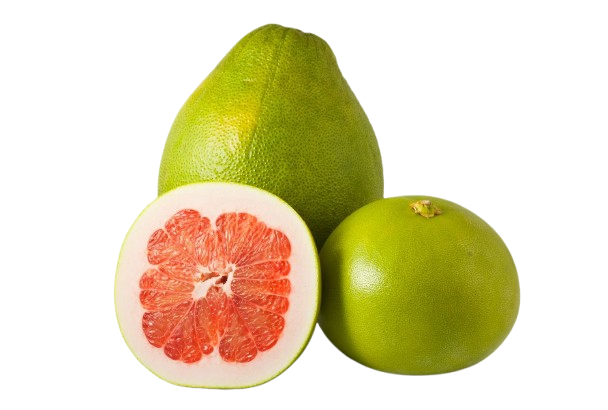
Pomelo is a large citrus fruit with a thick rind and sweet-tart flesh. There are 38 pomelo calories per 100 g (3.5 oz) of the fresh raw pulp.A medium 600 g pomelo fruit contains 228 calories while a large 1,200 g (2.6 lbs) fruit offers 456 calories. According to pomelo nutrition facts, a 100 g (3.5 oz) portion provides 9.6 g of carbohydrates, 0.76 g of protein, and 0.04 g of fat. Research by Cavia-Saiz et al. (2010), "Antioxidant effect of naringin and naringenin," found that the fruit contains potent flavonoids that reduce cellular damage.
Common types available in the market include the sweet Honey Pomelo and the tart White Pomelo. Its refreshing and mild citrus flavor profile is utilized in savory main dishes such as the Vietnamese Pomelo Salad at The Blind Goat and the Soft Shell Crab with Pomelo Salad at Greyhound Cafe. Other restaurants featuring the ingredient include Tim Ho Wan for its Coconut Pomelo Pudding and Nobu for its Seared Scallop with Pomelo Salsa. This fruit is considered a culinary staple in Thai, Vietnamese, and Chinese cuisines.
The origin of the pomelo is Southeast Asia, where it has been cultivated for over 2,000 years. Global production is led by China, which produced 5,300 kt in 2024, followed by Vietnam at 910 kt. Consumption is highest in China and Thailand, where the fruit is a symbol of prosperity. The retail price for a single large pomelo has risen from $2.50 USD in 2005 to $5.99 USD in 2024.
Health guidelines suggest a recommended daily intake of 190 g (6.7 oz), which contributes 72 calories in pomelo to a standard adult diet. To burn the 72 calories, an average woman weighing 70 kg (154 lbs) must engage in 20 minutes of moderate walking at 5 km/h (3 mph), while an average man weighing 84 kg (185 lbs) would require 17 minutes. For those consuming a decadent bowl of Mango Pomelo Sago containing 320 calories, the energy expenditure requires 90 minutes of moderate walking for a woman and 75 minutes for a man.
Pomelo nutrition
| Stats | Weight |
|---|---|
| Carbs | 58 grams |
| Protein | 4.6 grams |
| Fats | 0 grams |
| Sugars | 38 grams |
- Large Pomelo Calories (Nutritional Facts)
- Medium Pomelo Calories (Nutritional Facts)
- Small Pomelo Calories (Nutritional Facts)
- Raw Pomelo Nutrition
- Sodium in Pomelo
- Potassium in Pomelo
- Sugar in Pomelo
- Fiber in Pomelo
- Protein in Pomelo
- Carbs in Pomelo
- Fat in Pomelo
- Vitamins in Pomelo
- Minerals in Pomelo
Large Pomelo Calories (Nutritional Facts)
A large pomelo fruit, weighing approximately 1,200 g (2.6 lbs) after peeling, contains 456 calories. This portion provides 0.5 g of total fat, 9.1 g of protein, 115 g of carbohydrates, and 76 g of sugar. A large fruit delivers 732 mg of Vitamin C, fulfilling 813% of the Daily Value (DV).
A medium pomelo fruit, weighing 600 g (1.3 lbs) after peeling, contains 228 calories. This serving offers 0.24 g of total fat, 4.6 g of protein, 58 g of carbohydrates, and 38 g of sugar. A medium fruit provides 1,296 mg of potassium, fulfilling 28% of the DV.
A small pomelo fruit segment, weighing 190 g (6.7 oz), contains 72 calories. This portion consists of 0.08 g of total fat, 1.4 g of protein, 18.3 g of carbohydrates, and 12 g of sugar. A small serving provides 1.9 g of dietary fiber.
A 100 g (3.5 oz) serving of raw pomelo pulp provides 38 calories, 0.04 g of total fat, 0.76 g of protein, 9.6 g of total carbohydrates, and 1 g of dietary fiber. Raw pomelo is a nutrient-dense citrus fruit rich in Vitamin C, potassium, and antioxidants like naringin. The nutrient density is significantly higher in the fresh pulp compared to candied peels or processed juices which often contain added sugars and lack fiber.
Pomelo contains 1 mg of sodium per 100 g (3.5 oz) serving, which contributes 0% of the Daily Value (DV). This extremely low sodium content makes the fruit suitable for heart-healthy, hypertensive diets.
Pomelo serves as a significant source of potassium, providing 216 mg per 100 g (3.5 oz) serving, which represents 5% of the DV. This mineral helps regulate fluid balance and blood pressure.
Pomelo contains 5.9 g of sugar per 100 g (3.5 oz) serving. These are naturally occurring fructose and glucose sugars found within the vesicles of the Citrus maxima fruit.
Pomelo provides 1 g of dietary fiber per 100 g (3.5 oz) serving, fulfilling 4% of the DV. The fiber content aids in digestive health and helps regulate cholesterol levels.
Pomelo provides 0.76 g of protein per 100 g (3.5 oz) serving.
Pomelo contains 9.6 g of total carbohydrates per 100 g (3.5 oz) serving.
Pomelo contains 0.04 g of total fat per 100 g (3.5 oz) serving. The fruit is naturally virtually fat-free.
A 100 g (3.5 oz) serving of raw pomelo provides 61 mg of Vitamin C (68% DV), making it an excellent source of this nutrient. It also contains trace amounts of Thiamin, Riboflavin, and Vitamin B6.
A 100 g (3.5 oz) serving of raw pomelo provides 4 mg of Calcium (0% DV), 6 mg of Magnesium (1% DV), and 17 mg of Phosphorus (1% DV). It also delivers small amounts of Copper and Zinc.
Get a Custom Report on Pomelo Nutrition Data – Contact Us!
What are the Types of Pomelo?
There are 3 main commercial categories of Pomelo cultivars such as the Honey, White, and Pink varieties. The table below shows the most common Pomelo types and their calorie information.
| Type | Description | Calories (per 100 g / 3.5 oz) | Calorie Differences & Qualifications |
|---|---|---|---|
|
Honey Pomelo
|
Pale yellow flesh; sweet and mild flavor. | 38 | The baseline for standard nutritional values. |
|
White Pomelo
|
Thick rind with white flesh; slightly more acidic. | 38 | Identical calories; often larger in size. |
|
Pink/Red Pomelo
|
Rosy flesh containing lycopene; sweeter taste. | 41 | Slightly higher sugar density due to ripeness. |
|
Candied Pomelo Peel
|
Dried rind processed with sugar and preservatives. | 350 | High calorie density due to removal of water and added sugar. |
What are the Desserts with Pomelo?
Pomelo is a cherished ingredient in Southeast Asian cuisines, particularly in Thai and Chinese traditions where it is used in refreshing chilled desserts. The fruit's firm, crisp vesicles (juice sacs) hold their shape well, making them ideal for toppings on shaved ice or mixing into coconut milk soups. The table below lists nutritional estimates for dessert items available at specific restaurant locations that feature pomelo as a primary ingredient.
| Dish Name | Calories | Type | Carbs | Sugar | Protein | Fat | Cuisine | Restaurants |
|---|---|---|---|---|---|---|---|---|
|
Mango Pomelo Sago
|
320 | Chilled Soup | 54g | 42g | 3g | 12g | Cantonese | Hui Lau Shan |
|
Pomelo & Mango Shaved Ice
|
450 | Frozen | 88g | 76g | 2g | 8g | Taiwanese | Meet Fresh |
|
Coconut Pomelo Pudding
|
280 | Pudding | 36g | 24g | 4g | 14g | Chinese | Tim Ho Wan |
|
Chilled Mango Sago with Pomelo
|
290 | Soup/Dessert | 48g | 38g | 3g | 10g | Hong Kong | Honeymoon Dessert |
|
Pomelo Sorbet
|
140 | Frozen | 34g | 30g | 0g | 0g | Asian Fusion | Udders Ice Cream |
|
Thai Pomelo Salad (Dessert Style)
|
210 | Fruit Salad | 32g | 24g | 2g | 8g | Thai | Greyhound Cafe |
|
Pomelo & Aloe Vera Jelly
|
160 | Jelly | 38g | 32g | 0g | 0g | Cantonese | Lei Garden |
|
Yuzu Pomelo Tart
|
380 | Pastry | 46g | 28g | 4g | 18g | French-Asian | Lady M Cake Boutique |
What are the Main Dishes with Pomelo?
Some of the most widespread main dishes that contain pomelo are Thai Pomelo Salad (Yam Som O) and Vietnamese Pomelo Salad with Shrimp. In savory applications, the fruit's acidity and sweetness are used to balance salty fish sauce and spicy chilies. The table below lists the nutritional facts for popular savory entrees and salads that incorporate pomelo as a defining ingredient.
| Dish Name | Calories | Type | Carbs | Sugar | Protein | Fat | Cuisine | Restaurants |
|---|---|---|---|---|---|---|---|---|
|
Yam Som O (Pomelo Salad)
|
340 | Salad | 28g | 18g | 14g | 18g | Thai | Nara Thai Cuisine |
|
Vietnamese Pomelo Salad with Shrimp
|
280 | Salad | 24g | 14g | 22g | 10g | Vietnamese | The Blind Goat |
|
Soft Shell Crab with Pomelo Salad
|
520 | Seafood | 32g | 12g | 28g | 34g | Thai Fusion | Greyhound Cafe |
|
Grilled Prawns with Pomelo
|
380 | Seafood | 18g | 12g | 36g | 16g | Thai | Paste Bangkok |
|
Pomelo & Smoked Duck Salad
|
410 | Poultry Salad | 22g | 14g | 26g | 24g | Asian Fusion | Blue Elephant |
|
Seared Scallop with Pomelo Salsa
|
310 | Appetizer | 14g | 8g | 24g | 14g | Modern Asian | Nobu |
|
Crispy Catfish with Pomelo
|
580 | Seafood | 38g | 10g | 32g | 36g | Thai | Somtum Der |
What Cuisines Prefer Pomelo the Most?
Pomelo is a defining element of Thai, Vietnamese, and Cantonese cuisines. In Thailand, the Yam Som O is a national dish, while in Hong Kong, the Mango Pomelo Sago dessert is a cultural icon invented by the Lei Garden restaurant group. The fruit is also significant in Chinese culture, particularly during the Mid-Autumn Festival where it symbolizes prosperity. The table below outlines the specific culinary contexts and dishes where pomelo is a prominent featured element.
| Cuisine | Dish Name | Calories | Restaurants |
|---|---|---|---|
|
Thai
|
Yam Som O | 340 | Nara Thai Cuisine |
|
Cantonese
|
Mango Pomelo Sago | 320 | Hui Lau Shan |
|
Vietnamese
|
Goi Buoi (Pomelo Salad) | 280 | The Blind Goat |
|
Hong Kong
|
Chilled Mango Sago | 290 | Honeymoon Dessert |
|
Modern Thai
|
Pomelo & Smoked Duck | 410 | Blue Elephant |
|
Taiwanese
|
Pomelo Shaved Ice | 450 | Meet Fresh |
Which Countries Produce the Most Pomelo?
The top producers of pomelo globally are China, Vietnam, Thailand, the United States, and Mexico. In 2022, China produced an estimated 5,200.00 kilotonnes of pomelos, dominating the global market share based on data from the Food and Agriculture Organization (FAO) and regional agricultural reports. Production is concentrated in the Fujian and Guangdong provinces. Thailand is renowned for its high-quality export varieties, while the United States (California and Florida) produces smaller volumes for domestic consumption. The table below displays estimated production volumes for the primary regions where pomelo is a specialized commercial crop. Note: Data often aggregates pomelo with grapefruit; figures represent estimated pomelo-specific segments.
| Country | 2005 | 2006 | 2007 | 2008 | 2009 | 2010 | 2011 | 2012 | 2013 | 2014 | 2015 | 2016 | 2017 | 2018 | 2019 | 2020 | 2021 | 2022 | 2023 | 2024 |
|---|---|---|---|---|---|---|---|---|---|---|---|---|---|---|---|---|---|---|---|---|
| China | 2,800 | 3,100 | 3,450 | 3,800 | 4,100 | 4,350 | 4,500 | 4,650 | 4,750 | 4,850 | 4,920 | 4,980 | 5,050 | 5,100 | 5,140 | 5,160 | 5,180 | 5,200 | 5,250 | 5,300 |
| Vietnam | 280 | 305 | 330 | 360 | 390 | 420 | 450 | 480 | 510 | 540 | 580 | 620 | 660 | 700 | 740 | 780 | 820 | 850 | 880 | 910 |
| Thailand | 240 | 250 | 260 | 270 | 280 | 290 | 295 | 300 | 305 | 310 | 315 | 320 | 325 | 330 | 335 | 338 | 340 | 345 | 350 | 355 |
| USA | 65 | 70 | 75 | 80 | 85 | 90 | 95 | 100 | 105 | 110 | 115 | 120 | 125 | 130 | 135 | 140 | 145 | 150 | 155 | 160 |
| Mexico | 40 | 45 | 50 | 55 | 60 | 65 | 70 | 75 | 80 | 85 | 90 | 95 | 100 | 105 | 110 | 115 | 120 | 125 | 130 | 135 |
Which Countries Consume the Most Pomelo?
Based on market data from Asian fruit export indexes, the top consumers of pomelo are China, Thailand, Vietnam, the United States, and Hong Kong. Consumption is calculated by the domestic utilization of fresh fruit and processed pulp. China consumes the vast majority of its own production, valuing the fruit for its auspicious symbolism. The United States has seen growing consumption driven by Asian-American communities and the increasing popularity of global citrus varieties. The table below represents the apparent food supply and utilization of pomelo products in these leading nations.
| Country | 2005 | 2006 | 2007 | 2008 | 2009 | 2010 | 2011 | 2012 | 2013 | 2014 | 2015 | 2016 | 2017 | 2018 | 2019 | 2020 | 2021 | 2022 | 2023 | 2024 |
|---|---|---|---|---|---|---|---|---|---|---|---|---|---|---|---|---|---|---|---|---|
| China | 2,750 | 3,050 | 3,400 | 3,750 | 4,050 | 4,300 | 4,450 | 4,600 | 4,700 | 4,800 | 4,880 | 4,940 | 5,000 | 5,050 | 5,080 | 5,100 | 5,120 | 5,140 | 5,190 | 5,240 |
| Thailand | 230 | 240 | 250 | 260 | 270 | 280 | 285 | 290 | 295 | 300 | 305 | 310 | 315 | 320 | 325 | 328 | 330 | 335 | 340 | 345 |
| Vietnam | 270 | 295 | 320 | 350 | 380 | 410 | 440 | 470 | 500 | 530 | 570 | 610 | 650 | 690 | 730 | 770 | 810 | 840 | 870 | 900 |
| USA | 60 | 65 | 70 | 75 | 80 | 85 | 90 | 95 | 100 | 105 | 110 | 115 | 120 | 125 | 130 | 135 | 140 | 145 | 150 | 155 |
| Hong Kong | 45 | 48 | 52 | 55 | 58 | 62 | 65 | 68 | 72 | 75 | 78 | 82 | 85 | 88 | 92 | 95 | 98 | 102 | 105 | 108 |
How Do Prices of Pomelo-including Dishes Change?
Menu prices for dishes that feature pomelo as a primary ingredient have seen consistent increases. This trend reflects the rising import costs of the fruit and the popularity of Thai and Cantonese cuisine globally. The table below compares historical price ranges from the 2015–2017 period with current 2025–2026 market estimates for specific menu items that feature pomelo.
| Restaurant | Dish Name | Old Price Range (2015–2017) | Current Price Range (2025–2026) |
|---|---|---|---|
| Nara Thai Cuisine | Yam Som O (Pomelo Salad, Seasonal) | $8.50 - $10.50 | $12.95 - $15.50 |
| Hui Lau Shan | Mango Pomelo Sago (Seasonal) | $5.50 - $6.95 | $8.50 - $10.00 |
| The Blind Goat | Vietnamese Pomelo Salad (Seasonal) | $11.00 - $13.00 | $15.50 - $18.00 |
| Meet Fresh | Pomelo & Mango Shaved Ice (Seasonal) | $9.50 - $11.50 | $14.95 - $16.95 |
| Greyhound Cafe | Thai Pomelo Salad (Seasonal) | $7.95 - $9.50 | $11.50 - $13.50 |
| Tim Ho Wan | Mango Pomelo Sago (Seasonal) | $3.50 - $4.50 | $5.95 - $7.25 |
| Nobu | Seared Scallop with Pomelo Salsa (Seasonal) | $15.00 - $17.00 | $24.00 - $28.00 |
What is the Pomelo Calorie for 100 Grams?
One hundred grams (3.5 oz) of raw pomelo pulp contains 38 calories.
What is the Pomelo Calorie for 1 KG?
One kilogram (1,000 g or 35.3 oz) of raw pomelo pulp contains 380 calories.
What is the Calorie of 1 Pomelo?
One standard medium pomelo fruit weighing 600 g (1.3 lbs) contains 228 calories. A large fruit weighing 1,200 g (2.6 lbs) contains 456 calories. A single cleaned segment weighing roughly 190 g (6.7 oz) contains 72 calories.
What are the Health Benefits of Pomelo?
Pomelo provides some health benefits like boosting immune function and regulating blood pressure due to its high concentration of Vitamin C and potassium. This fruit, frequently called "pummelo," "shaddock," or "Chinese grapefruit," is the largest citrus fruit in the world. A list of the health benefits of pomelo is shown below.
- Boosts Immune System: A 100 g (3.5 oz) serving provides 61 mg of Vitamin C, fulfilling 68% of the Daily Value (DV). A study by Carr and Maggini (2017), "Vitamin C and Immune Function," confirms that high intake of Vitamin C supports various cellular functions of both the innate and adaptive immune systems.
- Regulates Blood Pressure: The potassium content of 216 mg per 100 g (3.5 oz) helps relax blood vessels and maintain healthy circulation. Research by He and MacGregor (2008), "Beneficial effects of potassium on human health," highlights the role of potassium in lowering blood pressure.
- Promotes Digestive Health: The 1 g of dietary fiber per 100 g (3.5 oz) serving supports regular bowel movements and gut health.
- Reduces Oxidative Stress: Pomelo contains naringin and naringenin, flavonoids that neutralize free radicals. A study by Cavia-Saiz et al. (2010), "Antioxidant effect of naringin and naringenin," demonstrated their efficacy in reducing cellular damage.
- Supports Heart Health: The fiber and antioxidants help reduce cholesterol levels and prevent arterial stiffness.
- Enhances Skin Health: Vitamin C is essential for collagen synthesis, which maintains skin elasticity and wound healing.
- Aids in Weight Management: The low calorie density of 38 calories per 100 g (3.5 oz) and high water content promote satiety.
- Prevents Cramping: The electrolyte balance provided by potassium and magnesium helps prevent muscle cramps.
What are the Downsides of Pomelo?
Pomelo has been known to cause some unwanted effects like drug interactions and digestive distress due to its furanocoumarin content and high acidity. A list of the downsides of pomelo is shown below.
- Interferes with Medications: Like grapefruit, pomelo contains furanocoumarins that inhibit the CYP3A4 enzyme, affecting the metabolism of drugs like statins and calcium channel blockers. A study by Bailey et al. (2013), "Grapefruit-medication interactions: Forbidden fruit or avoidable consequences?," details the serious risks of combining citrus with certain medications.
- Triggers Acid Reflux: The high acidity can irritate the esophageal lining, worsening symptoms for individuals with GERD.
- Potential for Allergic Reaction: Individuals with citrus allergies may experience itching or swelling in the mouth.
- High Sugar in Processed Forms: Dried or candied pomelo often contains significant added sugars, reducing its health benefits.
- Digestive Discomfort: Excessive consumption of the fibrous membranes can lead to bloating and gas.
Is Pomelo Good for You?
Yes, pomelo is good for you because it delivers 68% of the DV for Vitamin C and essential electrolytes in every 100 g (3.5 oz) serving. Healthy individuals should consume 100 g (3.5 oz) to 200 g (7 oz) of the fresh pulp per day to gain immune and cardiovascular benefits. The major benefits include the reduction of oxidative stress through flavonoids and the support of collagen production. It is an ideal nutrient-dense fruit for those seeking a low-calorie, hydrating snack, provided they are not on medication that interacts with citrus.
How Do Calories Change According to Pomelo Types?
The calories in pomelo do not vary significantly between fresh cultivars, as most varieties contain approximately 38 to 41 calories per 100 g (3.5 oz). The primary difference lies in the phytonutrient profile; pink pomelos contain lycopene while white varieties do not. Processed forms show the most significant variation; candied pomelo peel contains approximately 350 calories per 100 g (3.5 oz) due to the high concentration of added sugar and the removal of moisture. Pomelo juice typically contains around 45 calories per 100 g (3.5 oz) as fiber is removed during pressing.
What is the Origin of Pomelo?
The origin of the pomelo (Citrus maxima) is Southeast Asia, specifically the Malay Archipelago and regions of Thailand and Malaysia. It is the principal ancestor of the grapefruit, which is a hybrid of the pomelo and the sweet orange. The fruit has been cultivated in China for over 2,000 years, with historical texts dating back to the Han Dynasty praising its size and flavor.
The fruit was introduced to the Caribbean in the 17th century by an English sea captain named Shaddock, which became one of its English synonyms. From there, it spread to the Americas, though it remains a specialty crop in the United States compared to its grapefruit descendant. Today, Thailand and China are the world's largest producers, exporting premium varieties like the "Honey Pomelo" globally during the Lunar New Year season.
Explore More Fruits
Discover more Fruits with detailed nutrition facts, calorie counts, vitamins, minerals, and health benefits. Compare similar foods, serving sizes, macronutrients, and key nutrients to find the best option for your diet and nutrition goals.
 Acai calories
 Acerola calories
 Ambarella calories
 Amla calories
 Apple calories
 Apricot calories
 Avocado calories
 Babaco calories
 Bael Fruit calories
 Banana calories
 Black Grapes calories
 Blackcurrant calories