Calories and Nutritions in Potato Starch
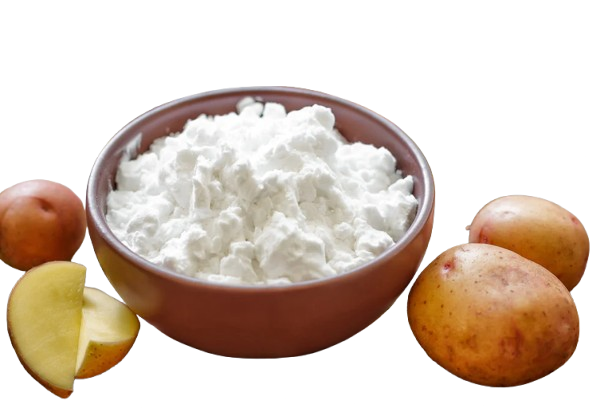
Potato starch is a fine tasteless powder extracted from the crushed fibers of the potato plant, functioning primarily as a gluten-free thickening agent. A standard 100g serving of the raw potato starch powder supplies 357 calories, while a 1-cup serving (160g) contains 571 calories. A small tablespoon serving of potato starch (10g) yields 36 calories. Retail brands display minor variances, as a tablespoon of Bob’s Red Mill (12g) and a serving of Anthony’s Organic (10g) both provide 40 calories, while Knorr supplies 35 calories per 10g serving. The calories in potato starch surpass those of raw whole potatoes due to the removal of water, with a single gram containing 3.6 calories.
A detailed breakdown of potato starch nutritional value highlights a composition of 83.1g carbohydrates, 6.9g protein, and 0.34g fat per 100g. This carbohydrate profile functions as a potent prebiotic when consumed raw, resisting digestion to fuel colonic bacteria. Research by Le Leu, R. K., et al. (2007) confirms that this fermentation process yields butyrate, a critical fatty acid for intestinal lining integrity. Metabolic benefits accompany these gut health improvements, as a study by Robertson, M. D., et al. (2005) establishes that resistant starch intake heightens insulin sensitivity. Cooking the starch eliminates these specific benefits by gelatinizing the granules, causing a rapid spike in blood glucose levels. People with sensitive stomachs often experience gas or bloating from the fermentation process, necessitating a gradual introduction of the ingredient.
Global supply of potato starch relies on massive agricultural outputs from Germany, the Netherlands, and China, with Germany producing 680,500 metric tons in 2023. This production meets the demands of China, the European Union, and the United States, where China alone consumed 950,000 metric tons in the same year. Regional gastronomies utilize potato starch powder extensively, appearing as a thickener in Chinese Sweet and Sour Pork, a coating for Japanese Chicken Karaage, and a binder in German Potato Dumplings. Market dynamics have driven costs upward, with wholesale prices rising from $600 per metric ton in the early 2000s to $1,200 by 2023. Menu prices mirror this inflation, as Sweet and Sour Chicken at P.F. Chang’s increased from $14.50 in 2012 to a range of $19.50 to $20.69 in 2024.
Dietitians recommend a daily intake of 15 to 30 grams of raw starch to maximize prebiotic effects without overwhelming the digestive system. A single tablespoon serving contains between 36 and 40 calories, an energy intake that requires 4 minutes of jogging or 11 minutes of dusting to burn off. Consumers with nightshade allergies must avoid this product entirely to prevent immune system reactions.
Potato Starch nutrition
| Stats | Weight |
|---|---|
| Carbs | 66.5 grams |
| Protein | 5.5 grams |
| Fats | 0 grams |
| Sugars | 2.8 grams |
- Large Potato Starch Calories (Nutritional Facts)
- Medium Potato Starch Calories (Nutritional Facts)
- Small Potato Starch Calories (Nutritional Facts)
- Raw Potato Starch Nutrition
- Sodium in Potato Starch
- Potassium in Potato Starch
- Sugar in Potato Starch
- Fiber in Potato Starch
- Protein in Potato Starch
- Carbs in Potato Starch
- Fat in Potato Starch
- Vitamins in Potato Starch
- Minerals in Potato Starch
Large Potato Starch Calories (Nutritional Facts)
A large serving of potato starch (160g or 1 cup) contains 571 calories, 11g of protein, 0.54g of fat, 133g of carbohydrates, 9.44g of fiber, 5.63g of sugar, and 88mg of sodium. A large serving of refined potato starch (160g or 1 cup) provides 533 calories, offering a lower protein profile due to the removal of fiber and ash during extensive washing.
A medium portion of potato starch (80g or 0.5 cup) provides 286 calories, 5.5g of protein, 0.27g of fat, 66.5g of carbohydrates, 4.72g of fiber, 2.82g of sugar, and 44mg of sodium. A medium portion of potato flour (80g or 0.5 cup) contains 290 calories, as the inclusion of the whole tuber increases the density of solids.
A small serving of potato starch (10g or 1 tablespoon) contains 36 calories, 0.69g of protein, 0.03g of fat, 8.3g of carbohydrates, 0.59g of fiber, 0.35g of sugar, and 5.5mg of sodium. A small serving of cornstarch (10g or 1 tablespoon) supplies 38 calories, offering a comparable caloric load for thickening applications.
A large serving of raw potato starch (160g or 1 cup) contains 571 calories, 11g of protein, 0.54g of fat, 133g of carbohydrates, 9.44g of fiber, 5.63g of sugar, and 88mg of sodium. A medium portion of raw potato starch (80g or 0.5 cup) provides 286 calories, 5.5g of protein, 0.27g of fat, 66.5g of carbohydrates, 4.72g of fiber, 2.82g of sugar, and 44mg of sodium. A small serving of raw potato starch (10g or 1 tablespoon) contains 36 calories, 0.69g of protein, 0.03g of fat, 8.3g of carbohydrates, 0.59g of fiber, 0.35g of sugar, and 5.5mg of sodium. A standard raw potato starch serving (100g) supplies 357 calories, 6.9g of protein, 0.34g of fat, 83.1g of carbohydrates, 5.9g of fiber, 3.5g of sugar, and 55mg of sodium.
A large serving of potato starch (160g) contains 88mg of sodium (4% DV). A medium portion of potato starch (80g) has 44mg of sodium (2% DV). A small serving of potato starch (10g) contains 5.5mg of sodium (0% DV). A raw potato starch serving (100g) supplies 55mg of sodium (2% DV).
A large serving of potato starch (160g) contains 1600mg of potassium (34% DV). A medium portion of potato starch (80g) has 800mg of potassium (17% DV). A small serving of potato starch (10g) contains 100mg of potassium (2% DV). A raw potato starch serving (100g) supplies 1000mg of potassium (21% DV).
A large serving of potato starch (160g) contains 5.63g of sugar. A medium portion of potato starch (80g) has 2.82g of sugar. A small serving of potato starch (10g) contains 0.35g of sugar. A raw potato starch serving (100g) supplies 3.52g of sugar.
A large serving of potato starch (160g) provides 9.44g of dietary fiber (34% DV). A medium portion of potato starch (80g) has 4.72g of fiber (17% DV). A small serving of potato starch (10g) contains 0.59g of fiber (2% DV). A raw potato starch serving (100g) supplies 5.9g of fiber (21% DV).
A large serving of potato starch (160g) provides 11g of protein (22% DV). A medium portion of potato starch (80g) has 5.5g of protein (11% DV). A small serving of potato starch (10g) contains 0.69g of protein (1% DV). A raw potato starch serving (100g) supplies 6.9g of protein (14% DV).
A large serving of potato starch (160g) contains 133g of carbohydrates (48% DV). A medium portion of potato starch (80g) has 66.5g of carbohydrates (24% DV). A small serving of potato starch (10g) contains 8.3g of carbohydrates (3% DV). A raw potato starch serving (100g) supplies 83.1g of carbohydrates (30% DV).
A large serving of potato starch (160g) contains 0.54g of total fat (1% DV). A medium portion of potato starch (80g) has 0.27g of total fat (0% DV). A small serving of potato starch (10g) contains 0.03g of total fat (0% DV). A raw potato starch serving (100g) supplies 0.34g of total fat (0% DV).
A large serving of potato starch (160g) provides 0.37mg of Thiamin (30% DV), 1.23mg of Vitamin B6 (72% DV), and 40mcg of Folate (10% DV). A medium portion of potato starch (80g) has 0.18mg of Thiamin (15% DV), 0.62mg of Vitamin B6 (36% DV), and 20mcg of Folate (5% DV). A small serving of potato starch (10g) contains 0.02mg of Thiamin (2% DV), 0.08mg of Vitamin B6 (4% DV), and 2.5mcg of Folate (1% DV). A raw potato starch serving (100g) supplies 0.23mg of Thiamin (19% DV).
A large serving of potato starch (160g) provides 104mg of calcium (8% DV), 2.21mg of iron (12% DV), 104mg of magnesium (25% DV), and 269mg of phosphorus (22% DV). A medium portion of potato starch (80g) has 52mg of calcium (4% DV), 1.1mg of iron (6% DV), 52mg of magnesium (12% DV), and 135mg of phosphorus (11% DV). A small serving of potato starch (10g) contains 6.5mg of calcium (0% DV), 0.14mg of iron (1% DV), 6.5mg of magnesium (2% DV), and 17mg of phosphorus (1% DV). A raw potato starch serving (100g) supplies 65mg of calcium (5% DV).
Get a Custom Report on Potato Starch Nutrition Data – Contact Us!
What are the Types of Potato Starches?
The types of Potato Starches are Native, Modified, and Pre-gelatinized. The table below delineates the nutritional variances among these forms.
| Type | Description | Calories (Per 100g) | Calorie Qualifications |
|---|---|---|---|
|
Native Potato Starch
|
Unmodified, raw powder extracted from tubers. | 357 | The standard form retains the natural caloric density of the extracted starch granules. |
|
Modified Potato Starch
|
Chemically or physically altered for stability. | 350 | The caloric value remains similar, though digestibility changes based on the modification. |
|
Pre-gelatinized Starch
|
Cooked and dried for instant thickening. | 360 | The processing makes the starch rapidly digestible, maintaining a high energy availability. |
|
Potato Flour
|
Whole cooked, dried, and ground potato. | 357 | The inclusion of fiber and protein adds nutrients without significantly altering calories. |
What are Desserts With Potato Starch?
Sweet courses featuring potato starch rely on the fine powder to create light textures in cakes and chewy consistencies in puddings. The ingredient pairs remarkably well with fruit purees, chocolate, and custard. Notable sweet preparations featuring this starch are presented in the following table.
| Dish Name | Calories (Estimate) | Type of Potato Starch | Carbs (g) | Sugar (g) | Protein (g) | Fat (g) | Cuisine | Restaurants |
|---|---|---|---|---|---|---|---|---|
|
Japanese Sponge Cake
|
320 | Native (Cake Flour Sub) | 45 | 25 | 5 | 12 | Japanese | Tous Les Jours |
|
Warabi Mochi (Substitute)
|
180 | Native (Thickener) | 42 | 15 | 1 | 0 | Japanese | Minamoto Kitchoan (New York, NY) |
|
Fruit Kissel (Kisiel)
|
150 | Native (Thickener) | 38 | 20 | 0 | 0 | Polish/Russian | Veselka (New York, NY) |
|
Gluten-Free Brownies
|
350 | Potato Flour/Starch | 45 | 28 | 3 | 18 | American | Erin McKenna's Bakery (New York, NY) |
|
Chocolate Pudding
|
220 | Native (Thickener) | 35 | 22 | 4 | 8 | American | Magnolia Bakery (New York, NY) |
|
Mochi Donuts
|
280 | Modified/Native | 35 | 15 | 2 | 14 | Japanese/American | Mochinut |
|
Swiss Roll Filling
|
250 | Native (Stabilizer) | 30 | 18 | 4 | 12 | European | Paris Baguette |
|
Lemon Meringue Pie Filling
|
380 | Native (Thickener) | 55 | 35 | 4 | 14 | American | The Pie Hole (Los Angeles, CA) |
|
Daifuku (Dusting)
|
200 | Native (Coating) | 45 | 20 | 2 | 1 | Japanese | Fugetsu-Do (Los Angeles, CA) |
|
Sand Cake (Sandkuchen)
|
300 | Native (Flour Mix) | 40 | 18 | 4 | 14 | German | Heidelberg Pastry Shoppe (Arlington, VA) |
What are the Main Dishes With Potato Starch?
Potato starch functions as a crucial binder and coating agent in savory entrees, particularly in Asian frying batters and European dumplings. The powder withstands high heat, creating crispy textures without gluten development. Prominent entrees and sides containing this component are detailed below.
| Dish Name | Calories (Estimate) | Type of Potato Starch | Carbs (g) | Sugar (g) | Protein (g) | Fat (g) | Cuisine | Restaurants |
|---|---|---|---|---|---|---|---|---|
|
Sweet and Sour Pork
|
650 | Native (Batter) | 45 | 25 | 25 | 40 | Chinese | P.F. Chang's |
|
Karaage (Fried Chicken)
|
450 | Native (Coating) | 15 | 0 | 30 | 30 | Japanese | Ippudo (National) |
|
German Potato Dumplings
|
280 | Potato Flour/Starch | 55 | 2 | 6 | 4 | German | Hofbräuhaus (Las Vegas, NV) |
|
General Tso's Chicken
|
500 | Native (Batter/Sauce) | 40 | 18 | 28 | 25 | Chinese-American | Panda Express |
|
Tempura Shrimp
|
350 | Native (Batter Mix) | 25 | 0 | 15 | 20 | Japanese | Nobu |
|
Mapo Tofu
|
300 | Native (Sauce Thickener) | 12 | 2 | 18 | 22 | Chinese | Mission Chinese Food (San Francisco, CA) |
|
Huli Huli Chicken
|
400 | Native (Glaze) | 15 | 12 | 35 | 18 | Hawaiian | Roy's (National) |
|
Beef and Broccoli
|
380 | Native (Sauce Thickener) | 18 | 8 | 30 | 20 | Chinese | Pei Wei |
|
Polish Pyzy (Dumplings)
|
320 | Native (Binder) | 60 | 0 | 8 | 6 | Polish | Karczma (New York, NY) |
|
Fried Calamari
|
420 | Native (Dredge) | 25 | 0 | 20 | 28 | Mediterranean | The Capital Grille |
What Cuisines Prefer Potato Starch the Most?
Potato starch serves as a staple ingredient in Chinese, Japanese, and German culinary traditions. The following chart highlights regional gastronomies that frequently employ this tuber extract.
| Cuisine | Dish | Types of Potato Starch | Calories (Estimate) | Restaurant(s) |
|---|---|---|---|---|
|
Chinese
|
Sweet and Sour Pork | Batter/Thickener | 650 | P.F. Chang's |
|
Japanese
|
Karaage | Coating | 450 | Ippudo (National) |
|
German
|
Kartoffelklöße | Binder | 280 | Hofbräuhaus (Las Vegas, NV) |
|
Polish
|
Kisiel | Thickener | 150 | Veselka (New York, NY) |
|
Korean
|
Tangsuyuk | Batter | 700 | Paik's Noodle (Los Angeles, CA) |
|
Swedish
|
Raggmunk | Binder | 350 | Aquavit (New York, NY) |
|
Thai
|
Rad Na (Noodle Gravy) | Thickener | 400 | Lotus of Siam (Las Vegas, NV) |
|
Vietnamese
|
Banh Bot Loc | Dough | 220 | Brodard Chateau (Garden Grove, CA) |
|
French
|
Soufflé | Stabilizer | 250 | Bouchon (Yountville, CA) |
|
American (GF)
|
GF Brownies | Flour Sub | 350 | Erin McKenna's Bakery (New York, NY) |
Which Countries Produce the Most Potato Starches?
The top producers of potato starch are Germany, the Netherlands, and China, driven by established industrial infrastructure and high-yield potato cultivation. European nations dominate the global export market, utilizing specialized starch-potato varieties with high amylopectin content. China has expanded production capacity to meet domestic demand for noodles and industrial applications. The table below shows the estimated production of potato starch for the top producing nations over the last two decades.
| Country | 2003 | 2008 | 2013 | 2018 | 2019 | 2020 | 2021 | 2022 | 2023 |
|---|---|---|---|---|---|---|---|---|---|
| Germany | 550.5 | 620.2 | 680.6 | 710.4 | 690.8 | 700.5 | 715.2 | 650.0 | 680.5 |
| Netherlands | 480.0 | 510.5 | 550.2 | 580.0 | 560.5 | 570.2 | 575.0 | 540.5 | 560.0 |
| China | 350.5 | 420.2 | 550.6 | 650.4 | 680.8 | 710.5 | 730.2 | 750.0 | 780.5 |
| France | 280.0 | 310.5 | 330.2 | 340.0 | 335.5 | 330.2 | 335.0 | 310.5 | 320.0 |
| Poland | 150.5 | 170.2 | 190.6 | 210.4 | 205.8 | 200.5 | 205.2 | 195.0 | 200.5 |
| Denmark | 120.0 | 135.5 | 150.2 | 160.0 | 165.5 | 170.2 | 175.0 | 160.5 | 165.0 |
| United States | 60.5 | 65.2 | 70.6 | 75.4 | 78.8 | 80.5 | 82.2 | 85.0 | 88.5 |
| Japan | 50.0 | 45.5 | 40.2 | 35.0 | 34.5 | 33.2 | 32.0 | 31.5 | 30.0 |
Which Countries Consume the Most Potato Starches?
The top consumers of potato starch are China, Germany, and the United States, where the ingredient serves as a primary thickener in food processing and a binder in paper manufacturing. Domestic markets in Europe absorb a significant portion of local production for industrial use. Asian markets utilize vast quantities for noodle production and culinary applications. The table below shows the estimated consumption values for potato starch in key markets.
| Country/Region | 2003 | 2008 | 2013 | 2018 | 2019 | 2020 | 2021 | 2022 | 2023 |
|---|---|---|---|---|---|---|---|---|---|
| China | 380.5 | 480.0 | 650.5 | 800.0 | 850.0 | 880.0 | 900.0 | 920.0 | 950.0 |
| European Union | 950.2 | 1050.5 | 1100.0 | 1150.5 | 1120.0 | 1130.0 | 1140.0 | 1080.0 | 1100.0 |
| United States | 120.2 | 140.5 | 160.0 | 180.5 | 185.0 | 190.0 | 200.0 | 210.0 | 220.0 |
| South Korea | 80.0 | 95.0 | 110.0 | 130.0 | 135.0 | 140.0 | 145.0 | 150.0 | 155.0 |
| Japan | 70.0 | 75.0 | 80.0 | 85.0 | 84.0 | 82.0 | 83.0 | 84.0 | 85.0 |
| Russia | 60.5 | 70.0 | 85.0 | 100.0 | 105.0 | 110.0 | 115.0 | 110.0 | 115.0 |
| Thailand | 40.0 | 50.0 | 60.0 | 75.0 | 80.0 | 85.0 | 90.0 | 95.0 | 100.0 |
| Taiwan | 30.0 | 35.0 | 40.0 | 45.0 | 46.0 | 47.0 | 48.0 | 49.0 | 50.0 |
How Do Prices of Potato Starch-Including Dishes Change?
Restaurant costs for dishes utilizing potato starch batters and thickeners have surged, mirroring the increased expense of labor and frying oils. The table below illustrates price adjustments for selected items at well-known establishments.
| Brand/Restaurant | Dish | Old Price (Year) | Current Price (2024/2025) |
|---|---|---|---|
| P.F. Chang's | Sweet and Sour Chicken | $14.50 (2012) | $19.50 - $20.69 |
| Hofbräuhaus | Potato Dumplings (Side) | $4.50 (2014) | $5.99 - $8.95 |
| Ippudo | Chicken Karaage | $8.00 (2015) | $14.00 - $19.00 |
What is the Potato Starch Calorie for 100 Grams?
A 100g serving of raw potato starch contains 357 calories, while the same quantity of modified potato starch provides 350 calories. A 100g serving of potato flour contains 357 calories, maintaining a similar energy profile with added fiber.
What is the Potato Starch Calorie for 1 KG?
One kilogram (1000g) of raw potato starch contains 3570 calories, whereas a kilogram of modified potato starch provides 3500 calories. One kilogram (1000g) of potato flour supplies 3570 calories.
What is the Calorie of 1 Potato Starch?
A single tablespoon of potato starch (10g) contains 36 calories. A single teaspoon of potato starch (3.3g) provides 12 calories. A single gram of potato starch contains 3.6 calories. A tablespoon of Bob's Red Mill Potato Starch (12g) contains 40 calories, while a serving of Anthony's Organic Potato Starch (10g) provides 40 calories. A tablespoon of Manischewitz Potato Starch (10g) contains 40 calories, and a serving of Knorr Potato Starch (10g) also supplies 35 calories.
What are the Health Benefits of Potato Starch?
Potato starch offers distinct physiological advantages, particularly regarding gut microbiome enhancement, metabolic regulation, and colonic cellular protection. The powder functions as a concentrated source of resistant starch type 2 when consumed in the raw state. The following points highlight these benefits.
- Supports Gut Microbiome: Raw potato starch resists digestion in the small intestine, reaching the colon to feed beneficial bacteria. A study by Le Leu, R. K., et al. (2007), "Effect of dietary resistant starch and protein on colonic fermentation and intestinal tumourigenesis in rats," confirmed that fermentation produces butyrate, a short-chain fatty acid essential for colon health.
- Improves Insulin Sensitivity: Resistant starch consumption enhances the body's response to insulin. Research by Robertson, M. D., et al. (2005), "Insulin-sensitizing effects of dietary resistant starch and effects on skeletal muscle and adipose tissue metabolism," established that regular intake improves insulin sensitivity in healthy subjects.
- Enhances Satiety: The fermentation process influences hormones that regulate appetite. A study by Bodinham, C. L., et al. (2010), "Acute ingestion of resistant starch reduces food intake in healthy adults," demonstrated that consumption leads to lower caloric intake during subsequent meals.
What are the Downsides of Potato Starch?
The table below shows potential adverse effects associated with consumption, necessitating caution for specific groups.
- Causes Digestive Distress: Rapid fermentation of resistant starch often results in gas, bloating, and abdominal discomfort. Research by Grabitske, H. A., & Slavin, J. L. (2009), "Gastrointestinal effects of low-digestible carbohydrates," indicates that high doses overwhelm the gut microbiota. Tapioca starch serves as a gentler alternative for individuals with sensitive stomachs. Dietitians recommend limiting intake to 30g per day to prevent gastrointestinal symptoms.
- Spikes Blood Glucose: Cooking potato starch gelatinizes the granules, converting the resistant starch into rapidly digestible glucose. A study by Brand-Miller, J. C., et al. (2002), "Glycemic index and obesity," notes that hot, gelatinized starch possesses a high glycemic index. Raw green banana flour serves as a low-glycemic alternative for resistant starch supplementation. The daily suggested amount remains zero for cooked starch if strictly managing blood sugar spikes.
Are Potato Starches Good for You?
Yes, potato starches are good for health because the ingredient supports colonic integrity, regulates metabolic function, and provides a safe energy source for gluten-sensitive individuals. Digestive health improves through the production of butyrate, a mechanism detailed in the study by Birt, D. F., et al. (2013), "Resistant starch: promise for improving human health." Metabolic health benefits from the modulation of insulin response, as explored by Higgins, J. A. (2004), "Resistant starch: metabolic effects and potential health benefits." Immune health strengthens due to the prebiotic effect that diversifies gut flora as confirmed by the study by Nugent, A. P. (2005), "Health properties of resistant starch."
How Do Calories Change According to Potato Starch Types?
Caloric density remains consistent across the different commercial forms of the product. Pre-gelatinized potato starch presents the highest energy load at approximately 360 calories per 100 grams due to the increased availability of digestible carbohydrates. Native potato starch and potato flour offer a standard profile at 357 calories per 100 grams. Modified potato starch contains a slightly lower energy content at 350 calories per 100 grams, depending on the specific chemical treatment applied.
Are the Calories in Potato Starch Higher Than Other Starches?
No, potato starch calories are not higher than other starches but align closely with common thickening agents. A 100g serving of potato starch supplies 357 calories, whereas the same weight of cornstarch provides 381 calories. Tapioca starch offers a comparable energy density at 358 calories per 100g. The high carbohydrate concentration across all pure starches results in a uniform caloric profile, making potato starch a standard option for energy content.
How Much Potato Starch is Recommended for Daily Intake?
Dietitians recommend 15 to 30 grams of raw potato starch daily to achieve therapeutic benefits for gut health. This specific amount provides sufficient resistant starch to stimulate butyrate production without causing excessive fermentation or gastrointestinal distress. Clinical trials suggest starting with 5 grams and gradually increasing the dosage to allow the microbiome to adapt. Consumption exceeding 40 grams often leads to diminishing returns and increased risk of bloating.
Are Potato Starch Carbs Better for Dieting Than Wheat Flour Carbs?
Yes, raw potato starch carbs are better for dieting than wheat flour carbs because the resistant starch functions as a soluble fiber rather than a digestible calorie source. Resistant starch passes through the small intestine without breaking down into glucose, resulting in a lower glycemic response and reduced net calorie absorption. Wheat flour consists mainly of digestible starch that rapidly converts to sugar, spiking insulin levels. Cooking potato starch negates this benefit, as gelatinization makes the carbohydrates highly digestible and comparable to refined wheat flour.
Are Potato Starch Carbs a Good Choice for a Gluten-Free Diet?
Yes, potato starch carbs are a good choice for a gluten-free diet because the ingredient is naturally free from gluten proteins found in wheat, barley, and rye. The powder serves as an effective binder and thickener in baking, mimicking the structural properties of gluten when combined with xanthan gum or other flours. Celiac disease organizations list potato starch as a safe ingredient for individuals with gluten intolerance. Cross-contamination remains a risk during manufacturing, necessitating the selection of certified gluten-free brands.
What is the Origin of Potato Starch?
Potato starch originated in the Andes mountains of South America, where indigenous peoples developed methods to preserve potatoes through freeze-drying (chuño), a precursor to starch extraction. European colonization introduced the tuber to the Old World, where industrial processing began in the 18th century. Germany and the Netherlands established the first large-scale factories to extract starch for textile sizing and food production. The invention of mechanical graters and centrifuges in the 19th century revolutionized the industry, making potato starch a globally traded commodity.
Explore More Grains
Discover more Grains with detailed nutrition facts, calorie counts, vitamins, minerals, and health benefits. Compare similar foods, serving sizes, macronutrients, and key nutrients to find the best option for your diet and nutrition goals.
 Amaranth calories
 Arborio Rice calories
 Arrowroot Powder calories
 Barley calories
 Basmati Rice calories
 Black Rice calories
 Brown Rice calories
 Buckwheat calories
 Bulgur Wheat calories
 Coconut Flour calories
 Cornmeal calories
 Cornstarch calories