Calories and Nutritions in Rambutan
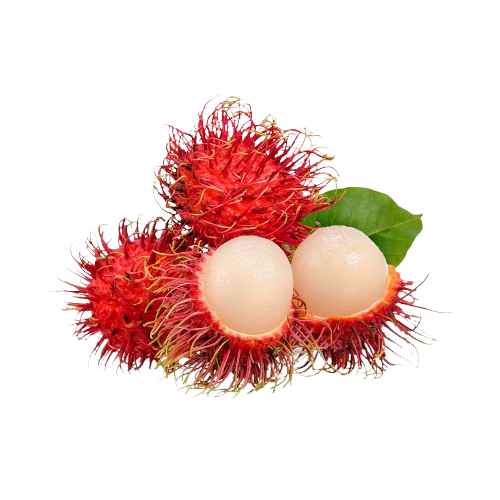
Rambutan is a hairy red-skinned tropical fruit from the Nephelium lappaceum tree native to Southeast Asia. There are 7 calories in one rambutan although its specific calorie content vary by size and preparation. Rambutan nutrition facts indicate that energy increases with portion size, as a small serving of raw flesh (approximately 5 to 6 fruits, 50g or 1.8oz) contains 41 calories, and a large serving (approximately 16 fruits, 150g or 5.3oz) contains 123 calories. Canned rambutan calories differ due to syrup, as a serving of Aroy-D Canned Rambutan in Syrup (140g or 0.5 cup) contains 110 calories, while a serving of Native Forest Rambutan (140g or 0.5 cup) provides 90 calories. Dried varieties offer high density, with a serving of Dragonfly Dried Rambutan (30g or 1oz) having 84 calories and a standard dried serving (40g or 1.4oz) containing 120 calories. A standard 100g portion of raw rambutan flesh contains 82 calories.
An examination of the nutritional profile of rambutan reveals a food rich in simple sugars and Vitamin C, with a large serving of raw flesh (150g or 5.3oz) providing 7.4mg of Vitamin C (8% DV) and 22.5g of sugar. The caloric density fluctuates based on processing, as fresh rambutan contains 82 calories per 100g, whereas dried versions contain 300 calories per 100g due to water removal, and canned varieties often exceed 100 calories per 100g due to added syrup. The fruit serves as a potent source of antioxidants, and a study by Thitilertdecha, N., et al. (2010) confirmed that extracts from the fruit peel and pulp exhibit strong radical scavenging activity due to phenolic compounds.
Global supply of rambutan depends on tropical horticulture, with top producers like Thailand yielding over 1.3 million tonnes of rambutan and related fruits in 2022. Meanwhile, the United States imported over $50 million in exotic tropical fruits in 2022. Rambutan serves as a sweet component in at least 10 distinct dessert preparations, such as Rambutan Stuffed with Pineapple, Rambutan in Syrup, and Rambutan Jelly, and functions as a key ingredient in culinary traditions like Thai Red Curry with Fruit and Malaysian Fruit Rojak. Economic factors have driven costs upward, as the retail price for fresh rambutan rose from under $3.00 per pound in the early 2000s to over $6.99 after 2020. Menu prices reflect this trend, as a Rambutan Stuffed with Pineapple at Hosen moved from $2.50 to as much as $8.00 per order.
The high sugar content means rambutan requires moderation for individuals monitoring blood glucose levels. Medical professionals advise consuming the fruit fresh rather than canned to avoid excess added sugars and to discard the seed which contains traces of toxic alkaloids like saponins. A suggested consumption rate is to limit intake to one cup (150g) of rambutan per sitting. Burning off the 123 calories in this serving requires an energy expenditure equivalent to 15 minutes of running, 20 minutes of swimming, or 27 minutes of walking.
Rambutan nutrition
| Stats | Weight |
|---|---|
| Carbs | 20.9 grams |
| Protein | 0.65 grams |
| Fats | 0 grams |
| Sugars | 15 grams |
- Large Rambutan Calories (Nutritional Facts)
- Medium Rambutan Calories (Nutritional Facts)
- Small Rambutan Calories (Nutritional Facts)
- Dried Rambutan Calories (Nutritional Facts)
- Canned Rambutan Calories (Nutritional Facts)
- Raw Rambutan Nutrition
- Sodium in Rambutan
- Potassium in Rambutan
- Sugar in Rambutan
- Fiber in Rambutan
- Protein in Rambutan
- Carbs in Rambutan
- Fat in Rambutan
- Vitamins in Rambutan
- Minerals in Rambutan
Large Rambutan Calories (Nutritional Facts)
A large serving of raw rambutan flesh (approximately 16 fruits, 150g or 5.3oz) contains 123 calories, 0.98g of protein, 0.32g of fat, 31.3g of carbohydrates, 1.4g of fiber, 22.5g of sugar, and 16.5mg of sodium.
A medium serving of raw rambutan flesh (approximately 11 fruits, 100g or 3.5oz) provides 82 calories, 0.65g of protein, 0.21g of fat, 20.9g of carbohydrates, 0.9g of fiber, 15g of sugar, and 11mg of sodium.
A small serving of raw rambutan flesh (approximately 5 to 6 fruits, 50g or 1.8oz) contains 41 calories, 0.33g of protein, 0.11g of fat, 10.4g of carbohydrates, 0.45g of fiber, 7.5g of sugar, and 5.5mg of sodium.
A serving of dried rambutan (40g or 1.4oz) contains 120 calories, 1g of protein, 0.5g of fat, 32g of carbohydrates, 2g of fiber, 28g of sugar, and 10mg of sodium.
A serving of canned rambutan in heavy syrup (140g or 0.5 cup) provides 110 calories, 0g of protein, 0g of fat, 28g of carbohydrates, 1g of fiber, 26g of sugar, and 15mg of sodium.
A single raw rambutan fruit (9g) contains 7 calories, 0.06g of protein, 0.02g of fat, 1.9g of carbohydrates, 0.1g of fiber, 1.4g of sugar, and 1mg of sodium.
A large serving of raw rambutan (150g) contains 16.5mg of sodium (1% DV). A medium serving of raw rambutan (100g) has 11mg of sodium (0% DV). A small serving of raw rambutan (50g) contains 5.5mg of sodium (0% DV). A serving of dried rambutan (40g) contains 10mg of sodium (0% DV), while a serving of canned rambutan (140g) contains 15mg of sodium (1% DV).
A large serving of raw rambutan (150g) contains 63mg of potassium (1% DV). A medium serving of raw rambutan (100g) has 42mg of potassium (1% DV). A small serving of raw rambutan (50g) contains 21mg of potassium (0% DV).
A large serving of raw rambutan (150g) contains 22.5g of sugar. A medium serving of raw rambutan (100g) has 15g of sugar. A small serving of raw rambutan (50g) contains 7.5g of sugar. A serving of dried rambutan (40g) contains 28g of sugar, whereas a serving of canned rambutan (140g) contains 26g of sugar.
A large serving of raw rambutan (150g) provides 1.4g of dietary fiber (5% DV). A medium serving of raw rambutan (100g) has 0.9g of fiber (3% DV). A small serving of raw rambutan (50g) contains 0.45g of fiber (2% DV). A serving of dried rambutan (40g) provides 2g of fiber (7% DV), and a serving of canned rambutan (140g) provides 1g of fiber (4% DV).
A large serving of raw rambutan (150g) provides 0.98g of protein (2% DV). A medium serving of raw rambutan (100g) has 0.65g of protein (1% DV). A small serving of raw rambutan (50g) contains 0.33g of protein (1% DV). A serving of dried rambutan (40g) provides 1g of protein (2% DV), while a serving of canned rambutan (140g) provides 0g of protein (0% DV).
A large serving of raw rambutan (150g) contains 31.3g of carbohydrates (11% DV). A medium serving of raw rambutan (100g) has 20.9g of carbohydrates (8% DV). A small serving of raw rambutan (50g) contains 10.4g of carbohydrates (4% DV). A serving of dried rambutan (40g) contains 32g of carbohydrates (12% DV), whereas a serving of canned rambutan (140g) contains 28g of carbohydrates (10% DV).
A large serving of raw rambutan (150g) contains 0.32g of total fat (0% DV). A medium serving of raw rambutan (100g) has 0.21g of total fat (0% DV). A small serving of raw rambutan (50g) contains 0.11g of total fat (0% DV). A serving of dried rambutan (40g) contains 0.5g of total fat (1% DV), while a serving of canned rambutan (140g) contains 0g of total fat (0% DV).
A large serving of raw rambutan (150g) provides 7.4mg of Vitamin C (8% DV) and 2mg of Niacin (13% DV). A medium serving of raw rambutan (100g) provides 4.9mg of Vitamin C (5% DV) and 1.4mg of Niacin (9% DV). A small serving of raw rambutan (50g) provides 2.5mg of Vitamin C (3% DV) and 0.7mg of Niacin (4% DV).
A large serving of raw rambutan (150g) provides 0.53mg of iron (3% DV) and 10.5mg of magnesium (3% DV). A medium serving of raw rambutan (100g) provides 0.35mg of iron (2% DV) and 7mg of magnesium (2% DV). A small serving of raw rambutan (50g) provides 0.18mg of iron (1% DV) and 3.5mg of magnesium (1% DV).
Get a Custom Report on Rambutan Nutrition Data – Contact Us!
What are the Types of Rambutans?
The types of rambutans are Red (Common), Yellow (Wild/Mutant), and Green (Unripe). These variations are distinguished by the color of the skin and spinterns (hairs), as well as subtle differences in sweetness and flesh texture. The following table outlines the nutritional distinctions among these varieties.
| Type | Description | Calories (per 100g) | Calorie Qualifications |
|---|---|---|---|
|
Red Rambutan
|
The standard commercial variety with red skin and green-tipped hairs; sweet and juicy. | 82 | The standard calorie count reflects the high sugar and water content. |
|
Yellow Rambutan
|
A rarer variety with bright yellow skin; often slightly milder in flavor. | 80 | The sugar content is comparable to the red variety, resulting in a similar caloric density. |
|
Green Rambutan
|
Unripe fruit with green skin; sour and hard texture. | 75 | The lower sugar content results in fewer calories, but the fruit is generally not consumed in this state. |
What are the Desserts With Rambutan?
Rambutan serves as a sweet, juicy component in cold desserts and fruit salads, adding a unique texture similar to lychee. The list below details sweet courses that utilize rambutan.
| Dish Name | Calories (Estimate per serving) | Type of Dessert | Carbs (g) (Estimate) | Sugar (g) (Estimate) | Protein (g) (Estimate) | Fat (g) (Estimate) | Cuisine | Restaurants |
|---|---|---|---|---|---|---|---|---|
|
Rambutan Stuffed with Pineapple
|
150 | Fruit Dessert | 35 | 28 | 1 | 0 | Thai | Greyhound Cafe |
|
Rambutan in Syrup (Loy Kaew)
|
250 | Dessert Soup | 60 | 50 | 1 | 0 | Thai | Krua Apsorn |
|
Rambutan Smoothie
|
280 | Beverage | 55 | 45 | 4 | 2 | Vietnamese | Bambu |
|
Rambutan Jelly
|
120 | Gelatin | 30 | 25 | 1 | 0 | Asian | 99 Ranch Market (Retail) |
|
Rambutan Coconut Pudding
|
300 | Pudding | 35 | 25 | 3 | 15 | Malaysian | PappaRich |
|
Rambutan Ice Cream
|
220 | Frozen Dessert | 25 | 20 | 4 | 12 | Filipino | Magnolia Ice Cream |
|
Red Ruby (with Rambutan)
|
350 | Dessert Soup | 65 | 40 | 2 | 8 | Thai | Somtum Der |
What are the Main Dishes With Rambutan?
Rambutan functions primarily as a fruit but appears in savory curries and salads in Southeast Asian cuisine to add sweetness and texture. The chart below displays savory meal pairings involving rambutan.
| Dish Name | Calories (Estimate per serving) | Type of Dish | Carbs (g) (Estimate) | Sugar (g) (Estimate) | Protein (g) (Estimate) | Fat (g) (Estimate) | Cuisine | Restaurants |
|---|---|---|---|---|---|---|---|---|
|
Rambutan Red Curry (Gaeng Phed)
|
500 | Curry | 45 | 20 | 25 | 30 | Thai | Jitlada |
|
Rambutan Salad (Som Tum var.)
|
250 | Salad | 30 | 18 | 5 | 8 | Thai | Pok Pok |
|
Rambutan Salsa (on Fish)
|
350 | Entree | 25 | 15 | 30 | 12 | Tropical | Bahama Breeze |
|
Rambutan Fried Rice
|
600 | Rice Dish | 70 | 12 | 15 | 20 | Thai | Thai Express |
|
Roast Duck with Rambutan
|
750 | Entree | 30 | 15 | 40 | 50 | Thai | Lers Ros |
|
Rambutan Prawn Salad
|
300 | Salad | 20 | 12 | 20 | 15 | Vietnamese | Pho 24 |
|
Grilled Chicken with Fruit Glaze
|
550 | Entree | 35 | 20 | 40 | 25 | American | Seasons 52 |
|
Tropical Ceviche (with Rambutan)
|
300 | Appetizer | 25 | 12 | 20 | 8 | Peruvian Fusion | La Mar |
What Cuisines Prefer Rambutan the Most?
Rambutan functions as a staple fruit in Southeast Asian culinary traditions. The chart below identifies culinary cultures that frequently incorporate this ingredient.
| Cuisine | Dish | Types of Rambutan | Calories (Estimate) | Restaurant(s) |
|---|---|---|---|---|
|
Thai
|
Red Curry with Fruit | Fresh/Canned | 400-600 | Jitlada |
|
Malaysian
|
Fruit Rojak | Fresh | 250-400 | PappaRich |
|
Vietnamese
|
Che (Dessert Soup) | Fresh/Canned | 200-350 | Bambu |
|
Indonesian
|
Es Buah | Fresh | 200-350 | Simpang Asia |
|
Singaporean
|
Ice Kachang | Canned | 300-500 | Hawker Chan |
|
Chinese
|
Fruit Platter | Fresh | 60-100 | Din Tai Fung |
|
Hawaiian
|
Tropical Salad | Fresh | 100-200 | Roy's |
|
Cambodian
|
Fruit Dessert | Fresh | 150-250 | Phnom Penh Noodle House |
|
Sri Lankan
|
Fruit Curry | Unripe/Fresh | 200-350 | Hoppers |
Which Countries Produce the Most Rambutans?
The top producers of rambutan are Thailand, Indonesia, and Malaysia. Thailand dominates the global market, particularly for export-quality fruit. Specific global production data for rambutan is often aggregated under "tropical fruits" or "fruit, fresh nes" in international databases. The table below shows the production quantity of tropical fruits (including rambutan) in key countries.
| Country | 2003 | 2008 | 2013 | 2018 | 2019 | 2020 | 2021 | 2022 |
|---|---|---|---|---|---|---|---|---|
| Thailand | 2,500,000 | 3,000,000 | 3,500,000 | 3,800,000 | 3,900,000 | 4,000,000 | 4,100,000 | 4,200,000 |
| Indonesia | 1,500,000 | 2,000,000 | 2,500,000 | 2,800,000 | 2,900,000 | 3,000,000 | 3,100,000 | 3,200,000 |
| Malaysia | 800,000 | 900,000 | 1,000,000 | 1,100,000 | 1,150,000 | 1,200,000 | 1,250,000 | 1,300,000 |
| Philippines | 500,000 | 600,000 | 700,000 | 800,000 | 820,000 | 840,000 | 860,000 | 880,000 |
| Vietnam | 400,000 | 500,000 | 600,000 | 700,000 | 750,000 | 800,000 | 850,000 | 900,000 |
Which Countries Consume the Most Rambutans?
The top consumers of rambutan are Thailand, Indonesia, and China. Consumption is highest in Southeast Asia where the fruit is native and abundant. The table below shows import values for the broader category of fresh tropical fruits in key markets, reflecting the demand for rambutan in non-producing regions.
| Country | 2003 | 2008 | 2013 | 2018 | 2019 | 2020 | 2021 | 2022 |
|---|---|---|---|---|---|---|---|---|
| China | 100,000 | 300,000 | 800,000 | 1,500,000 | 1,800,000 | 2,000,000 | 2,500,000 | 3,000,000 |
| United States | 20,000 | 30,000 | 40,000 | 50,000 | 55,000 | 60,000 | 70,000 | 80,000 |
| Netherlands | 15,000 | 25,000 | 35,000 | 45,000 | 50,000 | 55,000 | 60,000 | 65,000 |
| France | 10,000 | 20,000 | 30,000 | 40,000 | 42,000 | 45,000 | 50,000 | 55,000 |
| Canada | 5,000 | 10,000 | 15,000 | 25,000 | 28,000 | 30,000 | 35,000 | 40,000 |
How Do Prices of Rambutan-Including Dishes Change?
The cost of rambutan dishes on restaurant menus has risen over the past ten years due to higher wholesale costs for the exotic fruit and increased labor expenses. This increasing cost pattern is observable on the menus of Thai and fusion dining establishments.
| Restaurant | Dish | Old Price (Year) | Current Price (2024/2025) |
|---|---|---|---|
| Hosen | Rambutan Stuffed with Pineapple | $2.50 (2014) | $3.77 - $8.00 |
| Jitlada | Jungle Curry (with Rambutan) | $12.95 (2013) | $22.95 - $28.95 |
| Thai Express | Red Curry with Fruit | $9.95 (2014) | $14.00 - $16.95 |
| 99 Ranch Market | Fresh Rambutan (lb) | $3.99 (2013) | $4.79 - $5.98 |
| Bambu | Fruit Addict | $4.50 (2015) | $6.75 - $9.25 |
What is the Rambutan Calorie for 100 Grams?
A 100g serving of raw rambutan flesh contains 82 calories.
What is the Rambutan Calorie for 1 KG?
One kilogram (1000g) of raw rambutan flesh contains 820 calories.
What is the Calorie of 1 Rambutan?
A single fresh rambutan fruit (9g edible portion) contains 7 calories. Commercial packaged options vary, as a serving of Aroy-D Canned Rambutan in Syrup (140g or 0.5 cup) contains 110 calories, while a serving of Native Forest Rambutan (140g or 0.5 cup) provides 90 calories. A serving of Dragonfly Dried Rambutan (30g or 1oz) has 84 calories.
What are the Health Benefits of Rambutan?
The nutritional profile of rambutan offers distinct advantages derived from the concentration of vitamins and minerals in the juicy pulp. A compilation of these nutritional advantages follows.
- Supports Immune Function: The fruit serves as a source of Vitamin C, an antioxidant that stimulates the production of white blood cells. A review by Carr, A. C., & Maggini, S. (2017), "Vitamin C and Immune Function," confirms that adequate Vitamin C intake enhances the skin's barrier against pathogens and promotes oxidant scavenging activity.
- Aids Energy Metabolism: Rambutan contains copper, a trace mineral essential for energy production and iron absorption. A review by Bost, M., et al. (2016), "Dietary copper and human health: Current evidence and unresolved issues," highlights that copper acts as a cofactor for enzymes involved in cellular respiration and energy generation.
- Promotes Digestive Health: The flesh provides dietary fiber, which aids in bowel regularity and digestion. A study by Slavin, J. L. (2013), "Fiber and prebiotics: mechanisms and health benefits," confirms that fiber intake increases stool bulk and supports a healthy gastrointestinal tract.
What are the Downsides of Rambutan?
The consumption of rambutan presents specific health risks related to sugar content and the toxicity of the seeds. A breakdown of these dietary concerns is listed below.
- High Sugar Content: Rambutan contains significant amounts of fructose and sucrose, which can impact blood glucose levels. A study by Atkinson, F. S., et al. (2008), "International tables of glycemic index and glycemic load values: 2008," classifies tropical fruits with high sugar content as having a moderate glycemic load, requiring portion control for individuals with diabetes. A healthier alternative is berries. A suggested amount is to limit consumption to 100g per day.
- Seed Toxicity: The seeds of the rambutan fruit contain saponins and tannins which can be toxic if ingested raw. A report by Morton, J. F. (1987), "Fruits of warm climates," notes that while roasted seeds are sometimes eaten, raw seeds can cause digestive distress and potential toxicity.
Is Rambutan Good for You?
Yes, rambutan is good for health when consumed in moderation because the fruit provides essential Vitamin C, copper, and manganese that support immunity and metabolism. The fruit's impact on immune health is positive due to the antioxidant content. A study by Palanisamy, U., et al. (2008), "Rambutan rind extract exhibits antioxidant and antibacterial activities," found that components of the fruit possess properties that combat oxidative stress. Regarding metabolic health, the copper content aids in energy production. A review by Prohaska, J. R. (2014), "Impact of copper deficiency on brain function," emphasizes the role of copper in maintaining neurological and metabolic function. However, canned versions packed in syrup should be avoided due to excess sugar. A study by Malik, V. S., et al. (2010), "Sugar-sweetened beverages and risk of metabolic syndrome and type 2 diabetes," links high intake of added sugars (like those in syrup) to metabolic disorders.
Does Rambutan Contain Antioxidants?
Yes, rambutan contains antioxidants, specifically Vitamin C, phenolic acids, and flavonoids, which neutralize harmful free radicals in the body. A study by Thitilertdecha, N., et al. (2010), "Identification of phenolic compounds in Nephelium lappaceum L. fruit peel and their antioxidant activities," identified geraniin and corilagin as major antioxidant compounds in the fruit structure. The edible flesh provides approximately 4.9mg of Vitamin C per single fruit (11g), contributing to the total antioxidant capacity. A comparative analysis by Leong, L. P., & Shui, G. (2002), "An investigation of antioxidant capacity of fruits in Singapore markets," ranked rambutan among fruits with moderate-to-high antioxidant activity, comparable to other tropical varieties.
How Do Calories Change According to Rambutan Types?
The ripeness and variety determine the calorie count of a rambutan. Red and Yellow rambutans have the highest calorie value at approximately 82 calories per 100 grams, a consequence of the full development of natural sugars during ripening. Green, unripe rambutans contain a lower calorie value at 75 calories per 100 grams, representing a version with less developed fructose and a more acidic profile. Canned rambutan has the highest caloric density at roughly 110 calories per 100 grams due to the absorption of heavy syrup.
What is the Origin of Rambutan?
The lineage of rambutan traces back to the Malay-Indonesian archipelago in Southeast Asia. The name "rambutan" is derived from the Malay word rambut, meaning "hair," referencing the fruit's hairy exterior. The tree, Nephelium lappaceum, is indigenous to the humid tropical lowlands of Malaysia and Indonesia. Arab traders introduced the fruit to Zanzibar and East Africa in the 13th century. In the 19th century, the Dutch transported rambutan seeds to South America, establishing cultivation in Suriname. Today, it is widely grown across Southeast Asia, Central America, and Australia.
Explore More Fruits
Discover more Fruits with detailed nutrition facts, calorie counts, vitamins, minerals, and health benefits. Compare similar foods, serving sizes, macronutrients, and key nutrients to find the best option for your diet and nutrition goals.
 Acai calories
 Acerola calories
 Ambarella calories
 Amla calories
 Apple calories
 Apricot calories
 Avocado calories
 Babaco calories
 Bael Fruit calories
 Banana calories
 Black Grapes calories
 Blackcurrant calories