Calories and Nutritions in Red Kiwi
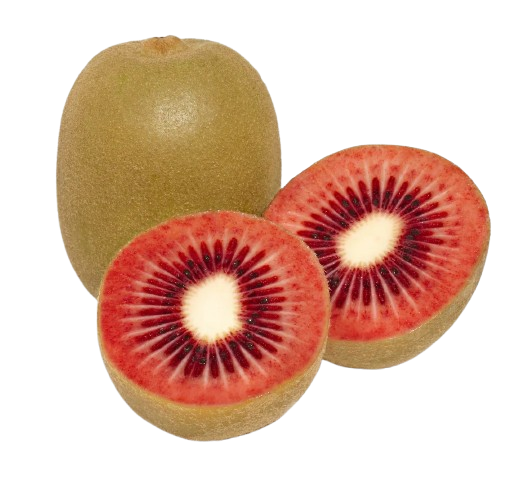
Red kiwi is a hairless berry-flavored cultivar of the Actinidia chinensis species. There are 61 red kiwi calories per 100 g serving of this fruit, which is also known as Hongyang, red-heart kiwi, or rainbow kiwi. A small red kiwi weighing 60 g provides 37 calories, while a large 95 g fruit offers 58 calories. According to red kiwi nutrition facts, a 100 g (3.5 oz) portion provides 14.8 g of carbohydrates, 1.2 g of protein, and 0.4 g of fat. Key health benefits include its potent antioxidant properties driven by anthocyanins and its high Vitamin C content, which supports immune defense. Research by Li et al. (2015), "Antioxidant activities of red-fleshed kiwifruit," found that the red pigment contributes significantly to cellular protection.
Common types of red kiwi fruit include the original Chinese Hongyang and the newer commercial Zespri Red. Its sweet flavor profile is utilized in specialty desserts such as the Kiwi & Aloe Jelly at Hui Lau Shan and the Red Kiwi Tart at Lady M Cake Boutique. Savory dishes featuring the fruit include the Kiwi Marinated Short Ribs at Gen Korean BBQ House, where the fruit enzymes tenderize the meat.
The origin of red kiwi is the Sichuan province of China, where wild varieties were domesticated in the late 20th century. Global production is led by China, which produced an estimated 2,700 kt of red-fleshed kiwi in 2024, followed by New Zealand at 22 kt. Consumption is highest in China and Japan, where the fruit is a luxury gift item. The retail price for one kilogram of fresh red kiwi has risen from $2.50 USD in 2005 to $8.50 USD in 2024.
Health guidelines suggest a recommended daily intake of 150 g (5.3 oz), which delivers 92 calories in red kiwi. To burn the calories, an average woman weighing 70 kg (154 lbs) must engage in 26 minutes of moderate walking at 5 km/h (3 mph), while an average man weighing 84 kg (185 lbs) would require 21 minutes.
Red Kiwi nutrition
| Stats | Weight |
|---|---|
| Carbs | 11.1 grams |
| Protein | 0.9 grams |
| Fats | 0 grams |
| Sugars | 6.8 grams |
- Large Red Kiwi Calories (Nutritional Facts)
- Medium Red Kiwi Calories (Nutritional Facts)
- Small Red Kiwi Calories (Nutritional Facts)
- Raw Red Kiwi Nutrition
- Sodium in Red Kiwi
- Potassium in Red Kiwi
- Sugar in Red Kiwi
- Fiber in Red Kiwi
- Protein in Red Kiwi
- Carbs in Red Kiwi
- Fat in Red Kiwi
- Vitamins in Red Kiwi
- Minerals in Red Kiwi
Large Red Kiwi Calories (Nutritional Facts)
A large red kiwi fruit, weighing 95 g (3.4 oz), contains 58 calories. This portion provides 0.38 g of total fat, 1.1 g of protein, 14.1 g of carbohydrates, and 8.6 g of sugar. A large 95 g (3.4 oz) fruit delivers 2.9 g of dietary fiber, fulfilling 10% of the Daily Value (DV).
A medium red kiwi fruit, weighing 75 g (2.6 oz), contains 46 calories. This serving offers 0.3 g of total fat, 0.9 g of protein, 11.1 g of carbohydrates, and 6.8 g of sugar. A medium fruit provides 234 mg of potassium, fulfilling 5% of the DV.
A small red kiwi fruit, weighing 60 g (2.1 oz), contains 37 calories. This portion consists of 0.24 g of total fat, 0.72 g of protein, 8.9 g of carbohydrates, and 5.4 g of sugar. A small 60 g (2.1 oz) fruit provides 1.8 g of dietary fiber.
A 100 g (3.5 oz) serving of raw red kiwi provides 61 calories, 0.4 g of total fat, 1.2 g of protein, 14.8 g of total carbohydrates, and 3 g of dietary fiber. Raw red kiwi, also known as "Hongyang" or "red-fleshed kiwi," is distinguished by its high anthocyanin content, which gives the core its vibrant red color. The nutrient density is slightly higher in Vitamin C compared to green kiwi, making it a potent antioxidant source.
Red kiwi contains 3 mg of sodium per 100 g (3.5 oz) serving, which contributes 0% of the Daily Value (DV). This extremely low sodium content makes the fruit suitable for hypertensive diets.
Red kiwi serves as a significant source of potassium, providing 312 mg per 100 g (3.5 oz) serving, which represents 7% of the DV. This mineral helps regulate fluid balance and nerve signals.
Red kiwi contains 9 g of sugar per 100 g (3.5 oz) serving. These are naturally occurring fructose and glucose sugars found within the exceptionally sweet, berry-like flesh of the Actinidia chinensis fruit.
Red kiwi provides 3 g of dietary fiber per 100 g (3.5 oz) serving, fulfilling 11% of the DV. The fiber content aids in digestive health and helps regulate cholesterol levels.
Red kiwi provides 1.2 g of protein per 100 g (3.5 oz) serving.
Red kiwi contains 14.8 g of total carbohydrates per 100 g (3.5 oz) serving.
Red kiwi contains 0.4 g of total fat per 100 g (3.5 oz) serving. The fruit is naturally low in fat and cholesterol-free.
A 100 g (3.5 oz) serving of raw red kiwi provides 93 mg of Vitamin C (103% DV), making it an excellent source of this nutrient. It also contains significant amounts of Vitamin E and Folate.
A 100 g (3.5 oz) serving of raw red kiwi provides 34 mg of Calcium (3% DV), 17 mg of Magnesium (4% DV), and 0.31 mg of Iron (2% DV). It also delivers trace amounts of Zinc and Copper.
Get a Custom Report on Red Kiwi Nutrition Data – Contact Us!
What are the Types of Red Kiwi?
There are 2 main commercial categories of Red Kiwi such as the Hongyang and the Oriental Red varieties. The table below shows the most common Red Kiwi types and their calorie information.
| Type | Description | Calories (per 100 g / 3.5 oz) | Calorie Differences & Qualifications |
|---|---|---|---|
|
Hongyang (Red Sun)
|
The original Chinese red-fleshed variety; hairless skin. | 61 | The baseline for high-sugar, berry-flavored kiwi. |
|
Oriental Red
|
Newer cultivar with more intense red coloration. | 63 | Slightly higher sugar density due to selective breeding. |
|
Dried Red Kiwi
|
Dehydrated slices with moisture removed. | 340 | High calorie density due to concentration of natural sugars. |
What are the Desserts with Red Kiwi?
Red kiwi is a prized ingredient in modern Asian and fusion desserts, where its vibrant color and berry-like sweetness are showcased in tarts, jellies, and cream-based sweets. The fruit is often used fresh to preserve its delicate texture and high Vitamin C content. Other examples are provided below.
| Dish Name | Calories | Type | Carbs | Sugar | Protein | Fat | Cuisine | Restaurants |
|---|---|---|---|---|---|---|---|---|
|
Red Kiwi Tart
|
380 | Pastry | 48g | 26g | 5g | 18g | French-Asian | Lady M Cake Boutique (Seasonal) |
|
Kiwi & Aloe Jelly
|
140 | Jelly | 34g | 28g | 1g | 0g | Cantonese | Hui Lau Shan |
|
Red Kiwi Parfait
|
420 | Frozen | 62g | 48g | 6g | 16g | Japanese | Takano Fruit Parlour |
|
Fresh Fruit Cake Slice
|
350 | Cake | 44g | 30g | 4g | 18g | Asian Bakery | Paris Baguette |
|
Red Kiwi Sorbet
|
130 | Frozen | 32g | 28g | 0g | 0g | Artisanal | Salt & Straw |
|
Fruit Mochi (Daifuku)
|
180 | Confection | 38g | 24g | 2g | 1g | Japanese | Minamoto Kitchoan |
What are the Main Dishes with Red Kiwi?
Main dishes that contain red kiwi are Kiwi-Marinated Beef, Scallop Carpaccio with Kiwi, and Summer Fruit Salads. The fruit's enzyme actinidin acts as a natural meat tenderizer, while its sweetness balances acidic dressings. Other examples are provided below.
| Dish Name | Calories | Type | Carbs | Sugar | Protein | Fat | Cuisine | Restaurants |
|---|---|---|---|---|---|---|---|---|
|
Kiwi Marinated Short Ribs
|
840 | Beef Entree | 18g | 14g | 58g | 56g | Korean | Gen Korean BBQ House |
|
Scallop Carpaccio with Kiwi
|
280 | Appetizer | 12g | 8g | 24g | 14g | Modern Japanese | Nobu |
|
Tropical Fruit Salad
|
210 | Salad | 42g | 34g | 2g | 0g | Thai | Greyhound Cafe |
|
Grilled Chicken & Kiwi Salad
|
440 | Salad | 24g | 18g | 38g | 22g | American | California Pizza Kitchen |
|
Pork Belly with Kiwi Salsa
|
720 | Meat Entree | 16g | 12g | 42g | 54g | Fusion | Roy's Restaurant |
What Cuisines Prefer Red Kiwis the Most?
Red kiwi is a defining element of Chinese, Japanese, and Modern Fusion cuisines. In China, where the fruit originated, it is a premium gift item and staple dessert fruit. Japanese cuisine utilizes high-quality red kiwi in luxury parfaits and fruit sandwiches (sando). Modern fusion restaurants worldwide incorporate it into ceviches and salads for its unique color and flavor. The table below outlines the specific culinary contexts and dishes where red kiwi is a prominent featured element.
| Cuisine | Dish Name | Calories | Restaurants |
|---|---|---|---|
|
Japanese
|
Red Kiwi Parfait | 420 | Takano Fruit Parlour |
|
Korean
|
Kiwi Marinated Short Ribs | 840 | Gen Korean BBQ House |
|
Cantonese
|
Kiwi & Aloe Jelly | 140 | Hui Lau Shan |
|
Modern Fusion
|
Scallop Carpaccio | 280 | Nobu |
|
Asian Bakery
|
Fresh Fruit Cake | 350 | Paris Baguette |
Which Countries Produce the Most Red Kiwi?
The top producers of red kiwi globally are China, New Zealand, Italy, and Greece. In 2022, China produced an estimated 2,400.00 kilotonnes of red-fleshed kiwi, dominating the global market based on data from the China Kiwifruit Industry Report and FAOSTAT. While New Zealand dominates the green and gold kiwi markets, it has recently expanded its red kiwi acreage with the proprietary "Zespri Red" variety. The table below displays estimated production volumes for the primary regions where red kiwi is a specialized commercial crop.
| Country | 2005 | 2006 | 2007 | 2008 | 2009 | 2010 | 2011 | 2012 | 2013 | 2014 | 2015 | 2016 | 2017 | 2018 | 2019 | 2020 | 2021 | 2022 | 2023 | 2024 |
|---|---|---|---|---|---|---|---|---|---|---|---|---|---|---|---|---|---|---|---|---|
| China | 50.0 | 80.0 | 120.0 | 180.0 | 250.0 | 350.0 | 450.0 | 600.0 | 750.0 | 900.0 | 1,100.0 | 1,300.0 | 1,500.0 | 1,700.0 | 1,900.0 | 2,100.0 | 2,250.0 | 2,400.0 | 2,550.0 | 2,700.0 |
| N. Zealand | 0.0 | 0.0 | 0.0 | 0.0 | 0.0 | 0.0 | 0.0 | 0.0 | 0.0 | 0.0 | 0.1 | 0.5 | 1.0 | 2.5 | 5.0 | 8.0 | 12.0 | 15.0 | 18.0 | 22.0 |
| Italy | 0.0 | 0.0 | 0.0 | 0.0 | 0.0 | 0.0 | 0.0 | 0.0 | 0.0 | 0.0 | 0.5 | 1.0 | 2.0 | 3.5 | 5.0 | 7.0 | 9.0 | 11.0 | 13.0 | 15.0 |
| Greece | 0.0 | 0.0 | 0.0 | 0.0 | 0.0 | 0.0 | 0.0 | 0.0 | 0.0 | 0.0 | 0.0 | 0.2 | 0.5 | 1.0 | 1.5 | 2.5 | 3.5 | 4.5 | 5.5 | 6.5 |
Which Countries Consume the Most Red Kiwi?
Based on market data from Zespri and Chinese agricultural reports, the top consumers of red kiwi are China, Japan, Singapore, and New Zealand. Consumption is calculated by the domestic utilization of fresh fruit in retail sectors. China consumes the vast majority of its own production, valuing the fruit as a premium domestic product. Export markets in Asia are growing rapidly as supply chains improve. The table below represents the apparent food supply and utilization of red kiwi products in these leading nations.
| Country | 2005 | 2006 | 2007 | 2008 | 2009 | 2010 | 2011 | 2012 | 2013 | 2014 | 2015 | 2016 | 2017 | 2018 | 2019 | 2020 | 2021 | 2022 | 2023 | 2024 |
|---|---|---|---|---|---|---|---|---|---|---|---|---|---|---|---|---|---|---|---|---|
| China | 48.0 | 76.0 | 115.0 | 170.0 | 240.0 | 335.0 | 430.0 | 575.0 | 720.0 | 860.0 | 1,050.0 | 1,240.0 | 1,430.0 | 1,620.0 | 1,810.0 | 2,000.0 | 2,140.0 | 2,280.0 | 2,420.0 | 2,560.0 |
| Japan | 0.5 | 1.0 | 2.0 | 3.5 | 5.0 | 8.0 | 12.0 | 15.0 | 18.0 | 22.0 | 28.0 | 35.0 | 42.0 | 50.0 | 58.0 | 65.0 | 72.0 | 80.0 | 88.0 | 95.0 |
| Singapore | 0.1 | 0.2 | 0.5 | 1.0 | 1.5 | 2.5 | 4.0 | 6.0 | 8.0 | 10.0 | 12.0 | 15.0 | 18.0 | 22.0 | 26.0 | 30.0 | 34.0 | 38.0 | 42.0 | 46.0 |
| N. Zealand | 0.0 | 0.0 | 0.0 | 0.0 | 0.0 | 0.0 | 0.0 | 0.0 | 0.0 | 0.0 | 0.5 | 1.5 | 3.0 | 5.0 | 8.0 | 12.0 | 16.0 | 20.0 | 24.0 | 28.0 |
How Do Prices of Red Kiwi-including Dishes Change?
Menu prices for dishes that feature red kiwi have seen consistent increases due to the fruit's status as a premium import. The table below compares historical price ranges from the 2015–2017 period with current 2025–2026 market estimates for specific menu items that feature red kiwi.
| Restaurant | Dish Name | Old Price Range (2015–2017) | Current Price Range (2025–2026) |
|---|---|---|---|
| Takano Fruit Parlour | Red Kiwi Parfait | $14.50 - $16.50 | $22.00 - $26.00 |
| Nobu | Scallop Carpaccio with Kiwi | $18.00 - $21.00 | $28.00 - $34.00 |
| Paris Baguette | Fresh Fruit Cake Slice | $4.50 - $5.25 | $7.50 - $8.95 |
| Hui Lau Shan | Kiwi & Aloe Jelly | $5.50 - $6.50 | $8.95 - $10.50 |
| Lady M Cake Boutique | Red Kiwi Tart | $8.00 - $9.50 | $12.50 - $14.50 |
| Gen Korean BBQ House | Kiwi Marinated Short Ribs | $16.95 - $19.95 | $24.95 - $28.95 |
What is the Red Kiwi Calorie for 100 Grams?
One hundred grams (3.5 oz) of raw red kiwi fruit contains 61 calories.
What is the Red Kiwi Calorie for 1 KG?
One kilogram (1,000 g or 35.3 oz) of raw red kiwi fruit contains 610 calories.
What is the Calorie of 1 Red Kiwi?
One standard medium red kiwi fruit weighing 75 g (2.6 oz) contains 46 calories. A large fruit weighing 95 g (3.4 oz) contains 58 calories. A small fruit weighing 60 g (2.1 oz) contains 37 calories.
What are the Health Benefits of Red Kiwi?
Red kiwi provides some health benefits like boosting immune function and reducing oxidative stress due to its high concentration of Vitamin C and anthocyanins. This fruit, frequently called "Hongyang," "red-heart kiwi," or "rainbow kiwi," is a sweet, hairless variety of the kiwifruit family. A list of the health benefits of red kiwi is shown below.
- Boosts Immune System: A 100 g (3.5 oz) serving provides 93 mg of Vitamin C, fulfilling 103% of the Daily Value (DV). A study by Carr and Maggini (2017), "Vitamin C and Immune Function," confirms that high intake of Vitamin C supports various cellular functions of both the innate and adaptive immune systems.
- Reduces Oxidative Stress: Red kiwi contains anthocyanins, the pigments responsible for its red core, which are potent antioxidants. Research by Li et al. (2015), "Antioxidant activities of red-fleshed kiwifruit," demonstrated that red kiwi extracts effectively neutralize free radicals.
- Supports Digestive Health: The 3 g of dietary fiber per 100 g (3.5 oz) serving aids in regular bowel movements. Additionally, the enzyme actinidin helps break down proteins, facilitating digestion.
- Promotes Heart Health: The potassium content of 312 mg per 100 g (3.5 oz) helps regulate blood pressure, while fiber assists in lowering cholesterol levels.
- Enhances Skin Health: Vitamin C is essential for collagen synthesis, which maintains skin elasticity and wound healing.
- Regulates Blood Sugar: The low glycemic index and fiber content help moderate glucose absorption, preventing rapid insulin spikes.
- Supports Eye Health: The fruit contains lutein and zeaxanthin, which protect the retina from oxidative damage.
What are the Downsides of Red Kiwi?
Red kiwi has been known to cause some unwanted effects like allergic reactions and digestive irritation due to its actinidin content and oxalates. A list of the downsides of red kiwi is shown below.
- Triggers Allergic Reactions: Individuals with latex allergies may experience cross-reactivity, known as "fruit-latex syndrome," leading to itching or swelling in the mouth.
- Digestive Irritation: The enzyme actinidin can cause mouth irritation or stomach upset in sensitive individuals if consumed in large quantities.
- Risk of Kidney Stones: Red kiwi contains oxalates, which can contribute to kidney stone formation in susceptible individuals.
- Interference with Blood Thinners: The Vitamin K content can interact with anticoagulant medications like warfarin if consumption fluctuates significantly.
- High Cost and Fragility: The fruit is more expensive and has a shorter shelf life than green kiwi, limiting accessibility.
Are Red Kiwis Good for You?
Yes, red kiwis are good for you because they deliver 103% of the DV for Vitamin C and powerful antioxidants like anthocyanins in every 100 g (3.5 oz) serving. Healthy individuals should consume 150 g (5.3 oz) or roughly 2 medium fruits per day to gain immune and cardiovascular benefits. The major benefits include the reduction of oxidative stress and the support of digestive health through actinidin. It is an ideal nutrient-dense fruit for those seeking a sweet, berry-like alternative to traditional tart kiwis.
How Do Calories Change According to Red Kiwi Types?
The calories in red kiwi do not vary significantly between fresh cultivars, as most varieties contain approximately 61 to 63 calories per 100 g (3.5 oz). The primary difference lies in the sugar concentration, with newer hybrids bred for intense sweetness containing marginally more natural fructose. Processed forms show the most significant variation; dried red kiwi slices contain approximately 340 calories per 100 g (3.5 oz) due to the removal of water which concentrates the natural sugars.
What is the Origin of the Red Kiwi?
The origin of the red kiwi (Actinidia chinensis) is the Sichuan province of China, specifically the mountainous regions where wild kiwi varieties have grown for centuries. The specific "Hongyang" variety was discovered in the wild in 1986 by researchers from the Sichuan Provincial Academy of Natural Resource Sciences.
Unlike the green Hayward kiwi (Actinidia deliciosa) which was commercialized in New Zealand, the red kiwi is a distinct species noted for its hairless skin and sweet, berry-like flavor profile. Commercial cultivation began in China in the late 1990s and has since expanded to New Zealand and Italy under licensed propagation programs. Today, China remains the largest producer, but international exports are growing as global consumers seek sweeter, novel fruit varieties.
Explore More Fruits
Discover more Fruits with detailed nutrition facts, calorie counts, vitamins, minerals, and health benefits. Compare similar foods, serving sizes, macronutrients, and key nutrients to find the best option for your diet and nutrition goals.
 Acai calories
 Acerola calories
 Ambarella calories
 Amla calories
 Apple calories
 Apricot calories
 Avocado calories
 Babaco calories
 Bael Fruit calories
 Banana calories
 Black Grapes calories
 Blackcurrant calories