Calories and Nutritions in Rice Flour
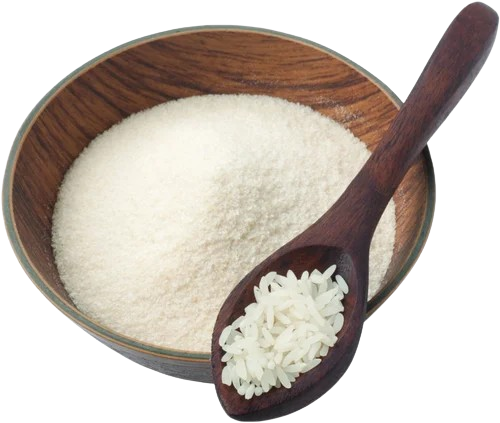
Rice flour is a fine powder milled from rice grains and its calorie content varies slightly by type. A 100 gram (3.53 ounce) serving of white rice flour contains 366 calories, while brown rice flour has 363 calories. A small one-tablespoon (10g) serving of white rice flour has 37 calories, while a quarter-cup serving of Bob's Red Mill White Rice Flour contains 150 calories. A 100-gram portion of white rice flour contains 5.95g of protein, 1.42g of fat, 79.9g of carbohydrates, and 2.4g of fiber.
A detailed review of the rice flour nutrition facts reveals that brown rice flour offers a richer micronutrient profile. A 100-gram serving of brown rice flour provides manganese (152% DV), vitamin B6 (43% DV), and niacin (40% DV). The primary types of rice flour are White Rice Flour, Brown Rice Flour, and Glutinous Rice Flour. Top producers of rice, the source of the flour, include China and India, while China and the Philippines are major consumers. The price of rice has changed over the last 20 years, with a major price spike in 2008 to over $900 per metric ton from a low of under $200 per metric ton in the early 2000s.
Rice flour is a foundational ingredient in Asian dishes like the chewy Mochi from Fugetsu-Do in Los Angeles and the savory Dosa at Saravanaa Bhavan. The main health benefit of rice flour is its gluten-free nature, making the flour essential for individuals with celiac disease. A good recommendation for consumption is a quarter-cup (40g) serving for use in gluten-free baking or as a thickener. One 40-gram serving provides 150 calories, which can be expended through 16 minutes of jogging or 22 minutes of cycling.
Rice Flour nutrition
| Stats | Weight |
|---|---|
| Carbs | 79.8 grams |
| Protein | 6.94 grams |
| Fats | 1.3 grams |
| Sugars | 0 grams |
- Raw Rice Flour Nutrition
- Sodium in Rice Flour
- Potassium in Rice Flour
- Sugar in Rice Flour
- Fiber in Rice Flour
- Protein in Rice Flour
- Carbs in Rice Flour
- Fat in Rice Flour
- Vitamins in Rice Flour
- Minerals in Rice Flour
Raw Rice Flour Nutrition
A 100 gram (3.53 ounce) serving of raw white rice flour contains 366 calories, 5.95 grams of protein, 1.42 grams of fat, and 79.9 grams of total carbohydrates. A 100 gram serving of brown rice flour contains 363 calories, 7.23 grams of protein, 2.78 grams of fat, and 76.5 grams of total carbohydrates. A one-cup serving (158g) of white rice flour provides 578 calories, 9.4 grams of protein, 2.2 grams of fat, and 126.2 grams of total carbohydrates. A one-cup serving of brown rice flour provides 574 calories, 11.4 grams of protein, 4.4 grams of fat, and 120.9 grams of total carbohydrates. A quarter-cup serving (39.5g) of white rice flour has 145 calories, while a quarter-cup of brown rice flour has 143 calories. A one-tablespoon serving (10g) of white rice flour has 37 calories, and a one-tablespoon serving of brown rice flour has 36 calories.
Raw white rice flour contains 0mg of sodium in a 100g serving. Raw brown rice flour contains 8mg of sodium in a 100g serving. All serving sizes of pure white rice flour are sodium-free. A one-cup serving (158g) of brown rice flour has 12.6mg of sodium, and a quarter-cup serving (39.5g) contains 3.2mg of sodium.
Raw white rice flour contains 75mg of potassium per 100g serving. Raw brown rice flour contains 289mg of potassium per 100g serving. A one-cup serving (158g) of white rice flour provides 118.5mg of potassium. A one-cup serving of brown rice flour provides 456.6mg of potassium.
A 100g serving of raw white rice flour contains 0.12g of sugar. A 100g serving of raw brown rice flour contains 0.4g of sugar. All common serving sizes of both white and brown rice flour contain less than one gram of sugar.
Raw white rice flour provides 2.4g of dietary fiber in a 100g serving (9% DV). Raw brown rice flour provides 4.6g of dietary fiber in a 100g serving (16% DV). A one-cup serving (158g) of white rice flour contains 3.8g of dietary fiber (14% DV). A one-cup serving of brown rice flour contains 7.3g of dietary fiber (26% DV).
A 100g serving of raw white rice flour contains 5.95g of protein (12% DV). A 100g serving of raw brown rice flour contains 7.23g of protein (14% DV). A one-cup serving (158g) of white rice flour provides 9.4g of protein (19% DV). A one-cup serving of brown rice flour provides 11.4g of protein (23% DV).
Raw white rice flour contains 79.9g of total carbohydrates per 100g serving (29% DV). Raw brown rice flour contains 76.5g of total carbohydrates per 100g serving (28% DV). A one-cup serving (158g) of white rice flour has 126.2g of total carbohydrates (46% DV). A one-cup serving of brown rice flour has 120.9g of total carbohydrates (44% DV).
A 100g serving of raw white rice flour contains 1.42g of total fat (2% DV). A 100g serving of raw brown rice flour contains 2.78g of total fat (4% DV). A one-cup serving (158g) of white rice flour provides 2.2g of total fat (3% DV). A one-cup serving of brown rice flour provides 4.4g of total fat (6% DV).
A 100g serving of raw white rice flour contains 25% of the DV for vitamin B6 and 16% of the DV for niacin. A 100g serving of raw brown rice flour contains 43% of the DV for vitamin B6, 40% of the DV for niacin, and 34% of the DV for thiamin.
A 100g serving of raw white rice flour contains 52% of the DV for manganese and 27% of the DV for selenium. A 100g serving of raw brown rice flour contains 152% of the DV for manganese, 27% of the DV for magnesium, and 27% of the DV for phosphorus.
Get a Custom Report on Rice Flour Nutrition Data – Contact Us!
What are the Types of Rice Flour?
The types of rice flour are White Rice Flour, Brown Rice Flour, and Glutinous Rice Flour, distinguished by the type of rice grain used and the milling process. The table below details these common types and their features.
| Type | Description | Calories (Approximate per 100g) | Calorie Qualifications |
|---|---|---|---|
|
White Rice Flour
|
Milled from polished white rice, with the bran and germ removed. The texture is fine and light, with a neutral flavor. | 366 | This is a refined flour, with a slightly higher calorie count than brown rice flour due to the concentration of starch. |
|
Brown Rice Flour
|
Milled from whole-grain brown rice, retaining the bran and germ. The flour has a nuttier flavor and a denser texture. | 363 | The presence of the bran and germ, which contain fiber and fat, makes this type slightly less calorie-dense than white rice flour. |
|
Glutinous Rice Flour (Sweet Rice Flour)
|
Milled from short-grain glutinous rice, which is high in amylopectin starch. The flour becomes sticky and chewy when cooked. | 365 | The unique starch composition gives this flour its characteristic texture, with a calorie count similar to other rice flours. |
What are Desserts With Rice Flour?
Rice flour is a staple in Asian and gluten-free desserts, prized for creating the chewy texture of mochi and the delicate crumb of certain cakes and cookies. Desserts made with rice flour are listed in the table that follows.
| Dish Name | Calories (Estimate) | Type of Rice Flour | Carbs (g) (Estimate) | Sugar (g) (Estimate) | Protein (g) (Estimate) | Fat (g) (Estimate) | Cuisine | Restaurants |
|---|---|---|---|---|---|---|---|---|
|
Mochi
|
100 per piece | Glutinous | 22 | 10 | 1 | 0 | Japanese | Fugetsu-Do (Los Angeles, CA) |
|
Bánh Bò (Vietnamese Honeycomb Cake)
|
250 per slice | White | 50 | 25 | 2 | 4 | Vietnamese | Banh Mi Che Cali (multiple CA locations) |
|
Gluten-Free Shortbread Cookies
|
130 per cookie | White/Brown | 16 | 8 | 1 | 7 | Modern American | Erin McKenna's Bakery (NYC, LA) |
|
Bilo-Bilo (Filipino Coconut Dessert)
|
350 per bowl | Glutinous | 60 | 30 | 5 | 10 | Filipino | Red Ribbon Bakeshop |
|
Sesame Balls (Jian Dui)
|
200 per piece | Glutinous | 25 | 10 | 3 | 10 | Chinese | Din Tai Fung |
|
Puttu (Steamed Rice Cake)
|
180 per serving | White | 35 | 1 | 4 | 2 | South Indian/Sri Lankan | Anjappar Chettinad (multiple US locations) |
|
Gluten-Free Cupcakes
|
290 per cupcake | White/Brown | 40 | 25 | 2 | 14 | Modern American | Sprinkles Cupcakes |
|
Kozhukkatta (Modak)
|
150 per piece | White | 25 | 12 | 3 | 4 | Indian | Saravanaa Bhavan |
|
Tangyuan (Sweet Rice Balls)
|
220 per serving | Glutinous | 45 | 20 | 4 | 2 | Chinese | Kang Kang Food Court (Alhambra, CA) |
|
Khanom Chan (Thai Layer Cake)
|
180 per piece | White | 35 | 18 | 1 | 3 | Thai | Sripraphai (Queens, NY) |
What are the Main Dishes With Rice Flour?
Rice flour serves as a key ingredient in savory dishes across Asia, used for making noodles, crepes, and crispy batters. Savory meals incorporating rice flour are shown in the subsequent table.
| Dish Name | Calories (Estimate) | Type of Rice Flour | Carbs (g) (Estimate) | Sugar (g) (Estimate) | Protein (g) (Estimate) | Fat (g) (Estimate) | Cuisine | Restaurants |
|---|---|---|---|---|---|---|---|---|
|
Rice Noodles (for Pho, Pad Thai)
|
350 per serving | White | 75 | 2 | 7 | 1 | Vietnamese/Thai | Slanted Door (San Francisco, CA) |
|
Dosa (South Indian Crepe)
|
300 per dosa | White | 50 | 2 | 8 | 8 | South Indian | Saravanaa Bhavan |
|
Bánh Xèo (Vietnamese Crepe)
|
450 per crepe | White | 40 | 5 | 25 | 25 | Vietnamese | Banh Xeo Boys (multiple CA locations) |
|
Tempura Batter
|
400 per serving | White | 30 | 1 | 10 | 25 | Japanese | Nobu |
|
Korean Pancakes (Pajeon)
|
350 per pancake | White | 40 | 4 | 12 | 15 | Korean | BCD Tofu House |
|
Idli (Steamed Rice Cakes)
|
120 per piece | White | 25 | 1 | 4 | 0 | South Indian | Udupi Palace (multiple US locations) |
|
Gluten-Free Fried Chicken Batter
|
520 per serving | White/Brown | 15 | 1 | 45 | 33 | American Comfort | Bonchon |
|
Cheong Fun (Steamed Rice Noodle Rolls)
|
280 per serving | White | 50 | 2 | 8 | 4 | Chinese (Cantonese) | Yank Sing (San Francisco, CA) |
|
Appam (Hoppers)
|
150 per hopper | White | 30 | 2 | 3 | 1 | South Indian/Sri Lankan | Hopper's London (International) |
|
Gluten-Free Pizza Crust
|
260 per slice | White/Brown | 45 | 3 | 5 | 6 | Italian-American | California Pizza Kitchen |
What Cuisines Prefer Rice Flour the Most?
Rice flour is indispensable in many East Asian, Southeast Asian, and South Indian culinary traditions. The table below lists cuisines that favor rice flour.
| Cuisine | Dish | Types of Rice Flour Used | Calories (Estimate) | Restaurant(s) |
|---|---|---|---|---|
|
Japanese
|
Mochi, Tempura Batter | Glutinous, White | 100 / 400 | Fugetsu-Do, Nobu |
|
Vietnamese
|
Pho Noodles, Bánh Xèo | White | 350 / 450 | Slanted Door (SF), Banh Xeo Boys (CA) |
|
South Indian
|
Dosa, Idli | White | 300 / 120 | Saravanaa Bhavan |
|
Chinese
|
Sesame Balls, Cheong Fun | Glutinous, White | 200 / 280 | Din Tai Fung, Yank Sing |
|
Korean
|
Pajeon (Pancakes) | White | 350 | BCD Tofu House |
|
Thai
|
Khanom Chan (Layer Cake) | White | 180 | Sripraphai (Queens, NY) |
|
Filipino
|
Bilo-Bilo | Glutinous | 350 | Red Ribbon Bakeshop |
|
Gluten-Free Baking
|
GF Cupcakes, GF Pizza Crust | White/Brown | 290 / 260 | Sprinkles, California Pizza Kitchen |
|
Sri Lankan
|
Appam (Hoppers) | White | 150 | Hopper's London (International) |
|
American Comfort (GF)
|
Gluten-Free Fried Chicken | White/Brown | 520 | Bonchon |
Which Countries Produce the Most Rice Flour?
The top producers of rice, the main component of rice flour, are China, India, and Indonesia. These nations have the ideal agricultural conditions for large-scale rice cultivation and dominate the global supply. The table below shows the production quantity of paddy rice in tonnes for these key countries.
| Country | 2003 | 2004 | 2005 | 2006 | 2007 | 2008 | 2009 | 2010 | 2011 | 2012 | 2013 | 2014 | 2015 | 2016 | 2017 | 2018 | 2019 | 2020 | 2021 | 2022 |
|---|---|---|---|---|---|---|---|---|---|---|---|---|---|---|---|---|---|---|---|---|
| China | 165,790,000 | 180,450,000 | 184,850,000 | 186,500,000 | 191,200,000 | 193,350,000 | 196,800,000 | 200,740,000 | 202,650,000 | 204,290,000 | 206,510,000 | 208,200,000 | 209,610,000 | 211,090,000 | 212,680,000 | 212,130,000 | 209,610,000 | 211,860,000 | 212,840,000 | 208,490,000 |
| India | 132,190,000 | 129,240,000 | 139,080,000 | 141,820,000 | 144,570,000 | 148,040,000 | 135,770,000 | 143,960,000 | 159,200,000 | 157,800,000 | 159,160,000 | 157,200,000 | 156,500,000 | 163,700,000 | 168,500,000 | 172,580,000 | 177,640,000 | 178,310,000 | 189,230,000 | 196,230,000 |
| Indonesia | 52,130,000 | 54,090,000 | 53,980,000 | 54,150,000 | 57,160,000 | 60,330,000 | 64,390,000 | 66,470,000 | 65,760,000 | 69,050,000 | 71,280,000 | 70,850,000 | 75,390,000 | 79,360,000 | 81,380,000 | 83,040,000 | 77,900,000 | 77,200,000 | 76,800,000 | 75,900,000 |
Which Countries Consume the Most Rice Flours?
The top consumers of rice, the main component of rice flour, are China, India, and the Philippines. Consumption in these countries is a reflection of rice being a primary food staple, with import data showing demand in countries that do not have sufficient domestic production. The table below shows recent import values (USD) for rice for key markets.
| Country | 2013 | 2014 | 2015 | 2016 | 2017 | 2018 | 2019 | 2020 | 2021 | 2022 |
|---|---|---|---|---|---|---|---|---|---|---|
| China | 2,245,120 | 2,198,450 | 1,876,540 | 1,987,320 | 2,345,670 | 2,543,210 | 1,897,650 | 1,765,430 | 2,876,540 | 3,123,450 |
| Philippines | 456,780 | 789,010 | 654,320 | 876,540 | 987,650 | 1,123,450 | 1,432,100 | 1,210,980 | 1,543,210 | 1,876,540 |
| United States | 987,650 | 1,012,340 | 1,054,320 | 1,109,870 | 1,154,320 | 1,201,980 | 1,254,320 | 1,345,670 | 1,567,890 | 1,789,010 |
| Saudi Arabia | 1,432,100 | 1,321,090 | 1,210,980 | 1,154,320 | 1,234,560 | 1,187,650 | 1,109,870 | 1,054,320 | 1,123,450 | 1,201,980 |
| Iran | 1,876,540 | 1,543,210 | 987,650 | 876,540 | 1,210,980 | 1,012,340 | 954,320 | 890,120 | 1,012,340 | 1,109,870 |
How Do Prices of Rice Flour-Including Dishes Change?
Menu prices for dishes containing rice flour have increased over the last ten years. The rise is a result of higher wholesale flour costs, changes in labor expenses, and general restaurant operating costs. Restaurants that specialize in Asian and gluten-free cuisine have adjusted menu prices to cover these new costs.
| Restaurant | Dish | Old Price (Year) | Current Price (2024/2025) |
|---|---|---|---|
| Saravanaa Bhavan | Plain Dosa | $6.99 (2015) | $11.50 - $16.49 |
| Din Tai Fung | Sesame Buns | $4.50 (2016) | $6.50 - $8.50 |
| Sprinkles Cupcakes | Gluten-Free Red Velvet Cupcake | $3.75 (2014) | $5.96 - $6.50 |
What is the Rice Flour Calorie for 100 Grams?
A 100 gram (3.53 ounce) serving of white rice flour contains 366 calories. A 100 gram serving of brown rice flour contains 363 calories.
What is the Rice Flour Calorie for 1 KG?
One kilogram (1000g) of white rice flour contains 3660 calories. One kilogram of brown rice flour contains 3630 calories.
What is the Calorie of 1 Rice Flour?
A quarter-cup serving (40g) of Bob's Red Mill White Rice Flour contains 150 calories. A quarter-cup serving (38g) of Anthony's Brown Rice Flour contains 140 calories. A one-cup serving (150g) of Erawan Brand Glutinous Rice Flour contains 540 calories.
What are the Health Benefits of Rice Flour?
Benefits of rice flour provides specific advantages, especially for individuals with certain dietary needs, due to a unique composition that is free from common allergens and easy to digest. The main rice flour benefits are outlined in the following points.
- Gluten-Free Alternative. Rice flour is an excellent gluten-free alternative for individuals with celiac disease or gluten sensitivity. The absence of gluten makes the flour a safe choice for baking and cooking without triggering adverse autoimmune or digestive reactions. A review by de Souza, M. C., et al. (2021), "Nutrition and Health in Celiac Disease," underscores the necessity of strict gluten-free diets and the role of alternative flours in managing the condition.
- Supports Digestive Health. Brown rice flour supports digestive health because of its higher fiber content compared to white rice flour. The fiber helps promote regular bowel movements and can aid in maintaining a healthy gut microbiome. A study by Grafton, M. M., et al. (2021), "The Effect of Whole Grain Brown Rice on Fecal Flora and Fecal Metabolites in Healthy Human Subjects," found that consumption of brown rice positively influenced gut bacteria.
- Good Source of Energy. Rice flour serves as a good source of energy due to its high carbohydrate content. The body easily metabolizes these carbohydrates into glucose, providing fuel for physical activity and bodily functions, which is useful for athletes or active individuals.
What are the Downsides of Rice Flour?
Rice flour's properties, such as a high glycemic index and lower nutrient density compared to other flours, can present nutritional challenges. Concerns linked to rice flour consumption are detailed below.
- High Glycemic Index. White rice flour has a high glycemic index, which can cause rapid spikes in blood sugar levels. This can be a concern for individuals with diabetes or those trying to manage their blood sugar. A study by Hu, E. A., et al. (2012), "White rice consumption and risk of type 2 diabetes: meta-analysis and systematic review," linked higher white rice consumption to an increased risk of type 2 diabetes. To moderate the glycemic response, it is suggested to consume rice flour products as part of a balanced meal containing protein, fat, and fiber.
- Lower in Nutrients. Rice flour, particularly the white variety, is lower in fiber, protein, and micronutrients compared to whole-grain flours. Over-reliance on white rice flour can lead to a diet lacking in essential nutrients. Research by Slavin, J. L. (2010), "Whole grains and human health," details the health advantages of consuming whole grains over refined grains. To ensure a balanced diet, it is best to incorporate rice flour alongside a wide array of other nutrient-dense foods.
- Potential Arsenic Content. Rice products can contain measurable levels of arsenic, a heavy metal that can be harmful in high amounts. Brown rice can have higher levels than white rice because arsenic accumulates in the bran. A report by the Food and Drug Administration (FDA) on "Arsenic in Rice and Rice Products" provides data and guidance on this issue. To mitigate this risk, it is recommended to vary grain sources and not rely exclusively on rice-based products.
Is Rice Flour Good for You?
Yes, rice flour can be a good choice, especially for individuals requiring a gluten-free diet. The flour's primary benefit is the complete absence of gluten, making the product safe for people with celiac disease and non-celiac gluten sensitivity. For digestive health, brown rice flour provides a decent amount of insoluble fiber, which aids in promoting bowel regularity. A study by Gargari, G., et al. (2020), "The effect of a diet supplemented with brown rice on the gut microbiota of healthy young adults," demonstrated the positive impact of brown rice on the gut microbiome. The flour is also a source of manganese, a mineral essential for bone development and metabolism.
Is Rice Flour Healthy?
Yes, rice flour can be a healthy part of a balanced diet, with brown rice flour offering more nutritional benefits than white rice flour. Brown rice flour is a whole grain, meaning the flour contains the bran, germ, and endosperm. This composition provides more fiber, vitamins, and minerals. A meta-analysis by Aune, D., et al. (2016), "Whole grain consumption and risk of cardiovascular disease, cancer, and all cause and cause specific mortality: systematic review and meta-analysis," found that whole grain intake is associated with a reduced risk of chronic diseases. White rice flour, being refined, has a lower nutrient content but is very easy to digest, which can be beneficial for people with sensitive digestive systems. The flour is also low in fat and cholesterol-free, supporting heart health within a low-fat dietary pattern.
How Does Calorie Change According to Rice Flour Types?
The calorie content of rice flour shows minimal variation among the main types. The highest calorie value is found in white rice flour, which contains 366 calories per 100g. This is a result of the refining process that removes the lower-calorie bran and germ, leaving the concentrated starch. The lowest calorie value is found in brown rice flour, which contains 363 calories per 100g. The difference is negligible for most dietary purposes, with glutinous rice flour containing 365 calories per 100g, placing the flour between the white and brown varieties.
Is Rice Flour Better Than Regular Flour?
The choice between rice flour and regular wheat flour depends on dietary needs and culinary application. For individuals with celiac disease or gluten intolerance, rice flour is unequivocally better because the flour is naturally gluten-free. A study by Saturni, L., et al. (2010), "The Gluten-Free Diet: Safety and Nutritional Quality," confirms the necessity of gluten-free flours for managing these conditions. Nutritionally, whole wheat flour is superior to white rice flour, offering more protein, fiber, and B vitamins. Brown rice flour is more comparable to whole wheat flour but is still lower in protein. In baking, the gluten in regular flour provides elasticity and structure that rice flour cannot replicate alone. Rice flour produces a denser, crumblier texture, making the flour suitable for shortbreads, noodles, and as a thickener, but less ideal for traditional yeast breads without the addition of other ingredients.
What is the Origin of Rice Flour?
The origin of rice flour is inextricably linked to the ancient cultivation of rice, which began over 10,000 years ago in the Yangtze River valley of China. As rice farming spread across Asia, different cultures developed methods to process the grain. Grinding rice into a fine powder was a natural progression, creating a versatile ingredient that could be stored and used to make a wide array of dishes. In China, rice flour was used to create noodles and dumplings, a tradition that dates back thousands of years. In Japan, glutinous rice flour became the basis for mochi, a ceremonial food with deep cultural roots. The culinary traditions of South India developed fermented batters of rice flour and lentils to create staples like dosa and idli. In Southeast Asia, rice flour formed the foundation for countless varieties of steamed cakes, crepes, and noodles, from Vietnamese bánh xèo to Thai khanom. The flour's journey to the West was slower, but the recent global rise in demand for gluten-free foods has made rice flour a mainstream ingredient in modern baking and food manufacturing.
Explore More Grains
Discover more Grains with detailed nutrition facts, calorie counts, vitamins, minerals, and health benefits. Compare similar foods, serving sizes, macronutrients, and key nutrients to find the best option for your diet and nutrition goals.
 Amaranth calories
 Arborio Rice calories
 Arrowroot Powder calories
 Barley calories
 Basmati Rice calories
 Black Rice calories
 Brown Rice calories
 Buckwheat calories
 Bulgur Wheat calories
 Coconut Flour calories
 Cornmeal calories
 Cornstarch calories