Calories and Nutritions in Rice Paper
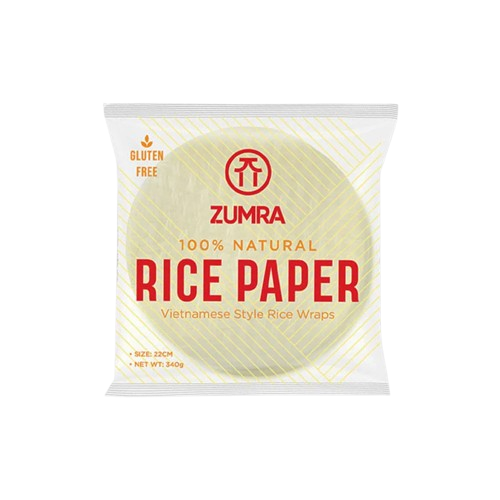
Rice paper is a super-thin, translucent edible wrapper made from steamed rice batter and sun-dried on bamboo mat. Rice paper is a staple in Vietnamese gastronomy and a single large sheet (20g) contains 66 calories. The calories in a rice paper fluctuate significantly depending on the size and the specific grain used; a small sheet (5g) offers just 16 calories, a medium sheet (15g) provides 49 calories, while brown rice paper contains 70 calories per two sheets (19g). Commercial brands show slight differences in calorie content, with Star Anise Foods Brown Rice wrappers providing 30 calories per sheet, whereas Three Ladies Brand white rice paper contains 33 calories per sheet.
A breakdown of rice paper nutrition facts reveals a food source composed almost entirely of carbohydrates with minimal macronutrient diversity. A large sheet (20g weight) delivers 14.5g of carbohydrates and only 1g of protein. The refining process strips away most vitamins, leaving 0% of the Daily Value for Vitamin C and Vitamin D, though it does provide small amounts of sodium (62mg). Brown rice versions offer a slightly better profile with trace amounts of nutrients, supplying 0.3g of fiber and 0.4mg of iron per serving. The high glycemic index of refined rice flour means that rice paper can cause blood sugar spikes in insulin-resistant individuals, as the rapid digestion of starch floods the bloodstream with glucose. Despite this glycemic impact, rice paper is considered good for weight loss when used as a low-calorie substitute for bread or tortillas, especially when filled with high-volume vegetables and lean proteins to promote satiety.
Global production of rice paper is dominated by Vietnam, Thailand, and China, which export these wrappers to meet the international demand for gluten-free products. Major consumers include Vietnam, the United States, and Australia. Rice paper serves as a core component in at least eight dishes, featuring in Vietnamese Gỏi Cuốn, Cambodian Nime Chow, and Hmong egg rolls. Market prices have seen a steady increase, with wholesale packs rising from under $1.00 in the early 2000s to retail prices between $2.50 and $4.00 by 2024. Menu pricing reflects this inflation, as a serving of Imperial Rolls at Tu Lan increased from $4.00 to over $9.75 in 2024/2025.
Rice paper is valued for its hypoallergenic properties and ability to provide quick energy. Dietitians recommend using the wrappers as a vessel for high-fiber vegetables and lean proteins to counteract the high glycemic impact. A medium rice paper sheet contains 49 calories, an energy amount that requires 5 minutes of running or 7 minutes of swimming to metabolize. Individuals managing blood sugar should be mindful of portion sizes, as the rapid digestion of rice starch can cause glucose spikes.
Rice Paper nutrition
| Stats | Weight |
|---|---|
| Carbs | 10.9 grams |
| Protein | 0.76 grams |
| Fats | 0 grams |
| Sugars | 0.04 grams |
- Large Rice Paper Calories (Nutritional Facts)
- Medium Rice Paper Calories (Nutritional Facts)
- Small Rice Paper Calories (Nutritional Facts)
- Brown Rice Sheets Calories (Nutritional Facts)
- Raw Rice Paper Nutrition
- Sodium in Rice Paper
- Potassium in Rice Paper
- Sugar in Rice Paper
- Fiber in Rice Paper
- Protein in Rice Paper
- Carbs in Rice Paper
- Fat in Rice Paper
- Vitamins in Rice Paper
- Minerals in Rice Paper
Large Rice Paper Calories (Nutritional Facts)
A large rice paper sheet with a 12-3/8 inch diameter (20g) contains 66 calories, 1g of protein, 0.24g of fat, 14.5g of carbohydrates, 0.42g of fiber, 0.05g of sugar, and 62mg of sodium.
A medium rice paper sheet with an 8-5/8 inch diameter (15g) provides 49 calories, 0.76g of protein, 0.18g of fat, 10.9g of carbohydrates, 0.32g of fiber, 0.04g of sugar, and 46.5mg of sodium.
A small rice paper sheet with a 6-3/8 inch diameter (5g) contains 16 calories, 0.25g of protein, 0.06g of fat, 3.6g of carbohydrates, 0.11g of fiber, 0.01g of sugar, and 15.5mg of sodium.
A serving of two dry Dynasty brown rice paper sheets (19g) provides 70 calories, 0.5g of protein, 0g of fat, 16g of carbohydrates, 0g of fiber, 0.5g of sugar, and 60mg of sodium.
A serving of raw rice paper (100g) contains 329 calories, 5.1g of protein, 1.2g of fat, 72.5g of carbohydrates, 2.1g of fiber, 0.27g of sugar, and 310mg of sodium.
A large rice paper sheet (20g) contains 62mg of sodium (3% DV). A medium rice paper sheet (15g) has 46.5mg of sodium (2% DV). A small rice paper sheet (5g) contains 15.5mg of sodium (1% DV). A serving of two brown rice sheets (19g) provides 60mg of sodium (3% DV).
A large rice paper sheet (20g) contains 13mg of potassium (0% DV). A medium rice paper sheet (15g) has 9.8mg of potassium (0% DV). A small rice paper sheet (5g) contains 3.3mg of potassium (0% DV).
A large rice paper sheet (20g) contains 0.05g of sugar. A medium rice paper sheet (15g) has 0.04g of sugar. A small rice paper sheet (5g) contains 0.01g of sugar. A serving of two brown rice sheets (19g) provides 0.5g of sugar.
A large rice paper sheet (20g) provides 0.42g of dietary fiber (2% DV). A medium rice paper sheet (15g) has 0.32g of fiber (1% DV). A small rice paper sheet (5g) contains 0.11g of fiber (0% DV). A serving of two brown rice sheets (19g) provides 0g of fiber (0% DV).
A large rice paper sheet (20g) provides 1g of protein (2% DV). A medium rice paper sheet (15g) has 0.76g of protein (2% DV). A small rice paper sheet (5g) contains 0.25g of protein (1% DV). A serving of two brown rice sheets (19g) provides 0.5g of protein.
A large rice paper sheet (20g) contains 14.5g of carbohydrates (5% DV). A medium rice paper sheet (15g) has 10.9g of carbohydrates (4% DV). A small rice paper sheet (5g) contains 3.6g of carbohydrates (1% DV). A serving of two brown rice sheets (19g) provides 16g of carbohydrates (6% DV).
A large rice paper sheet (20g) contains 0.24g of total fat (0% DV). A medium rice paper sheet (15g) has 0.18g of total fat (0% DV). A small rice paper sheet (5g) contains 0.06g of total fat (0% DV). A serving of two brown rice sheets (19g) provides 0g of total fat (0% DV).
A large rice paper sheet (20g) provides 0mg of Vitamin C (0% DV) and 0mcg of Vitamin D (0% DV). A medium rice paper sheet (15g) has 0mg of Vitamin C (0% DV) and 0mcg of Vitamin D (0% DV). A small rice paper sheet (5g) contains 0mg of Vitamin C (0% DV) and 0mcg of Vitamin D (0% DV).
A large rice paper sheet (20g) provides 0.08mg of iron (0% DV), 2mg of calcium (0% DV), and 16.8mg of phosphorus (1% DV). A medium rice paper sheet (15g) has 0.06mg of iron (0% DV), 1.5mg of calcium (0% DV), and 12.6mg of phosphorus (1% DV). A small rice paper sheet (5g) contains 0.02mg of iron (0% DV), 0.5mg of calcium (0% DV), and 4.2mg of phosphorus (0% DV).
Get a Custom Report on Rice Paper Nutrition Data – Contact Us!
What are the Types of Rice Papers?
The types of rice paper are White (Standard), Brown (Whole Grain), and Sesame/Black. These variations differ based on the rice grain used and the inclusion of seeds or tapioca starch. The following chart illustrates the differences among these forms.
| Type | Description | Calories (Per 100g) | Calorie Qualifications |
|---|---|---|---|
|
White Rice Paper (Standard)
|
Made from refined white rice flour and tapioca starch. | 329 | The calorie count reflects the pure starch content with minimal fiber or fat. |
|
Brown Rice Paper
|
Made from whole grain brown rice flour. | 368 | The inclusion of the bran layer slightly increases the calorie and fat density. |
|
Sesame/Black Rice Paper
|
Made with black rice flour and embedded sesame seeds. | 380 | The addition of seeds introduces healthy fats, raising the overall caloric value. |
What are Desserts With Rice Paper?
Rice paper appears in modern fusion and traditional Vietnamese desserts, utilizing the neutral flavor and chewy texture to wrap sweet fruits and custards. The table below outlines confectioneries that incorporate rice paper.
| Dish Name | Calories (Estimate) | Type of Dish | Carbs (g) (Estimate) | Sugar (g) (Estimate) | Protein (g) (Estimate) | Fat (g) (Estimate) | Cuisine | Restaurants |
|---|---|---|---|---|---|---|---|---|
|
Mango Summer Roll
|
180 | Fruit Roll | 40 | 25 | 2 | 1 | Vietnamese Fusion | Indochine (New York, NY) |
|
Banana Spring Roll (Baked)
|
220 | Baked Dessert | 45 | 18 | 2 | 4 | Filipino/Viet Fusion | The Pig and the Lady (Honolulu, HI) |
|
Strawberry Cream Roll
|
250 | Cream Dessert | 30 | 15 | 3 | 12 | Asian Fusion | Spot Dessert Bar (New York, NY) |
|
Coconut Sticky Rice Roll
|
300 | Rice Dessert | 55 | 20 | 4 | 8 | Thai Fusion | Pok Pok (Portland, OR - Closed/Historical) |
|
Fried Apple Rice Paper Roll
|
280 | Fried Pastry | 35 | 18 | 1 | 14 | American Fusion | State Bird Provisions (San Francisco, CA) |
|
Rice Paper Candy Wrap
|
40 | Candy Wrapper | 10 | 8 | 0 | 0 | Chinese | White Rabbit Candy (Retail) |
|
Avocado Chocolate Roll
|
320 | Sweet Roll | 25 | 12 | 4 | 22 | Modern Vegan | Planta (Miami, FL) |
|
Durian Rice Paper Roll
|
290 | Fruit Dessert | 40 | 22 | 3 | 10 | Vietnamese | Bambu |
|
Pumpkin Spice Roll
|
210 | Seasonal Dessert | 32 | 14 | 2 | 6 | Fusion | Trader Joe's (Retail Inspiration) |
|
Red Bean Paste Roll
|
240 | Bean Dessert | 48 | 18 | 6 | 2 | Chinese/Viet | Nom Wah Tea Parlor (New York, NY) |
What are Main Dishes With Rice Paper?
Rice paper serves as the structural foundation for fresh rolls and fried appetizers across Vietnamese and Southeast Asian cuisines. The wrapper holds herbs, vermicelli, and proteins together. The table below displays savory meals and appetizers that feature rice paper.
| Dish Name | Calories (Estimate) | Type of Dish | Carbs (g) (Estimate) | Sugar (g) (Estimate) | Protein (g) (Estimate) | Fat (g) (Estimate) | Cuisine | Restaurants |
|---|---|---|---|---|---|---|---|---|
|
Gỏi Cuốn (Shrimp)
|
180 | Fresh Roll | 25 | 2 | 12 | 4 | Vietnamese | Brodard Chateau (Garden Grove, CA) |
|
Nem Nướng Cuốn (Pork)
|
250 | Fresh Roll | 28 | 6 | 15 | 10 | Vietnamese | Brodard Restaurant (Fountain Valley, CA) |
|
Chả Giò (Fried Roll)
|
320 | Fried Appetizer | 22 | 4 | 10 | 20 | Vietnamese | The Slanted Door (San Francisco, CA) |
|
Bò Bía (Sausage Roll)
|
210 | Fresh Roll | 24 | 3 | 10 | 8 | Vietnamese | Pho 79 (Garden Grove, CA) |
|
Rice Paper Pizza (Bánh Tráng Nướng)
|
350 | Street Food | 35 | 4 | 12 | 18 | Vietnamese | Di An Di (New York, NY) |
|
Peking Duck Roll (Rice Paper var.)
|
380 | Poultry Wrap | 30 | 12 | 18 | 22 | Chinese Fusion | Peking Gourmet Inn (Falls Church, VA) |
|
Tofu Summer Roll
|
160 | Vegan Roll | 26 | 1 | 8 | 3 | Vietnamese | Au Lac (Fountain Valley, CA) |
|
Lemongrass Chicken Roll
|
200 | Fresh Roll | 24 | 2 | 16 | 5 | Vietnamese | Monsoon (Seattle, WA) |
|
Soft Shell Crab Roll
|
350 | Seafood Roll | 30 | 2 | 12 | 20 | Fusion | Crustacean (Beverly Hills, CA) |
|
Bulgogi Rice Paper Wrap
|
400 | Korean Fusion | 35 | 8 | 25 | 18 | Korean Fusion | Barn Joo (New York, NY) |
What Cuisines Prefer Rice Paper the Most?
Rice paper functions as a foundational staple in Vietnamese, Cambodian, and Thai cuisines. The table below highlights culinary traditions that prioritize rice paper.
| Cuisine | Dish | Types of Rice Paper | Calories (Estimate) | Restaurant(s) |
|---|---|---|---|---|
|
Vietnamese (Southern)
|
Gỏi Cuốn | White (Thin) | 180 | Brodard Restaurant (California) |
|
Vietnamese (Central)
|
Bánh Tráng Cuốn | White (Thick/Sesame) | 250 | Quan Hy (California) |
|
Vietnamese (Street)
|
Bánh Tráng Trộn | Strips (Salad) | 300 | Di An Di (New York, NY) |
|
Cambodian
|
Nime Chow | White (Thin) | 160 | Phnom Penh Noodle House (Seattle, WA) |
|
Thai (Northeast)
|
Nam Neung | White (Square) | 220 | Lers Ros (San Francisco, CA) |
|
Chinese (Fusion)
|
Cheong Fun (Style) | Steamed Sheet | 200 | Tim Ho Wan (New York, NY) |
|
Australian (Fusion)
|
Rice Paper Rolls | White (Thin) | 190 | Misschu (Global Influence) |
|
American (Health)
|
Salad Roll | Brown Rice | 150 | Sweetgreen |
|
Laotian
|
Yaw Dip | White (Thin) | 170 | Hawker Fare (San Francisco, CA) |
|
Hmong
|
Egg Rolls (Rice Paper) | Fried (Bubbly) | 310 | Hmong Village Kitchen (St. Paul, MN) |
Which Countries Produce the Most Rice Papers?
The top producers of rice paper are Vietnam, Thailand, and China. Vietnam dominates the global market, producing the highest volume of traditional Bánh Tráng for both domestic consumption and international export. Thailand and China also contribute significantly to the supply chain, manufacturing rice-based wrappers to meet the growing global demand for gluten-free products. The table below shows the estimated export values for rice preparations, including rice paper, for the leading countries over the last two decades.
| Country | 2003 | 2008 | 2013 | 2018 | 2019 | 2020 | 2021 | 2022 |
|---|---|---|---|---|---|---|---|---|
| Vietnam | 85 | 150 | 280 | 450 | 480 | 520 | 560 | 610 |
| Thailand | 120 | 180 | 250 | 320 | 330 | 350 | 370 | 390 |
| China | 60 | 110 | 190 | 280 | 290 | 310 | 330 | 350 |
| South Korea | 20 | 45 | 80 | 120 | 130 | 145 | 160 | 175 |
| United States | 15 | 25 | 40 | 65 | 70 | 75 | 80 | 85 |
| Italy | 10 | 18 | 30 | 50 | 55 | 60 | 65 | 70 |
| Taiwan | 12 | 22 | 35 | 55 | 58 | 62 | 66 | 72 |
| Singapore | 8 | 15 | 25 | 40 | 42 | 45 | 48 | 52 |
Which Countries Consume the Most Rice Papers?
The top consumers of rice paper are Vietnam, the United States, and Australia. Vietnam consumes the vast majority of production domestically as a daily staple. The United States and Australia represent the largest import markets, driven by significant Vietnamese diaspora populations and the mainstream popularity of healthy Asian cuisine. The table below shows the import values for rice preparations, indicative of rice paper demand, in key markets.
| Country | 2003 | 2008 | 2013 | 2018 | 2019 | 2020 | 2021 | 2022 |
|---|---|---|---|---|---|---|---|---|
| United States | 45 | 80 | 150 | 220 | 240 | 280 | 310 | 340 |
| Japan | 30 | 55 | 90 | 130 | 135 | 145 | 155 | 165 |
| France | 25 | 40 | 70 | 95 | 100 | 110 | 120 | 130 |
| Australia | 15 | 30 | 55 | 85 | 90 | 105 | 115 | 125 |
| Canada | 12 | 22 | 45 | 70 | 75 | 85 | 95 | 105 |
| Germany | 10 | 18 | 35 | 60 | 65 | 75 | 80 | 90 |
| United Kingdom | 10 | 20 | 38 | 55 | 60 | 70 | 75 | 85 |
| South Korea | 8 | 15 | 30 | 50 | 55 | 65 | 70 | 80 |
How Do Prices of Rice Paper-Including Dishes Change?
The cost of menu items featuring rice paper has risen notably, driven by the labor-intensive nature of assembly and increasing raw material costs. The following table compares historical and current prices for these dishes at well-known dining establishments.
| Brand/Restaurant | Dish | Old Price (Year) | Current Price (2024/2025) |
|---|---|---|---|
| Brodard (Garden Grove, CA) | Nem Nuong Cuon (4 rolls) | $6.50 (2012) | $8.25 - $12.00 |
| Tu Lan | Imperial Rolls (Cha Gio) | $4.00 (2010) | $5.25 - $9.75 |
| Pho 79 (Garden Grove, CA) | Goi Cuon (2 rolls) | $4.50 (2014) | $6.50 - $8.50 |
| Ocean's Halo Organic (Walmart) | Spring Roll Rice Paper Wrap, Shelf-Stable, 4.2 oz | $2.50 (2015) | $3.24 - $5.50 |
| Indochine (New York, NY) | Summer Rolls | $10.00 (2013) | $16.00 - $19.00 |
| Monsoon (Seattle, WA) | Fresh Rolls | $8.00 (2012) | $14.00 - $16.00 |
What is the Rice Paper Calorie for 100 Grams?
A 100g serving of white rice paper contains 329 calories, while a 100g serving of brown rice paper provides 368 calories.
What is the Rice Paper Calorie for 1 KG?
One kilogram (1000g) of white rice paper contains 3,290 calories, and one kilogram (1000g) of brown rice paper provides 3,684 calories.
What is the Calorie of 1 Rice Paper?
A single medium rice paper sheet (15g) contains 49 calories. A single large rice paper sheet (20g) contains 66 calories. Commercial brands vary, as a sheet of Star Anise Foods Brown Rice Spring Roll Wrapper (8.5g) provides 30 calories, while a sheet of Three Ladies Brand Rice Paper (10g) contains 33 calories.
What are the Health Benefits of Rice Paper?
The nutritional profile of rice paper offers specific advantages related to digestive comfort, energy provision, and dietary accommodation. The wrapper serves as a hypoallergenic carbohydrate source suitable for sensitive digestive systems. Primary health benefits of rice paper are shown here.
- Supports Gluten-Free Diets: The product consists entirely of rice flour, water, and salt, making the wrapper safe for individuals with celiac disease. A study by Catassi, C., et al. (2015), "Diagnosis of Non-Celiac Gluten Sensitivity," confirmed that strict avoidance of gluten prevents intestinal mucosal damage and systemic inflammation in sensitive patients.
- Provides Rapid Energy: The simple carbohydrate structure allows for quick digestion and glucose absorption. Research by Burke, L. M., et al. (2011), "Carbohydrates for training and competition," established that high-glycemic foods provide immediate fuel for muscle glycogen replenishment post-exercise.
- Facilitates Vegetable Consumption: The translucent sheet acts as a vessel for raw vegetables, encouraging higher fiber intake. A review by Slavin, J. L., & Lloyd, B. (2012), "Health benefits of fruits and vegetables," highlights that increasing vegetable intake reduces the risk of chronic diseases such as hypertension and stroke.
What are the Downsides of Rice Paper?
The food presents health risks linked to high glycemic impact and low nutrient density per calorie. These components require monitoring to prevent blood glucose instability. Distinct health considerations are listed here.
- Elevates Blood Glucose: The refined rice flour creates a high glycemic index response, leading to rapid insulin spikes. A study by Atkinson, F. S., et al. (2008), "International tables of glycemic index and glycemic load values," classified rice-based products as high-GI foods that can complicate glycemic control in diabetics.
- Lacks Micronutrient Density: The refining process removes the bran and germ, stripping away naturally occurring vitamins found in whole rice. Research by Gaesser, G.A., et al. (2019), "Refined Grains and Health: Genuine Risk, or Guilt by Association?" suggests that reliance on refined grains contributes to nutrient inadequacies compared to whole grain alternatives.
- A safer alternative for individuals monitoring blood sugar is a lettuce wrap or nori sheet. A suggested daily amount involves limiting consumption to two medium sheets (30g) paired with protein and fiber to mitigate glucose spikes.
Are Rice Papers Good for You?
Yes, rice paper is good for health in moderation because the wrapper offers a low-fat, gluten-free vessel for consuming nutrient-dense vegetables and lean proteins. The carbohydrate content supports energy metabolism by providing glucose for brain and muscle function, a mechanism explained by Mergenthaler, P., et al. (2013), "Sugar for the brain: the role of glucose in physiological and pathological brain function." The lack of heavy oils supports heart health by keeping saturated fat intake low, aligning with findings from Siri-Tarino, P. W., et al. (2010), "Saturated fat, carbohydrate, and cardiovascular disease." The wrapper also facilitates portion control, as the distinct unit size allows for precise calorie counting, a strategy supported by Rolls, B. J. (2014), "What is the role of portion control in weight management?"
Does Rice Paper Cause Blood Sugar Spikes in Insulin-Resistant Individuals?
Yes, rice paper causes blood sugar spikes in insulin-resistant individuals due to the high glycemic index of processed rice flour. The rapid digestion of the starch floods the bloodstream with glucose, demanding a strong insulin response. A study by Brand-Miller, J. C., et al. (2002), "Glycemic index and obesity," demonstrated that high-GI foods exacerbate insulin resistance and promote hyperinsulinemia.
Research by Willett, W., et al. (2002), "Glycemic index, glycemic load, and risk of type 2 diabetes," confirmed a positive correlation between the consumption of refined rice products and the incidence of metabolic disorders. A clinical trial by Jenkins, D. J., et al. (1981), "Glycemic index of foods: a physiological basis for carbohydrate exchange," established the foundational knowledge that processed rice structures digest faster than whole grains. A preferred consumption rate is one sheet per meal, strictly combined with high-fiber vegetables and proteins to slow absorption.
Is Rice Paper Good for Weight Loss?
Yes, rice paper is good for weight loss when utilized as a low-calorie substitute for bread or flour tortillas. The wrapper allows for the creation of high-volume, low-energy-density meals filled with vegetables. A study by Rolls, B. J. (2000), "The role of energy density in the overconsumption of fat," found that reducing the energy density of meals leads to spontaneous calorie reduction. Research by Howarth, N. C., et al. (2001), "Dietary fiber and weight regulation," suggests that while white rice paper lacks fiber, using the wrapper to consume fiber-rich fillings promotes satiety.
A review by Nordmann, A.J., et al. (2006), " Effects of low-carbohydrate vs low-fat diets on weight loss and cardiovascular risk factors: a meta-analysis of randomized controlled trials," indicates that reducing fat intake, which rice paper facilitates by being fat-free, supports weight reduction efforts. A preferred consumption rate is two to three rolls filled primarily with greens and lean protein to maximize satiety.
How Do Calories Change According to Rice Paper Types?
The calorie count varies between the refined white versions and the whole grain or seeded varieties of rice paper. A serving of Sesame/Black Rice Paper contains approximately 380 calories per 100 grams, representing the highest energy density due to the lipid content of the added seeds. Brown Rice Paper contains a slightly lower value at 368 calories per 100 grams, as the whole grain flour retains natural oils from the germ. White Rice Paper presents the lowest profile at 329 calories per 100 grams, reflecting the removal of fats and fiber during the refining process.
What is the Origin of Rice Paper?
The origin of rice paper traces back to the southern regions of Vietnam, particularly the Mekong Delta, where rice cultivation thrives. Farmers developed the technique of steaming rice batter into thin sheets and drying them on bamboo mats to preserve the grain for long periods. The bamboo mats imprint a distinctive woven pattern on the surface of the paper, known locally as Bánh Tráng. Historical records indicate the product served as a portable, non-perishable food source for soldiers and travelers during dynastic conflicts. The ingredient became central to Vietnamese cuisine, evolving from a simple preservation method to the structural basis for iconic dishes like summer rolls and sizzling crepes.
Explore More Grains
Discover more Grains with detailed nutrition facts, calorie counts, vitamins, minerals, and health benefits. Compare similar foods, serving sizes, macronutrients, and key nutrients to find the best option for your diet and nutrition goals.
 Amaranth calories
 Arborio Rice calories
 Arrowroot Powder calories
 Barley calories
 Basmati Rice calories
 Black Rice calories
 Brown Rice calories
 Buckwheat calories
 Bulgur Wheat calories
 Coconut Flour calories
 Cornmeal calories
 Cornstarch calories