Calories and Nutritions in Rose Apple
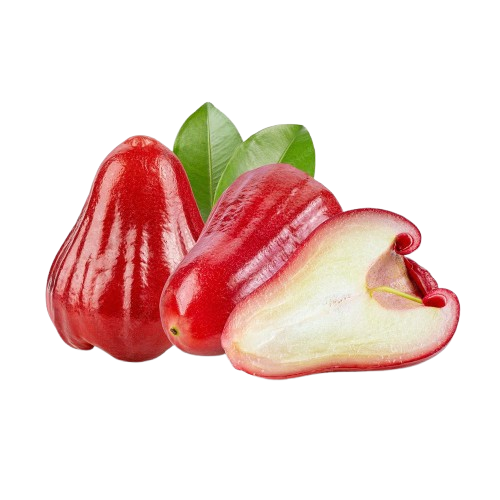
Rose apple is a bell-shaped tropical fruit with a waxy skin and watery flesh, used in Southeast Asian cuisines. There are 25 rose apple calories per 100 g (3.5 oz) of the fresh raw fruit. Frequently referred to by names such as wax apple, java apple, chomphu, or water apple, this fruit is significantly less energy-dense than mangoes or bananas due to its high water content (>90%). A small 70 g rose apple fruit provides 18 calories, while a large 135 g (4.8 oz) fruit offers 34 calories. According to rose apple nutrition facts, a 100 g (3.5 oz) portion provides 5.7 g of carbohydrates, 0.6 g of protein, and 0.3 g of fat. The primary health benefits of consuming this fruit include its ability to regulate blood sugar levels through the compound jambosine and its immune-boosting Vitamin C content. Research by Carr and Maggini (2017), "Vitamin C and Immune Function," highlights the importance of the fruit's antioxidant profile.
Common types include the deep red Chomphu Phet (Diamond) and the pale green Chomphu Kiao. It is utilized in refreshing desserts such as the Rose Apple in Syrup at After You Dessert Cafe and the Mixed Fruit Shaved Ice at Meet Fresh. Savory main dishes featuring the fruit include the Rose Apple & Shrimp Salad at The Blind Goat and the Crispy Catfish with Rose Apple at Nara Thai Cuisine.
The origin of the rose apple is the Malay Archipelago, where it has been cultivated for millennia before spreading to India and the Americas. Global production is led by Thailand, which produced 370.00 kt in 2024, followed by Indonesia at 345.00 kt. Consumption is highest in Indonesia and Thailand, where the fruit is a daily staple. The retail price for one kilogram of fresh rose apples has risen from $1.50 USD in 2005 to $5.50 USD in 2024.
The recommended daily intake is 100 g (3.5 oz), which contributes 25 calories in rose apple to a standard adult diet. To burn these calories, an average woman weighing 70 kg (154 lbs) must engage in 7 minutes of moderate walking at 5 km/h (3 mph), while an average man weighing 84 kg (185 lbs) would require approximately 6 minutes. For those consuming a spicy Yam Polamai salad containing 280 calories, the energy expenditure requires 79 minutes of moderate walking for a woman and 66 minutes for a man.
Rose Apple nutrition
| Stats | Weight |
|---|---|
| Carbs | 5.7 grams |
| Protein | 0.6 grams |
| Fats | 0 grams |
| Sugars | 6 grams |
- Large Rose Apple Calories (Nutritional Facts)
- Medium Rose Apple Calories (Nutritional Facts)
- Small Rose Apple Calories (Nutritional Facts)
- Raw Rose Apple Nutrition
- Sodium in Rose Apple
- Potassium in Rose Apple
- Sugar in Rose Apple
- Fiber in Rose Apple
- Protein in Rose Apple
- Carbs in Rose Apple
- Fat in Rose Apple
- Vitamins in Rose Apple
- Minerals in Rose Apple
Large Rose Apple Calories (Nutritional Facts)
A large fresh rose apple fruit, weighing 135 g (4.8 oz), contains 34 calories. This portion provides 0.4 g of total fat, 0.8 g of protein, 7.7 g of carbohydrates, and 0 g of added sugar. A large fruit delivers 29 mg of Vitamin C.
A medium rose apple fruit, weighing 100 g (3.5 oz), contains 25 calories. This serving offers 0.3 g of total fat, 0.6 g of protein, 5.7 g of carbohydrates, and naturally occurring fruit sugars. A medium fruit provides 123 mg of potassium.
A small rose apple fruit, weighing 70 g (2.5 oz), contains 18 calories. This portion consists of 0.2 g of total fat, 0.4 g of protein, 4 g of carbohydrates, and minimal sugar. A small fruit provides 1 g of dietary fiber.
A 100 g (3.5 oz) serving of raw rose apple pulp provides 25 calories, 0.3 g of total fat, 0.6 g of protein, 5.7 g of total carbohydrates, and 1.5 g of dietary fiber. Raw rose apple is a hydrating tropical fruit rich in Vitamin C, potassium, and antioxidants. The nutrient density is higher in the fresh fruit compared to pickled or preserved versions which often contain added sodium or sugar.
Rose apple contains 1 mg of sodium per 100 g (3.5 oz) serving, which contributes 0% of the Daily Value (DV). This extremely low sodium content makes the fruit suitable for heart-healthy diets.
Rose apple serves as a source of potassium, providing 123 mg per 100 g (3.5 oz) serving, which represents 3% of the DV. This mineral helps regulate fluid balance and nerve signals.
Rose apple contains naturally occurring sugars, primarily fructose and glucose. The fruit is generally less sweet than apples or pears, with a mild, floral sweetness.
Rose apple provides 1.5 g of dietary fiber per 100 g (3.5 oz) serving, fulfilling 5% of the DV. The fiber content aids in digestive health and helps regulate cholesterol levels.
Rose apple provides 0.6 g of protein per 100 g (3.5 oz) serving.
Rose apple contains 5.7 g of total carbohydrates per 100 g (3.5 oz) serving.
Rose apple contains 0.3 g of total fat per 100 g (3.5 oz) serving. The fruit is naturally virtually fat-free.
A 100 g (3.5 oz) serving of raw rose apple provides 22.3 mg of Vitamin C (25% DV). It also contains significant amounts of Vitamin A and Niacin.
A 100 g (3.5 oz) serving of raw rose apple provides 29 mg of Calcium (2% DV), 5 mg of Magnesium (1% DV), and 0.1 mg of Iron (1% DV). It also delivers trace amounts of Zinc and Copper.
Get a Custom Report on Rose Apple Nutrition Data – Contact Us!
What are the Types of Rose Apple?
There are 3 main commercial categories of Rose Apple varieties such as the Red, Green, and White cultivars. The table below shows the most common Rose Apple types and their calorie information.
| Type | Description | Calories (per 100 g / 3.5 oz) | Calorie Differences & Qualifications |
|---|---|---|---|
|
Red Rose Apple (Chomphu)
|
The most common variety; crisp, sweet, and juicy. | 25 | The baseline for standard nutritional values. |
|
Green Rose Apple
|
Smaller, elongated fruit; slightly more acidic. | 25 | Identical calories; often used in salads. |
|
White/Pale Rose Apple
|
Milder flavor; often larger and less sweet. | 22 | Slightly lower sugar density due to higher water content. |
What are the Desserts with Rose Apple?
Rose apple is a refreshing ingredient in Southeast Asian desserts, where its crisp texture and mild sweetness complement tropical fruits and coconut milk. It is often served fresh or in light syrups rather than baked into heavy pastries, as shown below.
| Dish Name | Calories | Type | Carbs | Sugar | Protein | Fat | Cuisine | Restaurants |
|---|---|---|---|---|---|---|---|---|
|
Rose Apple in Syrup
|
140 | Fruit Dessert | 34g | 28g | 1g | 0g | Thai | After You Dessert Cafe |
|
Mixed Fruit Shaved Ice
|
280 | Frozen | 62g | 54g | 2g | 1g | Taiwanese | Meet Fresh |
|
Fresh Fruit Platter
|
90 | Fruit Plate | 22g | 18g | 1g | 0g | Asian | Tim Ho Wan |
|
Rose Apple Sorbet
|
120 | Frozen | 30g | 26g | 0g | 0g | Artisanal | Guss Dam Good (Bangkok) |
|
Tropical Fruit Salad
|
110 | Fruit Cup | 28g | 22g | 1g | 0g | Thai | Greyhound Cafe |
|
Chilled Rose Apple Jelly
|
130 | Jelly | 32g | 26g | 1g | 0g | Cantonese | Lei Garden |
What are the Main Dishes with Rose Apple?
The most widely known main dishes that contain rose apples are Thai Spicy Fruit Salad (Yam Polamai) and Vietnamese Green Rose Apple Salad. In savory applications, the fruit adds a crunchy texture and subtle sweetness that balances spicy and sour dressings. The table below lists the nutritional facts for popular savory entrees and salads that incorporate rose apple:
| Dish Name | Calories | Type | Carbs | Sugar | Protein | Fat | Cuisine | Restaurants |
|---|---|---|---|---|---|---|---|---|
|
Yam Polamai (Spicy Fruit Salad)
|
280 | Salad | 34g | 22g | 8g | 12g | Thai | Somtum Der |
|
Rose Apple & Shrimp Salad
|
320 | Salad | 24g | 14g | 22g | 16g | Vietnamese | The Blind Goat |
|
Rojak (Fruit Salad with Shrimp Paste)
|
380 | Salad | 42g | 28g | 12g | 18g | Malaysian | PappaRich |
|
Crispy Catfish with Rose Apple
|
540 | Seafood | 38g | 12g | 32g | 34g | Thai | Nara Thai Cuisine |
|
Rose Apple Som Tum
|
210 | Salad | 32g | 18g | 6g | 8g | Thai | Zap Ver |
What Cuisines Prefer Rose Apple the Most?
Rose apple is a defining element of Thai, Vietnamese, Malaysian, and Indonesian cuisines. In Thailand, it is a staple snack fruit often eaten with prik gleua (chili and salt) or used in spicy salads. In Vietnam, it is a common dessert fruit. Malaysian and Indonesian cuisines utilize it in Rojak, a spicy fruit salad. The table below outlines the specific culinary contexts and dishes where rose apple is a prominent featured element.
| Cuisine | Dish Name | Calories | Restaurants |
|---|---|---|---|
|
Thai
|
Yam Polamai | 280 | Somtum Der |
|
Vietnamese
|
Rose Apple Salad | 320 | The Blind Goat |
|
Malaysian
|
Rojak | 380 | PappaRich |
|
Thai Dessert
|
Rose Apple in Syrup | 140 | After You Dessert Cafe |
|
Modern Thai
|
Crispy Catfish with Rose Apple | 540 | Nara Thai Cuisine |
Which Countries Produce the Most Rose Apples?
The top producers of rose apple globally are Thailand, Indonesia, Taiwan, Vietnam, and Malaysia. In 2022, Thailand produced an estimated 350.00 kilotonnes of rose apples, dominating the export market for premium varieties like the Thub Thim Chan. Taiwan is renowned for its intensive cultivation of the high-value "Black Pearl" wax apple. Production is concentrated in tropical lowlands with abundant water supply. The table below displays estimated production volumes for the primary regions where rose apple is a specialized commercial crop.
| Country | 2005 | 2006 | 2007 | 2008 | 2009 | 2010 | 2011 | 2012 | 2013 | 2014 | 2015 | 2016 | 2017 | 2018 | 2019 | 2020 | 2021 | 2022 | 2023 | 2024 |
|---|---|---|---|---|---|---|---|---|---|---|---|---|---|---|---|---|---|---|---|---|
| Thailand | 210 | 225 | 240 | 255 | 270 | 285 | 260 | 290 | 305 | 320 | 335 | 310 | 340 | 355 | 365 | 330 | 340 | 350 | 360 | 370 |
| Indonesia | 180 | 190 | 200 | 210 | 220 | 230 | 240 | 250 | 260 | 270 | 280 | 290 | 300 | 310 | 320 | 325 | 330 | 335 | 340 | 345 |
| Taiwan | 85 | 90 | 95 | 100 | 105 | 110 | 115 | 120 | 125 | 130 | 135 | 140 | 145 | 150 | 155 | 158 | 160 | 162 | 165 | 168 |
| Vietnam | 60 | 65 | 70 | 75 | 80 | 85 | 90 | 95 | 100 | 105 | 110 | 115 | 120 | 125 | 130 | 135 | 140 | 145 | 150 | 155 |
| Malaysia | 40 | 42 | 45 | 48 | 50 | 52 | 55 | 58 | 60 | 62 | 65 | 68 | 70 | 72 | 75 | 78 | 80 | 82 | 85 | 88 |
Which Countries Consume the Most Rose Apples?
Based on regional agricultural reports, the top consumers of rose apple are Indonesia, Thailand, Vietnam, Taiwan, and the Philippines. Consumption is calculated by the domestic utilization of fresh fruit in local markets. Indonesia consumes the majority of its own production, valuing the fruit as a thirst-quenching snack. Taiwan has a high per capita consumption of premium gift-grade wax apples. The table below represents the apparent food supply and utilization of rose apple products in these leading nations.
| Country | 2005 | 2006 | 2007 | 2008 | 2009 | 2010 | 2011 | 2012 | 2013 | 2014 | 2015 | 2016 | 2017 | 2018 | 2019 | 2020 | 2021 | 2022 | 2023 | 2024 |
|---|---|---|---|---|---|---|---|---|---|---|---|---|---|---|---|---|---|---|---|---|
| Indonesia | 178 | 188 | 198 | 208 | 218 | 228 | 238 | 248 | 258 | 268 | 278 | 288 | 298 | 308 | 318 | 323 | 328 | 333 | 338 | 343 |
| Thailand | 190 | 200 | 210 | 220 | 230 | 240 | 220 | 245 | 255 | 265 | 275 | 255 | 280 | 290 | 300 | 270 | 280 | 290 | 300 | 310 |
| Vietnam | 58 | 63 | 68 | 73 | 78 | 83 | 88 | 93 | 98 | 103 | 108 | 113 | 118 | 123 | 128 | 133 | 138 | 143 | 148 | 153 |
| Taiwan | 70 | 74 | 78 | 82 | 86 | 90 | 94 | 98 | 102 | 106 | 110 | 114 | 118 | 122 | 126 | 128 | 130 | 132 | 134 | 136 |
| Philippines | 25 | 27 | 29 | 31 | 33 | 35 | 37 | 39 | 41 | 43 | 45 | 47 | 49 | 51 | 53 | 55 | 57 | 59 | 61 | 63 |
How Do Prices of Rose Apple-including Dishes Change?
Menu prices for dishes that feature rose apples have seen consistent increases due to the fruit's seasonal availability and import costs. The table below compares historical price ranges from the 2015–2017 period with current 2025–2026 market estimates for specific menu items that feature rose apple.
| Restaurant | Dish Name | Old Price Range (2015–2017) | Current Price Range (2025–2026) |
|---|---|---|---|
| Somtum Der | Yam Polamai (Spicy Fruit Salad) | $8.50 - $10.00 | $12.95 - $15.50 |
| The Blind Goat | Rose Apple & Shrimp Salad | $11.00 - $13.00 | $16.00 - $18.50 |
| PappaRich | Rojak (Fruit Salad) | $7.95 - $9.50 | $11.50 - $13.50 |
| After You Dessert Cafe | Rose Apple in Syrup | $5.50 - $6.95 | $8.50 - $10.00 |
| Nara Thai Cuisine | Crispy Catfish with Rose Apple | $14.50 - $16.50 | $21.00 - $24.50 |
| Greyhound Cafe | Tropical Fruit Salad | $6.50 - $8.00 | $9.95 - $11.95 |
What is the Rose Apple Calorie for 100 Grams?
One hundred grams (3.5 oz) of raw rose apple fruit contains 25 calories.
What is the Rose Apple Calorie for 1 KG?
One kilogram (1,000 g or 35.3 oz) of raw rose apple fruit contains 250 calories.
What is the Calorie of 1 Rose Apple?
One standard medium rose apple fruit weighing 100 g (3.5 oz) contains 25 calories. A large fruit weighing 135 g (4.8 oz) contains 34 calories. A small fruit weighing 70 g (2.5 oz) contains 18 calories.
What are the Health Benefits of Rose Apple?
Rose apple provides some health benefits like boosting immune function and supporting digestion due to its high concentration of Vitamin C and dietary fiber. This fruit, frequently called "wax apple," "java apple," "chomphu," or "water apple," is a staple in Southeast Asian and Indian traditional medicine. A list of the health benefits of rose apples is shown below.
- Boosts Immune System: A 100 g (3.5 oz) serving provides 22.3 mg of Vitamin C, fulfilling 25% of the Daily Value (DV). A study by Carr and Maggini (2017), "Vitamin C and Immune Function," confirms that high intake of Vitamin C supports various cellular functions of both the innate and adaptive immune systems.
- Promotes Digestive Health: The 1.5 g of dietary fiber per 100 g (3.5 oz) serving supports regular bowel movements and gut microbiome balance.
- Regulates Blood Sugar: Compounds in the fruit, such as jambosine, may help regulate the conversion of starch to sugar, potentially aiding in diabetes management.
- Supports Heart Health: The potassium and fiber content help regulate blood pressure and cholesterol levels.
- Hydrates the Body: With a water content of over 90%, rose apple helps maintain hydration and flush out toxins.
- Protects Against Oxidative Stress: The fruit contains flavonoids and phenolic compounds that neutralize free radicals.
- Enhances Skin Health: Vitamin C supports collagen synthesis and protects skin cells from UV damage.
- Antimicrobial Properties: Extracts from the leaves and bark have been shown to possess antimicrobial activity against certain bacteria.
What are the Downsides of Rose Apple?
Rose apple has been known to cause some unwanted effects like potential toxicity from seeds and pesticide exposure due to its thin skin and seed composition. A list of the downsides of rose apple is shown below.
- Toxicity of Seeds: The seeds contain trace amounts of cyanide-like compounds and should not be consumed in large quantities.
- Pesticide Residue: The thin, edible skin can retain pesticide residues if not grown organically or washed thoroughly.
- Risk of Perishability: The fruit bruises easily and has a short shelf life, making it difficult to store for long periods.
- Potential for Allergic Reaction: Individuals with allergies to the Myrtaceae family (guava, eucalyptus) may experience cross-reactivity.
- Digestive Discomfort: Excessive consumption of the fibrous fruit can lead to bloating or gas in sensitive individuals.
Is Rose Apple Good for You?
Yes, rose apple is good for you because it delivers 25% of the DV for Vitamin C and essential hydration in every 100 g (3.5 oz) serving. Healthy individuals should consume 100 g (3.5 oz) to 200 g (7 oz) of this fruit per day to gain immune and digestive benefits. The major benefits include the support of blood sugar regulation through jambosine and the reduction of oxidative stress. It is an ideal low-calorie, nutrient-dense fruit for those seeking a refreshing, hydrating snack.
How Do Calories Change According to Rose Apple Types?
The calories in rose apples do not vary significantly between color varieties, as most cultivars contain approximately 22 to 25 calories per 100 g (3.5 oz). The primary difference lies in the sugar-to-acid ratio; darker red varieties tend to be sweeter and may contain marginally more natural sugars than the paler green or white types. Processed forms are rare, but candied or pickled rose apples would have a significantly higher caloric density due to added sugar or syrup.
What is the Origin of Rose Apple?
The origin of the rose apple (Syzygium samarangense) is the Malay Archipelago and the Greater Sunda Islands. It has been cultivated in Southeast Asia for thousands of years and was introduced to India and the Pacific Islands in ancient times. The fruit gets its name from the distinct floral aroma of some varieties, particularly the Syzygium jambos, though the wax apple (Syzygium samarangense) is the most commercially common.
The fruit was introduced to the Caribbean and Central America in the 18th century, where it is known as pomarrosa or manzana de agua. Today, Thailand, Indonesia, and Taiwan are the world's largest producers of high-quality cultivars like the "Black Pearl" wax apple.
Explore More Fruits
Discover more Fruits with detailed nutrition facts, calorie counts, vitamins, minerals, and health benefits. Compare similar foods, serving sizes, macronutrients, and key nutrients to find the best option for your diet and nutrition goals.
 Acai calories
 Acerola calories
 Ambarella calories
 Amla calories
 Apple calories
 Apricot calories
 Avocado calories
 Babaco calories
 Bael Fruit calories
 Banana calories
 Black Grapes calories
 Blackcurrant calories