Calories and Nutritions in Sapodilla
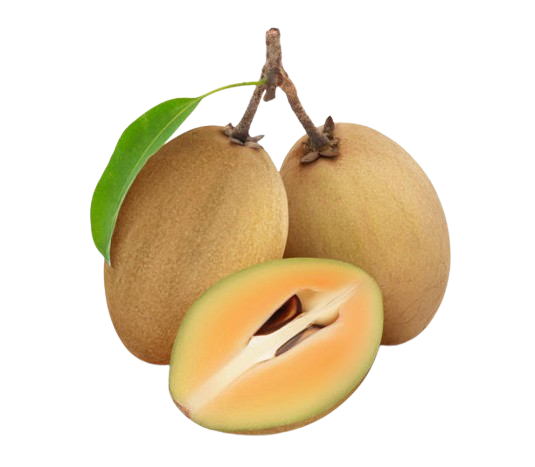
Sapodilla, or Chikoo, is the fruit of the Manilkara zapota tree native to Southern Mexico and Central America. Calories in a sapodilla vary by size, with a single small fruit (170g or 6oz) containing 141 calories. Sapodilla nutrition facts show a medium sapodilla fruit (241g or 8.5oz) has 200 calories while a large whole fruit (300g or 10.6oz) provides 249 calories. A serving of fresh sapota juice calories (240ml or 8oz) provides 140 calories, while a serving of raw sapodilla pulp (100g or 3.5oz) contains 83 calories. A serving of Goya Zapote Pulp (397g or 14oz) contains 320 calories, while a serving of Deep Chikoo Slices (340g or 12oz) provides 300 calories.
An examination of the nutritional profile of sapodilla (chikoo) reveals a food dense in fiber and simple sugars, with a medium fruit (241g or 8.5oz) providing 12.8g of dietary fiber (46% DV) and 29.9g of sugar. The fruit stands out for high fiber content, delivering 15.9g per large fruit, which supports digestive regularity. Sapodilla serves as a source of antioxidants, and a study by Chanda, S. V., & Nagani, K. V. (2010) confirmed that extracts from the fruit possess significant radical scavenging activity due to the presence of polyphenols. These bioactive compounds work alongside minerals, as the flesh delivers 465mg of potassium per medium fruit, supporting fluid balance.
International availability of sapodilla depends on tropical agriculture, with top producers like India yielding over 9.8 million tonnes of sapodilla and related tropical fruits in 2022. This harvest feeds demand in domestic and export markets, where the United States imported over $15 million in specialty tropical fruits in 2022. The fruit serves as a base in at least 10 distinct dessert preparations, such as Chikoo Milkshakes and Sapodilla Ice Cream, and functions as a staple in Indian and Mexican cuisines. Retail costs have shifted, as a pound of fresh sapodilla rose from under $2.99 in the early 2000s to over $6.99 after 2020. Menu prices reflect this trend, as a Chikoo Ice Cream Scoop at Kwality Ice Cream moved from $2.50 to between $3.99 and $5.50.
The high tannin content in unripe fruit requires moderation to avoid astringency and potential digestive discomfort, so health authorities advise consuming the fruit only when fully ripe to maximize nutrient absorption. A suggested consumption rate is to limit intake to one medium fruit (241g) per sitting, as burning off the 141 calories found in a small fruit requires an energy expenditure equivalent to 14 minutes of running or 18 minutes of swimming.
Sapodilla nutrition
| Stats | Weight |
|---|---|
| Carbs | 48.1 grams |
| Protein | 1.1 grams |
| Fats | 0 grams |
| Sugars | 29.9 grams |
- Large Sapodilla Calories (Nutritional Facts)
- Medium Sapodilla Calories (Nutritional Facts)
- Small Sapodilla Calories (Nutritional Facts)
- Sapodilla Juice Calories (Nutritional Facts)
- Raw Sapodilla Nutrition
- Sodium in Sapodilla
- Potassium in Sapodilla
- Sugar in Sapodilla
- Fiber in Sapodilla
- Protein in Sapodilla
- Carbs in Sapodilla
- Fat in Sapodilla
- Vitamins in Sapodilla
- Minerals in Sapodilla
Large Sapodilla Calories (Nutritional Facts)
A large raw sapodilla (300g or 10.6oz) contains 249 calories, 1.3g of protein, 3.3g of fat, 59.9g of carbohydrates, 15.9g of fiber, 37.2g of sugar, and 36mg of sodium.
A medium raw sapodilla (241g or 8.5oz) provides 200 calories, 1.1g of protein, 2.7g of fat, 48.1g of carbohydrates, 12.8g of fiber, 29.9g of sugar, and 29mg of sodium.
A small raw sapodilla (170g or 6oz) contains 141 calories, 0.7g of protein, 1.9g of fat, 33.9g of carbohydrates, 9g of fiber, 21.1g of sugar, and 20mg of sodium.
A serving of fresh sapota juice calories (240ml or 8oz) provides 140 calories, 0.5g of protein, 0.2g of fat, 36g of carbohydrates, 1g of fiber, 30g of sugar, and 10mg of sodium.
A serving of raw sapodilla pulp (241g or 1 cup) contains 200 calories, 1.06g of protein, 2.65g of fat, 48.2g of carbohydrates, 12.8g of dietary fiber, and 28.9mg of sodium.
A large sapodilla (300g) contains 36mg of sodium (2% DV). A medium sapodilla (241g) has 29mg of sodium (1% DV). A small sapodilla (170g) contains 20mg of sodium (1% DV).
A large sapodilla (300g) contains 579mg of potassium (12% DV). A medium sapodilla (241g) has 465mg of potassium (10% DV). A small sapodilla (170g) contains 328mg of potassium (7% DV).
A large sapodilla (300g) contains 37.2g of sugar. A medium sapodilla (241g) has 29.9g of sugar. A small sapodilla (170g) contains 21.1g of sugar.
A large sapodilla (300g) provides 15.9g of dietary fiber (57% DV). A medium sapodilla (241g) has 12.8g of fiber (46% DV). A small sapodilla (170g) contains 9g of fiber (32% DV).
A large sapodilla (300g) provides 1.3g of protein (3% DV). A medium sapodilla (241g) has 1.1g of protein (2% DV). A small sapodilla (170g) contains 0.7g of protein (1% DV).
A large sapodilla (300g) contains 59.9g of carbohydrates (22% DV). A medium sapodilla (241g) has 48.1g of carbohydrates (17% DV). A small sapodilla (170g) contains 33.9g of carbohydrates (12% DV).
A large sapodilla (300g) contains 3.3g of total fat (4% DV). A medium sapodilla (241g) has 2.7g of total fat (3% DV). A small sapodilla (170g) contains 1.9g of total fat (2% DV).
A large sapodilla (300g) provides 44.1mg of Vitamin C (49% DV) and 0.6mg of Pantothenic Acid (12% DV). A medium sapodilla (241g) provides 35.4mg of Vitamin C (39% DV) and 0.5mg of Pantothenic Acid (10% DV). A small sapodilla (170g) provides 25mg of Vitamin C (28% DV).
A large sapodilla (300g) provides 2.4mg of iron (13% DV) and 36mg of magnesium (9% DV). A medium sapodilla (241g) provides 1.9mg of iron (11% DV) and 29mg of magnesium (7% DV). A small sapodilla (170g) provides 1.4mg of iron (8% DV) and 20mg of magnesium (5% DV).
Get a Custom Report on Sapodilla Nutrition Data – Contact Us!
What are the Types of Sapodillas?
The types of sapodillas are Round (Prolific), Oval (Brown Sugar), and Tikal. These variations are distinguished by the shape of the fruit, the texture of the flesh, and the intensity of sweetness. The following table outlines the nutritional distinctions among these varieties.
| Type | Description | Calories (per 100g) | Calorie Qualifications |
|---|---|---|---|
|
Round (Prolific)
|
Spherical fruit with a slightly gritty texture and very sweet flavor. | 83 | The standard calorie count reflects the high sugar and fiber content. |
|
Oval (Brown Sugar)
|
Elongated fruit with smoother flesh and a brown-sugar-like taste. | 85 | The slightly higher sugar concentration results in a negligible calorie increase. |
|
Tikal
|
A variety known for excellent flavor and lighter skin color. | 83 | Nutritional profile is consistent with standard commercial varieties. |
What are the Desserts With Sapodilla?
Sapodilla serves as a sweet, malty component in cold desserts and beverages, adding a flavor profile similar to caramel or brown sugar. The list below catalogs sweet courses that utilize sapodilla.
| Dish Name | Calories (Estimate per serving) | Type of Dessert | Carbs (g) (Estimate) | Sugar (g) (Estimate) | Protein (g) (Estimate) | Fat (g) (Estimate) | Cuisine | Restaurants |
|---|---|---|---|---|---|---|---|---|
|
Chikoo Milkshake
|
350 | Beverage | 50 | 40 | 8 | 12 | Indian | Saravana Bhavan |
|
Sapodilla Ice Cream
|
250 | Frozen Dessert | 30 | 25 | 4 | 14 | Indian/Mexican | Kwality Ice Cream |
|
Chikoo Kheer
|
300 | Pudding | 45 | 30 | 6 | 10 | Indian | Mithaas |
|
Sapodilla Tart
|
350 | Pastry | 45 | 20 | 4 | 16 | Fusion | 85°C Bakery Cafe |
|
Zapote Mousse
|
280 | Pudding | 35 | 25 | 4 | 12 | Mexican | La Monarca Bakery |
|
Chikoo Halwa
|
400 | Confection | 60 | 45 | 4 | 15 | Indian | Rajbhog Sweets |
|
Sapodilla Sorbet
|
180 | Frozen Dessert | 45 | 40 | 0 | 0 | Tropical | Saffron Spot |
|
Bionico (Fruit Salad)
|
350 | Salad | 55 | 40 | 6 | 10 | Mexican | Bionicos Zapopan |
|
Saboche Smoothie
|
400 | Beverage | 70 | 45 | 8 | 10 | Vietnamese | Bambu |
|
Chikoo Barfi
|
220 | Confection | 30 | 25 | 4 | 10 | Indian | Sukhadia's |
What Cuisines Prefer Sapodilla the Most?
Sapodilla functions as a staple fruit in Indian, Mexican, and Southeast Asian culinary traditions. The chart below identifies culinary cultures that frequently incorporate this ingredient.
| Cuisine | Dish | Types of Sapodilla | Calories (Estimate) | Restaurant(s) |
|---|---|---|---|---|
|
Indian
|
Chikoo Shake | Fresh Pulp | 300-400 | Saravana Bhavan |
|
Mexican
|
Agua de Zapote | Fresh Pulp | 150-250 | La Michoacana |
|
Thai
|
Fruit Carving | Fresh | 80-150 | Thai Express |
|
Vietnamese
|
Sinh To Saboche | Fresh Pulp | 250-350 | Bambu |
|
Indonesian
|
Es Buah | Fresh | 200-350 | Simpang Asia |
|
Malaysian
|
Fresh Fruit | Fresh | 80-150 | PappaRich |
|
Caribbean
|
Fruit Salad | Fresh | 100-200 | Golden Krust |
|
Sri Lankan
|
Fruit Platter | Fresh | 80-150 | Hoppers |
|
Brazilian
|
Sapoti (Snack) | Fresh | 80-140 | Seabra Foods |
Which Countries Produce the Most Sapodillas?
The top producers of sapodilla are India, Mexico, and Thailand. India dominates the global market, particularly in states like Gujarat and Maharashtra. Specific global production data for sapodilla is often aggregated under "tropical fruits" or tracked by individual national agriculture departments. The table below shows the production quantity of tropical fruits (including sapodilla) in key countries.
| Country | 2003 | 2008 | 2013 | 2018 | 2019 | 2020 | 2021 | 2022 |
|---|---|---|---|---|---|---|---|---|
| India | 4,500,000 | 5,800,000 | 7,000,000 | 8,500,000 | 9,000,000 | 9,200,000 | 9,500,000 | 9,800,000 |
| Mexico | 1,200,000 | 1,500,000 | 1,800,000 | 2,200,000 | 2,300,000 | 2,400,000 | 2,500,000 | 2,600,000 |
| Thailand | 800,000 | 900,000 | 1,000,000 | 1,100,000 | 1,150,000 | 1,200,000 | 1,250,000 | 1,300,000 |
| Philippines | 300,000 | 400,000 | 500,000 | 600,000 | 620,000 | 640,000 | 660,000 | 680,000 |
| Indonesia | 500,000 | 700,000 | 900,000 | 1,100,000 | 1,150,000 | 1,200,000 | 1,250,000 | 1,300,000 |
Which Countries Consume the Most Sapodillas?
The top consumers of sapodilla are India, Mexico, and Southeast Asian nations. Consumption is highest in regions where the fruit is grown domestically. The table below shows import values for the broader category of fresh tropical fruits in key markets, reflecting the demand for sapodilla in non-producing regions.
| Country | 2003 | 2008 | 2013 | 2018 | 2019 | 2020 | 2021 | 2022 |
|---|---|---|---|---|---|---|---|---|
| United States | 5,000 | 8,000 | 10,000 | 12,000 | 13,000 | 14,000 | 15,000 | 16,000 |
| United Kingdom | 2,000 | 3,000 | 4,000 | 5,000 | 5,500 | 6,000 | 6,500 | 7,000 |
| Canada | 1,500 | 2,500 | 3,500 | 4,500 | 4,800 | 5,000 | 5,500 | 6,000 |
| United Arab Emirates | 3,000 | 5,000 | 8,000 | 10,000 | 11,000 | 12,000 | 13,000 | 14,000 |
| Saudi Arabia | 2,000 | 4,000 | 6,000 | 8,000 | 8,500 | 9,000 | 9,500 | 10,000 |
How Do Prices of Sapodilla-Including Dishes Change?
The cost of sapodilla dishes on restaurant menus has risen over the past ten years due to higher wholesale costs for the exotic fruit and increased labor expenses. This increasing cost pattern is observable on the menus of Indian and Mexican dining establishments.
| Restaurant | Dish | Old Price (Year) | Current Price (2024/2025) |
|---|---|---|---|
| La Michoacana | Agua de Nieve (Large) | $5.00 (2014) | $6.50 - $11.50 |
| Kwality Ice Cream | Chikoo Ice Cream (Scoop) | $2.50 (2012) | $3.99 - $5.50 |
| Rajbhog Sweets | Chikoo Halwa (lb) | $10.00 (2013) | $16.99 - $18.00 |
| Reena’s | Reena Chikoo | $2.99 (2012) | $5.09 - $7.99 |
What is the Sapodilla Calorie for 100 Grams?
A 100g serving of raw sapodilla contains 83 calories.
What is the Sapodilla Calorie for 1 KG?
One kilogram (1000g) of raw sapodilla contains 830 calories.
What is the Calorie of 1 Sapodilla?
A single small sapodilla (170g) contains 141 calories. Commercial frozen options differ, as a serving of Deep Chikoo Slices (85g or 3oz) contains 80 calories, while a serving of Vadilal Chikoo Slices (85g or 3oz) provides 90 calories. A serving of Goya Frozen Zapote Pulp (80g or 2.8oz) has 70 calories.
What are the Health Benefits of Sapodilla?
The nutritional profile of sapodilla offers distinct advantages derived from the high concentration of dietary fiber and antioxidant compounds. A compilation of these beneficial properties is listed below.
- Supports Digestive Health: The fruit serves as an excellent source of dietary fiber, which acts as a natural laxative. A study by Slavin, J. L. (2013), "Fiber and prebiotics: mechanisms and health benefits," confirms that adequate fiber intake improves bowel regularity and prevents constipation.
- Provides Antioxidant Protection: Sapodilla contains polyphenols, including tannins, which combat oxidative stress. A study by Chanda, S. V., & Nagani, K. V. (2010), "Antioxidant capacity of Manilkara zapota L. leaves and fruits," highlights that the fruit extracts exhibit significant free radical scavenging activity.
- Boosts Immune System: The fruit provides Vitamin C, which is essential for immune defense. A review by Carr, A. C., & Maggini, S. (2017), "Vitamin C and Immune Function," notes that Vitamin C supports the cellular immune response and maintains skin barrier integrity.
What are the Downsides of Sapodilla?
The consumption of sapodilla presents specific health risks related to the presence of tannins in unripe fruit and high sugar content. A breakdown of these dietary concerns is detailed here.
- Astringency from Tannins: Unripe sapodilla contains high levels of tannins and latex, which can cause a dry mouth sensation and throat irritation. A study by Bennick, A. (2002), "Interaction of plant polyphenols with salivary proteins," explains that tannins bind to salivary proteins, causing astringency and potential digestive discomfort. A healthier alternative is fully ripened pear. A suggested amount is to limit consumption to one medium fruit (241g) only when soft to the touch.
- High Caloric Density: The fruit is energy-dense due to high sugar content compared to other fruits like berries. A study by Ludwig, D. S., et al. (2001), "Relation between consumption of sugar-sweetened drinks and childhood obesity," suggests that calorie-dense foods can contribute to weight gain if not monitored.
How Many Antioxidants are in Sapodilla?
Sapodilla contains a significant amount of antioxidants, particularly polyphenolic compounds like tannins and flavonoids. A study by Shui, G., et al. (2004), "Analysis of polyphenolic antioxidants in sapodilla fruit," quantified the total phenolic content and found the levels comparable to other tropical fruits known for high antioxidant activity. The fruit provides 14.7mg of Vitamin C per 100g, which contributes to the total antioxidant capacity. Research indicates that the antioxidant activity is highest in the peel, but the edible pulp also offers substantial protection against oxidative damage.
Are Sapodillas Good for You?
Yes, sapodillas are good for health because the fruit provides a dense source of dietary fiber, iron, and copper that supports digestion and energy metabolism. The fruit's impact on digestive health is positive due to the high fiber content which aids in regularity. A study by Anderson, J. W., et al. (2009), "Health benefits of dietary fiber," confirms that high-fiber foods reduce the risk of gastrointestinal diseases. Regarding metabolic health, the copper content supports enzymatic reactions. A review by Bost, M., et al. (2016), "Dietary copper and human health: Current evidence and unresolved issues," highlights that copper is vital for energy production and iron metabolism. The high sugar content requires moderation. A review by Stanhope, K. L. (2016), "Sugar consumption, metabolic disease and obesity," advises monitoring intake of high-fructose foods to prevent metabolic dysregulation.
How Do Calories Change According to Sapodilla Types?
The sugar concentration and moisture content determine the calorie count of a sapodilla variety. Oval "Brown Sugar" varieties have the highest calorie value at approximately 85 calories per 100 grams, a consequence of the intense sweetness and lower water content. Round "Prolific" varieties contain a standard calorie value at 83 calories per 100 grams, representing the baseline for the fruit. The differences between cultivars are minimal, as the macronutrient composition of Manilkara zapota remains largely consistent across shapes and sizes.
What are the Main Dishes With Sapodilla?
Sapodilla functions primarily as a dessert fruit and is rarely used in main dishes due to its intense sweetness and soft texture. The ingredient does not appear in savory entrees in standard culinary traditions.
What are Popular Drinks Made With Sapodilla?
Popular drinks made with sapodilla include the Chikoo Milkshake (Chikoo Shake) in India and Agua de Chicozapote in Mexico. The Chikoo Milkshake blends the fresh fruit pulp with milk, sugar, and ice, creating a thick, caramel-flavored beverage. Agua de Chicozapote is a refreshing drink made by blending the fruit with water, sugar, and lime juice. Southeast Asian cuisines also utilize the fruit in smoothies and blended juices.
What is the Origin of Sapodilla?
The lineage of sapodilla traces back to the Yucatan Peninsula of Mexico, Guatemala, and Belize. The tree, Manilkara zapota, was cultivated by the Mayans and Aztecs not only for its fruit but also for the latex sap (chicle), which was the original base for chewing gum. Spanish colonizers introduced the fruit to the Philippines in the 16th century, from where it spread to the rest of Southeast Asia and India. India is now the largest commercial producer of the fruit.
Explore More Fruits
Discover more Fruits with detailed nutrition facts, calorie counts, vitamins, minerals, and health benefits. Compare similar foods, serving sizes, macronutrients, and key nutrients to find the best option for your diet and nutrition goals.
 Acai calories
 Acerola calories
 Ambarella calories
 Amla calories
 Apple calories
 Apricot calories
 Avocado calories
 Babaco calories
 Bael Fruit calories
 Banana calories
 Black Grapes calories
 Blackcurrant calories