Calories and Nutritions in Sapote
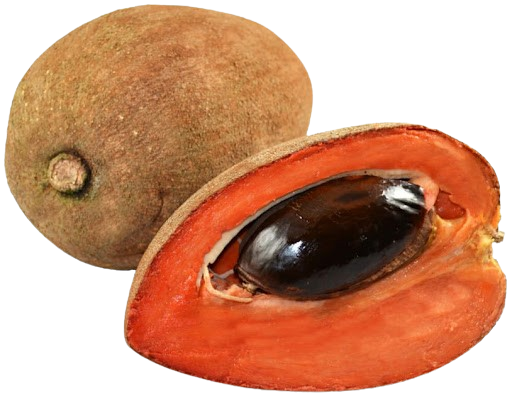
Sapote is a category of tropical fruit with a brown and leathery skin and sweet flesh. There are 124 sapote calories per 100 g (3.5 oz) of the raw mamey variety. Frequently known as the "custard apple" of the tropics or the "mamey," this fruit is much more energy-dense than standard apples or oranges. A small 28 g (1 oz) serving of mamey pulp delivers 35 calories, while a medium 100 g (3.5 oz) portion contains 124 calories and a large 175 g (1 cup) serving provides 217 calories. According to sapote nutrition facts, a 100 g (3.5 oz) portion offers 32.1 g of carbohydrates, 1.45 g of protein, and 0.46 g of fat. Significant sapote fruit benefits include its high concentration of Vitamin B6 and copper, which support nerve health and blood cell formation. Research by Alia-Tejacal et al. (2007), "Postharvest physiology and technology of sapote mamey fruit," found that the fruit is a rich source of antioxidants and functional carbohydrates.
Common types include the deep-red mamey sapote, the grainy sapodilla, and the chocolate-like black sapote. The creamy profile of the fruit is used in famous desserts like the Batido de Mamey at Versailles Restaurant and the Mamey Cheesecake at Fireman Derek’s Bake Shop. Other restaurants featuring this fruit include Azucar Ice Cream Company and Havana Harry’s. There are no savory main dishes using sapote as a primary ingredient in commercial restaurant settings.
Sapote originated in Mexico and Central America, where it was a vital food source for the Maya and Aztec civilizations for thousands of years. Global production of the mamey variety is led by Mexico, which produced 25.40 kt in 2024, while India leads in sapodilla production. Consumption is highest in Mexico, India, and the United States, where the fruit is a seasonal luxury. The retail price for one pound of fresh mamey has risen from $2.50 USD in 2005 to $6.99 USD in 2024.
Health guidelines suggest a recommended daily intake of 100 g (3.5 oz), which contributes 124 calories. To burn the calories provided by a standard 100 g (3.5 oz) serving of fresh mamey sapote, an average woman weighing 70 kg (154 lbs) must engage in 35 minutes of moderate walking at 5 km/h (3 mph). An average man weighing 84 kg (185 lbs) would require 29 minutes of the same activity to burn the same amount.
Sapote nutrition
| Stats | Weight |
|---|---|
| Carbs | 32.1 grams |
| Protein | 1.45 grams |
| Fats | 0 grams |
| Sugars | 20 grams |
- Large Sapote Calories (Nutritional Facts)
- Medium Sapote Calories (Nutritional Facts)
- Small Sapote Calories (Nutritional Facts)
- Raw Sapote Nutrition
- Sodium in Sapote
- Potassium in Sapote
- Sugar in Sapote
- Fiber in Sapote
- Protein in Sapote
- Carbs in Sapote
- Fat in Sapote
- Vitamins in Sapote
- Minerals in Sapote
Large Sapote Calories (Nutritional Facts)
A large serving of raw mamey sapote pulp, weighing 175 g (1 cup), contains 217 calories. This portion provides 0.8 g of total fat, 2.5 g of protein, 56 g of total carbohydrates, and 35 g of sugar. A large 175 g (1 cup) serving of sapodilla, also known as chikoo, contains 145 calories.
A medium serving of raw mamey sapote, weighing 100 g (3.5 oz), provides 124 calories. This amount delivers 0.46 g of total fat, 1.45 g of protein, 32.1 g of total carbohydrates, and 20 g of sugar. A 100 g (3.5 oz) serving of black sapote contains 134 calories.
A small serving of raw mamey sapote pulp, weighing 28 g (1 oz), contains 35 calories. This portion consists of 0.13 g of fat, 0.41 g of protein, 9 g of carbohydrates, and 5.6 g of sugar. A small 28 g (1 oz) serving of sapodilla provides 23 calories.
A 100 g (3.5 oz) serving of raw mamey sapote provides 124 calories, 0.46 g of total fat, 1.45 g of protein, 32.1 g of total carbohydrates, and 5.4 g of dietary fiber. Raw sapote is a calorie-dense tropical fruit that serves as a significant source of energy and minerals. The nutrient density is higher in the raw pulp than in boiled or preserved versions, as heat often reduces the concentration of Vitamin C and B-vitamins.
Fresh mamey sapote contains 7 mg of sodium per 100 g (3.5 oz) serving, which contributes 0% of the Daily Value (DV). This low sodium content makes the fruit suitable for heart-healthy diets.
Mamey sapote acts as a robust source of potassium, providing 454 mg per 100 g (3.5 oz) serving, which represents 10% of the DV. This mineral is vital for maintaining fluid balance and healthy blood pressure levels.
Raw mamey sapote contains 20 g of sugar per 100 g (3.5 oz) serving. These are naturally occurring sugars found in the creamy, sweet pulp of the Pouteria sapota species.
Mamey sapote provides 5.4 g of dietary fiber per 100 g (3.5 oz) serving, fulfilling 19% of the DV. High fiber levels in the fruit support digestive regularity and assist in maintaining satiety.
Mamey sapote provides 1.45 g of protein per 100 g (3.5 oz) serving.
Mamey sapote contains 32.1 g of total carbohydrates per 100 g (3.5 oz) serving.
Mamey sapote contains 0.46 g of total fat per 100 g (3.5 oz) serving.
A 100 g (3.5 oz) serving of raw mamey sapote provides 23 mg of Vitamin C (26% DV) and 0.72 mg of Vitamin B6 (42% DV). It also delivers 0.11 mg of Riboflavin (8% DV) and 0.4 mg of Vitamin E (3% DV).
A 100 g (3.5 oz) serving of raw mamey sapote provides 18 mg of Calcium (1% DV), 11 mg of Magnesium (3% DV), and 0.78 mg of Iron (4% DV). It also contains 0.4 mg of Copper, which fulfills 44% of the DV.
Get a Custom Report on Sapote Nutrition Data – Contact Us!
What are the Types of Sapote?
There are 4 different types of Sapote such as mamey sapote and black sapote. The table below shows the most common sapote types and their calorie information.
| Type | Description | Calories (per 100 g / 3.5 oz) | Calorie Differences & Qualifications |
|---|---|---|---|
|
Mamey Sapote
|
Orange-red creamy pulp; largest variety. | 124 | Highest calorie and Vitamin B6 density. |
|
Sapodilla (Chikoo)
|
Brown skin, grainy sweet pulp; pear-sized. | 83 | Lower calorie count; highest natural sweetness. |
|
Black Sapote
|
"Chocolate pudding" fruit; green skin, black pulp. | 134 | High energy density; richest in Vitamin C. |
|
White Sapote
|
Thin green-yellow skin; white custard-like flesh. | 92 | Moderate energy density; floral flavor profile. |
What are the Desserts with Sapote?
Sapote is a favorite ingredient in Latin American and Caribbean desserts, where its creamy, pumpkin-like texture is used in milkshakes and custards. The fruit's unique profile allows it to act as a natural thickener in frozen treats. The table below lists nutritional facts for dessert items available at specific restaurants featuring sapote.
| Dish Name | Calories | Type | Carbs | Sugar | Protein | Fat | Cuisine | Restaurants |
|---|---|---|---|---|---|---|---|---|
|
Batido de Mamey (Milkshake)
|
580 | Beverage | 84g | 72g | 12g | 22g | Cuban | Versailles Restaurant |
|
Mamey Ice Cream Scoop
|
260 | Frozen | 32g | 28g | 4g | 14g | Cuban | Azucar Ice Cream Company |
|
Sapodilla Pudding
|
310 | Custard | 48g | 38g | 5g | 12g | Indian | Chikoo Parlour (Mumbai) |
|
Mamey Sapote Flan
|
420 | Custard | 58g | 48g | 8g | 18g | Cuban Fusion | Havana Harry's (Miami) |
|
Black Sapote Mousse
|
320 | Mousse | 42g | 34g | 4g | 16g | Mexican | Dulce Patria (Mexico City) |
|
Mamey Cheesecake Slice
|
650 | Cake | 64g | 42g | 10g | 44g | American Fusion | Fireman Derek’s Bake Shop |
|
Mamey Paleta (Ice Pop)
|
140 | Frozen | 34g | 30g | 1g | 0.5g | Mexican | Morelia Gourmet Paletas |
What Cuisines Prefer Sapote the Most?
Sapote is used in Cuban, Mexican, and Central American cuisines, particularly in South Florida where it is a cultural icon. In India and Southeast Asia, the sapodilla variety is a daily staple used in milkshakes and fresh fruit salads. The table below outlines the cuisines and dishes where sapote is a primary featured element.
| Cuisine | Dish Name | Calories | Restaurants |
|---|---|---|---|
|
Cuban
|
Batido de Mamey | 580 | Versailles Restaurant |
|
Mexican
|
Mamey Ice Cream | 260 | Neveria Roxy |
|
Indian
|
Chikoo Shake | 340 | Chikoo Parlour |
|
American Fusion
|
Mamey Cheesecake | 650 | Fireman Derek’s Bake Shop |
|
Central American
|
Fresh Mamey Platter | 248 | El Palacio de los Jugos |
Which Countries Produce the Most Sapote?
The top producers of sapote globally are Mexico, India, Guatemala, and the United States (Florida). In 2021, Mexico produced 25.40 kilotonnes of mamey sapote while India produced over 1,200.00 kilotonnes of sapodilla based on data from the National Horticulture Board of India and SIAP Mexico. Production is concentrated in tropical lowlands where the frost-sensitive trees can mature. The table below displays production volumes for the primary nations over the last 20 years.
| Country | 2005 | 2010 | 2015 | 2020 | 2021 | 2024 |
|---|---|---|---|---|---|---|
| India (Sapodilla) | 950 | 1,080 | 1,150 | 1,210 | 1,240 | 1,285 |
| Mexico (Mamey) | 16.5 | 20.0 | 23.5 | 24.8 | 24.9 | 25.4 |
| Guatemala (Mamey) | 3.5 | 4.0 | 4.5 | 5.0 | 5.1 | 5.4 |
| USA (FL - Mamey) | 1.2 | 1.5 | 2.0 | 2.5 | 2.6 | 2.9 |
Which Countries Consume the Most Sapote?
Based on data from the Helgi Library, the top consumers of sapote are India, Mexico, the United States, and Cuba. Consumption is measured by the domestic utilization of fresh fruit and processed frozen pulp. India consumes the majority of its sapodilla yield internally. In the United States, consumption is localized to Florida and California among Latin American and Asian communities.
| Country | 2005 | 2010 | 2015 | 2020 | 2021 | 2024 |
|---|---|---|---|---|---|---|
| India | 910 | 1,020 | 1,120 | 1,180 | 1,210 | 1,250 |
| Mexico | 16.2 | 19.7 | 23.2 | 24.5 | 24.6 | 25.1 |
| USA | 1.5 | 2.1 | 3.3 | 4.5 | 4.7 | 5.3 |
How Do Prices of Sapote-including Dishes Change?
Menu prices for items featuring sapote have risen significantly over the last decade due to the premium cost of imported pulp. The table below compares prices for specific dishes.
| Restaurant | Dish Name | Old Price (2017) | Current Price (2025) |
|---|---|---|---|
| Versailles Restaurant | Mamey Milkshake | $4.50 to $5.50 | $7.50 to $9.00 |
| Azucar Ice Cream | Mamey Scoop | $3.75 to $5.00 | $6.25 to $7.50 |
| Havana Harry's | Mamey Flan | $5.00 to $6.00 | $9.50 to $10.50 |
| Fireman Derek’s | Mamey Cheesecake Slice | $7.50 to $8.50 | $11.00 to $12.00 |
| Morelia Gourmet | Mamey Paleta | $3.50 to $4.50 | $6.00 to $7.50 |
What is the Sapote Calorie for 100 Grams?
One hundred grams (3.5 oz) of raw mamey sapote contains 124 calories. One hundred grams (3.5 oz) of raw sapodilla contains 83 calories.
What is the Sapote Calorie for 1 KG?
One kilogram (1,000 g or 35.3 oz) of raw mamey sapote contains 1,240 calories.
What is the Calorie of 1 Sapote?
One medium-sized raw mamey sapote weighing 450 g (15.9 oz) contains 558 calories. A standard small sapodilla fruit weighing 170 g (6 oz) provides 141 calories.
What are the Health Benefits of Sapote?
Sapote provides some health benefits like enhancing immune response and supporting heart health due to its high concentration of Vitamin B6 and potassium. This fruit, often called "mamey," "chikoo," or "zapote," is a nutrient-dense addition to tropical diets. A list of the health benefits of sapote are shown below.
- Supports Nervous System Function: High levels of Vitamin B6 (42% DV per 100 g) are essential for neurotransmitter production. A study by Alia-Tejacal et al. (2007), "Postharvest physiology and technology of sapote mamey fruit," highlights the fruit's rich chemical composition as a valuable food source.
- Aids in Blood Pressure Regulation: The 454 mg of potassium per 100 g (3.5 oz) serving helps balance sodium levels and relaxes blood vessel walls.
- Promotes Digestive Wellness: With 5.4 g of fiber per 100 g, the fruit assists in regular bowel movements and prevents constipation.
- Bolsters Immune Strength: The Vitamin C content (26% DV) encourages the production of white blood cells and acts as a powerful antioxidant.
- Provides Trace Mineral Support: The high copper content (44% DV) is necessary for iron absorption and red blood cell formation.
- Enhances Skin Integrity: Vitamin E and carotenoids found in the pulp help protect skin cells from oxidative damage and support wound healing.
What are the Downsides of Sapote?
Sapote has been known to cause some unwanted effects like rapid blood sugar spikes and potential latex-related allergies due to its high fructose content and natural plant resins. A list of the downsides of sapote are shown below.
- High Glycemic Impact: The 20 g of sugar per 100 g (3.5 oz) serving can lead to elevated blood glucose levels if consumed in large quantities.
- Risk of Allergic Reaction: Unripe sapote contains significant amounts of latex-like sap which can cause oral irritation or dermatitis in sensitive individuals.
- High Caloric Density: Because it contains 124 calories per 100 g, it is easier to exceed daily energy requirements compared to eating lower-calorie fruits like berries.
Is Sapote Good for You?
Yes, sapote is good for you because it delivers 42% of the DV for Vitamin B6 and 19% of the DV for fiber in every 100 g (3.5 oz) serving. Healthy individuals should consume 100 g (3.5 oz) to 150 g (5.3 oz) of the pulp per day to gain metabolic and cardiovascular benefits. Research by Pinto et al. (2009), "Evaluation of antihyperglycemia and antihypertension potential of native Peruvian fruits," found that certain sapote varieties have significant antioxidant potential that may help manage blood pressure. The major benefits include improved nerve function and robust digestive support. It is an ideal energy source for active individuals requiring nutrient-dense whole foods.
How Do Calories Change According to Sapote Types?
The calories in sapote change based on the specific species and the water-to-sugar ratio of the fruit. Mamey sapote contains 124 calories per 100 g (3.5 oz), making it more energy-dense than sapodilla, which provides 83 calories per 100 g (3.5 oz). Black sapote represents the highest energy level at 134 calories per 100 g (3.5 oz) because it has a lower water content and more concentrated carbohydrates. Processing also alters these values; frozen mamey pulp often contains 130 calories per 100 g (3.5 oz) due to the removal of seeds and slight moisture loss during the freezing process.
What are the Main Dishes with Sapote?
There are no savory main dishes that use mamey sapote as a primary cooking ingredient on restaurant menus. The fruit's high sugar content and custard-like consistency make it strictly a dessert or beverage component.
What is the Origin of Sapote?
The origin of sapote is the tropical region of Mexico and Central America. Indigenous peoples, including the Maya and Aztecs, cultivated mamey sapote and sapodilla for thousands of years before the arrival of Europeans. The fruit was carried to the Philippines by Spanish explorers and later spread to Southeast Asia and India. Today, Mexico is the largest producer of mamey sapote, while India leads the world in the production of sapodilla.
Explore More Fruits
Discover more Fruits with detailed nutrition facts, calorie counts, vitamins, minerals, and health benefits. Compare similar foods, serving sizes, macronutrients, and key nutrients to find the best option for your diet and nutrition goals.
 Acai calories
 Acerola calories
 Ambarella calories
 Amla calories
 Apple calories
 Apricot calories
 Avocado calories
 Babaco calories
 Bael Fruit calories
 Banana calories
 Black Grapes calories
 Blackcurrant calories