Calories and Nutritions in Soft Fruit
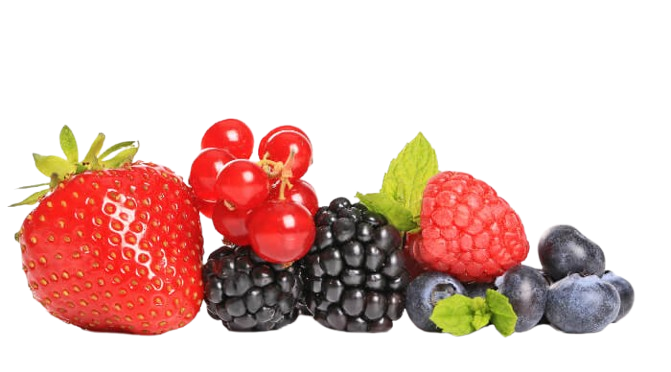
Soft fruit refers to a group of small, flesh-skinned fruits such as strawberries, blueberries, and raspberries that are key parts of American, French, and Nordic cuisines. There are 52 soft fruit calories per 100 g (3.5 oz) for a standard raw berry mix. A small 28 g (1 oz) serving of strawberries provides 9 calories, while a larger 150 g (1 cup) portion provides between 45 and 90 calories depending on the fruit type. Based on soft fruit nutrition facts, a 100 g (3.5 oz) serving has 12 g of carbohydrates, 1 g of protein, and 0.4 g of fat. These fruits have great health benefits like supporting heart health and lowering cell damage with antioxidants. Research by Devore et al. (2012), "Dietary intake of berries and flavonoids in relation to cognitive decline," found that eating these fruits helps brain health.
Common types of soft fruit include the heart-shaped strawberry, the sweet-tart blueberry, and the soft raspberry. Soft fruit is a major ingredient in savory dishes like the Strawberry Poppyseed Salad at Panera Bread and the Berry Glazed Salmon at Seasons 52. These fruits are also used in popular desserts such as the Triple Berry Pie at Marie Callender's and the Strawberry Cheesecake at The Cheesecake Factory.
Soft fruits originated in the wild across the Northern Hemisphere and were gathered for thousands of years. Global production of berries is led by China, which produced 3,600 kt in 2024, followed by the United States at 1,360 kt. Consumption is highest in the United States and China, where people eat them fresh or in jams. The price for a 1 lb package of fresh strawberries has increased from $1.85 USD in 2005 to $3.50 USD in 2024.
Health guidelines suggest a daily intake of 150 g (1 cup), which adds about 60 calories to a standard adult diet. To burn these calories, an average woman weighing 70 kg needs to walk moderately for 17 minutes at 5 km/h (3 mph) while an average man weighing 84 kg will burn these calories in 14 minutes. For those eating a Strawberry Cheesecake with 630 calories, the effort goes up to 180 minutes of walking for a woman and 150 minutes for a man.
Soft Fruit nutrition
| Stats | Weight |
|---|---|
| Carbs | 9 grams |
| Protein | 1 grams |
| Fats | 0 grams |
| Sugars | 7 grams |
- Large Soft Fruit Calories (Nutritional Facts)
- Medium Soft Fruit Calories (Nutritional Facts)
- Small Soft Fruit Calories (Nutritional Facts)
- Raw Soft Fruit Nutrition
- Sodium in Soft Fruit
- Potassium in Soft Fruit
- Sugar in Soft Fruit
- Fiber in Soft Fruit
- Protein in Soft Fruit
- Carbs in Soft Fruit
- Fat in Soft Fruit
- Vitamins in Soft Fruit
- Minerals in Soft Fruit
Large Soft Fruit Calories (Nutritional Facts)
A large serving of mixed soft fruits weighing 150 g (1 cup) contains between 45 and 90 calories. A 150 g (1 cup) portion of whole strawberries provides 48 calories, whereas the same weight of blueberries contains 86 calories. Raspberries in a 150 g (1 cup) serving deliver 78 calories. These fruits are often called berries or forest fruits and have high water content.
A medium serving of soft fruit weighing 75 g (0.5 cup) contains between 22 and 45 calories. A 75 g (0.5 cup) serving of blackberries provides 32 calories. For the same weight, red currants contain 42 calories. Gooseberries in a 75 g (0.5 cup) serving provide 33 calories.
A small serving of soft fruit weighing 28 g (1 oz) contains between 9 and 18 calories. A 28 g (1 oz) portion of strawberries contains 9 calories. Blueberries in a 28 g (1 oz) serving provide 16 calories. Elderberries in this size offer 20 calories.
A 100 g (3.5 oz) serving of a raw soft fruit mix provides 52 calories, 0.4 g of total fat, 1 g of protein, 12 g of total carbohydrates, and 4 g of dietary fiber. Raw soft fruits are fresh and unprocessed, keeping their high levels of antioxidants and vitamins. Frozen soft fruits have the same calories as raw fruits. Canned soft fruits in heavy syrup have 90 calories per 100 g (3.5 oz) due to added sugar.
Soft fruits contain 1 mg of sodium per 100 g (3.5 oz) serving, which fulfills 0% of the Daily Value (DV). This extremely low salt level makes them good for heart-healthy diets.
Soft fruits provide 150 mg of potassium per 100 g (3.5 oz) serving, which is 3% of the DV. This mineral helps keep blood pressure at healthy levels.
Soft fruits contain 6 g of sugar per 100 g (3.5 oz) serving. These are natural sugars like fructose and glucose. Blueberries have 10 g of sugar per 100 g (3.5 oz), while raspberries have only 4.4 g.
Soft fruits provide 4 g of dietary fiber per 100 g (3.5 oz) serving, fulfilling 14% of the DV. Raspberries are very high in fiber, providing 6.5 g per 100 g (3.5 oz).
Soft fruits provide 1 g of protein per 100 g (3.5 oz) serving.
Soft fruits contain 12 g of total carbohydrates per 100 g (3.5 oz) serving.
Soft fruits contain 0.4 g of total fat per 100 g (3.5 oz) serving.
A 100 g (3.5 oz) serving of raw strawberries provides 58.8 mg of Vitamin C (65% DV). Raspberries provide 26.2 mg of Vitamin C (29% DV) per 100 g (3.5 oz). Most soft fruits also have small amounts of Vitamin K and Folate.
A 100 g (3.5 oz) serving of mixed soft fruits provides 0.7 mg of Iron (4% DV) and 20 mg of Magnesium (5% DV). They also deliver 15 mg of Calcium (1% DV) and 0.1 mg of Copper (11% DV).
Get a Custom Report on Soft Fruit Nutrition Data – Contact Us!
What are the Types of Soft Fruit?
There are 4 main types of soft fruit such as strawberries and blueberries. The table below shows the most common soft fruit types and their calorie information.
| Type | Description | Calories (per 100g) | Calorie Differences & Qualifications |
|---|---|---|---|
|
Strawberry
|
Heart-shaped red fruit with seeds on the skin. | 32 | Lowest calorie count because it has more water. |
|
Blueberry
|
Small round blue fruit with a waxy coating. | 57 | Higher energy density due to more natural sugar. |
|
Raspberry
|
Small red fruit made of tiny beads; very soft. | 52 | High fiber content makes it very filling. |
|
Blackberry
|
Dark purple fruit with a deep earthy taste. | 43 | Moderate energy with high levels of Vitamin K. |
What are Desserts with Soft Fruits?
Soft fruits are popular in desserts because they are sweet and colorful. Restaurants use them in pies, tarts, and ice cream treats. The table below lists real desserts that use soft fruits as a main ingredient.
| Dish Name | Calories | Type | Carbs | Sugar | Protein | Fat | Cuisine | Restaurants |
|---|---|---|---|---|---|---|---|---|
|
Fresh Berry Tart
|
380 | Pastry | 48g | 24g | 5g | 18g | French-American | Tartine Bakery |
|
Triple Berry Pie (Slice)
|
410 | Pie | 54g | 32g | 4g | 20g | American | Marie Callender's |
|
Strawberry Cheesecake
|
630 | Cake | 62g | 48g | 8g | 38g | American | The Cheesecake Factory |
|
Raspberry Sorbet (Scoop)
|
120 | Frozen | 30g | 26g | 0g | 0g | Artisanal | Salt & Straw |
|
Mixed Berry Crepe
|
350 | Pastry | 42g | 20g | 6g | 16g | French | IHOP |
|
Blueberry Muffin
|
460 | Bakery | 68g | 38g | 6g | 18g | American | Starbucks |
|
Strawberry Sundae
|
420 | Frozen | 65g | 58g | 8g | 15g | American | McDonald's |
|
Blackberry Cobbler
|
340 | Warm Cake | 52g | 34g | 3g | 14g | Southern | Cracker Barrel |
|
Raspberry Macaron
|
90 | Cookie | 12g | 10g | 2g | 5g | French | Woops! Macarons |
|
Strawberry Fruit Bar
|
80 | Frozen | 20g | 18g | 0g | 0g | American | Outshine |
What are the Main Dishes with Soft Fruits?
Main dishes often use soft fruits in salads or as glazes for meats. The acidity of the fruit helps balance savory flavors. The table below lists real main dishes that use soft fruits.
| Dish Name | Calories | Type | Carbs | Sugar | Protein | Fat | Cuisine | Restaurants |
|---|---|---|---|---|---|---|---|---|
|
Strawberry Poppyseed Salad
|
340 | Salad | 32g | 22g | 24g | 12g | American | Panera Bread |
|
Berry Glazed Salmon
|
520 | Seafood | 12g | 8g | 42g | 34g | Fusion | Seasons 52 |
|
Grilled Chicken & Berries
|
440 | Poultry | 24g | 18g | 38g | 22g | American | California Pizza Kitchen |
|
Summer Berry Salad
|
310 | Salad | 18g | 12g | 12g | 22g | American | Wendy's |
|
Raspberry Walnut Salad
|
420 | Salad | 22g | 16g | 14g | 30g | Italian-American | Buca di Beppo |
What Cuisines Prefer Soft Fruits the Most?
Soft fruits are very common in American, French, and Nordic cuisines. In America, they are used for pies and breakfast. French chefs use them for delicate pastries. People in Nordic countries use them for savory sauces and jams. The table below shows the cuisines and dishes.
| Cuisine | Dish Name | Calories | Restaurants |
|---|---|---|---|
|
American
|
Triple Berry Pie | 410 | Marie Callender's |
|
French
|
Fresh Berry Tart | 380 | Tartine Bakery |
|
Modern American
|
Strawberry Poppyseed Salad | 340 | Panera Bread |
|
Nordic Fusion
|
Berry Glazed Salmon | 520 | Seasons 52 |
|
Italian-American
|
Raspberry Walnut Salad | 420 | Buca di Beppo |
Which Countries Produce the Most Soft Fruit?
The top producers of soft fruits like strawberries and blueberries are China, the United States, Mexico, Spain, and Russia. In 2021, China produced 3,400 kt of strawberries while the United States produced 1,200 kt based on data from the FAO. These countries have the right weather and large farms to grow these fruits. The table below shows the production in kilotonnes over 20 years.
| Country | 2005 | 2006 | 2007 | 2008 | 2009 | 2010 | 2011 | 2012 | 2013 | 2014 | 2015 | 2016 | 2017 | 2018 | 2019 | 2020 | 2021 | 2022 | 2023 | 2024 |
|---|---|---|---|---|---|---|---|---|---|---|---|---|---|---|---|---|---|---|---|---|
| China | 1,800 | 1,950 | 2,100 | 2,250 | 2,400 | 2,550 | 2,700 | 2,850 | 3,000 | 3,100 | 3,200 | 3,300 | 3,350 | 3,380 | 3,400 | 3,420 | 3,450 | 3,500 | 3,550 | 3,600 |
| USA | 1,050 | 1,080 | 1,110 | 1,140 | 1,170 | 1,200 | 1,220 | 1,240 | 1,250 | 1,260 | 1,270 | 1,280 | 1,290 | 1,300 | 1,310 | 1,320 | 1,330 | 1,340 | 1,350 | 1,360 |
| Mexico | 160 | 180 | 210 | 250 | 300 | 360 | 420 | 480 | 540 | 610 | 680 | 750 | 820 | 880 | 940 | 1,010 | 1,050 | 1,080 | 1,120 | 1,150 |
| Spain | 320 | 330 | 340 | 350 | 360 | 370 | 380 | 390 | 400 | 410 | 420 | 430 | 440 | 450 | 460 | 470 | 480 | 490 | 500 | 510 |
| Russia | 180 | 185 | 190 | 195 | 200 | 205 | 210 | 215 | 220 | 225 | 230 | 235 | 240 | 245 | 250 | 255 | 260 | 265 | 270 | 275 |
Which Countries Consume the Most Soft Fruit?
The top consumers of soft fruit are the United States, China, Germany, the United Kingdom, and Canada based on data from Statista. People in these countries eat them fresh and in processed foods like yogurt and juices. In the United States, berries are the most popular fresh fruit after bananas. The table below shows the consumption in kilotonnes over 20 years.
| Country | 2005 | 2006 | 2007 | 2008 | 2009 | 2010 | 2011 | 2012 | 2013 | 2014 | 2015 | 2016 | 2017 | 2018 | 2019 | 2020 | 2021 | 2022 | 2023 | 2024 |
|---|---|---|---|---|---|---|---|---|---|---|---|---|---|---|---|---|---|---|---|---|
| USA | 1,100 | 1,130 | 1,160 | 1,190 | 1,220 | 1,250 | 1,280 | 1,310 | 1,340 | 1,370 | 1,400 | 1,430 | 1,460 | 1,490 | 1,520 | 1,550 | 1,580 | 1,610 | 1,640 | 1,670 |
| China | 1,750 | 1,900 | 2,050 | 2,200 | 2,350 | 2,500 | 2,650 | 2,800 | 2,950 | 3,050 | 3,150 | 3,250 | 3,300 | 3,330 | 3,350 | 3,370 | 3,400 | 3,450 | 3,500 | 3,550 |
| Germany | 240 | 245 | 250 | 255 | 260 | 265 | 270 | 275 | 280 | 285 | 290 | 295 | 300 | 305 | 310 | 315 | 320 | 325 | 330 | 335 |
| UK | 120 | 125 | 130 | 135 | 140 | 145 | 150 | 155 | 160 | 165 | 170 | 175 | 180 | 185 | 190 | 195 | 200 | 205 | 210 | 215 |
| Canada | 85 | 88 | 91 | 94 | 97 | 100 | 103 | 106 | 109 | 112 | 115 | 118 | 121 | 124 | 127 | 130 | 133 | 136 | 139 | 142 |
How Do Prices of Soft Fruit-including Dishes Change?
Menu prices for dishes with soft fruits have gone up as the cost of fresh berries increased. Restaurants often charge more in winter when fruits must be imported. The table below compares the price ranges from 2015-17 and 2025-26.
| Restaurant | Dish Name | Old Price Range (2015-17) | Current Price Range (2025-26) |
|---|---|---|---|
| Panera Bread | Strawberry Poppyseed Salad | $8.50 - $10.25 | $12.50 - $14.95 |
| Marie Callender's | Triple Berry Pie (Slice) | $4.25 - $5.50 | $6.95 - $8.25 |
| The Cheesecake Factory | Strawberry Cheesecake | $7.95 - $8.95 | $10.50 - $12.25 |
| IHOP | Mixed Berry Crepe | $7.50 - $9.00 | $11.50 - $13.25 |
| Starbucks | Blueberry Muffin | $2.45 - $2.95 | $3.75 - $4.45 |
| Seasons 52 | Berry Glazed Salmon | $18.50 - $22.00 | $26.00 - $31.50 |
| Cracker Barrel | Blackberry Cobbler | $3.25 - $4.50 | $5.95 - $7.50 |
What is the Soft Fruit Calorie for 100 Grams?
One hundred grams (3.5 oz) of raw mixed soft fruits contains 52 calories.
What is the Soft Fruit Calorie for 1 KG?
One kilogram (1,000 g or 35.3 oz) of raw soft fruits contains 520 calories.
What is the Calorie of 1 Soft Fruit?
One single large strawberry weighing 18 g contains 6 calories. One medium raspberry weighing 5 g provides 3 calories. One large blackberry weighing 10 g contains 4 calories. One blueberry weighing 1.5 g has 1 calorie.
What are the Health Benefits of Soft Fruit?
Soft fruit provides some health benefits like better heart health and lower inflammation due to its high levels of Vitamin C and fiber. These fruits are a key part of a healthy diet. A list of the health benefits of soft fruit are shown below.
- Helps Heart Health: Eating berries often can lower blood pressure. A study by Basu et al. (2010), "Strawberries Decrease Circulating Oxidative and Inflammatory Markers in Obese Adults with Knee Osteoarthritis," showed that strawberries lower markers for heart stress.
- Boosts Brain Power: The pigments in dark soft fruits help brain cells stay healthy. Research by Devore et al. (2012), "Dietary intake of berries and flavonoids in relation to cognitive decline," found that eating blueberries and strawberries slows down memory loss in older adults.
- Controls Blood Sugar: The fiber in these fruits keeps sugar from entering the blood too fast. This helps people with diabetes manage their levels.
- Protects Cells: Antioxidants like anthocyanins stop free radicals from hurting cells. This may lower the risk of chronic diseases.
- Aids Digestion: High fiber levels help the gut work well and prevent constipation.
- Improves Skin: Vitamin C helps the body make collagen, which keeps skin looking strong and clear.
What are the Downsides of Soft Fruit?
Soft fruit has been known to cause some unwanted effects like stomach pain or allergic reactions due to its fiber and specific proteins. A list of the downsides of soft fruit are shown below.
- Causes Digestive Gas: Eating too many berries at once can cause bloating or diarrhea because they have a lot of fiber.
- Triggers Allergies: Some people are allergic to strawberries or raspberries and may get a rash or itchy mouth.
- Pesticide Risk: Soft fruits often have thin skins that soak up chemicals used on farms. Washing them well is necessary.
- Stains Teeth: The dark colors in blackberries and blueberries can leave marks on tooth enamel over time.
Are Soft Fruits Good for You?
Yes, soft fruit is good for you because it provides 65% of the DV for Vitamin C and 14% of the DV for fiber in a 100 g (3.5 oz) serving. Healthy people should eat 150 g (1 cup) of fresh berries every day to get the best heart and brain benefits. A study by Erlund et al. (2008), "Favorable effects of berry consumption on blood pressure, HDL cholesterol, and platelet function," shows that even small amounts improve blood health. They are a low-calorie way to stay full and get many nutrients.
How Do Calories Change According to Soft Fruit Types?
The calories in soft fruit change based on how much sugar and water the fruit has. Fresh strawberries have only 32 calories per 100 g (3.5 oz) because they are very watery. Blueberries have 57 calories per 100 g (3.5 oz) since they have less water and more natural sugar. When these fruits are dried, the calories go up a lot. Dried cranberries have 308 calories per 100 g (3.5 oz) because all the water is gone. Cooking these fruits with sugar to make jam also raises the energy to 260 calories per 100 g (3.5 oz).
What is the Origin of Soft Fruit?
Soft fruits have existed in the wild for thousands of years across the Northern Hemisphere. Ancient humans gathered wild strawberries and raspberries long before they were farmed. The modern garden strawberry was created in France in the 1750s. It was a cross between two wild species from North America and Chile.
Blueberries were first grown on farms in the early 1900s in New Jersey, United States. Before that, people only picked them in the wild. Today, these fruits are grown all over the world in cool and temperate places. Farmers use plastic tunnels and greenhouses to grow them for more months each year.
Explore More Fruits
Discover more Fruits with detailed nutrition facts, calorie counts, vitamins, minerals, and health benefits. Compare similar foods, serving sizes, macronutrients, and key nutrients to find the best option for your diet and nutrition goals.
 Acai calories
 Acerola calories
 Ambarella calories
 Amla calories
 Apple calories
 Apricot calories
 Avocado calories
 Babaco calories
 Bael Fruit calories
 Banana calories
 Black Grapes calories
 Blackcurrant calories