Calories and Nutritions in Spelt Flour
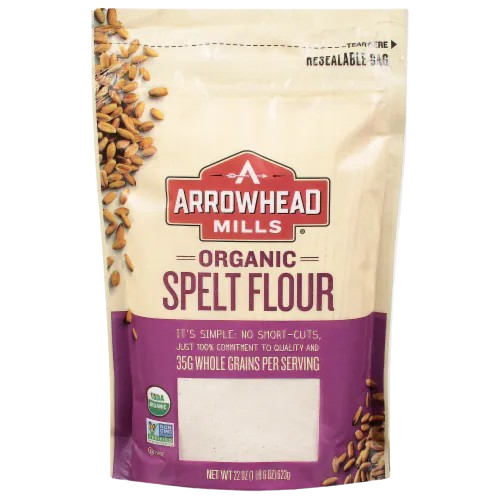
Calories in spelt flour vary based on preparation and serving size. One cup of cooked spelt (194 grams or 6.8 ounces) contains 246 calories while a one-cup serving of raw spelt flour (174 grams or 6.1 ounces) has 588 calories. A 100-gram (3.5 ounce) serving of whole meal spelt flour has 349 calories, while one kilogram of whole meal spelt flour has 3490 calories. A quarter-cup (30g) serving of Bob's Red Mill Spelt Flour contains 110 calories and a 100-gram serving contains 385 calories. A quarter-cup serving of Arrowhead Mills Organic Spelt Flour contains 110 calories, and a one-cup serving has 440 calories.
The spelt flour nutrition facts profile is notable for high fiber, protein, and essential minerals. A one-cup raw serving (174g) delivers 18.6g of fiber (66% DV), 25.4g of protein (51% DV), and 122.1g of carbohydrates (44% DV). A meta-analysis confirmed the link between high fiber intake and improved digestive health (McRae, M. P., 2017). Major health advantages come from the rich supply of manganese and phosphorus, with that same serving providing a high percentage of the DV for manganese and 56% DV for phosphorus to support bone health and energy metabolism.
Common types include whole and white spelt flour, used in dishes like pasta, pizza, and bread at restaurants like True Food Kitchen and Le Pain Quotidien. The grain's popularity is supported by leading wheat producers and consumers like China and India, with Germany being a key spelt producer. Reflecting the grain's rising status, the price has increased significantly over the last 20 years, climbing from under $2.00 per pound in the early 2000s to over $6.00 per pound after 2020.
Primary spelt bread benefits relate to improved digestion from fiber and metabolic support from B vitamins. Spelt flour is not recommended for individuals with celiac disease or gluten sensitivity due to the gluten content, although a small portion is a healthful choice for others. A small quarter-cup serving (30g) provides 110 spelt flour calories, an amount that can be expended through 11 minutes of running or 15 minutes of cycling.
Spelt Flour nutrition
| Stats | Weight |
|---|---|
| Carbs | 70.7 grams |
| Protein | 14.5 grams |
| Fats | 2.54 grams |
| Sugars | 0 grams |
- Large Spelt Flour Calories (Nutritional Facts)
- Medium Spelt Flour Calories (Nutritional Facts)
- Small Spelt Flour Calories (Nutritional Facts)
- Raw Spelt Flour Nutrition
- Sodium in Spelt Flour
- Potassium in Spelt Flour
- Sugar in Spelt Flour
- Fiber in Spelt Flour
- Protein in Spelt Flour
- Carbs in Spelt Flour
- Fat in Spelt Flour
- Vitamins in Spelt Flour
- Minerals in Spelt Flour
Large Spelt Flour Calories (Nutritional Facts)
A large serving of one cup of cooked spelt (194g or 6.8oz) contains 246 calories, 10.7g of protein (21% DV), 1.7g of fat (2% DV), 51.2g of carbohydrates (19% DV), 7.6g of fiber (27% DV), 0g of sugar, and 9.7mg of sodium.
A medium serving of one-half cup of cooked spelt (97g or 3.4oz) provides 123 calories, 5.4g of protein (11% DV), 0.85g of fat (1% DV), 25.6g of carbohydrates (9% DV), 3.8g of fiber (14% DV), 0g of sugar, and 4.9mg of sodium.
A small serving of a quarter-cup of raw spelt flour (30g or 1.1oz) contains 110 calories, 5g of protein (10% DV), 0.5g of fat (1% DV), 22g of carbohydrates (8% DV), 4g of fiber (14% DV), 0g of sugar, and 0mg of sodium.
A one-cup serving of raw spelt flour (174g) contains 588 calories, 4.2g of total fat (5% DV), 0.71g of saturated fat (4% DV), 0mg of cholesterol (0% DV), 13.9mg of sodium (1% DV), 122.1g of total carbohydrates (44% DV), 18.6g of dietary fiber (66% DV), 11.9g of total sugars (24% DV), and 25.4g of protein (51% DV). This serving size also provides 7.7mg of iron (43% DV), 47mg of calcium (4% DV), and 675.1mg of potassium (14% DV).
A large serving of one cup of cooked spelt (194g) contains 9.7mg of sodium. A medium serving of one-half cup of cooked spelt (97g) contains 4.9mg of sodium. A small serving of a quarter-cup of raw spelt flour (30g) contains 0mg of sodium. A one-cup serving of raw spelt flour (174g) contains 13.9mg of sodium (1% DV).
A large serving of one cup of cooked spelt (194g) provides 277mg of potassium (6% DV). A medium serving of one-half cup of cooked spelt (97g) provides 138.5mg of potassium (3% DV). A one-cup serving of raw spelt flour (174g) contains 675.1mg of potassium (14% DV).
A large serving of one cup of cooked spelt (194g) contains 0g of sugar. A medium serving of one-half cup of cooked spelt (97g) contains 0g of sugar. A small serving of a quarter-cup of raw spelt flour (30g) contains 0g of sugar. A one-cup serving of raw spelt flour (174g) contains 11.9g of total sugars.
A large serving of one cup of cooked spelt (194g) contains 7.6g of fiber (27% DV). A medium serving of one-half cup of cooked spelt (97g) contains 3.8g of fiber (14% DV). A small serving of a quarter-cup of raw spelt flour (30g) provides 4g of fiber (14% DV). A one-cup serving of raw spelt flour (174g) has 18.6g of dietary fiber (66% DV).
A large serving of one cup of cooked spelt (194g) has 10.7g of protein (21% DV). A medium serving of one-half cup of cooked spelt (97g) has 5.4g of protein (11% DV). A small serving of a quarter-cup of raw spelt flour (30g) has 5g of protein (10% DV). A one-cup serving of raw spelt flour (174g) contains 25.4g of protein (51% DV).
A large serving of one cup of cooked spelt (194g) contains 51.2g of carbohydrates (19% DV). A medium serving of one-half cup of cooked spelt (97g) contains 25.6g of carbohydrates (9% DV). A small serving of a quarter-cup of raw spelt flour (30g) has 22g of carbohydrates (8% DV). A one-cup serving of raw spelt flour (174g) has 122.1g of total carbohydrates (44% DV).
A large serving of one cup of cooked spelt (194g) contains 1.7g of total fat (2% DV). A medium serving of one-half cup of cooked spelt (97g) contains 0.85g of total fat (1% DV). A small serving of a quarter-cup of raw spelt flour (30g) contains 0.5g of total fat (1% DV). A one-cup serving of raw spelt flour (174g) has 4.2g of total fat (5% DV).
A one-cup serving of cooked spelt (194g) provides 4.99mg of Niacin (31% DV), 0.2mg of Thiamine (17% DV), 0.16mg of Vitamin B6 (9% DV), 25.2mcg of Folate (6% DV), and 0.5mg of Vitamin E (3% DV).
A one-cup serving of cooked spelt (194g) delivers 2.1mg of manganese (91% DV), 291mg of phosphorus (23% DV), 95.1mg of magnesium (23% DV), 2.4mg of zinc (22% DV), and 3.2mg of iron (18% DV). A one-cup serving of raw spelt flour (174g) provides 697.7mg of phosphorus (56% DV), 7.7mg of iron (43% DV), and 47mg of calcium (4% DV).
Get a Custom Report on Spelt Flour Nutrition Data – Contact Us!
What are the Types of Spelt Flours?
The types of spelt flour are whole spelt flour and white spelt flour. These types are defined by the parts of the spelt grain that are included during the milling process. The table below provides a breakdown of these common flour types.
| Type | Description | Calories (Approximate per 100g) | Calorie Qualifications |
|---|---|---|---|
|
Whole Spelt Flour
|
Made by grinding the entire spelt grain, including the bran, germ, and endosperm. Has a darker color and robust, nutty flavor. | 338 | The presence of the high-fiber bran and nutrient-dense germ results in a lower glycemic index and higher nutrient content. |
|
White Spelt Flour
|
Made by milling only the starchy endosperm after the bran and germ have been removed. Has a lighter texture and milder flavor. | 359 | The removal of bran and germ concentrates the carbohydrates, resulting in a slightly higher calorie count and a finer texture suitable for delicate baked goods. |
What are the Desserts With Spelt Flour?
Desserts made with spelt flour offer a nutty flavor and are featured in health-conscious and artisanal bakeries. A summary of dessert options that use spelt flour is provided in the table that follows.
| Dish Name | Calories (Estimate per serving) | Type of Dessert | Carbs (g) (Estimate) | Sugar (g) (Estimate) | Protein (g) (Estimate) | Fat (g) (Estimate) | Cuisine | Restaurants |
|---|---|---|---|---|---|---|---|---|
|
Spelt Chocolate Chip Cookies
|
250-350 | Cookie | 35 | 25 | 4 | 12 | American | Erewhon Market, Flower Child |
|
Spelt Apple Crumble
|
450-600 | Baked Fruit | 70 | 50 | 6 | 18 | British/American | The Smith, Gramercy Tavern |
|
Spelt Banana Bread
|
300-450 | Quick Bread | 50 | 30 | 7 | 10 | American | Le Pain Quotidien, Bluestone Lane |
|
Spelt Brownies
|
350-500 | Bar | 45 | 35 | 5 | 20 | American | By Chloe, Chaumont Vegan |
|
Spelt Carrot Cake
|
500-700 | Cake | 65 | 50 | 8 | 25 | American | True Food Kitchen, Whole Foods Market Bakery |
|
Spelt Scones with Jam
|
400-550 | Pastry | 60 | 20 | 9 | 15 | British | Alice's Tea Cup, Bouchon Bakery |
|
Spelt Pancakes with Maple Syrup
|
500-700 | Breakfast Pastry | 90 | 40 | 12 | 10 | American | The Butcher's Daughter, Sarabeth's |
|
Spelt Waffles
|
450-650 | Breakfast Pastry | 75 | 30 | 11 | 14 | Belgian/American | First Watch, Ellen's Stardust Diner |
|
Spelt Berry Muffins
|
300-450 | Muffin | 55 | 30 | 6 | 8 | American | Maman, Blue Bottle Coffee |
|
Spelt Pear and Almond Tart
|
400-550 | Tart | 50 | 35 | 7 | 22 | French | Dominique Ansel Bakery, Ladurée |
|
Spelt Cinnamon Rolls
|
450-600 | Pastry | 70 | 40 | 8 | 18 | American/Swedish | Cinnaholic, Tartine Bakery |
|
Spelt Zucchini Bread
|
280-400 | Quick Bread | 45 | 25 | 6 | 9 | American | Cafe Gratitude, Gjusta |
|
Spelt Pumpkin Pie
|
400-550 | Pie | 55 | 35 | 7 | 20 | American | Four & Twenty Blackbirds, The Pie Hole |
|
Spelt Shortbread Cookies
|
150-250 (per 2-3 cookies) | Cookie | 20 | 10 | 3 | 8 | Scottish | Tatte Bakery & Café |
|
Spelt Crepes with Nutella
|
400-600 | Crepe | 60 | 40 | 9 | 15 | French | Vive la Crêpe!, Creperie NYC |
What are the Main Dishes With Spelt Flour?
Spelt flour is a versatile ingredient used in hearty main courses, from pasta and bread to pizza crusts, especially in health-focused and European-inspired restaurants. A list of main dishes that feature spelt flour is provided in the following table.
| Dish Name | Calories (Estimate per serving) | Type of Spelt Flour | Carbs (g) (Estimate) | Sugar (g) (Estimate) | Protein (g) (Estimate) | Fat (g) (Estimate) | Cuisine | Restaurants |
|---|---|---|---|---|---|---|---|---|
|
Spelt Pizza with Vegetables
|
600-900 | White or Whole | 80 | 8 | 25 | 20 | Italian-American | True Food Kitchen, PizzaRev |
|
Spelt Pasta with Pesto
|
550-800 | White or Whole | 90 | 5 | 20 | 15 | Italian | Monteverdi Restaurant & Pastificio, L'Artusi |
|
Spelt Bread Sandwich
|
450-700 | Whole | 60 | 7 | 30 | 18 | American | Le Pain Quotidien, Panera Bread |
|
Spelt Gnocchi with Sage Butter
|
600-850 | White | 75 | 4 | 18 | 30 | Italian | Eataly, Uovo |
|
Spelt Flour Tortilla Wraps
|
400-650 | Whole | 50 | 5 | 25 | 15 | Mexican-American | Sweetgreen, Chopt |
|
German Spelt Dumplings (Dinkelknödel)
|
350-500 | White | 55 | 6 | 12 | 10 | German | Schaller's Stube, Zum Schneider |
|
Spelt Fettuccine Alfredo
|
800-1100 | White | 90 | 8 | 25 | 45 | Italian-American | Il Buco, Carbone |
|
Spelt Savory Galette
|
500-750 | Whole | 60 | 8 | 20 | 25 | French | Balthazar, Maman |
|
Spelt Burger Bun
|
400-650 (with patty) | Whole | 45 | 10 | 30 | 20 | American | Bareburger, Veggie Grill |
|
Spelt Flour Fried Chicken Coating
|
500-800 | White | 30 | 2 | 40 | 28 | American (Southern) | Yardbird Southern Table & Bar |
|
Spelt Pretzels (Laugengebäck)
|
300-450 | White | 65 | 3 | 10 | 4 | German | Sigmund's Pretzels, Radegast Hall & Biergarten |
|
Spelt Crackers with Cheese
|
350-500 | Whole | 30 | 2 | 15 | 20 | American | Murray's Cheese Bar, Beecher's Handmade Cheese |
|
Spelt Focaccia Bread
|
250-400 (per slice) | White | 45 | 2 | 8 | 6 | Italian | Sullivan Street Bakery, Eataly |
|
Spelt Pierogi
|
500-700 | White | 70 | 5 | 15 | 20 | Polish | Veselka, Karczma |
|
Spelt Blinis with Smoked Salmon
|
300-450 | White | 30 | 4 | 15 | 15 | Russian/French | Caviar Russe, The Russian Tea Room |
What Cuisines Prefer Spelt Flour the Most?
Spelt flour is a staple in several European culinary traditions, especially those with a history of ancient grain cultivation, and has been adopted by modern health-focused American cuisine. The table below details the culinary traditions that make prominent use of spelt flour.
| Cuisine | Dish | Types of Spelt Flour Used | Calories (Estimate) | Restaurant(s) |
|---|---|---|---|---|
|
German
|
Dinkelbrot (Spelt Bread), Dinkelknödel | Whole, White | 300-500 | Heidelberg Restaurant, Lederhosen |
|
Italian
|
Spelt Pasta, Spelt Pizza Crust, Focaccia | White, Whole | 550-900 | Eataly, Monteverdi Restaurant & Pastificio |
|
American (Health-Focused)
|
Spelt Pancakes, Sandwiches, Cookies | Whole | 400-800 | True Food Kitchen, The Butcher's Daughter |
|
French
|
Savory Galettes, Crepes, Tarts | Whole, White | 400-750 | Balthazar, Dominique Ansel Bakery |
|
British
|
Scones, Apple Crumble | Whole, White | 400-600 | Alice's Tea Cup, Tea & Sympathy |
|
Swiss
|
Spelt Zopf Bread | White | 300-450 (per slice) | New Glarus Bakery, The Chalet at The St. Regis Aspen |
|
Austrian
|
Spelt Kaiserschmarrn (shredded pancake) | White | 500-700 | Wallsé, Café Sabarsky |
|
Polish
|
Spelt Pierogi | White | 500-700 | Veselka, Pierozek |
|
Belgian
|
Spelt Waffles | White | 450-650 | BXL Cafe, Petite Abeille |
|
Russian
|
Spelt Blinis | White | 300-450 | Caviar Russe, Mari Vanna |
Which Countries Produce the Most Spelt Flour?
The top producers of wheat, the grain from which spelt flour is milled, are China, India, and the Russian Federation. Specific global production data for spelt is not tracked separately from the broader "wheat" category by major agricultural organizations. Germany is a notable producer of spelt within Europe. The table below shows the production quantity of wheat in key countries.
| Country | 2003 | 2008 | 2013 | 2018 | 2019 | 2020 | 2021 | 2022 |
|---|---|---|---|---|---|---|---|---|
| China | 86,488,000 | 112,462,000 | 121,932,000 | 131,441,000 | 133,596,000 | 134,250,000 | 136,946,000 | 137,720,000 |
| India | 65,760,000 | 78,570,000 | 93,510,000 | 99,700,000 | 103,600,000 | 107,860,000 | 109,590,000 | 107,740,000 |
| Russian Federation | 34,104,000 | 63,765,000 | 52,090,000 | 72,136,000 | 74,453,000 | 85,896,000 | 76,098,000 | 104,230,000 |
| United States | 63,831,000 | 68,027,000 | 61,733,000 | 51,287,000 | 52,258,000 | 49,691,000 | 44,792,000 | 44,902,000 |
| Germany | 20,776,000 | 25,958,000 | 25,014,000 | 20,263,000 | 23,063,000 | 22,172,000 | 21,496,000 | 22,560,000 |
Which Countries Consume the Most Spelt Flour?
The top consumers of wheat, which includes spelt, are China, India, and the United States. Consumption data is best represented by domestic disappearance or total utilization, measures that account for production, imports, and exports. The table below shows wheat consumption in key markets.
| Country | 2003 | 2008 | 2013 | 2018 | 2019 | 2020 | 2021 | 2022 |
|---|---|---|---|---|---|---|---|---|
| China | 104,028,000 | 108,124,000 | 130,123,000 | 138,591,000 | 142,883,000 | 148,000,000 | 150,500,000 | 152,000,000 |
| India | 68,850,000 | 73,470,000 | 91,610,000 | 97,200,000 | 100,100,000 | 104,250,000 | 106,000,000 | 108,500,000 |
| United States | 32,831,000 | 32,927,000 | 31,733,000 | 31,787,000 | 31,258,000 | 30,691,000 | 30,292,000 | 30,902,000 |
| Russian Federation | 30,104,000 | 35,765,000 | 35,590,000 | 40,136,000 | 41,453,000 | 43,896,000 | 42,598,000 | 45,230,000 |
| Germany | 20,276,000 | 21,458,000 | 20,514,000 | 19,763,000 | 19,563,000 | 19,672,000 | 19,996,000 | 20,060,000 |
How Do Prices of Spelt Flour-Including Dishes Change?
Menu prices for dishes containing spelt flour have climbed over the past decade. This change is a direct result of the fluctuating wholesale cost of the flour, combined with increased expenses for restaurant labor and general operations. Price adjustments are visible on the menus of prominent national and regional restaurants that feature health-conscious ingredients.
| Restaurant | Dish | Old Price (Year) | Current Price (2024/2025) |
|---|---|---|---|
| Le Pain Quotidien | Avocado Toast (on Spelt Bread) | $10.75 (2015) | $17.05 - $17.60 |
| True Food Kitchen | Ancient Grains Bowl (contains spelt) | $16.00 (2016) | $18.50 - $23.00 |
| The Butcher's Daughter | Spelt Pancakes | $14.00 (2014) | $15.00 - $16.00 |
What is the Spelt Flour Calorie for 100 Grams?
A 100-gram (3.5 ounce) serving of uncooked spelt contains 338 calories, while a 100-gram serving of whole meal spelt flour has 349 calories, and a 100-gram serving of cooked spelt provides 127 calories.
What is the Spelt Flour Calorie for 1 KG?
One kilogram (1000g) of uncooked spelt contains 3380 calories, while one kilogram of whole meal spelt flour has 3490 calories.
What is the Calorie Content of 1 Spelt Flour?
A quarter-cup (30g) serving of Bob's Red Mill Spelt Flour contains 110 calories and a 100-gram serving contains 385 calories, while a quarter-cup serving of Arrowhead Mills Organic Spelt Flour contains 110 calories and a one-cup serving has 440 calories.
What are the Health Benefits of Spelt Flour?
Spelt flour offers distinct nutritional advantages centered on digestive wellness, metabolic support, and bone health. The key health benefits of consuming spelt flour are listed here.
- Supports Digestive Health: Whole spelt flour promotes regular bowel movements and supports a healthy gut microbiome by providing nourishment for beneficial bacteria. A study by Anderson, J. W., et al. (2009), "Health benefits of dietary fiber," established the role of fiber in digestive regulation.
- Aids Energy Metabolism: Spelt flour is a rich source of niacin (Vitamin B3), essential for converting food into energy and supporting nervous system function. A review by Kennedy, D. O. (2016), "B Vitamins and the Brain: Mechanisms, Dose and Efficacy—A Review," detailed the critical role of B vitamins as coenzymes in cellular energy production and in the synthesis of neurotransmitters.
- Promotes Bone Health: Spelt flour delivers a substantial amount of manganese, a mineral critical for the formation of healthy bones and connective tissues. A publication from the Linus Pauling Institute at Oregon State University, "Manganese," outlines the mineral's role in the body.
What are the Downsides of Spelt Flour?
Consumption of spelt flour can present health challenges, mainly related to its gluten content and the presence of antinutrients. Potential health risks from consuming spelt flour are detailed here.
- Contains Gluten: The gluten in spelt flour makes the grain unsuitable for people with celiac disease or non-celiac gluten sensitivity, causing digestive distress and inflammation. A study by Biesiekierski, J. R., et al. (2011), "Gluten Causes Gastrointestinal Symptoms in Subjects Without Celiac Disease," confirmed that gluten can cause adverse reactions even in individuals without celiac disease. An alternative with no gluten is buckwheat flour. A suggested amount is to avoid spelt flour completely if a gluten-related disorder is present.
- Reduces Mineral Absorption: Spelt flour contains phytic acid, an antinutrient that can bind to minerals like iron and zinc, reducing absorption in the digestive tract. A review by Schlemmer, U., et al. (2009), "Phytic acid in legumes and cereals," explained how certain compounds affect nutrient uptake. A suitable alternative is to use sprouted spelt flour, which has lower phytic acid levels. A daily suggested amount is to consume spelt flour as part of a varied diet to ensure adequate mineral intake from other sources.
Is Spelt Flour Good for You?
Yes, spelt flour is a beneficial food choice because of the dense concentration of dietary fiber, essential minerals, and B vitamins. Whole spelt flour provides substantial digestive health benefits through its high fiber content, which aids in maintaining bowel regularity and nourishing gut flora. A meta-analysis by McRae, M. P. (2017), "Health Benefits of Dietary Fiber," confirmed the link between high fiber intake and improved digestive health. The grain supports metabolic health and energy production through minerals like manganese and phosphorus, along with B vitamins such as niacin. A review by Tardy, A. L., et al. (2020), "Vitamins and Minerals for Energy, Fatigue and Cognition," details the critical role of these micronutrients in cellular energy pathways.
Spelt flour also supports bone health, as manganese is a cofactor for enzymes involved in bone formation. A study by Straub, D. A. (2007), "Calcium supplementation in clinical practice: a review of forms, doses, and indications," reinforces the importance of minerals like manganese in conjunction with calcium for skeletal integrity. The combination of these nutrients makes whole spelt flour a valuable addition to a balanced diet for individuals without gluten sensitivities.
Is Spelt Flour Inflammatory?
No, spelt flour is not inflammatory for most individuals and may possess anti-inflammatory properties. An inflammatory response occurs in people with gluten-related disorders. For the general population, the fiber and phytonutrients in whole spelt flour can support a healthy inflammatory response. A clinical trial by Kallio, P., et al. (2007), "Dietary carbohydrate modification induces alterations in serum C-reactive protein level in healthy subjects," found that whole-grain rye, which shares properties with spelt, lowered levels of the inflammatory marker C-reactive protein. The presence of gluten, a protein composite, is the source of inflammation for susceptible individuals.
People with celiac disease experience an autoimmune reaction from gluten that damages the small intestine. A study by Fasano, A. (2020), "All disease begins in the (leaky) gut," explains the mechanism by which gluten can increase intestinal permeability and drive inflammation. For those with non-celiac gluten sensitivity, consuming spelt flour can also lead to an inflammatory response, causing symptoms like bloating and fatigue, as documented in a review by Catassi, C., et al. (2017), "Non-Celiac Gluten Sensitivity."
Is Spelt Flour Good for Diabetics?
Yes, whole spelt flour can be a suitable food for individuals with diabetes when consumed in moderation as part of a balanced diet. The high fiber content of whole spelt flour is advantageous for blood sugar management. Fiber slows the digestion and absorption of carbohydrates, leading to a more gradual rise in blood glucose levels after a meal. A series of meta-analyses by Reynolds, A., et al. (2019), "Carbohydrate quality and human health: a series of systematic reviews and meta-analyses," showed that higher intakes of dietary fiber and whole grains were associated with a significant reduction in the incidence of type 2 diabetes. Whole spelt flour also has a lower glycemic index compared to refined white flour, making the ancient grain a better choice for maintaining stable blood sugar.
Research by Jenkins, D. J. A., et al. (1981), "Glycemic index of foods," first established the concept of the glycemic index, demonstrating that different carbohydrate foods have different effects on blood glucose. The magnesium content in spelt flour also plays a role in glucose metabolism and insulin sensitivity. A study by Hruby, A., et al. (2014), "Magnesium intake is inversely associated with risk of type 2 diabetes," found a direct correlation between higher magnesium intake and a lower risk of developing type 2 diabetes.
How Do Calories Change According to Spelt Flour Types?
Changes in calorie content for spelt flour are based on the milling process that produces either whole or white varieties. Whole spelt flour, which contains all parts of the grain, has the lowest calorie value at 338 calories per 100 grams. This lower caloric density is a result of the high-fiber bran and germ content. White spelt flour contains the highest calorie value at 359 calories per 100 grams. The removal of the bran and germ concentrates the starchy endosperm, leading to a slight increase in calories per gram compared to the whole grain version.
Is Sweet Potatoes Gluten Free in Chips and Fries?
Yes, sweet potatoes are naturally gluten-free in their whole, unprocessed form. Sweet potato chips and fries that are made solely from sweet potatoes, oil, and salt do not contain gluten. A risk of gluten exposure comes from cross-contamination during processing and preparation. Commercial chips may be produced in facilities that also process wheat products. Fries from restaurants are often cooked in the same fryers as breaded items like chicken tenders or onion rings, which introduces gluten into the cooking oil and onto the fries. Some frozen or commercially prepared sweet potato fries may also have a wheat-based coating to make them crispier.
What is the Origin of Spelt Flour?
The origin of spelt, a distinct type of wheat known scientifically as Triticum spelta, traces back nearly 7,000 years to the ancient Near East, in the region of modern-day Iran. This ancient grain spread westward across Europe during the Bronze Age, becoming a staple crop in parts of Central Europe, particularly in what is now Germany and Switzerland. Spelt was valued for its hardiness and ability to thrive in cold climates and poor soil conditions where other wheat varieties would fail. The tough outer husk, or hull, protected the kernel from pollutants and insects, preserving the nutrients inside. For centuries, spelt was a primary grain for making bread, such as the dense and nutty German Dinkelbrot. The grain's use declined sharply in the 19th and 20th centuries as farmers shifted to higher-yield, easier-to-harvest bread wheat varieties. A resurgence in popularity began in the late 20th century, driven by the health food movement. Consumers rediscovered spelt for its higher protein and fiber content compared to modern wheat and its rich, nutty flavor, leading to its incorporation into a wide array of modern dishes like pasta, pizza, and pastries.
Explore More Grains
Discover more Grains with detailed nutrition facts, calorie counts, vitamins, minerals, and health benefits. Compare similar foods, serving sizes, macronutrients, and key nutrients to find the best option for your diet and nutrition goals.
 Amaranth calories
 Arborio Rice calories
 Arrowroot Powder calories
 Barley calories
 Basmati Rice calories
 Black Rice calories
 Brown Rice calories
 Buckwheat calories
 Bulgur Wheat calories
 Coconut Flour calories
 Cornmeal calories
 Cornstarch calories