Calories and Nutritions in Surinam Cherry
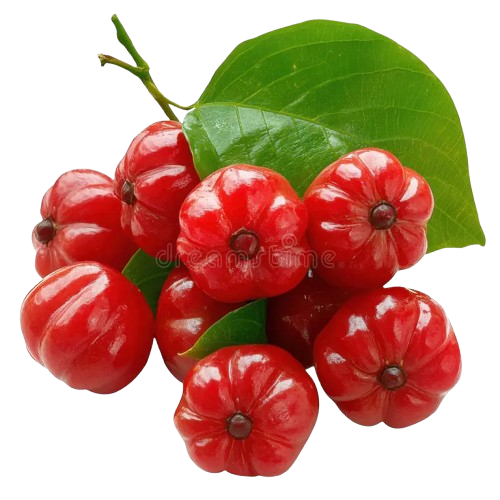
Surinam Cherry is a ribbed pumpkin-shaped berry and a highly popular fruit in Brazilian and Caribbean cuisines. There are 33 surinam cherry calories per 100 g (3.5 oz) of the fresh raw fruit. Also known as pitanga, Brazil cherry, or Cayenne cherry, this fruit is significantly less energy-dense than grapes or bananas due to its high water content. A small 30 g (1 oz) serving of pitanga provides 10 calories, while a 1 cup serving offers 57 calories. According to surinam cherry nutrition facts, a 100 g (3.5 oz) portion provides 7.5 g of carbohydrates, 0.8 g of protein, and 0.4 g of fat. Key health benefits include its high antioxidant capacity driven by lycopene and anthocyanins, and its ability to reduce inflammation. Research by Schmeda-Hirschmann et al. (1987), "Preliminary pharmacological studies on Eugenia uniflora leaves," found that the plant extracts significantly reduce pain and inflammation.
Common types include the tart vermillion (red) variety and the sweeter dark purple-black variety. The resinous and sweet-tart flavor profile of this fruit is utilized in specialty desserts such as the Pitanga Popsicle at Sorvetes Rochinha and the Surinam Cherry Jam by Hawaiian Sun.
The origin of Surinam cherry is the tropical east coast of South America, from Suriname to Southern Brazil, where it has been consumed by indigenous populations for millennia. Global production is led by Brazil, which produced 5.05 kt in 2024. Consumption is highest in Brazil, where the fruit is a primary flavor for juices and frozen treats. The retail price for a 100 g packet of frozen pitanga pulp has risen from $0.50 USD in 2005 to $1.25 USD in 2024.
Health guidelines suggest a recommended daily intake of 100 g (3.5 oz), which contributes 33 calories in surinam cherries to a standard adult diet. To burn the calories provided by this serving size of fresh Surinam cherries, an average woman weighing 70 kg (154 lbs) must engage in 8 minutes of moderate walking at 5 km/h (3 mph), while an average man weighing 84 kg (185 lbs) would require approximately 7 minutes. For those consuming a scoop of Pitanga Sorbet containing 130 calories, the energy expenditure requires 37 minutes of moderate walking for a woman and 31 minutes for a man.
Surinam Cherry nutrition
| Stats | Weight |
|---|---|
| Carbs | 7.5 grams |
| Protein | 0.8 grams |
| Fats | 0 grams |
| Sugars | 6 grams |
- Large Surinam Cherry Calories (Nutritional Facts)
- Medium Surinam Cherry Calories (Nutritional Facts)
- Small Surinam Cherry Calories (Nutritional Facts)
- Raw Surinam Cherry Nutrition
- Sodium in Surinam Cherry
- Potassium in Surinam Cherry
- Sugar in Surinam Cherry
- Fiber in Surinam Cherry
- Protein in Surinam Cherry
- Carbs in Surinam Cherry
- Fat in Surinam Cherry
- Vitamins in Surinam Cherry
- Minerals in Surinam Cherry
Large Surinam Cherry Calories (Nutritional Facts)
A large serving of raw Surinam cherries, weighing 173 g (1 cup), contains 57 calories. This portion provides 0.7 g of total fat, 1.4 g of protein, 13 g of total carbohydrates, and 10 g of sugar. A large 173 g (1 cup) serving of pitted cherries delivers 190% of the Daily Value (DV) for Vitamin C.
A medium serving of fresh Surinam cherries, weighing 100 g (3.5 oz), contains 33 calories. This serving offers 0.4 g of total fat, 0.8 g of protein, 7.5 g of carbohydrates, and 6 g of sugar. A medium 100 g (3.5 oz) portion provides 45 mg of magnesium.
A small serving of raw Surinam cherries, weighing 30 g (1 oz), contains 10 calories. This portion consists of 0.12 g of total fat, 0.24 g of protein, 2.2 g of carbohydrates, and 1.8 g of sugar.
A 100 g (3.5 oz) serving of raw Surinam cherry provides 33 calories, 0.4 g of total fat, 0.8 g of protein, 7.5 g of total carbohydrates, and 0.6 g of dietary fiber. Raw Surinam cherry, also known as pitanga, is exceptionally rich in antioxidants such as lycopene and anthocyanins. The nutrient density is significantly higher in the deep red to purple-black fruit compared to lighter orange varieties which are less ripe.
Surinam cherry contains 3 mg of sodium per 100 g (3.5 oz) serving, which contributes 0% of the Daily Value (DV). This low sodium content makes the fruit suitable for heart-healthy, low-salt diets.
Surinam cherry serves as a source of potassium, providing 103 mg per 100 g (3.5 oz) serving, which represents 2% of the DV. This mineral helps regulate fluid balance and nerve signals.
Surinam cherry contains 6 g of sugar per 100 g (3.5 oz) serving. These are naturally occurring fructose and glucose sugars found within the pulp of the Eugenia uniflora fruit.
Surinam cherry provides 0.6 g of dietary fiber per 100 g (3.5 oz) serving, fulfilling 2% of the DV. The fiber content aids in digestive health and helps regulate cholesterol levels.
Surinam cherry provides 0.8 g of protein per 100 g (3.5 oz) serving.
Surinam cherry contains 7.5 g of total carbohydrates per 100 g (3.5 oz) serving.
Surinam cherry contains 0.4 g of total fat per 100 g (3.5 oz) serving. The fruit is naturally low in fat but contains beneficial volatile oils in the skin.
A 100 g (3.5 oz) serving of raw Surinam cherry provides 26.3 mg of Vitamin C (29% DV) and 1,500 IU of Vitamin A (30% DV). It also contains significant amounts of Riboflavin and Thiamin.
A 100 g (3.5 oz) serving of raw Surinam cherry provides 9 mg of Calcium (1% DV), 12 mg of Phosphorus (1% DV), and 0.2 mg of Iron (1% DV). It also delivers trace amounts of Magnesium.
Get a Custom Report on Surinam Cherry Nutrition Data – Contact Us!
What are the Types of Surinam Cherry?
There are 2 main commercial categories of Surinam Cherry based on fruit color and flavor profile. The table below shows the most common Surinam Cherry types and their calorie information.
| Type | Description | Calories (per 100 g / 3.5 oz) | Calorie Differences & Qualifications |
|---|---|---|---|
|
Red Surinam Cherry (Vermillion)
|
Tart, acidic flavor; higher in Vitamin C. | 33 | The baseline for standard nutritional values. |
|
Black Surinam Cherry (Preto)
|
Sweeter, less resinous flavor; higher in anthocyanins. | 35 | Slightly higher sugar density due to ripeness. |
What are the Desserts with Surinam Cherries?
Surinam cherry is a cherished ingredient in Brazilian and Floridian cuisines, where its unique tart-sweet flavor profile is utilized in jams, sorbets, and fruit compotes. The fruit, known as pitanga in Brazil, is most famous for its use in frozen treats and as a topping for cheesecakes or custards. The table below lists nutritional estimates for dessert items available at specific regional restaurants or artisanal producers that feature Surinam cherry.
| Dish Name | Calories | Type | Carbs | Sugar | Protein | Fat | Cuisine | Restaurants |
|---|---|---|---|---|---|---|---|---|
|
Pitanga Sorbet (Scoop)
|
130 | Frozen | 32g | 28g | 0g | 0g | Brazilian | Sorveteria Cairu (Belem) |
|
Surinam Cherry Cheesecake Slice
|
450 | Cake | 48g | 34g | 8g | 26g | American Fusion | Rare Fruit Council (Events) |
|
Pitanga Mousse
|
310 | Mousse | 38g | 30g | 5g | 16g | Brazilian | Doces da Vovo (Local) |
|
Surinam Cherry Jam (1 tbsp)
|
50 | Preserve | 13g | 12g | 0g | 0g | Hawaiian | Hawaiian Sun |
|
Pitanga Popsicle (Picolé)
|
90 | Frozen | 22g | 18g | 0g | 0g | Brazilian | Sorvetes Rochinha |
|
Pitanga Jelly Roll
|
280 | Pastry | 42g | 26g | 4g | 10g | Brazilian | Padaria Portuguesa |
What Cuisines Prefer Surinam Cherry the Most?
Surinam cherry is a defining element of Brazilian (specifically Northeastern and Amazonian) and Caribbean cuisines. In Brazil, pitanga is a cultural staple, used extensively in juices (sucos), ice creams, and liqueurs. In Florida and Hawaii, the fruit is grown in backyards and utilized in local jams and jellies. The table below outlines the specific culinary contexts where Surinam cherry is a prominent featured element.
| Cuisine | Dish Name | Calories | Restaurants |
|---|---|---|---|
|
Brazilian (Pará)
|
Pitanga Sorbet | 130 | Sorveteria Cairu |
|
Brazilian (Bahia)
|
Pitanga Popsicle | 90 | Sorvetes Rochinha |
|
Hawaiian Regional
|
Surinam Cherry Jam | 50 | Hawaiian Sun (Retail) |
|
Brazilian Dessert
|
Pitanga Mousse | 310 | Local Brazilian Bakeries |
Which Countries Produce the Most Surinam Cherry?
The top producer of Surinam cherry (pitanga) globally is Brazil, which holds a virtual monopoly on the commercial harvest of the fruit for pulp and juice. Small-scale cultivation exists in Suriname, French Guiana, and the United States (Florida and Hawaii), but volumes are negligible compared to Brazil's output. In 2022, Brazil produced estimated volumes supporting a robust domestic frozen pulp industry, primarily in the states of Pernambuco and Bahia. The table below displays estimated production volumes for the primary region where Surinam cherry is a commercial crop.
| Country | 2005 | 2006 | 2007 | 2008 | 2009 | 2010 | 2011 | 2012 | 2013 | 2014 | 2015 | 2016 | 2017 | 2018 | 2019 | 2020 | 2021 | 2022 | 2023 | 2024 |
|---|---|---|---|---|---|---|---|---|---|---|---|---|---|---|---|---|---|---|---|---|
| Brazil | 2.50 | 2.60 | 2.75 | 2.90 | 3.05 | 3.20 | 3.35 | 3.50 | 3.65 | 3.80 | 3.95 | 4.10 | 4.25 | 4.40 | 4.55 | 4.65 | 4.75 | 4.85 | 4.95 | 5.05 |
Which Countries Consume the Most Surinam Cherry?
Based on regional consumption patterns and agricultural data, the top consumer of Surinam cherry is Brazil. Consumption is almost entirely domestic and highly localized to the Northeast and Southeast regions where the fruit is processed into frozen pulp for juice bars and ice cream manufacturers. There is negligible international trade of the fresh fruit due to its rapid fermentation after harvest. The table below represents the apparent food supply and utilization of Surinam cherry products in the leading nation.
| Country | 2005 | 2006 | 2007 | 2008 | 2009 | 2010 | 2011 | 2012 | 2013 | 2014 | 2015 | 2016 | 2017 | 2018 | 2019 | 2020 | 2021 | 2022 | 2023 | 2024 |
|---|---|---|---|---|---|---|---|---|---|---|---|---|---|---|---|---|---|---|---|---|
| Brazil | 2.45 | 2.55 | 2.70 | 2.85 | 3.00 | 3.15 | 3.30 | 3.45 | 3.60 | 3.75 | 3.90 | 4.05 | 4.20 | 4.35 | 4.50 | 4.60 | 4.70 | 4.80 | 4.90 | 5.00 |
How Do Prices of Surinam Cherry-including Dishes Change?
Menu prices for desserts and beverages featuring Surinam cherry have seen consistent increases due to the reliance on processed frozen pulp. The table below compares historical price ranges from the 2015–2017 period with current 2025–2026 market estimates for specific menu items that feature pitanga.
| Restaurant | Dish Name | Old Price Range (2015–2017) | Current Price Range (2025–2026) |
|---|---|---|---|
| Sorveteria Cairu | Pitanga Sorbet (Scoop, seasonal) | $1.50 - $2.00 | $2.50 - $3.50 |
| Sorvetes Rochinha | Pitanga Popsicle (Seasonal) | $1.00 - $1.50 | $2.00 - $2.75 |
| Hawaiian Sun | Surinam Cherry Jam (10 oz) | $5.50 - $6.50 | $8.95 - $10.50 |
| Local Brazilian Bakery | Pitanga Mousse (Seasonal) | $2.50 - $3.25 | $4.50 - $5.50 |
What is the Surinam Cherry Calorie for 100 Grams?
One hundred grams (3.5 oz) of raw Surinam cherry fruit contains 33 calories.
What is the Surinam Cherry Calorie for 1 KG?
One kilogram (1,000 g or 35.3 oz) of raw Surinam cherry fruit contains 330 calories.
What is the Calorie of 1 Surinam Cherry?
One single Surinam cherry fruit weighing roughly 8 g (0.28 oz) contains 3 calories. A handful of 10 cherries (approx. 80 g) provides 26 calories.
What are the Health Benefits of Surinam Cherry?
Surinam cherry provides some health benefits like reducing inflammation and regulating blood pressure due to its high concentration of anthocyanins and essential oils. This fruit, frequently called "pitanga," "Brazil cherry," or "Cayenne cherry," is a staple in South American traditional medicine. A list of the health benefits of Surinam cherry is shown below.
- Reduces Inflammation: The fruit contains essential oils such as cineole and citronellal which possess anti-inflammatory properties. A study by Schmeda-Hirschmann et al. (1987), "Preliminary pharmacological studies on Eugenia uniflora leaves," found that extracts significantly reduced inflammation and pain.
- Regulates Blood Pressure: The leaves and fruit act as a diuretic and vasodilator, helping to lower blood pressure. Research by Consolini et al. (2000), "Diuretic activity of the infusion of Artemisia tyranica and Eugenia uniflora," confirmed the hypotensive effects in animal models.
- Boosts Immune System: A 100 g (3.5 oz) serving provides 26.3 mg of Vitamin C, fulfilling 29% of the Daily Value (DV) for supporting immune defense.
- Provides Potent Antioxidants: Surinam cherries are rich in lycopene (in red varieties) and beta-cryptoxanthin, which neutralize free radicals. A study by Einbond et al. (2004), "Anthocyanin antioxidants from edible fruits," highlighted the high antioxidant capacity of Eugenia uniflora.
- Supports Digestive Health: The astringent properties of the unripe fruit and leaves are traditionally used to treat diarrhea and digestive upset.
- Enhances Skin Health: The high Vitamin A content (30% DV) supports skin cell turnover and protection against UV damage.
- Potential Anti-Diabetic Effects: Compounds in the leaves have been shown to inhibit alpha-glucosidase, potentially aiding in blood sugar control.
What are the Downsides of Surinam Cherry?
Surinam Cherry has been known to cause some unwanted effects like gastrointestinal irritation and potential toxicity due to its high resin content in seeds and unripe fruit. A list of the downsides of Surinam cherry is shown below.
- Gastrointestinal Irritation: The seeds are highly resinous and can cause severe stomach cramps or diarrhea if ingested.
- Unpleasant Taste in Unripe Fruit: Green or orange fruits contain high levels of resins that create an intensely bitter and astringent taste, often described as "turpentine-like."
- Short Shelf Life: The fruit is extremely perishable, fermenting within hours of harvest, which limits its availability to local markets.
- Potential for Allergic Reaction: Individuals with sensitivities to the Myrtaceae family (guava, eucalyptus) may experience allergic symptoms.
Is Surinam Cherry Good for You?
Yes, Surinam cherry is good for you because it delivers 30% of the DV for Vitamin A and powerful anti-inflammatory essential oils in every 100 g (3.5 oz) serving. Healthy individuals should consume 50 g (1.7 oz) to 100 g (3.5 oz) of the fully ripe, deep red or black fruit per day to gain immune and cardiovascular benefits. The major benefits include the reduction of systemic inflammation and the support of healthy blood pressure. It is an ideal low-calorie fruit for those seeking nutrient density, provided the seeds are removed.
How Do Calories Change According to Surinam Cherry Types?
The calories in Surinam cherries do not vary significantly between the red and black cultivars, as both contain approximately 33 to 35 calories per 100 g (3.5 oz). The primary difference lies in the sugar-to-acid ratio; the darker "black" varieties are sweeter and less astringent, potentially containing marginally more natural sugars (fructose). Processed forms, such as Surinam cherry jam or jelly, contain significantly higher calories, ranging from 250 to 280 calories per 100 g (3.5 oz) due to the addition of cane sugar required to balance the fruit's natural tartness.
What are the Main Dishes with Surinam Cherries?
There are no main dishes that use Surinam cherry as a cooking ingredient on real, mainstream restaurant menus. The fruit's high acidity and delicate structure make it unsuitable for savory protein preparations, and it is almost exclusively consumed as a fresh fruit, juice, or dessert garnish. In Brazil, the juice is sometimes used in vinaigrettes for salads, but this is a home-cooking application rather than a standardized restaurant menu item.
What is the Origin of Surinam Cherry?
The origin of the Surinam cherry (Eugenia uniflora) is the tropical east coast of South America, ranging from Suriname and Guyana down to Southern Brazil, Uruguay, and Paraguay. It has been consumed by indigenous peoples for millennia, valued for both its fruit and medicinal leaves. Portuguese explorers spread the plant to their colonies in Africa and Asia, where it became naturalized.
The fruit was introduced to Florida in the late 19th century as an ornamental hedge plant, eventually escaping cultivation to become a common backyard fruit tree. Despite its name, it is more culturally significant in Brazil (as pitanga) than in Suriname. Today, it is grown commercially on a small scale in Brazil for juice production, but remains a "dooryard fruit" in most other regions due to its extreme perishability and difficult harvest requirements.
Explore More Fruits
Discover more Fruits with detailed nutrition facts, calorie counts, vitamins, minerals, and health benefits. Compare similar foods, serving sizes, macronutrients, and key nutrients to find the best option for your diet and nutrition goals.
 Acai calories
 Acerola calories
 Ambarella calories
 Amla calories
 Apple calories
 Apricot calories
 Avocado calories
 Babaco calories
 Bael Fruit calories
 Banana calories
 Black Grapes calories
 Blackcurrant calories