Calories and Nutritions in Sweet Orange
Sweet orange is a globally cultivated citrus fruit used for its refreshing flavor and nutrients. A 100g portion of raw sweet orange contains 47 calories, while a whole fruit provides 62 calories. Branded juices, such as Tropicana Pure Premium, offer higher energy values at 110 calories per 240ml (8 oz) serving.
Nutrient profiling of sweet oranges reveals high amounts of vitamin C (69.7mg) per standard sized fruit, along with 3.1g of fiber, 15.4g of carbohydrates, and 237mg of potassium. This citrus fruit is also a source of folate and essential electrolytes. Scientific research explores the vascular protective effects of citrus flavonoids, such as the work by Morand, C., et al. (2011), which investigates the role of hesperidin in heart health.
Dietitians recommend consuming one to two sweet orange fruits daily to maximize nutrient intake without excessive acid exposure. This suggested portion provides a concentrated dose of antioxidants and expending the 62 calories from one fruit requires activities like 9 minutes of rowing, 7 minutes of stair climbing, or 12 minutes of dancing.
Sweet orange appears prominently in global culinary traditions, especially Navel, Valencia, and Blood Oranges. Culinary applications include Orange Chicken at Panda Express and the Duck à l'Orange at Le Coucou. Originating in Southeast Asia, the ingredient is now consumed globally, with the price tied to the fresh citrus market. The Producer Price Index for fresh fruits and melons rose from 138.7 in 2016 to 172.897 in 2022, while retail prices for 1lb of fresh fruit rose from $0.99 in 2016 to a range of $1.49 to $2.29 in 2026.
Sweet Orange nutrition
| Stats | Weight |
|---|---|
| Carbs | 15.4 grams |
| Protein | 1.2 grams |
| Fats | 0 grams |
| Sugars | 12 grams |
- Large Sweet Orange Calories (Nutritional Facts)
- Medium Sweet Orange Calories (Nutritional Facts)
- Small Sweet Orange Calories (Nutritional Facts)
- Raw Sweet Orange Nutrition
- Sodium in Sweet Orange
- Potassium in Sweet Orange
- Sugar in Sweet Orange
- Fiber in Sweet Orange
- Protein in Sweet Orange
- Carbs in Sweet Orange
- Fat in Sweet Orange
- Vitamins in Sweet Orange
- Minerals in Sweet Orange
Large Sweet Orange Calories (Nutritional Facts)
A large serving of raw sweet orange (184g or 6.5oz) contains 86 calories, 1.7g of protein (3% DV), 0.2g of fat (0% DV), 21.6g of carbohydrates (8% DV), 4.4g of dietary fiber (16% DV), and 0mg of sodium (0% DV).
A medium raw sweet orange (131g or 4.6oz) provides 62 calories, 1.2g of protein (2% DV), 0.16g of fat (0% DV), 15.4g of carbohydrates (6% DV), 3.1g of dietary fiber (11% DV), and 0mg of sodium (0% DV).
A small serving of raw sweet orange (96g or 3.4oz) has 45 calories, 0.9g of protein (2% DV), 0.1g of fat (0% DV), 11.3g of carbohydrates (4% DV), 2.3g of dietary fiber (8% DV), and 0mg of sodium (0% DV).
A single raw sweet orange fruit (2-5/8 inch dia) (131g) contains 62 calories, 1.2g of protein, 0.16g of fat, and 15.4g of total carbohydrates. This serving size also provides 3.1g of dietary fiber, 237mg of potassium, and 69.7mg of Vitamin C.
A large serving of raw sweet orange (184g or 6.5oz) contains 0mg of sodium (0% DV). A medium raw sweet orange (131g or 4.6oz) has 0mg of sodium (0% DV), and a small raw serving (96g or 3.4oz) contains 0mg of sodium (0% DV).
A large serving of raw sweet orange (184g or 6.5oz) provides 333mg of potassium (7% DV). A medium raw sweet orange (131g or 4.6oz) offers 237mg of potassium (5% DV), while a small raw serving (96g or 3.4oz) has 174mg of potassium (4% DV).
A large serving of raw sweet orange (184g or 6.5oz) contains 17.2g of sugar. A medium raw sweet orange (131g or 4.6oz) has 12.2g of sugar, and a small raw serving (96g or 3.4oz) contains 9g of sugar.
A large serving of raw sweet orange (184g or 6.5oz) contains 4.4g of dietary fiber (16% DV). A medium raw sweet orange (131g or 4.6oz) provides 3.1g of dietary fiber (11% DV), and a small raw serving (96g or 3.4oz) contains 2.3g of dietary fiber (8% DV).
A large serving of raw sweet orange (184g or 6.5oz) provides 1.7g of protein (3% DV). A medium raw sweet orange (131g or 4.6oz) has 1.2g of protein (2% DV), and a small raw serving (96g or 3.4oz) contains 0.9g of protein (2% DV).
A large serving of raw sweet orange (184g or 6.5oz) contains 21.6g of total carbohydrates (8% DV). A medium raw sweet orange (131g or 4.6oz) has 15.4g of carbohydrates (6% DV), and a small raw serving (96g or 3.4oz) provides 11.3g of carbohydrates (4% DV).
A large serving of raw sweet orange (184g or 6.5oz) contains 0.2g of total fat (0% DV). A medium raw sweet orange (131g or 4.6oz) has 0.16g of fat (0% DV), and a small raw serving (96g or 3.4oz) contains 0.1g of fat (0% DV).
A large serving of raw sweet orange (184g or 6.5oz) contains 97.9mg of Vitamin C (109% DV), 55.2mcg of Folate (14% DV), and 0.16mg of Thiamin (13% DV). A medium raw sweet orange (131g or 4.6oz) provides 69.7mg of Vitamin C (77% DV). A small raw serving (96g or 3.4oz) delivers 51.1mg of Vitamin C (57% DV) and 0.01mg of Vitamin B6 (1% DV).
A large serving of raw sweet orange (184g or 6.5oz) provides 73.6mg of calcium (6% DV), 18.4mg of magnesium (4% DV), and 0.18mg of iron (1% DV). A medium raw sweet orange (131g or 4.6oz) offers 52.4mg of calcium (4% DV) and 13.1mg of magnesium (3% DV). A small raw serving (96g or 3.4oz) has 38.4mg of calcium (3% DV), 9.6mg of magnesium (2% DV), and 0.1mg of iron (1% DV).
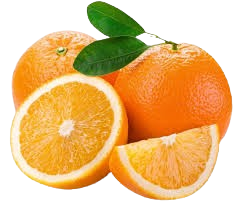
Get a Custom Report on Sweet Orange Nutrition Data – Contact Us!
What are the Types of Sweet Oranges?
The types of sweet oranges include the common Navel, Valencia, and Blood oranges. The table below presents the nutritional differences between the main varieties.
| Type | Description | Calories (Per 100g) | Calorie Qualifications |
|---|---|---|---|
|
Navel Orange
|
The common variety features a thick skin and a seedless, sweet pulp. | 47 | This amount represents the standard caloric value for the species Citrus sinensis. |
|
Valencia Orange
|
A cultivar displays a thinner skin and high juice content, ideal for juicing. | 47 | The nutritional profile mirrors the Navel variety with a slightly higher juice yield. |
|
Blood Orange
|
A variety features a deep red pulp due to high anthocyanin levels. | 50 | The higher energy value stems from a slightly higher concentration of natural sugars and antioxidants. |
|
Cara Cara Orange
|
A navel variety displays a pinkish-red pulp and a lower acid profile. | 47 | The caloric load is identical to standard navels but offers higher Vitamin A and C levels. |
What are the Desserts With Sweet Orange?
Sweet orange features prominently in global desserts due to a naturally sweet and tangy flavor profile. The fruit adds a refreshing citrus note to frozen treats and baked goods. A breakdown of specific sweet dishes that include this fruit is shown in the list that follows.
| Dish Name | Calories | Type of Sweet Orange | Carbs (g) | Sugar (g) | Protein (g) | Fat (g) | Cuisine | Restaurants |
|---|---|---|---|---|---|---|---|---|
|
Orange Sorbet
|
140 | Raw Sweet Orange Juice | 36 | 30 | 0 | 0 | Mediterranean | Fig & Olive |
|
Orange Creamsicle
|
180 | Raw Sweet Orange Pulp | 28 | 22 | 2 | 7 | American | Dairy Queen |
|
Orange Blossom Cake
|
420 | Baked Sweet Orange Zest | 58 | 38 | 5 | 20 | Middle Eastern | Zaytinya (Washington, D.C.) |
|
Orange Tart
|
350 | Baked Sweet Orange Curd | 42 | 30 | 4 | 19 | French Fusion | Balthazar (New York, NY) |
|
Orange Gelato
|
220 | Raw Sweet Orange Pulp | 34 | 28 | 4 | 9 | Italian | Amorino (National) |
|
Orange Cheesecake
|
480 | Cooked Sweet Orange Puree | 48 | 36 | 7 | 30 | American | The Cheesecake Factory (National) |
|
Orange Rice Pudding
|
280 | Cooked Sweet Orange Peel | 48 | 32 | 6 | 7 | Asian Fusion | Nobu |
|
Orange Parfait
|
250 | Raw Sweet Orange Slices | 38 | 30 | 9 | 11 | New American | True Food Kitchen |
|
Orange Macarons
|
95 | Sweet Orange Ganache | 13 | 11 | 2 | 5 | French | Bottega Louie (Los Angeles, CA) |
|
Orange Shortbread
|
160 | Baked Sweet Orange Zest | 20 | 9 | 2 | 9 | British | Walkers (Retail/National) |
|
Orange Panna Cotta
|
300 | Cooked Sweet Orange Juice | 24 | 20 | 5 | 22 | Italian Fusion | Fiola (Washington, D.C.) |
|
Orange Fruit Salad
|
100 | Raw Sweet Orange Chunks | 24 | 20 | 1 | 0 | Tropical | Seasons 52 |
What are the Main Dishes With Sweet Orange?
Sweet orange appears in savory cooking as a sweet counterbalance to spicy or salty flavor profiles. The acidic juice functions well in glazes, salsas, and tropical sauces for seafood and poultry. A breakdown of specific savory dishes that include this fruit is shown in the list that follows.
| Dish Name | Calories | Type of Sweet Orange | Carbs (g) | Sugar (g) | Protein (g) | Fat (g) | Cuisine | Restaurants |
|---|---|---|---|---|---|---|---|---|
|
Orange Chicken
|
490 | Cooked Sweet Orange Glaze | 51 | 19 | 25 | 21 | Chinese-American | Panda Express |
|
Duck à l'Orange
|
820 | Cooked Sweet Orange Reduction | 22 | 16 | 42 | 58 | French | Le Coucou (New York, NY) |
|
Orange Glazed Salmon
|
520 | Cooked Sweet Lemon Reduction | 18 | 12 | 40 | 32 | New American | The Capital Grille |
|
Orange Shrimp Scampi
|
430 | Raw Sweet Orange Juice | 14 | 6 | 34 | 28 | Italian-American | Maggiano's Little Italy |
|
Roasted Chicken With Orange
|
610 | Baked Sweet Orange Halves | 12 | 8 | 58 | 38 | French | Balthazar (New York, NY) |
|
Orange Ginger Beef
|
550 | Sweet Orange Marinade | 35 | 15 | 38 | 28 | Asian Fusion | P.F. Chang's |
|
Orange Quinoa Salad
|
310 | Raw Sweet Orange Dressing | 48 | 8 | 11 | 9 | Modern American | Flower Child |
|
Grilled Tofu With Orange
|
330 | Sweet Orange Marinade | 20 | 10 | 24 | 18 | Pan-Asian | True Food Kitchen |
|
Orange Butter Scallops
|
510 | Sweet Orange Infused Butter | 12 | 7 | 30 | 40 | French Fusion | Le Bernardin (New York, NY) |
|
Orange Lamb Tagine
|
680 | Cooked Sweet Orange Peel | 38 | 18 | 50 | 45 | Moroccan | Mourad (San Francisco, CA) |
|
Orange Chickpea Stew
|
360 | Simmered Sweet Orange Pulp | 52 | 12 | 17 | 12 | Middle Eastern | Oleana (Cambridge, MA) |
|
Orange Glazed Duck
|
750 | Cooked Sweet Orange Reduction | 25 | 20 | 42 | 55 | Asian Fusion | Hakkasan (Miami, FL) |
What Cuisines Prefer Sweet Orange the Most?
Sweet orange holds a prominent place within Chinese and French culinary traditions. The fruit is indispensable in Asian and Mediterranean gastronomy. The table below presents specific cuisines and associated restaurant offerings.
| Cuisine | Dish | Types of Sweet Orange | Calories (Estimate) | Restaurant(s) |
|---|---|---|---|---|
|
Chinese-American
|
Orange Chicken | Cooked Sweet Orange Glaze | 490 | Panda Express |
|
French
|
Duck à l'Orange | Cooked Sweet Orange Reduction | 820 | Le Coucou |
|
New American
|
Orange Glazed Salmon | Cooked Sweet Orange Reduction | 520 | The Capital Grille |
|
Italian-American
|
Orange Shrimp Scampi | Raw Sweet Orange Juice | 430 | Maggiano's Little Italy |
|
Asian Fusion
|
Orange Ginger Beef | Sweet Orange Marinade | 550 | P.F. Chang's |
|
Modern American
|
Orange Quinoa Salad | Raw Sweet Orange Dressing | 310 | Flower Child |
|
Pan-Asian
|
Grilled Tofu With Orange | Sweet Orange Marinade | 330 | True Food Kitchen |
|
French Fusion
|
Orange Butter Scallops | Sweet Orange Infused Butter | 510 | Le Bernardin |
|
Moroccan
|
Orange Lamb Tagine | Cooked Sweet Orange Peel | 680 | Mourad |
|
Middle Eastern
|
Orange Chickpea Stew | Simmered Sweet Orange Pulp | 360 | Oleana |
|
Mediterranean
|
Orange Sorbet | Raw Sweet Orange Juice | 140 | Fig & Olive |
|
Italian Fusion
|
Orange Panna Cotta | Cooked Sweet Orange Juice | 300 | Fiola |
Which Countries Produce the Most Sweet Oranges?
The top producers of sweet oranges are Brazil, China, and India. Cultivation thrives in these regions due to ideal tropical and subtropical climates. Agricultural sectors in these nations dedicate vast acreage to citrus farming to meet domestic needs and export demands. The table below shows the annual production volumes in thousand metric tonnes for these countries over the last two decades.
| Country | 2003 | 2008 | 2013 | 2018 | 2019 | 2020 | 2021 | 2022 |
|---|---|---|---|---|---|---|---|---|
| Brazil | 16,500 | 17,200 | 15,800 | 16,700 | 17,100 | 16,900 | 16,500 | 16,800 |
| China | 1,800 | 3,500 | 6,200 | 7,100 | 7,300 | 7,500 | 7,600 | 7,800 |
| India | 2,800 | 4,200 | 6,400 | 8,200 | 8,500 | 8,800 | 9,100 | 9,400 |
| United States | 10,200 | 8,400 | 6,800 | 4,500 | 4,200 | 3,800 | 3,500 | 3,200 |
| Mexico | 3,800 | 4,100 | 4,400 | 4,600 | 4,750 | 4,850 | 4,950 | 5,100 |
Which Countries Consume the Most Sweet Oranges?
The top consumers of sweet oranges are Brazil, China, and the United States. High consumption rates stem from deep-rooted culinary traditions that incorporate fresh citrus juices into daily hydration and local recipes. Growing populations and expanding middle classes in these regions drive the demand for fresh produce. The table below shows the annual consumption volumes in thousand metric tonnes for these markets over the last two decades.
| Country | 2003 | 2008 | 2013 | 2018 | 2019 | 2020 | 2021 | 2022 |
|---|---|---|---|---|---|---|---|---|
| Brazil | 15,800 | 16,500 | 15,200 | 16,100 | 16,500 | 16,300 | 16,000 | 16,200 |
| China | 1,750 | 3,400 | 6,050 | 6,950 | 7,150 | 7,350 | 7,450 | 7,650 |
| United States | 9,800 | 8,100 | 6,550 | 4,350 | 4,050 | 3,650 | 3,350 | 3,100 |
| India | 2,750 | 4,100 | 6,250 | 8,050 | 8,350 | 8,650 | 8,950 | 9,250 |
| Mexico | 3,700 | 4,000 | 4,300 | 4,500 | 4,650 | 4,750 | 4,850 | 5,000 |
How Do Prices of Sweet Orange-Including Products Change?
The financial outlay for retail goods and restaurant dishes containing sweet orange has expanded, mirroring the rising sourcing expenses for fresh citrus. The subsequent chart details the price shifts for specific store-bought items and menu offerings.
| Brand/Restaurant/Retailer | Item | Old Price (Year) | Current Price (2025/2026) |
|---|---|---|---|
| Tropicana / Walmart | Pure Premium Orange Juice (52oz) | $2.99 (2015) | $3.49 - $5.89 |
| Whole Foods Market | Organic Navel Oranges (1 lb) | $1.49 (2016) | $2.49 - $4.99 |
| Panda Express | Orange Chicken (Entree) | $4.20 (2014) | $5.50 - $6.50 |
| Sunkist / Kroger | Fresh Navel Oranges (4 lb bag) | $4.99 (2015) | $6.99 - $8.99 |
What is the Sweet Orange Calorie for 100 Grams?
One hundred grams (3.5oz) of raw sweet orange contains 47 calories.
What is the Sweet Orange Calorie for 1 KG?
One kilogram (1000g) of raw sweet orange contains 470 calories.
What is the Calorie of 1 Sweet Orange?
A single medium raw sweet orange (131g) contains 62 calories. Calorie counts for branded products vary, as a medium Sunkist Navel Orange (140g) contains 70 calories. The energy content of orange juice sold by brands like Tropicana is 110 calories per 240ml (8.1oz) serving.
What are the Health Benefits of Sweet Orange?
Sweet oranges provide distinct wellness advantages due to a dense nutrient and antioxidant profile. Specific health benefits are supported by scientific research below.
- Reduces Cancer Risk: The fruit pulp contains high levels of bioactive compounds that help protect cells from damage. Grosso, G., et al. (2013). "Citrus Fruits and Cancer Risk in Epidemiologic Studies: A Systematic Review and Meta-Analysis." Evidence from this research shows a link between citrus consumption and a lower risk of certain cancers.
- Improves Vascular Function: Hesperidin and other flavonoids aid in maintaining healthy blood vessels. Morand, C., et al. (2011). "Hesperidin contributes to the vascular protective effects of orange juice: a randomized crossover study in healthy volunteers." The study investigates how orange juice consumption improves endothelial function and reduces blood pressure.
- Promotes Digestive Wellness: Dietary fiber adds bulk to the stool and facilitates smooth digestion. Anderson, J. W., et al. (2009). "Health benefits of dietary fiber." Findings from the study link fiber consumption to a lower risk of digestive disorders and improved gut health.
What are the Downsides of Sweet Orange?
Consumption of sweet orange presents potential health considerations, particularly regarding acid reflux and natural sugar levels. Nutritionists recommend a daily suggested amount of one to two fruits with a 2-5/8 inch diameter (131g to 262g) to avoid adverse effects. A lower-acid alternative is a serving of fresh watermelon or pear. These potential aspects are outlined below.
- Triggers Acid Reflux: The citric acid content can irritate the esophageal lining in sensitive individuals. Feldman, M., & Barnett, C. (1995). "Relationships between the acidity and osmolality of popular beverages and reported postprandial heartburn." Data from the study suggests acidic citrus fruits increase the risk of heartburn and gastroesophageal reflux symptoms.
- Impacts Blood Glucose: The natural sugar content can cause fluctuations in blood sugar when consumed in excess. Passos, T. U., et al. (2015). "Glycemic index and glycemic load of tropical fruits and the potential for managing type 2 diabetes." Analysis within the research confirms the need for portion control to prevent glucose spikes.
Are Sweet Oranges Good for You?
Yes, sweet oranges are good for health when the edible pulp is consumed as part of a balanced diet. Heart health receives support from high potassium and flavonoid levels, which help maintain stable blood pressure and vascular integrity. The meta-analysis by Aburto, N. J., et al. (2013), "Effect of increased potassium intake on blood pressure, renal function, rate of cardiovascular disease, stroke and coronary heart disease in adults," confirms the link between potassium and cardiovascular protection. Digestive health improves through the intake of dietary fiber, which ensures regular bowel movements and gut wellness. Research by Anderson, J. W., et al. (2009), "Health benefits of dietary fiber," details how fiber intake prevents gastrointestinal issues. Immune system strength increases due to the presence of Vitamin C and other antioxidants. The study by Cirmi, S., et al. (2018), " Citrus fruits intake and oral cancer risk: A systematic review and meta-analysis," identifies bioactive compounds that protect cells from oxidative stress.
How Does Calorie Change According to Sweet Orange Types?
Energy content shows minimal change between the different types of raw sweet oranges. The caloric value for the standard Navel, Valencia, and Cara Cara varieties remains identical, with each containing 47 calories per 100g. The fundamental composition of the fruit pulp, consisting of carbohydrates, protein, and trace amounts of fat, stays consistent across the cultivars. Minor variations stem from the Blood orange variety, which contains 50 calories per 100g due to a higher concentration of natural sugars and anthocyanins. The lowest calorie type and the highest calorie type differ by only 3 calories, meaning the main factor affecting total calorie intake is the serving size consumed rather than the specific cultivar chosen.
What is the Origin of Sweet Orange?
The origin of the sweet orange traces back to the southern regions of China and Southeast Asia. Ancient trade routes facilitated the spread of the fruit to the Mediterranean basin and the Middle East during the medieval period. The plant thrived in the warm climates of the Mediterranean, leading to widespread cultivation across Spain and Italy. Spanish and Portuguese explorers discovered the fruit during early expeditions and transported seeds across global trade routes to the Americas. Culinary applications evolved alongside global expansion, starting with simple raw consumption and juice extraction. Modern gastronomy incorporated the sweet pulp into complex dishes like Duck à l'Orange and Orange Chicken. Savory culinary practices adopted the fruit to provide a sweet flavor profile to balance spicy and acidic elements in fusion dishes.
Explore More Fruits
Discover more Fruits with detailed nutrition facts, calorie counts, vitamins, minerals, and health benefits. Compare similar foods, serving sizes, macronutrients, and key nutrients to find the best option for your diet and nutrition goals.
 Acai calories
 Acerola calories
 Ambarella calories
 Amla calories
 Apple calories
 Apricot calories
 Avocado calories
 Babaco calories
 Bael Fruit calories
 Banana calories
 Black Grapes calories
 Blackcurrant calories