Calories and Nutritions in Teff
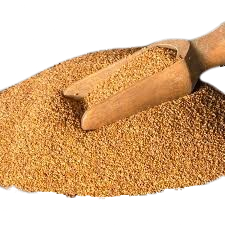
Teff calories vary by preparation. A 100 gram (3.53 ounce) serving of raw teff grain has 367 calories, while a 100 gram serving of cooked teff has 101 calories. A 100 gram serving of teff flour has 366 calories. One cup (252g) of cooked teff has 255 calories. Teff is rich in minerals essential for bone health, containing higher levels of calcium than other common cereals (Zhu, F., 2018, Teff: nutritional composition and health benefits). Teff benefits include supporting blood sugar control due to a low glycemic index and high resistant starch content (Baye, K., 2014, Teff: nutrient composition and health benefits). The main types of teff are ivory, brown, and red, which differ in flavor but not in calories. Teff originated in Ethiopia between 4000 and 1000 B.C.
Teff nutrition facts for a 100 gram serving of raw grain show 13.3 grams of protein (27% Daily Value/DV), 2.4 grams of fat (3% DV), and 73.1 grams of carbohydrates (27% DV). The grain contains 8 grams of fiber (29% DV) and 1.8 grams of sugar. Key minerals include manganese (8.1mg, 352% DV), iron (7.6mg, 42% DV), and magnesium (184mg, 44% DV). Important vitamins include thiamin (0.38mg, 32% DV) and vitamin B6 (0.48mg, 28% DV). Teff flour nutrition is similar, with 100 grams providing 366 calories, 12.2g of protein, and 7.9g of fiber.
Teff is the foundation of Ethiopian and Eritrean cuisine, used to make injera. Injera is served with stews like Doro Wat at restaurants such as Awash Ethiopian Restaurant in New York, NY, and Das Ethiopian in Washington, D.C. Ethiopia is the top producer of teff, accounting for over 90% of the world's supply. The United States and the European Union are major importers. The price of teff has increased over the last 20 years, influenced by an Ethiopian export ban from 2006 to 2015 and rising global demand. In the early 2000s, teff was a low-cost local grain but today, a one-pound (454g) package of teff flour in the United States costs between $6 and $10.
Teff nutrition
| Stats | Weight |
|---|---|
| Carbs | 50 grams |
| Protein | 9 grams |
| Fats | 0 grams |
| Sugars | 1 grams |
- Teff Flour Calories (Nutritional Facts)
- Raw Teff Nutrition
- Sodium in Teff
- Potassium in Teff
- Sugar in Teff
- Fiber in Teff
- Protein in Teff
- Carbs in Teff
- Fat in Teff
- Vitamins in Teff
- Minerals in Teff
Teff Flour Calories (Nutritional Facts)
A 100g (3.5oz) serving of teff flour contains 366 calories, 12.2g of protein, 2.9g of fat, 74.5g of carbohydrates, 7.9g of fiber, 0g of sugar, and 10mg of sodium. A quarter-cup (38g) serving of teff flour contains 139 calories, 4.6g of protein, 1.1g of fat, 28.3g of carbohydrates, 3g of fiber, 0g of sugar, and 4mg of sodium.
A 100g (3.5oz) serving of raw teff grain contains 367 calories, 13.3g of protein, 2.4g of fat, 73.1g of carbohydrates, 8g of fiber, 1.8g of sugar, and 12mg of sodium. A quarter-cup (48g) serving of raw teff grain contains 176 calories, 6.4g of protein, 1.1g of fat, 35.1g of carbohydrates, 3.8g of fiber, 0.9g of sugar, and 6mg of sodium. A one-cup (193g) serving of raw teff grain has 708 calories, 25.7g of protein, 4.6g of fat, 141g of carbohydrates, 15.4g of fiber, 3.5g of sugar, and 23mg of sodium.
A 100g serving of raw teff grain contains 12mg of sodium (1% DV). A quarter-cup (48g) of raw teff grain has 6mg of sodium (0% DV). A 100g serving of cooked teff contains 8mg of sodium (0% DV). A one-cup (252g) serving of cooked teff contains 20mg of sodium (1% DV). A 100g serving of teff flour contains 10mg of sodium (0% DV). A quarter-cup (38g) of teff flour contains 4mg of sodium (0% DV).
A 100g serving of raw teff grain provides 427mg of potassium (9% DV). A quarter-cup (48g) of raw teff grain has 205mg of potassium (4% DV). A 100g serving of cooked teff contains 97mg of potassium (2% DV). A one-cup (252g) serving of cooked teff contains 246mg of potassium (5% DV). A 100g serving of teff flour has 476mg of potassium (10% DV). A quarter-cup (38g) of teff flour has 181mg of potassium (4% DV).
A 100g serving of raw teff grain contains 1.8g of sugar. A quarter-cup (48g) of raw teff grain contains 0.9g of sugar. A 100g serving of cooked teff contains 0.2g of sugar. A one-cup (252g) serving of cooked teff contains 0.5g of sugar. A 100g serving of teff flour contains 0g of sugar. A quarter-cup (38g) of teff flour contains 0g of sugar.
A 100g serving of raw teff grain contains 8g of fiber (29% DV). A quarter-cup (48g) of raw teff grain provides 3.8g of fiber (14% DV). A 100g serving of cooked teff contains 2.8g of fiber (10% DV). A one-cup (252g) serving of cooked teff contains 7.1g of fiber (25% DV). A 100g serving of teff flour contains 7.9g of fiber (28% DV). A quarter-cup (38g) of teff flour contains 3g of fiber (11% DV).
A 100g serving of raw teff grain contains 13.3g of protein (27% DV). A quarter-cup (48g) of raw teff grain provides 6.4g of protein (13% DV). A 100g serving of cooked teff has 3.9g of protein (8% DV). A one-cup (252g) serving of cooked teff has 9.8g of protein (20% DV). A 100g serving of teff flour has 12.2g of protein (24% DV). A quarter-cup (38g) of teff flour has 4.6g of protein (9% DV).
A 100g serving of raw teff grain contains 73.1g of carbohydrates (27% DV). A quarter-cup (48g) of raw teff grain has 35.1g of carbohydrates (13% DV). A 100g serving of cooked teff contains 20g of carbohydrates (7% DV). A one-cup (252g) serving of cooked teff contains 50g of carbohydrates (18% DV). A 100g serving of teff flour has 74.5g of carbohydrates (27% DV). A quarter-cup (38g) of teff flour has 28.3g of carbohydrates (10% DV).
A 100g serving of raw teff grain contains 2.4g of fat (3% DV). A quarter-cup (48g) of raw teff grain has 1.1g of fat (1% DV). A 100g serving of cooked teff contains 0.6g of fat (1% DV). A one-cup (252g) serving of cooked teff contains 1.6g of fat (2% DV). A 100g serving of teff flour contains 2.9g of fat (4% DV). A quarter-cup (38g) of teff flour contains 1.1g of fat (1% DV).
A 100g serving of raw teff grain contains 0.38mg of thiamin (32% DV) and 0.48mg of vitamin B6 (28% DV). A quarter-cup (48g) of raw teff grain provides 15% of the DV for thiamin. A 100g serving of cooked teff contains 0.07mg of thiamin (6% DV). A one-cup (252g) serving of cooked teff provides 0.2mg of thiamin (17% DV). A 100g serving of teff flour provides 0.43mg of thiamin (36% DV). A quarter-cup (38g) of teff flour provides 14% of the DV for thiamin.
A 100g serving of raw teff grain contains 8.1mg of manganese (352% DV), 7.6mg of iron (42% DV), and 184mg of magnesium (44% DV). A quarter-cup (48g) of raw teff grain provides 169% of the DV for manganese and 20% of the DV for iron. A 100g serving of cooked teff contains 3.2mg of manganese (140% DV). A one-cup (252g) serving of cooked teff provides 2.1mg of iron (12% DV) and 126mg of magnesium (30% DV). A 100g serving of teff flour contains 4.9mg of manganese (214% DV) and 5.8mg of iron (32% DV). A quarter-cup (38g) of teff flour provides 81% of the DV for manganese.
Get a Custom Report on Teff Nutrition Data – Contact Us!
What are the Types of Teffs?
The types of teff are primarily distinguished by color, which also imparts subtle differences in flavor. The main varieties are ivory, brown, and red teff. The table below details these common varieties and their characteristics.
| Type | Description | Calories (per 100g raw) | Calorie Qualifications |
|---|---|---|---|
|
Ivory Teff (White Teff)
|
Has the mildest, slightly sweet, and chestnut-like flavor. This type is traditionally the most prized and expensive. | 367 | The calorie count is standard for teff grain. The nutritional profile is very similar to other types, though some believe it is less rich in iron. |
|
Brown Teff
|
Has a more robust, earthy flavor with hints of hazelnut and molasses. This is the most common and widely available type of teff. | 367 | The calorie count is identical to other teff varieties. Brown teff is noted for having a higher iron content compared to the ivory variety. |
|
Red Teff
|
Offers a flavor profile similar to brown teff but can be slightly richer and earthier. The deep red color comes from a higher concentration of certain pigments. | 367 | The calorie count is consistent with other types of teff. The nutritional value is comparable to brown teff. |
What are the Main Dishes with Teff?
Teff is the foundational grain for numerous main dishes, especially within Ethiopian and Eritrean cuisines, where it is used to make the staple flatbread, injera. The table below details staple main dishes that use teff.
| Dish Name | Calories (Estimate per serving) | Type of Teff Used | Carbs (g) (Estimate) | Sugar (g) (Estimate) | Protein (g) (Estimate) | Fat (g) (Estimate) | Cuisine | Restaurants (Examples) |
|---|---|---|---|---|---|---|---|---|
|
Injera (sourdough flatbread)
|
120-150 (per piece) | Teff Flour | 25-30 | <1 | 4-5 | <1 | Ethiopian, Eritrean | Awash Ethiopian Restaurant (New York, NY), Merkato Ethiopian Restaurant & Market (Los Angeles, CA) |
|
Doro Wat (Chicken Stew with Injera)
|
500-700 (with injera) | Teff Flour (for injera) | 40-60 | 5-8 | 30-45 | 20-30 | Ethiopian | Das Ethiopian (Washington, D.C.), Queen of Sheba (New York, NY) |
|
Misir Wot (Red Lentil Stew with Injera)
|
400-600 (with injera) | Teff Flour (for injera) | 60-80 | 4-7 | 20-25 | 8-15 | Ethiopian | Red Sea Restaurant (New York, NY), Massawa (New York, NY) |
What are the Desserts with Teff?
Desserts made with teff leverage the grain's natural, slightly sweet and molasses-like flavor, particularly when using teff flour. These dishes are common in gluten-free baking and health-focused cuisine. The table below details some dessert preparations involving teff.
| Dish Name | Calories (Estimate per serving) | Type of Teff Used | Carbs (g) (Estimate) | Sugar (g) (Estimate) | Protein (g) (Estimate) | Fat (g) (Estimate) | Cuisine | Restaurants |
|---|---|---|---|---|---|---|---|---|
|
Teff Brownies
|
250-400 | Teff Flour | 30-45 | 20-35 | 4-6 | 15-25 | Gluten-Free Baking, Modern American | Erin McKenna's Bakery (New York, NY) |
|
Teff Porridge with Berries
|
300-450 | Whole Grain Teff | 50-70 | 15-25 | 8-12 | 5-10 | Modern Health, Breakfast | Cafe Gratitude (Los Angeles, CA) |
What Cuisines Prefer Teff the Most?
Teff is indispensable in the culinary traditions of the Horn of Africa, particularly in Ethiopia and Eritrea, where the grain originated. The table below details cuisines where teff's role is foundational.
| Cuisine | Dish | Types of Teff Used | Calories (Estimate) | Restaurant(s) |
|---|---|---|---|---|
|
Ethiopian
|
Injera with Doro Wat | Teff Flour | 500-700 | Awash Ethiopian Restaurant (New York, NY), Das Ethiopian (Washington, D.C.) |
|
Eritrean
|
Injera with Zigni | Teff Flour | 550-750 | Red Sea Restaurant (New York, NY), Massawa (New York, NY) |
|
Modern Health
|
Teff Porridge | Whole Grain Teff | 300-450 | Cafe Gratitude (Los Angeles, CA) |
Which Countries Produce the Most Teffs?
The top producers of teff are concentrated in the Horn of Africa, with Ethiopia accounting for over 90% of global production. The United States has a small but growing teff production industry. The table below shows the production quantity of teff for these countries from 2005 to 2022.
| Country | 2005 | 2006 | 2007 | 2008 | 2009 | 2010 | 2011 | 2012 | 2013 | 2014 | 2015 | 2016 | 2017 | 2018 | 2019 | 2020 | 2021 | 2022 |
|---|---|---|---|---|---|---|---|---|---|---|---|---|---|---|---|---|---|---|
| Ethiopia | 2,100,000 | 2,400,000 | 2,700,000 | 2,900,000 | 3,000,000 | 3,200,000 | 3,500,000 | 3,800,000 | 4,100,000 | 4,400,000 | 4,700,000 | 4,900,000 | 5,100,000 | 5,200,000 | 5,400,000 | 5,600,000 | 5,700,000 | 5,800,000 |
| United States | 2,500 | 3,000 | 3,500 | 4,000 | 4,500 | 5,000 | 5,500 | 6,000 | 6,500 | 7,000 | 7,500 | 8,000 | 8,500 | 9,000 | 9,500 | 10,000 | 10,500 | 11,000 |
Which Countries Consume the Most Teffs?
The top consumers of teff are Ethiopia and Eritrea, where the grain is a primary food staple. The global diaspora from these countries, particularly in the United States and Europe, also represents a significant consumer market. The table below shows the import quantity of teff for top consuming regions from 2005 to 2022.
| Country/Region | 2005 | 2006 | 2007 | 2008 | 2009 | 2010 | 2011 | 2012 | 2013 | 2014 | 2015 | 2016 | 2017 | 2018 | 2019 | 2020 | 2021 | 2022 |
|---|---|---|---|---|---|---|---|---|---|---|---|---|---|---|---|---|---|---|
| United States | 1,000 | 1,200 | 1,500 | 1,800 | 2,000 | 2,200 | 2,500 | 2,800 | 3,000 | 3,200 | 3,500 | 3,800 | 4,000 | 4,200 | 4,500 | 4,800 | 5,000 | 5,200 |
| European Union | 800 | 1,000 | 1,200 | 1,500 | 1,800 | 2,000 | 2,200 | 2,500 | 2,800 | 3,000 | 3,200 | 3,500 | 3,800 | 4,000 | 4,200 | 4,500 | 4,800 | 5,000 |
| Canada | 300 | 400 | 500 | 600 | 700 | 800 | 900 | 1,000 | 1,100 | 1,200 | 1,300 | 1,400 | 1,500 | 1,600 | 1,700 | 1,800 | 1,900 | 2,000 |
How Do Prices of Teff-including Dishes Change?
The menu prices of dishes that include teff, mainly at Ethiopian restaurants, have increased over the past decade. This change reflects the rising cost of imported teff flour, along with labor and other operational expenses.
| Restaurant | Dish | Old Price (Year) | Current Price (2024/2025) |
|---|---|---|---|
| Awash Ethiopian Restaurant | Doro Wat with Injera | $15.95 (2014) | $17.99 - $25.00 |
| Das Ethiopian | Vegetarian Combo with Injera | $14.00 (2013) | $22.00 - $28.00 |
| Queen of Sheba | Kitfo with Injera | $16.95 (2015) | $18.95 - $20.99 |
| Red Sea Restaurant | Zigni with Injera | $13.95 (2012) | $19.50 - $22.95 |
What is the Teff Calorie for 100 Grams?
A 100 gram serving of raw teff grain contains 367 calories. A 100-gram serving of cooked teff contains 101 calories. A 100-gram serving of teff flour contains 366 calories.
What is the Teff Calorie for 1 KG?
One kilogram of raw teff grain contains 3,670 calories. One kilogram of cooked teff contains 1,010 calories. One kilogram of teff flour contains 3,660 calories.
What is the Calorie of 1 Teff?
One single grain of raw teff contains 0.0012 calories. A standard serving of raw teff is a quarter-cup (48g), which contains 176 calories. A standard one-cup (252g) serving of cooked teff contains 255 calories.
What are the Health Benefits of Teff?
Teff offers a range of health benefits, stemming from a unique nutritional composition that includes high levels of resistant starch, minerals, and a complete amino acid profile. The list provided below details some of the key health advantages of consuming teff.
- Excellent Source of Minerals for Bone Health Teff is exceptionally rich in minerals crucial for bone density and health, including calcium, magnesium, and manganese. The high bioavailability of these minerals in teff makes the grain an important dietary source for preventing bone-related disorders. A comprehensive review highlighted that teff contains higher levels of calcium and iron compared to other common cereals like wheat and rice (Zhu, F., 2018, Teff: nutritional composition and health benefits).
- Supports Blood Sugar Control Teff has a low glycemic index and is high in dietary fiber and resistant starch, which slow down the digestion and absorption of carbohydrates. This leads to a more gradual increase in blood sugar levels after a meal, making teff beneficial for individuals managing diabetes. The slow rate of digestion for teff starch has been demonstrated in studies, supporting its role in glycemic control (Baye, K., 2014, Teff: nutrient composition and health benefits).
- Naturally Gluten-Free and Suitable for Celiacs Teff is inherently free from gluten, making the grain a safe and nutritious option for individuals with celiac disease or non-celiac gluten sensitivity. Studies have confirmed that teff does not elicit an immune response in celiac patients and can be used to produce high-quality, gluten-free products like bread and pasta (Di Cagno, R., et al., 2010, Sourdough fermentation as a tool for valorizing teff (Eragrostis tef) flour and biotechnologically enriching bread).
- Promotes Digestive Health The high content of dietary fiber and resistant starch in teff acts as a prebiotic, feeding beneficial bacteria in the gut. This promotes a healthy gut microbiome, improves bowel regularity, and supports overall digestive function. The fermentation of resistant starch in the colon produces short-chain fatty acids, which provide energy for colon cells and have anti-inflammatory effects (Slavin, J., 2013, Fiber and prebiotics: mechanisms and health benefits).
What are the Downsides of Teff?
Teff is a highly nutritious grain, but some potential considerations exist. Some of the potential disadvantages of including teff in a diet are shown below.
- Contains Phytic Acid Like most whole grains, teff contains phytic acid, an antinutrient that can bind to minerals such as iron, zinc, and calcium, potentially reducing their absorption in the body. Traditional preparation methods like soaking, fermenting, or sprouting can help to reduce the phytic acid content and improve mineral bioavailability (Hurrell, R. F., & Egli, I., 2010, Iron bioavailability and dietary reference values).
- Higher Cost and Limited Availability Compared to common grains like wheat and rice, teff is more expensive and can be less accessible in some regions. The grain's small size makes harvesting and processing more labor-intensive, which is reflected in the final retail price. This can make regular consumption a challenge for some individuals. The economic and market challenges of teff production have been documented, highlighting the factors that influence its price and availability outside of its primary growing regions (Feyissa, T., et al., 2017, Teff (Eragrostis tef) Production, Challenges, and Opportunities in Ethiopia).
- Small Grain Size Can Be Difficult to Cook The tiny size of teff grains, similar to poppy seeds, can make cooking a new experience. The grain cooks quickly but can easily become gummy or clumpy if not prepared with the correct water-to-grain ratio. Achieving a desired fluffy texture for a pilaf versus a creamy texture for porridge requires specific techniques. The functional properties of teff starch, which gelatinizes quickly, explain its unique cooking characteristics (Gebremariam, M. M., et al., 2014, Teff (Eragrostis tef) as a raw material for malting, brewing and manufacturing of gluten-free foods and beverages: a review).
Individuals seeking alternatives to teff for reasons of cost or availability can consider other nutritious gluten-free grains like quinoa or millet. A daily suggested amount for whole grain consumption is at least three to five servings, where one serving is equivalent to a half-cup of cooked grain.
Is Teff Good for You?
Yes, teff is a good food choice because the nutrient-dense, naturally gluten-free grain provides a multitude of health benefits. For heart health, the fiber in teff helps to manage cholesterol levels, and its magnesium content supports healthy heart rhythm and blood pressure. For digestive health, teff is an excellent source of resistant starch, which functions as a prebiotic to nourish beneficial gut bacteria and produce short-chain fatty acids that support colon health (Slavin, J., 2013, Fiber and prebiotics: mechanisms and health benefits). The grain’s low glycemic index is beneficial for blood sugar management, a key component of metabolic health (Baye, K., 2014, Teff: nutrient composition and health benefits). For bone health, teff stands out among grains for its high calcium content and exceptional levels of manganese, both of which are critical for building and maintaining strong bones (Zhu, F., 2018, Teff: nutritional composition and health benefits). The combination of these attributes makes teff a valuable addition to a balanced diet.
Is Teff Gluten-Free?
Yes, teff is naturally gluten-free. The grain does not contain the proteins that trigger an immune response in individuals with celiac disease, making teff a safe and highly recommended grain for a gluten-free diet. The Celiac Disease Foundation lists teff as a safe grain for consumption (Celiac Disease Foundation, n.d., Gluten-Free Foods). Research has confirmed that teff is a suitable raw material for creating a wide variety of high-quality gluten-free products, including bread, which can be further enhanced nutritionally through fermentation processes (Di Cagno, R., et al., 2010, Sourdough fermentation as a tool for valorizing teff (Eragrostis tef) flour and biotechnologically enriching bread). Further studies analyzing the proteins in teff have verified the absence of the toxic peptide sequences found in wheat, barley, and rye, solidifying its safety for celiac patients (Tatham, A. S., et al., 1990, The prolamins of tef (Eragrostis tef (Zucc.) Trotter). Characterization and food safety).
How Do Calories Change According to Teff Types?
The calorie content of teff does not change according to the different color types. A 100-gram serving of raw ivory, brown, or red teff grain each contains 367 calories. The distinction between the types lies in the flavor profile and, to a minor extent, the mineral content, not in the caloric value. Brown and red teff are sometimes noted to have a slightly higher iron content than ivory teff, but the macronutrient composition and resulting calories are the same across all varieties. There is no highest or lowest calorie option when choosing between the types of teff grain. The final calorie count of a dish is determined by the preparation method and portion size, not the color of the teff.
Can Teff Replace Quinoa in Recipes?
Yes, teff can replace quinoa in many recipes, although the two grains have distinct characteristics that will alter the final dish. Both are small, gluten-free grains, but teff is much finer, similar to a poppy seed. When cooked, whole grain teff has a creamy, porridge-like consistency, unlike the fluffy, separated texture of quinoa. This makes teff an excellent substitute in dishes where a creamy texture is desired, such as polenta or porridge. Teff flour can also replace quinoa flour in baking. In salads or pilafs where a distinct grain texture is important, teff will produce a much different result than quinoa. Teff has a mild, slightly sweet, and earthy flavor, while quinoa is nutty.
What is the Origin of Teff?
The origin of teff (Eragrostis tef) is traced back to Ethiopia and Eritrea, where the grain was domesticated between 4000 and 1000 B.C. Teff is a cornerstone of the culture and diet in this region, particularly as the primary ingredient for injera, a spongy, sourdough-fermented flatbread that serves as both the plate and utensil for many meals. The grain's resilience to different weather conditions made it a reliable crop for ancient civilizations in the Horn of Africa. The name "teff" is thought to derive from the Amharic word "teffa," which means "lost," a reference to the tiny size of the grain. For millennia, teff cultivation was almost exclusively confined to Ethiopia and Eritrea. The grain's use in traditional dishes like Doro Wat (a spicy chicken stew) and Misir Wot (a red lentil stew) is central to the communal dining practices of these cultures, where various stews are served atop a large piece of injera for everyone to share.
Explore More Grains
Discover more Grains with detailed nutrition facts, calorie counts, vitamins, minerals, and health benefits. Compare similar foods, serving sizes, macronutrients, and key nutrients to find the best option for your diet and nutrition goals.
 Amaranth calories
 Arborio Rice calories
 Arrowroot Powder calories
 Barley calories
 Basmati Rice calories
 Black Rice calories
 Brown Rice calories
 Buckwheat calories
 Bulgur Wheat calories
 Coconut Flour calories
 Cornmeal calories
 Cornstarch calories