Calories and Nutritions in Uva
Uva (otherwise known as grape) is a small fruit that grows in clusters on a woody vine and is a key ingredient in Mediterranean, American, and French cuisines. There are 69 uva calories per 100 g (3.5 oz) of the raw fruit, while a small grape (2.4 g) provides just 2 calories. Among the key grapes health benefits are a high amount of Vitamin K and Copper, which support bone density and blood health. Research by Dohadwala and Vita (2009), "Grapes and Cardiovascular Disease," found that the specific polyphenols in grapes improve the flexibility of blood vessels and reduce heart stress.
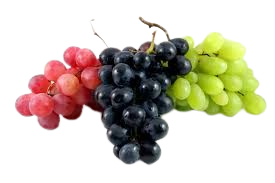
Common types of uva include green Thompson Seedless, red Globe, and the sweet Cotton Candy variety. Grapes are an important part of savory dishes like the Napa Almond Chicken Salad Sandwich at Panera Bread and flatbreads at Seasons 52. These berries are also used in desserts like the Grape and Almond Tart at Tartine Bakery and the Grape Sorbet at Salt & Straw. Nearly 7 popular main dishes and over 10 desserts highlight this fruit in establishments like California Pizza Kitchen and Buca di Beppo.
Uva originated in the Near East and was brought to Europe thousands of years ago. Global production is led by China, which produced 15,100 kt of grapes in 2024, followed by Italy at 7,300 kt. Consumption is highest in China and the United States, where the fruit is eaten fresh year-round. The price for one pound of fresh seedless grapes was $1.49 USD in 2005 and increased to $3.49 USD in 2024.
Health guidelines suggest eating 150 g (1 cup) of fresh grapes daily, which adds 104 calories to a standard adult diet. To burn the calories, an average woman weighing 70 kg (154 lbs) must walk moderately for 29 minutes at 5 km/h (3 mph), while an average man weighing 84 kg (185 lbs) would require 24 minutes of the same activity.
Uva nutrition
| Stats | Weight |
|---|---|
| Carbs | 27.2 grams |
| Protein | 1.08 grams |
| Fats | 0 grams |
| Sugars | 23.4 grams |
- Large Uva Calories (Nutritional Facts)
- Medium Uva Calories (Nutritional Facts)
- Small Uva Calories (Nutritional Facts)
- Raw Uva Nutrition
- Sodium in Uva
- Potassium in Uva
- Sugar in Uva
- Fiber in Uva
- Protein in Uva
- Carbs in Uva
- Fat in Uva
- Vitamins in Uva
- Minerals in Uva
Large Uva Calories (Nutritional Facts)
A large two-cup serving of raw uva, also called table grapes or the vine berry, weighing 300 g, contains 208 calories. This amount of fruit has 0.48 g of total fat, 2.16 g of protein, 54.3 g of total carbohydrates, and 46.8 g of sugar. Two cups of fresh grapes also provide 2.7 g of fiber.
A medium one-cup serving of uva fruit, weighing 150 g (5.3 oz), contains 104 calories. This portion provides 0.24 g of total fat, 1.08 g of protein, 27.2 g of total carbohydrates, and 23.4 g of sugar. One cup of grapes gives 1.4 g of dietary fiber.
A small half-cup serving of raw uva weighing 75 g (2.6 oz) contains 52 calories. This portion consists of 0.12 g of total fat, 0.54 g of protein, 13.6 g of total carbohydrates, and 11.7 g of sugar. These smaller portions are often used as side dishes in lunch combos.
One hundred grams (3.5 oz) of raw uva contains 69 calories, 0.16 g of total fat, 0.72 g of protein, 18.1 g of total carbohydrates, and 0.9 g of fiber. Raw grapes are a healthy fruit choice because they have Vitamin K and copper. Dried uva, called raisins, have a much higher energy count of 299 calories per 100 g (3.5 oz) because the water has been removed.
Raw uva has 2 mg of sodium per 100 g (3.5 oz) serving, which is 0% of the DV. This very low amount of salt makes the fruit good for a heart-healthy diet.
One hundred grams (3.5 oz) of uva provides 191 mg of potassium, which is 4% of the DV. Potassium is an important mineral that helps keep blood pressure at the right level.
Uva contains 15.5 g of sugar per 100 g (3.5 oz) serving. These are natural sugars like fructose. Fresh grapes have less sugar than grape jellies or bottled juices.
There is 0.9 g of fiber in a 100 g (3.5 oz) serving of uva, fulfilling 3% of the DV. The skin of the grape contains most of this fiber.
Uva provides 0.72 g of protein per 100 g (3.5 oz) serving.
Uva has 18.1 g of total carbohydrates per 100 g (3.5 oz) serving.
The fat in 100 g (3.5 oz) of uva is only 0.16 g.
A 100 g (3.5 oz) serving of raw uva has 14.6 mcg of Vitamin K (12% DV). It also provides 3.2 mg of Vitamin C (4% DV) and small amounts of Vitamin A.
Uva has 0.127 mg of Copper (14% DV) and 10 mg of Calcium (1% DV) per 100 g (3.5 oz). The fruit also provides 7 mg of Magnesium (2% DV) and 0.36 mg of Iron (2% DV).
Get a Custom Report on Uva Nutrition Data – Contact Us!
What are the Types of Uva?
There are many types of uva sold in markets, including green, red, and black varieties. The table below shows the most common uva types and their calorie information.
| Type | Description | Calories (per 100 g / 3.5 oz) | Calorie Differences & Qualifications |
|---|---|---|---|
|
Thompson Seedless
|
The standard green table grape with a thin skin and sweet taste. | 69 | Baseline for common seedless fruit energy. |
|
Red Globe
|
Very large red grapes with seeds and a firm texture. | 69 | Identical energy count; higher in red pigments. |
|
Autumn Royal
|
Large, seedless black grapes with a deep, rich flavor. | 69 | Standard calories but highest in dark antioxidants. |
|
Cotton Candy
|
Specialty green grapes that taste like spun sugar. | 75 | Higher sugar density due to selective breeding. |
|
Concord
|
Purple, thick-skinned grapes used primarily for juice. | 70 | Slightly more calories due to a higher sugar-to-water ratio. |
What are the Desserts with Uvas?
Uvas are used in many sweet dishes because their natural juice and firm texture add a fresh taste to cakes and tarts. The table below lists dessert items available at specific restaurant locations that include grapes.
| Dish Name | Calories | Type | Carbs | Sugar | Protein | Fat | Cuisine | Restaurants |
|---|---|---|---|---|---|---|---|---|
|
Grape and Almond Tart
|
380 | Pastry | 48g | 24g | 5g | 18g | French | Tartine Bakery |
|
Roasted Grape Sorbet
|
140 | Frozen | 34g | 30g | 0g | 0g | American | Salt & Straw |
|
Concord Grape Pie (Slice)
|
460 | Pie | 64g | 36g | 4g | 22g | American | Little Pie Company |
|
Fresh Fruit Tart
|
410 | Pastry | 54g | 28g | 5g | 20g | French | Paul Bakery |
|
Grape Gelato
|
220 | Frozen | 28g | 24g | 4g | 11g | Italian | Grom Gelato |
|
Fruit & Cheese Bistro Box
|
480 | Snack | 42g | 24g | 18g | 26g | American | Starbucks |
|
Warm Grape Clafoutis
|
320 | Cake | 42g | 22g | 6g | 12g | French | Bouchon Bistro |
|
Grape and Honey Parfait
|
290 | Parfait | 48g | 34g | 12g | 4g | American | Au Bon Pain |
|
Concord Grape Macaron
|
90 | Cookie | 12g | 10g | 2g | 5g | French | Woops! Macarons |
|
Fresh Fruit Cup
|
110 | Fruit | 28g | 22g | 1g | 0g | American | Chick-fil-A |
What are the Main Dishes with Uvas?
Savory dishes use uvas to add a sweet pop that balances salty or rich ingredients like cheese or roasted meat. Grapes are popular in modern salads and sandwiches. The table below lists the nutritional facts for real savory dishes that use grapes.
| Dish Name | Calories | Type | Carbs | Sugar | Protein | Fat | Cuisine | Restaurants |
|---|---|---|---|---|---|---|---|---|
|
Napa Almond Chicken Salad Sandwich
|
560 | Sandwich | 54g | 10g | 32g | 26g | American | Panera Bread |
|
Fancy Nancy Chicken Salad
|
410 | Salad | 12g | 10g | 24g | 30g | American | Chicken Salad Chick |
|
California Cobb Salad
|
610 | Salad | 14g | 8g | 45g | 42g | American | California Pizza Kitchen |
|
Autumn Harvest Bowl
|
685 | Salad | 58g | 14g | 24g | 34g | American | Sweetgreen |
|
Waldorf Salad
|
540 | Salad | 32g | 24g | 12g | 42g | American | Waldorf Astoria Hotel |
|
Curry Chicken Salad
|
380 | Salad | 16g | 12g | 28g | 24g | Fusion | Mendocino Farms |
|
Market Salad
|
540 | Salad | 28g | 22g | 28g | 31g | American | Chick-fil-A |
|
Orchard Salad
|
460 | Salad | 32g | 24g | 34g | 22g | American | Wendy's |
|
Fruity Fran Chicken Salad
|
380 | Salad | 10g | 8g | 22g | 28g | American | Chicken Salad Chick |
|
Sonoma Chicken Salad
|
480 | Salad | 18g | 12g | 28g | 34g | American | Whole Foods Market |
What Cuisines Prefer Uvas the Most?
Uvas are a core part of Mediterranean and American culinary traditions. In Italy and France, they are used in both winemaking and as a fresh addition to savory roasted meat dishes. American cuisine uses them for classic deli salads and quick snack options. The table below outlines the cuisines and dishes.
| Cuisine | Dish Name | Calories | Restaurants |
|---|---|---|---|
|
American Deli
|
Napa Almond Chicken Salad Sandwich | 560 | Panera Bread |
|
American Heritage
|
Waldorf Salad | 540 | Waldorf Astoria Hotel |
|
Modern American
|
Autumn Harvest Bowl | 685 | Sweetgreen |
|
French
|
Warm Grape Clafoutis | 320 | Bouchon Bistro |
|
Mediterranean
|
Market Salad | 540 | Chick-fil-A |
|
Italian-American
|
Grape Gelato | 220 | Grom Gelato |
Which Countries Produce the Most Uva?
China is the world's leading producer of grapes, followed by Italy and the United States. These nations have the warm and dry weather needed for large vineyards. In 2021, China produced 14,700 kt of total grapes based on data from the FAO. The table below shows the production for the top five global producers.
| Country | 2005 | 2006 | 2007 | 2008 | 2009 | 2010 | 2011 | 2012 | 2013 | 2014 | 2015 | 2016 | 2017 | 2018 | 2019 | 2020 | 2021 | 2022 | 2023 | 2024 |
|---|---|---|---|---|---|---|---|---|---|---|---|---|---|---|---|---|---|---|---|---|
| China | 6,500 | 7,200 | 8,100 | 9,000 | 9,800 | 10,500 | 11,200 | 11,800 | 12,400 | 12,900 | 13,400 | 13,800 | 14,100 | 14,300 | 14,500 | 14,600 | 14,700 | 14,800 | 14,950 | 15,100 |
| Italy | 8,200 | 8,000 | 7,800 | 7,600 | 7,400 | 7,200 | 7,000 | 6,900 | 7,100 | 6,800 | 7,200 | 7,300 | 7,000 | 7,500 | 7,200 | 7,100 | 7,150 | 7,200 | 7,250 | 7,300 |
| USA | 6,800 | 6,600 | 6,500 | 6,700 | 6,800 | 6,900 | 6,850 | 6,950 | 7,100 | 7,200 | 7,100 | 7,000 | 6,900 | 7,000 | 6,800 | 6,700 | 6,600 | 6,500 | 6,450 | 6,400 |
| Spain | 6,200 | 6,100 | 5,900 | 5,800 | 5,700 | 5,600 | 5,500 | 5,400 | 6,200 | 6,100 | 6,000 | 5,900 | 5,800 | 6,100 | 5,700 | 5,600 | 5,500 | 5,450 | 5,400 | 5,350 |
| France | 6,500 | 6,400 | 6,200 | 6,000 | 5,900 | 5,800 | 6,200 | 5,600 | 5,700 | 6,000 | 6,100 | 5,900 | 5,500 | 6,000 | 5,400 | 5,600 | 5,500 | 5,400 | 5,350 | 5,300 |
Which Countries Consume the Most Uva?
Based on reports from the OIV, the top consumers of grapes are China, the United States, and the European Union. Consumption includes fresh table fruit and grapes used for wine. The United States stays as a top consumer due to heavy imports from South America during the winter. The table below represents the total consumption for the top nations over 20 years.
| Country | 2005 | 2006 | 2007 | 2008 | 2009 | 2010 | 2011 | 2012 | 2013 | 2014 | 2015 | 2016 | 2017 | 2018 | 2019 | 2020 | 2021 | 2022 | 2023 | 2024 |
|---|---|---|---|---|---|---|---|---|---|---|---|---|---|---|---|---|---|---|---|---|
| China | 6,200 | 6,800 | 7,500 | 8,400 | 9,200 | 10,000 | 10,800 | 11,500 | 12,100 | 12,600 | 13,100 | 13,500 | 13,800 | 14,000 | 14,200 | 14,300 | 14,400 | 14,500 | 14,650 | 14,800 |
| USA | 1,200 | 1,250 | 1,300 | 1,350 | 1,400 | 1,450 | 1,500 | 1,550 | 1,580 | 1,600 | 1,620 | 1,640 | 1,660 | 1,680 | 1,700 | 1,720 | 1,740 | 1,760 | 1,780 | 1,800 |
| EU | 2,100 | 2,150 | 2,200 | 2,250 | 2,300 | 2,350 | 2,400 | 2,450 | 2,500 | 2,550 | 2,600 | 2,650 | 2,600 | 2,700 | 2,650 | 2,600 | 2,550 | 2,500 | 2,450 | 2,400 |
| Brazil | 800 | 850 | 900 | 950 | 1,000 | 1,050 | 1,100 | 1,150 | 1,200 | 1,250 | 1,300 | 1,350 | 1,400 | 1,450 | 1,500 | 1,550 | 1,580 | 1,600 | 1,620 | 1,640 |
| India | 1,100 | 1,200 | 1,300 | 1,400 | 1,500 | 1,600 | 1,700 | 1,800 | 1,900 | 2,000 | 2,100 | 2,200 | 2,300 | 2,400 | 2,500 | 2,600 | 2,700 | 2,800 | 2,900 | 3,000 |
How Do Prices of Uva-including Dishes Change?
Menu prices for dishes with uvas have gone up as the cost of fresh fruit and labor increased. Restaurants often charge higher prices for seasonal fruit salads. The table below compares historical price ranges from 2015–2017 to current 2025–2026 market estimates.
| Restaurant | Dish Name | Old Price Range (2015–2017) | Current Price Range (2025–2026) |
|---|---|---|---|
| Panera Bread | Napa Almond Chicken Salad Sandwich | $7.95 - $9.25 | $11.50 - $13.50 |
| Little Pie Company | Concord Grape Pie (Slice) | $6.50 - $7.50 | $9.50 - $11.00 |
| California Pizza Kitchen | California Cobb Salad | $12.50 - $14.95 | $17.50 - $20.00 |
| Chicken Salad Chick | Fancy Nancy Chicken Salad | $7.25 - $8.50 | $9.50 - $12.00 |
| Sweetgreen | Autumn Harvest Bowl | $9.50 - $11.25 | $13.25 - $15.75 |
| Tartine Bakery | Grape and Almond Tart | $6.50 - $7.95 | $9.50 - $11.50 |
| Chick-fil-A | Market Salad | $8.15 - $9.50 | $11.45 - $13.25 |
| Wendy's | Orchard Salad | $6.50 - $7.50 | $9.25 - $10.95 |
| Mendocino Farms | Curry Chicken Salad | $8.95 - $10.50 | $13.50 - $15.25 |
| Whole Foods Market | Sonoma Chicken Salad (per lb) | $8.99 - $10.99 | $13.99 - $15.99 |
What is the Uva Calorie for 100 Grams?
One hundred grams (3.5 oz) of raw uva has 69 calories.
What is the Uva Calorie for 1 KG?
One kilogram (1,000 g) of raw uva provides 690 calories.
What is the Calorie of 1 Uva?
A large single grape weighing 7 g has 5 calories. A medium grape weighing 5 g has 3 calories. A small grape weighing 2.4 g has 2 calories.
What are the Health Benefits of Uva?
Uva provides some health benefits like protecting the heart and reducing cell damage due to its high levels of resveratrol and antioxidants. This fruit, often called the "vine berry," is an important part of the Mediterranean diet. A list of the health benefits of uva is shown below.
- Helps Heart Health: Grapes have polyphenols that help blood vessels relax. Research by Dohadwala and Vita (2009), "Grapes and Cardiovascular Disease," shows that these compounds can lower blood pressure.
- Boosts Brain Function: The resveratrol in grape skins helps more blood flow to the brain. A study by Kennedy et al. (2010), "Effects of Resveratrol on Cerebral Blood Flow Variables and Cognitive Performance in Humans," found that it helps with mental tasks.
- Reduces Oxidative Stress: Grapes are full of antioxidants that fight free radicals. This helps keep cells safe from damage.
- Promotes Bone Strength: A 100 g (3.5 oz) serving has 12% of the DV for Vitamin K, which helps the body maintain healthy bones.
- Lowers Inflammation: Natural chemicals in the fruit reduce markers of inflammation in the body.
- Supports Vision: Regular grape intake can protect the eyes from light-related damage.
What are the Downsides of Uva?
Uva has been known to cause some unwanted effects like choking risks and blood sugar spikes due to its round shape and high sugar levels. A list of the downsides of uva is shown below.
- Choking Hazard: Because they are round and firm, grapes can easily get stuck in the throats of young children if they are not cut into pieces.
- High Fructose Levels: Grapes have a lot of natural sugar, which can cause blood glucose levels to rise quickly for people with diabetes.
- Digestive Issues: The fiber and sugar in grapes can cause gas or bloating in people with sensitive stomachs.
- Pesticide Residue: Grapes are often treated with chemicals on farms, so they should be washed very well before eating.
Are Uvas Good for You?
Yes, uvas are good for you because they provide 12% of the DV for Vitamin K and many heart-healthy antioxidants in every 100 g (3.5 oz) serving. Healthy people should eat 150 g (1 cup) per day to get the full benefits for their circulation and heart. Research by Pezzuto (2008), "Grapes and human health: a perspective," confirms that these berries help prevent long-term diseases. They are a great low-fat snack that provides natural energy.
How Do Calories Change According to Uva Types?
The calories in uva change based on how much natural sugar is in the specific variety. Most fresh grapes have between 69 and 72 calories per 100 g (3.5 oz). Branded "designer" grapes like Cotton Candy have 75 calories per 100 g (3.5 oz) because they were bred to have more sugar. The biggest change happens when grapes are dried into raisins; the energy level rises to 299 calories per 100 g (3.5 oz) because the water is gone and the nutrients are concentrated.
What is the Origin of Uva?
The origin of the grape (uva) is the Near East region, including modern-day Iran, Turkey, and Georgia. People began growing them over 6,000 years ago, mostly to make wine. As trade grew, grapes were brought to Egypt, Greece, and Rome, where they became a symbol of wealth. Modern table grapes were refined in California during the 1800s and 1900s to create larger, seedless varieties. Today, the world relies on massive production from China, Italy, and the United States to supply fresh fruit all year.
Explore More Fruits
Discover more Fruits with detailed nutrition facts, calorie counts, vitamins, minerals, and health benefits. Compare similar foods, serving sizes, macronutrients, and key nutrients to find the best option for your diet and nutrition goals.
 Acai calories
 Acerola calories
 Ambarella calories
 Amla calories
 Apple calories
 Apricot calories
 Avocado calories
 Babaco calories
 Bael Fruit calories
 Banana calories
 Black Grapes calories
 Blackcurrant calories