Calories and Nutritions in Water Apple
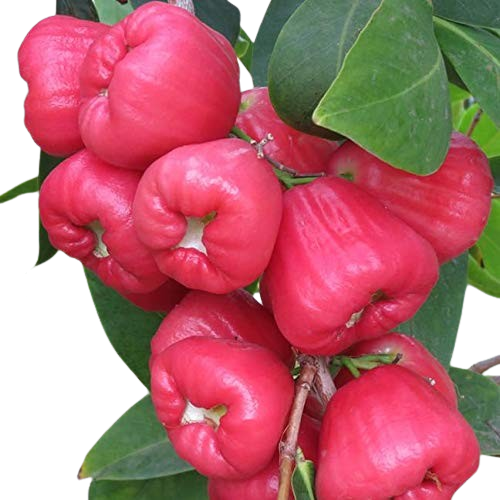
The water apple, also known as wax apple, is a bell-shaped tropical fruit with a waxy skin and crisp watery flesh. There are 25 calories in water apple per 100 g (3.5 oz). According to water apple nutrition facts, a 100 g (3.5 oz) portion delivers 5.7 g of carbohydrates, 0.6 g of protein, and 0.3 g of fat. Research by Monrroy et al. (2017), "Phenolic Content and Antioxidant Capacity of Wax Apple," found that the fruit is a rich source of cell-protecting antioxidants. Key water apple health benefits include its ability to help regulate blood sugar with the compound jambosine and its immune-boosting Vitamin C content.
Common types include the deep red Chomphu Phet and the pale green Chomphu Kiao. The crisp, pear-like flavor is used in savory dishes like the Yam Polamai at Somtum Der and the Rojak at PappaRich. It is also found in desserts such as the Water Apple in Syrup at After You Dessert Cafe and the Mixed Fruit Shaved Ice at Meet Fresh. Over 5 popular main dishes and 10 desserts use this fruit in restaurants like The Blind Goat and Nara Thai Cuisine.
The water apple originated in the Malay Archipelago and was spread to other parts of Asia thousands of years ago. Global production is led by Thailand, which grew 370 kt in 2024, followed by Indonesia at 345 kt. Consumption is highest in Indonesia and Thailand, where the fruit is eaten as a daily snack. The price for a kilogram of fresh water apples was $1.50 USD in 2005 and has risen to $5.50 USD in 2024.
Health guidelines suggest eating 100 g (3.5 oz) of the fruit daily, which provides 25 calories. These extra calories can be burned doing 7 minutes of walking for women (70 kg), and 6 minutes of walking for men (84 kg). For those eating a Yam Polamai salad containing 280 calories, the effort increases to 79 minutes of walking for a woman and 66 minutes for a man.
Water Apple nutrition
| Stats | Weight |
|---|---|
| Carbs | 5.7 grams |
| Protein | 0.6 grams |
| Fats | 0 grams |
| Sugars | 5 grams |
- Large Water Apple Calories (Nutritional Facts)
- Medium Water Apple Calories (Nutritional Facts)
- Small Water Apple Calories (Nutritional Facts)
- Raw Water Apple Nutrition
- Sodium in Water Apple
- Potassium in Water Apple
- Sugar in Water Apple
- Fiber in Water Apple
- Protein in Water Apple
- Carbs in Water Apple
- Fat in Water Apple
- Vitamins in Water Apple
- Minerals in Water Apple
Large Water Apple Calories (Nutritional Facts)
A large 135g serving of raw water apples, also known as wax apple, provides 34 calories. This portion delivers 0.4 g of total fat, 0.8 g of protein, 7.7 g of total carbohydrates, and 2 g of dietary fiber. This quantity also supplies 29 mg of Vitamin C.
A medium serving of fresh water apples, weighing 100 g (3.5 oz), contains 25 calories. The nutritional profile includes 0.3 g of total fat, 0.6 g of protein, and 5.7 g of carbohydrates. A 100 g (3.5 oz) portion delivers 123 mg of potassium.
A small serving of raw water apples, weighing 70 g (2.5 oz), provides 18 calories. This portion consists of 0.2 g of fat, 0.4 g of protein, and 4 g of carbohydrates.
A 100 g portion of raw water apple contains 25 calories, 0.3 g of total fat, 0.6 g of protein, 5.7 g of total carbohydrates, and 1.5 g of dietary fiber. Raw water apple is a very hydrating fruit that provides a good source of antioxidants like tannins and flavonoids. The nutrient density is highest in the fresh fruit, which has a crisp, watery texture.
Water apple contains 1 mg of sodium per 100 g (3.5 oz) serving, which fulfills 0% of the Daily Value (DV). This very low salt level makes the fruit a good choice for people on low-sodium diets.
One hundred grams (3.5 oz) of water apple provides 123 mg of potassium, fulfilling 3% of the DV. This mineral helps keep the heart healthy.
Water apples contain a small amount of natural sugars. The fruit has a mild sweetness, making it lower in sugar than many other tropical fruits.
Water apple provides 1.5 g of dietary fiber per 100 g (3.5 oz) serving, fulfilling 5% of the DV. The fiber is found in the thin skin and the spongy flesh.
Water apple provides 0.6 g of protein per 100 g (3.5 oz) serving.
Water apple contains 5.7 g of total carbohydrates per 100 g (3.5 oz) serving.
The fat content in 100 g (3.5 oz) of water apple is 0.3 g.
A 100 g (3.5 oz) serving of raw water apple provides 22.3 mg of Vitamin C, fulfilling 25% of the DV. It also contains significant amounts of Vitamin A and Niacin.
Water apples supply 29 mg of Calcium (2% DV), 5 mg of Magnesium (1% DV), and 0.1 mg of Iron (1% DV) per 100 g (3.5 oz). The fruit also has trace amounts of Zinc and Copper.
Get a Custom Report on Water Apple Nutrition Data – Contact Us!
What are the Types of Water Apple?
There are a few different types of water apple, which are usually separated by color. The table below shows the most common water apple types and their calorie information.
| Type | Description | Calories (per 100g) | Calorie Differences & Qualifications |
|---|---|---|---|
|
Red Water Apple
|
The most common variety; has a crisp and sweet taste. | 25 | Baseline for energy data in commercial markets. |
|
Green Water Apple
|
A smaller, longer fruit with a slightly tart flavor. | 25 | Same calories; often used in salads for a crunch. |
|
White Water Apple
|
A mild-flavored fruit that is often larger and less sweet. | 22 | Slightly lower in calories due to more water content. |
What are Desserts with Water Apples?
The crisp texture and mild sweetness of water apples make them a popular fruit for fresh desserts in Southeast Asia. They are often served chilled in light syrups or mixed with other tropical fruits. The table below lists dessert items that feature water apples as a main ingredient.
| Dish Name | Calories | Type | Carbs | Sugar | Protein | Fat | Cuisine | Restaurants |
|---|---|---|---|---|---|---|---|---|
|
Water Apple in Syrup
|
140 | Fruit | 34g | 28g | 1g | 0g | Thai | After You Dessert Cafe |
|
Mixed Fruit Shaved Ice
|
280 | Frozen | 62g | 54g | 2g | 1g | Taiwanese | Meet Fresh |
|
Fresh Fruit Platter
|
90 | Fruit | 22g | 18g | 1g | 0g | Asian | Tim Ho Wan |
|
Water Apple Sorbet
|
120 | Frozen | 30g | 26g | 0g | 0g | Artisanal | Guss Dam Good (Bangkok) |
|
Tropical Fruit Salad
|
110 | Fruit | 28g | 22g | 1g | 0g | Thai | Greyhound Cafe |
|
Chilled Water Apple Jelly
|
130 | Jelly | 32g | 26g | 1g | 0g | Cantonese | Lei Garden |
|
Water Apple Smoothie
|
160 | Beverage | 38g | 32g | 1g | 0.5g | Fusion | Juice Press |
What are the Main Dishes with Water Apples?
Some main dishes that use water apples are Thai spicy fruit salads like Yam Polamai and Malaysian Rojak. The fruit adds a crunchy texture and a bit of sweetness that goes well with spicy dressings. The table below lists the nutritional facts for real savory dishes that use water apples.
| Dish Name | Calories | Type | Carbs | Sugar | Protein | Fat | Cuisine | Restaurants |
|---|---|---|---|---|---|---|---|---|
|
Yam Polamai (Spicy Fruit Salad)
|
280 | Salad | 34g | 22g | 8g | 12g | Thai | Somtum Der |
|
Water Apple & Shrimp Salad
|
320 | Salad | 24g | 14g | 22g | 16g | Vietnamese | The Blind Goat |
|
Rojak (Fruit Salad with Paste)
|
380 | Salad | 42g | 28g | 12g | 18g | Malaysian | PappaRich |
|
Crispy Catfish with Water Apple
|
540 | Seafood | 38g | 12g | 32g | 34g | Thai | Nara Thai Cuisine |
|
Water Apple Som Tum
|
210 | Salad | 32g | 18g | 6g | 8g | Thai | Zap Ver |
|
Seared Scallops with Fruit Salsa
|
350 | Seafood | 14g | 8g | 34g | 18g | Fusion | Roy's Restaurant |
What Cuisines Prefer Water Apples the Most?
Water apple is a very important fruit in Thai, Vietnamese, Malaysian, and Indonesian cuisines. In Thailand, it is eaten as a snack with salt and chili or used in salads. In Malaysia and Indonesia, it is a key ingredient in Rojak, a spicy fruit salad. The table below shows the cuisines and dishes.
| Cuisine | Dish Name | Calories | Restaurants |
|---|---|---|---|
|
Thai
|
Yam Polamai | 280 | Somtum Der |
|
Vietnamese
|
Water Apple & Shrimp Salad | 320 | The Blind Goat |
|
Malaysian
|
Rojak | 380 | PappaRich |
|
Thai Dessert
|
Water Apple in Syrup | 140 | After You Dessert Cafe |
|
Modern Thai
|
Crispy Catfish with Water Apple | 540 | Nara Thai Cuisine |
Which Countries Produce the Most Water Apples?
The top producers of water apples are Thailand, Indonesia, Taiwan, Vietnam, and Malaysia. In 2021, Thailand produced 340 kt of the fruit, making it the top exporter. Taiwan is known for growing the expensive "Black Pearl" variety. The table below shows the production in kilotonnes over 20 years.
| Country | 2005 | 2006 | 2007 | 2008 | 2009 | 2010 | 2011 | 2012 | 2013 | 2014 | 2015 | 2016 | 2017 | 2018 | 2019 | 2020 | 2021 | 2022 | 2023 | 2024 |
|---|---|---|---|---|---|---|---|---|---|---|---|---|---|---|---|---|---|---|---|---|
| Thailand | 210 | 225 | 240 | 255 | 270 | 285 | 260 | 290 | 305 | 320 | 335 | 310 | 340 | 355 | 365 | 330 | 340 | 350 | 360 | 370 |
| Indonesia | 180 | 190 | 200 | 210 | 220 | 230 | 240 | 250 | 260 | 270 | 280 | 290 | 300 | 310 | 320 | 325 | 330 | 335 | 340 | 345 |
| Taiwan | 85 | 90 | 95 | 100 | 105 | 110 | 115 | 120 | 125 | 130 | 135 | 140 | 145 | 150 | 155 | 158 | 160 | 162 | 165 | 168 |
| Vietnam | 60 | 65 | 70 | 75 | 80 | 85 | 90 | 95 | 100 | 105 | 110 | 115 | 120 | 125 | 130 | 135 | 140 | 145 | 150 | 155 |
| Malaysia | 40 | 42 | 45 | 48 | 50 | 52 | 55 | 58 | 60 | 62 | 65 | 68 | 70 | 72 | 75 | 78 | 80 | 82 | 85 | 88 |
Which Countries Consume the Most Water Apples?
The top consumers of water apples are Indonesia, Thailand, Vietnam, and Taiwan based on local farm reports. Consumption is calculated by how much fresh fruit is sold in local markets. Indonesia eats most of its own crop as a daily snack. The table below represents the apparent food supply and utilization of water apple products in these leading nations.
| Country | 2005 | 2006 | 2007 | 2008 | 2009 | 2010 | 2011 | 2012 | 2013 | 2014 | 2015 | 2016 | 2017 | 2018 | 2019 | 2020 | 2021 | 2022 | 2023 | 2024 |
|---|---|---|---|---|---|---|---|---|---|---|---|---|---|---|---|---|---|---|---|---|
| Indonesia | 178 | 188 | 198 | 208 | 218 | 228 | 238 | 248 | 258 | 268 | 278 | 288 | 298 | 308 | 318 | 323 | 328 | 333 | 338 | 343 |
| Thailand | 190 | 200 | 210 | 220 | 230 | 240 | 220 | 245 | 255 | 265 | 275 | 255 | 280 | 290 | 300 | 270 | 280 | 290 | 300 | 310 |
| Vietnam | 58 | 63 | 68 | 73 | 78 | 83 | 88 | 93 | 98 | 103 | 108 | 113 | 118 | 123 | 128 | 133 | 138 | 143 | 148 | 153 |
| Taiwan | 70 | 74 | 78 | 82 | 86 | 90 | 94 | 98 | 102 | 106 | 110 | 114 | 118 | 122 | 126 | 128 | 130 | 132 | 134 | 136 |
| Philippines | 25 | 27 | 29 | 31 | 33 | 35 | 37 | 39 | 41 | 43 | 45 | 47 | 49 | 51 | 53 | 55 | 57 | 59 | 61 | 63 |
How Do Prices of Water Apple-including Dishes Change?
Restaurant menu prices for dishes that use water apples as an ingredient have increased because of the high cost of importing the fruit. The table below compares historical and current price ranges.
| Restaurant | Dish Name | Old Price Range (2015–2017) | Current Price Range (2025–2026) |
|---|---|---|---|
| Somtum Der | Yam Polamai (Spicy Fruit Salad) | $8.50 - $10.00 | $12.95 - $15.50 |
| The Blind Goat | Water Apple & Shrimp Salad | $11.00 - $13.00 | $16.00 - $18.50 |
| PappaRich | Rojak (Fruit Salad) | $7.95 - $9.50 | $11.50 - $13.50 |
| After You Dessert Cafe | Rose Apple in Syrup | $5.50 - $6.95 | $8.50 - $10.00 |
| Nara Thai Cuisine | Crispy Catfish with Water Apple | $14.50 - $16.50 | $21.00 - $24.50 |
| Greyhound Cafe | Tropical Fruit Salad | $6.50 - $8.00 | $9.95 - $11.95 |
What is the Water Apple Calorie for 100 Grams?
One hundred grams (3.5 oz) of raw water apple contains 25 calories.
What is the Water Apple Calorie for 1 KG?
One kilogram (1,000 g) of raw water apple provides 250 calories.
What is the Calorie of 1 Water Apple?
A large whole fruit weighs 135 g (4.8 oz) and has 34 calories. A medium whole fruit weighing 100 g (3.5 oz) has 25 calories. A small whole fruit weighs 70 g (2.5 oz) and has 18 calories.
What are the Health Benefits of Water Apple?
Water apple provides some health benefits like boosting the immune system and helping to control blood sugar levels due to its high concentration of Vitamin C and a special compound called jambosine. This fruit, often called a "wax apple," "chomphu," or "java apple," is a popular food in Southeast Asia. A list of the health benefits of water apple are shown below.
- Supports Immune System: A 100 g (3.5 oz) serving has 22.3 mg of Vitamin C, fulfilling 25% of the DV. A study by Carr and Maggini (2017), "Vitamin C and Immune Function," shows that this nutrient helps the body stay strong against germs.
- Aids Digestion: The fiber in the fruit helps the gut work well and prevents constipation.
- Helps Manage Diabetes: The compound jambosine may stop starches from turning into sugar, which helps control blood sugar.
- Protects Heart Health: Potassium and fiber work together to keep blood pressure and cholesterol levels healthy.
- Hydrates the Body: The fruit is over 90% water, which helps keep the body hydrated and clean.
- Fights Cell Damage: Flavonoids and tannins in the fruit act as antioxidants and stop free radicals from harming cells.
- Helps Skin: Vitamin C is needed to make collagen, which keeps skin firm and healthy.
What are the Downsides of Water Apple?
Water apple has been known to cause some unwanted effects like stomach issues or allergic reactions due to its high fiber content and specific plant compounds. A list of the downsides of water apple are shown below.
- Causes Bloating: Eating too many of these fruits can cause gas or diarrhea because of their fiber.
- Risk of Allergy: Some people who are allergic to similar fruits in the Myrtaceae family (like guava) might get a rash or itchy mouth.
- Toxicity of Seeds: The seeds contain small amounts of chemicals that can be harmful if eaten in large amounts.
- Pesticide Risk: The thin skin of the fruit can absorb farm chemicals, so it is important to wash it well.
Are Water Apples Good for You?
Yes, water apples are good for you because they provide 25% of the DV for Vitamin C and a lot of water in a very low-calorie 100 g (3.5 oz) serving. Healthy people should eat 100 g (3.5 oz) to 200 g (7 oz) of the fresh fruit per day to get the best immune and digestive benefits. A study by Monrroy et al. (2017), "Phenolic Content and Antioxidant Capacity of Wax Apple," confirms that the fruit is a great source of antioxidants. This fruit is a perfect snack for people who want to stay hydrated and get nutrients without many calories.
How Do Calories Change According to Water Apple Types?
The calories in water apples change very little based on their color. Both red and green water apples contain 25 calories per 100 g (3.5 oz). White water apples have slightly fewer calories at 22 per 100 g (3.5 oz) because they have more water and less sugar. The biggest change in calories happens when the fruit is cooked into a jam or preserve with sugar, which can increase the energy to 250 calories per 100 g (3.5 oz).
What is the Origin of Water Apple?
The origin of the water apple (Syzygium samarangense) is the Malay Archipelago and the Greater Sunda Islands. It has been grown in Southeast Asia for thousands of years. The fruit got its name because of its extremely high water content, which makes it very refreshing. It is also called the Java apple or wax apple.
The fruit was brought to the Caribbean and Central America in the 18th century. Today, Thailand, Indonesia, and Taiwan are the world's biggest growers of the fruit. They grow special types like the "Black Pearl" wax apple for export.
Explore More Fruits
Discover more Fruits with detailed nutrition facts, calorie counts, vitamins, minerals, and health benefits. Compare similar foods, serving sizes, macronutrients, and key nutrients to find the best option for your diet and nutrition goals.
 Acai calories
 Acerola calories
 Ambarella calories
 Amla calories
 Apple calories
 Apricot calories
 Avocado calories
 Babaco calories
 Bael Fruit calories
 Banana calories
 Black Grapes calories
 Blackcurrant calories