Calories and Nutritions in Wheat Berries
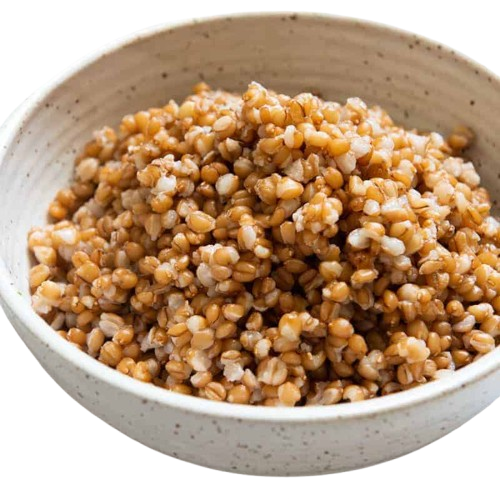
Wheat berries are a whole grain used in salads and breads. A small one-quarter cup serving of raw hard red wheat berries (46g) has 150 calories, while a small quarter-cup of cooked wheat berries (45.5g) contains 74 calories. A medium 100 gram serving of raw wheat berries contains 327 calories, while 100g serving of cooked berries has 163 calories. A quarter-cup dry serving of Bob's Red Mill Hard Red Wheat Berries offers 150 calories.
The wheat berries nutrition profile is notable for a high concentration of dietary fiber and manganese, with a single cup of cooked berries providing 9.6g of fiber (34% DV) and 99% of the DV for manganese. A study confirmed that whole grain consumption is associated with a reduced risk of several chronic diseases (Aune, D., et al., 2016). Major wheat berries benefits come from this nutrient density. The high fiber content supports digestive health and can aid in weight management by promoting satiety. A 100g serving of cooked wheat berries also delivers 14% of the DV for magnesium and 13% for phosphorus, supporting bone health and energy metabolism.
Available in several forms, including hard red, soft red, hard white, and soft white, wheat berries are primarily produced by China, India, and the Russian Federation, with China and India also being the top consumers. The price for this global crop has seen significant fluctuation over the last 20 years. Commodity prices rose from under $4.00 per bushel in the early 2000s to peaks over $12.00 per bushel in 2022, influenced by global harvests, geopolitical events, and demand for animal feed and biofuels.
Wheat berries are a culinary staple found in restaurants like True Food Kitchen and Sweetgreen. A sensible consumption amount, considering the overall wheat berries nutrition facts, is a one-cup serving of cooked wheat berries (182g), which provides 297 calories. These calories can be expended through 30 minutes of running or 38 minutes of swimming.
Wheat Berries nutrition
| Stats | Weight |
|---|---|
| Carbs | 27 grams |
| Protein | 4 grams |
| Fats | 0 grams |
| Sugars | 0.5 grams |
- Large Wheat Berries Calories (Nutritional Facts)
- Medium Wheat Berries Calories (Nutritional Facts)
- Small Wheat Berries Calories (Nutritional Facts)
- Raw Wheat Berries Nutrition
- Sodium in Wheat Berries
- Potassium in Wheat Berries
- Sugar in Wheat Berries
- Fiber in Wheat Berries
- Protein in Wheat Berries
- Carbs in Wheat Berries
- Fat in Wheat Berries
- Vitamins in Wheat Berries
- Minerals in Wheat Berries
Large Wheat Berries Calories (Nutritional Facts)
A large serving of raw hard red wheat berries, equivalent to one cup (184g), has 602 calories, 23.2g of protein, 2.8g of fat, 131g of carbohydrates, 22.4g of fiber, 0.75g of sugar, and 4mg of sodium. A large one-cup serving (182g) of cooked wheat berries contains 297 calories, 11g of protein, 1.3g of fat, 64g of carbohydrates, 9.6g of fiber, 0g of sugar, and 9mg of sodium.
A medium 100g (3.5oz) serving of raw hard red wheat berries contains 327 calories, 12.6g of protein, 1.5g of fat, 71.2g of carbohydrates, 12.2g of fiber, 0.41g of sugar, and 2mg of sodium. A medium 100g serving of cooked wheat berries provides 163 calories, 6.04g of protein, 0.71g of fat, 35.2g of carbohydrates, 5.3g of fiber, 0g of sugar, and 5mg of sodium.
A small serving of raw hard red wheat berries, or one-quarter cup (46g), contains 150 calories, 5.8g of protein, 0.7g of fat, 32.7g of carbohydrates, 5.6g of fiber, 0.19g of sugar, and 1mg of sodium. A small quarter-cup serving (45.5g) of cooked wheat berries has 74 calories, 2.7g of protein, 0.3g of fat, 16g of carbohydrates, 2.4g of fiber, 0g of sugar, and 2mg of sodium.
Uncooked hard red wheat berries provide a dense source of nutrients. A 100g serving of raw wheat berries contains 327 calories, 12.6g of protein, 1.5g of fat, 71.2g of carbohydrates, 12.2g of fiber, 0.4g of sugar, and 2mg of sodium. A one-cup serving (184g) of raw wheat berries offers 602 calories, 23.2g of protein, 2.8g of fat, 131g of carbohydrates, 22.4g of fiber, 0.75g of sugar, and 4mg of sodium.
A large one-cup serving (184g) of raw wheat berries contains 4mg of sodium (0% DV). A large one-cup serving (182g) of cooked wheat berries has 9mg of sodium (0% DV). A medium 100g serving of raw wheat berries contains 2mg of sodium (0% DV). A medium 100g serving of cooked wheat berries has 5mg of sodium (0% DV). A small quarter-cup serving (46g) of raw wheat berries contains 1mg of sodium (0% DV). A small quarter-cup serving (45.5g) of cooked wheat berries has 2mg of sodium (0% DV). A 100g serving of raw wheat berries contains 2mg of sodium (0% DV).
A large one-cup serving (184g) of raw wheat berries contains 673mg of potassium (14% DV). A large one-cup serving (182g) of cooked wheat berries has 266mg of potassium (6% DV). A medium 100g serving of raw wheat berries contains 366mg of potassium (8% DV). A medium 100g serving of cooked wheat berries has 146mg of potassium (3% DV). A small quarter-cup serving (46g) of raw wheat berries contains 168mg of potassium (4% DV). A small quarter-cup serving (45.5g) of cooked wheat berries has 66mg of potassium (1% DV). A 100g serving of raw wheat berries contains 366mg of potassium (8% DV).
A large one-cup serving (184g) of raw wheat berries contains 0.75g of sugar. Cooked wheat berries contain 0g of sugar. A medium 100g serving of raw wheat berries contains 0.41g of sugar. A small quarter-cup serving (46g) of raw wheat berries contains 0.19g of sugar. A 100g serving of raw wheat berries contains 0.41g of sugar.
A large one-cup serving (184g) of raw wheat berries contains 22.4g of fiber (80% DV). A large one-cup serving (182g) of cooked wheat berries has 9.6g of fiber (34% DV). A medium 100g serving of raw wheat berries contains 12.2g of fiber (44% DV). A medium 100g serving of cooked wheat berries has 5.3g of fiber (19% DV). A small quarter-cup serving (46g) of raw wheat berries contains 5.6g of fiber (20% DV). A small quarter-cup serving (45.5g) of cooked wheat berries has 2.4g of fiber (9% DV). A 100g serving of raw wheat berries contains 12.2g of fiber (44% DV).
A large one-cup serving (184g) of raw wheat berries contains 23.2g of protein (46% DV). A large one-cup serving (182g) of cooked wheat berries has 11g of protein (22% DV). A medium 100g serving of raw wheat berries contains 12.6g of protein (25% DV). A medium 100g serving of cooked wheat berries has 6.04g of protein (12% DV). A small quarter-cup serving (46g) of raw wheat berries contains 5.8g of protein (12% DV). A small quarter-cup serving (45.5g) of cooked wheat berries has 2.7g of protein (5% DV). A 100g serving of raw wheat berries contains 12.6g of protein (25% DV).
A large one-cup serving (184g) of raw wheat berries contains 131g of carbohydrates (48% DV). A large one-cup serving (182g) of cooked wheat berries has 64g of carbohydrates (23% DV). A medium 100g serving of raw wheat berries contains 71.2g of carbohydrates (26% DV). A medium 100g serving of cooked wheat berries has 35.2g of carbohydrates (13% DV). A small quarter-cup serving (46g) of raw wheat berries contains 32.7g of carbohydrates (12% DV). A small quarter-cup serving (45.5g) of cooked wheat berries has 16g of carbohydrates (6% DV). A 100g serving of raw wheat berries contains 71.2g of carbohydrates (26% DV).
A large one-cup serving (184g) of raw wheat berries contains 2.8g of total fat (4% DV). A large one-cup serving (182g) of cooked wheat berries has 1.3g of total fat (2% DV). A medium 100g serving of raw wheat berries contains 1.5g of total fat (2% DV). A medium 100g serving of cooked wheat berries has 0.71g of total fat (1% DV). A small quarter-cup serving (46g) of raw wheat berries contains 0.7g of total fat (1% DV). A small quarter-cup serving (45.5g) of cooked wheat berries has 0.3g of total fat (0% DV). A 100g serving of raw wheat berries contains 1.5g of total fat (2% DV).
A large one-cup serving (184g) of raw wheat berries provides Thiamin (79% DV), Niacin (63% DV), and Vitamin B6 (38% DV). A medium 100g serving of raw wheat berries provides Thiamin (43% DV), Niacin (34% DV), and Vitamin B6 (21% DV). A small quarter-cup serving (46g) of raw wheat berries provides Thiamin (20% DV), Niacin (16% DV), and Vitamin B6 (9% DV). A 100g serving of raw wheat berries provides Thiamin (43% DV).
A large one-cup serving (184g) of raw wheat berries provides Iron (38% DV), Magnesium (69% DV), Phosphorus (73% DV), Zinc (50% DV), and Manganese (266% DV). A large one-cup serving (182g) of cooked wheat berries provides Iron (12% DV), Magnesium (25% DV), Phosphorus (23% DV), Zinc (16% DV), and Manganese (99% DV). A medium 100g serving of raw wheat berries provides Iron (21% DV), Magnesium (38% DV), Phosphorus (40% DV), Zinc (27% DV), and Manganese (145% DV). A medium 100g serving of cooked wheat berries provides Iron (7% DV), Magnesium (14% DV), Phosphorus (13% DV), Zinc (9% DV), and Manganese (54% DV). A 100g serving of raw wheat berries provides Manganese (145% DV).
Get a Custom Report on Wheat Berries Nutrition Data – Contact Us!
What are the Types of Wheat Berries?
The types of wheat berries are distinguished by the species of wheat, the hardness of the kernel, and the color. The table below outlines the features of these common types.
| Type | Description | Calories (per 100g, raw) | Calorie Qualifications |
|---|---|---|---|
|
Hard Red Wheat Berries
|
A high-protein wheat with a reddish-brown color and a firm, chewy texture. | 327 | The high protein content makes this type ideal for yeast breads. The calorie count is standard for whole wheat. |
|
Soft Red Wheat Berries
|
A lower-protein wheat with a reddish-brown color and a softer texture. | 325 | The lower protein and gluten content results in a slightly lower calorie count and is suitable for pastries and flatbreads. |
|
Hard White Wheat Berries
|
A high-protein wheat with a tan color and a milder flavor than red varieties. | 327 | The nutritional profile is similar to hard red wheat, making the calorie count identical. |
|
Soft White Wheat Berries
|
A lower-protein wheat with a tan color and a very mild, sweet flavor. | 325 | Similar to soft red wheat, the lower protein content leads to a slightly lower calorie count. |
|
Spelt Berries
|
An ancient species of wheat with a nutty, sweet flavor and a chewy texture. | 338 | Spelt has a slightly different nutritional composition with higher protein and fiber, resulting in a higher calorie count. |
|
Farro (Emmer) Berries
|
An ancient species of wheat, larger than modern wheat, with a firm texture and nutty flavor. | 336 | Emmer farro has a unique nutrient profile that gives the grain a slightly higher calorie count than modern wheat. |
What are the Desserts With Wheat Berries?
Wheat berries can be used in desserts, offering a chewy texture and nutty flavor, particularly in puddings and rustic baked goods. A list of desserts that incorporate wheat berries is presented in the table below.
| Dish Name | Calories (Estimate per serving) | Type of Wheat Berries | Carbs (g) (Estimate) | Sugar (g) (Estimate) | Protein (g) (Estimate) | Fat (g) (Estimate) | Cuisine | Restaurants |
|---|---|---|---|---|---|---|---|---|
|
Wheat Berry Pudding
|
380 | Soft White or Red | 65 | 30 | 9 | 10 | New American | Blue Hill at Stone Barns (Pocantico Hills, NY) |
|
Frumenty (Medieval Wheat Porridge)
|
410 | Soft Red | 70 | 35 | 10 | 11 | British | St. John (London, UK) |
|
Sweet Wheat Berry Salad
|
350 | Hard White | 55 | 25 | 8 | 12 | Mediterranean | Zaytinya (Washington, D.C.) |
|
Wheat Berry and Fruit Pilaf
|
390 | Hard Red | 70 | 30 | 9 | 8 | Middle Eastern | Mamoun's Falafel (New York, NY) |
|
Coliva (Memorial Wheat Dish)
|
450 | Soft White | 75 | 40 | 10 | 12 | Eastern Orthodox | Avra (New York, NY) |
|
Wheat Berry Muffins
|
360 | Soft White (ground) | 50 | 22 | 7 | 15 | American Bakery | Tartine Bakery (San Francisco, CA) |
|
Wheat Berry Cookies
|
220 | Soft White (ground) | 30 | 18 | 4 | 10 | Health Food | Erewhon Market (Los Angeles, CA) |
|
Pastiera Napoletana (Italian Wheat Pie)
|
520 | Soft White | 60 | 35 | 12 | 25 | Italian | Ferrara Bakery (New York, NY) |
What are the Main Dishes With Wheat Berries?
In savory cooking, wheat berries are used as a hearty base for salads, soups, and pilafs, prized for their chewy texture and nutty flavor. The table below presents a selection of main dishes that utilize wheat berries.
| Dish Name | Calories (Estimate per serving) | Type of Wheat Berries | Carbs (g) (Estimate) | Sugar (g) (Estimate) | Protein (g) (Estimate) | Fat (g) (Estimate) | Cuisine | Restaurants |
|---|---|---|---|---|---|---|---|---|
|
Wheat Berry Salad
|
450 | Hard Red or White | 55 | 8 | 15 | 20 | Californian | Sweetgreen |
|
Hearty Wheat Berry Soup
|
410 | Hard Red | 60 | 10 | 18 | 9 | New American | Gramercy Tavern (New York, NY) |
|
Wheat Berry Pilaf
|
480 | Hard Red | 70 | 6 | 16 | 15 | Mediterranean | CAVA |
|
Grain Bowl with Wheat Berries
|
580 | Hard Red or Spelt | 75 | 9 | 20 | 22 | Health Food | True Food Kitchen |
|
Stuffed Peppers with Wheat Berries
|
510 | Hard White | 65 | 15 | 20 | 19 | American | Tender Greens |
|
Wheat Berries with Roasted Vegetables
|
490 | Hard Red | 60 | 12 | 15 | 21 | Farm-to-Table | The French Laundry (Yountville, CA) |
|
Mushroom and Wheat Berry Risotto
|
550 | Farro or Spelt | 70 | 7 | 18 | 22 | Italian-American | Flour + Water (San Francisco, CA) |
|
Chili with Wheat Berries
|
520 | Hard Red | 65 | 10 | 25 | 18 | American | Panera Bread |
What Cuisines Prefer Wheat Berries the Most?
From Mediterranean salads to Italian grain pies, wheat berries are a cherished staple in many culinary traditions that value whole grains. An overview of the culinary styles that prominently feature wheat berries is shown in the table below.
| Cuisine | Dish | Types of Wheat Berries Used | Calories (Estimate) | Restaurant(s) |
|---|---|---|---|---|
|
Mediterranean
|
Wheat Berry Salads, Pilafs | Hard Red, Hard White | 450-550 | Zaytinya (Washington, D.C.) |
|
New American
|
Grain Bowls, Hearty Soups | Hard Red, Spelt, Farro | 410-600 | Canlis (Seattle, WA) |
|
Italian
|
Pastiera Napoletana, Farro Salads | Soft White, Farro (Emmer) | 500-600 | Via Carota (New York, NY) |
|
Californian
|
Salads, Grain Bowls | Hard Red, Hard White | 450-580 | Gjelina (Venice, CA) |
|
Health Food
|
Grain Bowls, Salads | All types | 400-600 | True Food Kitchen |
|
Farm-to-Table
|
Side Dishes, Salads | All types | 400-500 | Blue Hill at Stone Barns (Pocantico Hills, NY) |
|
Vegetarian/Vegan
|
Main Courses, Salads | All types | 450-600 | Moosewood Restaurant (Ithaca, NY) |
|
Middle Eastern
|
Salads, Pilafs | Hard Red, Hard White | 390-500 | Mamoun's Falafel (New York, NY) |
Which Countries Produce the Most Wheat Berries?
The top producers of wheat, the source of wheat berries, are China, India, and the Russian Federation. These countries lead the world in total wheat production. The table below shows the production quantity of wheat in key countries.
| Country | 2003 | 2008 | 2013 | 2018 | 2019 | 2020 | 2021 | 2022 |
|---|---|---|---|---|---|---|---|---|
| China | 86,488,000 | 112,462,000 | 121,723,000 | 131,440,000 | 133,590,000 | 134,250,000 | 136,946,000 | 137,720,000 |
| India | 65,760,800 | 78,570,000 | 93,510,000 | 99,700,000 | 103,600,000 | 107,860,000 | 109,590,000 | 107,740,000 |
| Russian Federation | 34,104,700 | 63,765,100 | 52,090,000 | 72,136,100 | 74,453,000 | 85,896,000 | 76,056,000 | 104,230,000 |
| United States | 63,822,000 | 68,029,000 | 61,731,000 | 51,287,000 | 52,258,000 | 49,691,000 | 44,792,000 | 44,902,000 |
| France | 30,490,000 | 39,230,000 | 38,620,000 | 35,798,000 | 39,552,000 | 30,144,000 | 36,571,000 | 30,550,000 |
| Australia | 25,600,000 | 21,420,000 | 22,860,000 | 17,300,000 | 15,200,000 | 33,300,000 | 36,200,000 | 39,000,000 |
Which Countries Consume the Most Wheat Berries?
The top consumers of wheat, the source of wheat berries, are China and India, which have large populations that rely on wheat as a staple food. Per capita consumption data reflects the importance of wheat in diets around the world. The table below shows the food supply of wheat for human consumption in select countries.
| Country | 2003 | 2008 | 2013 | 2018 | 2019 | 2020 |
|---|---|---|---|---|---|---|
| Turkey | 199.5 | 205.1 | 210.3 | 215.2 | 214.8 | 214.8 |
| Algeria | 185.2 | 190.4 | 195.6 | 200.1 | 201.3 | 201.3 |
| Egypt | 145.8 | 148.2 | 150.1 | 152.3 | 152.1 | 152.1 |
| Italy | 120.5 | 118.9 | 117.5 | 116.8 | 116.5 | 116.5 |
| China | 75.6 | 78.2 | 80.5 | 82.1 | 82.5 | 82.5 |
| United States | 60.2 | 59.8 | 59.5 | 59.1 | 59.0 | 59.0 |
How Do Prices of Wheat Berries-Including Dishes Change?
The prices on restaurant menus for dishes containing wheat berries have climbed over the past ten years, a movement that mirrors the volatile commodity price of wheat and increasing operational expenses. Health-focused and New American restaurants that feature grain bowls and hearty salads show these price adjustments on menus.
| Restaurant | Dish | Old Price (Year) | Current Price (2025) |
|---|---|---|---|
| True Food Kitchen | Ancient Grains Bowl (with wheat berries) | $15.00 (2016) | $17.50 - $19.50 |
| Sweetgreen | Custom Salad with Wheat Berries | $10.50 (2017) | $13.00 - $17.00 |
| CAVA | Grain Bowl with Wheat Berries | $9.10 (2017) | $12.85 - $15.25 |
| Tender Greens | Harvest Salad with Chicken (with wheat berries) | $12.00 (2018) | $16.00 - $19.65 |
| Zaytinya | Big Salad | $11.00 (2015) | $16.00 - $19.00 |
What is the Wheat Berries Calorie for 100 Grams?
A 100 gram serving of raw wheat berries has 327 calories. A 100 gram serving of cooked wheat berries contains 163 calories.
What is the Wheat Berries Calorie for 1 KG?
One kilogram (1000g) of raw wheat berries contains 3270 calories. One kilogram of cooked wheat berries has 1630 calories.
What is the Calorie of 1 Wheat Berries?
The calorie of one serving of wheat berries varies by brand. A quarter-cup dry serving (46g) of Bob's Red Mill Hard Red Wheat Berries contains 150 calories. A quarter-cup dry serving (45g) of Arrowhead Mills Organic Red Winter Wheat Berries has 160 calories. A quarter-cup dry serving (48g) of Great River Organic Milling Hard Red Spring Wheat contains 160 calories.
What are the Health Benefits of Wheat Berries?
The consumption of wheat berries is linked to several health advantages, supported by scientific evidence. A breakdown of the principal health advantages is provided below.
- Supports Digestive Health: Wheat berries are an important source of insoluble dietary fiber. This type of fiber adds bulk to stool and promotes regular bowel movements, helping to prevent constipation and maintain a healthy digestive tract. A large meta-analysis by Aune, D., et al. (2016), "Whole grain consumption and risk of cardiovascular disease, cancer, and all cause and cause specific mortality: systematic review and dose-response meta-analysis of prospective studies," found that high whole grain intake was associated with a reduced risk of several diseases, including those of the digestive system.
- Aids in Blood Sugar Control: The high fiber content in wheat berries slows the absorption of sugar into the bloodstream, which helps to prevent sharp spikes in blood glucose levels. This makes wheat berries a beneficial food for managing blood sugar and reducing the risk of type 2 diabetes. A study by de Munter, J. S. L., et al. (2007), "Whole grain, bran, and germ intake and risk of type 2 diabetes: a prospective cohort study and systematic review," concluded that a higher intake of whole grains is associated with a lower risk of developing type 2 diabetes.
- Rich in Essential Minerals: Wheat berries are a dense source of essential minerals, particularly manganese, magnesium, and selenium. Manganese is crucial for bone formation and enzyme function, while magnesium plays a role in over 300 enzymatic reactions, including nerve function and blood pressure regulation. Selenium is a powerful antioxidant that protects cells from damage. A review by Slavin, J. L. (2004), "Whole grains and human health," details the wide range of micronutrients found in whole grains and their importance for overall health.
What are the Downsides of Wheat Berries?
While wheat berries are a nutritious food, a few potential considerations should be noted. A summary of these potential considerations is presented below.
- Contains Gluten: Wheat berries are the whole kernel of the wheat plant, and as such, they contain gluten. This makes them unsuitable for individuals with celiac disease, non-celiac gluten sensitivity, or a wheat allergy. Ingesting wheat can trigger a range of adverse reactions in these individuals, from digestive distress to a serious autoimmune response. A study by Sapone, A., et al. (2012), "Spectrum of gluten-related disorders: consensus on new nomenclature and classification," outlines the different conditions that require a strict gluten-free diet. A gluten-free alternative is brown rice. A daily suggested amount for whole grains is three one-ounce equivalent servings.
- Contains Phytic Acid: Like many whole grains, wheat berries contain phytic acid, an antinutrient that can bind to minerals like iron and zinc, reducing their absorption in the body. While this is not a concern for most people eating a balanced diet, the effect can be a factor for individuals on plant-based diets with marginal mineral intake. Research by Gibson, R. S., et al. (2010), "A review of phytate, iron, zinc, and calcium concentrations in plant-based complementary foods used in low-income countries and implications for bioavailability," discusses how food preparation methods like soaking or sprouting can help to reduce the phytic acid content of grains.
Are Wheat Berries Good for You?
Yes, wheat berries are a highly nutritious food because the whole grain offers benefits for heart, digestive, and metabolic health. Wheat berries support heart health through a high content of dietary fiber, which helps lower cholesterol levels. A meta-analysis by Aune, D., et al. (2016), "Whole grain consumption and risk of cardiovascular disease, cancer, and all cause and cause specific mortality: systematic review and dose-response meta-analysis of prospective studies," established a clear link between higher whole grain intake and a reduced risk of cardiovascular disease. For digestive health, the insoluble fiber in wheat berries promotes regular bowel movements and helps maintain a healthy gut. A position paper by the Academy of Nutrition and Dietetics from Dahl, W. J., & Stewart, M. L. (2015), "Health Implications of Dietary Fiber," reaffirms the essential role of fiber from sources like whole grains in promoting laxation. The grain's low glycemic index and high fiber content support metabolic health by slowing sugar absorption and promoting stable blood glucose levels. A study by de Munter, J. S. L., et al. (2007), "Whole grain, bran, and germ intake and risk of type 2 diabetes: a prospective cohort study and systematic review," found that a higher intake of whole grains is associated with a lower risk of type 2 diabetes.
How Do Calories Change According to Wheat Berries Types?
The specific type of wheat berry determines its caloric value, with differences resulting from variations in protein, fiber, and carbohydrate composition. Spelt berries have the highest calorie count, with 338 calories per 100g, due to a higher protein and fiber content. Farro (emmer) berries follow with 336 calories per 100g. Hard red and hard white wheat berries, which are higher in protein, both contain 327 calories per 100g. Soft red and soft white wheat berries have the lowest calorie count at 325 calories per 100g, a reflection of their lower protein and gluten content compared to hard wheat varieties.
Are Wheat Berries Carbohydrate or Protein?
Wheat berries are primarily a source of carbohydrates, but they also contain a substantial amount of protein. A 100g serving of raw hard red wheat berries contains 71.2g of carbohydrates and 12.6g of protein. While carbohydrates are the dominant macronutrient, the protein content is significant for a grain, making wheat berries a balanced source of both energy and plant-based protein. The high fiber content, a type of carbohydrate, is also a key nutritional feature.
Are Wheat Berries Considered as Grains?
Yes, wheat berries are considered grains. A wheat berry is the entire, unprocessed kernel of the wheat plant, consisting of the bran, the germ, and the endosperm. This makes the wheat berry a whole grain in its most natural form. All other wheat products, including flour, are derived from processing this original whole grain kernel.
How are Wheat Berries Used in Baking?
Wheat berries are used in baking in two primary ways. The first method involves cooking the whole berries until tender and then incorporating them directly into doughs for rustic, textured breads. This adds a chewy, nutty element and boosts the fiber content of the final loaf. The second, and more common, method is to mill the raw wheat berries into fresh, whole-wheat flour using a grain mill. Home bakers and specialty bakeries do this to achieve the freshest possible flour, which retains all the nutrients from the bran and germ. Hard red and hard white wheat berries, with their high protein content, are milled to make flour for yeast breads, while soft red and soft white wheat berries are milled for lower-protein flour used in pastries, cookies, and cakes.
What is the Origin of Wheat Berries?
Wheat berries' origins are synonymous with the origin of agriculture itself. The wheat berry is simply the whole kernel of the wheat plant, one of the first crops to be domesticated by humans around 10,000 years ago in the Fertile Crescent of the Middle East. Ancient civilizations in Mesopotamia, Egypt, and the Indus Valley relied on this grain as their primary food source. Early humans would have consumed the kernels whole, likely boiled into a porridge or parched over a fire. The development of grinding stones allowed for the creation of the first flours, which led to bread, but the simple, boiled whole berry remained a staple food for millennia. Dishes like frumenty in medieval Europe and coliva in Eastern Orthodox traditions are direct culinary descendants of these ancient preparations, showcasing the long history of consuming the wheat kernel in its whole, unprocessed form.
Explore More Grains
Discover more Grains with detailed nutrition facts, calorie counts, vitamins, minerals, and health benefits. Compare similar foods, serving sizes, macronutrients, and key nutrients to find the best option for your diet and nutrition goals.
 Amaranth calories
 Arborio Rice calories
 Arrowroot Powder calories
 Barley calories
 Basmati Rice calories
 Black Rice calories
 Brown Rice calories
 Buckwheat calories
 Bulgur Wheat calories
 Coconut Flour calories
 Cornmeal calories
 Cornstarch calories