Calories and Nutritions in Wild Cherry
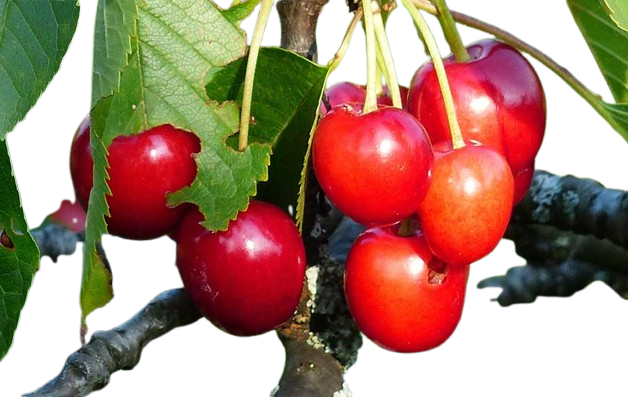
Wild cherry is a tart and bright red fruit that is a key component of German, Persian, and American baking cultures. There are 50 wild cherry calories per 100 g serving. Known as tart cherry, pie cherry, or sour cherry, this fruit is less energy-dense than sweet table cherries because it holds more water. A small 28 g (1 oz) serving provides 14 calories, while a large 155 g (1 cup) portion offers 78 calories in wild cherry. Based on wild cherry nutrition facts, a 100 g serving delivers 12.2 g of carbohydrates, 1 g of protein, and 0.3 g of fat. These fruits offer powerful health benefits like improved sleep quality and faster muscle recovery after hard exercise. Research by Howatson et al. (2012), "Influence of tart cherry juice on melatonin levels and enhanced sleep quality," found that drinking tart cherry juice can significantly increase sleep duration and quality in adults.
Common types include the bright red Montmorency, the dark-fleshed Morello, and the firm, flavorful Balaton. These fruits are essential ingredients in savory main dishes such as the Albaloo Polo at Raffi’s Place, which has 520 calories, and the Grilled Pork with Cherry Glaze at Seasons 52. Popular desserts using the fruit include the Tart Cherry Pie at Grand Traverse Pie Company and the Black Forest Cake at Black Forest Inn.
The origin of the wild cherry is the region between the Caspian Sea and the Balkans, from which it was introduced to North America in the 17th century. Global production is led by Turkey, which grew 210 kt in 2024, followed by Russia at 168 kt. Consumption is highest in Russia and Germany, where the fruit is used for juices and traditional cakes. The retail price for a 1 lb bag of frozen tart cherries has increased from $2.25 USD in 2005 to $4.50 USD in 2024.
Health guidelines suggest a recommended daily intake of 155 g (1 cup), which contributes 78 calories. These calories can be burned doing 18 to 22 minutes of walking at 5 km/h. For those eating a slice of Black Forest Cake with 480 calories, the physical cost jumps to 137 minutes of walking for a woman and 114 minutes for a man.
Wild Cherry nutrition
| Stats | Weight |
|---|---|
| Carbs | 12 grams |
| Protein | 1 grams |
| Fats | 0 grams |
| Sugars | 8 grams |
- Large Wild Cherry Calories (Nutritional Facts)
- Medium Wild Cherry Calories (Nutritional Facts)
- Small Wild Cherry Calories (Nutritional Facts)
- Raw Wild Cherry Nutrition
- Sodium in Wild Cherry
- Potassium in Wild Cherry
- Sugar in Wild Cherry
- Fiber in Wild Cherry
- Protein in Wild Cherry
- Carbs in Wild Cherry
- Fat in Wild Cherry
- Vitamins in Wild Cherry
- Minerals in Wild Cherry
Large Wild Cherry Calories (Nutritional Facts)
A large serving of raw wild cherries weighing 155 g (1 cup) contains 78 calories. This portion provides 0.5 g of total fat, 1.6 g of protein, 19 g of carbohydrates, and 13 g of sugar. A large 155 g (1 cup) serving of canned sour cherries in syrup contains 264 calories due to the added sugar content.
A medium serving of fresh wild cherries, also known as tart or pie cherries, weighing 100 g (3.5 oz), provides 50 calories. This amount delivers 0.3 g of total fat, 1 g of protein, 12 g of carbohydrates, and 8 g of sugar. A 100 g (3.5 oz) serving of frozen wild cherries contains 46 calories.
A small serving of raw wild cherries, weighing 28 g (1 oz), contains 14 calories. This portion consists of 0.08 g of total fat, 0.28 g of protein, 3.4 g of carbohydrates, and 2.4 g of sugar.
A 100 g (3.5 oz) serving of raw wild cherries provides 50 calories, 0.3 g of total fat, 1 g of protein, 12 g of total carbohydrates, and 1.6 g of dietary fiber. Raw wild cherries are dense with anthocyanins and Vitamin C, which promote cellular health. The nutrient concentration is slightly higher in the fresh fruit than in dried or preserved varieties that undergo heat processing.
Raw wild cherries contain 0 mg of sodium per 100 g (3.5 oz) serving, contributing 0% of the Daily Value (DV). This zero-sodium profile makes them a heart-healthy choice.
Raw wild cherries supply 173 mg of potassium per 100 g (3.5 oz) serving, fulfilling 4% of the DV. This mineral helps support healthy muscle function and blood pressure levels.
One hundred grams (3.5 oz) of raw wild cherries contains 8 g of natural sugars. These sugars are primarily fructose and glucose. The sugar levels in wild cherries are lower than those found in sweet cherry varieties.
Raw wild cherries provide 1.6 g of dietary fiber per 100 g (3.5 oz) serving, fulfilling 6% of the DV. This fiber content supports consistent digestive health.
Raw wild cherries provide 1 g of protein per 100 g (3.5 oz) serving.
Raw wild cherries contain 12 g of total carbohydrates per 100 g (3.5 oz) serving.
Raw wild cherries contain 0.3 g of total fat per 100 g (3.5 oz) serving.
A 100 g (3.5 oz) serving of raw wild cherries provides 10 mg of Vitamin C (11% DV) and 0.1 mg of Vitamin B6 (6% DV). These vitamins help maintain a strong immune system and skin health.
A 100 g (3.5 oz) serving provides 16 mg of Calcium (1% DV), 9 mg of Magnesium (2% DV), and 0.3 mg of Iron (2% DV). They also contain trace amounts of copper and zinc.
Get a Custom Report on Wild Cherry Nutrition Data – Contact Us!
What are the Types of Wild Cherry?
There are 4 different types of wild cherry such as the bright Montmorency and the dark-fleshed Morello. The table below shows the most common Wild Cherry types and their calorie information.
| Type | Description | Calories (per 100g) | Calorie Differences & Qualifications |
|---|---|---|---|
|
Montmorency
|
Bright red skin with clear juice; standard for baking. | 50 | Baseline energy for fresh sour cherries. |
|
Morello
|
Dark red skin with deep red juice; very tart flavor. | 50 | Identical calories; higher anthocyanin pigments. |
|
Balaton
|
Dark, firm, sweet-tart fruit; resistant to bruising. | 52 | Slightly higher sugar content makes it more energy-dense. |
|
Dried Wild Cherry
|
Dehydrated berries with concentrated natural sugars. | 330 | Highest energy density because the water is removed. |
What are the Desserts with Wild Cherry?
Wild cherries are a staple in European and American bakeries because their sharp acidity balances heavy pastry crusts and sweet fillings. Restaurants often highlight the cherry's flavor in classic pies and sophisticated French-style desserts. Below is a table showing desserts with wild cherries served in restaurants.
| Dish Name | Calories | Type | Carbs | Sugar | Protein | Fat | Cuisine | Restaurants |
|---|---|---|---|---|---|---|---|---|
|
Tart Cherry Pie (Slice)
|
410 | Pie | 54g | 32g | 4g | 20g | American | Grand Traverse Pie Company |
|
Black Forest Cake (Slice)
|
480 | Cake | 62g | 45g | 6g | 24g | German | Black Forest Inn |
|
Cherry Clafoutis
|
320 | Custard Cake | 42g | 22g | 6g | 12g | French | Bouchon Bakery |
|
Sour Cherry Strudel
|
290 | Pastry | 38g | 18g | 4g | 14g | Austrian | Andre’s Confiserie Suisse |
|
Tart Cherry Sorbet
|
140 | Frozen | 34g | 31g | 0g | 0g | Artisanal | Salt & Straw |
|
Sour Cherry Blintzes
|
450 | Pastry | 52g | 28g | 15g | 20g | Eastern European | Veselka |
|
Cherry Almond Tart
|
380 | Pastry | 45g | 24g | 5g | 21g | French | Tartine Bakery |
What are the Main Dishes with Wild Cherry?
Some of the most widespread main dishes that contain wild cherries are Albaloo Polo, Roast Duck with Cherry Sauce, and Grilled Pork Chops with Cherry Glaze. Savory kitchens use the fruit's tartness to create reductions that pair perfectly with gamey meats and heavy fats. The table below lists the nutritional facts for real savory entrees that include wild cherries as a main component.
| Dish Name | Calories | Type | Carbs | Sugar | Protein | Fat | Cuisine | Restaurants |
|---|---|---|---|---|---|---|---|---|
|
Albaloo Polo (Cherry Rice)
|
520 | Rice Entree | 88g | 15g | 12g | 14g | Persian | Raffi’s Place |
|
Roast Duck with Cherry Sauce
|
720 | Poultry | 18g | 14g | 46g | 52g | French | Le Coucou |
|
Sour Cherry Meatballs
|
410 | Meat Entree | 22g | 14g | 28g | 24g | Armenian | Almayass |
|
Grilled Pork with Cherry Glaze
|
610 | Meat Entree | 12g | 8g | 45g | 42g | American | Seasons 52 |
|
Cherry Gazpacho
|
180 | Soup | 24g | 14g | 3g | 9g | Spanish Fusion | Jaleo by Jose Andres |
What Cuisines Prefer Wild Cherry the Most?
Wild cherries are an essential part of Persian, German, and Eastern European culinary traditions. In Iran, the rice dish Albaloo Polo is a classic. German cuisine is famous for using sour cherries in rich desserts like Black Forest cake. American baking also relies on the fruit for traditional pies. The table below outlines the cuisines and dishes.
| Cuisine | Dish Name | Calories | Restaurants |
|---|---|---|---|
|
Persian
|
Albaloo Polo | 520 | Raffi’s Place |
|
German
|
Black Forest Cake | 480 | Black Forest Inn |
|
Eastern European
|
Sour Cherry Blintzes | 450 | Veselka |
|
American Heritage
|
Tart Cherry Pie | 410 | Grand Traverse Pie Company |
|
Spanish Fusion
|
Cherry Gazpacho | 180 | Jaleo by Jose Andres |
Which Countries Produce the Most Wild Cherries?
The top producers of sour cherries are Turkey, Russia, Poland, Ukraine, and the United States. In 2024, Turkey produced 210.00 kilotonnes of sour cherries based on industry reports. The Great Lakes region of the United States remains a primary hub for tart cherry production. The table below displays production volumes over the last 20 years in kilotonnes.
| Country | 2005 | 2006 | 2007 | 2008 | 2009 | 2010 | 2011 | 2012 | 2013 | 2014 | 2015 | 2016 | 2017 | 2018 | 2019 | 2020 | 2021 | 2022 | 2023 | 2024 |
|---|---|---|---|---|---|---|---|---|---|---|---|---|---|---|---|---|---|---|---|---|
| Turkey | 140 | 143 | 146 | 149 | 152 | 155 | 158 | 161 | 164 | 167 | 170 | 173 | 176 | 179 | 182 | 185 | 190 | 192 | 201 | 210 |
| Russia | 135 | 136 | 137 | 138 | 140 | 145 | 147 | 149 | 151 | 153 | 155 | 156 | 157 | 158 | 159 | 160 | 162 | 164 | 166 | 168 |
| Poland | 160 | 158 | 156 | 154 | 152 | 140 | 145 | 150 | 155 | 160 | 170 | 171 | 172 | 173 | 174 | 165 | 170 | 172 | 174 | 175 |
| Ukraine | 95 | 96 | 97 | 98 | 99 | 105 | 108 | 111 | 114 | 117 | 120 | 122 | 126 | 129 | 132 | 135 | 140 | 142 | 144 | 145 |
| USA | 105 | 102 | 100 | 98 | 96 | 95 | 97 | 99 | 101 | 103 | 108 | 109 | 110 | 111 | 112 | 108 | 110 | 112 | 115 | 118 |
Which Countries Consume the Most Wild Cherries?
The top consumers are Russia, Germany, Poland, the United States, and Turkey. Consumption is based on the use of fresh fruit, juice, and preserves. Russia and Germany lead due to strong traditions in baking. The United States has increased consumption of tart cherry juice for athletic health. The table below represents the food supply for these nations.
| Country | 2005 | 2006 | 2007 | 2008 | 2009 | 2010 | 2011 | 2012 | 2013 | 2014 | 2015 | 2016 | 2017 | 2018 | 2019 | 2020 | 2021 | 2022 | 2023 | 2024 |
|---|---|---|---|---|---|---|---|---|---|---|---|---|---|---|---|---|---|---|---|---|
| Russia | 130 | 132 | 134 | 136 | 138 | 142 | 144 | 146 | 148 | 150 | 152 | 153 | 154 | 155 | 156 | 158 | 160 | 162 | 163 | 165 |
| Germany | 85 | 86 | 87 | 88 | 89 | 92 | 94 | 96 | 98 | 100 | 105 | 108 | 110 | 112 | 113 | 115 | 118 | 120 | 121 | 122 |
| Poland | 78 | 79 | 80 | 81 | 82 | 85 | 87 | 89 | 91 | 93 | 94 | 95 | 96 | 97 | 98 | 100 | 102 | 105 | 108 | 110 |
| USA | 45 | 47 | 49 | 51 | 53 | 58 | 62 | 65 | 68 | 70 | 72 | 75 | 78 | 80 | 82 | 85 | 90 | 92 | 95 | 98 |
| Turkey | 42 | 43 | 44 | 45 | 46 | 48 | 50 | 52 | 54 | 55 | 56 | 57 | 58 | 59 | 60 | 61 | 62 | 65 | 68 | 70 |
How Do Prices of Wild Cherry-including Dishes Change?
Menu prices for dishes with sour cherries have increased due to higher ingredient and labor costs. The table below compares historical price ranges from 2015–2017 to current 2025–2026 estimates.
| Restaurant | Dish Name | Old Price Range (2015-17) | Current Price Range (2025-26) |
|---|---|---|---|
| Grand Traverse Pie Co. | Tart Cherry Pie (Slice) | $3.50 - $4.25 | $5.95 - $7.25 |
| Black Forest Inn | Black Forest Cake | $6.50 - $7.95 | $9.50 - $11.50 |
| Seasons 52 | Cherry Glazed Pork | $18.50 - $21.00 | $24.95 - $28.50 |
| Veselka | Sour Cherry Blintzes | $10.50 - $12.50 | $16.00 - $18.50 |
| Raffi’s Place | Albaloo Polo (Cherry Rice) | $14.50 - $16.50 | $21.00 - $24.00 |
What is the Wild Cherry Calorie for 100 Grams?
One hundred grams (3.5 oz) of raw wild cherries contains 50 calories.
What is the Wild Cherry Calorie for 1 KG?
One kilogram (1,000 g) of raw wild cherries provides 500 calories.
What is the Calorie of 1 Wild Cherry?
One single large wild cherry weighing 5 g (0.18 oz) contains 3 calories. A medium fruit weighing 4 g (0.14 oz) contains 2 calories. A small fruit weighing 3 g (0.1 oz) contains 1.5 calories.
What are the Health Benefits of Wild Cherry?
Wild cherries provide some health benefits like reducing muscle soreness and improving sleep quality due to their dense supply of anthocyanins and natural melatonin. This fruit, often called "tart cherry," "pie cherry," or "Prunus cerasus," is a preferred choice for athletes and health enthusiasts. A list of the health benefits of wild cherries are shown below.
- Accelerates Muscle Recovery: Anthocyanins in the fruit lower markers of inflammation after intense physical training. A study by Kuehl et al. (2010), "Efficacy of tart cherry juice in reducing muscle pain during running," found that athletes who consumed tart cherry juice reported less muscle soreness.
- Supports Sleep Cycles: These cherries contain high levels of melatonin, a hormone that regulates internal sleep clocks. Research by Howatson et al. (2012), "Influence of tart cherry juice on melatonin levels and enhanced sleep quality," demonstrated that participants who drank tart cherry juice experienced longer and more restful sleep.
- Neutralizes Oxidative Stress: Phenolic compounds present in the skin protect cells from damage. A study by Bell et al. (2014), "The effects of tart cherry juice on biomarkers of inflammation and oxidative stress," showed that juice consumption lowers inflammatory proteins in the blood.
- Promotes Heart Health: Potassium and fiber contribute to stable blood pressure and balanced cholesterol levels.
- Strengthens Immune Defense: The high Vitamin C content supports the production of white blood cells.
What are the Downsides of Wild Cherry?
Wild cherry has been known to cause some unwanted effects like digestive irritation and potential medication interactions due to its high acidity and natural sugar content. A list of the downsides of wild cherry are shown below.
- Induces Digestive Discomfort: The fruit contains sorbitol, a sugar alcohol that can lead to bloating or diarrhea in individuals with sensitive guts. A study by Barrett et al. (2009), "Dietary fructose intolerance and the gastrointestinal tract," highlights how such compounds can provoke symptoms of IBS.
- Promotes Dental Erosion: The natural acids in the fruit soften tooth enamel with frequent exposure.
- Risk of High Sugar Intake: Processed cherry products, such as pie fillings or dried chips, often have large amounts of added sugar, increasing the risk of weight gain.
- Potential Medication Interference: The Vitamin K content can alter the effectiveness of blood-thinning drugs like warfarin.
Are Wild Cherries Good for You?
Yes, wild cherries are healthy because they deliver 11% of the DV for Vitamin C and a rich supply of antioxidants in every 100 g (3.5 oz) serving. Healthy individuals should consume 155 g (1 cup) of fresh or frozen berries daily to gain the best sleep and exercise recovery benefits. A study by Levers et al. (2016), "Effects of powdered Montmorency tart cherry supplementation on acute endurance exercise performance," suggests that these berries help athletes perform better during training. They are a nutrient-dense snack that supports metabolic and heart health.
How Do Calories Change According to Wild Cherry Types?
The calories in wild cherries change based on water removal and added sweeteners. Fresh Montmorency and Morello cherries contain 50 calories per 100 g (3.5 oz). If the fruit is dried, the energy increases to 330 calories per 100 g (3.5 oz) because the water evaporates, leaving behind concentrated sugar. Canned cherries packed in heavy syrup reach 165 calories per 100 g (3.5 oz) due to the added sucrose.
What is the Origin of Wild Cherry?
The origin of the wild cherry (Prunus cerasus) is the region between the Caspian Sea and the Balkan Mountains. It is a natural cross between the sweet cherry and the ground cherry. Ancient Greeks and Romans harvested the fruit and spread the trees across Europe. Settlers brought the fruit to North America in the 1600s, where it grew well in the Great Lakes region due to the cold climate. Today, it is valued worldwide for its intense tart flavor and medical uses.
Explore More Fruits
Discover more Fruits with detailed nutrition facts, calorie counts, vitamins, minerals, and health benefits. Compare similar foods, serving sizes, macronutrients, and key nutrients to find the best option for your diet and nutrition goals.
 Acai calories
 Acerola calories
 Ambarella calories
 Amla calories
 Apple calories
 Apricot calories
 Avocado calories
 Babaco calories
 Bael Fruit calories
 Banana calories
 Black Grapes calories
 Blackcurrant calories