Calories and Nutritions in Wild Rice
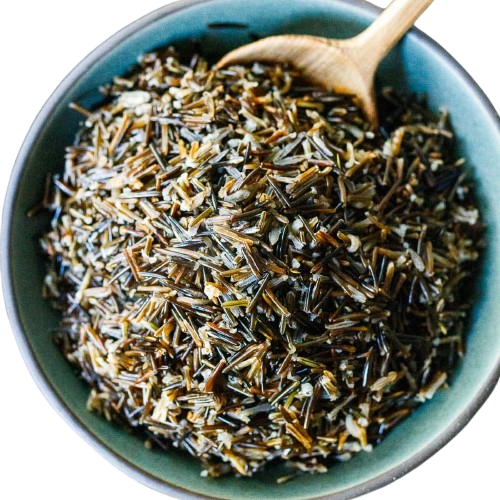
Wild rice is a nutrient-dense whole grain with a nutty flavor. A large serving of cooked wild rice (164g or 6 oz) has 166 calories while a 100g serving has 101 calories. A small serving of Wild Rice (45g) offers 45 calories. Raw wild rice is more calorie-dense, with a one-cup (160g) serving containing 571 calories. A 45g portion of dry Lundberg Organic Wild Rice provides 150 calories.
The wild rice nutrition profile is rich in minerals, with a one-cup serving of cooked wild rice offering copper (22% DV), zinc (20% DV), manganese (20% DV), and magnesium (12% DV). A study on the antioxidant capacity of wild rice confirmed the grain possesses potent antioxidant activity, which helps protect cells from damage (Hao, J., et al., 2011). The complete wild rice nutrition facts reveal that the main health benefits of wild rice come from this combination of high antioxidant, fiber, and protein content, which supports heart health and muscle repair.
Northern Wild Rice and Giant Wild Rice are the principal types of this grain, both native to North America. The top producers of wild rice are the United States and Canada, which are also the main consumers. The price of wild rice has risen over the last 20 years, with the average retail price for cultivated wild rice in the United States increasing from $4.00 per pound in the early 2000s to over $8.00 per pound in 2022.
Wild rice is a featured ingredient in dishes like Creamy Chicken and Wild Rice Soup at Panera Bread and Bison Meatballs with Wild Rice at Owamni. A good recommendation for consumption is one cup of cooked wild rice (166 calories). The energy from this portion can be expended through 17 minutes of jogging or 21 minutes of cycling.
Wild Rice nutrition
| Stats | Weight |
|---|---|
| Carbs | 75.7 grams |
| Protein | 12.8 grams |
| Fats | 1.7 grams |
| Sugars | 0 grams |
- Cooked Wild Rice Calories (Nutritional Facts)
- Medium Wild Rice Calories (Nutritional Facts)
- Small Cup Wild Rice Calories (Nutritional Facts)
- Raw Wild Rice Nutrition
- Sodium in Wild Rice
- Potassium in Wild Rice
- Sugar in Wild Rice
- Fiber in Wild Rice
- Protein in Wild Rice
- Carbs in Wild Rice
- Fat in Wild Rice
- Vitamins in Wild Rice
- Minerals in Wild Rice
Cooked Wild Rice Calories (Nutritional Facts)
A large serving of Wild Rice (164g, 6 oz) has 166 calories. This serving contains 6.5g of protein, 35g of carbohydrates, 3g of fiber, 1.2g of sugar, and 0.56g of total fat.
A medium serving of Wild Rice (100g) offers 101 calories. The medium Wild Rice nutrition profile for this portion includes 4g of protein, 21.3g of carbohydrates, 1.8g of fiber, 0.73g of sugar, and 0.34g of total fat.
A small serving of Wild Rice (45g) offers 45 calories. The small Wild Rice nutrition facts for this portion are 1.8g of protein, 9.6g of carbohydrates, 0.81g of fiber, 0.33g of sugar, and 0.15g of total fat.
Raw Wild Rice nutrition profile for a one-cup serving (160g or 5.64oz) includes 571 calories, 23.6g of protein, 119.8g of carbohydrates, 9.9g of fiber, 4g of sugar, and 1.7g of total fat.
The sodium in Wild Rice is low across different serving sizes. A one-cup (164g) serving of cooked wild rice contains 4.9mg of sodium (0% DV). A medium 100g serving of cooked wild rice has 3mg of sodium (0% DV). A small 45g serving of cooked wild rice contains 1.3mg of sodium (0% DV). A one-cup (160g) serving of raw wild rice contains 11.2mg of sodium (0% DV).
The potassium in Wild Rice varies with preparation and serving size. A one-cup (164g) serving of cooked wild rice contains 165.6mg of potassium (4% DV). A medium 100g serving of cooked wild rice has 101mg of potassium (2% DV). A small 45g serving of cooked wild rice contains 45.5mg of potassium (1% DV). A one-cup (160g) serving of raw wild rice contains 683.2mg of potassium (15% DV).
A one-cup (164g) serving of cooked wild rice contains 1.2g of sugar. A medium 100g serving of cooked wild rice has 0.73g of sugar. A small 45g serving of cooked wild rice contains 0.33g of sugar. A one-cup (160g) serving of raw wild rice contains 4g of sugar.
A one-cup (164g) serving of cooked wild rice provides 3g of fiber (11% DV). A medium 100g serving of cooked wild rice has 1.8g of fiber (6% DV). A small 45g serving of cooked wild rice contains 0.81g of fiber (3% DV). A one-cup (160g) serving of raw wild rice contains 9.9g of fiber (35% DV).
The protein in Wild Rice is a key nutritional component. A one-cup (164g) serving of cooked wild rice contains 6.5g of protein (13% DV). A medium 100g serving of cooked wild rice has 4g of protein (8% DV). A small 45g serving of cooked wild rice contains 1.8g of protein (4% DV). A one-cup (160g) serving of raw wild rice contains 23.6g of protein (47% DV).
A one-cup (164g) serving of cooked wild rice contains 35g of carbohydrates (13% DV). A medium 100g serving of cooked wild rice has 21.3g of carbohydrates (8% DV). A small 45g serving of cooked wild rice contains 9.6g of carbohydrates (3% DV). A one-cup (160g) serving of raw wild rice contains 119.8g of carbohydrates (44% DV).
A one-cup (164g) serving of cooked wild rice contains 0.56g of total fat (1% DV). A medium 100g serving of cooked wild rice has 0.34g of total fat (0% DV). A small 45g serving of cooked wild rice contains 0.15g of total fat (0% DV). A one-cup (160g) serving of raw wild rice contains 1.7g of total fat (2% DV).
A one-cup (164g) serving of cooked wild rice provides niacin (13% DV), vitamin B6 (13% DV), riboflavin (11% DV), and folate (11% DV). A medium 100g serving of cooked wild rice provides niacin (8% DV) and vitamin B6 (8% DV). A small 45g serving of cooked wild rice provides niacin (4% DV) and vitamin B6 (4% DV). A one-cup (160g) serving of raw wild rice provides niacin (67% DV), folate (38% DV), vitamin B6 (37% DV), and pantothenic acid (34% DV).
A one-cup (164g) serving of cooked wild rice provides copper (22% DV), zinc (20% DV), manganese (20% DV), and magnesium (12% DV). A medium 100g serving of cooked wild rice provides copper (13% DV) and zinc (12% DV). A small 45g serving of cooked wild rice provides manganese (6% DV) and copper (6% DV). A one-cup (160g) serving of raw wild rice provides copper (93% DV), manganese (92% DV), zinc (87% DV), and magnesium (67% DV).
Get a Custom Report on Wild Rice Nutrition Data – Contact Us!
What are the Types of Wild Rice?
The primary types are native to North America and are distinguished by their growing region and grain characteristics. Wild rice consists of distinct species of aquatic grass, not varieties of a single plant. The table below describes these common types.
| Type | Description | Calories (per 100g cooked) | Calorie Qualifications |
|---|---|---|---|
|
Northern Wild Rice (Zizania palustris)
|
The most common type, grown in the Great Lakes region. Grains are long and slender with a dark brown or black color. | 101 | This is the standard for most commercially available wild rice, offering a nutty flavor and chewy texture. |
|
Giant Wild Rice (Zizania aquatica)
|
Native to the Atlantic and Gulf coasts. Grains are larger and thicker than Northern wild rice. | 101 | The nutritional and caloric profile is identical to Northern wild rice, though the texture is slightly softer. |
|
Texas Wild Rice (Zizania texana)
|
An endangered species found only in a small area of the San Marcos River in Texas. Not commercially harvested. | 101 | Calorie and nutritional data are based on the common species, as this type is not available for consumption. |
What are the Main Dishes With Wild Rice?
A hearty texture and nutty flavor make wild rice a key ingredient in many savory preparations, especially in North American cuisine. Main dishes that incorporate wild rice are detailed in the subsequent table.
| Dish Name | Calories (Estimate) | Type of Rice | Carbs (g) (Estimate) | Sugar (g) (Estimate) | Protein (g) (Estimate) | Fat (g) (Estimate) | Cuisine | Restaurants |
|---|---|---|---|---|---|---|---|---|
|
Creamy Chicken and Wild Rice Soup
|
450 | Northern | 40 | 8 | 25 | 22 | Midwestern US | Panera Bread |
|
Wild Rice Pilaf
|
350 | Northern | 55 | 6 | 10 | 10 | American | The Capital Grille |
|
Thanksgiving Stuffing with Wild Rice
|
400 | Northern | 50 | 10 | 12 | 18 | American | Boston Market |
|
Stuffed Bell Peppers with Wild Rice
|
380 | Northern | 45 | 12 | 20 | 15 | American | The Cheesecake Factory (chain) |
|
Salmon with Wild Rice
|
650 | Northern | 50 | 5 | 45 | 30 | Modern American | Seasons 52 |
|
Wild Rice Burgers
|
500 | Northern | 55 | 8 | 20 | 22 | Vegetarian | The Herbivorous Butcher (Minneapolis, MN) |
|
Duck and Wild Rice Casserole
|
600 | Northern | 50 | 7 | 35 | 32 | Midwestern US | The Grand Cafe (Minneapolis, MN) |
|
Bison Meatballs with Wild Rice
|
580 | Northern | 45 | 6 | 40 | 28 | New American | Owamni by The Sioux Chef (Minneapolis, MN) |
|
Wild Rice and Mushroom Risotto
|
550 | Northern | 65 | 8 | 15 | 25 | Italian-American | Bar La Grassa (Minneapolis, MN) |
|
Pheasant with Wild Rice Stuffing
|
700 | Northern | 55 | 9 | 50 | 35 | American | The Ryland Inn (Whitehouse Station, NJ) |
|
Walleye with Wild Rice
|
620 | Northern | 48 | 5 | 48 | 25 | Midwestern US | The 1905 Eatery & Saloon (Baudette, MN) |
|
Wild Rice Grain Bowl
|
480 | Northern | 60 | 10 | 18 | 18 | Modern American | Sweetgreen |
What are the Desserts With Wild Rice?
Wild rice provides a chewy texture and nutty flavor to desserts such as puddings, breads, and cakes. The subsequent table describes dessert preparations that feature wild rice.
| Dish Name | Calories (Estimate) | Type of Rice | Carbs (g) (Estimate) | Sugar (g) (Estimate) | Protein (g) (Estimate) | Fat (g) (Estimate) | Cuisine | Restaurants |
|---|---|---|---|---|---|---|---|---|
|
Wild Rice Pudding
|
380 | Northern | 65 | 40 | 10 | 10 | Modern American | The Bachelor Farmer (Minneapolis, MN - historical) |
|
Wild Rice Cranberry Bread
|
250 (per slice) | Northern | 45 | 15 | 7 | 4 | American | Great Harvest Bread Co. |
|
Wild Rice Pancakes
|
450 | Northern | 60 | 20 | 12 | 18 | Midwestern US | Hell's Kitchen (Minneapolis, MN) |
|
Wild Rice Muffins
|
320 | Northern | 50 | 25 | 8 | 10 | American | Kowalski's Markets (Minnesota - prepared foods) |
|
Wild Rice and Maple Syrup Custard
|
400 | Northern | 55 | 45 | 9 | 16 | Canadian | Canoe (Toronto, ON) |
|
Wild Rice Chocolate Chip Cookies
|
180 (per cookie) | Northern | 25 | 15 | 4 | 7 | Modern American | Birchwood Cafe (Minneapolis, MN) |
|
Wild Rice Porridge with Berries
|
350 | Northern | 60 | 25 | 11 | 8 | New Nordic | The Sioux Chef (Minneapolis, MN - catering) |
|
Wild Rice and Apple Crumble
|
420 | Northern | 70 | 40 | 7 | 14 | American | Lucia's Restaurant (Minneapolis, MN - historical) |
|
Wild Rice Waffles
|
480 | Northern | 65 | 22 | 14 | 20 | Midwestern US | Al's Breakfast (Minneapolis, MN) |
|
Wild Rice Ice Cream
|
300 (per scoop) | Northern | 35 | 30 | 6 | 15 | Modern American | Izzy's Ice Cream (St. Paul, MN) |
What Cuisines Prefer Wild Rice the Most?
North American Indigenous and Midwestern cooking rely on wild rice as a foundational ingredient, and the grain's use is expanding in modern American food. Cuisines that make prominent use of wild rice are detailed in the table below.
| Cuisine | Dish | Types of Wild Rice Used | Calories (Estimate) | Restaurant(s) |
|---|---|---|---|---|
|
Midwestern US
|
Creamy Chicken and Wild Rice Soup | Northern | 450 | Broders' Pasta Bar (Minneapolis, MN) |
|
Indigenous American
|
Bison with Wild Rice | Northern | 580 | Owamni by The Sioux Chef (Minneapolis, MN) |
|
Modern American
|
Salmon with Wild Rice Pilaf | Northern | 650 | True Food Kitchen |
|
Canadian
|
Tourtière with Wild Rice | Northern | 650 | Au Pied de Cochon (Montreal, QC) |
|
New American
|
Wild Rice Grain Bowl | Northern | 480 | Mendocino Farms |
|
Vegetarian
|
Wild Rice Burgers | Northern | 500 | The Chicago Diner (Chicago, IL) |
|
Minnesotan
|
Walleye with Wild Rice | Northern | 620 | The Angry Trout Cafe (Grand Marais, MN) |
|
Health Food
|
Wild Rice Salad | Northern | 400 | Whole Foods Market |
|
American Holiday
|
Thanksgiving Stuffing | Northern | 400 | Cracker Barrel |
|
Fusion
|
Wild Rice and Mushroom Risotto | Northern | 550 | Spoon and Stable (Minneapolis, MN) |
Which Countries Produce the Most Wild Rice?
The top producers of wild rice are the United States and Canada. The United States, mainly California and Minnesota, produces cultivated wild rice in man-made paddies, while Canada's production is dominated by lake-grown wild rice. The table below shows recent production quantities for these countries.
| Country | 2013 | 2014 | 2015 | 2016 | 2017 | 2018 | 2019 | 2020 | 2021 | 2022 |
|---|---|---|---|---|---|---|---|---|---|---|
| United States | 8,200 | 7,500 | 6,800 | 9,100 | 7,300 | 6,500 | 7,700 | 6,900 | 6,200 | 6,600 |
| Canada | 1,500 | 1,650 | 1,400 | 1,800 | 1,550 | 1,300 | 1,600 | 1,450 | 1,350 | 1,500 |
Which Countries Consume the Most Wild Rice?
The top consumers of wild rice are the United States and Canada, where the grain is produced and holds cultural significance. A smaller but consistent export market exists in Europe. The table below shows recent import values for key secondary markets.
| Country/Region | 2013 | 2014 | 2015 | 2016 | 2017 | 2018 | 2019 | 2020 | 2021 | 2022 |
|---|---|---|---|---|---|---|---|---|---|---|
| European Union | 5,200 | 5,500 | 5,100 | 5,800 | 5,600 | 5,300 | 5,900 | 5,700 | 6,100 | 6,300 |
| Japan | 850 | 900 | 820 | 950 | 910 | 870 | 930 | 890 | 950 | 980 |
| United Kingdom | 700 | 750 | 680 | 780 | 760 | 720 | 790 | 770 | 810 | 830 |
| Australia | 450 | 480 | 430 | 500 | 490 | 460 | 510 | 490 | 530 | 550 |
How Do Prices of Wild Rice-Including Dishes Change?
The increase in wild rice cost, along with other restaurant expenses, has led to higher menu prices for dishes featuring the grain over the last decade.
| Restaurant | Dish | Old Price (Year) | Current Price (2024/2025) |
|---|---|---|---|
| Victor's 1959 Cafe | Wild Rice Pancake | $3.75 (2016) | $5.25 - $6.25 |
| NorthStar Tavern | Chicken Wild Rice | $4.95 (2017) | $6.95 - $7.95 |
| Panera Bread | Chicken & Wild Rice Soup (Bowl) | $5.89 (2015) | $6.99 - $8.49 |
| The Capital Grille | Wild Rice Pilaf (Side) | $9.00 (2015) | $13.00 - $15.00 |
| Hell's Kitchen (Minneapolis, MN) | Wild Rice Porridge | $10.50 (2016) | $30.00 - $32.00 |
What is the Wild Rice Calorie for 100 Grams?
A standard 100g (3.53oz) serving of cooked wild rice contains 101 calories. Raw wild rice is more calorie-dense, with a 100g portion containing 357 calories.
What is the Wild Rice Calorie for 1 KG?
The calorie content for one kilogram (1000g) of cooked wild rice is 1010 calories. A kilogram of raw wild rice contains a higher amount, with 3570 calories.
What is the Calorie of 1 Wild Rice?
Wild Rice calories and protein content vary by brand. A 0.13-cup (23g) serving of Quality Wild Rice contains 88 calories and 3g of protein. A 0.25-cup (45g) serving of Maitreya Wild Rice has 170 calories and 7g of protein. A 45g serving of Lundberg Organic Wild Rice provides 150 calories and 6g of protein.
What are the Health Benefits of Wild Rice?
Wild rice consumption offers several health advantages backed by scientific evidence. The key benefits are detailed below.
- Rich in Antioxidants. Wild rice contains a high concentration of antioxidants, which help protect the body's cells from damage caused by free radicals. A study by Hao, J., et al., 2011, "Antioxidant Capacity of Wild Rice (Zizania aquatica L.)", confirmed that wild rice possesses potent antioxidant activity, attributing the effect to phenolic compounds that are more abundant in wild rice than in white rice.
- Supports Heart Health. The fiber, magnesium, and low-fat content of wild rice aid in maintaining cardiovascular health. Research by Anderson, J. W., et al., 2009, "Health benefits of dietary fiber," established that a high intake of dietary fiber, like that found in whole grains such as wild rice, is associated with a lower risk of coronary heart disease and can help reduce blood pressure and cholesterol levels.
- Aids in Muscle Repair and Growth. Wild rice is a good source of plant-based protein, containing all nine essential amino acids. A publication by the University of Minnesota, "Wild Rice: Nutritional and Health Benefits," details the grain's complete amino acid profile, which is essential for building and repairing tissues in the body, making the grain a valuable protein source.
What are the Downsides of Wild Rice?
Certain considerations for wild rice consumption exist, relating to contaminants and cost. These aspects are described below.
- Risk of Ergot Contamination. Wild rice can be contaminated with a fungus called Claviceps purpurea, which produces toxic alkaloids known as ergot. A report by the Canadian Grain Commission, "Ergot," explains that consuming ergot can lead to a serious condition called ergotism, with symptoms ranging from nausea to convulsions. Commercial processing is designed to remove ergot bodies, but caution is warranted. An alternative is brown rice. A suggested practice is to purchase wild rice from reputable suppliers who follow strict quality control standards.
- Potential for Heavy Metal Accumulation. The aquatic environment where wild rice grows can contain heavy metals like lead and cadmium, which the plant may absorb. A study by the Minnesota Department of Health, "Metals in Minnesota-Grown Wild Rice," found that while levels are low, monitoring is important. An alternative is quinoa. A suggested daily amount is to consume wild rice as part of a varied diet that includes grains grown in different environments.
Is Wild Rice Good for You?
Yes, wild rice is a beneficial food choice because the robust nutritional profile supports heart health, digestive function, and cellular protection. For heart health, the high fiber content helps to lower cholesterol levels, while the magnesium content aids in regulating blood pressure. A study by Aune, D., et al., 2016, "Whole grain consumption and risk of cardiovascular disease, cancer, and all cause and cause specific mortality: systematic review and dose-response meta-analysis of prospective studies," found that higher whole grain intake is associated with a reduced risk of cardiovascular disease. Digestive health is improved by the dietary fiber in wild rice, which promotes regular bowel movements and helps prevent constipation. Research by Slavin, J., 2013, "Fiber and Prebiotics: Mechanisms and Health Benefits," confirmed that dietary fiber is fundamental for maintaining a healthy gut. The grain's high antioxidant content provides cellular health benefits by neutralizing harmful free radicals. A study by Zhu, Y., et al., 2018, "Antioxidant and Antiglycation Activities of Wild Rice," demonstrated the strong antioxidant capacity of wild rice, suggesting a role in preventing chronic diseases linked to oxidative stress.
Is Wild Rice Healthy for Weight Loss Diets?
Yes, wild rice is a healthy food for weight loss diets. The combination of high fiber and protein in wild rice promotes a feeling of fullness, which can help reduce overall calorie intake. A review by Clark, M. J., & Slavin, J. L., 2013, "The effect of fiber on satiety and food intake: a systematic review," confirmed that dietary fiber intake is effective in increasing post-meal satiety. The protein content also aids in weight management. Research by Paddon-Jones, D., et al., 2008, "Protein, weight management, and satiety," established that protein is the most satiating macronutrient, helping to control appetite. The status of wild rice as a whole grain is beneficial. A meta-analysis by Pol, K., et al., 2018, "Whole-grain consumption and body weight changes in cohort studies," found that increased whole-grain consumption is associated with less weight gain over time. A suggested consumption rate is to incorporate one-half to one cup of cooked wild rice into meals to leverage these properties.
How Does Calorie Change According to Wild Rice Types?
The calorie content of cooked wild rice does not change according to the different North American species. Both Northern Wild Rice and Giant Wild Rice, the main commercially available types, contain 101 calories per 100g cooked. The nutritional composition is consistent across these species. Any perceived differences in dishes come from preparation methods and the addition of other ingredients rather than from the wild rice type itself. The highest and lowest calorie counts for the base grain are identical.
What is the Origin of Wild Rice?
Wild rice originates from North America, growing in the shallow waters of the Great Lakes region. The grain is the seed of an aquatic grass, Zizania, not a true rice. For the Anishinaabe (Ojibwe) people, the grain, called manoomin, has been a sacred and vital component of their diet and culture for centuries. Traditional harvesting involves knocking the ripe seeds from the stalk into a canoe, a sustainable method that allows for natural reseeding. This Indigenous heritage shaped the grain's culinary history, with uses in stews, soups, and as an accompaniment to fish and game. European settlers later integrated wild rice into their own foodways, creating regional Midwestern dishes like creamy soups and poultry stuffings.
Explore More Grains
Discover more Grains with detailed nutrition facts, calorie counts, vitamins, minerals, and health benefits. Compare similar foods, serving sizes, macronutrients, and key nutrients to find the best option for your diet and nutrition goals.
 Amaranth calories
 Arborio Rice calories
 Arrowroot Powder calories
 Barley calories
 Basmati Rice calories
 Black Rice calories
 Brown Rice calories
 Buckwheat calories
 Bulgur Wheat calories
 Coconut Flour calories
 Cornmeal calories
 Cornstarch calories