Calories and Nutritions in Wild Strawberry
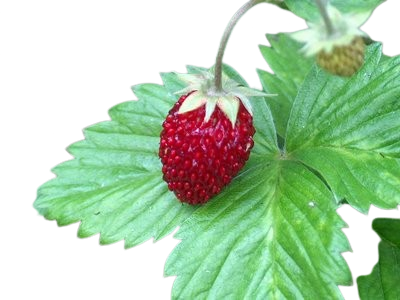
Wild strawberry is a small and fragrant fruit that is a key component of French, Italian, and Scandinavian culinary cultures. There are 33 wild strawberry calories per 100 g serving. Known as woodland strawberry, alpine strawberry, or fraises des bois, this fruit is less energy-dense than hybrid garden strawberries because it holds less water-diluted sugar. A small 28 g (1 oz) serving provides 9 calories, while a large 1 cup portion offers 51 calories. Based on wild strawberry nutrition facts, a 100 g serving delivers 8 g of carbohydrates, 0.7 g of protein, and 0.4 g of fat. These fruits offer powerful health benefits like improved heart health and immune support. Research by Erlund et al. (2008), "Favorable effects of berry consumption on platelet function, blood pressure, and HDL cholesterol," found that regular berry consumption can significantly increase good cholesterol levels.
Common types available include the bright red alpine, the productive Alexandria, and the sweet Yellow Wonder. These fruits are essential ingredients in savory main dishes such as the wild strawberry Gazpacho at Jaleo, which has 160 calories, and the strawberry balsamic salad at Sweetgreen. Popular desserts using wild strawberries include the Fruit Tart with wild strawberries at Bouchon Bakery and the Fraisier at Ladurée. Popular retail products include Bonne Maman Wild Strawberry Conserves, which contains 50 calories per tbsp, and D'arbo Wild Strawberry Fruit Spread.
The origin of the wild strawberry is the Northern Hemisphere, where it has been foraged since the Stone Age. Global production is led by China, which produced 3,450 kt in 2024, followed by the United States at 1,350 kt. Consumption is highest in China and the United States, where the fruit is used for fresh snacks and high-end desserts. The retail price for a 1 lb punnet of strawberries has increased from $1.65 USD in 2005 to $3.50 USD in 2024.
Health experts suggest a recommended daily intake of 1 cup of strawberries, which adds 51 calories to a person's diet. These calories can be burned doing 12 to 15 minutes of walking at 5 km/h. For those eating a slice of Alpine Strawberry Cheesecake with 450 calories, the physical cost jumps to 129 minutes of walking for an average-sized woman and 107 minutes for an average-sized man.
Wild Strawberry nutrition
| Stats | Weight |
|---|---|
| Carbs | 8 grams |
| Protein | 0.7 grams |
| Fats | 0 grams |
| Sugars | 4.6 grams |
- Large Wild Strawberry Calories (Nutritional Facts)
- Medium Wild Strawberry Calories (Nutritional Facts)
- Small Wild Strawberry Calories (Nutritional Facts)
- Raw Wild Strawberry Nutrition
- Sodium in Wild Strawberry
- Potassium in Wild Strawberry
- Sugar in Wild Strawberry
- Fiber in Wild Strawberry
- Protein in Wild Strawberry
- Carbs in Wild Strawberry
- Fat in Wild Strawberry
- Vitamins in Wild Strawberry
- Minerals in Wild Strawberry
Large Wild Strawberry Calories (Nutritional Facts)
A large serving of raw wild strawberries weighing 155 g (1 cup) contains 51 calories. This portion provides 0.6 g of total fat, 1.1 g of protein, 12.4 g of carbohydrates, and 7.1 g of sugar. A large 155 g (1 cup) serving of wild strawberry preserves contains 388 calories due to the high concentration of added sweeteners.
A medium serving of fresh wild strawberries, also known as woodland strawberries or alpine strawberries, weighing 100 g (3.5 oz) provides 33 calories. This amount delivers 0.4 g of total fat, 0.7 g of protein, 8 g of carbohydrates, and 4.6 g of sugar. A 100 g (3.5 oz) serving of frozen wild strawberries contains 30 calories.
A small serving of raw wild strawberries weighing 28 g (1 oz) contains 9 calories. This portion consists of 0.11 g of total fat, 0.2 g of protein, 2.2 g of carbohydrates, and 1.3 g of sugar.
A 100 g (3.5 oz) serving of raw wild strawberries provides 33 calories, 0.4 g of total fat, 0.7 g of protein, 8 g of total carbohydrates, and 2 g of dietary fiber. Raw wild strawberries are dense with vitamin C and manganese. The nutrient concentration is higher in the fresh fruit than in processed syrups that undergo high-heat treatment.
Raw wild strawberries contain 1 mg of sodium per 100 g (3.5 oz) serving, contributing 0% of the daily value (DV). This negligible sodium level makes them a heart-healthy choice.
Raw wild strawberries supply 153 mg of potassium per 100 g (3.5 oz) serving, fulfilling 3% of the DV. This mineral helps support healthy muscle function.
One hundred grams (3.5 oz) of raw wild strawberries contains 4.6 g of natural sugars. These sugars are primarily fructose and glucose. The sugar levels in wild strawberries are lower than those found in larger hybrid garden strawberries.
Raw wild strawberries provide 2 g of dietary fiber per 100 g (3.5 oz) serving, fulfilling 7% of the DV. This fiber content supports consistent digestive health.
Raw wild strawberries provide 0.7 g of protein per 100 g (3.5 oz) serving.
Raw wild strawberries contain 8 g of total carbohydrates per 100 g (3.5 oz) serving.
Raw wild strawberries contain 0.4 g of total fat per 100 g (3.5 oz) serving.
A 100 g (3.5 oz) serving of raw wild strawberries provides 58.8 mg of vitamin C (65% DV) and 24 mcg of folate (6% DV). These vitamins help maintain a strong immune system and skin health.
A 100 g (3.5 oz) serving provides 16 mg of calcium (1% DV), 13 mg of magnesium (3% DV), and 0.4 mg of iron (2% DV). They also contain 0.4 mg of manganese (17% DV).
Get a Custom Report on Wild Strawberry Nutrition Data – Contact Us!
What are the Types of Wild Strawberries?
There are 4 different types of wild strawberry such as the alpine, Alexandria, and Yellow Wonder. The table below shows the most common wild strawberry types and their calorie information.
| Type | Description | Calories (per 100g) | Calorie Differences & Qualifications |
|---|---|---|---|
|
Alpine
|
Small red fruit with intense aroma and no runners. | 33 | Baseline energy for fresh woodland types. |
|
Alexandria
|
A red variety known for consistent fruit production. | 33 | Identical calories to the standard alpine type. |
|
Yellow Wonder
|
A creamy-yellow fruit that is often sweeter. | 35 | Higher sugar content makes it more energy-dense. |
|
Mignonette
|
A classic French variety with deep red berries. | 33 | Standard caloric density for red wild types. |
What are the Desserts with Wild Strawberry?
Wild strawberries are a staple in high-end European patisseries because their concentrated flavor stands out in creams and pastries. Restaurants often use them as a seasonal garnish or a primary filling for tarts. The table below shows desserts containing wild strawberries that are served in restaurants.
| Dish Name | Calories | Type | Carbs | Sugar | Protein | Fat | Cuisine | Restaurants |
|---|---|---|---|---|---|---|---|---|
|
Fruit Tart with wild strawberries (Seasonal)
|
340 | Pastry | 42g | 22g | 5g | 18g | French | Bouchon Bakery |
|
Fraises des bois with Cream (Seasonal)
|
290 | Custard | 28g | 24g | 6g | 15g | French | Le Coucou |
|
Wild strawberry Gelato (Seasonal)
|
210 | Frozen | 26g | 24g | 4g | 11g | Italian | Eataly |
|
Wild strawberry Sorbet
|
120 | Frozen | 30g | 28g | 0g | 0g | Italian | Grom |
|
Fraisier with wild berries (Seasonal)
|
420 | Cake | 52g | 38g | 7g | 22g | French | Ladurée |
|
Wild strawberry Macarons (Seasonal)
|
90 | Cookie | 12g | 10g | 2g | 4g | French | Pierre Hermé |
|
Wild strawberry Pavlova
|
310 | Meringue | 55g | 48g | 4g | 10g | Australian | Eleven Madison Park |
|
Alpine Strawberry Cheesecake (Seasonal)
|
450 | Cake | 48g | 35g | 8g | 26g | American | The Cheesecake Factory |
|
Wild strawberry Panna Cotta
|
280 | Pudding | 22g | 20g | 4g | 20g | Italian | Del Posto |
|
Wild strawberry Mille-feuille
|
380 | Pastry | 40g | 24g | 5g | 23g | French | Daniel |
What are the Main Dishes with Wild Strawberries?
There are some main dishes that contain wild strawberries such as strawberry and spinach salad and duck breast with berry reduction. Savory kitchens use the fruit's acidity to create glazes that pair with meats. The table below lists the main dishes containing wild strawberries, along with their nutritional information.
| Dish Name | Calories | Type | Carbs | Sugar | Protein | Fat | Cuisine | Restaurants |
|---|---|---|---|---|---|---|---|---|
|
Strawberry and spinach salad (Seasonal)
|
220 | Salad | 18g | 9g | 4g | 16g | American | Seasons 52 |
|
Strawberry balsamic salad (Seasonal)
|
190 | Salad | 15g | 8g | 3g | 14g | American | Sweetgreen |
|
Duck Breast with wild berry jus
|
680 | Poultry | 14g | 10g | 42g | 52g | French | Canlis |
|
Wild strawberry Gazpacho (Seasonal)
|
160 | Soup | 22g | 12g | 3g | 8g | Spanish | Jaleo by Jose Andres |
|
Scallops with strawberry salsa
|
320 | Seafood | 15g | 8g | 35g | 12g | Fusion | Le Bernardin |
|
Foraged wild berries (Seasonal)
|
190 | Salad | 12g | 6g | 4g | 15g | Scandinavian | Noma |
|
Foie Gras with fraises des bois
|
510 | Meat | 12g | 9g | 14g | 48g | French | Jean-Georges |
|
Burrata with alpine strawberries
|
390 | Cheese | 10g | 7g | 18g | 32g | Italian | Osteria Mozza |
What Cuisines Prefer Wild Strawberry the Most?
Wild strawberries are a valued part of French, Italian, and Scandinavian cuisines. In France, "fraises des bois" are a seasonal delicacy served with cream. Italian cuisine uses them in fresh gelatos and sorbets. The table below outlines the cuisines and dishes.
| Cuisine | Dish Name | Calories | Restaurants |
|---|---|---|---|
|
French
|
Fraises des bois with Cream (Seasonal) | 290 | Le Coucou |
|
Italian
|
Wild strawberry Gelato (Seasonal) | 210 | Eataly |
|
American
|
Strawberry balsamic salad (Seasonal) | 190 | Sweetgreen |
|
Spanish
|
Wild strawberry Gazpacho (Seasonal) | 160 | Jaleo by Jose Andres |
|
Scandinavian
|
Foraged wild berries (Seasonal) | 190 | Noma |
Which Countries Produce the Most Wild Strawberries?
The top global producers of wild strawberries are China, the United States, Egypt, Mexico, and Turkey. In 2024, China produced 3,450.00 kilotonnes of strawberries based on international agricultural reports. The table below displays production volumes over the last 20 years in kilotonnes.
| Country | 2005 | 2006 | 2007 | 2008 | 2009 | 2010 | 2011 | 2012 | 2013 | 2014 | 2015 | 2016 | 2017 | 2018 | 2019 | 2020 | 2021 | 2022 | 2023 | 2024 |
|---|---|---|---|---|---|---|---|---|---|---|---|---|---|---|---|---|---|---|---|---|
| China | 1800 | 1850 | 1900 | 2000 | 2100 | 2200 | 2350 | 2500 | 2700 | 2900 | 3000 | 3100 | 3200 | 3250 | 3300 | 3320 | 3350 | 3380 | 3400 | 3450 |
| USA | 1050 | 1090 | 1130 | 1150 | 1200 | 1250 | 1300 | 1360 | 1350 | 1340 | 1360 | 1380 | 1400 | 1350 | 1300 | 1250 | 1280 | 1300 | 1320 | 1350 |
| Egypt | 100 | 110 | 150 | 180 | 200 | 240 | 260 | 280 | 310 | 350 | 400 | 450 | 480 | 520 | 580 | 600 | 620 | 630 | 640 | 650 |
| Mexico | 160 | 180 | 200 | 220 | 240 | 280 | 300 | 350 | 380 | 450 | 500 | 550 | 600 | 650 | 700 | 750 | 800 | 820 | 840 | 860 |
| Turkey | 200 | 210 | 250 | 260 | 290 | 300 | 320 | 350 | 370 | 380 | 400 | 420 | 450 | 480 | 500 | 520 | 540 | 560 | 580 | 600 |
Which Countries Consume the Most Wild Strawberries?
The top consumers of wild strawberries are China, the United States, Germany, Japan, and Turkey. Consumption is based on the use of fresh fruit, juice, and preserves. China and the United States lead due to large domestic markets and processing industries. The table below represents the food supply for these nations.
| Country | 2005 | 2006 | 2007 | 2008 | 2009 | 2010 | 2011 | 2012 | 2013 | 2014 | 2015 | 2016 | 2017 | 2018 | 2019 | 2020 | 2021 | 2022 | 2023 | 2024 |
|---|---|---|---|---|---|---|---|---|---|---|---|---|---|---|---|---|---|---|---|---|
| China | 1750 | 1800 | 1850 | 1950 | 2050 | 2150 | 2300 | 2450 | 2650 | 2850 | 2950 | 3050 | 3150 | 3200 | 3250 | 3280 | 3300 | 3340 | 3360 | 3400 |
| USA | 950 | 980 | 1020 | 1050 | 1080 | 1120 | 1150 | 1200 | 1220 | 1250 | 1280 | 1300 | 1320 | 1330 | 1340 | 1350 | 1360 | 1380 | 1400 | 1420 |
| Germany | 210 | 215 | 220 | 225 | 230 | 240 | 245 | 250 | 255 | 260 | 265 | 270 | 275 | 280 | 285 | 290 | 295 | 300 | 305 | 310 |
| Japan | 200 | 195 | 190 | 185 | 180 | 175 | 170 | 165 | 168 | 170 | 172 | 175 | 178 | 180 | 182 | 185 | 188 | 190 | 192 | 195 |
| Turkey | 180 | 190 | 220 | 230 | 250 | 260 | 280 | 300 | 320 | 330 | 350 | 370 | 390 | 410 | 430 | 450 | 470 | 490 | 510 | 530 |
How Do Prices of Wild Strawberry-including Dishes Change?
Restaurant menu prices for dishes containing wild strawberries have increased because of higher foraged berry costs and labor. The table below compares historical prices of these items to current 2025–2026 estimates.
| Restaurant | Dish Name | Old Price Range (2015-17) | Current Price Range (2025-26) |
|---|---|---|---|
| Bouchon Bakery | Fruit Tart with wild strawberries (Seasonal) | $6.50 - $7.50 | $9.75 - $11.50 |
| Seasons 52 | Strawberry and spinach salad (Seasonal) | $17.95 - $20.00 | $24.50 - $28.00 |
| Sweetgreen | Strawberry balsamic salad (Seasonal) | $9.50 - $11.00 | $14.50 - $16.75 |
| Jaleo by Jose Andres | Wild strawberry Gazpacho (Seasonal) | $10.00 - $12.00 | $15.00 - $18.00 |
| Noma | Foraged wild berries (Seasonal) | $350.00 - $450.00 | $550.00 - $650.00 |
| Ladurée | Fraisier with wild berries (Seasonal) | $8.50 - $10.00 | $13.50 - $16.00 |
What is the Wild Strawberry Calorie for 100 Grams?
One hundred grams (3.5 oz) of raw wild strawberries contains 33 calories.
What is the Wild Strawberry Calorie for 1 KG?
One kilogram (1,000 g) of raw wild strawberries provides 330 calories.
What is the Calorie of 1 Wild Strawberry?
One single large wild strawberry weighing 2 g (0.07 oz) contains 0.66 calories. A medium sized fresh wild strawberry weighing 1 g (0.03 oz) contains 0.33 calories. A small fruit weighing 0.5 g (0.01 oz) contains 0.16 calories.
What are the Health Benefits of Wild Strawberries?
Wild strawberries provide some health benefits like reduced oxidative stress and improved cholesterol levels due to their high concentration of polyphenols and vitamin C. This fruit, often called "Fragaria vesca," "woodland strawberry," or "alpine strawberry," is a nutrient-dense choice for various diets. A list of the health benefits of wild strawberries are shown below.
- Improves Cardiovascular Health: Antioxidants in the fruit help lower blood pressure and improve lipid profiles. A study by Erlund et al. (2008), "Favorable effects of berry consumption on platelet function, blood pressure, and HDL cholesterol," showed that regular berry intake increases good cholesterol.
- Supports Immune Defense: The high vitamin C content aids in the production of white blood cells.
- Enhances Skin Integrity: Vitamin C is essential for collagen synthesis, which maintains skin elasticity.
- Regulates Blood Sugar: The low glycemic index and fiber content help prevent rapid insulin spikes. A study by Edirisinghe et al. (2011), "Strawberry anthocyanin and its association with postprandial inflammation and insulin," found that strawberries improve insulin sensitivity.
- Protects Brain Health: Flavonoids in the fruit may delay cognitive decline by reducing inflammation in the brain.
- Promotes Bone Health: Manganese content supports the development and maintenance of bone density.
What are the Downsides of Wild Strawberries?
Wild strawberry has been known to cause some unwanted effects like oral allergies and digestive irritation due to its natural acidity and protein structure. A list of the downsides of wild strawberries are shown below.
- Induces Allergic Reactions: Some people experience itching or swelling in the mouth. A study by Zuidmeer et al. (2006), "The prevalence of plant food allergies," notes that strawberries can trigger reactions in birch pollen-sensitive individuals.
- Causes Gastric Irritation: The natural fruit acids can lead to heartburn or stomach discomfort in sensitive people.
- Risk of Environmental Contamination: Wild strawberries growing near industrial sites or roads may absorb heavy metals from the soil.
Are Wild Strawberries Good for You?
Yes, wild strawberries are good for you because they deliver 65% of the DV for vitamin C and a rich supply of manganese in every 100 g (3.5 oz) serving. Healthy individuals should consume 155 g (1 cup) of fresh berries daily to gain the best antioxidant benefits. A study by Giampieri et al. (2012), "The strawberry: composition, nutritional quality and impact on human health," confirms that these berries are a functional food that helps prevent chronic disease. They are a low-calorie snack that supports metabolic and heart health.
How Do Calories Change According to Wild Strawberry Types?
The calories in wild strawberries change based on the sugar concentration and water content of the variety. Fresh alpine and Alexandria varieties contain 33 calories per 100 g (3.5 oz). If the fruit is a yellow variety like Yellow Wonder, the energy increases to 35 calories per 100 g (3.5 oz) because it has higher natural sugar levels. Processed versions like wild strawberry jam reach 250 calories per 100 g (3.5 oz) due to the addition of sucrose and the removal of water during cooking.
What is the Origin of Wild Strawberries?
The origin of the wild strawberry (Fragaria vesca) is the Northern Hemisphere, where it grows natively across Europe, North Asia, and North America. It was consumed by humans in the Stone Age long before the larger garden strawberry was created in the 1700s. Ancient Romans used the berries to treat inflammatory symptoms and fever. Today, it remains a luxury item foraged in forests or grown in specialized alpine gardens.
Explore More Fruits
Discover more Fruits with detailed nutrition facts, calorie counts, vitamins, minerals, and health benefits. Compare similar foods, serving sizes, macronutrients, and key nutrients to find the best option for your diet and nutrition goals.
 Acai calories
 Acerola calories
 Ambarella calories
 Amla calories
 Apple calories
 Apricot calories
 Avocado calories
 Babaco calories
 Bael Fruit calories
 Banana calories
 Black Grapes calories
 Blackcurrant calories