Calories and Nutritions in Yellow Passionfruit
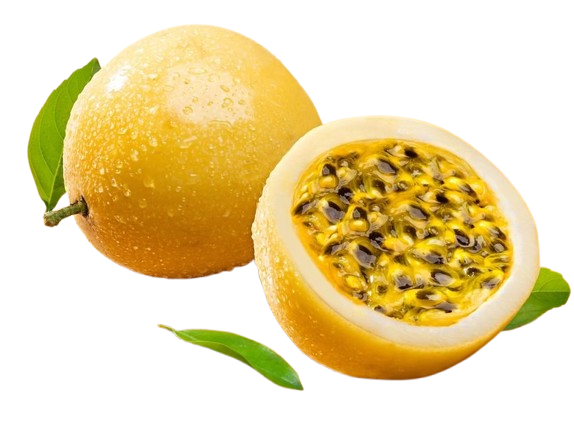
Yellow passionfruit, also known as maracuja, is a tropical fruit from South America containing 97 calories per 100g of raw pulp. One kilogram of raw yellow passionfruit provides 970 calories while a single fruit (60g) has 58 calories. Drinking a cup of raw yellow passionfruit juice (247g) delivers 148 calories.
Nutritional checks show a balance of carbohydrates and dietary fiber in this fruit. A single yellow passionfruit weighing 60g supplies 14g of total carbohydrates (5% DV) and 6.2g of fiber, fulfilling 22% of the Daily Value (DV). This fruit also provides 18mg of Vitamin C (20% DV) and 209mg of potassium (4% DV) to support a healthy diet. Scientific papers, such as the work by Zeraik, M. L., et al. (2010), point to antioxidants in the pulp that protect the body from oxidative damage.
Common varieties of passionfruit found in markets are the yellow variety and the purple variety. This fruit is used in many dishes including mousse at Fogo de Chão and ceviche at CVI.CHE 105. Large farms in Brazil, Colombia, and Peru manage the fruit for shoppers everywhere. Store prices for a pound of fresh yellow passionfruit rose from $3.99 in 2016 to between $5.99 and $7.99 in 2024.
Health experts suggest eating one or two yellow passionfruits (60g-120g) per day. A single fruit (60g) contains 58 calories which can be burned doing 6 minutes of fast swimming, 8 minutes of running, or 14 minutes of fast walking.
Yellow Passionfruit nutrition
| Stats | Weight |
|---|---|
| Carbs | 14 grams |
| Protein | 1.3 grams |
| Fats | 0 grams |
| Sugars | 7.8 grams |
- Large Yellow Passionfruit Calories (Nutritional Facts)
- Medium Yellow Passionfruit Calories (Nutritional Facts)
- Small Yellow Passionfruit Calories (Nutritional Facts)
- Raw Yellow Passionfruit Nutrition
- Sodium in Yellow Passionfruit
- Potassium in Yellow Passionfruit
- Sugar in Yellow Passionfruit
- Fiber in Yellow Passionfruit
- Protein in Yellow Passionfruit
- Carbs in Yellow Passionfruit
- Fat in Yellow Passionfruit
- Vitamins in Yellow Passionfruit
- Minerals in Yellow Passionfruit
Large Yellow Passionfruit Calories (Nutritional Facts)
A large serving of raw yellow passionfruit, equivalent to one cup of pulp (236g or 8.3oz), contains 229 calories, 5.2g of protein, 1.7g of fat, 55.2g of carbohydrates, 24.5g of dietary fiber, and 66mg of sodium. A large glass of raw yellow passionfruit juice (370.5g or 13.1oz) contains 222 calories, 2.6g of protein, 0.66g of fat, 53.6g of carbohydrates, 0.7g of dietary fiber, and 22.2mg of sodium.
A medium raw yellow passionfruit (60g or 2.1oz) provides 58 calories, 1.3g of protein, 0.4g of fat, 14g of carbohydrates, 6.2g of dietary fiber, and 17mg of sodium. A medium serving of raw yellow passionfruit juice, equivalent to one cup (247g or 8.7oz), delivers 148 calories, 1.7g of protein, 0.44g of fat, 35.7g of carbohydrates, 0.49g of dietary fiber, and 14.8mg of sodium.
A small serving of raw yellow passionfruit (100g or 3.5oz) has 97 calories, 2.2g of protein, 0.7g of fat, 23.4g of carbohydrates, 10.4g of dietary fiber, and 28mg of sodium. A small serving of raw yellow passionfruit juice (100g or 3.5oz) has 60 calories, 0.7g of protein, 0.18g of fat, 14.5g of carbohydrates, 0.2g of dietary fiber, and 6mg of sodium.
A single raw yellow passionfruit (60g) contains 58 calories, 1.3g of protein, 0.4g of fat, and 14g of total carbohydrates. This serving size also provides 6.2g of dietary fiber, 209mg of potassium, and 18mg of Vitamin C. One cup (247g) of raw yellow passionfruit juice contains 148 calories, 1.7g of protein, 0.44g of fat, and 35.7g of total carbohydrates, which includes 0.49g of fiber, 686.7mg of potassium, and 45mg of Vitamin C.
A large serving of raw yellow passionfruit pulp (236g or 8.3oz) contains 66mg of sodium (3% DV). A medium raw yellow passionfruit (60g or 2.1oz) has 17mg of sodium (1% DV), and a small raw serving (100g or 3.5oz) contains 28mg of sodium (1% DV). One cup of raw yellow passionfruit juice (247g) contains 14.8mg of sodium (1% DV).
A large serving of raw yellow passionfruit pulp (236g or 8.3oz) provides 821mg of potassium (17% DV). A medium raw yellow passionfruit (60g or 2.1oz) offers 209mg of potassium (4% DV), while a small raw serving (100g or 3.5oz) has 348mg of potassium (7% DV). One cup of raw yellow passionfruit juice (247g) provides 686.7mg of potassium (15% DV).
A large serving of raw yellow passionfruit pulp (236g or 8.3oz) contains 55.2g of total carbohydrates and 24.5g of fiber, resulting in 30.7g of net carbohydrates, which includes natural sugars. A medium raw yellow passionfruit (60g or 2.1oz) contains 7.8g of net carbohydrates, and a small raw serving (100g or 3.5oz) has 13g of net carbohydrates. One cup of raw yellow passionfruit juice (247g) contains 35.2g of total sugars.
A large serving of raw yellow passionfruit pulp (236g or 8.3oz) contains 24.5g of dietary fiber (88% DV). A medium raw yellow passionfruit (60g or 2.1oz) provides 6.2g of dietary fiber (22% DV), and a small raw serving (100g or 3.5oz) contains 10.4g of dietary fiber (37% DV). One cup of raw yellow passionfruit juice (247g) contains 0.49g of dietary fiber (2% DV).
A large serving of raw yellow passionfruit pulp (236g or 8.3oz) provides 5.2g of protein (10% DV). A medium raw yellow passionfruit (60g or 2.1oz) has 1.3g of protein (3% DV), and a small raw serving (100g or 3.5oz) contains 2.2g of protein (4% DV). One cup of raw yellow passionfruit juice (247g) provides 1.7g of protein (3% DV).
A large serving of raw yellow passionfruit pulp (236g or 8.3oz) contains 55.2g of total carbohydrates (20% DV). A medium raw yellow passionfruit (60g or 2.1oz) has 14g of carbohydrates (5% DV), and a small raw serving (100g or 3.5oz) provides 23.4g of carbohydrates (9% DV). One cup of raw yellow passionfruit juice (247g) contains 35.7g of total carbohydrates (13% DV).
A large serving of raw yellow passionfruit pulp (236g or 8.3oz) contains 1.7g of total fat (2% DV). A medium raw yellow passionfruit (60g or 2.1oz) has 0.4g of fat (1% DV), and a small raw serving (100g or 3.5oz) contains 0.7g of fat (1% DV). One cup of raw yellow passionfruit juice (247g) contains 0.44g of total fat (1% DV).
A large serving of raw yellow passionfruit pulp (236g or 8.3oz) contains 79% DV of Vitamin C and 17% DV of Vitamin A. A medium raw yellow passionfruit (60g or 2.1oz) provides 20% DV of Vitamin C. A small raw serving (100g or 3.5oz) delivers 33% DV of Vitamin C and 10% DV of Riboflavin. One cup of raw yellow passionfruit juice (247g) contains 50% DV of Vitamin C.
A large serving of raw yellow passionfruit pulp (236g or 8.3oz) provides 21% DV of iron, 16% DV of magnesium, and 13% DV of phosphorus. A medium raw yellow passionfruit (60g or 2.1oz) offers 6% DV of iron. A small raw serving (100g or 3.5oz) has 9% DV of iron and 7% DV of magnesium. One cup of raw yellow passionfruit juice (247g) provides 5% DV of iron, 5% DV of phosphorus, and 1% DV of calcium.
Get a Custom Report on Yellow Passionfruit Nutrition Data – Contact Us!
What are the Types of Yellow Passionfruit?
The main market types of passionfruit include the yellow variety and the purple variety, which represent different forms of the same species. The table below presents the nutritional differences between the main varieties.
| Type | Description | Calories (Per 100g) | Calorie Qualifications |
|---|---|---|---|
|
Yellow Passionfruit
|
This type is larger in size with a smooth, yellow skin and a more acidic, aromatic pulp. | 97 | This value represents the standard caloric content for the Passiflora edulis f. flavicarpa species. |
|
Purple Passionfruit
|
This type is smaller than the yellow variety with a wrinkled, dark purple skin and a sweeter, less acidic pulp. | 97 | The nutritional energy is identical to the yellow variety; differences lie in flavor profile and the presence of anthocyanins in the skin. |
What are the Desserts With Yellow Passionfruit?
Yellow passionfruit features prominently in tropical desserts due to a naturally tart, vibrant flavor profile. The fruit adds a bright acidity and unique floral aroma to frozen treats and baked goods. A breakdown of specific sweet dishes that include this fruit is shown in the list that follows.
| Dish Name | Calories | Type of Yellow Passionfruit | Carbs (g) | Sugar (g) | Protein (g) | Fat (g) | Cuisine | Restaurants |
|---|---|---|---|---|---|---|---|---|
|
Passionfruit Cheesecake
|
680 | Cooked Passionfruit Puree | 55 | 42 | 8 | 45 | American | The Cheesecake Factory (National) |
|
Passionfruit Sorbet
|
160 | Raw Passionfruit Puree | 40 | 32 | 0 | 0 | Artisanal Ice Cream | Salt & Straw |
|
Passionfruit Tart
|
410 | Baked Passionfruit Curd | 48 | 30 | 5 | 22 | French Bakery | Tartine Bakery (San Francisco, CA) |
|
Passionfruit Mousse
|
310 | Raw Yellow Passionfruit Pulp | 32 | 28 | 4 | 18 | Brazilian | Fogo de Chão |
|
Passionfruit Macaron
|
95 | Passionfruit Ganache | 14 | 12 | 2 | 5 | French | Bottega Louie (Los Angeles, CA) |
|
Passionfruit Panna Cotta
|
330 | Cooked Passionfruit Puree | 28 | 24 | 5 | 22 | Italian Fusion | Fiola (Washington, D.C.) |
|
Passionfruit Shaved Ice
|
140 | Raw Passionfruit Syrup | 35 | 32 | 0 | 0 | Hawaiian | Waiola Shave Ice (Honolulu, HI) |
|
Passionfruit Ice Cream
|
270 | Raw Yellow Passionfruit Pulp | 34 | 26 | 4 | 14 | Cuban/American | Azucar Ice Cream Company (Miami, FL) |
|
Passionfruit Pavlova
|
290 | Raw Yellow Passionfruit Pulp | 45 | 38 | 3 | 10 | French/Tropical | Balthazar (New York, NY) |
|
Passionfruit Soufflé
|
410 | Baked Passionfruit Puree | 42 | 30 | 8 | 20 | French | Le Bernardin (New York, NY) |
|
Passionfruit Smoothie
|
220 | Raw Yellow Passionfruit Juice | 48 | 40 | 2 | 1 | Tropical | Tropical Smoothie Cafe (National) |
|
Passionfruit Gelato
|
250 | Raw Yellow Passionfruit Pulp | 35 | 28 | 4 | 10 | Italian | Amorino (National) |
What are the Main Dishes With Yellow Passionfruit?
Yellow passionfruit occasionally appears in savory cooking as an acidic counterbalance to rich or spicy flavor profiles. The tart juice functions well in glazes, ceviches, and tropical sauces for seafood and poultry. A breakdown of specific savory dishes that include this fruit is shown in the list that follows.
| Dish Name | Calories | Type of Yellow Passionfruit | Carbs (g) | Sugar (g) | Protein (g) | Fat (g) | Cuisine | Restaurants |
|---|---|---|---|---|---|---|---|---|
|
Mahi-Mahi With Passionfruit Sauce
|
450 | Raw Yellow Passionfruit Juice | 20 | 12 | 38 | 22 | Floribbean | Tommy Bahama Restaurant (National) |
|
Scallop Ceviche With Passionfruit
|
220 | Raw Yellow Passionfruit Juice | 15 | 8 | 24 | 6 | Peruvian | CVI.CHE 105 (Miami, FL) |
|
Pork Tenderloin With Passionfruit Glaze
|
520 | Cooked Passionfruit Reduction | 28 | 18 | 42 | 24 | Caribbean | Bahama Breeze |
|
Duck Breast With Passionfruit Reduction
|
760 | Cooked Passionfruit Sauce | 22 | 15 | 38 | 54 | Asian Fusion | Hakkasan (Miami, FL) |
|
Grilled Salmon With Passionfruit Butter
|
610 | Passionfruit Infused Butter | 12 | 6 | 45 | 40 | New American | The Capital Grille |
|
Passionfruit Glazed Chicken
|
480 | Baked Passionfruit Glaze | 25 | 16 | 40 | 22 | Caribbean | Pollo Tropical |
|
Shrimp Aguachile With Passionfruit
|
240 | Raw Yellow Passionfruit Juice | 14 | 9 | 26 | 7 | Mexican | Javier's (Las Vegas, NV) |
|
Halibut With Passionfruit Vinaigrette
|
380 | Raw Yellow Passionfruit Juice | 10 | 5 | 42 | 18 | Japanese Fusion | Nobu |
|
Passionfruit Marinated Skirt Steak
|
680 | Raw Passionfruit Marinade | 12 | 8 | 55 | 42 | Latin/Asian Fusion | SushiSamba (Las Vegas, NV) |
|
Lobster Salad With Passionfruit Dressing
|
350 | Raw Passionfruit Vinaigrette | 18 | 10 | 28 | 18 | Seafood | Joe's Stone Crab (Miami Beach, FL) |
|
Crispy Snapper With Passionfruit Chili Sauce
|
550 | Cooked Passionfruit Sauce | 30 | 18 | 45 | 25 | Tropical American | Roy's Restaurant (National) |
|
Tuna Tartare With Passionfruit Foam
|
290 | Aerated Passionfruit Juice | 12 | 6 | 25 | 14 | Modern Spanish | The Bazaar by José Andrés (Miami, FL) |
What Cuisines Do Prefer Yellow Passionfruit the Most?
Yellow passionfruit holds a prominent place within tropical and Latin American culinary traditions. The fruit is indispensable in Brazilian and Peruvian gastronomy. The table below presents specific cuisines and associated restaurant offerings.
| Cuisine | Dish | Types of Yellow Passionfruit | Calories (Estimate) | Restaurant(s) |
|---|---|---|---|---|
|
Floribbean
|
Mahi-Mahi With Passionfruit Sauce | Raw Yellow Passionfruit Juice | 450 | Tommy Bahama Restaurant |
|
Peruvian
|
Scallop Ceviche With Passionfruit | Raw Yellow Passionfruit Juice | 220 | CVI.CHE 105 |
|
Brazilian
|
Passionfruit Mousse | Raw Yellow Passionfruit Pulp | 310 | Fogo de Chão |
|
Caribbean
|
Pork Tenderloin With Passionfruit Glaze | Cooked Passionfruit Reduction | 520 | Bahama Breeze |
|
Asian Fusion
|
Duck Breast With Passionfruit Reduction | Cooked Passionfruit Sauce | 760 | Hakkasan |
|
Mexican
|
Shrimp Aguachile With Passionfruit | Raw Yellow Passionfruit Juice | 240 | Javier's |
|
Japanese Fusion
|
Halibut With Passionfruit Vinaigrette | Raw Yellow Passionfruit Juice | 380 | Nobu |
|
French
|
Passionfruit Soufflé | Baked Passionfruit Puree | 410 | Le Bernardin |
|
American
|
Passionfruit Cheesecake | Cooked Passionfruit Puree | 680 | The Cheesecake Factory |
|
Hawaiian
|
Passionfruit Shaved Ice | Raw Passionfruit Syrup | 140 | Waiola Shave Ice |
|
Cuban/American
|
Passionfruit Ice Cream | Raw Yellow Passionfruit Pulp | 270 | Azucar Ice Cream Company |
|
Tropical American
|
Crispy Snapper With Passionfruit Chili Sauce | Cooked Passionfruit Sauce | 550 | Roy's Restaurant |
Which Countries Produce the Most Yellow Passionfruit?
The top producers of yellow passionfruit are Brazil, Colombia, and Peru. Cultivation thrives in these South American regions due to optimal tropical climates. Agricultural sectors in these nations dedicate vast acreage to exotic fruit farming to meet domestic needs and export demands. The table below shows the annual production volumes in thousand metric tonnes for these countries over the last two decades.
| Country | 2004 | 2005 | 2006 | 2007 | 2008 | 2009 | 2010 | 2011 | 2012 | 2013 | 2014 | 2015 | 2016 | 2017 | 2018 | 2019 | 2020 | 2021 | 2022 | 2023 |
|---|---|---|---|---|---|---|---|---|---|---|---|---|---|---|---|---|---|---|---|---|
| Brazil | 460 | 470 | 485 | 500 | 520 | 535 | 550 | 565 | 580 | 600 | 615 | 630 | 645 | 660 | 680 | 700 | 710 | 720 | 740 | 755 |
| Colombia | 85 | 90 | 95 | 100 | 110 | 115 | 120 | 125 | 130 | 140 | 145 | 150 | 155 | 160 | 165 | 170 | 175 | 185 | 190 | 195 |
| Peru | 45 | 48 | 52 | 56 | 60 | 65 | 70 | 75 | 80 | 90 | 98 | 105 | 112 | 120 | 130 | 135 | 145 | 155 | 162 | 170 |
| Ecuador | 32 | 35 | 40 | 45 | 50 | 55 | 58 | 62 | 66 | 70 | 74 | 78 | 82 | 90 | 95 | 100 | 105 | 110 | 115 | 120 |
| Indonesia | 22 | 25 | 28 | 32 | 35 | 38 | 42 | 45 | 48 | 50 | 55 | 60 | 65 | 70 | 75 | 80 | 85 | 95 | 100 | 105 |
Which Countries Consume the Most Yellow Passionfruit?
The top consumers of yellow passionfruit are Brazil, Colombia, and the United States. High consumption rates stem from deep-rooted culinary traditions that incorporate fresh tropical fruits into daily diets and local desserts. Growing populations and expanding middle classes in South American regions further drive the demand for fresh produce. The table below shows the annual consumption volumes in thousand metric tonnes for these markets over the last two decades.
| Country | 2004 | 2005 | 2006 | 2007 | 2008 | 2009 | 2010 | 2011 | 2012 | 2013 | 2014 | 2015 | 2016 | 2017 | 2018 | 2019 | 2020 | 2021 | 2022 | 2023 |
|---|---|---|---|---|---|---|---|---|---|---|---|---|---|---|---|---|---|---|---|---|
| Brazil | 440 | 450 | 465 | 480 | 500 | 515 | 530 | 545 | 560 | 570 | 585 | 600 | 615 | 640 | 660 | 670 | 680 | 700 | 715 | 730 |
| Colombia | 75 | 80 | 85 | 90 | 95 | 100 | 105 | 110 | 115 | 120 | 125 | 130 | 135 | 140 | 145 | 150 | 155 | 160 | 165 | 170 |
| United States | 18 | 20 | 22 | 24 | 25 | 28 | 30 | 34 | 38 | 40 | 45 | 50 | 55 | 65 | 75 | 85 | 95 | 110 | 120 | 125 |
| Peru | 38 | 40 | 44 | 48 | 50 | 55 | 60 | 65 | 70 | 75 | 80 | 85 | 92 | 100 | 110 | 115 | 120 | 130 | 138 | 145 |
| Ecuador | 28 | 30 | 33 | 36 | 40 | 43 | 46 | 49 | 52 | 55 | 58 | 61 | 65 | 70 | 75 | 80 | 85 | 90 | 95 | 100 |
How Do Prices of Yellow Passionfruit-Including Dishes Change?
The prices of retail goods containing yellow passionfruit has grown, mirroring the rising sourcing expenses for the fresh tropical fruit. The subsequent chart details the price shifts for specific store-bought items and restaurant dishes.
| Brand/Retailer/Restaurant | Item | Old Price (Year) | Current Price (2024/2025) |
|---|---|---|---|
| Misfits Market | Fresh Yellow Passionfruit (1 lb) | $3.99 (2016) | $5.99 - $6.98 |
| Kroger | Frozen Passionfruit Pulp (14oz) | $2.99 (2015) | $4.49 - $5.49 |
| Whole Foods Market | Organic Passionfruit Juice (32oz) | $3.99 (2017) | $4.29 - $12.99 |
| The Cheesecake Factory | Passion Mint Fizz | $4.50 (2015) | $6.95 - $7.95 |
What is the Yellow Passionfruit Calorie for 100 Grams?
One hundred grams (3.5oz) of raw yellow passionfruit contains 97 calories, while one hundred grams of raw yellow passionfruit juice contains 60 calories.
What is the Yellow Passionfruit Calorie for 1 KG?
One kilogram (1000g) of raw yellow passionfruit contains 970 calories, while one kilogram of raw yellow passionfruit juice contains 600 calories.
What is the Calorie of 1 Yellow Passionfruit?
A single raw yellow passionfruit (60g) contains 58 calories. Calorie counts for branded products vary, as an 8.45 fl oz (250ml) serving of Ceres 100% Passion Fruit Juice contains 120 calories, and an 8 fl oz (240ml) serving of Goya Passion Fruit Cocktail contains 120 calories.
What are the Health Benefits of Yellow Passionfruit?
Consuming yellow passionfruit provides distinct health advantages related to a rich antioxidant and fiber content, as discussed in the following list.
- Supplies Antioxidant Protection: The pulp is a source of Vitamin C and polyphenolic compounds that neutralize harmful free radicals. Zeraik, M. L., et al. (2010). "Evaluation of the antioxidant activity of passion fruit (Passiflora edulis and Passiflora alata) extracts." Evidence from this research confirms that extracts from the fruit demonstrate potent free-radical scavenging capabilities, protecting cells from oxidative damage.
- Supports Immune System: A high concentration of Vitamin C strengthens natural defenses against pathogens. Carr, A. C., & Maggini, S. (2017). "Vitamin C and Immune Function." This review details the crucial role of Vitamin C in stimulating the production and function of white blood cells, which are essential for fighting infections.
- Promotes Digestive Regularity: The substantial amount of dietary fiber in the pulp and seeds helps maintain a healthy gastrointestinal tract. Anderson, J. W., et al. (2009). "Health benefits of dietary fiber." Findings from the study establish a clear link between adequate fiber intake and improved bowel function, reduced risk of constipation, and overall digestive wellness.
- Improves Heart Health: High potassium levels and fiber content support cardiovascular function. Weaver, C. M. (2013). "Potassium and health." Data from the study demonstrate that adequate potassium intake helps regulate blood pressure and counterbalance the negative effects of sodium.
- Aids Blood Sugar Regulation: The low glycemic index and high fiber content prevent rapid spikes in blood glucose. Passos, T. U., et al. (2015). "Glycemic index and glycemic load of tropical fruits and the potential for managing type 2 diabetes." Research findings indicate that the fiber in the fruit slows the absorption of sugar into the bloodstream.
What are the Downsides of Yellow Passionfruit?
Yellow passionfruit carries certain risks related to cyanogenic compounds and allergic reactions, which are discussed here.
- Contains Cyanogenic Glycosides: Parts of the passionfruit plant contain cyanogenic glycosides, which can be toxic. Chassagne, D., et al. (1996). "Identification and quantification of passion fruit cyanogenic glycosides." Analysis within the research quantified these compounds, finding higher concentrations in the rind and leaves, whereas the ripe edible pulp contains very low to negligible amounts.
- May Trigger Allergic Reactions: Certain individuals experience allergic reactions due to cross-reactivity with proteins found in the fruit. Wagner, S., & Breiteneder, H. (2002). "The latex-fruit syndrome." Evidence from the study explains that structural similarities between proteins in latex and passionfruit lead to allergic symptoms ranging from mild oral irritation to severe systemic reactions.
- Causes Gastrointestinal Distress: The high fiber content and seeds can cause digestive issues if consumed in large quantities. Slavin, J. L. (2013). "Fiber and prebiotics: mechanisms and health benefits." Data from the study suggests that a sudden increase in fiber intake can overwhelm the digestive system, leading to bloating or gas.
- Impacts Dental Enamel: The high acidity of the fruit pulp can erode tooth enamel over time. Cheng, R., et al. (2009). "Dental erosion and severe tooth decay related to soft drinks: a case report and literature review." Research demonstrates that frequent consumption of highly acidic foods softens the protective layer of the teeth.
Are Yellow Passionfruit Good for You?
Yes, yellow passionfruit is good for health when the pulp is consumed as part of a balanced diet. Heart health benefits from high potassium levels, which help regulate blood pressure and counterbalance sodium intake. The review by Weaver, C. M. (2013), "Potassium and health," confirms that adequate potassium intake is associated with lower blood pressure and a reduced risk of stroke. Digestive health improves through a rich supply of dietary fiber, which promotes regular bowel movements and supports a healthy gut microbiome. The study by Lattimer, J. M., & Haub, M. D. (2010), "Effects of dietary fiber and its components on metabolic health," details how dietary fiber improves laxation and supports overall gastrointestinal function. Immune system strength increases from abundant Vitamin C, a powerful antioxidant that protects against cellular damage and bolsters immune cell function. The review by Hemilä, H. (2017), "Vitamin C and Infections," explains that Vitamin C is essential for the function of various immune cells and supports the body's ability to fight infections.
How Does Calorie Change According to Yellow Passionfruit Types?
Energy content shows no change between the common types of passionfruit. The caloric value for both the Yellow Passionfruit and the Purple Passionfruit remains identical, with each containing 97 calories per 100g of raw pulp. The core nutritional makeup of carbohydrates, protein, and fat stays consistent between these two main cultivars of the Passiflora edulis species. Minor fluctuations in caloric density arise from ripeness levels and resulting sugar concentration, but these variations are not sufficient to alter the established caloric value. The lowest calorie type and the highest calorie type are identical, meaning total calorie intake depends on the serving size consumed rather than the color variety chosen.
What is the Origin of Yellow Passionfruit?
The origin of the yellow passionfruit traces back to the Amazon basin and surrounding tropical regions of South America. Indigenous populations utilized the tart pulp for dietary sustenance and medicinal applications. Portuguese explorers documented the vine during early expeditions and transported seeds across global trade routes to tropical climates worldwide. Cultivation expanded rapidly across Brazil, Peru, and later Hawaii and Australia. Culinary applications evolved alongside global agricultural expansion, starting with simple raw consumption. Modern gastronomy eventually incorporated the vibrant juice into complex desserts like mousses and pavlovas. Savory culinary practices adopted the fruit much later, utilizing the high acidity to cure seafood in ceviches or balance rich meats in modern fusion dishes.
Explore More Fruits
Discover more Fruits with detailed nutrition facts, calorie counts, vitamins, minerals, and health benefits. Compare similar foods, serving sizes, macronutrients, and key nutrients to find the best option for your diet and nutrition goals.
 Acai calories
 Acerola calories
 Ambarella calories
 Amla calories
 Apple calories
 Apricot calories
 Avocado calories
 Babaco calories
 Bael Fruit calories
 Banana calories
 Black Grapes calories
 Blackcurrant calories