Calories and Nutritions in Brazil Nut
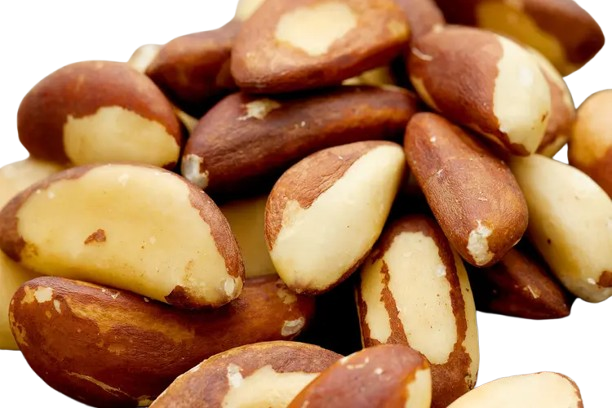
Brazil nuts are high-calorie crescent-shaped seeds sourced from the Amazonian rainforest. A 100g serving of raw Brazil nuts supplies 656 calories, a 1oz portion (28.35g) supplies 186 calories, while a single raw Brazil nut (5g) offers 33 calories. Roasted Brazil nuts contain slightly more calories in Brazil nuts due to moisture loss and added oils, providing 886 calories per cup. Commercial brands display varying caloric counts, as a serving of NOW Foods Real Food Raw Brazil Nuts (1oz) provides 190 calories, while a serving of Trader Joe's Roasted & Salted Brazil Nuts (1oz) contains 200 calories.
An analysis of the nutritional profile of Brazil nuts indicates a lipid-dense profile with significant fiber reserves. A 1 cup serving of whole raw Brazil nuts (133g) provides 88.3g of fat and 10g of dietary fiber. The seed serves as the most concentrated food source of selenium, a trace mineral required for thyroid hormone metabolism. Research by Thomson, C. D., et al. (2008), "Brazil nuts: an effective way to improve selenium status," confirms that consuming just two nuts daily increases plasma selenium levels as effectively as supplementation. Fats contribute most of the energy, rendering this seed a powerful fuel for endurance. Brazil nuts are a high-fat food with 66% fat by weight, surpassing almonds and cashews. The trace element profile is robust, yielding 500mg of magnesium (119% DV) per large serving. Thiamin is present in beneficial amounts, providing 0.8mg per large serving to support nervous system function.
The worldwide supply of Brazil Nuts depends largely on wild harvesting in the Amazon basin, with Bolivia, Brazil, and Peru leading export volumes. Throughout Latin American and European kitchens, Brazil nuts play a central role in various foods like the Castanha do Pará cake, chocolate clusters, and trail mixes. The price of shelled brazil nuts rose from between $7.00 and $9.00 per lb in the early 2010s to between $14.00 and $20.00 per lb by 2024. Dining establishments reflect this shift, as a Granola Parfait at Le Pain Quotidien increased from $6.50 in 2013 to between $9.90 and $11.00 in 2024.
Brazil nut seeds are valued for their high nutrient density, specifically containing exceptional levels of selenium and magnesium, providing 2550mcg of selenium and 500mg of magnesium per cup. Dietitians advise consuming 1 to 2 nuts per day to optimize nutrient intake while avoiding selenium toxicity, as a single kernel contains 96mcg of selenium. A 1oz serving of Brazil nuts contains 186 calories, an energy load that requires 52 minutes of walking or 19 minutes of running to metabolize.
Brazil Nut nutrition
| Stats | Weight |
|---|---|
| Carbs | 21.6 grams |
| Protein | 15 grams |
| Fats | 57.4 grams |
| Sugars | 0 grams |
- Large Brazil Nut Calories (Nutritional Facts)
- Medium Brazil Nut Calories (Nutritional Facts)
- Small Brazil Nut Calories (Nutritional Facts)
- Raw Brazil Nut Nutrition
- Sodium in Brazil Nut
- Potassium in Brazil Nut
- Sugar in Brazil Nut
- Fiber in Brazil Nut
- Protein in Brazil Nut
- Carbs in Brazil Nut
- Fat in Brazil Nut
- Vitamins in Brazil Nut
- Minerals in Brazil Nut
Large Brazil Nut Calories (Nutritional Facts)
A large 1 cup serving of whole raw Brazil nuts (133g) contains 872 calories, 19g of protein, 88.3g of fat, 16.3g of carbohydrates, 10g of dietary fiber, 3.1g of sugar, and 4mg of sodium. A large 1 cup serving of roasted, salted Brazil nuts (133g) provides 886 calories due to moisture reduction and added oils, along with 19.5g of protein, 90g of fat, 17g of carbohydrates, 10.5g of dietary fiber, 3.2g of sugar, and 346mg of sodium.
A medium 1oz serving of raw Brazil nuts (28.35g) provides 186 calories, 4.1g of protein, 18.8g of fat, 3.5g of carbohydrates, 2.1g of dietary fiber, 0.7g of sugar, and 1mg of sodium. A medium 1oz serving of dry-roasted, unsalted Brazil nuts (28.35g) contains 189 calories, 4.2g of protein, 19.1g of fat, 3.6g of carbohydrates, 2.2g of dietary fiber, 0.7g of sugar, and 1mg of sodium.
A small 0.5oz serving of raw Brazil nuts (14g) contains 93 calories, 2g of protein, 9.4g of fat, 1.7g of carbohydrates, 1.1g of dietary fiber, 0.3g of sugar, and 0.5mg of sodium. A small 0.5oz serving of roasted, salted Brazil nuts (14g) supplies 94 calories, 2.1g of protein, 9.5g of fat, 1.8g of carbohydrates, 1.1g of dietary fiber, 0.3g of sugar, and 36mg of sodium.
A 100g serving of raw Brazil nuts supplies 656 calories, 14.3g of protein, 66.4g of fat, 12.3g of carbohydrates, 7.5g of fiber, 2.3g of sugar, and 3mg of sodium. A 100g serving of roasted, salted Brazil nuts provides 669 calories, 14.6g of protein, 67.5g of fat, 12.8g of carbohydrates, 7.8g of fiber, 2.4g of sugar, and 260mg of sodium.
A large 1 cup serving of whole raw Brazil nuts (133g) contains 4mg of sodium (0% DV). A large 1 cup serving of roasted, salted Brazil nuts (133g) contains 346mg of sodium (15% DV). A medium 1oz serving of raw Brazil nuts (28.35g) has 1mg of sodium (0% DV). A medium 1oz serving of dry-roasted, unsalted Brazil nuts (28.35g) contains 1mg of sodium (0% DV). A small 0.5oz serving of raw Brazil nuts (14g) supplies 0.5mg of sodium (0% DV). A small 0.5oz serving of roasted, salted Brazil nuts (14g) contains 36mg of sodium (2% DV). A 100g serving of raw Brazil nuts supplies 3mg of sodium (0% DV).
A large 1 cup serving of whole raw Brazil nuts (133g) contains 876mg of potassium (19% DV). A large 1 cup serving of roasted, salted Brazil nuts (133g) contains 850mg of potassium (18% DV). A medium 1oz serving of raw Brazil nuts (28.35g) has 187mg of potassium (4% DV). A medium 1oz serving of dry-roasted, unsalted Brazil nuts (28.35g) contains 180mg of potassium (4% DV). A small 0.5oz serving of raw Brazil nuts (14g) supplies 93mg of potassium (2% DV). A small 0.5oz serving of roasted, salted Brazil nuts (14g) contains 90mg of potassium (2% DV). A 100g serving of raw Brazil nuts supplies 659mg of potassium (14% DV).
A large 1 cup serving of whole raw Brazil nuts (133g) contains 3.1g of sugar. A large 1 cup serving of roasted, salted Brazil nuts (133g) contains 3.2g of sugar. A medium 1oz serving of raw Brazil nuts (28.35g) has 0.7g of sugar. A medium 1oz serving of dry-roasted, unsalted Brazil nuts (28.35g) contains 0.7g of sugar. A small 0.5oz serving of raw Brazil nuts (14g) supplies 0.3g of sugar. A small 0.5oz serving of roasted, salted Brazil nuts (14g) contains 0.3g of sugar. A 100g serving of raw Brazil nuts supplies 2.3g of sugar.
A large 1 cup serving of whole raw Brazil nuts (133g) provides 10g of dietary fiber (36% DV). A large 1 cup serving of roasted, salted Brazil nuts (133g) contains 10.5g of dietary fiber (38% DV). A medium 1oz serving of raw Brazil nuts (28.35g) has 2.1g of fiber (8% DV). A medium 1oz serving of dry-roasted, unsalted Brazil nuts (28.35g) contains 2.2g of fiber (8% DV). A small 0.5oz serving of raw Brazil nuts (14g) supplies 1.1g of fiber (4% DV). A small 0.5oz serving of roasted, salted Brazil nuts (14g) contains 1.1g of fiber (4% DV). A 100g serving of raw Brazil nuts supplies 7.5g of fiber (27% DV).
A large 1 cup serving of whole raw Brazil nuts (133g) provides 19g of protein (38% DV). A large 1 cup serving of roasted, salted Brazil nuts (133g) contains 19.5g of protein (39% DV). A medium 1oz serving of raw Brazil nuts (28.35g) has 4.1g of protein (8% DV). A medium 1oz serving of dry-roasted, unsalted Brazil nuts (28.35g) contains 4.2g of protein (8% DV). A small 0.5oz serving of raw Brazil nuts (14g) supplies 2g of protein (4% DV). A small 0.5oz serving of roasted, salted Brazil nuts (14g) contains 2.1g of protein (4% DV). A 100g serving of raw Brazil nuts supplies 14.3g of protein (29% DV).
A large 1 cup serving of whole raw Brazil nuts (133g) contains 16.3g of carbohydrates (6% DV). A large 1 cup serving of roasted, salted Brazil nuts (133g) contains 17g of carbohydrates (6% DV). A medium 1oz serving of raw Brazil nuts (28.35g) has 3.5g of carbohydrates (1% DV). A medium 1oz serving of dry-roasted, unsalted Brazil nuts (28.35g) contains 3.6g of carbohydrates (1% DV). A small 0.5oz serving of raw Brazil nuts (14g) supplies 1.7g of carbohydrates (1% DV). A small 0.5oz serving of roasted, salted Brazil nuts (14g) contains 1.8g of carbohydrates (1% DV). A 100g serving of raw Brazil nuts supplies 12.3g of carbohydrates (4% DV).
A large 1 cup serving of whole raw Brazil nuts (133g) contains 88.3g of total fat (113% DV). A large 1 cup serving of roasted, salted Brazil nuts (133g) contains 90g of total fat (115% DV). A medium 1oz serving of raw Brazil nuts (28.35g) has 18.8g of total fat (24% DV). A medium 1oz serving of dry-roasted, unsalted Brazil nuts (28.35g) contains 19.1g of total fat (24% DV). A small 0.5oz serving of raw Brazil nuts (14g) supplies 9.4g of total fat (12% DV). A small 0.5oz serving of roasted, salted Brazil nuts (14g) contains 9.5g of total fat (12% DV). A 100g serving of raw Brazil nuts supplies 66.4g of total fat (85% DV).
A large 1 cup serving of whole raw Brazil nuts (133g) provides 0.8mg of Thiamin (69% DV), 7.6mg of Vitamin E (51% DV), and 0.1mg of Vitamin B6 (8% DV). A large 1 cup serving of roasted, salted Brazil nuts (133g) contains 0.7mg of Thiamin (58% DV). A medium 1oz serving of raw Brazil nuts (28.35g) has 0.17mg of Thiamin (14% DV), 1.6mg of Vitamin E (11% DV), and 0.03mg of Vitamin B6 (2% DV). A medium 1oz serving of dry-roasted, unsalted Brazil nuts (28.35g) contains 0.15mg of Thiamin (13% DV). A small 0.5oz serving of raw Brazil nuts (14g) supplies 0.09mg of Thiamin (7% DV). A small 0.5oz serving of roasted, salted Brazil nuts (14g) contains 0.07mg of Thiamin (6% DV). A 100g serving of raw Brazil nuts supplies 0.62mg of Thiamin (52% DV).
A large 1 cup serving of whole raw Brazil nuts (133g) provides 2550mcg of selenium (4636% DV), 500mg of magnesium (119% DV), 2.3mg of copper (256% DV), and 975mg of phosphorus (78% DV). A large 1 cup serving of roasted, salted Brazil nuts (133g) contains 2500mcg of selenium (4545% DV). A medium 1oz serving of raw Brazil nuts (28.35g) has 544mcg of selenium (989% DV), 106mg of magnesium (25% DV), 0.5mg of copper (55% DV), and 206mg of phosphorus (16% DV). A medium 1oz serving of dry-roasted, unsalted Brazil nuts (28.35g) contains 530mcg of selenium (964% DV). A small 0.5oz serving of raw Brazil nuts (14g) supplies 272mcg of selenium (495% DV). A small 0.5oz serving of roasted, salted Brazil nuts (14g) contains 265mcg of selenium (482% DV). A 100g serving of raw Brazil nuts supplies 1917mcg of selenium (3485% DV) and 376mg of magnesium (90% DV).
Get a Custom Report on Brazil Nut Nutrition Data – Contact Us!
What are the Types of Brazil Nuts?
The types of Brazil nuts include Raw, Roasted, and Chocolate-Covered varieties. The table below delineates the nutritional variances among these types.
| Type | Description | Calories (Per 100g) | Calorie Qualifications |
|---|---|---|---|
|
Raw Brazil Nuts
|
Fresh, shelled seeds. | 656 | The calorie count reflects the natural high oil content of the kernel. |
|
Dry-Roasted Brazil Nuts
|
Heated without oil. | 669 | Moisture evaporation during roasting slightly concentrates the energy density. |
|
Oil-Roasted Brazil Nuts
|
Cooked in vegetable oil. | 680 | Absorption of external cooking oils increases the total fat and calorie count. |
|
Chocolate-Covered Brazil Nuts
|
Coated in milk/dark chocolate. | 580 | The sugar and milk solids in chocolate replace some of the denser nut oils, lowering calories per gram but increasing sugar. |
|
Salted Brazil Nuts
|
Roasted and seasoned. | 675 | Salt addition does not add calories, but the roasting process concentrates the nutrients. |
What are Desserts With Brazil Nuts?
Sweet courses featuring Brazil nuts rely on the creamy texture and high oil content of the seed to create rich fillings and crunchy toppings. The distinct earthy flavor pairs exceptionally well with chocolate, coconut, and caramel. Distinct sweet creations featuring this seed are enumerated here.
| Dish Name | Calories (Estimate) | Type of Dish | Carbs (g) (Estimate) | Sugar (g) (Estimate) | Protein (g) (Estimate) | Fat (g) (Estimate) | Cuisine | Restaurants |
|---|---|---|---|---|---|---|---|---|
|
Chocolate Covered Brazil Nuts
|
220 | Confectionery | 18 | 15 | 3 | 16 | American | See's Candies |
|
Bolo de Castanha (Nut Cake)
|
450 | Cake | 45 | 25 | 8 | 28 | Brazilian | Fogo de Chão |
|
Brazil Nut Torte
|
500 | Cake/Pastry | 35 | 20 | 10 | 38 | European | Tartine Bakery (San Francisco, CA) |
|
Vegan Brazil Nut Cheesecake
|
480 | Cake | 30 | 18 | 12 | 36 | Vegan/Raw | Cafe Gratitude (California) |
|
Amazonian Acai Bowl
|
550 | Frozen Bowl | 65 | 35 | 8 | 25 | Brazilian/Health | Playa Bowls |
|
Brazil Nut Brittle
|
180 | Confectionery | 22 | 18 | 2 | 10 | American | Jacques Torres Chocolate (New York, NY) |
|
Traditional Fruitcake
|
350 | Cake | 55 | 30 | 4 | 14 | American/British | Claxton Bakery (Claxton, GA) |
|
Brazil Nut Pavé
|
600 | Layered Dessert | 50 | 35 | 8 | 42 | Brazilian | Texas de Brazil |
|
Mixed Nut Tart
|
420 | Pastry | 38 | 18 | 6 | 28 | French | Bouchon Bakery (Yountville, CA) |
|
Brazil Nut Brownies
|
380 | Baked Good | 45 | 30 | 5 | 22 | American | Fat Witch Bakery (New York, NY) |
|
Cupuaçu Mousse with Crunch
|
300 | Mousse | 35 | 25 | 4 | 15 | Brazilian | Churrascaria Plataforma (New York, NY) |
|
Raw Energy Balls
|
250 | Snack/Dessert | 20 | 12 | 6 | 18 | Health Food | SunCafe (Los Angeles, CA) |
|
Brazil Nut Gelato
|
280 | Frozen Dessert | 25 | 22 | 5 | 18 | Italian | Grom (New York, NY) |
|
Panettone with Brazil Nuts
|
380 | Bread/Cake | 50 | 20 | 7 | 16 | Italian/Brazilian | Eataly (National) |
|
Caramel Nut Clusters
|
240 | Confectionery | 28 | 22 | 3 | 14 | American | Ghirardelli Soda Fountain (National) |
What are the Main Dishes With Brazil Nut?
Brazil nuts function as a dairy substitute in vegan cuisine and a textural element in traditional South American savory dishes. The seed provides a rich, parmesan-like flavor when grated and adds density to sauces. The chart below presents savory options that feature this rich ingredient.
| Dish Name | Calories (Estimate) | Type of Dish | Carbs (g) (Estimate) | Sugar (g) (Estimate) | Protein (g) (Estimate) | Fat (g) (Estimate) | Cuisine | Restaurants |
|---|---|---|---|---|---|---|---|---|
|
Brazil Nut Pesto Pasta
|
750 | Pasta Entree | 65 | 4 | 18 | 48 | Modern American | True Food Kitchen |
|
Farofa with Brazil Nuts
|
250 | Side Dish | 30 | 1 | 5 | 14 | Brazilian | Fogo de Chão |
|
Vegan Mac & Cheese (Nut Base)
|
600 | Pasta Entree | 70 | 5 | 20 | 28 | Vegan | Crossroads Kitchen (Los Angeles, CA) |
|
Brazil Nut Crusted Fish
|
550 | Seafood Entree | 15 | 1 | 40 | 38 | American | The Oceanaire (National) |
|
Raw Lasagna (Nut Cheese)
|
450 | Raw Entree | 25 | 8 | 15 | 32 | Raw/Vegan | SunCafe (Los Angeles, CA) |
|
Arugula Salad with Shaved Nuts
|
350 | Salad Entree | 12 | 4 | 8 | 30 | American | Sweetgreen |
|
Encocado (Fish in Nut Sauce)
|
650 | Seafood Stew | 20 | 6 | 35 | 45 | Ecuadorian | Urubamba (New York, NY) |
|
Roasted Vegetable Mole
|
400 | Sauce/Entree | 25 | 10 | 8 | 30 | Mexican | Cosme (New York, NY) |
|
Brazil Nut Parmesan Pizza
|
800 | Pizza | 90 | 6 | 25 | 35 | Vegan | Sage Plant Based Bistro (Los Angeles, CA) |
|
Quinoa Salad with Nuts
|
480 | Salad/Grain | 45 | 5 | 14 | 26 | Health Food | Panera Bread |
|
Nut Roast
|
520 | Vegetarian Entree | 35 | 6 | 18 | 34 | British/American | The Spotted Pig (New York, NY) |
|
Grilled Asparagus with Crumble
|
180 | Side Dish | 8 | 2 | 6 | 14 | American | Seasons 52 |
|
Tacacá (Garnished)
|
300 | Soup | 25 | 2 | 15 | 12 | Brazilian | Miss Favela (New York, NY) |
|
Chicken in Nut Sauce
|
600 | Poultry Entree | 10 | 4 | 45 | 42 | Fusion | Nobu |
|
Creamy Nut Soup
|
350 | Soup | 18 | 4 | 8 | 28 | French | Le Bernardin (New York, NY) |
What Cuisines Prefer Brazil Nuts the Most?
Brazil nuts serve as a foundational ingredient in Amazonian, Vegan, and Health-focused culinary traditions. The following data highlights the gastronomic cultures that frequently employ this forest product.
| Cuisine | Dish | Types of Brazil Nut Use | Calories (Estimate) | Restaurant(s) |
|---|---|---|---|---|
|
Brazilian
|
Bolo de Castanha | Flour/Batter Base | 450 | Fogo de Chão |
|
Vegan/Plant-Based
|
Nut Cheese | Dairy Substitute | 120 | Crossroads Kitchen (Los Angeles, CA) |
|
Amazonian
|
Farofa | Toasted Garnish | 250 | Texas de Brazil |
|
Raw Food
|
Raw Lasagna | Ricotta Substitute | 450 | SunCafe (Los Angeles, CA) |
|
American Confectionery
|
Chocolate Clusters | Whole Nut Coating | 220 | See's Candies |
|
Modern Health
|
Acai Bowls | Crunchy Topping | 550 | Playa Bowls |
|
Peruvian
|
Chocolate Crunch | Dessert Component | 300 | La Mar (San Francisco, CA) |
|
Paleo
|
Trail Mix | Raw Snack | 180 | Whole Foods Market |
|
Modern American
|
Pesto Sauce | Pine Nut Substitute | 750 | True Food Kitchen |
|
Bakery/Pastry
|
Fruitcake | Whole Nut Mix-in | 350 | Claxton Bakery (Claxton, GA) |
|
Italian (Fusion)
|
Nut Gelato | Frozen Mix-in | 280 | Grom (New York, NY) |
|
French (Fusion)
|
Nut Tart | Pastry Filling | 420 | Bouchon Bakery (Yountville, CA) |
|
Mexican (Regional)
|
Mole | Sauce Thickener | 400 | Cosme (New York, NY) |
|
Keto
|
Fat Bombs | High Fat Snack | 200 | Erewhon Market (Los Angeles, CA) |
|
Spanish (Fusion)
|
Romesco Sauce | Almond Substitute | 150 | Boqueria (New York, NY) |
Which Countries Produce the Most Brazil Nuts?
The top producers of Brazil nuts are Bolivia, Peru, and Brazil, which together control the global market for this wild-harvested seed. Bolivia currently leads in export volume due to an established shelling and processing industry that outperforms neighboring nations. Production levels depend entirely on wild harvest conditions in the Amazon rainforest, causing significant annual fluctuations based on rainfall and pollination rates. The table below shows the estimated production volume in thousand metric tons for the leading nations over the last two decades.
| Country | 2003 | 2008 | 2013 | 2018 | 2019 | 2020 | 2021 | 2022 | 2023 |
|---|---|---|---|---|---|---|---|---|---|
| Bolivia | 35.2 | 42.5 | 55.6 | 62.4 | 64.5 | 58.2 | 60.5 | 63.4 | 66.0 |
| Peru | 5.4 | 8.2 | 12.5 | 15.6 | 16.2 | 14.5 | 15.8 | 16.2 | 16.5 |
| Brazil | 45.6 | 38.5 | 35.2 | 32.4 | 30.5 | 28.6 | 26.5 | 25.4 | 24.8 |
| Ivory Coast | 0.0 | 0.0 | 0.5 | 1.2 | 1.5 | 1.8 | 2.0 | 2.2 | 2.5 |
| United States | 0.0 | 0.0 | 0.0 | 0.0 | 0.0 | 0.0 | 0.0 | 0.0 | 0.0 |
Which Countries Consume the Most Brazil Nuts?
The top consumers of Brazil nuts are the United States, the United Kingdom, and Germany, driven by demand for health foods and premium nut mixes. Domestic consumption within Bolivia and Brazil remains high, but the export market dictates the commercial flow of the commodity. The table below shows the estimated consumption and import market values in millions of USD for the key consuming nations.
| Country | 2003 | 2008 | 2013 | 2018 | 2019 | 2020 | 2021 | 2022 | 2023 |
|---|---|---|---|---|---|---|---|---|---|
| United States | 25.4 | 32.5 | 45.6 | 52.4 | 48.5 | 45.2 | 42.5 | 40.2 | 41.0 |
| United Kingdom | 15.2 | 18.5 | 22.4 | 25.6 | 24.2 | 22.5 | 20.4 | 19.5 | 18.8 |
| Germany | 12.5 | 15.6 | 20.5 | 24.2 | 23.5 | 22.8 | 23.5 | 22.4 | 23.0 |
| Netherlands | 8.5 | 10.2 | 15.4 | 18.5 | 20.2 | 22.4 | 35.6 | 40.2 | 44.4 |
| France | 5.2 | 6.5 | 8.4 | 9.5 | 9.2 | 8.8 | 8.5 | 8.2 | 8.0 |
| Brazil | 10.5 | 12.4 | 15.6 | 18.2 | 19.5 | 20.4 | 22.5 | 24.1 | 25.5 |
| Australia | 3.2 | 4.5 | 6.2 | 7.5 | 7.2 | 6.8 | 6.5 | 6.2 | 6.0 |
How Do Prices of Brazil Nut-Including Dishes Change?
Restaurant menu prices for desserts and specialty items containing Brazil nuts have risen, mirroring the increased expense of sourcing this premium wild-harvested seed. The table below illustrates price adjustments for selected items at well-known establishments.
| Brand/Restaurant | Dish | Old Price (Year) | Current Price (2024/2025) |
|---|---|---|---|
| See's Candies | Chocolate Covered Brazil Nuts (1 lb) | $19.90 (2017) | $32.00 - $40.00 |
| Le Pain Quotidien | Granola Parfait | $6.50 (2013) | $9.90 - $11.00 |
| Erewhon Market | Pinnacle Trail Mix | $12.00 (2015) | $13.00 - $18.00 |
What is the Brazil Nut Calorie for 100 Grams?
A 100g serving of fresh raw Brazil nuts contains 656 calories, while the same quantity of roasted, salted Brazil nuts provides 669 calories.
What is the Brazil Nut Calorie for 1 KG?
One kilogram (1000g) of fresh raw Brazil nuts contains 6560 calories, whereas a kilogram of roasted, salted Brazil nuts provides 6690 calories.
What is the Calorie of 1 Brazil Nut?
A single raw Brazil nut (5g) contains 33 calories. A single roasted, salted Brazil nut (5g) provides 34 calories. Commercial brands display varying caloric counts, as a serving of NOW Foods Real Food Raw Brazil Nuts (1oz) provides 190 calories, while a serving of Trader Joe's Roasted & Salted Brazil Nuts (1oz) contains 200 calories. A serving of Sunfood Superfoods Raw Organic Brazil Nuts (1oz) supplies 186 calories.
How Many Calories are in 2 Brazil Nuts?
Two raw Brazil nuts (10g) contain 66 calories. Two roasted and salted Brazil nuts (10g) provide 68 calories.
What are the Health Benefits of Brazil Nut?
Brazil nuts offer distinct physiological advantages, particularly concerning thyroid regulation, cardiovascular protection, and anti-inflammatory responses. The seed acts as a potent reservoir of selenium and ellagic acid. The specific advantages are detailed below.
- Regulates Thyroid Function: The thyroid gland requires high concentrations of selenium to convert T4 hormones into the active T3 form. Research by Thomson, C. D., et al. (2008), "Brazil nuts: an effective way to improve selenium status," confirmed that consuming two nuts daily increases plasma selenium levels as effectively as supplementation, thereby supporting optimal thyroid hormone synthesis.
- Enhances Cardiovascular Health: High levels of healthy unsaturated fats and fiber contribute to improved lipid profiles. A study by Colpo, E., et al. (2013), "A single consumption of high amounts of the Brazil nuts improves lipid profile of healthy volunteers," demonstrated that intake of the nut significantly increases HDL cholesterol while lowering LDL cholesterol within hours of consumption.
- Reduces Inflammation: Bioactive compounds such as ellagic acid and selenium function as antioxidants that mitigate cellular damage. Research by Maranhão, P. A., et al. (2011), "Brazil nut intake improves lipid profile, oxidative stress and microvascular function in obese adolescents," established that regular consumption reduces oxidized LDL and improves microvascular function, signaling a reduction in systemic inflammation.
What are the Downsides of Brazil Nut?
Brazil nuts carry a risk of selenium toxicity if consumed in excess due to the exceptionally high mineral concentration. Dietitians recommend limiting intake to 1 to 2 kernels (approximately 5g to 10g) per day and suggest pumpkin seeds as a lower-selenium alternative for daily snacking. The table below shows the potential adverse effects.
- Causes Selenium Toxicity (Selenosis): Consuming large quantities leads to an accumulation of selenium, resulting in symptoms like hair loss, brittle nails, and gastrointestinal distress. Research by Rayman, M. P. (2012), "Selenium and human health," indicates that chronic intake exceeding the upper tolerable limit of 400mcg per day can trigger selenosis and neurological damage.
- Contains Aflatoxins: Improper storage allows the growth of Aspergillus mold, which produces carcinogenic mycotoxins. A study by Pacheco, A. M., & Scussel, V. M. (2007), "Selenium and aflatoxin levels in raw Brazil nuts from the Amazon basin," notes that the shell often harbors these fungal toxins, necessitating rigorous quality control during processing to ensure safety.
Are Brazil Nuts Good for You?
Yes, Brazil nuts are good for health because the seed supports thyroid efficiency, strengthens cardiovascular function, and protects cognitive acuity. Thyroid health improves through the provision of selenium, a mechanism detailed in the study by Thomson, C. D., et al. (2008), "Brazil nuts: an effective way to improve selenium status." Heart health benefits from the monounsaturated fats that regulate cholesterol, as explored by Colpo, E., et al. (2013), "A single consumption of high amounts of the Brazil nuts improves lipid profile of healthy volunteers." Cognitive health relies on the antioxidant properties of selenium to prevent oxidative stress in neural tissues, a benefit confirmed by research from Cardoso, B. R., et al. (2016), "Brazil nuts consumption modulates Nrf2 expression in elderly subjects with mild cognitive impairment."
Are Brazil Nuts Good for Diabetic Individuals?
Yes, Brazil nuts assist in managing diabetes by reducing oxidative stress and improving microvascular function. Dietitians suggest a consumption rate of 1 kernel per day to obtain beneficial selenium levels without affecting caloric balance. Research by Maranhao, P., et al. (2011), " Brazil nuts intake improves lipid profile, oxidative stress and microvascular function in obese adolescents: a randomized controlled trial," indicates that the antioxidant capacity of the nut helps mitigate the systemic inflammation often associated with insulin resistance. A study by Stockler-Pinto, M. B., et al. (2016), "Brazil nut consumption improves Nrf2 expression in hemodialysis patients," confirms that selenium activates pathways that protect cells from oxidative damage, a common complication in diabetes. Research by Maranhão, P. A., et al. (2011), "Brazil nut intake improves lipid profile, oxidative stress and microvascular function in obese adolescents," further establishes that the nut enhances blood flow and vessel health, which are critical for preventing diabetic neuropathy.
What Happens If You Eat Too Many Brazil Nuts?
Excessive consumption of Brazil nuts leads to selenosis, a condition characterized by nausea, skin lesions, and nerve damage. Medical professionals advise against exceeding 2 nuts daily to stay within safe mineral limits. Research by MacFarquhar, J. K., et al. (2010), "Acute selenium toxicity associated with a dietary supplement," highlights that rapid accumulation of selenium causes acute gastrointestinal and neurological symptoms. A study by Morris, J. S., & Crane, S. B. (2013), "Selenium toxicity from a Brazil nut supplement," confirms that sustained high intake results in hair loss and nail deformities. Research by Rayman, M. P. (2012), "Selenium and human health," further warns that long-term exposure to high selenium levels may increase the risk of type 2 diabetes and skin cancer.
How Do Calories Change According to Brazil Nut Types?
Caloric density fluctuates based on the processing method and the addition of external ingredients. Oil-roasted Brazil nuts present the highest energy load at approximately 680 calories per 100g due to the absorption of frying oils. Dry-roasted varieties follow closely at 669 calories per 100g as water loss concentrates the nut's natural fats. Raw Brazil nuts offer a standard profile at 656 calories per 100g. Chocolate-covered options actually contain fewer calories per 100g (around 580) compared to the pure nut because the chocolate coating is less calorically dense than the pure oil found in the seed, though this introduces added sugars.
What is the Origin of Brazil Nut?
The Brazil nut (Bertholletia excelsa) originated in the vast Amazon rainforest basin, spanning across Brazil, Bolivia, Peru, Colombia, Venezuela, and the Guianas. Indigenous peoples of the Amazon utilized the nutrient-dense seed as a survival food and energy source for centuries before European contact. The tree ranks among the largest and longest-lived organisms in the rainforest, often living for 500 to 1,000 years. Commercial production relies almost exclusively on wild harvesting rather than plantations because the tree depends on the euglossine bee for pollination and the agouti rodent for seed dispersal, a complex ecological relationship difficult to replicate in farming. Spanish and Portuguese explorers introduced the nut to European markets in the 17th century, establishing the seed as a valuable global commodity.
Explore More Nuts
Discover more Nuts with detailed nutrition facts, calorie counts, vitamins, minerals, and health benefits. Compare similar foods, serving sizes, macronutrients, and key nutrients to find the best option for your diet and nutrition goals.
 Almond Flour calories
 Almonds calories
 Cashew calories
 Hazelnut calories
 Macadamia Milk calories
 Macadamia Nuts calories
 Nuts calories
 Peanuts calories
 Pecans calories
 Pine Nut calories
 Pistachio calories
 Walnut calories