Calories and Nutritions in Cashew
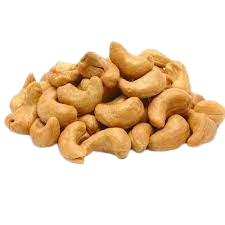
Cashews are a nutrient-dense tree nut with a creamy texture and buttery flavor. Cashew calories are high, with a 100 gram (3.53 ounce) serving of raw cashews containing 553 calories. A small single kernel (1.6g) serving has 9 calories, a one-ounce (28g) serving has 157 calories, and a large one-cup serving contains 758 calories. A 100g serving of oil-roasted cashews contains 581 calories.
Cashews’ nutrition profile highlights a rich composition of monounsaturated fats and vital minerals. A 100-gram serving provides 2.2 milligrams of copper (244% DV) and 292 milligrams of magnesium (70% DV), both important for bone health and energy production. The nutritional value of cashews also includes beneficial plant compounds that contribute to overall wellness. Research by Mah, E., et al. (2017) found that regular cashew intake in a standard American diet helped lower total and LDL cholesterol levels. These health benefits result from the nut’s balanced mix of healthy fats, minerals, and antioxidants.
Cashews are categorized by preparation methods such as raw, dry roasted, and oil roasted. Major producing countries include Côte d'Ivoire and India, while the United States and Germany are leading consumers. Prices have risen sharply over the past two decades, with wholesale costs increasing from below $2.00 per pound to more than $4.60 per pound in 2022/2023.
Cashews are popular in dishes such as Cashew Chicken at P.F. Chang’s serves as a creamy base for vegan desserts like the Vegan Cheesecake at The Cheesecake Factory. A recommended serving size is one ounce of cashew nuts per day, which contains 157 calories. This amount of calories can be burned through 16 minutes of jogging or 21 minutes of cycling.
Cashew nutrition
| Stats | Weight |
|---|---|
| Carbs | 36.3 grams |
| Protein | 17.4 grams |
| Fats | 38.9 grams |
| Sugars | 0 grams |
- Large Cashew Calories (Nutritional Facts)
- Medium Cashew Calories (Nutritional Facts)
- Small Cashew Calories (Nutritional Facts)
- Raw Cashew Nutrition
- Sodium in Cashew
- Potassium in Cashew
- Sugar in Cashew
- Fiber in Cashew
- Protein in Cashew
- Carbs in Cashew
- Fat in Cashew
- Vitamins in Cashew
- Minerals in Cashew
Large Cashew Calories (Nutritional Facts)
A large serving of one cup (137 grams) of raw cashews contains 758 calories, 25 grams of protein, 60 grams of fat, and 41.4 grams of total carbohydrates.
A medium serving of one ounce (28.35 grams) of raw cashews contains 157 calories, 5.2 grams of protein, 12.4 grams of fat, and 8.6 grams of total carbohydrates.
A small serving of one single kernel (1.6 grams) of raw cashews contains 9 calories, 0.3 grams of protein, 0.7 grams of fat, and 0.5 grams of total carbohydrates.
A one-cup (137g) serving of raw cashews provides 758 calories, 25 grams of protein, 60.1 grams of fat, 41.4 grams of carbohydrates, 4.5 grams of fiber, and 8.1 grams of sugar. A one-ounce (28.35g) serving of raw cashews has 157 calories, 5.2 grams of protein, 12.4 grams of fat, 8.6 grams of carbohydrates, 0.9 grams of fiber, and 1.7 grams of sugar. A single raw cashew kernel (1.6g) contains 9 calories, 0.3 grams of protein, 0.7 grams of fat, 0.5 grams of carbohydrates, 0.1 grams of fiber, and 0.1 grams of sugar.
A large one-cup (137g) serving of raw cashews contains 16 milligrams of sodium. A medium one-ounce (28.35g) serving contains 3 milligrams of sodium. A small single kernel (1.6g) serving contains 0 milligrams of sodium.
A large one-cup (137g) serving of raw cashews contains 904 milligrams of potassium (19% DV). A medium one-ounce (28.35g) serving contains 187 milligrams of potassium (4% DV). A small single kernel (1.6g) serving contains 11 milligrams of potassium (0% DV).
A large one-cup (137g) serving of raw cashews contains 8.1 grams of sugar. A medium one-ounce (28.35g) serving contains 1.7 grams of sugar. A small single kernel (1.6g) serving contains 0.1 grams of sugar.
A large one-cup (137g) serving of raw cashews provides 4.5 grams of fiber (16% DV). A medium one-ounce (28.35g) serving provides 0.9 grams of fiber (3% DV). A small single kernel (1.6g) serving provides 0.1 grams of fiber (0% DV).
A large one-cup (137g) serving of raw cashews provides 25 grams of protein (50% DV). A medium one-ounce (28.35g) serving provides 5.2 grams of protein (10% DV). A small single kernel (1.6g) serving provides 0.3 grams of protein (1% DV).
A large one-cup (137g) serving of raw cashews contains 41.4 grams of carbohydrates (15% DV). A medium one-ounce (28.35g) serving contains 8.6 grams of carbohydrates (3% DV). A small single kernel (1.6g) serving contains 0.5 grams of carbohydrates (0% DV).
A large one-cup (137g) serving of raw cashews contains 60.1 grams of total fat (77% DV). A medium one-ounce (28.35g) serving contains 12.4 grams of total fat (16% DV). A small single kernel (1.6g) serving contains 0.7 grams of total fat (1% DV).
A large one-cup (137g) serving of raw cashews provides 46.7 micrograms of Vitamin K (39% DV) and 0.6 milligrams of Vitamin B1 (48% DV). A medium one-ounce (28.35g) serving provides 9.7 micrograms of Vitamin K (8% DV) and 0.1 milligrams of Vitamin B6 (6% DV). A small single kernel (1.6g) serving provides 0.5 micrograms of Vitamin K (0% DV).
A large one-cup (137g) serving of raw cashews contains 3 milligrams of copper (334% DV) and 400 milligrams of magnesium (95% DV). A medium one-ounce (28.35g) serving contains 0.6 milligrams of copper (69% DV) and 83 milligrams of magnesium (20% DV). A small single kernel (1.6g) serving contains 0 milligrams of copper (4% DV) and 5 milligrams of magnesium (1% DV).
Get a Custom Report on Cashew Nutrition Data – Contact Us!
What are the Types of Cashews?
The types of cashews are primarily distinguished by preparation methods, such as raw, roasted, and salted, rather than different botanical varieties. The table below describes these common forms.
| Type | Description | Calories (Approximate per 100g) | Calorie Qualifications |
|---|---|---|---|
|
Raw Cashews
|
Uncooked, unroasted cashews. These are what most commercial "raw" cashews are, as true raw cashews are unsafe. | 553 | The baseline calorie count for cashews before any roasting or additives. |
|
Dry Roasted Cashews
|
Cashews that have been roasted with dry heat without the use of oil. | 574 | The roasting process removes some moisture, slightly concentrating the nutrients and increasing the calorie density per gram. |
|
Oil Roasted Cashews
|
Cashews that have been roasted in oil, often with added salt. | 581 | The addition of oil during the roasting process adds a small amount of fat and increases the overall calorie count. |
|
Salted Cashews
|
Roasted cashews to which salt has been added for flavor. | 574-581 | The calorie count is determined by the roasting method (dry or oil). The addition of salt does not change the calorie content. |
What are the Desserts With Cashews?
Cashews are a versatile ingredient in desserts, prized for a creamy texture when blended and a rich, buttery flavor. The nuts are used whole in traditional sweets and as a base for modern vegan cheesecakes and creams. Desserts made with cashews are detailed in the table below.
| Dish Name | Calories (Estimate) | Type of Cashew | Carbs (g) (Estimate) | Sugar (g) (Estimate) | Protein (g) (Estimate) | Fat (g) (Estimate) | Cuisine | Restaurants |
|---|---|---|---|---|---|---|---|---|
|
Vegan Cheesecake
|
450 per slice | Raw (soaked) | 35 | 25 | 8 | 30 | Modern Vegan | The Cheesecake Factory (multiple locations) |
|
Kaju Katli (Cashew Fudge)
|
80 per piece | Raw (ground) | 8 | 6 | 2 | 4 | Indian | Sukhadia's (multiple US locations) |
|
Cashew Brittle
|
200 per serving | Roasted | 25 | 22 | 4 | 10 | American Confection | See's Candies |
|
Raw Vegan Brownies
|
300 per square | Raw | 28 | 20 | 6 | 20 | Modern Vegan | Cafe Gratitude (Los Angeles, CA) |
|
Cashew Cream Frosting
|
150 per serving | Raw (soaked) | 10 | 8 | 2 | 12 | Modern Vegan | By Chloe. (New York, NY) |
|
Thai Mango with Cashew Sticky Rice
|
400 per serving | Roasted | 75 | 40 | 6 | 10 | Thai | Zabb Elee (New York, NY) |
|
Cashew Baklava
|
250 per piece | Roasted | 28 | 15 | 4 | 14 | Middle Eastern | Shatila Bakery (Dearborn, MI) |
|
Kaju Pista Roll
|
90 per piece | Raw (ground) | 9 | 7 | 2 | 5 | Indian | Rajbhog Sweets (multiple US locations) |
|
Cashew Ice Cream (Vegan)
|
280 per scoop | Raw (soaked) | 25 | 20 | 5 | 18 | Modern Vegan | Van Leeuwen Ice Cream |
|
White Chocolate Cashew Cookies
|
220 per cookie | Roasted | 25 | 15 | 4 | 12 | American | Insomnia Cookies |
What are the Main Dishes With Cashews?
Cashews are a fundamental component in many savory dishes, especially in Asian cuisines, adding a crunchy texture and mild, sweet flavor that balances spicy and savory elements. Main dishes that use cashews are described in the table that follows.
| Dish Name | Calories (Estimate) | Type of Cashew | Carbs (g) (Estimate) | Sugar (g) (Estimate) | Protein (g) (Estimate) | Fat (g) (Estimate) | Cuisine | Restaurants |
|---|---|---|---|---|---|---|---|---|
|
Cashew Chicken
|
700 per serving | Roasted | 50 | 25 | 45 | 38 | Chinese-American | P.F. Chang's |
|
Chicken Korma
|
650 per serving | Raw (ground) | 20 | 10 | 50 | 40 | Mughlai/Indian | Badmaash (Los Angeles, CA) |
|
Pad Med Mamuang (Thai Cashew Stir-fry)
|
680 per serving | Roasted | 55 | 18 | 40 | 35 | Thai | Lotus of Siam (Las Vegas, NV) |
|
Shahi Paneer
|
550 per serving | Raw (ground) | 15 | 8 | 25 | 45 | Mughlai/Indian | Junoon (New York, NY) |
|
Vietnamese Cashew Nut Chicken
|
620 per serving | Roasted | 40 | 15 | 45 | 30 | Vietnamese | The Slanted Door (San Francisco, CA) |
|
Goan Cashew Curry
|
480 per serving | Raw | 25 | 10 | 15 | 35 | Goan/Indian | Local Goan restaurants |
|
Cashew Nut Pesto Pasta
|
580 per serving | Raw | 60 | 5 | 18 | 30 | Modern Italian | Vegan and vegetarian cafes |
|
Lemon Rice with Cashews
|
350 per serving | Roasted | 60 | 2 | 8 | 10 | South Indian | Saravanaa Bhavan |
|
Cashew-Crusted Salmon
|
550 per serving | Raw (ground) | 10 | 2 | 45 | 38 | Modern American | Seasons 52 |
|
Vegan Cashew "Alfredo" Sauce
|
450 per serving | Raw (soaked) | 50 | 4 | 15 | 22 | Modern Vegan | Crossroads Kitchen (Los Angeles, CA) |
What Cuisines Prefer Cashews the Most?
Cashews are a fundamental ingredient in South and Southeast Asian cuisines and a foundational element in modern vegan cooking. The following table lists cuisines that feature cashews extensively.
| Cuisine | Dish | Types of Cashew Used | Calories (Estimate) | Restaurant(s) |
|---|---|---|---|---|
|
Indian (Mughlai)
|
Chicken Korma, Shahi Paneer | Raw (ground into paste) | 550-650 | Rasika (Washington, D.C.) |
|
Thai
|
Pad Med Mamuang | Roasted (whole) | 650-750 | Ayara Thai (Los Angeles, CA) |
|
Chinese-American
|
Cashew Chicken | Roasted (whole) | 600-700 | P.F. Chang's |
|
Vietnamese
|
Cashew Nut Stir-fry | Roasted (whole) | 550-650 | The Slanted Door (San Francisco, CA) |
|
Modern Vegan
|
Vegan Cheesecake, Cashew Cream | Raw (soaked and blended) | 400-500 | Cafe Gratitude (Los Angeles, CA) |
|
Goan
|
Goan Cashew Curry | Raw (whole) | 450-550 | Local Goan restaurants |
|
South Indian
|
Lemon Rice with Cashews | Roasted (pieces) | 300-400 | Saravanaa Bhavan |
|
Modern American
|
Cashew-Crusted Fish/Chicken | Raw (ground as coating) | 500-600 | Seasons 52 |
|
Middle Eastern
|
Baklava, Nut-filled pastries | Roasted (pieces) | 250-350 | Shatila Bakery (Dearborn, MI) |
|
American Confection
|
Cashew Brittle, Nut Clusters | Roasted (whole/pieces) | 200-300 | See's Candies |
Which Countries Produce the Most Cashews?
The top producers of raw cashews (in shell) are Côte d'Ivoire, India, and Vietnam. These countries have climates that are highly suitable for cashew cultivation and have developed extensive agricultural sectors to support production. The table below shows the production quantity of raw cashews in tonnes for key countries.
| Country | 2003 | 2004 | 2005 | 2006 | 2007 | 2008 | 2009 | 2010 | 2011 | 2012 | 2013 | 2014 | 2015 | 2016 | 2017 | 2018 | 2019 | 2020 | 2021 | 2022 |
|---|---|---|---|---|---|---|---|---|---|---|---|---|---|---|---|---|---|---|---|---|
| Côte d'Ivoire | 185,100 | 190,000 | 205,000 | 230,000 | 240,000 | 265,000 | 310,000 | 370,000 | 400,000 | 450,000 | 505,000 | 702,000 | 703,000 | 725,000 | 761,000 | 793,000 | 838,000 | 849,000 | 1,048,000 | 1,100,000 |
| India | 460,000 | 530,000 | 544,000 | 573,000 | 695,000 | 620,000 | 613,000 | 645,000 | 736,000 | 753,000 | 705,000 | 655,000 | 670,000 | 745,000 | 779,000 | 786,000 | 742,000 | 703,000 | 691,000 | 738,000 |
| Vietnam | 305,000 | 320,000 | 335,000 | 350,000 | 360,000 | 375,000 | 380,000 | 385,000 | 390,000 | 395,000 | 400,000 | 410,000 | 420,000 | 430,000 | 440,000 | 450,000 | 286,000 | 339,000 | 348,000 | 350,000 |
| Nigeria | 450,000 | 460,000 | 480,000 | 500,000 | 510,000 | 520,000 | 530,000 | 540,000 | 550,000 | 560,000 | 570,000 | 580,000 | 590,000 | 600,000 | 610,000 | 620,000 | 240,000 | 230,000 | 220,000 | 210,000 |
Which Countries Consume the Most Cashews?
The top consumers of shelled cashews are the United States, Germany, and the Netherlands. Consumption in these countries is high due to the popularity of cashews as a snack food and as an ingredient in a wide range of food products. The table below shows recent import values (USD) for shelled cashews for key markets.
| Country | 2013 | 2014 | 2015 | 2016 | 2017 | 2018 | 2019 | 2020 | 2021 | 2022 |
|---|---|---|---|---|---|---|---|---|---|---|
| United States | 985,400 | 1,150,300 | 1,280,600 | 1,350,800 | 1,460,200 | 1,510,700 | 1,490,500 | 1,520,300 | 1,750,600 | 1,680,400 |
| Germany | 310,200 | 345,700 | 380,100 | 410,500 | 450,800 | 470,200 | 460,900 | 510,400 | 590,800 | 570,600 |
| Netherlands | 280,600 | 310,900 | 340,200 | 360,700 | 390,100 | 410,600 | 400,300 | 430,700 | 480,200 | 460,900 |
| China | 150,400 | 170,800 | 190,500 | 210,300 | 240,600 | 260,100 | 250,800 | 280,500 | 320,100 | 310,400 |
| United Kingdom | 140,700 | 155,200 | 170,600 | 185,900 | 200,400 | 210,800 | 205,100 | 220,600 | 240,300 | 230,700 |
How Do Prices of Cashew-Including Dishes Change?
Menu prices for dishes that feature cashews have risen over the last ten years. This increase mirrors the growing wholesale cost of high-quality nuts, in addition to higher labor and restaurant operational expenses. Restaurants known for Asian and modern vegan food have adjusted menu prices to reflect these economic factors.
| Restaurant | Dish | Old Price (Year) | Current Price (2024/2025) |
|---|---|---|---|
| P.F. Chang's | Almond and Cashew Chicken | $8.50 (2015) | $9.95 - $16.99 |
| The Cheesecake Factory (restaurant chain) | Thai Lettuce Wraps with Chicken | $18.95 (2016) | $20.50 - $24.95 |
| Cafe Gratitude (Los Angeles, CA) | "I Am Whole" Macrobiotic Bowl (with cashews) | $16.00 (2015) | $22.00 - $25.31 |
| Lotus of Siam (Las Vegas, NV) | Chicken with Cashew Nuts | $14.95 (2014) | $20.99 - $24.00 |
What is the Cashew Calorie for 100 Grams?
A 100-gram (3.53 ounce) serving of raw cashews contains 553 calories. A 100-gram serving of oil-roasted cashews contains 581 calories.
What is the Cashew Calorie for 1 KG?
One kilogram (1000 grams) of raw cashews contains 5530 calories. One kilogram of oil-roasted cashews contains 5810 calories.
What is the Calorie of 1 Cashew?
A single raw cashew kernel contains 9 calories. A single oil-roasted cashew kernel contains 9 calories.
What are the Health Benefits of Cashew?
Cashews provide several health advantages due to a rich profile of unsaturated fats, essential minerals, and vitamins. The main benefits of cashews are outlined below.
- Supports Heart Health. Cashews are high in monounsaturated and polyunsaturated fatty acids, which help lower LDL cholesterol and triglyceride levels. Reducing these markers is associated with a lower risk of cardiovascular disease. A study by Mah, E., et al. (2017), "Cashew consumption reduces total and LDL cholesterol: a randomized, crossover, controlled-feeding trial," demonstrated that daily consumption of cashews as part of a typical American diet decreased total and LDL cholesterol.
- Aids in Bone Health. The nuts are an excellent source of copper and magnesium, two minerals vital for bone maintenance. Copper plays a role in collagen and elastin synthesis, keeping bones and joints strong, while magnesium is essential for calcium absorption and bone structure. A review by Aydin, H., et al. (2010), "The role of copper, zinc, and selenium in bone metabolism," established the importance of these trace minerals in preventing bone disorders.
- Promotes Healthy Blood Sugar Control. Cashews have a low carbohydrate content and a good amount of fiber, which helps prevent sharp spikes in blood sugar. The healthy fats and protein also slow down the absorption of sugar into the bloodstream. Research by Mohan, V., et al. (2018), "Effects of a plant-based, low-carbohydrate diet on body weight and blood lipids in hyperlipidemic adults: a randomized controlled trial," found that incorporating tree nuts like cashews into the diet improved glycemic control in individuals with type 2 diabetes.
What are the Downsides of Cashew?
Cashews are a nutritious food, but certain aspects like a high calorie count and the presence of potential allergens can be a concern for some individuals. Potential issues associated with cashew consumption are listed below.
- High Calorie Density. Cashews are high in calories, with a one-ounce serving containing 157 calories. Consuming large quantities without adjusting overall caloric intake can lead to weight gain. Research by Swinburn, B.A., et al. (2011), "The global obesity pandemic: shaped by global drivers and local environments," confirmed that increased consumption of energy-dense foods is a key driver of rising obesity rates. A daily suggested amount is one ounce (28.35 grams) to manage calorie intake. An alternative with lower calories is air-popped popcorn.
- Potential for Allergic Reactions. Cashews are a tree nut, a common allergen that can cause severe and potentially life-threatening allergic reactions in susceptible individuals. Reactions can range from mild itching to anaphylaxis. A study by McWilliam, V., et al. (2015), "The Prevalence of Tree Nut Allergy: A Systematic Review," highlights the prevalence and severity of tree nut allergies, emphasizing the need for strict avoidance by allergic individuals.
- Presence of Oxalates. Cashews contain oxalates, which are natural compounds that can contribute to the formation of kidney stones in people who are susceptible. Individuals with a history of kidney stones may need to limit their intake of oxalate-rich foods. A review by Taylor, E. N., & Curhan, G. C. (2008), "Dietary risk factors for urinary tract calculi," discusses how dietary oxalates from sources like nuts are a significant factor in the risk of developing calcium oxalate kidney stones. An alternative nut with lower oxalate content is the macadamia nut.
Are Cashews Good for You?
Yes, cashews are a good food choice because the nuts provide a dense source of heart-healthy monounsaturated fats, essential minerals like copper and magnesium, and beneficial plant compounds. The nutritional composition of cashews supports heart health by helping to lower bad cholesterol levels. A study published in The Journal of Nutrition by Gebauer, S.K., et al. (2011) showed that nut consumption is linked to a reduced risk of cardiovascular disease. Cashews also support bone health. The high concentration of magnesium and copper is crucial for bone formation and density, as detailed in a review by Rondanelli, M., et al. (2021) on the role of nutrients in bone health. Brain health benefits from the magnesium content in cashews, which plays a role in regulating neurotransmitters and protecting against neuronal over-excitation. Research by Boyle, N. B., et al. (2017), "The Effects of Magnesium Supplementation on Subjective Anxiety and Stress - A Systematic Review," established a link between magnesium status and neurological health.
How Does Calorie Change According to Cashew Types?
The calorie content of cashews changes based on the preparation method. The lowest calorie count is found in raw cashews, which contain 553 calories per 100 grams. Dry roasted cashews have a slightly higher calorie count at 574 calories per 100 grams. This increase is because the roasting process removes water, making the nut more dense by weight. The highest calorie count is in oil-roasted cashews, which contain 581 calories per 100 grams. The absorption of oil during the roasting process adds extra fat and calories to the final product.
Do Cashews Have More Protein Than Peanuts?
No, cashews do not have more protein than peanuts. Peanuts, which are technically legumes, contain a higher concentration of protein. A 100-gram serving of raw peanuts provides approximately 25.8 grams of protein. A 100-gram serving of raw cashews contains 18.2 grams of protein. The nutritional composition of nuts and legumes varies, with peanuts being one of the most protein-dense options. A comparative analysis of nut compositions, such as data provided by the USDA FoodData Central, confirms this difference. While both are good protein sources, peanuts offer a greater amount per serving.
Are Cashews Higher in Fat Than Walnuts?
No, cashews are not higher in fat than walnuts. Walnuts contain a greater amount of total fat per serving. A 100-gram serving of walnuts has approximately 65.2 grams of total fat. A 100-gram serving of cashews contains 43.9 grams of total fat. The type of fat also differs between the two nuts. Walnuts are exceptionally rich in polyunsaturated fats, specifically the omega-3 fatty acid alpha-linolenic acid (ALA). Cashews are richer in monounsaturated fats. A study by Ros, E. (2010), "Health benefits of nut consumption," provides a detailed comparison of the fatty acid profiles of different nuts, confirming the higher total fat and unique omega-3 content of walnuts.
How Many Cashews Can a Diabetic Eat?
A diabetic can eat one ounce of cashews, which is 18 whole kernels, as a daily serving. This portion provides important nutrients like magnesium and healthy fats without contributing an excessive amount of carbohydrates or calories, helping to maintain stable blood sugar levels. Cashew nuts are good for diabetics when consumed in moderation as the nuts have a low carbohydrate content and a favorable fat profile, which helps in managing blood glucose levels. A study by Mohan, V., et al. (2018), "Effects of a plant-based, low-carbohydrate diet on body weight and blood lipids in hyperlipidemic adults: a randomized controlled trial," found that incorporating tree nuts like cashews improved glycemic control. Another study by Afshin, A., et al. (2014), "Consumption of nuts and legumes and risk of incident ischemic heart disease, stroke, and diabetes: a systematic review and meta-analysis," linked regular nut consumption to a lower risk of developing type 2 diabetes. The magnesium in cashews also plays a vital role in glucose metabolism, and research by Hruby, A., et al. (2014) in "Magnesium intake and risk of type 2 diabetes: a meta-analysis" confirmed an inverse association between magnesium intake and diabetes risk.
What is the Origin of the Cashew?
The cashew tree (Anacardium occidentale) originated in northeastern Brazil. Indigenous populations in Brazil valued both the nut and the cashew apple. Portuguese explorers discovered the cashew in the 16th century and initiated its worldwide distribution. The Portuguese introduced the tree to India and East Africa, where favorable climates allowed for cultivation. India, Vietnam, and Nigeria subsequently developed into the main hubs for cashew processing and export. The nut integrated deeply into local food traditions. Indian cuisine uses ground cashews to form creamy sauces for Mughlai dishes. Thai and Chinese cooking adds whole cashews to stir-fries for textural contrast. Cashew consumption in Western diets grew rapidly during the 20th century. The nut is now a key ingredient in vegan cooking for producing dairy-free cheeses, creams, and desserts.
Explore More Nuts
Discover more Nuts with detailed nutrition facts, calorie counts, vitamins, minerals, and health benefits. Compare similar foods, serving sizes, macronutrients, and key nutrients to find the best option for your diet and nutrition goals.
 Almond Flour calories
 Almonds calories
 Brazil Nut calories
 Hazelnut calories
 Macadamia Milk calories
 Macadamia Nuts calories
 Nuts calories
 Peanuts calories
 Pecans calories
 Pine Nut calories
 Pistachio calories
 Walnut calories