Calories and Nutritions in Pecans
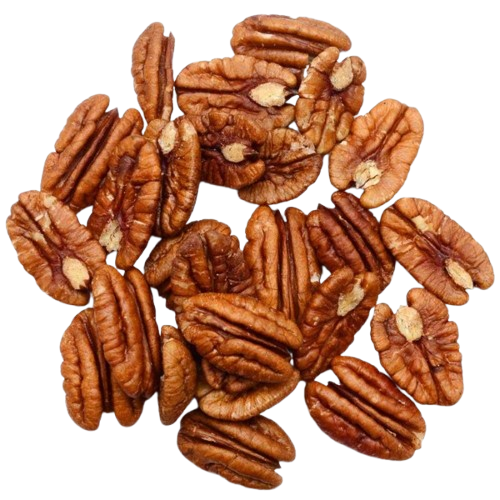
Pecans are a smooth-shelled nut from the hickory family distinguished by a rich buttery texture and high oil content. A 100g serving of raw pecans supplies 691 pecan calories while a single raw pecan half (2g) offers 14 calories. A 1oz portion (28.35g) of raw pecans supplies 196 calories while a 1 cup serving of raw pecan halves (99g) yields 684 calories. Oil-roasted pecans contain significantly more calories due to the absorption of cooking oils, providing 793 calories per cup (110g). Retail offerings present distinct energy values, as a serving of Fisher Chef's Naturals Pecan Halves (1oz) provides 200 calories, while a serving of Planters Roasted Pecans (1oz) contains 210 calories.
Pecan nutrition facts reveals a high fat food source with substantial fiber content, with a cup of raw pecan halves (99g) providing 71.4g of fat and 9.5g of dietary fiber. It is an excellent source of essential trace minerals required for metabolic function and research by Rajaram, S., et al. (2001), "A monounsaturated fatty acid-rich pecan-enriched diet favorably alters the serum lipid profile of healthy men and women," confirms that the high monounsaturated fat content in such nuts lowers total cholesterol and preserves beneficial HDL cholesterol. Pecans are a high-fat tree nut with over 70% fat by weight, similar to walnuts. Micronutrient intake is substantial, offering 4.5mg of manganese (196% DV) per cup. Thiamin is present in beneficial amounts, providing 0.65mg per large serving to support energy metabolism.
Global production of pecans depends heavily on the agricultural output of major nations, with the United States and Mexico leading harvest volumes. North American and Chinese populations consume significant quantities of pecans. Southern American, Creole, and Texan cuisines use pecans mainly in desserts like pecan pies and pralines, as well as main dishes like smoked brisket. Increasing global demand has pushed retail costs higher, with the price of fresh shelled halves rising from between $6.00 and $8.00 per lb in the early 2000s to between $11.00 and $16.00 per lb by 2024. Dining establishments reflect this shift, as a slice of Caramel Pecan Turtle Cheesecake at The Cheesecake Factory increased from $6.95 in 2010 to between $10.50 and $15.95 in 2024.
Pecans are a nutrient-dense food featuring substantial levels of manganese and copper, providing 4.5mg of manganese and 1.2mg of copper per large serving. This pecan nutrition profile supports antioxidant defense and strengthens bone health. Dietitians advise consuming 1oz (28g) of pecan per day which contains 196 calories. To burn the calories from this serving size, doing 54 minutes of sweeping or 42 minutes of weeding is recommended.
Pecans nutrition
| Stats | Weight |
|---|---|
| Carbs | 12.7 grams |
| Protein | 9.96 grams |
| Fats | 73.3 grams |
| Sugars | 0 grams |
- Large Pecans Calories (Nutritional Facts)
- Medium Pecans Calories (Nutritional Facts)
- Small Pecans Calories (Nutritional Facts)
- Raw Pecans Nutrition
- Sodium in Pecans
- Potassium in Pecans
- Sugar in Pecans
- Fiber in Pecans
- Protein in Pecans
- Carbs in Pecans
- Fat in Pecans
- Vitamins in Pecans
- Minerals in Pecans
Large Pecans Calories (Nutritional Facts)
A large 1-cup serving of raw pecan halves (99g) contains 684 calories, 9.2g of protein, 71.4g of fat, 13.6g of carbohydrates, 9.5g of dietary fiber, 3.9g of sugar, and 0mg of sodium. A large 1-cup serving of oil-roasted pecans (110g) provides 793 calories due to the absorption of cooking oils, along with 9.8g of protein, 83.4g of fat, 15.6g of carbohydrates, 10.5g of dietary fiber, 4.6g of sugar, and 366mg of sodium.
A medium 1-oz serving of raw pecans (28.35g) provides 196 calories, 2.6g of protein, 20.4g of fat, 3.9g of carbohydrates, 2.7g of dietary fiber, 1.1g of sugar, and 0mg of sodium. A medium 1-oz serving of dry-roasted pecans (28.35g) contains 201 calories, 2.8g of protein, 21g of fat, 3.8g of carbohydrates, 2.7g of dietary fiber, 1.2g of sugar, and 0mg of sodium.
A small 0.5-oz serving of raw pecans (14g) contains 98 calories, 1.3g of protein, 10.2g of fat, 1.9g of carbohydrates, 1.4g of dietary fiber, 0.6g of sugar, and 0mg of sodium. A small 0.5-oz serving of oil-roasted pecans (14g) supplies 101 calories, 1.2g of protein, 10.6g of fat, 2g of carbohydrates, 1.3g of dietary fiber, 0.6g of sugar, and 47mg of sodium.
A 100g serving of raw pecans supplies 691 calories, 9.17g of protein, 71.97g of fat, 13.86g of carbohydrates, 9.6g of fiber, 3.97g of sugar, and 0mg of sodium. A 100g serving of dry-roasted pecans provides 710 calories, 9.5g of protein, 74.27g of fat, 13.6g of carbohydrates, 9.5g of fiber, 4.2g of sugar, and 0mg of sodium.
A large 1-cup serving of raw pecan halves (99g) contains 0mg of sodium (0% DV). A large 1-cup serving of oil-roasted pecans (110g) contains 366mg of sodium (16% DV) when salted. A medium 1-oz serving of raw pecans (28.35g) has 0mg of sodium (0% DV). A medium 1-oz serving of dry-roasted pecans (28.35g) contains 0mg of sodium (0% DV) if unsalted. A small 0.5-oz serving of raw pecans (14g) supplies 0mg of sodium (0% DV). A small 0.5-oz serving of oil-roasted pecans (14g) contains 47mg of sodium (2% DV) when salted. A 100g serving of raw pecans supplies 0mg of sodium (0% DV).
A large 1-cup serving of raw pecan halves (99g) contains 406mg of potassium (9% DV). A large 1-cup serving of oil-roasted pecans (110g) contains 443mg of potassium (9% DV). A medium 1-oz serving of raw pecans (28.35g) has 116mg of potassium (2% DV). A medium 1-oz serving of dry-roasted pecans (28.35g) contains 118mg of potassium (3% DV). A small 0.5-oz serving of raw pecans (14g) supplies 58mg of potassium (1% DV). A small 0.5-oz serving of oil-roasted pecans (14g) contains 56mg of potassium (1% DV). A 100g serving of raw pecans supplies 410mg of potassium (9% DV).
A large 1-cup serving of raw pecan halves (99g) contains 3.9g of sugar. A large 1-cup serving of oil-roasted pecans (110g) contains 4.6g of sugar. A medium 1-oz serving of raw pecans (28.35g) has 1.1g of sugar. A medium 1-oz serving of dry-roasted pecans (28.35g) contains 1.2g of sugar. A small 0.5-oz serving of raw pecans (14g) supplies 0.6g of sugar. A small 0.5-oz serving of oil-roasted pecans (14g) contains 0.6g of sugar. A 100g serving of raw pecans supplies 3.97g of sugar.
A large 1-cup serving of raw pecan halves (99g) provides 9.5g of dietary fiber (34% DV). A large 1-cup serving of oil-roasted pecans (110g) contains 10.5g of dietary fiber (38% DV). A medium 1-oz serving of raw pecans (28.35g) has 2.7g of fiber (10% DV). A medium 1-oz serving of dry-roasted pecans (28.35g) contains 2.7g of fiber (10% DV). A small 0.5-oz serving of raw pecans (14g) supplies 1.4g of fiber (5% DV). A small 0.5-oz serving of oil-roasted pecans (14g) contains 1.3g of fiber (5% DV). A 100g serving of raw pecans supplies 9.6g of fiber (34% DV).
A large 1-cup serving of raw pecan halves (99g) provides 9.2g of protein (18% DV). A large 1-cup serving of oil-roasted pecans (110g) contains 9.8g of protein (20% DV). A medium 1-oz serving of raw pecans (28.35g) has 2.6g of protein (5% DV). A medium 1-oz serving of dry-roasted pecans (28.35g) contains 2.8g of protein (6% DV). A small 0.5-oz serving of raw pecans (14g) supplies 1.3g of protein (3% DV). A small 0.5-oz serving of oil-roasted pecans (14g) contains 1.2g of protein (2% DV). A 100g serving of raw pecans supplies 9.17g of protein (18% DV).
A large 1-cup serving of raw pecan halves (99g) contains 13.6g of carbohydrates (5% DV). A large 1-cup serving of oil-roasted pecans (110g) contains 15.6g of carbohydrates (6% DV). A medium 1-oz serving of raw pecans (28.35g) has 3.9g of carbohydrates (1% DV). A medium 1-oz serving of dry-roasted pecans (28.35g) contains 3.8g of carbohydrates (1% DV). A small 0.5-oz serving of raw pecans (14g) supplies 1.9g of carbohydrates (1% DV). A small 0.5-oz serving of oil-roasted pecans (14g) contains 2g of carbohydrates (1% DV). A 100g serving of raw pecans supplies 13.86g of carbohydrates (5% DV).
A large 1-cup serving of raw pecan halves (99g) contains 71.4g of total fat (92% DV). A large 1-cup serving of oil-roasted pecans (110g) contains 83.4g of total fat (107% DV). A medium 1-oz serving of raw pecans (28.35g) has 20.4g of total fat (26% DV). A medium 1-oz serving of dry-roasted pecans (28.35g) contains 21g of total fat (27% DV). A small 0.5-oz serving of raw pecans (14g) supplies 10.2g of total fat (13% DV). A small 0.5-oz serving of oil-roasted pecans (14g) contains 10.6g of total fat (14% DV). A 100g serving of raw pecans supplies 71.97g of total fat (92% DV).
A large 1-cup serving of raw pecan halves (99g) provides 0.65mg of Thiamin (54% DV), 0.2mg of Vitamin B6 (12% DV), and 1.4mg of Vitamin E (9% DV). A large 1-cup serving of oil-roasted pecans (110g) contains 0.5mg of Thiamin (42% DV). A medium 1-oz serving of raw pecans (28.35g) has 0.19mg of Thiamin (16% DV), 0.06mg of Vitamin B6 (4% DV), and 0.4mg of Vitamin E (3% DV). A medium 1-oz serving of dry-roasted pecans (28.35g) contains 0.1mg of Thiamin (8% DV). A small 0.5-oz serving of raw pecans (14g) supplies 0.09mg of Thiamin (8% DV). A small 0.5-oz serving of oil-roasted pecans (14g) contains 0.06mg of Thiamin (5% DV). A 100g serving of raw pecans supplies 0.66mg of Thiamin (55% DV).
A large 1-cup serving of raw pecan halves (99g) provides 4.5mg of manganese (196% DV), 1.2mg of copper (133% DV), 121mg of magnesium (29% DV), and 4.5mg of zinc (41% DV). A large 1-cup serving of oil-roasted pecans (110g) contains 4.8mg of manganese (209% DV). A medium 1-oz serving of raw pecans (28.35g) has 1.3mg of manganese (57% DV), 0.34mg of copper (38% DV), 34mg of magnesium (8% DV), and 1.3mg of zinc (12% DV). A medium 1-oz serving of dry-roasted pecans (28.35g) contains 1.4mg of manganese (61% DV). A small 0.5-oz serving of raw pecans (14g) supplies 0.65mg of manganese (28% DV). A small 0.5-oz serving of oil-roasted pecans (14g) contains 0.6mg of manganese (26% DV). A 100g serving of raw pecans supplies 4.5mg of manganese (196% DV) and 1.2mg of copper (133% DV).
Get a Custom Report on Pecans Nutrition Data – Contact Us!
What are the Types of Pecans?
The types of Pecans include specific cultivars like Stuart and Desirable, as well as prepared forms such as Roasted and Praline. The table below delineates the nutritional variances among these types.
| Type | Description | Calories (Per 100g) | Calorie Qualifications |
|---|---|---|---|
|
Raw Pecans
|
Fresh, shelled kernels. | 691 | The calorie count reflects the natural oil content of the raw kernel. |
|
Dry-Roasted Pecans
|
Heated without oil. | 710 | Moisture loss during roasting concentrates the energy density. |
|
Oil-Roasted Pecans
|
Cooked in vegetable oil. | 721 | Absorption of external cooking oils increases the total fat and calorie count. |
|
Pecan Pralines
|
Coated in sugar/syrup. | 450 | The addition of sugar reduces fat density per gram but adds empty carbohydrates. |
|
Spiced/Glazed Pecans
|
Coated with spices/sugar. | 650 | Sugar coatings add carbohydrates, slightly altering the fat-to-calorie ratio. |
What are Desserts With Pecans?
Desserts featuring pecans rely heavily on the high fat content and rich, buttery flavor of the nut to complement sugars and syrups. The texture allows the ingredient to maintain a crunch even when baked into custards or coated in caramel. Specific desserts utilizing this nut are listed below.
| Dish Name | Calories (Estimate) | Type of Dish | Carbs (g) (Estimate) | Sugar (g) (Estimate) | Protein (g) (Estimate) | Fat (g) (Estimate) | Cuisine | Restaurants (Examples in US) |
|---|---|---|---|---|---|---|---|---|
|
Southern Pecan Pie
|
500 | Pie/Pastry | 65 | 30 | 5 | 27 | Southern American | Cracker Barrel |
|
New Orleans Pralines
|
150 | Confectionery | 25 | 22 | 1 | 6 | Creole/Cajun | Magnolia Praline Co. (New Orleans, LA) |
|
Butter Pecan Ice Cream
|
280 | Frozen Dessert | 25 | 22 | 5 | 18 | American | Baskin-Robbins |
|
Hummingbird Cake
|
600 | Cake | 70 | 50 | 6 | 32 | Southern American | Magnolia Bakery (New York, NY) |
|
Turtle Cheesecake
|
920 | Cake/Cheesecake | 80 | 60 | 12 | 62 | American | The Cheesecake Factory (National) |
|
Pecan Sticky Buns
|
880 | Pastry | 110 | 55 | 12 | 45 | American | Cinnabon |
|
German Chocolate Cake
|
740 | Cake | 90 | 70 | 8 | 40 | American | The Palm |
|
Pecan Sandies
|
160 | Cookie | 18 | 8 | 2 | 10 | American | Panera Bread |
|
Carrot Cake with Pecans
|
1080 | Cake | 115 | 85 | 14 | 64 | American | The Cheesecake Factory (National) |
|
Pecan Tart
|
350 | Pastry | 40 | 20 | 4 | 22 | French/American | Bouchon Bakery (Yountville, CA) |
|
Chocolate Pecan Pie
|
550 | Pie/Pastry | 70 | 35 | 6 | 30 | Southern American | Michele's Pies (Norwalk, CT) |
|
Pecan Log Roll
|
300 | Confectionery | 45 | 35 | 2 | 12 | Southern American | Stuckey's (National) |
|
Bread Pudding with Pecan Sauce
|
800 | Dessert | 100 | 70 | 10 | 40 | Creole | Commander's Palace (New Orleans, LA) |
|
Texas Sheet Cake
|
450 | Cake | 60 | 45 | 5 | 22 | Texan | Magnolia Table (Waco, TX) |
|
Maple Pecan Danish
|
400 | Pastry | 45 | 20 | 6 | 24 | American | Starbucks |
What are the Main Dishes With Pecans?
Pecans function as a versatile coating for proteins or a crunchy element in savory salads and grain bowls. The nut adds a distinct texture and nutty flavor that pairs well with poultry, fish, and pork. Specific dishes utilizing this ingredient are listed below.
| Dish Name | Calories (Estimate) | Type of Dish | Carbs (g) (Estimate) | Sugar (g) (Estimate) | Protein (g) (Estimate) | Fat (g) (Estimate) | Cuisine | Restaurants |
|---|---|---|---|---|---|---|---|---|
|
Pecan Crusted Chicken Salad
|
900 | Salad Entree | 45 | 12 | 40 | 65 | American | TGI Fridays |
|
Pecan Crusted Rainbow Trout
|
600 | Seafood Entree | 20 | 2 | 45 | 38 | Southern American | Cracker Barrel |
|
Sweet Potato Casserole
|
400 | Side/Entree | 60 | 30 | 4 | 16 | Southern American | Ruth's Chris Steak House (National) |
|
Pecan Crusted Catfish
|
850 | Seafood Entree | 40 | 3 | 40 | 55 | Cajun/Creole | Pappadeaux Seafood Kitchen |
|
Chicken Salad with Pecans
|
500 | Sandwich/Salad | 15 | 8 | 25 | 35 | American | Arby's |
|
Apple Pecan Chicken Salad
|
550 | Salad Entree | 35 | 25 | 30 | 28 | American | Wendy's |
|
Pecan Smoked Pork Ribs
|
950 | BBQ Entree | 10 | 8 | 65 | 70 | Texan BBQ | Terry Black's BBQ (Austin, TX) |
|
Mushroom & Pecan Ravioli
|
820 | Pasta Entree | 85 | 6 | 22 | 45 | Italian-American | Maggiano's Little Italy |
|
Pecan Crusted Salmon
|
700 | Seafood Entree | 25 | 4 | 40 | 48 | American | Bonefish Grill |
|
Stuffed Acorn Squash
|
450 | Vegetarian Entree | 55 | 15 | 10 | 22 | American | Seasons 52 |
|
Goat Cheese & Pecan Salad
|
400 | Salad Entree | 25 | 18 | 12 | 28 | American | Panera Bread |
|
Pecan Waffles
|
520 | Breakfast Entree | 65 | 15 | 8 | 26 | American Diner | Waffle House |
|
Pancakes with Pecans
|
700 | Breakfast Entree | 90 | 20 | 12 | 30 | American | IHOP |
|
Pecan Wood Smoked Brisket
|
800 | BBQ Entree | 0 | 0 | 60 | 62 | Texan BBQ | The Salt Lick BBQ (Driftwood, TX) |
|
Cranberry Pecan Chicken Sandwich
|
600 | Sandwich | 55 | 12 | 30 | 28 | American | Panera Bread |
What Cuisines Prefer Pecans the Most?
Pecans serve as a foundational ingredient in Southern American, Texan, and Creole culinary traditions. The table below identifies culinary traditions that rely heavily on this tree nut.
| Cuisine | Dish | Types of Pecan Use | Calories (Estimate) | Restaurant(s) |
|---|---|---|---|---|
|
Southern American
|
Pecan Pie | Baked Dessert | 500 | Cracker Barrel |
|
Creole
|
Pralines | Confectionery | 150 | Commander's Palace (New Orleans, LA) |
|
Texan BBQ
|
Pecan Smoked Brisket | Smoking Wood/Ingredient | 800 | Franklin Barbecue (Austin, TX) |
|
American Diner
|
Pecan Waffles | Batter Mix-in | 520 | Waffle House |
|
Mexican
|
Chiles en Nogada | Walnut/Pecan Cream Sauce | 600 | La Fonda del Sol (New York, NY) |
|
Modern American
|
Pecan Crusted Trout | Protein Coating | 600 | Bonefish Grill |
|
French-American
|
Pecan Tart | Pastry Filling | 350 | Bouchon Bakery (Yountville, CA) |
|
Italian-American
|
Pecan Pesto Pasta | Sauce Base | 820 | Maggiano's Little Italy |
|
Bakery/Cafe
|
Pecan Sticky Buns | Dough Filling/Topping | 880 | Cinnabon |
|
Steakhouse
|
Sweet Potato Casserole | Topping | 400 | Ruth's Chris Steak House (National) |
|
Fast Casual
|
Apple Pecan Salad | Salad Topping | 550 | Wendy's |
|
Breakfast Chain
|
Pecan Pancakes | Batter Mix-in | 700 | IHOP |
|
Ice Cream Parlor
|
Butter Pecan | Frozen Mix-in | 280 | Baskin-Robbins |
|
Health/Fusion
|
Quinoa Pecan Bowl | Grain Topping | 450 | True Food Kitchen |
|
Confectionery
|
Pecan Log Roll | Candy Center | 300 | Stuckey's (National) |
Which Countries Produce the Most Pecans?
The top producers of pecans are the United States and Mexico, which account for the vast majority of the global supply. South Africa and Australia contribute smaller volumes to the international market, focusing on counter-seasonal exports. Production levels fluctuate annually based on the alternate bearing nature of the trees. The table below shows the estimated production volume in thousand metric tons for the leading nations over the last two decades.
| Country | 2003 | 2008 | 2013 | 2018 | 2019 | 2020 | 2021 | 2022 | 2023 |
|---|---|---|---|---|---|---|---|---|---|
| United States | 118.5 | 132.4 | 120.6 | 135.2 | 115.6 | 138.4 | 116.2 | 124.5 | 130.2 |
| Mexico | 75.2 | 90.5 | 110.4 | 132.6 | 145.2 | 148.5 | 155.6 | 160.2 | 165.4 |
| South Africa | 4.5 | 6.8 | 10.5 | 16.4 | 18.2 | 19.5 | 21.4 | 24.5 | 28.6 |
| Australia | 1.8 | 2.2 | 2.8 | 3.5 | 3.6 | 3.8 | 4.2 | 4.5 | 4.8 |
| Brazil | 1.2 | 1.5 | 2.0 | 2.8 | 3.0 | 3.2 | 3.5 | 3.8 | 4.0 |
Which Countries Consume the Most Pecans?
The top consumers of pecans are the United States, Mexico, and China, driven by domestic availability and rising import demand. European nations such as the Netherlands, Germany, and the United Kingdom also import significant quantities for processing and retail distribution. The table below shows the estimated consumption and import market values in millions of USD for the key consuming nations.
| Country | 2003 | 2008 | 2013 | 2018 | 2019 | 2020 | 2021 | 2022 | 2023 |
|---|---|---|---|---|---|---|---|---|---|
| United States | 250.5 | 320.4 | 450.6 | 580.2 | 560.5 | 540.2 | 590.5 | 610.4 | 625.0 |
| Mexico | 80.2 | 110.5 | 150.4 | 180.6 | 190.2 | 195.4 | 210.5 | 220.6 | 230.5 |
| China | 10.5 | 45.2 | 180.5 | 120.4 | 95.6 | 85.2 | 90.5 | 105.4 | 115.2 |
| Netherlands | 25.4 | 35.6 | 55.2 | 75.4 | 78.2 | 82.5 | 88.6 | 92.4 | 96.5 |
| United Kingdom | 15.2 | 20.5 | 30.4 | 40.2 | 42.5 | 45.6 | 48.2 | 50.5 | 52.4 |
| Canada | 12.5 | 18.2 | 25.6 | 35.4 | 36.8 | 38.2 | 40.5 | 42.6 | 44.5 |
| Germany | 10.2 | 14.5 | 22.4 | 30.5 | 32.6 | 34.5 | 36.8 | 38.5 | 40.2 |
How Do Prices of Pecans-Including Dishes Change?
Restaurant costs for pecan-based entrees and desserts have surged, mirroring the increased expense of labor and raw ingredients. The table below illustrates price adjustments for selected items at well-known establishments.
| Brand/Restaurant | Dish | Old Price (Year) | Current Price (2024/2025) |
|---|---|---|---|
| Cracker Barrel | Slice of Pecan Pie | $2.99 (2010) | $5.49 - $7.14 |
| Starbucks | Maple Pecan Danish | $12.45 (2012) | $13.95 - $14.47 |
| Panera Bread | Pecan Braid/Pastry | $2.29 (2011) | $3.79 - $5.69 |
| The Cheesecake Factory | Caramel Pecan Turtle Cheesecake (Slice) | $6.95 (2010) | $10.50 - $15.95 |
| Wendy's | Apple Pecan Chicken Salad | $6.29 (2012) | $8.49 - $9.49 |
What is the Pecans Calorie for 100 Grams?
A 100g serving of fresh raw pecans contains 691 calories, while the same quantity of dry-roasted pecans provides 710 calories.
What is the Pecans Calorie for 1 KG?
One kilogram (1000g) of fresh raw pecans contains 6910 calories, whereas a kilogram of oil-roasted pecans provides 7150 calories.
What is the Calorie of 1 Pecan?
A single raw pecan half (2g) contains 14 calories. A whole raw pecan kernel (4g) provides 28 calories. Retail offerings present distinct energy values, as a serving of Fisher Chef's Naturals Pecan Halves (1oz) provides 200 calories, while a serving of Planters Roasted Pecans (1oz) contains 210 calories. A serving of Kirkland Signature Fancy Pecan Halves (1oz) supplies 210 calories.
What are the Health Benefits of Pecans?
Pecans provide notable physiological advantages, specifically regarding cardiovascular maintenance, oxidative stress reduction, and metabolic regulation. The nut functions as a dense source of monounsaturated fats and antioxidants. The following points highlight these benefits.
- Supports Cardiovascular Health: Pecans contain high levels of monounsaturated fats, which assist in lowering LDL cholesterol levels. Research by Rajaram, S., et al. (2001), "A monounsaturated fatty acid-rich pecan-enriched diet favorably alters the serum lipid profile of healthy men and women," confirmed that a diet enriched with this nut lowers total cholesterol and preserves beneficial HDL cholesterol.
- Reduces Oxidative Stress: The nut supplies a substantial amount of gamma-tocopherol and other antioxidants that neutralize free radicals. A study by Hudthagosol, C., et al. (2011), "Pecans acutely increase plasma postprandial antioxidant capacity and catechins and decrease LDL oxidation in humans," established that consumption of the nut effectively reduces lipid oxidation and boosts plasma antioxidant defense.
- Improves Metabolic Health: Regular consumption aids in managing insulin sensitivity and cardiometabolic risk factors. Research by McKay, D. L., et al. (2018), "A Pecan-Rich Diet Improves Cardiometabolic Risk Factors in Overweight and Obese Adults," demonstrated that incorporating the food into a diet lowers the risk of cardiometabolic disease without inducing weight gain.
What are the Downsides of Pecans?
Pecans pose risks for specific individuals due to allergenic proteins and high caloric density. Dietitians recommend limiting intake to 1oz (28g) per day and suggest sunflower seeds as a safe alternative for allergic individuals. Potential adverse effects are outlined below.
- Triggers Allergic Reactions: The nut contains proteins that act as potent allergens, capable of causing anaphylaxis in sensitive subjects. Research by Teuber, S. S., & Sathe, S. K. (2021), "Adult peanut allergy: What we know and what we need to learn," indicates that the 2S albumin protein within the kernel remains stable during processing and provokes severe immune responses.
- Increases Caloric Load: Excessive consumption leads to a caloric surplus due to the high fat content found in the kernel. A study by Jackson, C. L., & Hu, F. B. (2014), " Long-term associations of nut consumption with body weight and obesity," notes that failing to account for the energy density of nuts results in unwanted weight gain despite the metabolic benefits.
Are Pecans Good for You?
Yes, pecans are good for health because the nut supports cardiovascular efficiency, enhances cognitive performance, and aids digestive regularity. Heart health improves through the reduction of LDL cholesterol, a mechanism detailed in the study by Rajaram, S., et al. (2001), "A monounsaturated fatty acid-rich pecan-enriched diet favorably alters the serum lipid profile of healthy men and women." Cognitive health benefits from the presence of antioxidants that protect neural pathways, as explored by Carey, A. N., et al. (2012), " The beneficial effects of tree nuts on the aging brain." Digestive health relies on the high fiber content to maintain bowel regularity and support gut microbiome diversity, a benefit confirmed by research from Anderson, J. W., et al. (2009), "Health benefits of dietary fiber."
Are Pecans Good for Weight Loss?
Yes, Pecans assist in weight management when consumed in moderation due to the satiating effect of fiber and healthy fats. Dietitians suggest a consumption rate of 1oz (19 halves) per day to maximize satiety without exceeding caloric limits. Research by Flores-Mateo, G., et al. (2013), "Nut intake and adiposity: meta-analysis of clinical trials," indicates that nut consumption does not lead to weight gain and may support weight maintenance. A study by Li, H., et al. (2018), "Nut consumption and risk of metabolic syndrome and overweight/obesity," confirms that higher nut intake correlates with lower body weight and reduced waist circumference. Research by McKay, D. L., et al. (2018), "A Pecan-Rich Diet Improves Cardiometabolic Risk Factors in Overweight and Obese Adults," further establishes that adding the nut to a diet produces no significant increase in body weight or waist circumference.
How Do Calories Change According to Pecans Types?
Caloric density fluctuates based on the processing method and moisture content of the nut. Oil-roasted pecans present the highest energy load at approximately 721 calories per 100g due to the absorption of added fats. Dry-roasted pecans follow closely at 710 calories per 100g as moisture evaporation concentrates the nutrients. Raw pecans offer a slightly lower profile at 691 calories per 100g. Sugar-coated varieties like pralines actually contain fewer calories per 100g (around 450) compared to pure nuts because sugar is less calorically dense than the natural fats found in the nut, though the nutritional quality decreases.
Are Pecans Better Than Walnuts for Protein Content?
No, pecans are not better than walnuts for protein content because walnuts supply a higher concentration of amino acids per serving. A 100g serving of walnuts provides 15.2g of protein, whereas the same amount of pecans offers 9.2g of protein. Research by the USDA FoodData Central (2019) confirms that walnuts rank higher in protein density among tree nuts compared to pecans. Individuals seeking maximum protein intake from nuts should prioritize walnuts or almonds over pecans.
Are Pecans a Good Source of Fiber?
Yes, pecans are a good source of fiber because a standard serving supplies a significant portion of the daily required intake. A 100g serving of raw pecans provides 9.6g of dietary fiber, which aids in digestion and blood sugar regulation. Research by Anderson, J. W., et al. (2009), "Health benefits of dietary fiber," establishes that foods containing such high fiber levels contribute effectively to gastrointestinal health and satiety. The nut functions as an efficient vehicle for increasing daily fiber consumption.
What is the Origin of Pecans?
The pecan (Carya illinoinensis) originated in the Mississippi Valley and the river valleys of central and northern Mexico. Native American tribes utilized the nut extensively as a staple food source long before European arrival, valuing the kernel for the high caloric density and storage stability. The name "pecan" derives from the Algonquin word pacane, meaning a nut requiring a stone to crack. Spanish explorers encountered the tree in the 16th century, referring to the fruit as a "wrinkle-shelled walnut." Thomas Jefferson and George Washington later cultivated the trees in the United States, promoting the spread of the species across the Southern states. Commercial propagation began in the 1880s in Louisiana, transforming the wild harvest into a structured agricultural industry.
Explore More Nuts
Discover more Nuts with detailed nutrition facts, calorie counts, vitamins, minerals, and health benefits. Compare similar foods, serving sizes, macronutrients, and key nutrients to find the best option for your diet and nutrition goals.
 Almond Flour calories
 Almonds calories
 Brazil Nut calories
 Cashew calories
 Hazelnut calories
 Macadamia Milk calories
 Macadamia Nuts calories
 Nuts calories
 Peanuts calories
 Pine Nut calories
 Pistachio calories
 Walnut calories