Calories and Nutritions in Hazelnut
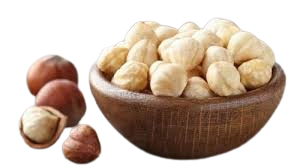
Hazelnuts are high fat and high calorie nuts from the genus Corylus, often used as an ingredient in ice cream, cookies, and pastries. A cup of raw whole hazelnuts delivers 848 hazelnut calories, while a 1 oz serving (28g) provides 176 calories. Processing methods impact these figures, as a large 135g serving of dry roasted hazelnuts contains 872 calories, slightly exceeding the raw variety due to moisture loss. A single raw hazelnut kernel containing 9 calories. A 28g serving of Fisher Chef's Naturals Hazelnuts holds 190 calories, while a 28g bag of Wild Soil Beyond Fresh Roasted Hazelnuts supplies 180 calories.
An examination of hazelnut nutrition facts reveals a composition dense in healthy fats and protein with moderate carbohydrate content, as a cup of raw hazelnuts have 23g of carbs, 20g of protein, and 82g of fat. This nut serves as a primary delivery system for monounsaturated fats and essential minerals. Research conducted by Tey, S. L., et al. (2011), titled "Effects of different forms of hazelnuts on blood lipids and α-tocopherol concentrations," validates that the fatty acid profile significantly reduces LDL cholesterol levels. The caloric energy is derived principally from lipids, establishing the nut as a potent fuel reserve.
International supply networks rely heavily on the agricultural yields of Turkey, Italy, and the United States, with Turkey controlling the majority of global production. This output caters to the requirements of major markets, particularly Germany, Italy, and France. Within Italian, Turkish, and French culinary traditions, the nut acts as a fundamental ingredient for chocolate spreads, praline pastes, and plates like Gianduja, Hazelnut Baklava, and Paris-Brest. Weather conditions and harvest yields have pushed retail costs through periods of extreme volatility, with wholesale rates for standard kernels rising from approximately $1.15 per pound in the early 2000s to exceeding $2.30 per pound following the 2014 frost in Turkey. Restaurant menu pricing mirrors this inflation, as a Grande Iced Hazelnut Oatmilk Shaken Espresso at Starbucks climbed from $3.95 in 2014 to between $5.45 and $6.45 in 2024.
Dietitians suggest a daily consumption of 30g of hazelnuts to maximize nutrient uptake while controlling caloric intake, as this amount holds 189 calories. Expending this energy load necessitates 20 minutes of Stair Climbing or 25 minutes of Dancing.
Hazelnut nutrition
| Stats | Weight |
|---|---|
| Carbs | 26.5 grams |
| Protein | 13.5 grams |
| Fats | 53.5 grams |
| Sugars | 0 grams |
- Large Hazelnut Calories (Nutritional Facts)
- Medium Hazelnut Calories (Nutritional Facts)
- Small Hazelnut Calories (Nutritional Facts)
- Raw Hazelnut Nutrition
- Sodium in Hazelnut
- Potassium in Hazelnut
- Sugar in Hazelnut
- Fiber in Hazelnut
- Protein in Hazelnut
- Carbs in Hazelnut
- Fat in Hazelnut
- Vitamins in Hazelnut
- Minerals in Hazelnut
Large Hazelnut Calories (Nutritional Facts)
A large serving of raw whole hazelnuts (135g or 1 cup) contains 848 calories, 20g of protein, 82g of fat, 23g of carbohydrates, 13g of fiber, 6g of sugar, and 0mg of sodium. A large serving of dry roasted hazelnuts (135g or 1 cup) provides 872 calories, 20g of protein, 84g of fat, 24g of carbohydrates, 13g of fiber, 7g of sugar, and 3mg of sodium.
A medium portion of raw whole hazelnuts (67.5g or 0.5 cup) provides 424 calories, 10g of protein, 41g of fat, 11.5g of carbohydrates, 6.5g of fiber, 3g of sugar, and 0mg of sodium. A medium portion of dry roasted hazelnuts (67.5g or 0.5 cup) supplies 436 calories, 10g of protein, 42g of fat, 12g of carbohydrates, 6.5g of fiber, 3.5g of sugar, and 1.5mg of sodium.
A small handful of raw whole hazelnuts (28g or 1oz) contains 176 calories, 4.2g of protein, 17g of fat, 4.7g of carbohydrates, 2.7g of fiber, 1.2g of sugar, and 0mg of sodium. A small handful of dry roasted hazelnuts (28g or 1oz) provides 183 calories, 4.2g of protein, 17.7g of fat, 5g of carbohydrates, 2.7g of fiber, 1.4g of sugar, and 1mg of sodium.
A cup of raw whole hazelnuts (135g) supplies 848 calories, 20g of protein, 82g of fat, 23g of carbohydrates, 13g of fiber, 6g of sugar, and 0mg of sodium. A cup of raw hazelnut meal (95g) contains 597 calories, 14g of protein, 58g of fat, 16g of carbohydrates, 9g of fiber, 4g of sugar, and 0mg of sodium.
A large serving of raw hazelnuts (135g or 1 cup) contains 0mg of sodium (0% DV), while a large serving of salted roasted hazelnuts (135g or 1 cup) provides 320mg of sodium (14% DV). A medium portion of raw hazelnuts (67.5g or 0.5 cup) has 0mg of sodium (0% DV), whereas a medium portion of salted roasted hazelnuts (67.5g or 0.5 cup) supplies 160mg of sodium (7% DV). A small handful of raw hazelnuts (28g or 1oz) contains 0mg of sodium (0% DV), and a small handful of salted roasted hazelnuts (28g or 1oz) provides 66mg of sodium (3% DV). A standard serving of unsalted roasted hazelnuts (28g or 1oz) supplies 1mg of sodium (0% DV), while a serving of hazelnut butter (32g or 2 tbsp) contains 0mg of sodium (0% DV).
A large serving of raw hazelnuts (135g or 1 cup) provides 918mg of potassium (20% DV), while a large serving of dry roasted hazelnuts (135g or 1 cup) contains 960mg of potassium (20% DV). A medium portion of raw hazelnuts (67.5g or 0.5 cup) has 459mg of potassium (10% DV), whereas a medium portion of dry roasted hazelnuts (67.5g or 0.5 cup) supplies 480mg of potassium (10% DV). A small handful of raw hazelnuts (28g or 1oz) contains 193mg of potassium (4% DV), and a small handful of dry roasted hazelnuts (28g or 1oz) provides 208mg of potassium (4% DV). A standard serving of hazelnut flour (28g or 1oz) supplies 230mg of potassium (5% DV), while a serving of blanched hazelnuts (28g or 1oz) contains 190mg of potassium (4% DV).
A large serving of raw hazelnuts (135g or 1 cup) contains 6g of sugar, while a large serving of dry roasted hazelnuts (135g or 1 cup) provides 7g of sugar. A medium portion of raw hazelnuts (67.5g or 0.5 cup) has 3g of sugar, whereas a medium portion of dry roasted hazelnuts (67.5g or 0.5 cup) supplies 3.5g of sugar. A small handful of raw hazelnuts (28g or 1oz) contains 1.2g of sugar, and a small handful of dry roasted hazelnuts (28g or 1oz) provides 1.4g of sugar. A standard serving of hazelnut butter (32g or 2 tbsp) supplies 1g of sugar, while a serving of chocolate-covered hazelnuts (40g) contains 18g of sugar.
A large serving of raw hazelnuts (135g or 1 cup) provides 13g of dietary fiber (46% DV), while a large serving of dry roasted hazelnuts (135g or 1 cup) contains 13g of fiber (46% DV). A medium portion of raw hazelnuts (67.5g or 0.5 cup) has 6.5g of fiber (23% DV), whereas a medium portion of dry roasted hazelnuts (67.5g or 0.5 cup) supplies 6.5g of fiber (23% DV). A small handful of raw hazelnuts (28g or 1oz) contains 2.7g of fiber (10% DV), and a small handful of dry roasted hazelnuts (28g or 1oz) provides 2.7g of fiber (10% DV). A standard serving of hazelnut flour (28g or 1oz) supplies 3g of fiber (11% DV), while a serving of blanched hazelnuts (28g or 1oz) contains 2.5g of fiber (9% DV).
A large serving of raw hazelnuts (135g or 1 cup) provides 20g of protein (40% DV), while a large serving of dry roasted hazelnuts (135g or 1 cup) contains 20g of protein (40% DV). A medium portion of raw hazelnuts (67.5g or 0.5 cup) has 10g of protein (20% DV), whereas a medium portion of dry roasted hazelnuts (67.5g or 0.5 cup) supplies 10g of protein (20% DV). A small handful of raw hazelnuts (28g or 1oz) contains 4.2g of protein (8% DV), and a small handful of dry roasted hazelnuts (28g or 1oz) provides 4.2g of protein (8% DV). A standard serving of hazelnut butter (32g or 2 tbsp) supplies 4g of protein (8% DV), while a serving of hazelnut flour (28g or 1oz) contains 5g of protein (10% DV).
A large serving of raw hazelnuts (135g or 1 cup) contains 23g of carbohydrates (8% DV), while a large serving of dry roasted hazelnuts (135g or 1 cup) provides 24g of carbohydrates (9% DV). A medium portion of raw hazelnuts (67.5g or 0.5 cup) has 11.5g of carbohydrates (4% DV), whereas a medium portion of dry roasted hazelnuts (67.5g or 0.5 cup) supplies 12g of carbohydrates (4% DV). A small handful of raw hazelnuts (28g or 1oz) contains 4.7g of carbohydrates (2% DV), and a small handful of dry roasted hazelnuts (28g or 1oz) provides 5g of carbohydrates (2% DV). A standard serving of hazelnut flour (28g or 1oz) supplies 5g of carbohydrates (2% DV), while a serving of chocolate-covered hazelnuts (40g) contains 22g of carbohydrates (8% DV).
A large serving of raw hazelnuts (135g or 1 cup) contains 82g of total fat (105% DV), while a large serving of dry roasted hazelnuts (135g or 1 cup) provides 84g of total fat (108% DV). A medium portion of raw hazelnuts (67.5g or 0.5 cup) has 41g of total fat (53% DV), whereas a medium portion of dry roasted hazelnuts (67.5g or 0.5 cup) supplies 42g of total fat (54% DV). A small handful of raw hazelnuts (28g or 1oz) contains 17g of total fat (22% DV), and a small handful of dry roasted hazelnuts (28g or 1oz) provides 17.7g of total fat (23% DV). A standard serving of hazelnut butter (32g or 2 tbsp) supplies 19g of total fat (24% DV), while a serving of hazelnut oil (14g or 1 tbsp) contains 14g of total fat (18% DV).
A large serving of raw hazelnuts (135g or 1 cup) provides 20mg of Vitamin E (133% DV) and 0.8mg of Thiamin (67% DV). A large serving of dry roasted hazelnuts (135g or 1 cup) contains 20.6mg of Vitamin E (137% DV) and 0.5mg of Thiamin (42% DV). A medium portion of raw hazelnuts (67.5g or 0.5 cup) has 10mg of Vitamin E (67% DV), whereas a medium portion of dry roasted hazelnuts (67.5g or 0.5 cup) supplies 10.3mg of Vitamin E (69% DV). A small handful of raw hazelnuts (28g or 1oz) contains 4.2mg of Vitamin E (28% DV), and a small handful of dry roasted hazelnuts (28g or 1oz) provides 4.3mg of Vitamin E (29% DV). A standard serving of hazelnut flour (28g or 1oz) supplies 4mg of Vitamin E (27% DV), while a serving of blanched hazelnuts (28g or 1oz) contains 4.1mg of Vitamin E (27% DV).
A large serving of raw hazelnuts (135g or 1 cup) provides 8.3mg of manganese (361% DV) and 2.3mg of copper (256% DV). A large serving of dry roasted hazelnuts (135g or 1 cup) contains 8.6mg of manganese (374% DV) and 2.3mg of copper (256% DV). A medium portion of raw hazelnuts (67.5g or 0.5 cup) has 4.15mg of manganese (180% DV), whereas a medium portion of dry roasted hazelnuts (67.5g or 0.5 cup) supplies 4.3mg of manganese (187% DV). A small handful of raw hazelnuts (28g or 1oz) contains 1.7mg of manganese (74% DV), and a small handful of dry roasted hazelnuts (28g or 1oz) provides 1.8mg of manganese (78% DV). A standard serving of hazelnut flour (28g or 1oz) supplies 1.6mg of manganese (70% DV), while a serving of hazelnut butter (32g or 2 tbsp) contains 48mg of magnesium (11% DV).
Get a Custom Report on Hazelnut Nutrition Data – Contact Us!
What are the Types of Hazelnuts?
The varieties of Hazelnuts include Raw Whole, Dry Roasted, Blanched, Hazelnut Meal, and Hazelnut Paste. The table below shows the nutritional differences across these specific types.
| Type | Description | Calories (Per 100g) | Calorie Qualifications |
|---|---|---|---|
|
Raw Whole Hazelnuts
|
Unprocessed kernels with skin intact. | 628 | The natural moisture content keeps the caloric density standard for the nut. |
|
Dry Roasted Hazelnuts
|
Heated without oil to enhance flavor. | 646 | The loss of moisture during roasting slightly concentrates the fats and energy. |
|
Blanched Hazelnuts
|
Skin removed through scalding. | 630 | The removal of the fibrous skin results in a negligible change in caloric value. |
|
Hazelnut Meal (Flour)
|
Ground kernels used for baking. | 650 | The grinding process makes the fats more bioavailable, potentially increasing absorbed energy. |
|
Hazelnut Paste (Butter)
|
Ground into a creamy consistency. | 660 | The release of natural oils creates a dense, high-energy product. |
What are Desserts With Hazelnuts?
Hazelnuts act as a rich, aromatic element in confectionery by adding crunch and a distinct toasted flavor to sweet treats. The nut functions as a base for pralines, a topping for cakes, and a core ingredient in chocolate spreads. The following list presents sweet items that use this flavorful seed as a primary ingredient.
| Dish Name | Calories (Estimate) | Type of Dish | Carbs (g) (Estimate) | Sugar (g) (Estimate) | Protein (g) (Estimate) | Fat (g) (Estimate) | Cuisine | Restaurants |
|---|---|---|---|---|---|---|---|---|
|
Torta della Nonna
|
450 | Tart/Cake | 55 | 30 | 8 | 22 | Italian | Eataly (Various Locations) |
|
Hazelnut Gelato
|
220 | Frozen Dessert | 28 | 24 | 4 | 10 | Italian | Amorino (Various Locations) |
|
Chocolate Hazelnut Mousse
|
350 | Pudding | 25 | 20 | 5 | 25 | French | La Madeleine |
|
Gianduja (Chocolate)
|
160 | Confection | 15 | 12 | 2 | 10 | Italian | Venchi (New York, NY) |
|
Hazelnut Biscotti
|
140 | Cookie | 20 | 10 | 3 | 6 | Italian | Panera Bread |
|
Dacquoise
|
320 | Cake Layer | 35 | 25 | 5 | 18 | French | Bouchon Bakery (Yountville, CA) |
|
Ferrero Rocher
|
73 | Confection | 5 | 4 | 1 | 5 | Italian | Retail (National) |
|
Hazelnut Praline Truffle
|
90 | Candy | 8 | 6 | 1 | 6 | Belgian | Godiva (National) |
|
Nutella Crepe
|
450 | Pastry | 50 | 35 | 6 | 22 | French | IHOP |
|
Hazelnut Torte
|
380 | Cake | 40 | 25 | 6 | 20 | Austrian | Cafe Sabarsky (New York, NY) |
What are the Main Dishes With Hazelnuts?
Hazelnuts serve as a crunchy coating and thickening agent in savory cooking, particularly for fish and vegetable dishes. The roasted nuts add texture to salads and richness to sauces like romesco. The list below presents various recipes that include this ingredient.
| Dish Name | Calories (Estimate) | Type of Dish | Carbs (g) (Estimate) | Sugar (g) (Estimate) | Protein (g) (Estimate) | Fat (g) (Estimate) | Cuisine | Restaurants |
|---|---|---|---|---|---|---|---|---|
|
Hazelnut Crusted Halibut
|
450 | Seafood Entree | 15 | 2 | 35 | 28 | American | The Capital Grille |
|
Roasted Beet & Hazelnut Salad
|
320 | Salad Entree | 25 | 14 | 8 | 22 | American | Seasons 52 |
|
Duck with Hazelnut Sauce
|
650 | Roasted Entree | 15 | 8 | 45 | 45 | French | Le Coucou (New York, NY) |
|
Romesco Sauce (with Fish/Veg)
|
280 | Sauce/Entree | 12 | 4 | 6 | 24 | Spanish | Boqueria (New York, NY) |
|
Hazelnut Green Beans
|
180 | Side Dish | 10 | 2 | 4 | 14 | American | Ruth's Chris Steak House (National) |
|
Chicken with Hazelnut Pesto
|
520 | Sautéed Entree | 8 | 2 | 40 | 35 | Italian | Carrabba's Italian Grill |
|
Hazelnut Stuffed Pork Loin
|
480 | Roasted Entree | 12 | 4 | 45 | 28 | American | LongHorn Steakhouse |
|
Pumpkin & Hazelnut Ravioli
|
550 | Pasta Entree | 65 | 8 | 15 | 25 | Italian | North Italia |
|
Hazelnut Crusted Chicken
|
580 | Fried Entree | 25 | 2 | 40 | 35 | American | The Cheesecake Factory (National) |
|
Wild Rice with Hazelnuts
|
250 | Side Dish | 35 | 2 | 6 | 10 | American | Yard House |
What Cuisines Prefer Hazelnuts the Most?
Hazelnuts act as a foundational element in Italian, Turkish, and French culinary customs. The subsequent table pinpoints specific food cultures that fundamentally depend on this flavorful nut.
| Cuisine | Dish | Types of Hazelnut Use | Calories (Estimate) | Restaurant(s) |
|---|---|---|---|---|
|
Italian (Piedmont)
|
Gianduja | Chocolate Blend | 160 | Eataly (Various Locations) |
|
Turkish
|
Hazelnut Baklava | Pastry Filling | 380 | Gulluoglu (New York, NY) |
|
French
|
Paris-Brest | Praline Cream | 450 | Bouchon Bakery (Yountville, CA) |
|
American (Northwest)
|
Hazelnut Crusted Salmon | Fish Coating | 520 | The Capital Grille |
|
Spanish (Catalan)
|
Romesco Sauce | Thickener | 120 (per serving) | Boqueria (New York, NY) |
|
Austrian
|
Linzer Torte | Crust Ingredient | 350 | Cafe Sabarsky (New York, NY) |
|
Georgian
|
Churchkhela | Candy Filling | 200 | Chama Mama (New York, NY) |
|
Swiss
|
Muesli | Breakfast Mix | 250 | First Watch |
|
German
|
Haselnusskuchen | Cake Ingredient | 320 | Heidelberg Restaurant (New York, NY) |
|
Middle Eastern
|
Dukkah | Spice Blend | 80 | Shaya (New Orleans, LA) |
Which Countries Produce the Most Hazelnuts?
Turkey, Italy, and the United States are the primary manufacturers of hazelnuts, supplying the global market for confectionery and snacking. Turkey dominates the industry, accounting for approximately 60% to 70% of the world's total supply due to the favorable climate along the Black Sea coast. Italy serves as the second-largest producer, particularly in the Piedmont and Campania regions. The United States, specifically Oregon, contributes a growing share to the global stock. The table below displays the estimated production of hazelnuts in key nations over the last two decades.
| Country | 2003 | 2008 | 2013 | 2018 | 2019 | 2020 | 2021 | 2022 |
|---|---|---|---|---|---|---|---|---|
| Turkey | 480,000 | 800,000 | 549,000 | 515,000 | 776,000 | 665,000 | 684,000 | 765,000 |
| Italy | 84,000 | 110,000 | 112,000 | 132,000 | 98,000 | 140,000 | 110,000 | 98,000 |
| United States | 34,000 | 29,000 | 42,000 | 46,000 | 39,000 | 64,000 | 70,000 | 75,000 |
| Azerbaijan | 22,000 | 25,000 | 30,000 | 52,000 | 53,000 | 49,000 | 64,000 | 70,000 |
| Chile | 2,000 | 3,500 | 8,000 | 20,000 | 25,000 | 35,000 | 45,000 | 55,000 |
| Georgia | 18,000 | 15,000 | 39,000 | 17,000 | 24,000 | 32,000 | 46,000 | 40,000 |
| China | 12,000 | 16,000 | 22,000 | 24,000 | 25,000 | 26,000 | 27,000 | 25,000 |
| France | 6,000 | 8,000 | 9,000 | 14,000 | 10,000 | 11,000 | 12,000 | 15,000 |
Which Countries Consume the Most Hazelnuts?
Germany, Italy, and France are the leading purchasers of hazelnuts. European nations collectively absorb a significant portion of global exports, driven by a robust confectionery industry that utilizes the nut in chocolates and spreads. The United States represents a growing market, with increasing demand for hazelnut-flavored coffee products and snacks. The table below shows the estimated domestic consumption of hazelnuts in key markets.
| Country | 2003 | 2008 | 2013 | 2018 | 2019 | 2020 | 2021 | 2022 |
|---|---|---|---|---|---|---|---|---|
| Germany | 60,000 | 65,000 | 70,000 | 75,000 | 78,000 | 80,000 | 82,000 | 85,000 |
| Italy | 70,000 | 75,000 | 72,000 | 78,000 | 80,000 | 82,000 | 85,000 | 83,000 |
| Turkey | 80,000 | 90,000 | 85,000 | 95,000 | 100,000 | 110,000 | 105,000 | 100,000 |
| France | 25,000 | 28,000 | 30,000 | 32,000 | 33,000 | 34,000 | 35,000 | 36,000 |
| United States | 15,000 | 18,000 | 22,000 | 28,000 | 30,000 | 35,000 | 40,000 | 42,000 |
| Russia | 10,000 | 15,000 | 20,000 | 25,000 | 26,000 | 28,000 | 30,000 | 28,000 |
| Canada | 8,000 | 10,000 | 12,000 | 14,000 | 15,000 | 16,000 | 17,000 | 18,000 |
| Switzerland | 6,000 | 7,000 | 8,000 | 9,000 | 9,500 | 10,000 | 10,500 | 11,000 |
How Do Prices of Hazelnut-Including Dishes Change?
Menu item prices for hazelnut-infused items have climbed up, reflecting the broader inflationary trends in the hospitality sector and the specific cost of the nut. The table below illustrates price adjustments for selected items at well-known establishments.
| Brand/Restaurant | Dish | Old Price (Year) | Current Price (2024/2025) |
|---|---|---|---|
| Starbucks | Iced Hazelnut Oatmilk Shaken Espresso (Grande) | $3.95 (2014) | $5.45 - $6.45 |
| Panera Bread | Hazelnut Crème Ground Coffee (12oz) | $7.99 (2013) | $9.99 - $10.49 |
| Dunkin' | Hazelnut Swirl Coffee | $2.09 (2015) | $2.89 - $3.49 |
| Ferrero Rocher | 12-Piece Box | $4.99 (2012) | $6.77 - $8.49 |
| Nutella | Hazelnut Spread with Cocoa Jar (13 oz) | $3.49 (2013) | $3.98 - $4.97 |
| Au Bon Pain | Caffe Milano | $1.79 (2012) | $2.49 - $3.29 |
What is the Hazelnut Calorie for 100 Grams?
A 100g serving of raw hazelnuts contains 628 calories, while a 100g serving of dry roasted hazelnuts provides 646 calories. A 100g serving of hazelnut butter supplies 660 calories.
What is the Hazelnut Calorie for 1 KG?
One kilogram (1000g) of raw hazelnuts contains 6280 calories, while one kilogram (1000g) of dry roasted hazelnuts provides 6460 calories. One kilogram (1000g) of hazelnut butter supplies 6600 calories.
What is the Calorie of 1 Hazelnut?
A single raw hazelnut kernel (1.35g) contains 9 calories, while a single dry roasted kernel provides 9 calories. Regarding commercial brands, a standard serving of Fisher Chef's Naturals Hazelnuts (28g or 1oz) contains 190 calories, whereas a serving of Wild Soil Beyond Fresh Roasted Hazelnuts (28g or 1oz) provides 180 calories, and a single Ferrero Rocher chocolate-hazelnut confection supplies 73 calories.
How Many Calories are in 10 Hazelnuts?
A serving of 10 raw hazelnut kernels (13.5g) contains 88 calories, while a serving of 10 dry roasted hazelnut kernels (13.5g) provides 90 calories. A serving of 10 blanched hazelnut kernels (13.5g) supplies 89 calories.
What are the Health Benefits of Hazelnuts?
Hazelnuts function as a dense source of monounsaturated fats and Vitamin E, supporting cardiovascular stability and cellular defense. The seed facilitates the reduction of LDL cholesterol and provides essential antioxidants. The following points highlight these specific physiological advantages.
- Improves Lipid Profiles: The high concentration of oleic acid helps lower bad cholesterol levels while maintaining good cholesterol. A study by Tey, S. L., et al. (2011), "Effects of different forms of hazelnuts on blood lipids and α-tocopherol concentrations in mildly hypercholesterolemic individuals," confirmed that daily consumption significantly reduces total cholesterol and LDL cholesterol levels.
- Enhances Endothelial Function: The nut supplies arginine and antioxidants that support blood vessel health and circulation. Research by Orem, A., et al. (2013), "Hazelnut-enriched diet improves cardiovascular risk biomarkers beyond a lipid-lowering effect in hypercholesterolemic subjects," established that regular intake improves flow-mediated dilation and reduces oxidized LDL.
- Reduces Inflammation: Bioactive compounds such as phenolics present in the skin of the nut combat systemic inflammation. A systematic review by Perna, S., et al. (2016), "Effects of Hazelnut Consumption on Blood Lipids and Body Weight," demonstrated that hazelnut-enriched diets effectively lower inflammatory markers like C-reactive protein.
What are the Downsides of Hazelnut?
Hazelnuts remain safe for most populations, though specific allergic and caloric concerns affect certain individuals. Nutritionists advise limiting intake to 30g daily and checking labels for cross-contamination risks. The list below outlines potential negative health outcomes.
- Triggers Oral Allergy Syndrome: The nut contains proteins similar to birch pollen, which often causes itching and swelling in the mouth for sensitized individuals. A study by Hansen, K. S., et al. (2003), "Food allergy to hazelnut and birch pollen," identified that cross-reactivity between birch pollen allergens and hazelnut proteins is a common cause of oral allergy symptoms.
- Increases Caloric Intake: The kernel holds a high caloric density because of its significant lipid content, which may lead to weight accumulation if portion sizes are ignored. Research by Ledikwe, J. H., et al. (2006), "Dietary energy density is associated with energy intake and weight status in the US population," demonstrated that diets high in energy-dense foods are linked to higher body weight and obesity risk.
- Contains Phytic Acid: This anti-nutrient binds to minerals like iron and zinc, reducing their absorption in the digestive tract. A report by Gibson, R. S., et al. (2010), "A review of phytate, iron, zinc, and calcium concentrations in plant-based complementary foods," noted that high phytate levels in raw nuts inhibit the bioavailability of critical micronutrients.
Are Hazelnuts Good for You?
Yes, hazelnuts are good for health because the nut provides essential fatty acids and antioxidants that support heart health, metabolic regulation, and immune defense. Cardiovascular stability improves through the intake of monounsaturated fats which regulate cholesterol as explored by Tey, S. L., et al. (2011), "Effects of different forms of hazelnuts on blood lipids and α-tocopherol concentrations." Vascular function benefits from the arginine content which enhances blood flow as confirmed by Orem, A., et al. (2013), "Hazelnut-enriched diet improves cardiovascular risk biomarkers beyond a lipid-lowering effect." Systemic inflammation decreases due to the antioxidant profile as detailed in the study by Perna, S., et al. (2016), "Effects of Hazelnut Consumption on Blood Lipids and Body Weight."
Are Hazelnuts Good for Weight Loss?
Yes, hazelnuts are good for weight loss due to the high fiber and protein content which promotes satiety and reduces overall caloric intake. Dietitians suggest a consumption rate of 30g daily to achieve metabolic benefits without causing weight gain. A study by Tey, S. L., et al. (2013), "The dose of hazelnuts influences acceptance and diet quality but not inflammatory markers and body composition in overweight and obese individuals," confirmed that adding hazelnuts to the diet improves diet quality without adversely affecting body weight. Research by Freisling, H., et al. (2017), "Nut intake and 5-year changes in body weight and obesity risk in adults: results from the EPIC-PANACEA study," established that higher nut consumption correlates with reduced weight gain and a lower risk of obesity over time. Further evidence by Casas-Agustench, P., et al. (2011), "Nuts and body weight," demonstrated that the energy absorbed from nuts is often less than the theoretical energy content, mitigating the risk of weight gain.
How Do Calories Change According to Hazelnut Types?
Energy values shift based on the processing method and moisture content. Hazelnut paste possesses the maximal caloric load per 100g because the grinding process releases natural oils and compacts the mass. Dry roasted hazelnuts exhibit a higher energy profile than the raw variety due to the evaporation of water which concentrates the nutrients. Raw whole kernels present a standard count of 628 calories per 100g. Blended versions like chocolate-hazelnut spreads offer a variable caloric density depending on the ratio of added sugar and oil to nut solids.
Is Hazelnut a Nut?
Yes, the hazelnut is a nut because the fruit consists of a hard shell and a seed where the shell does not open to release the seed (indehiscent). Botanically, the hazelnut fits the strict definition of a true nut, unlike almonds or walnuts which are classified as drupes. The hard outer pericarp of the hazelnut originates from the ovary wall of the flower and remains closed at maturity, protecting the edible kernel inside.
What is the Origin of Hazelnuts?
The hazelnut tree originated in Asia Minor, specifically the region of modern-day Turkey, with consumption dating back over 9,000 years. Ancient Greeks and Romans cultivated the plant, spreading the species across Europe where it adapted to various climates. The specific variety Corylus avellana became widely established in Italy and Spain during the Roman era. Commercial production expanded significantly in the Black Sea region of Turkey, which remains the historical and modern heartland of hazelnut cultivation. The nut gained global prominence in the 20th century with the invention of hazelnut-chocolate spreads in Italy.
Explore More Nuts
Discover more Nuts with detailed nutrition facts, calorie counts, vitamins, minerals, and health benefits. Compare similar foods, serving sizes, macronutrients, and key nutrients to find the best option for your diet and nutrition goals.
 Almond Flour calories
 Almonds calories
 Brazil Nut calories
 Cashew calories
 Macadamia Milk calories
 Macadamia Nuts calories
 Nuts calories
 Peanuts calories
 Pecans calories
 Pine Nut calories
 Pistachio calories
 Walnut calories