Calories and Nutritions in Pistachio
Pistachios are a nutritious and calorie-rich food, with a 100-gram (3.53 ounce) serving of raw pistachios providing 562 calories. A 1-oz serving of pistachio nuts contains 159 calories, while a large one-cup (123g) portion has 689 calories. A single pistachio kernel has 4 calories. The pistachio nutrition profile is notable for its rich supply of essential vitamins and minerals. A 100-gram serving delivers a high amount of Vitamin B6 (131% DV) and Thiamin (73% DV). The pistachio nutrition facts for the same portion size also show high levels of key minerals, including Copper (144% DV) and Manganese (52% DV). Its main health benefits are derived from the complete pistachio macros and nutrient composition, which aid heart function, assist with weight management, and help regulate blood sugar.
Pistachios are mainly available as Raw Pistachios and Roasted Pistachios. The United States and Iran are the leading global producers, with China and the United States being the primary consumers. The price for pistachios has trended upward over the past 20 years, with the U.S. grower price climbing from below $2.00 per pound to more than $2.95 per pound by 2022/2023.
Pistachios are a prized component in sweet dishes like Baklava served at Mamoun's Falafel and in savory preparations such as the pistachio-crusted lamb chops available at L'Artusi. A suggested daily consumption amount is 1 oz (49 kernels) which provides 159 calories. To burn the energy from this amount, a person can jog for 16 minutes or cycle for 22 minutes.
Pistachio nutrition
| Stats | Weight |
|---|---|
| Carbs | 8 grams |
| Protein | 6 grams |
| Fats | 0 grams |
| Sugars | 2 grams |
- Shelled Pistachio Calories (Nutritional Facts)
- Large Pistachio Calories (Nutritional Facts)
- Medium Pistachio Calories (Nutritional Facts)
- Small Pistachio Calories (Nutritional Facts)
- Raw Pistachio Nutrition
- Sodium in Pistachio
- Potassium in Pistachio
- Sugar in Pistachio
- Fiber in Pistachio
- Protein in Pistachio
- Carbs in Pistachio
- Fat in Pistachio
- Vitamins in Pistachio
- Minerals in Pistachio
Shelled Pistachio Calories (Nutritional Facts)
A quarter-cup serving (30 grams) of shelled pistachios contains 170 calories, 6 grams of protein, 14 grams of fat, and 8 grams of total carbohydrates. A serving of Wonderful Pistachios No Shells (49 kernels) contains 160 calories.
A large serving of one cup (123 grams) of raw pistachios contains 691 calories, 24.8 grams of protein, 55.7 grams of fat, and 33.4 grams of total carbohydrates.
A medium serving of one ounce (28.35 grams) of raw pistachios contains 159 calories, 5.7 grams of protein, 12.9 grams of fat, and 7.7 grams of total carbohydrates.
A small serving of one single kernel (0.6 grams) of raw pistachios contains 3 calories, 0.1 grams of protein, 0.3 grams of fat, and 0.2 grams of total carbohydrates.
A 100-gram (3.53 ounce) serving of raw pistachios contains 562 calories, 20.2 grams of protein, 45.3 grams of fat, 27.2 grams of carbohydrates, 10.6 grams of fiber, and 7.7 grams of sugar. A one-cup (123g) serving of raw pistachios provides 691 calories, 24.8 grams of protein, 55.7 grams of fat, 33.4 grams of carbohydrates, 13 grams of fiber, and 9.5 grams of sugar. A one-ounce (28.35g) serving of raw pistachios has 159 calories, 5.7 grams of protein, 12.9 grams of fat, 7.7 grams of carbohydrates, 3 grams of fiber, and 2.2 grams of sugar.
A quarter-cup serving (30g) of salted shelled pistachios contains 160 milligrams of sodium. A large one-cup (123g) serving of raw pistachios contains 1 milligram of sodium. A medium one-ounce (28.35g) serving of raw pistachios contains 0 milligrams of sodium. A small single kernel (0.6g) of raw pistachios contains 0 milligrams of sodium.
A quarter-cup serving (30g) of shelled pistachios contains 308 milligrams of potassium (7% DV). A large one-cup (123g) serving of raw pistachios contains 1261 milligrams of potassium (27% DV). A medium one-ounce (28.35g) serving contains 291 milligrams of potassium (6% DV). A small single kernel (0.6g) of raw pistachios contains 6 milligrams of potassium (0% DV).
A quarter-cup serving (30g) of shelled pistachios contains 2.3 grams of sugar. A large one-cup (123g) serving of raw pistachios contains 9.5 grams of sugar. A medium one-ounce (28.35g) serving contains 2.2 grams of sugar. A small single kernel (0.6g) of raw pistachios contains 0 grams of sugar.
A quarter-cup serving (30g) of shelled pistachios provides 3.2 grams of fiber (11% DV). A large one-cup (123g) serving of raw pistachios provides 13 grams of fiber (46% DV). A medium one-ounce (28.35g) serving provides 3 grams of fiber (11% DV). A small single kernel (0.6g) of raw pistachios provides 0.1 grams of fiber (0% DV).
A quarter-cup serving (30g) of shelled pistachios provides 6.1 grams of protein (12% DV). A large one-cup (123g) serving of raw pistachios provides 24.8 grams of protein (50% DV). A medium one-ounce (28.35g) serving provides 5.7 grams of protein (11% DV). A small single kernel (0.6g) of raw pistachios provides 0.1 grams of protein (0% DV).
A quarter-cup serving (30g) of shelled pistachios contains 8.2 grams of carbohydrates (3% DV). A large one-cup (123g) serving of raw pistachios contains 33.4 grams of carbohydrates (12% DV). A medium one-ounce (28.35g) serving contains 7.7 grams of carbohydrates (3% DV). A small single kernel (0.6g) of raw pistachios contains 0.2 grams of carbohydrates (0% DV).
A quarter-cup serving (30g) of shelled pistachios contains 13.6 grams of total fat (17% DV). A large one-cup (123g) serving of raw pistachios contains 55.7 grams of total fat (71% DV). A medium one-ounce (28.35g) serving contains 12.9 grams of total fat (16% DV). A small single kernel (0.6g) of raw pistachios contains 0.3 grams of total fat (0% DV).
A large one-cup (123g) serving of raw pistachios provides 2.1 milligrams of Vitamin B6 (123% DV) and 1.1 milligrams of Vitamin B1 (89% DV). A medium one-ounce (28.35g) serving provides 0.5 milligrams of Vitamin B6 (28% DV) and 0.2 milligrams of Vitamin B1 (20% DV). A small single kernel (0.6g) of raw pistachios provides 0 milligrams of Vitamin B6 (1% DV).
A large one-cup (123g) serving of raw pistachios contains 1.6 milligrams of copper (178% DV) and 1.5 milligrams of manganese (65% DV). A medium one-ounce (28.35g) serving contains 0.4 milligrams of copper (41% DV) and 0.3 milligrams of manganese (15% DV). A small single kernel (0.6g) of raw pistachios contains 0 milligrams of copper (1% DV).
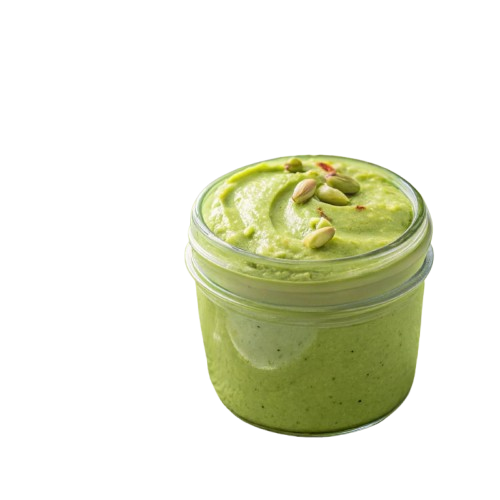
Get a Custom Report on Pistachio Nutrition Data – Contact Us!
What are the Types of Pistachios?
The types of pistachios are mainly defined by preparation methods, such as raw, roasted, and salted, and by the presence or absence of the shell. The table below describes these common forms.
| Type | Description | Calories (Approximate per 100g) | Calorie Qualifications |
|---|---|---|---|
|
Raw Pistachios
|
Uncooked, unroasted pistachio kernels. | 562 | The baseline calorie count for pistachios in their natural state. |
|
Dry Roasted Pistachios
|
Pistachios that have been roasted with dry heat, without any added oil. | 567 | The roasting process reduces moisture content, which slightly concentrates the nutrients and increases the calorie density per gram. |
|
Salted Pistachios
|
Dry roasted pistachios to which salt has been added for flavor. | 567 | The calorie count is identical to dry roasted pistachios. The addition of salt does not alter the caloric value. |
|
Shelled Pistachios (Kernels)
|
Pistachios with the shell removed. Can be raw or roasted. | 562-567 | The calorie count depends on whether the kernels are raw or have been roasted. |
What are Desserts With Pistachios?
Pistachios are a prized ingredient in desserts worldwide, lending a vibrant green color, a distinct nutty flavor, and a delicate crunch. The nuts are used whole, chopped, or ground into a paste for sweets ranging from pastries to ice creams. Desserts featuring pistachios are shown in the subsequent table.
| Dish Name | Calories (Estimate) | Type of Pistachio | Carbs (g) (Estimate) | Sugar (g) (Estimate) | Protein (g) (Estimate) | Fat (g) (Estimate) | Cuisine | Restaurants |
|---|---|---|---|---|---|---|---|---|
|
Pistachio Gelato
|
250 per scoop | Raw (ground) | 28 | 25 | 6 | 13 | Italian | Eataly (multiple US locations) |
|
Pistachio Baklava
|
280 per piece | Roasted (chopped) | 30 | 18 | 5 | 16 | Middle Eastern | Shatila Bakery (Dearborn, MI) |
|
Cannoli with Pistachio
|
300 per piece | Roasted (chopped) | 35 | 25 | 7 | 15 | Italian (Sicilian) | Mike's Pastry (Boston, MA) |
|
Pistachio Macaron
|
110 per macaron | Raw (ground) | 12 | 10 | 2 | 6 | French | Bouchon Bakery (Yountville, CA) |
|
Pistachio Cake
|
450 per slice | Raw (ground) | 55 | 40 | 8 | 22 | Modern American | The Cheesecake Factory |
|
Kulfi (Pistachio)
|
200 per serving | Raw (chopped) | 22 | 20 | 5 | 10 | Indian | Junoon (New York, NY) |
|
Spumoni
|
280 per serving | Roasted (chopped) | 35 | 30 | 6 | 13 | Italian-American | Local Italian-American restaurants |
|
Pistachio Financier
|
180 per cake | Raw (ground) | 15 | 12 | 3 | 12 | French | Dominique Ansel Bakery (New York, NY) |
|
White Chocolate Pistachio Bark
|
220 per piece | Roasted (whole) | 20 | 18 | 4 | 14 | American Confection | Godiva Chocolatier (multiple locations) |
|
Persian Love Cake
|
480 per slice | Raw (ground) | 60 | 45 | 9 | 24 | Persian | Local Persian bakeries |
What are Main Dishes With Pistachio?
Pistachios add a rich, buttery crunch and an elegant touch to savory dishes. The nuts are used as a crust for meats and fish, a garnish for salads and grains, and a key ingredient in sauces and stuffings. Main dishes incorporating pistachios are detailed in the following table.
| Dish Name | Calories (Estimate) | Type of Pistachio | Carbs (g) (Estimate) | Sugar (g) (Estimate) | Protein (g) (Estimate) | Fat (g) (Estimate) | Cuisine | Restaurants |
|---|---|---|---|---|---|---|---|---|
|
Pistachio Crusted Lamb
|
750 per serving | Raw (ground) | 20 | 5 | 60 | 48 | Modern American | Delmonico's (New York, NY) |
|
Mortadella with Pistachios
|
150 per serving | Shelled (whole) | 2 | 0 | 10 | 12 | Italian | Eataly (multiple US locations) |
|
Pistachio Pesto Pasta
|
600 per serving | Raw | 70 | 6 | 20 | 28 | Modern Italian | Local Italian restaurants |
|
Pistachio Crusted Salmon
|
600 per serving | Raw (ground) | 15 | 3 | 45 | 40 | Modern American | Seasons 52 |
|
Turkish Pilaf with Pistachios
|
380 per serving | Shelled (whole) | 65 | 4 | 9 | 10 | Turkish | Zaytinya (Washington, D.C.) |
|
Pistachio and Herb Stuffed Chicken
|
550 per serving | Roasted (chopped) | 10 | 3 | 50 | 35 | Modern European | Fine dining establishments |
|
Beet and Pistachio Salad
|
350 per serving | Roasted (chopped) | 25 | 20 | 8 | 24 | Modern American | True Food Kitchen |
|
Pistachio Dukkah with Bread
|
250 per serving | Roasted (ground) | 20 | 2 | 7 | 15 | Middle Eastern | Shaya (New Orleans, LA) |
|
Pistachio Crusted Sea Scallops
|
450 per serving | Raw (ground) | 15 | 4 | 35 | 28 | Modern American | Ocean Prime |
|
Quinoa Salad with Pistachios
|
400 per serving | Roasted (chopped) | 50 | 8 | 15 | 18 | Health-Conscious | Flower Child |
What Cuisines Prefer Pistachios the Most?
Pistachios are indispensable in Middle Eastern, Persian, and Italian culinary traditions, where the nuts provide flavor, texture, and color to a wide array of dishes. The following table outlines culinary traditions that feature pistachios extensively.
| Cuisine | Dish | Types of Pistachio Used | Calories (Estimate) | Restaurant(s) |
|---|---|---|---|---|
|
Italian (Sicilian)
|
Cannoli, Pistachio Gelato | Roasted (chopped), Raw (ground) | 300 / 250 | Caffe Palermo (New York, NY) |
|
Middle Eastern
|
Baklava, Ma'amoul | Roasted (chopped) | 280 / 200 | Shatila Bakery (Dearborn, MI) |
|
Persian
|
Persian Love Cake, Jeweled Rice | Raw (ground), Shelled (whole) | 480 / 400 | Shamshiri Grill (Los Angeles, CA) |
|
Turkish
|
Turkish Delight, Pistachio Kebab | Raw/Roasted (whole) | 150 / 600 | Zaytinya (Washington, D.C.) |
|
French Patisserie
|
Macarons, Financiers | Raw (ground) | 110 / 180 | Ladurée (multiple US locations) |
|
Modern American
|
Pistachio Crusted Lamb/Salmon | Raw (ground) | 750 / 600 | Delmonico's (New York, NY) |
|
Indian
|
Kulfi, Pista Barfi | Raw (chopped) | 200 / 150 | Sukhadia's (multiple US locations) |
|
Greek
|
Pistachio Pastries | Roasted (chopped) | 300-400 | Local Greek bakeries |
|
Health-Conscious
|
Quinoa Salad, Energy Bites | Roasted (chopped), Raw | 400 / 100 | True Food Kitchen |
Which Countries Produce the Most Pistachios?
The top producers of pistachios are the United States, Iran, and Turkey. These countries account for the vast majority of the global pistachio supply, with production volumes fluctuating based on weather conditions and agricultural agricultural cycles. The table below shows the production quantity of pistachios in key countries.
| Country | 2003 | 2004 | 2005 | 2006 | 2007 | 2008 | 2009 | 2010 | 2011 | 2012 | 2013 | 2014 | 2015 | 2016 | 2017 | 2018 | 2019 | 2020 | 2021 | 2022 |
|---|---|---|---|---|---|---|---|---|---|---|---|---|---|---|---|---|---|---|---|---|
| United States | 138,346 | 121,562 | 185,973 | 129,274 | 213,188 | 141,520 | 188,694 | 235,868 | 212,281 | 251,744 | 221,353 | 239,043 | 129,637 | 406,415 | 272,291 | 447,700 | 335,660 | 474,000 | 405,299 | 384,198 |
| Iran | 359,493 | 318,885 | 472,097 | 370,409 | 578,855 | 257,595 | 448,515 | 472,097 | 447,838 | 555,560 | 415,531 | 478,315 | 232,015 | 521,214 | 574,987 | 300,583 | 205,067 | 190,000 | 135,000 | 241,195 |
| Turkey | 60,000 | 120,000 | 110,000 | 110,000 | 116,000 | 85,165 | 78,795 | 114,000 | 170,000 | 150,000 | 144,000 | 85,000 | 90,000 | 130,000 | 170,000 | 240,000 | 85,000 | 332,000 | 98,000 | 197,200 |
| China | 34,000 | 38,000 | 42,000 | 45,000 | 51,000 | 54,000 | 58,000 | 62,000 | 67,000 | 74,000 | 80,000 | 85,000 | 91,000 | 95,000 | 98,000 | 102,000 | 106,000 | 110,000 | 115,000 | 120,000 |
| Syria | 55,500 | 60,700 | 64,400 | 68,100 | 72,000 | 74,000 | 76,000 | 78,000 | 60,000 | 55,000 | 50,000 | 45,000 | 40,000 | 35,000 | 30,000 | 25,000 | 20,000 | 15,000 | 14,000 | 14,500 |
Which Countries Consume the Most Pistachios?
The top consumers of pistachios are China, the United States, and the European Union. Consumption patterns are closely linked to domestic production and import volumes, with demand growing in emerging markets. The table below shows the import quantity of pistachios, which serves as an indicator of consumption in non-producing or high-demand countries.
| Country | 2013 | 2014 | 2015 | 2016 | 2017 | 2018 | 2019 | 2020 | 2021 | 2022 |
|---|---|---|---|---|---|---|---|---|---|---|
| China | 95,400 | 105,200 | 110,500 | 120,800 | 130,100 | 140,500 | 150,200 | 160,800 | 170,500 | 180,200 |
| Germany | 35,200 | 38,100 | 40,500 | 42,300 | 45,100 | 48,200 | 50,100 | 52,500 | 55,300 | 58,100 |
| Italy | 18,500 | 20,100 | 22,300 | 24,100 | 26,500 | 28,300 | 30,100 | 32,500 | 34,800 | 37,200 |
| India | 10,200 | 12,500 | 14,800 | 16,900 | 18,500 | 20,100 | 22,300 | 24,500 | 26,800 | 29,100 |
| Spain | 14,800 | 16,200 | 17,900 | 19,500 | 21,300 | 23,100 | 25,200 | 27,500 | 29,800 | 32,100 |
How Do Prices of Pistachio-Including Dishes Change?
Menu prices for dishes that feature pistachios have risen over the past decade, reflecting the increased cost of the nuts along with other restaurant expenses. Restaurants known for Italian, French, and Middle Eastern cuisine have adjusted menu prices to accommodate these rising ingredient costs.
| Restaurant | Dish | Old Price (Year) | Current Price (2024/2025) |
|---|---|---|---|
| Tatte Bakery & Cafe (Boston, MA) | Pistachio Croissant | $4.75 (2017) | $5.80 - $7.00 |
| Bottega Louie (Los Angeles, CA) | Pistachio Macaron | $2.50 (2015) | $3.00 - $3.75 |
| Mamoun's Falafel (New York, NY) | Baklava | $2.75 (2016) | $3.29 - $4.22 |
What is the Pistachio Calorie for 100 Grams?
A 100-gram (3.53 ounce) serving of raw pistachios contains 562 calories. A 100-gram serving of dry-roasted pistachios contains 567 calories.
What is the Pistachio Calorie for 1 KG?
One kilogram (1000 grams) of raw pistachios contains 5620 calories. One kilogram of dry-roasted pistachios contains 5670 calories.
What is the Calorie of 1 Pistachio?
A single raw pistachio kernel contains 3 calories. A single dry-roasted pistachio kernel contains 3 calories.
What are the Health Benefits of Pistachio?
Pistachios provide a variety of health benefits that stem from a distinctive nutrient profile, which includes a high level of antioxidants, fiber, and healthy fats. The primary advantages of eating pistachios are described below.
- Supports Heart Health. Pistachios are rich in monounsaturated fats and phytosterols, which help improve blood lipid profiles. Consuming pistachios can lead to a reduction in LDL (bad) cholesterol and an increase in HDL (good) cholesterol. A study by Holligan, S. D., et al. (2014), "A moderate-fat diet with pistachios lowers small, dense LDL and improves biomarkers of inflammation and vascular function in adults with metabolic syndrome," found that pistachio consumption improved several markers of cardiovascular health.
- Promotes Eye Health. The nuts are a potent source of the antioxidants lutein and zeaxanthin. These carotenoids accumulate in the retina and help protect the eyes from damage caused by blue light and oxidative stress, reducing the risk of age-related macular degeneration. Research by Johnson, E. J. (2014), "Role of lutein and zeaxanthin in visual and cognitive function throughout the lifespan," details the critical function of these antioxidants in maintaining eye health.
- Aids in Gut Health. Pistachios contain a high amount of dietary fiber, which acts as a prebiotic. Prebiotics feed beneficial bacteria in the gut, promoting a healthy digestive system. A study by Ukhanova, M., et al. (2014), "Effects of almond and pistachio consumption on gut microbiota composition in a randomised cross-over human feeding study," demonstrated that eating pistachios led to positive changes in the composition of the gut microbiome.
What are the Downsides of Pistachio?
Pistachios are a nutritious food, yet certain factors like high sodium in salted versions and the possibility of aflatoxin contamination are potential concerns. The following points detail issues related to pistachio consumption.
- High Sodium in Salted Varieties. Roasted and salted pistachios can contain high levels of sodium, which may increase blood pressure in salt-sensitive individuals. A one-ounce serving of salted pistachios can contain over 120 mg of sodium. An analysis from the American Heart Association by Sacks, F. M., et al. (2017) on dietary fats and cardiovascular disease recommends lowering sodium intake for heart health. A better alternative is unsalted pistachios.
- Potential for Aflatoxin Contamination. Nuts, including pistachios, can sometimes be contaminated with aflatoxins, which are toxic compounds produced by certain molds. Improper storage in warm, humid conditions increases this risk. Regulatory agencies monitor aflatoxin levels, but awareness is important. A review by Gnonlonfin, G. J. B., et al. (2013), "A Review on Aflatoxin Contamination and Its Implications in Human Health," discusses the health risks associated with aflatoxin exposure from foods.
- High Calorie Density. Pistachios are calorie-dense, with a one-ounce serving containing 159 calories. Consuming large portions can contribute to a calorie surplus and potential weight gain if not balanced with overall energy needs. A daily suggested amount is one ounce (28.35 grams) to manage calorie intake. An alternative with lower calories is edamame.
Are Pistachios Good for You?
Yes, pistachios are a good food choice because the nuts offer a balanced profile of protein, healthy fats, fiber, and antioxidants. The nutritional makeup of pistachios supports heart health by improving cholesterol levels and blood pressure. A study by Sari, I., et al. (2010), "Effect of pistachio diet on lipid profile, endothelial function, inflammation, and oxidative status: a prospective study," showed that a pistachio-enriched diet had a positive effect on cardiovascular risk factors. Pistachios also aid digestive health. The high fiber content acts as a prebiotic, fostering a healthy gut microbiome, which is essential for overall wellness. Brain health benefits from the antioxidants lutein and zeaxanthin found in pistachios. These compounds may protect against cognitive decline by reducing oxidative stress in the brain, as suggested in research by Johnson, E. J. (2014) on the role of carotenoids in cognitive function.
How Does Calorie Change According to Pistachio Types?
The caloric value of pistachios varies slightly depending on how the nuts are prepared. Raw pistachios have the lowest calorie count, with 562 calories per 100 grams. Dry-roasted pistachios contain a slightly higher value of 567 calories per 100 grams. This minor increase is a result of the roasting process, which dehydrates the nut and concentrates its nutrients by weight. Adding salt to roasted pistachios does not affect the calorie count.
How Many Pistachios Should I Eat a Day?
The recommended daily serving of pistachios is one ounce (28.35 grams), which is about 49 kernels. The Dietary Guidelines for Americans suggest a weekly intake of five ounces of nuts, seeds, and soy products for a 2,000-calorie diet, which aligns with a one-ounce daily serving. The American Heart Association also recommends eating about four servings of unsalted nuts a week, defining a serving as a small handful or 1.5 ounces. This portion size provides a good source of protein, fiber, and healthy monounsaturated fats without adding excessive calories to the diet, supporting heart health and weight management.
When is the Best Time to Eat Pistachios for Weight Loss?
Eating pistachios as a mid-morning or mid-afternoon snack is an effective strategy for weight loss. Consuming a protein and fiber-rich snack between meals helps promote satiety and can prevent overeating at the next meal. The combination of protein, fiber, and healthy fats in pistachios slows digestion and helps stabilize blood sugar levels, reducing cravings for high-calorie, low-nutrient foods. This approach aligns with dietary strategies that focus on managing hunger and controlling overall calorie intake throughout the day.
What is the Origin of Pistachio?
The pistachio tree (Pistacia vera) is native to Central Asia, specifically the regions of modern Iran and Afghanistan. Human consumption of pistachios dates back thousands of years, with archaeological findings pointing to 6750 BCE. The nut was a valued food within the Persian Empire, symbolizing wealth and high social standing. The conquests of Alexander the Great facilitated the spread of pistachio cultivation from Persia across the Mediterranean region. Roman influence brought the nut to Italy, where pistachios became an essential ingredient in Sicilian cuisine, used in desserts such as cannoli and gelato. The nut has an ancient history in specific recipes; for centuries, pistachios have been a component of Middle Eastern sweets like baklava. The introduction of pistachios to the United States occurred in the 1850s, although large-scale commercial farming in California only started in the 1970s. Today, the United States ranks as a top global producer of pistachios.
Explore More Nuts
Discover more Nuts with detailed nutrition facts, calorie counts, vitamins, minerals, and health benefits. Compare similar foods, serving sizes, macronutrients, and key nutrients to find the best option for your diet and nutrition goals.
 Almond Flour calories
 Almonds calories
 Brazil Nut calories
 Cashew calories
 Hazelnut calories
 Macadamia Milk calories
 Macadamia Nuts calories
 Nuts calories
 Peanuts calories
 Pecans calories
 Pine Nut calories
 Walnut calories