Calories and Nutritions in Pine Nut
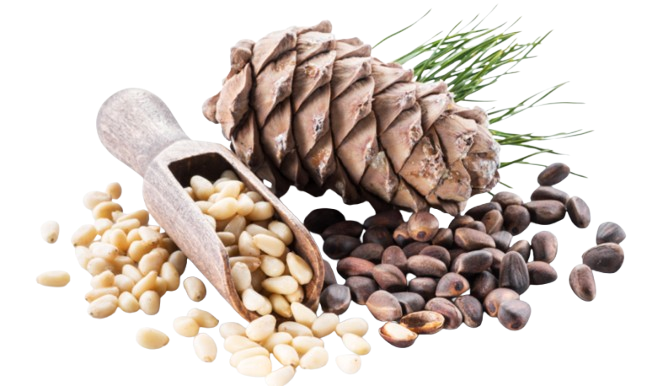
Pine nuts are harvested from pine cones and used in cakes, pastries, and sauces. A cup of raw dried pine nuts delivers 909 pine nuts calories, while a 28g portion (1 oz) offers 191 calories. A cup of roasted pine nuts provides 918 calories. A 30g serving of Kirkland Signature Organic Pine Nuts contains 210 calories while a 1 ounce serving of Trader Joe's Dry Roasted Pine Nuts provides 200 calories.
An evaluation of pine nuts nutrition facts shows a nutrient profile dense in healthy fats and protein with moderate carbohydrates, with a cup of raw pine nuts providing 18g of carbs, 18g of protein, and 92g of fat. This seed functions as a primary delivery system for pinolenic acid and vital minerals. Research conducted by Pasman, W. J., et al. (2008), titled "The effect of Korean pine nut oil on in vitro CCK release," validates that these distinct fatty acids trigger satiety hormones to control appetite. The caloric load originates mainly from lipids, establishing the seed as a potent energy reserve. Fat makes up 68% of the total weight in dried pine nuts. Micronutrient concentrations are high, with a large raw serving providing 12mg of manganese (522% DV). The seed supplies substantial magnesium levels, offering 339mg per large serving to aid metabolic wellness.
International supply networks rely heavily on the agricultural yields of China, North Korea, and Russia, with China leading global production. This output caters to the requirements of major markets, particularly China, the United States, and Germany. Within Italian, Lebanese, and Chinese cuisines, the seed acts as a fundamental ingredient for rich sauces, savory fillings, and plates like Pesto Genovese, Kibbeh, and Pine Nuts with Corn. Growing worldwide demand and labor shortages have pushed retail costs higher, with wholesale rates for standard pine nuts rising from $7.00 per pound in the mid-2010s to over $14.00 per pound in 2024. Restaurant menu pricing mirrors this inflation, as Chicken Bellagio at The Cheesecake Factory climbed from $14.95 in 2011 to between $21.95 and $25.95 in 2024.
Dietitians suggest a daily consumption of 30g of pine nuts to maximize nutrient uptake while controlling caloric intake, as this amount holds 205 calories. Expending this energy load necessitates 20 minutes of Boxing or 25 minutes of Rowing. People tracking fat consumption need to monitor their intake of these oil-dense seeds to avoid surplus caloric gain.
Pine Nut nutrition
| Stats | Weight |
|---|---|
| Carbs | 18.6 grams |
| Protein | 15.7 grams |
| Fats | 61.3 grams |
| Sugars | 0 grams |
- Large Pine Nut Calories (Nutritional Facts)
- Medium Pine Nut Calories (Nutritional Facts)
- Small Pine Nut Calories (Nutritional Facts)
- Raw Pine Nut Nutrition
- Sodium in Pine Nut
- Potassium in Pine Nut
- Sugar in Pine Nut
- Fiber in Pine Nut
- Protein in Pine Nut
- Carbs in Pine Nut
- Fat in Pine Nut
- Vitamins in Pine Nut
- Minerals in Pine Nut
Large Pine Nut Calories (Nutritional Facts)
A large serving of raw dried pine nuts (135g or 1 cup) contains 909 calories, 18g of protein, 92g of fat, 18g of carbohydrates, 5g of fiber, 5g of sugar, and 3mg of sodium. A large serving of roasted pine nuts (135g or 1 cup) provides 918 calories, 19g of protein, 94g of fat, 19g of carbohydrates, 5g of fiber, 4g of sugar, and 5mg of sodium.
A medium portion of raw dried pine nuts (67.5g or 0.5 cup) provides 455 calories, 9g of protein, 46g of fat, 9g of carbohydrates, 2.5g of fiber, 2.5g of sugar, and 1.5mg of sodium. A medium portion of roasted pine nuts (67.5g or 0.5 cup) supplies 459 calories, 9.5g of protein, 47g of fat, 9.5g of carbohydrates, 2.5g of fiber, 2g of sugar, and 2.5mg of sodium.
A small handful of raw dried pine nuts (28g or 1oz) contains 191 calories, 3.9g of protein, 19g of fat, 3.7g of carbohydrates, 1g of fiber, 1g of sugar, and 1mg of sodium. A small handful of roasted pine nuts (28g or 1oz) provides 193 calories, 4g of protein, 20g of fat, 4g of carbohydrates, 1g of fiber, 0.8g of sugar, and 1mg of sodium.
A cup of raw pine nuts (135g) supplies 909 calories, 18.5g of protein, 92.3g of fat, 17.7g of carbohydrates, 5g of fiber, 4.8g of sugar, and 3mg of sodium. A cup of dried pine nut kernels (135g) contains 909 calories, 18g of protein, 92g of fat, 18g of carbohydrates, 5g of fiber, 5g of sugar, and 3mg of sodium.
A large serving of raw pine nuts (135g or 1 cup) contains 3mg of sodium (0% DV), while a large serving of salted roasted pine nuts (135g or 1 cup) provides 320mg of sodium (14% DV). A medium portion of raw pine nuts (67.5g or 0.5 cup) has 1.5mg of sodium (0% DV), whereas a medium portion of salted roasted pine nuts (67.5g or 0.5 cup) supplies 160mg of sodium (7% DV). A small handful of raw pine nuts (28g or 1oz) contains 1mg of sodium (0% DV), and a small handful of salted roasted pine nuts (28g or 1oz) provides 66mg of sodium (3% DV). A standard serving of unsalted roasted pine nuts (28g or 1oz) supplies 1mg of sodium (0% DV), while a serving of raw dried pine nuts (100g) contains 2mg of sodium (0% DV).
A large serving of raw pine nuts (135g or 1 cup) provides 806mg of potassium (17% DV), while a large serving of roasted pine nuts (135g or 1 cup) contains 810mg of potassium (17% DV). A medium portion of raw pine nuts (67.5g or 0.5 cup) has 403mg of potassium (9% DV), whereas a medium portion of roasted pine nuts (67.5g or 0.5 cup) supplies 405mg of potassium (9% DV). A small handful of raw pine nuts (28g or 1oz) contains 169mg of potassium (4% DV), and a small handful of roasted pine nuts (28g or 1oz) provides 170mg of potassium (4% DV). A standard serving of dried pine nuts (100g) supplies 597mg of potassium (13% DV), while a serving of toasted pine nuts (28g or 1oz) contains 165mg of potassium (4% DV).
A large serving of raw pine nuts (135g or 1 cup) contains 5g of sugar, while a large serving of roasted pine nuts (135g or 1 cup) provides 4g of sugar. A medium portion of raw pine nuts (67.5g or 0.5 cup) has 2.5g of sugar, whereas a medium portion of roasted pine nuts (67.5g or 0.5 cup) supplies 2g of sugar. A small handful of raw pine nuts (28g or 1oz) contains 1g of sugar, and a small handful of roasted pine nuts (28g or 1oz) provides 0.8g of sugar. A standard serving of dried pine nuts (100g) supplies 3.6g of sugar, while a serving of toasted pine nuts (28g or 1oz) contains 0.9g of sugar.
A large serving of raw pine nuts (135g or 1 cup) provides 5g of dietary fiber (18% DV), while a large serving of roasted pine nuts (135g or 1 cup) contains 5g of fiber (18% DV). A medium portion of raw pine nuts (67.5g or 0.5 cup) has 2.5g of fiber (9% DV), whereas a medium portion of roasted pine nuts (67.5g or 0.5 cup) supplies 2.5g of fiber (9% DV). A small handful of raw pine nuts (28g or 1oz) contains 1g of fiber (4% DV), and a small handful of roasted pine nuts (28g or 1oz) provides 1g of fiber (4% DV). A standard serving of dried pine nuts (100g) supplies 3.7g of fiber (13% DV), while a serving of toasted pine nuts (28g or 1oz) contains 1.1g of fiber (4% DV).
A large serving of raw pine nuts (135g or 1 cup) provides 18.5g of protein (37% DV), while a large serving of roasted pine nuts (135g or 1 cup) contains 19g of protein (38% DV). A medium portion of raw pine nuts (67.5g or 0.5 cup) has 9.2g of protein (18% DV), whereas a medium portion of roasted pine nuts (67.5g or 0.5 cup) supplies 9.5g of protein (19% DV). A small handful of raw pine nuts (28g or 1oz) contains 3.9g of protein (8% DV), and a small handful of roasted pine nuts (28g or 1oz) provides 4g of protein (8% DV). A standard serving of dried pine nuts (100g) supplies 13.7g of protein (27% DV), while a serving of toasted pine nuts (28g or 1oz) contains 3.8g of protein (8% DV).
A large serving of raw pine nuts (135g or 1 cup) contains 18g of carbohydrates (7% DV), while a large serving of roasted pine nuts (135g or 1 cup) provides 19g of carbohydrates (7% DV). A medium portion of raw pine nuts (67.5g or 0.5 cup) has 9g of carbohydrates (3% DV), whereas a medium portion of roasted pine nuts (67.5g or 0.5 cup) supplies 9.5g of carbohydrates (3% DV). A small handful of raw pine nuts (28g or 1oz) contains 3.7g of carbohydrates (1% DV), and a small handful of roasted pine nuts (28g or 1oz) provides 4g of carbohydrates (1% DV). A standard serving of dried pine nuts (100g) supplies 13g of carbohydrates (5% DV), while a serving of toasted pine nuts (28g or 1oz) contains 3.9g of carbohydrates (1% DV).
A large serving of raw pine nuts (135g or 1 cup) contains 92g of total fat (118% DV), while a large serving of roasted pine nuts (135g or 1 cup) provides 94g of total fat (121% DV). A medium portion of raw pine nuts (67.5g or 0.5 cup) has 46g of total fat (59% DV), whereas a medium portion of roasted pine nuts (67.5g or 0.5 cup) supplies 47g of total fat (60% DV). A small handful of raw pine nuts (28g or 1oz) contains 19g of total fat (24% DV), and a small handful of roasted pine nuts (28g or 1oz) provides 20g of total fat (26% DV). A standard serving of dried pine nuts (100g) supplies 68g of total fat (87% DV), while a serving of toasted pine nuts (28g or 1oz) contains 19.5g of total fat (25% DV).
A large serving of raw pine nuts (135g or 1 cup) provides 12.6mg of Vitamin E (84% DV) and 73mcg of Vitamin K (61% DV). A large serving of roasted pine nuts (135g or 1 cup) contains 12mg of Vitamin E (80% DV) and 70mcg of Vitamin K (58% DV). A medium portion of raw pine nuts (67.5g or 0.5 cup) has 6.3mg of Vitamin E (42% DV), whereas a medium portion of roasted pine nuts (67.5g or 0.5 cup) supplies 6mg of Vitamin E (40% DV). A small handful of raw pine nuts (28g or 1oz) contains 2.6mg of Vitamin E (17% DV), and a small handful of roasted pine nuts (28g or 1oz) provides 2.5mg of Vitamin E (17% DV). A standard serving of dried pine nuts (100g) supplies 9.3mg of Vitamin E (62% DV), while a serving of toasted pine nuts (28g or 1oz) contains 0.1mg of Thiamin (8% DV).
A large serving of raw pine nuts (135g or 1 cup) provides 12mg of manganese (522% DV) and 339mg of magnesium (81% DV). A large serving of roasted pine nuts (135g or 1 cup) contains 11.8mg of manganese (513% DV) and 335mg of magnesium (80% DV). A medium portion of raw pine nuts (67.5g or 0.5 cup) has 6mg of manganese (261% DV), whereas a medium portion of roasted pine nuts (67.5g or 0.5 cup) supplies 5.9mg of manganese (257% DV). A small handful of raw pine nuts (28g or 1oz) contains 2.5mg of manganese (109% DV), and a small handful of roasted pine nuts (28g or 1oz) provides 2.4mg of manganese (104% DV). A standard serving of dried pine nuts (100g) supplies 8.8mg of manganese (383% DV), while a serving of toasted pine nuts (28g or 1oz) contains 71mg of magnesium (17% DV).
Get a Custom Report on Pine Nut Nutrition Data – Contact Us!
What are the Types of Pine Nuts?
The varieties of Pine Nuts include European Stone Pine, Chinese/Korean Pine, Siberian Pine, and Chilgoza Pine. The table below outlines the nutritional differences across these specific classifications.
| Type | Description | Calories (Per 100g) | Calorie Qualifications |
|---|---|---|---|
|
European Stone Pine (Pinus pinea)
|
Long, slender, ivory-colored seeds. | 673 | The moderate fat content results in a standard caloric density for the category. |
|
Chinese/Korean Pine (Pinus koraiensis)
|
Short, triangular, thick seeds. | 680 | The slightly higher oil content contributes to a marginally increased energy load. |
|
Siberian Pine (Pinus sibirica)
|
Small, round seeds often imported from Russia. | 650 | The smaller size and varying oil composition result in a slightly lower caloric profile. |
|
Chilgoza Pine (Pinus gerardiana)
|
Long, boat-shaped seeds from the Himalayas. | 670 | The nutritional profile closely mirrors the European variety. |
|
Roasted Pine Nuts
|
Heat-treated to enhance flavor. | 680 | The loss of moisture during roasting concentrates the nutrients and calories per gram. |
What are Desserts With Pine Nut?
Pine nuts act as a buttery, resinous element in confectionery by adding richness and texture to sweet treats. The seed functions as a topping for tarts, a base for cookies, and a filling for pastries. The following list enumerates sweet treats that use this oil-rich seed as a key ingredient.
| Dish Name | Calories (Estimate) | Type of Dish | Carbs (g) (Estimate) | Sugar (g) (Estimate) | Protein (g) (Estimate) | Fat (g) (Estimate) | Cuisine | Restaurants |
|---|---|---|---|---|---|---|---|---|
|
Pignoli Cookies
|
180 | Cookie | 22 | 15 | 3 | 10 | Italian | Ferrara Bakery (New York, NY) |
|
Torta della Nonna
|
450 | Tart/Cake | 55 | 30 | 8 | 22 | Italian | Eataly (Various Locations) |
|
Pine Nut Baklava
|
380 | Pastry | 45 | 25 | 6 | 20 | Middle Eastern | Shatila Bakery (Dearborn, MI) |
|
Castagnaccio
|
250 | Chestnut Cake | 35 | 12 | 4 | 10 | Italian | Sullivan Street Bakery (New York, NY) |
|
Pine Nut Brittle
|
160 | Candy | 20 | 18 | 2 | 8 | American | See's Candies |
|
Pine Nut Tart
|
320 | Pastry | 38 | 18 | 5 | 18 | French | Bouchon Bakery (Yountville, CA) |
|
Halva with Pine Nuts
|
190 | Confection | 15 | 12 | 4 | 12 | Greek/Turkish | Titan Foods (Astoria, NY) |
|
Pine Nut Biscotti
|
140 | Cookie | 20 | 10 | 3 | 6 | Italian | Panera Bread |
|
Panellets
|
150 | Marzipan Sweet | 18 | 14 | 3 | 8 | Spanish (Catalan) | Despaña (New York, NY) |
|
Honey Pine Nut Gelato
|
220 | Frozen Dessert | 28 | 24 | 4 | 10 | Italian | Amorino (Various Locations) |
What are the Main Dishes With Pine Nut?
Pine nuts serve as a rich, creamy thickening agent and textural garnish in savory cooking, particularly for pestos and grain dishes. The high oil content emulsifies into sauces, while toasted seeds add crunch to salads and stuffed vegetables. The list below presents distinct recipes that feature this ingredient.
| Dish Name | Calories (Estimate) | Type of Dish | Carbs (g) (Estimate) | Sugar (g) (Estimate) | Protein (g) (Estimate) | Fat (g) (Estimate) | Cuisine | Restaurants |
|---|---|---|---|---|---|---|---|---|
|
Pesto Genovese Pasta
|
580 | Pasta Entree | 65 | 4 | 15 | 32 | Italian | North Italia |
|
Kibbeh
|
350 | Meat Appetizer | 25 | 2 | 20 | 18 | Lebanese | Ilili (New York, NY) |
|
Stuffed Grape Leaves (Dolma)
|
220 | Appetizer | 30 | 4 | 5 | 10 | Greek/Turkish | Zaytinya (Washington, D.C.) |
|
Spinach Salad with Pine Nuts
|
320 | Salad Entree | 15 | 6 | 8 | 25 | American | The Capital Grille |
|
Lamb with Pine Nuts (Hummus)
|
450 | Appetizer/Entree | 20 | 2 | 25 | 30 | Middle Eastern | Shaya (New Orleans, LA) |
|
Hashweh (Rice Pilaf)
|
420 | Rice Entree | 55 | 4 | 15 | 18 | Lebanese | Al Bawadi (Chicago, IL) |
|
Stuffed Peppers (Vegetarian)
|
380 | Vegetable Entree | 45 | 12 | 10 | 18 | Mediterranean | Zoe's Kitchen |
|
Chicken with Pine Nuts
|
550 | Sautéed Entree | 10 | 4 | 45 | 35 | Mediterranean | The Cheesecake Factory (National) |
|
Eggplant Caponata
|
180 | Side Dish | 15 | 8 | 2 | 12 | Italian | Carrabba's Italian Grill |
|
Sauteed Spinach with Pine Nuts
|
150 | Side Dish | 8 | 2 | 5 | 12 | American | Ruth's Chris Steak House (National) |
What Cuisines Prefer Pine Nut the Most?
Pine nuts act as a foundational element in Mediterranean, Middle Eastern, and East Asian culinary customs. The subsequent table pinpoints specific food cultures that fundamentally depend on this oil-rich seed.
| Cuisine | Dish | Types of Pine Nut Use | Calories (Estimate) | Restaurant(s) |
|---|---|---|---|---|
|
Italian (Ligurian)
|
Pesto Genovese | Sauce Base | 580 | Eataly (Various Locations) |
|
Lebanese
|
Kibbeh | Filling Ingredient | 350 | Al Bawadi (Chicago, IL) |
|
Chinese
|
Pine Nuts with Corn | Stir-Fry | 280 | P.F. Chang's |
|
Turkish
|
Pilav (Rice) | Garnish/Ingredient | 320 | Istanbul Grill (Houston, TX) |
|
Greek
|
Dolmades | Filling Ingredient | 220 | The Great Greek Mediterranean Grill |
|
Korean
|
Jat-juk (Porridge) | Soup Base | 250 | Cho Dang Gol (New York, NY) |
|
Spanish (Catalan)
|
Spinacs a la Catalana | Sauté Ingredient | 180 | Boqueria (New York, NY) |
|
French (Provençal)
|
Tourte de Blettes | Tart Filling | 350 | Balthazar (New York, NY) |
|
Syrian
|
Fatteh | Garnish | 450 | Shaya (New Orleans, LA) |
|
Sicilian
|
Pasta con le Sarde | Sauce Ingredient | 520 | L'Artusi (New York, NY) |
Which Countries Produce the Most Pine Nuts?
China, North Korea, and Russia function as the primary manufacturers of pine nuts, supplying the global market for both shelled and in-shell varieties. China dominates the industry, processing vast quantities of nuts harvested domestically and imported from neighboring regions. Russia serves as a major source of Siberian pine nuts, while Mediterranean countries like Italy and Turkey produce the highly prized Stone Pine variety. The table below displays the estimated production of pine nuts in key nations over the last two decades.
| Country | 2003 | 2008 | 2013 | 2018 | 2019 | 2020 | 2021 | 2022 |
|---|---|---|---|---|---|---|---|---|
| China | 15,000 | 22,000 | 25,000 | 20,000 | 18,000 | 19,000 | 22,000 | 24,000 |
| North Korea | 3,000 | 4,500 | 5,000 | 5,500 | 5,200 | 4,800 | 4,500 | 4,200 |
| Russia | 2,500 | 3,800 | 4,500 | 6,000 | 7,500 | 8,000 | 8,500 | 9,000 |
| Pakistan | 2,800 | 3,200 | 3,500 | 3,000 | 2,800 | 2,900 | 3,100 | 3,000 |
| Afghanistan | 2,000 | 2,500 | 3,000 | 3,200 | 3,100 | 3,000 | 2,800 | 2,500 |
| Italy | 800 | 600 | 500 | 400 | 350 | 300 | 250 | 200 |
| Turkey | 1,200 | 1,000 | 800 | 600 | 550 | 500 | 450 | 400 |
| Portugal | 600 | 500 | 400 | 300 | 280 | 250 | 220 | 200 |
Which Countries Consume the Most Pine Nuts?
China, the United States, and Germany stand as the leading purchasers of pine nuts. Chinese consumers utilize the seed extensively in cooking and as a roasted snack. American buyers represent a significant import market, driven by the popularity of pesto and Mediterranean cuisine. European nations, particularly Germany and Italy, absorb a large portion of exports for use in traditional bakery goods and sauces. The table below shows the estimated domestic consumption of pine nuts in key markets.
| Country | 2003 | 2008 | 2013 | 2018 | 2019 | 2020 | 2021 | 2022 |
|---|---|---|---|---|---|---|---|---|
| China | 3,500 | 4,800 | 5,500 | 4,600 | 4,500 | 4,700 | 5,000 | 5,200 |
| United States | 2,800 | 3,200 | 3,600 | 3,800 | 3,700 | 3,900 | 4,000 | 3,800 |
| Germany | 1,500 | 1,800 | 2,000 | 2,200 | 2,100 | 2,300 | 2,200 | 2,100 |
| Russia | 1,200 | 1,800 | 2,500 | 3,000 | 3,200 | 3,300 | 3,400 | 3,500 |
| Italy | 1,800 | 1,600 | 1,400 | 1,200 | 1,100 | 1,000 | 950 | 900 |
| Netherlands | 600 | 700 | 800 | 900 | 950 | 1,000 | 980 | 950 |
| Spain | 800 | 750 | 700 | 650 | 600 | 550 | 500 | 480 |
| South Korea | 400 | 500 | 600 | 650 | 600 | 580 | 610 | 620 |
How Do Prices of Pine Nut-Including Dishes Change?
Dining establishment charges for pine nut-infused items have climbed, reflecting the broader inflationary trends in the hospitality sector and the specific premium cost of the seed. The table below illustrates price adjustments for selected items at well-known establishments.
| Brand/Restaurant | Dish | Old Price (Year) | Current Price (2024/2025) |
|---|---|---|---|
| Starbucks | Pesto & Mozzarella Sandwich | $4.45 (2014) | $5.75 - $7.95 |
| Noodles & Company | Basil Pesto Cavatappi | $6.50 (2012) | $9.50 - $11.60 |
| The Cheesecake Factory | Chicken Bellagio (Basil Oil/Pesto) | $14.95 (2011) | $21.95 - $25.95 |
| Carrabba's Italian Grill | Chicken Bryan (Sun-Dried Tomato Pesto) | $16.50 (2012) | $23.99 - $27.29 |
| Trader Joe's | Dry Roasted Pine Nuts (8 oz) 2 pack | $9.99 (2014) | $11.99 - $15.97 |
What is the Pine Nut Calorie for 100 Grams?
A 100g serving of raw pine nuts contains 673 calories, while a 100g serving of roasted pine nuts provides 680 calories. A 100g serving of dried pine nuts supplies 673 calories.
What is the Pine Nut Calorie for 1 KG?
One kilogram (1000g) of raw pine nuts contains 6730 calories, while one kilogram (1000g) of roasted pine nuts provides 6800 calories. One kilogram (1000g) of dried pine nuts supplies 6730 calories.
What is the Calorie of 1 Pine Nut?
A single raw pine nut kernel (0.15g) contains 1 calorie, while a single roasted kernel provides 1.1 calories. For packaged varieties, a serving of Kirkland Signature Organic Pine Nuts (30g) contains 210 calories, whereas a serving of Trader Joe's Dry Roasted Pine Nuts (28g or 1oz) provides 200 calories, and a standard portion of Diamond of California Pine Nuts (28g or 1oz) supplies 190 calories.
What are the Health Benefits of Pine Nut?
Pine nuts function as a potent source of pinolenic acid and essential minerals, supporting satiety and cardiovascular health. The seed facilitates the release of appetite-suppressing hormones and provides antioxidants for cellular defense. The following points highlight these specific physiological advantages.
- Promotes Satiety: The fatty acids present in the nut, specifically pinolenic acid, stimulate the release of cholecystokinin (CCK), a hormone that signals fullness to the brain. A study by Pasman, W. J., et al. (2008), "The effect of Korean pine nut oil on in vitro CCK release, on appetite sensations and on gut hormones in post-menopausal overweight women," confirmed that consuming pine nut oil significantly increases satiety hormones and reduces prospective food intake.
- Supports Cardiovascular Health: High levels of monounsaturated fats and magnesium help regulate blood pressure and improve lipid profiles. Research by Ryan, E., et al. (2006), "Fatty acid profile, tocopherol, squalene and phytosterol content of brazil, pecan, pine, pistachio and cashew nuts," established that the unique fatty acid composition contributes to reduced LDL cholesterol and improved arterial function.
- Reduces Oxidative Stress: The seed supplies antioxidants such as Vitamin E and manganese, which protect cells from free radical damage. A study by Miraliakbari, H., & Shahidi, F. (2008), "Antioxidant activity of minor components of tree nut oils," demonstrated that the phenolic compounds in pine nut oil exhibit significant radical scavenging activity, supporting overall metabolic health.
What are the Downsides of Pine Nut?
Pine nuts remain safe for most populations, though specific sensory and allergic reactions affect certain individuals. Nutritionists advise limiting intake to 30g daily and purchasing from reputable sources to avoid varieties associated with taste disturbances. The list below outlines potential negative health outcomes.
- Causes Pine Mouth (Cacogeusia): Consumption of certain species, particularly Pinus armandii, often leads to a bitter, metallic taste lasting for days or weeks. A study by Möller, G. (2010), "The curious case of the metallogeusia: pine nut syndrome," identified that this specific species contains compounds that alter taste perception 12 to 48 hours after ingestion.
- Triggers Allergic Reactions: The seed contains storage proteins like albumin and vicilin which can cause severe anaphylaxis in sensitized individuals. Research by Cabanillas, B., et al. (2012), "Pine nut allergy: clinical features and major allergens characterization," noted that pine nut allergy often presents with severe symptoms and shows little cross-reactivity with other tree nuts.
- Increases Caloric Density: The nut possesses a very high fat content, leading to rapid caloric accumulation if not portioned correctly. A report by Faeh, D., et al. (2006), "Homocysteine, nutrition and risk of cardiovascular disease," indicated that while nuts are healthy, unchecked consumption of energy-dense foods contributes to weight gain in sedentary populations.
Are Pine Nuts Good for You?
Yes, pine nuts are good for health because the seed provides unique fatty acids and essential minerals that support weight management, heart health, and antioxidant defense. Satiety regulation improves through the action of pinolenic acid which stimulates gut hormones as explored by Pasman, W. J., et al. (2008), "The effect of Korean pine nut oil on in vitro CCK release." Cardiovascular stability benefits from the rich monounsaturated fat profile which optimizes cholesterol levels as confirmed by Ryan, E., et al. (2006), "Fatty acid profile, tocopherol, squalene and phytosterol content of brazil, pecan, pine, pistachio and cashew nuts." Cellular protection strengthens via the high Vitamin E and manganese content as detailed in the study by Miraliakbari, H., & Shahidi, F. (2008), "Antioxidant activity of minor components of tree nut oils."
How Do Calories Change According to Pine Nut Types?
Nutritional content varies depending on the pine species and moisture level. Chinese and Korean pine nuts possess a higher fat concentration compared to European varieties, resulting in a slightly greater caloric density per 100g. Roasted pine nuts exhibit a maximal count, exceeding 680 calories per 100g, as the removal of water concentrates the fats and proteins. Raw Siberian pine nuts often present a marginally lower energy profile due to differences in lipid composition.
Are Pine Nuts Healthier Than Other Nuts?
Yes, pine nuts are healthier than many other nuts regarding manganese density and specific appetite control mechanisms. A single ounce (28g) of pine nuts provides 2.5mg of manganese, which is more than double the 0.9mg found in walnuts and four times the 0.6mg found in almonds. This mineral is vital for metabolism and antioxidant defense. Walnuts remain superior for anti-inflammatory benefits, offering 2,500mg of Omega-3 fatty acids per ounce compared to the negligible amounts in pine nuts. Almonds lead in skin health with 7.3mg of Vitamin E per ounce, whereas pine nuts supply only 2.6mg. Despite these lower values in specific vitamins, the unique presence of pinolenic acid in pine nuts offers exclusive satiety benefits not found in these other varieties.
What is the Best Way to Consume Pine Nuts for Maximum Benefits?
Consuming pine nuts raw or very lightly toasted is the best way to maximize health benefits because high heat degrades the delicate polyunsaturated fats and Vitamin E. The pinolenic acid responsible for satiety is an unsaturated fatty acid that remains most stable in its raw form. A study by Schlörmann, W., et al. (2015), "Influence of roasting on the allergenic potential of pine nuts," noted that while roasting enhances flavor, excessive heat can alter the protein structure and reduce the antioxidant capacity of the oils. Therefore, adding raw seeds to salads or smoothies ensures the full retention of their appetite-suppressing and heart-healthy properties.
What is the Origin of Pine Nut?
The consumption of pine nuts dates back to the Paleolithic period, with archaeological evidence suggesting humans gathered these seeds over 10,000 years ago. The Stone Pine (Pinus pinea) originated in the Mediterranean region, where Roman legions carried the seeds as a portable, high-energy food source during campaigns. Simultaneously, indigenous peoples in North America and Asia harvested local varieties like the Pinyon and Korean pine for sustenance. The seed became a luxury ingredient in the Middle Ages due to the labor-intensive harvesting process, which involves manually extracting seeds from pine cones. Today, the nut remains a global delicacy, prized for its unique flavor and historical significance in Old World cuisines.
Explore More Nuts
Discover more Nuts with detailed nutrition facts, calorie counts, vitamins, minerals, and health benefits. Compare similar foods, serving sizes, macronutrients, and key nutrients to find the best option for your diet and nutrition goals.
 Almond Flour calories
 Almonds calories
 Brazil Nut calories
 Cashew calories
 Hazelnut calories
 Macadamia Milk calories
 Macadamia Nuts calories
 Nuts calories
 Peanuts calories
 Pecans calories
 Pistachio calories
 Walnut calories