Calories and Nutritions in Walnut
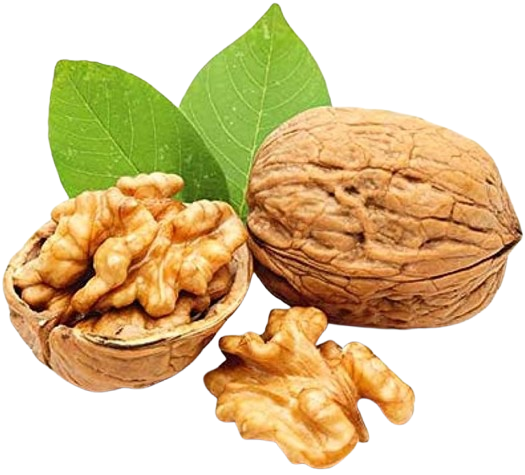
Walnuts are a nutrient-dense and high-calorie stone fruit seed known for their buttery flavor and crinkled appearance. One cup of walnuts (120g) contains 785 calories, while a 1 ounce portion (28g) supplies 183 calories. A 100g serving of soaked walnuts supplies 503 calories due to increased water content, but a single raw walnut kernel (4g) contains 26 calories.
A detailed examination of walnuts nutrition facts highlights a nutrient profile dominated by healthy lipids and plant-based proteins. A large serving of raw chopped walnuts (117g) provides 17.8g of protein and 76.3g of fat. This nut serves as an excellent source of alpha-linolenic acid, a compound confirmed by Guasch-Ferré, M., et al. (2013) to reduce cardiovascular risks. Scientific evidence presented by Chauhan, A., & Chauhan, V. (2020) indicates that the high antioxidant content supports cognitive performance by combating oxidative stress. The energy content stems primarily from polyunsaturated fats, making the food a satiating option for ketogenic diets. Regarding potential downsides, the presence of phytic acid inhibits mineral absorption, though soaking mitigates this effect. Varieties include the common English Walnut, Black Walnut, and White Walnut, each offering distinct flavor profiles.
International harvest volumes of walnuts are dominated by the agricultural output of China, the United States, and Iran. China and the European Union consume substantial quantities of this agricultural commodity. Walnuts are a foundational component in Fesenjan stew, Satsivi sauce, and Honey Walnut Shrimp dishes. Increasing global demand and trade tariffs for walnuts have caused wholesale costs to fluctuate, with grower prices recovering to $1,720 per ton by 2024 after a significant dip. Dining establishments reflect this value, as the price of Honey Walnut Shrimp at Panda Express increased from $6.99 in 2010 to between $10.30 and $13.40 in 2024.
Dietitians advise consuming 30 grams of walnuts per day to optimize nutrient intake while minimizing phytic acid exposure. A small serving of walnuts (28g) contains 183 calories, an energy load that requires 45 minutes of gardening or 30 minutes of mowing the lawn to metabolize. This specific amount supplies 2.5 grams of essential omega-3 fatty acids without exceeding daily caloric limits.
Walnut nutrition
| Stats | Weight |
|---|---|
| Carbs | 10.9 grams |
| Protein | 14.6 grams |
| Fats | 69.7 grams |
| Sugars | 0 grams |
- Large Walnut Calories (Nutritional Facts)
- Medium Walnut Calories (Nutritional Facts)
- Small Walnut Calories (Nutritional Facts)
- Soaked Walnut Calories (Nutritional Facts)
- Raw Walnut Nutrition
- Sodium in Walnut
- Potassium in Walnut
- Sugar in Walnut
- Fiber in Walnut
- Protein in Walnut
- Carbs in Walnut
- Fat in Walnut
- Vitamins in Walnut
- Minerals in Walnut
Large Walnut Calories (Nutritional Facts)
A large serving of walnut pieces or chips (120g or 1 cup) contains 785 calories, 18.2g of protein, 78.2g of fat, 16.4g of carbohydrates, 8.04g of fiber, 3.13g of sugar, and 2.4mg of sodium. A large serving of chopped walnuts (117g or 1 cup) provides 765 calories, 17.8g of protein, 76.3g of fat, 16g of carbohydrates, 7.84g of fiber, 3.05g of sugar, and 2.34mg of sodium. A large serving of ground walnuts (80g or 1 cup) supplies 523 calories, 12.2g of protein, 52.2g of fat, 11g of carbohydrates, 5.36g of fiber, 2.09g of sugar, and 1.6mg of sodium.
A medium portion of chopped walnuts (58.5g or 0.5 cup) provides 383 calories, 8.9g of protein, 38.2g of fat, 8g of carbohydrates, 3.92g of fiber, 1.53g of sugar, and 1.17mg of sodium. A medium portion of roasted walnuts (58.5g or 0.5 cup) contains 391 calories, offering a slightly denser energy profile due to moisture loss.
A small serving of walnuts (28g or 1oz) contains 183 calories, 4.26g of protein, 18.3g of fat, 3.83g of carbohydrates, 1.88g of fiber, 0.73g of sugar, and 0.56mg of sodium. A small serving of honey-roasted walnuts (28g or 1oz) supplies 190 calories, as the added glaze increases the carbohydrate load.
A serving of soaked walnuts (100g or 3.5oz) supplies 503 calories, 11.7g of protein, 50.1g of fat, 10.5g of carbohydrates, 5.1g of fiber, 2g of sugar, and 1.5mg of sodium. The soaking process increases the water weight of the nut by 30%, which reduces the caloric density per gram compared to the dry variety.
A large serving of raw chopped walnuts (117g or 1 cup) contains 765 calories, 17.8g of protein, 76.3g of fat, 16g of carbohydrates, 7.84g of fiber, 3.05g of sugar, and 2.34mg of sodium. A medium portion of raw chopped walnuts (58.5g or 0.5 cup) provides 383 calories, 8.9g of protein, 38.2g of fat, 8g of carbohydrates, 3.92g of fiber, 1.53g of sugar, and 1.17mg of sodium. A small serving of raw walnuts (28g or 1oz) contains 183 calories, 4.26g of protein, 18.3g of fat, 3.83g of carbohydrates, 1.88g of fiber, 0.73g of sugar, and 0.56mg of sodium. A standard raw walnut serving (100g) supplies 654 calories, 15.2g of protein, 65.2g of fat, 13.7g of carbohydrates, 6.7g of fiber, 2.6g of sugar, and 2mg of sodium.
A large serving of raw chopped walnuts (117g) contains 2.34mg of sodium (0% DV). A medium portion of raw chopped walnuts (58.5g) has 1.17mg of sodium (0% DV). A small serving of raw walnuts (28g) contains 0.56mg of sodium (0% DV). A raw walnut serving (100g) supplies 2mg of sodium (0% DV).
A large serving of raw chopped walnuts (117g) contains 516mg of potassium (11% DV). A medium portion of raw chopped walnuts (58.5g) has 258mg of potassium (5% DV). A small serving of raw walnuts (28g) contains 123mg of potassium (3% DV). A raw walnut serving (100g) supplies 441mg of potassium (9% DV).
A large serving of raw chopped walnuts (117g) contains 3.05g of sugar. A medium portion of raw chopped walnuts (58.5g) has 1.53g of sugar. A small serving of raw walnuts (28g) contains 0.73g of sugar. A raw walnut serving (100g) supplies 2.6g of sugar.
A large serving of raw chopped walnuts (117g) provides 7.84g of dietary fiber (28% DV). A medium portion of raw chopped walnuts (58.5g) has 3.92g of fiber (14% DV). A small serving of raw walnuts (28g) contains 1.88g of fiber (7% DV). A raw walnut serving (100g) supplies 6.7g of fiber (24% DV).
A large serving of raw chopped walnuts (117g) provides 17.8g of protein (36% DV). A medium portion of raw chopped walnuts (58.5g) has 8.9g of protein (18% DV). A small serving of raw walnuts (28g) contains 4.26g of protein (9% DV). A raw walnut serving (100g) supplies 15.2g of protein (30% DV).
A large serving of raw chopped walnuts (117g) contains 16g of carbohydrates (6% DV). A medium portion of raw chopped walnuts (58.5g) has 8g of carbohydrates (3% DV). A small serving of raw walnuts (28g) contains 3.83g of carbohydrates (1% DV). A raw walnut serving (100g) supplies 13.7g of carbohydrates (5% DV).
A large serving of raw chopped walnuts (117g) contains 76.3g of total fat (98% DV). A medium portion of raw chopped walnuts (58.5g) has 38.2g of total fat (49% DV). A small serving of raw walnuts (28g) contains 18.3g of total fat (23% DV). A raw walnut serving (100g) supplies 65.2g of total fat (84% DV).
A large serving of raw chopped walnuts (117g) provides 0.63mg of Vitamin B6 (37% DV) and 115mcg of Folate (29% DV). A medium portion of raw chopped walnuts (58.5g) has 0.31mg of Vitamin B6 (18% DV) and 57.5mcg of Folate (14% DV). A small serving of raw walnuts (28g) contains 0.15mg of Vitamin B6 (9% DV) and 27.5mcg of Folate (7% DV). A raw walnut serving (100g) supplies 0.54mg of Vitamin B6 (32% DV).
A large serving of raw chopped walnuts (117g) provides 1.86mg of copper (207% DV), 3.99mg of manganese (173% DV), and 185mg of magnesium (44% DV). A medium portion of raw chopped walnuts (58.5g) has 0.93mg of copper (103% DV), 2mg of manganese (87% DV), and 92.5mg of magnesium (22% DV). A small serving of raw walnuts (28g) contains 0.45mg of copper (50% DV), 0.95mg of manganese (41% DV), and 44mg of magnesium (10% DV). A raw walnut serving (100g) supplies 1.59mg of copper (177% DV).
Get a Custom Report on Walnut Nutrition Data – Contact Us!
What are the Types of Walnuts?
The types of Walnuts are English, Black, and White. The table below delineates the nutritional variances among these species.
| Type | Description | Calories (Per 100g) | Calorie Qualifications |
|---|---|---|---|
|
English Walnut
|
The most common variety, thin shell. | 654 | The high oil content results in the highest caloric density among the varieties. |
|
Black Walnut
|
Native to North America, thick shell. | 618 | The protein content is higher, resulting in a slightly lower fat and calorie profile. |
|
White Walnut (Butternut)
|
Native to US and Canada, sweet taste. | 612 | The lipid profile is lower than the English variety, offering the lowest energy load. |
What are Desserts With Walnut?
Sweet courses featuring walnuts rely on the nut to add texture and earthy contrast to sugars and syrups. The ingredient pairs exceptionally well with cinnamon, maple, and chocolate. Specific desserts utilizing this nut are listed below.
| Dish Name | Calories (Estimate) | Type of Walnut | Carbs (g) | Sugar (g) | Protein (g) | Fat (g) | Cuisine | Restaurants |
|---|---|---|---|---|---|---|---|---|
|
Baklava
|
334 | Finely Chopped | 30 | 15 | 6 | 22 | Greek/Turkish | Hellas Restaurant (Tarpon Springs, FL) |
|
Carrot Cake with Walnuts
|
850 | Chopped | 90 | 55 | 10 | 48 | American | The Cheesecake Factory (National) |
|
Walnut Brownie
|
450 | Halves/Chopped | 55 | 35 | 6 | 24 | American | Levain Bakery (New York, NY) |
|
Maple Walnut Ice Cream
|
280 | Wet/Chopped | 30 | 25 | 5 | 16 | American | Ben & Jerry’s Scoop Shops (National) |
|
Pecan/Walnut Pie
|
500 | Halves | 65 | 30 | 6 | 27 | Southern American | The Pie Hole (Los Angeles, CA) |
|
Rugelach
|
150 | Finely Chopped | 18 | 9 | 3 | 8 | Jewish | Russ & Daughters (New York, NY) |
|
Ma'amoul
|
180 | Ground | 25 | 10 | 3 | 9 | Middle Eastern | Shatila Bakery (Dearborn, MI) |
|
Sticky Buns
|
600 | Halves | 80 | 35 | 9 | 28 | American | Flour Bakery (Boston, MA) |
|
Date and Walnut Loaf
|
220 | Chopped | 40 | 20 | 4 | 6 | British/American | Zingerman's Bakehouse (Ann Arbor, MI) |
|
Apple Walnut Crisp
|
350 | Chopped | 55 | 30 | 4 | 14 | American | Grand Lux Cafe |
|
Walnut Snowball Cookies
|
120 | Finely Chopped | 12 | 5 | 2 | 8 | International | Magnolia Bakery (New York, NY) |
|
Chocolate Walnut Fudge
|
200 | Chopped | 25 | 22 | 2 | 10 | American | Kilwins |
|
Cranberry Walnut Bread
|
180 | Chopped | 32 | 6 | 5 | 4 | American | Panera Bread |
|
Kataifi
|
300 | Chopped | 35 | 15 | 5 | 18 | Greek/Middle Eastern | Artopolis Bakery (Astoria, NY) |
|
Banana Walnut Muffin
|
420 | Chopped | 50 | 28 | 6 | 22 | American | Starbucks |
What are the Main Dishes With Walnut?
Walnuts function as a versatile protein source and texture enhancer in savory entrees, particularly in vegetarian and Asian cuisines. The nut withstands cooking heat, maintaining a distinct crunch. Specific dishes utilizing this ingredient are listed below.
| Dish Name | Calories (Estimate) | Type of Walnut | Carbs (g) | Sugar (g) | Protein (g) | Fat (g) | Cuisine | Restaurants |
|---|---|---|---|---|---|---|---|---|
|
Honey Walnut Shrimp
|
450 | Glazed Whole | 45 | 15 | 18 | 24 | Chinese-American | Panda Express |
|
Fesenjan (Pomegranate Stew)
|
600 | Ground Paste | 40 | 25 | 25 | 35 | Persian | Shamshiri Grill (Los Angeles, CA) |
|
Chiles en Nogada
|
550 | Cream Sauce | 35 | 20 | 25 | 30 | Mexican | La Morada (New York, NY) |
|
Walnut Pesto Pasta
|
500 | Ground | 55 | 3 | 15 | 28 | Italian | Eataly (Various Locations) |
|
Waldorf Salad
|
350 | Halves | 15 | 12 | 8 | 28 | American | Waldorf Astoria (New York, NY) |
|
Gorgonzola Walnut Pizza
|
800 | Toasted | 90 | 6 | 25 | 35 | American/Italian | California Pizza Kitchen |
|
Circassian Chicken
|
320 | Ground Sauce | 8 | 2 | 30 | 18 | Turkish/Russian | Sip Sak (New York, NY) |
|
Badrijani Nigvzit
|
250 | Ground Paste | 12 | 4 | 6 | 20 | Georgian | Chama Mama (New York, NY) |
|
Ravioli with Walnut Sauce
|
480 | Ground Sauce | 50 | 3 | 14 | 26 | Italian | Il Mulino (New York, NY) |
|
Candied Walnut Salad
|
550 | Glazed Halves | 25 | 18 | 35 | 30 | American | Panera Bread |
|
Walnut Tacos (Vegan)
|
300 | Ground Meat Sub | 20 | 2 | 10 | 22 | Mexican/Fusion | Gracias Madre (Los Angeles, CA) |
|
Chicken Satsivi
|
450 | Ground Sauce | 10 | 3 | 35 | 30 | Georgian | Oda House (New York, NY) |
|
Muhammara (Dip)
|
200 | Crushed | 15 | 4 | 5 | 14 | Levantine | Shaya (New Orleans, LA) |
|
Roquefort Walnut Burger
|
900 | Toasted Topping | 45 | 6 | 40 | 60 | American | The Spotted Pig (New York, NY - Historical) |
|
Stir-Fried Chicken w/ Walnuts
|
400 | Whole/Halves | 15 | 4 | 30 | 25 | Chinese | P.F. Chang's |
What Cuisines Prefer Walnut the Most?
Walnuts serve as a staple ingredient in Persian, Georgian, and Chinese culinary traditions. The table below identifies culinary traditions that rely heavily on this tree nut.
| Cuisine | Dish | Types of Walnut | Calories (Estimate) | Restaurant(s) |
|---|---|---|---|---|
|
Persian
|
Fesenjan | Ground Paste | 600 | Shamshiri Grill (Los Angeles, CA) |
|
Georgian
|
Satsivi | Ground Sauce | 450 | Chama Mama (New York, NY) |
|
Chinese
|
Honey Walnut Shrimp | Glazed Whole | 450 | Panda Express |
|
American
|
Waldorf Salad | Raw Halves | 350 | Waldorf Astoria (New York, NY) |
|
Italian
|
Pansoti con Salsa di Noci | Creamy Sauce | 500 | Eataly (Various Locations) |
|
Greek
|
Baklava | Finely Chopped | 334 | Hellas Restaurant (Tarpon Springs, FL) |
|
Mexican
|
Chiles en Nogada | Cream Sauce | 550 | La Morada (New York, NY) |
|
Turkish
|
Circassian Chicken | Ground Sauce | 320 | Sip Sak (New York, NY) |
|
Levantine
|
Muhammara | Crushed | 200 | Shaya (New Orleans, LA) |
|
French
|
Salade aux Noix | Toasted Halves | 300 | Le Bernardin (New York, NY) |
|
Jewish
|
Charoset | Chopped | 180 | Russ & Daughters (New York, NY) |
|
British
|
Coffee and Walnut Cake | Chopped | 450 | The British Banker's Club (Menlo Park, CA) |
|
Spanish
|
Membrillo con Nueces | Raw Halves | 150 | Boqueria (New York, NY) |
|
Syrian
|
Makdous | Stuffed Pieces | 120 | Aleppo's Kitchen (Anaheim, CA) |
|
Austrian
|
Nusstorte | Ground Meal | 400 | Wallsé (New York, NY) |
Which Countries Produce the Most Walnuts?
The top producers of walnuts are China, the United States, and Iran, driven by extensive orchard acreage and favorable temperate climates. China dominates the market, accounting for over half of the global supply, while the United States maintains a strong export position through high-yield California orchards. Chile and Ukraine also maintain substantial output levels, particularly for the export market. The table below shows the estimated production of walnuts (in shell) for the top producing nations over the last two decades.
| Country | 2003 | 2008 | 2013 | 2018 | 2019 | 2020 | 2021 | 2022 | 2023 |
|---|---|---|---|---|---|---|---|---|---|
| China | 380.5 | 550.2 | 950.6 | 1,150.4 | 1,250.8 | 1,300.5 | 1,380.2 | 1,450.0 | 1,550.0 |
| United States | 295.7 | 395.5 | 449.0 | 626.0 | 594.2 | 712.1 | 653.2 | 680.4 | 747.5 |
| Iran | 160.0 | 170.5 | 220.4 | 340.2 | 320.5 | 356.7 | 368.9 | 375.2 | 381.0 |
| Turkey | 130.0 | 165.2 | 190.5 | 215.0 | 225.0 | 280.5 | 310.0 | 335.0 | 360.0 |
| Chile | 15.5 | 28.2 | 45.0 | 120.5 | 135.0 | 148.0 | 158.0 | 175.0 | 192.0 |
| Ukraine | 65.0 | 75.5 | 100.2 | 127.0 | 126.0 | 115.0 | 110.0 | 100.0 | 106.1 |
| Mexico | 60.5 | 85.0 | 105.0 | 155.0 | 165.0 | 164.0 | 160.0 | 162.0 | 167.8 |
| France | 30.0 | 35.0 | 38.0 | 39.0 | 35.0 | 36.0 | 37.0 | 39.0 | 40.0 |
Which Countries Consume the Most Walnuts?
The top consumers of walnuts are China, the European Union, and the United States, where the nut functions as a primary ingredient in bakery products and healthy snacks. Domestic markets in China absorb nearly all local production, while the European Union relies heavily on imports to meet demand. Turkey and Iran also function as major consumers due to the popularity of traditional desserts like baklava. The table below shows the estimated consumption values for walnuts in key markets.
| Country/Region | 2003 | 2008 | 2013 | 2018 | 2019 | 2020 | 2021 | 2022 | 2023 |
|---|---|---|---|---|---|---|---|---|---|
| China | 350.5 | 520.0 | 980.5 | 1,200.0 | 1,280.0 | 1,320.0 | 1,350.0 | 1,330.0 | 1,420.0 |
| United States | 140.2 | 160.5 | 185.0 | 210.5 | 205.0 | 220.0 | 215.0 | 210.0 | 225.0 |
| European Union | 280.5 | 310.0 | 350.0 | 390.0 | 400.0 | 410.0 | 420.0 | 415.0 | 425.0 |
| Turkey | 110.0 | 140.0 | 180.0 | 220.0 | 230.0 | 240.0 | 250.0 | 260.0 | 270.0 |
| Iran | 145.0 | 155.0 | 180.0 | 200.0 | 190.0 | 185.0 | 180.0 | 175.0 | 180.0 |
| Japan | 35.0 | 40.0 | 55.0 | 65.0 | 62.0 | 60.0 | 63.0 | 65.0 | 68.0 |
| South Korea | 20.0 | 25.0 | 35.0 | 45.0 | 48.0 | 50.0 | 52.0 | 54.0 | 56.0 |
| Canada | 15.0 | 18.0 | 22.0 | 28.0 | 30.0 | 32.0 | 33.0 | 34.0 | 35.0 |
How Do Prices of Walnut-Including Dishes Change?
Restaurant costs for walnut-based entrees and desserts have surged, mirroring the increased expense of labor and general food inflation. The table below illustrates price adjustments for selected items at well-known establishments.
| Brand/Restaurant | Dish | Old Price (Year) | Current Price (2024/2025) |
|---|---|---|---|
| Panda Express | Honey Walnut Shrimp (Plate) | $6.99 (2010) | $10.30 - $13.40 |
| Starbucks | Banana Walnut & Pecan Loaf | $2.45 (2015) | $4.75 - $5.85 |
| Levain Bakery | Chocolate Chip Walnut Cookie | $4.00 (2015) | $5.00 - $6.33 |
| Panera Bread | Cranberry Walnut Chicken Salad Sandwich | $8.49 (2015) | $9.99 - $10.99 |
What is the Walnut Calorie for 100 Grams?
A 100g serving of fresh raw walnuts contains 654 calories, while the same quantity of dry roasted walnuts provides 670 calories. A 100g serving of honey-roasted walnuts contains 680 calories due to the added sugars.
What is the Walnut Calorie for 1 KG?
One kilogram (1000g) of fresh raw walnuts contains 6540 calories, whereas a kilogram of dry roasted walnuts provides 6700 calories. One kilogram (1000g) of honey-roasted walnuts supplies 6800 calories.
What is the Calorie of 1 Walnut?
A single raw walnut kernel (4g) contains 26 calories, while a Diamond of California walnut half (2g) provides 13 calories. A Fisher Nuts walnut half (2g) contains 13 calories, and a Kirkland Signature walnut half (2g) also supplies 13 calories.
What are the Health Benefits of Walnut?
Walnuts provide notable physiological advantages, specifically regarding cardiovascular stability, cognitive enhancement, and microbiome support. The nut functions as a concentrated source of omega-3 fatty acids and antioxidants. The following points highlight these benefits.
- Supports Cardiovascular Function: Walnuts contain high levels of alpha-linolenic acid, which reduces inflammation and arterial stiffness. A study by Guasch-Ferré, M., et al. (2013), "Frequency of nut consumption and mortality: risk of cardiovascular disease," confirmed that regular consumption reduces heart disease risks.
- Enhances Cognitive Performance: The high antioxidant content in the skin and flesh combats oxidative stress in the brain. Research by Chauhan, A., & Chauhan, V. (2020), "Beneficial Effects of Walnuts on Cognition and Brain Health," established that reducing oxidative stress improves memory and processing speed.
- Promotes Digestive Balance: Dietary fiber found in the kernel acts as a prebiotic that fosters beneficial gut bacteria. A study by Holscher, H. D., et al. (2018), "Walnut Consumption Alters the Gastrointestinal Microbiota," demonstrated that intake increases the abundance of butyrate-producing bacteria.
What are the Downsides of Walnut?
The table below shows potential adverse effects associated with consumption, necessitating caution for specific groups.
- Inhibits Mineral Absorption: Walnuts contain phytic acid, which binds to iron and zinc, reducing the bioavailability of these minerals. Research by Schlemmer, U., et al. (2009), " Phytate in foods and significance for humans: food sources, intake, processing, bioavailability, protective role and analysis," indicates that high phytate levels impair mineral absorption. Soaking the nuts serves as an effective alternative to reduce phytic acid content. Dietitians recommend limiting intake to 30g per day to minimize this effect.
- Triggers Allergic Reactions: The nut contains specific proteins that cause immune responses in sensitive individuals. A study by Bartra, J., et al. (2019), " Allergen Recognition Patterns in Walnut Allergy Are Age Dependent and Correlate with the Severity of Allergic Reactions," notes that reactions range from oral allergy syndrome to severe anaphylaxis. Pecans or seeds serve as alternatives for some, though cross-reactivity exists. The daily suggested amount remains zero for allergic individuals.
Are Walnuts Good for You?
Yes, walnuts are good for health because the food source supports cardiovascular efficiency, enhances cognitive function, and maintains digestive balance. Heart health improves through the high concentration of alpha-linolenic acid, a mechanism detailed in the study by Pan, A., et al. (2012), "Alpha-Linolenic Acid and Risk of Cardiovascular Disease." Brain health benefits from the neuroprotective compounds found in the skin and flesh, as explored by Poulose, S. M., et al. (2014), "Role of Walnuts in Maintaining Brain Health with Age." Digestive health strengthens due to the prebiotic potential of the fiber content, which fosters beneficial gut bacteria as confirmed by the study by Bamberger, C., et al. (2018), "A Walnut-Enriched Diet Affects Gut Microbiome in Healthy Caucasian Subjects." Liver health also benefits from the omega-3 fatty acids, which help reduce fat accumulation in hepatic tissue.
How Do Calories Change According to Walnut Types?
Caloric density fluctuates between the common English variety and the wilder Black and White species. English Walnuts present the highest energy load at 654 calories per 100 grams due to a higher fat composition. Black Walnuts offer a moderate profile at 618 calories per 100 grams. White Walnuts contain the lowest energy content at 612 calories per 100 grams.
Are Walnuts High in Calories Compared to Other Nuts?
Yes, walnuts rank as a high-calorie nut compared to almonds and cashews but contain fewer calories than macadamia nuts and pecans. A 100g serving of walnuts supplies 654 calories, whereas the same amount of macadamia nuts provides 718 calories. Almonds offer a lower energy density at 579 calories per 100g. The high fat content in walnuts drives the caloric value above the average for tree nuts.
Are Walnuts a Good Source of Protein and Healthy Fats?
Yes, walnuts function as an exceptional source of plant-based protein and essential fatty acids. A single cup of chopped walnuts contains 17.8g of protein, supporting muscle repair and enzymatic activity. The lipid profile consists largely of polyunsaturated fats, specifically alpha-linolenic acid (ALA), which constitutes the plant-based form of omega-3. This fatty acid composition reduces inflammation and improves cholesterol levels. The high fat content provides sustained energy, making the nut a calorically dense but nutrient-rich food option.
What is the Origin of Walnut?
Walnuts originated in the region surrounding the Caspian Sea, specifically ancient Persia, dating back to 7000 B.C. The Romans cultivated the tree extensively, naming the species Juglans regia or "Jupiter's royal acorn." Trade routes along the Silk Road facilitated the spread of the nut to China and eventually Europe. English merchant marines transported the Persian variety to global markets, leading to the moniker "English Walnut." Black Walnuts developed independently in North America, serving as a food source for Indigenous populations long before European settlement. Franciscan fathers introduced the English variety to California in the late 1700s, establishing the foundation for modern commercial production in the United States.
Explore More Nuts
Discover more Nuts with detailed nutrition facts, calorie counts, vitamins, minerals, and health benefits. Compare similar foods, serving sizes, macronutrients, and key nutrients to find the best option for your diet and nutrition goals.
 Almond Flour calories
 Almonds calories
 Brazil Nut calories
 Cashew calories
 Hazelnut calories
 Macadamia Milk calories
 Macadamia Nuts calories
 Nuts calories
 Peanuts calories
 Pecans calories
 Pine Nut calories
 Pistachio calories